The Impact of Placebo Analgesia on Pressure Pain Threshold and Tolerance: A Gender-Based Experimental Study in Young Adults
 , Lana Hamou, Waleed Ali, Jana Al Ahmad, Ramya Rathanand Miral Nagy Fahmy Salama*
 Department of Biomedical Science, Gulf Medical University, Ajman, UAE
Corresponding Author E-mail: dr.miral@gmu.ac.ae
Download this article as:
ABSTRACT:Placebo analgesia has been investigated across various pain models, but evidence on pressure pain modulation and gender related differences in young adults is limited. To evaluate the effects of placebo analgesia on pressure pain threshold (PPT) and pressure pain tolerance (PT), and to understand the gender-based differences in pain perception. A seven-month an uncontrolled pre–post quasi-experimental design with 161 people ages 18 to 25 was held at Gulf Medical, UAE. The pressure pain threshold (PPT) and pain tolerance (PT) on the thenar eminence of the dominant hand were measured using a digital pressure algometer. A placebo intervention was administered using a saline spray, falsely presented as an analgesic. Statistical analysis was done using the Wilcoxon Signed Ranks and the Mann-Whitney U tests. Post-placebo, both PPT and PT increased significantly across all participants (p < 0.001). Males consistently demonstrated higher values than females before and after the intervention. Notably, the placebo effect was more pronounced in PT values. While both sexes exhibited improvement, the gender-based differences in pain perception remained statistically significant. Placebo analgesia increases pain tolerance significantly, with notable gender-specific differences in pain perception. These findings underscore the potential of placebo mechanisms in pain modulation and support further research into non-pharmacological strategies for pain management.
KEYWORDS:Gender differences; Pain Management; Pain Perception; Placebo Analgesia; Pressure Pain Tolerance
Introduction
Pain is defined as a distressing sensory and emotional experience that is associated with, or similar to that arising from, actual or potential tissue injury.1 Despite advances in pharmacological treatments, pain management remains a persistent challenge, especially given the risks of opioid dependence, tolerance, and adverse effects associated with long-term analgesic use. This has created growing interest in non-pharmacological approaches and complementary mechanisms of pain control, including the placebo effect.
Placebo analgesia refers to the reduction of pain following the administration of an inert treatment, accompanied by an expectation of benefit.2 It is supported by both neurobiological and psychological mechanisms, activation of the endogenous opioid pathway, increased activity in the brain regions such as the prefrontal cortex, and the expectancy effects reinforced by prior experiences and observations of others.3,4 While placebo responses have been extensively studied in clinical conditions such as chronic pain, their role in experimental pain models, particularly PPT and PT, remains inconsistent.
Several studies have reported a significant increase in pain tolerance following placebo interventions.5,6 For example, sham ultrasound has been shown to improve muscle soreness as effectively as therapeutic ultrasound in some experimental models.5 On the contrary, in other cases, neither the placebo nor the therapeutic methods were effective, as reported by Lougee et al.⁷ who measured the pain pressure threshold in ten healthy subjects before and after applying high-velocity low-amplitude thrust, sham functional technique, sham ultrasound, and no intervention control. The results showed no remarkable change in the pain pressure threshold following any of the methods used. Hence, the placebo response differs from patient to patient, and it can be positive towards one condition and hostile towards another. 8 It was also reported by Colloca3 that individuals with higher pain tolerance might exhibit more significant placebo responses, suggesting a connection between psychological resilience and the modulation of pain perception. These inconsistencies highlight the complexity of placebo responses and suggest that contextual factors such as population, study design, and the psychological state of participants may influence the outcomes. More focused studies are therefore needed to clarify the extent to which placebo analgesia modulates pressure pain and under what conditions these effects are most evident. Nevertheless, Placebo analgesia is increasingly recognized as a genuine psychobiological phenomenon that influences both experimentally induced and clinical pain through cognitive and neurobiological mechanisms. A meta-analysis by Forsberg et al. (2017), which included 71 studies involving 4,239 participants, demonstrated that placebo interventions produced significant analgesic effects in both healthy individuals and patients, with larger effect sizes observed among patients. These findings suggest that placebo analgesia is mediated by expectancy, contextual factors, and endogenous pain-modulating mechanisms rather than by response bias alone.9 Furthermore, a neuroimaging meta-analysis by Atlas and Wager (2014) demonstrated that placebo analgesia is consistently associated with reduced activation in brain regions involved in pain processing, including the anterior cingulate cortex, insula, and thalamus, together with increased activation of prefrontal cortical regions responsible for cognitive pain modulation.10 These findings provide objective evidence that placebo interventions induce measurable neurobiological changes that contribute to pain reduction. Collectively, these studies support the hypothesis that placebo analgesia is mediated by both psychological and neurophysiological mechanisms, making it an important area of investigation in experimental pain research.
Another factor that may explain variability in placebo responses is gender. Evidence suggests that there is a difference between men and women, both in the baseline pain perception and responses to analgesic interventions.11 On average, males report higher PPT and greater PT, whereas females are more sensitive to pain and more likely to report distress associated with painful stimuli.12 These differences are likely multifactorial: biological influences such as testosterone and estrogen levels after nociceptive processing and endogenous opioid activity,13 while neuroimaging studies have revealed distinct brain activation patterns between men and women during pain tasks.11 In addition, cultural and psychosocial influences may shape pain expression; women often engage in more pain related communication, whereas men may underreport discomfort due to social expectations of resilience.14
Understanding gender differences in placebo analgesia is not only of theoretical interest but also has clinical implications. If men and women respond differently to placebo interventions, then sex specific approaches to pain management may be warranted. Moreover, clarifying these patterns in young healthy populations can provide a baseline against which findings in patient groups can be compared.
Despite decades of placebo research, there is a lack of studies focusing on healthy young individuals, who represent an ideal population for experimental work. Unlike older adults, they are less affected by comorbidities, medications, or chronic pain conditions that often confound the placebo response. Furthermore, most placebo studies have been conducted in Western contexts, and there is minimal data from the Middle East. Cultural norms regarding pain expression and gender roles may influence both baseline pain perception and placebo responses, making it important to examine these phenomena in diverse populations. Generating such data not only contributes to the global understanding of placebo mechanisms but also has potential relevance for developing locally tailored strategies in pain management education and practice.
Primary Objective
To examine how pressure pain tolerance and threshold are affected by placebo analgesia.
Secondary Objective
To evaluate the difference in the established placebo response between males and females.
Material and Methods
Study Design and Setting
An uncontrolled pre–post quasi-experimental design involving 161 participants from Gulf Medical University was conducted. A priori power analysis was conducted using G*Power version 3.1. Based on a two-tailed hypothesis, a significance level (α) of 0.05, a statistical power of 80% (1−β = 0.80), and a medium effect size (Cohen’s d = 0.50), the minimum required sample size was estimated to be 128 participants for detecting differences in pressure pain tolerance associated with placebo analgesia. To account for an anticipated attrition or incomplete data rate of approximately 20%, the target sample size was increased to 160 participants.
Adjusted sample= Required sample/ 1−Attrition rate
Adjusted sample = 128/1- 0.20 = 160
The research occurred in the Department of Biomedical Science, College of Medicine, Gulf Medical University, Ajman, UAE, over seven months from September 2023 to March 2024.
Participants
Inclusion Criteria
Participants were Gulf Medical University (GMU) students aged 18–25.
Exclusion Criteria
Exclusion criteria included individuals with skin allergies, wounds, any history of medical conditions, recent upper limb fractures or trauma, high caffeine or nicotine consumption, and use of analgesics 12 hours prior to the study.
Institutional Approval and Ethical Considerations
The study was approved by the institutional review board of Gulf Medical University, Ref. no. IRB-COM-STD-41-NOV-2023. A consent form was provided to all participants to exclude those who did not match the inclusion criteria.
Measurement tools and Validation
Pain measurements were conducted using an FPIX50 pressure algometer from (Wagner Instruments, Greenwich, CT, USA) to measure PPT (The point at which the pressure first becomes painful), and PT (the maximum pressure the participant can tolerate). The device quantifies the applied pressure in kgf/cm² using a 1 cm² rubber probe tip and displays measurements digitally. The algometer was factory-calibrated and supplied with a National Institute of Standards and Technology (NIST)-traceable calibration certificate to ensure measurement accuracy. The Wagner pressure algometer has been widely used in pain research and has demonstrated acceptable reliability and validity for the assessment of pressure pain threshold and pressure pain tolerance when standardized testing procedures are followed. Before data collection, the device calibration was verified according to the manufacturer’s recommendations.15,16
Data Collection
Measuring Pain Threshold and Pain Tolerance
Participants completed a questionnaire and signed a consent form. They were seated in a quiet room with a flexed elbow and supinated forearm and remained still throughout the test. Pressure was applied perpendicularly to the thenar eminence muscle of the dominant hand. Participants indicated the onset of pain (“Now” for PPT) and when pain became intolerable (“Stop” for PT). This process was repeated three times with a one-minute rest period between trials to prevent sensitization. The average of the three trials was calculated for each participant’s PPT and PT. Participants could not view the algometer screen to avoid bias. Two trained examiners manually recorded all readings to ensure accuracy and reduce inter-observer variability.
Placebo Intervention
Following initial measurements, a placebo intervention was introduced using a 0.9% NaCl solution in a stainless-steel spray bottle. Participants were misled to believe that the solution was a topical analgesic spray. The spray was applied uniformly to the thenar eminence, followed by a 5-minute wait period. PPT and PT measurements were then repeated using the same procedure
Data Analysis
Data was recorded in an Excel spreadsheet and analyzed using IBM SPSS Statistics version 28.0. Categorical variables are presented as frequency (n) and percentage (%). Continuous variables were assessed for normality using the Shapiro–Wilk test and, as they were not normally distributed, are presented as median (interquartile range, IQR). Normality of continuous variables was assessed using the Shapiro–Wilk test. Since the data were not normally distributed, comparisons between paired observations were performed using the Wilcoxon Signed-Rank Test, whereas comparisons between independent groups were performed using the Mann–Whitney U Test. Statistical significance was set at p < 0.05.
Results
As stated in the methodology, 161 undergraduate GMU students aged 18 to 25 participated in this research, with an almost equal distribution of 50.6% males and 49.4% females. Table 1 summarizes the study’s findings by providing descriptive data on PPT and PT before and after the placebo intervention for both males and females.
Table 1: Pressure Pain Threshold (PPT) and Pressure Pain Tolerance (PT) before and after placebo intervention according to gender (kgF/cm²). Values are presented as Median (Q1–Q3).
|
Gender |
PPT Before (THBI) Median (Q1–Q3) | PPT After (THAI) Median (Q1–Q3) | PT Before (TRBI) Median (Q1–Q3) | PT After (TRAI) Median (Q1–Q3) | p-value† |
| Male (n = 81) | 4.26 (3.53–5.43)* | 4.42 (3.85–5.29)* | 15.35 (10.71–20.81) * | 18.85 (15.10–24.98)* |
<0.001 |
|
Female (n = 80) |
2.86 (2.30–3.76)* | 3.48 (2.72–4.09)* | 7.57 (5.41–11.65)* | 9.73 (7.27–13.63)* | <0.001 |
| Between-gender p-value‡ | <0.001 | <0.001 | <0.001 |
<0.001 |
† Wilcoxon Signed-Rank Test comparing pre- and post-intervention values within each gender.
‡ Mann–Whitney U Test comparing males and females
PPT Before and After Placebo Intervention
The median pressure pain threshold (PPT) before the placebo intervention (THBI) was 3.6 kgF/cm² (Q1–Q3: 2.8–4.6), indicating variability in pain sensitivity among the participants, as shown in Table 2. Following the placebo intervention (THAI), the median PPT increased to 4.0 kgF/cm² (Q1–Q3: 3.3–4.8). This increase was statistically significant according to the Wilcoxon Signed-Rank Test (p < 0.001). Figure 1a illustrates the distribution of PPT before and after the intervention. The boxplot demonstrates an upward shift in the median PPT after the placebo intervention, while the boxes represent the interquartile ranges (Q1–Q3), the whiskers indicate the spread of the data, and the circles and asterisks denote outliers and extreme outliers, respectively. Overall, these findings indicate that the placebo intervention produced a statistically significant increase in pressure pain threshold.
Table 2: Comparison of Pressure Pain Threshold (PPT) and Pressure Pain Tolerance (PT) before and after the placebo intervention.
|
Variable |
Before Intervention, Median (Q1–Q3) | After Intervention, Median (Q1–Q3) | p-value* |
| PPT (THBI vs THAI) (kgF/cm²) | 3.6 (2.8–4.6) | 4.0 (3.3–4.8) |
<0.001 |
|
PT (TRBI vs TRAI) (kgF/cm²) |
11.1 (6.7–16.8) | 13.6 (9.2–19.7) | <0.001 |
*Wilcoxon Signed-Rank Test.
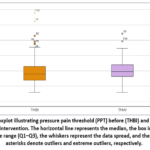 |
Figure 1a: Boxplot illustrating pressure pain threshold (PPT) before (THBI) and after (THAI) the placebo intervention. Click here to View table |
PT Before and After Placebo Intervention
The median pressure pain tolerance (PT) before the placebo intervention (TRBI) was 11.1 kgF/cm² (Q1–Q3: 6.7–16.8). Following the placebo intervention (TRAI), the median PT increased to 13.6 kgF/cm² (Q1–Q3: 9.2–19.7), as shown in Table 2. The increase in PT was statistically significant (Wilcoxon Signed-Rank Test, p < 0.001). Figure 1b demonstrates an upward shift in the distribution of PT following the placebo intervention, indicating that participants tolerated higher pressure stimuli after receiving the placebo.
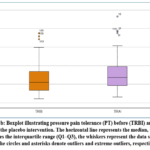 |
Figure 1b: Boxplot illustrating pressure pain tolerance (PPT) before (TRBI) and after (TRAI) the placebo intervention. Click here to View Figure |
Gender Comparisons of PPT and PT
Before the placebo intervention:
- Males demonstrated significantly higher-pressure pain threshold (PPT) values than females, with a median of 4.3 kgF/cm² compared with 2.9 kgF/cm², respectively (Mann–Whitney U test, p < 0.001).
- Similarly, males exhibited significantly higher-pressure pain tolerance (PT) values than females, with median values of 15.3 kgF/cm² and 7.6 kgF/cm², respectively (p < 0.001).
After the placebo intervention:
- Males continued to demonstrate significantly higher-pressure pain threshold (PPT) values than females, with median values of 4.4 kgF/cm² and 3.5 kgF/cm², respectively (Mann–Whitney U test, p < 0.001).
- Likewise, pressure pain tolerance (PT) remained significantly higher in males than in females, with median values of 18.9 kgF/cm² and 9.7 kgF/cm², respectively (p < 0.001).
Table 3: Comparison of Pressure Pain Threshold (PPT) and Pressure Pain Tolerance (PT) between male and female participants before and after the placebo intervention
|
Variable |
Gender | Median (kgF/cm²) | Minimum | Maximum | Range | p-value† |
| Pressure Pain Threshold (PPT) | ||||||
|
Before intervention (THBI) |
Male | 4.3 | 1.3 | 11.6 | 10.3 | <0.001 |
| Female | 2.9 | 1.2 | 6.3 |
5.1 |
||
|
After intervention (THAI) |
Male | 4.4 | 2.1 | 8.9 | 6.8 | <0.001 |
| Female | 3.5 | 1.2 | 5.9 | 4.7 | ||
|
Pressure Pain Tolerance (PT) |
||||||
| Before intervention (TRBI) | Male | 15.3 | 3.8 | 37.5 | 33.7 |
<0.001 |
| Female | 7.6 | 2.2 | 21.9 | 19.7 | ||
| After intervention (TRAI) | Male | 18.9 | 8.0 | 46.6 | 38.6 |
<0.001 |
| Female | 9.7 | 3.2 | 27.3 | 24.1 |
THBI = Pressure Pain Threshold Before Intervention; THAI = Pressure Pain Threshold After Intervention. Pressure Pain Threshold was measured in kgF/cm² using a digital pressure algometer. Comparisons between male and female participants were performed using the Mann–Whitney U test. Values are presented as the median, minimum, maximum, and range.
Discussion
Pressure Pain Threshold (PPT) and Pain Tolerance (PT) Before and After Intervention
The present study results showed an increase in the pressure pain threshold and pain tolerance values after applying the placebo compared to the values before the placebo in all participants which was more remarkable towards the pain tolerance. These results are similar to what Parker and Madden5 observed when they reported that placebo ultrasound equally improved the induced soreness of the biceps muscle compared to the therapeutic ultrasound. In addition, these results are consistent with what was reported by Yildirim et al.⁶, as a placebo improved the degree of trapezius spasm in fifty-four patients suffering from myofascial pain syndrome.
This rise in Pressure Pain Threshold and Pain Tolerance was explained by Fiorio et al.⁸ and Benedetti¹7 who emphasized how cognitive elements enhance placebo effects. They illustrated how one can dramatically affect the analgesic effects of placebo therapies by changing expectations regarding their efficacy. Moreover, Wager et al.⁴ used neuroimaging to investigate the effect of placebo analgesia. They reported that a placebo activates the prefrontal cortex and periaqueductal gray, which are involved in managing pain. To help better tolerate discomfort, this activation may trigger the production of endogenous opioids and other neurotransmitters that reduce pain perception. The observed increase in pressure pain threshold (PPT) and pressure pain tolerance (PT) following the placebo intervention may not be attributable exclusively to the placebo effect. Repeated exposure to pressure algometry may influence pain perception through habituation, increased familiarity with the testing procedure, reduced anxiety, and anticipation of the stimulus.18,19
On the other hand, the results of this research were opposite to what Lougee et al.⁷ declared that placebo intervention failed to change the Pressure Pain Threshold (PPT) as a method of spinal manipulative therapy.7 Interestingly, Beissner et al.20 discovered that the placebo irritant solution and laser effects caused burning and stinging sensations in sixty healthy individuals.20
Sex Differences in Pain Perception
One of the objectives of this study is to compare the values of Pressure Pain Threshold (PPT), and Pain Tolerance (PT) values pre and post-intervention in both genders. Our results showed that males and females experienced increased PPT and PT after the intervention. However, males exhibited higher PTT after intervention than females. This finding is similar to the results collected by Castro-Sánchez et al.¹2 who reported that the Pressure Pain Threshold (PPT) in female patients with fibromyalgia is lesser than in males who suffer from the same disease.12 Similarly, it was found that Pain Tolerance (PT) in males is higher than in females when it was investigated in one hundred volunteers of different ages.21 The higher values in Pressure Pain Threshold and Pain Tolerance in males compared to females before and after the application of a placebo can be explained by Bartley et al., who claimed that there is a difference in pain processing pathways and neurobiological mechanisms between genders. Neuroimaging techniques revealed sex-specific differences in brain activation patterns during pain processing, suggesting that men and women may utilize distinct neural circuits to perceive and modulate pain.11 Moreover, Vase et al.22 added that testosterone affects pain perception, with higher hormonal levels associated with increased pain tolerance. Therefore, variations in testosterone levels between men and women could potentially contribute to gender differences in placebo-induced pain relief.13 Furthermore, cultural norms and societal expectations regarding gender roles may shape individuals’ beliefs and attitudes towards pain relief and treatment outcomes.23
Conclusion
The present study demonstrated that the placebo intervention was associated with statistically significant increases in both pressure pain threshold (PPT) and pressure pain tolerance (PT) among healthy young adults. The increase was more pronounced for pressure pain tolerance than for pressure pain threshold. In addition, male participants consistently exhibited significantly higher-pressure pain threshold and tolerance values than female participants, both before and after the placebo intervention. Although these findings indicate that placebo intervention can influence experimentally induced pain perception in healthy individuals, the observed increase is likely to reflect a combination of placebo-induced expectation, habituation, and procedural learning associated with repeated pressure pain testing. Therefore, the findings should be interpreted within the context of the study design, which involved healthy participants under controlled experimental conditions, and should not be directly generalized to clinical pain populations. Future studies should include larger and more diverse populations, particularly individuals with acute or chronic pain conditions, and incorporate appropriate control groups to further distinguish placebo-induced analgesia from habituation effects and to better elucidate the mechanisms underlying placebo analgesia and its potential clinical applications.
Acknowledgement
Authors are thankful for the Department of Biomedical Science, College of Medicine at Gulf Medical University for supplying the digital algometer device that was used in this experiment.
Funding Sources
Author(s) received no financial support for the research, authorship and /or publication of this article.
Conflict of Interest
The authors do not have any conflict of interest.
Data Availability Statement
The manuscript incorporates all datasets produced or examined throughout this research study.
Ethics Statement
The study was approved by the institutional review board of Gulf Medical University, Ref. no. IRB-COM-STD-41-NOV-2023.
Informed Consent Statement
Informed consent was obtained for experimentation and that it conforms to the standards currently applied in the United Arab of Emirates.
Clinical Trial Registeration
This research does not involve any clinical trials.
Permission to Reproduce Material from other Resources
Not applicable.
Author Contributions
- Salma Amr, Lana Hamou, Waleed Ali and Jana Al Ahmad: Conceptualization, Methodology, Data Collection, Analysis.
- Ramya Rathan: Data Analysis, Writing – Review & Editing and Supervision
- Miral Nagy Fahmy Salama: Writing – Original Draft, Review & Editing, Supervision and Management.
References
- Raja SN, Carr DB, Cohen M, Finnerup NB, Flor H, Gibson S, et al. The revised International Association for the Study of Pain definition of pain: concepts, challenges, and compromises. Pain. 2020;161(9):1976-1982. doi:10.1097/j.pain.0000000000001939
CrossRef - Finniss DG, Nicholas MK, Benedetti F. Placebo analgesia: understanding the mechanisms and implications for clinical practice. Rev Pain. 2009;3(2):15-19. doi:10.1177/204946370900300205
CrossRef - Colloca L. The placebo effect in pain therapies. Annu Rev Pharmacol Toxicol. 2019;59:191-211. doi:10.1146/annurev-pharmtox-010818-021542
CrossRef - Wager TD, Scott DJ, Zubieta JK. Placebo effects on human mu-opioid activity during pain. Proc Natl Acad Sci U S A. 2007;104(26):11056-11061. doi:10.1073/pnas.0702413104
CrossRef - Parker R, Madden VJ. Ultrasound v. sham ultrasound for experimentally induced delayed-onset muscle soreness: a double-blind, randomized controlled trial. S Afr J Sports Med. 2014;26(4):99-103. doi:10.7196/SAJSM.535
CrossRef - Yildirim MA, Öneş K, Gökşenoğlu G. Effectiveness of ultrasound therapy on myofascial pain syndrome of the upper trapezius: randomized, single-blind, placebo-controlled study. Arch Rheumatol. 2018;33(4):418-423. doi:10.5606/ArchRheumatol.2018.6538
CrossRef - Lougee H, Johnston RG, Thomson OP. The suitability of sham treatments for use as placebo controls in trials of spinal manipulative therapy: a pilot study. J Bodyw Mov Ther. 2013;17(1):59-68. doi:10.1016/j.jbmt.2012.06.005
CrossRef - Fiorio M, Recchia S, Corrà F, Simonetto S, Garcia-Larrea L, Tinazzi M. Enhancing non-noxious perception: behavioural and neurophysiological correlates of a placebo-like manipulation. Neuroscience. 2012;217:96-104. doi:10.1016/j.neuroscience.2012.04.066
CrossRef - Forsberg, J. T., Martinussen, M., & Flaten, M. A. (2017). The placebo analgesic effect in healthy individuals and patients: A meta-analysis. Psychosomatic Medicine, 79(4), 388–394. https://doi.org/10.1097/PSY.0000000000000432
CrossRef - Atlas, L. Y., & Wager, T. D. (2014). A meta-analysis of brain mechanisms of placebo analgesia: Consistent findings and unanswered questions. In Handbook of Experimental Pharmacology (Vol. 225, pp. 37–69). Springer. https://doi.org/10.1007/978-3-662-44519-8_3
CrossRef - Bartley EJ, Fillingim RB. Sex differences in pain: a brief review of clinical and experimental findings. Br J Anaesth. 2013;111(1):52-58. doi:10.1093/bja/aet127
CrossRef - Castro-Sánchez AM, Matarán-Peñarrocha GA, López-Rodríguez MM, Lara-Palomo IC, Arendt-Nielsen L, Fernández-de-las-Peñas C. Gender differences in pain severity, disability, depression, and widespread pressure pain sensitivity in patients with fibromyalgia syndrome without comorbid conditions. Pain Med. 2012;13(12):1639-1647. doi:10.1111/j.1526-4637.2012.01523.x
CrossRef - Athnaiel O, Cantillo S, Paredes S, Knezevic NN. The role of sex hormones in pain-related conditions. Int J Mol Sci. 2023;24(3):1866. doi:10.3390/ijms24031866
CrossRef - Somers TJ, Kurakula PC, Criscione-Schreiber L, et al. Self-efficacy and pain catastrophizing in systemic lupus erythematosus: relationship to pain, stiffness, fatigue, and psychological distress. Arthritis Care Res (Hoboken). 2012;64(9):1334-1340.
CrossRef - Sufiyan RS, Jawish L, Ait Tayeb S, Bachir A, Rathan R, Salama MNF. A cross-sectional study to associate BMI with pressure pain threshold and pain tolerance among healthy young individuals. New Emirates Med J. 2023;4(1):1-9. doi:10.2174/04666221205091500
CrossRef - Castien RF, Coppieters MW, Durge TSC, et al. High concurrent validity between digital and analogue algometers to measure pressure pain thresholds in healthy participants and people with migraine: a cross-sectional study. J Headache Pain. 2021;22(1):69. doi:10.1186/s10194-021-01278-8
CrossRef - Benedetti F. Placebo analgesia. Neurol Sci. 2006;27(suppl 2):S100-S102. doi:10.1007/s10072-006-0580-4
CrossRef - Lacourt, T. E., Houtveen, J. H., & van Doornen, L. J. P. (2012). Experimental pressure-pain assessments: Test-retest reliability, convergence and dimensionality. Scandinavian journal of pain, 3(1), 31–37. https://doi.org/10.1016/j.sjpain.2011.10.003
CrossRef - Mailloux, C., Beaulieu, L. D., Wideman, T. H., & Massé-Alarie, H. (2021). Within-session test-retest reliability of pressure pain threshold and mechanical temporal summation in healthy subjects. PloS one, 16(1), e0245278. https://doi.org/10.1371/journal. pone.0245278
CrossRef - Beissner F, Brünner F, Fink M, Meissner K, Kaptchuk TJ, Napadow V. Placebo-induced somatic sensations: a multi-modal study of three different placebo interventions. PLoS One. 2015;10(4):e0124808. doi:10.1371/journal.pone.0124808
CrossRef - Bek N, Uygur F, Bayar B, Armutlu K. Analysis of age and gender related differences in pressure pain threshold and pressure pain tolerance levels. Pain Clinic. 2002;14(4):309-314. doi:10.1163/15685690260494843
CrossRef - Vase L, Riley JL III, Price DD. A comparison of placebo effects in clinical analgesic trials versus studies of placebo analgesia. Pain. 2002;99(3):443-452. doi:10.1016/S0304-3959(02)00205-1
CrossRef - Cimpean A, David D. The mechanisms of pain tolerance and pain-related anxiety in acute pain. Health Psychol Open. 2019;6(2):2055102919865161. doi:10.1177/2055102919865161.
CrossRef

Accepted on: 29-07-2026
Second Review by: Dr. Randa Salah Gomaa Mahmoud and Dr. Ramdas Bhat
Final Approval by: Dr. Patorn Piromchai