Artificial Intelligence and Organ-on-Chip Technologies: A Critical Review of Emerging Approaches for Improving Translational Predictivity in Drug Development
 , Gitesh Mohokar1, Ashish Wadekar2, Tushar Bhatkar3and Raju Thenge2
1Department of Pharmacology, Dr. Rajendra Gode Institute of Pharmacy, Amravati, Maharashtra, India.
2Department of Pharmaceutics, Dr. Rajendra Gode Institute of Pharmacy, Amravati, Maharashtra, India.
3Department of Pharmaceutical chemistry, Dr. Rajendra Gode Institute of Pharmacy, Amravati, Maharashtra, India.
Corresponding Author E-mail: prashantajmire@drgiop.ac.in
Download this article as:
ABSTRACT:High clinical attrition rates in drug development largely arise from the limited translational predictivity of conventional preclinical models, including two-dimensional cell cultures and animal studies. Organ-on-chip (OoC) technology has emerged as a promising microphysiological platform that incorporates human cells within engineered microfluidic devices to replicate key structural, biochemical, and mechanical characteristics of human tissues. These systems enable dynamic modeling of tissue interactions and physiological responses, thereby improving the prediction of drug efficacy and safety. This review examines the integration of artificial intelligence (AI) with OoC technologies to enhance translational biomedical research. Recent advances in machine learning, deep learning, and multi-omics data integration for analyzing complex datasets generated from OoC platforms are discussed. Key applications include drug toxicity assessment, disease modeling, pharmacokinetic–pharmacodynamic (PK–PD) analysis, and precision medicine. Despite significant potential, challenges related to data standardization, computational complexity, and regulatory validation remain. Addressing these issues will be essential for the widespread adoption of AI-integrated OoC systems in pharmaceutical development and clinical research
KEYWORDS:Artificial Intelligence in Drug Discovery; AI-Driven Toxicity Prediction; Microphysiological Systems; Machine Learning in Biomedical Research; Organ-on-Chip (OoC); Pharmacokinetic–Pharmacodynamic (PK–PD) Modeling; Precision Medicine; Translational Drug Development
Introduction
Traditional in-vitro models and in-vivo models don’t always effectively replicate human physiology. This is particularly true for the interactions between different organs and the role of mechanical forces in regulating their function.1 Because of these limitations, many drug candidates that appears safe and effective during preclinical testing fail once they reach human trials. Approximately 80-90% of drugs fail in clinical trials study because animal models or in vivo models do not show accurate distinctive biochemical and genetic characteristics as seen in humans.2 Similarly, in-vitro models lack the ability to represent the actual behaviors of human tissue.
As drug development process is costly and time-consuming and due to poor predictions by these models, there is an increasing necessity for methodologies with greater human tissue relevance. This change is essential because it is supported by the international adoption of the 3Rs (Replace, Reduce, and Refine) framework to minimize animal suffering in research and testing.3 To enhance accuracy of prediction and to avoid the drug failure rate in clinical trials, it is important to adapt advanced models, such as models that have a cell/tissue derived from stem cells or cells developed by biotechnology, that effectively mimic the human physiological functions and human-specific biology.4
Advancements in stem-cell biology, bioprinting and microfluidics resulted in the development of organ-on-chip (Ooc) devices. These organ-on-chip systems effectively incorporate microfluidic channels, flexible membranes, and integrated sensors to provide a controlled microenvironment that mimics mechanical forces and perfusion.3,4 Organ-on-a-chip platforms can model essential physiological functions (e.g., barrier integrity, peristalsis, and immune interactions), thus offering superior biological relevance over static cultures and many animal models.5 This organ-on-chip technology is now generally used in key areas of biomedical research and development (R&D) that integrate toxicity assessment, disease models, drug discovery and screening, etc.
Artificial Intelligence (AI) accelerates biomedical science by analyzing vast, complex datasets. AI can detect complex patterns in medical images, sensor outputs, and multi-omics datasets that are often missed during human observation.6 In the context of organ-on-chip, AI facilitates: Computer-aided/assisted morphological analysis, prediction of drug toxicity and therapeutic response, integration of multi-organ chip data, optimization of chip design and fluid dynamics, creation of digital twins of human organs5,6. Thus, by integrating AI with the organ-on-chip platform, researchers can achieve greater accuracy in predicting drug efficacy and toxicity during drug development.
Methodology of Literature Review
Through a systematic search of the scientific literature, a review was performed to locate research that examined the integration of artificial intelligence (AI) and organ-on-chip (OoC) technologies for biomedical research and drug development. Scientific databases used to find articles published between 2015 and 2025 include PubMed, Scopus, Web of Science, and Google Scholar. The keywords used in this search included “organ-on-chip”, “microphysiological systems”, “artificial intelligence”, “machine learning” (ML), “drug discovery”, and “translational modeling”. Studies were reviewed for their relevance to AI-based analysis of OoC data sets, use of OoC systems for disease modelling or toxicology, and foundations for translational biomedical engineering. Both experimental and review articles were included in the analysis in order to give a broad overview of the current technological status and the analytical frameworks for AI-OoC integrations. Of the articles analysed, major themes identified included AI-based predictive modelling, integration of multi-omic data, AI-based image analysis, and regulatory considerations for microphysiological systems. The focus of the review was directed primarily towards those studies that presented real-world applications or validation of AI-OoC integration in drug discovery and safety assessment.
Organ-on-Chip (OOC)
Organ-on-Chip (OOC) is a micro-engineered biomimetic device that integrates living cells into a microfluidic device to mimic human organ or tissue function in-vitro.2,7 This device contains a complex design at a minute scale, having microscale channels, membranes, and compartments to accurately replicate human-like physiological functions like tissue-tissue interactions, mechanical forces, and bio-chemical gradient.8 OOC devices are designed to fill the gap between traditional cell culture methods, animal models, and human preclinical responses under conditions that mimic accurate human physiology2.
Collectively, OOC platform are built around three core engineering principles- Microfluidics: – Microfluidic channels provide continuous perfusion that allows nutrient exchange, shear stress, and chemical gradients that replicate better in-vivo physiological conditions.9 Cell-3DArchitecture: – These structures enable native-like cellular development, including cell-to-cell interactions and multicellular organization.10 Biomechanical Cues: – Mechanical stimuli such as stretching within the lungs, the heart’s pulsatile flow, peristaltic gut motion and kidney pressure gradients are successfully mimicked using deformable polymers and vacuum-actuated membranes.11 These replicated cues remarkably improve functional relevance by activating key mechano-transduction pathways.12
Types of Organ-on-chip models
Lung-on-Chip
The lung-on-chip is among the earliest and most extensively studied OOC models.11 It typically consists of an alveolar–capillary interface formed by co-culturing human alveolar epithelial cells and pulmonary microvascular endothelial cells on opposite part of a flexible, porous membrane. Cyclic mechanical stretching is applied to simulate breathing motions, while continuous perfusion reproduces blood flow.13 Lung-on-chip models have been successfully employed to study pulmonary inflammation, infection, nanoparticle toxicity, and drug-induced lung injury.14 Importantly, these systems have demonstrated improved prediction of human-specific responses compared with animal models, particularly in assessing drug-induced pulmonary edema and immune-mediated lung damage.2
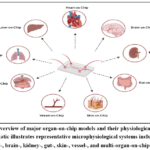 |
Figure 1: Overview of major organ-on-chip models and their physiological relevance. Click here to View Figure |
Figure 1 shows some of the many organ-on-chip platforms designed to mimic the key functions of the different human organs. Each of these microphysiological models provides a representation of the unique biophysical and biochemical characteristics of various tissues, thus facilitating specific studies on the physiological responses of organs to drug treatments.
Heart-on-Chip
Heart-on-chip platforms aim to replicate the structural and functional characteristics of cardiac tissue, including contractility, electrophysiological activity, and response to mechanical load.15 These systems commonly utilize human induced pluripotent stem cell-derived cardiomyocytes (hiPSC-CMs) organized within micro engineered scaffolds or patterned substrates. Electrical stimulation and mechanical conditioning are applied to promote cardiomyocyte maturation and synchronized contraction, enabling the assessment of drug-induced cardiotoxicity and arrhythmogenic risk.16 Heart-on-chip models have shown strong potential in detecting adverse cardiac effects of pharmaceuticals that were previously undetected in conventional preclinical assays.15
Liver-on-Chip
The liver is an important organ for drug metabolism and detoxification, making it a critical target for OOC modeling.17 Liver-on-chip systems typically incorporate primary human hepatocytes or hiPSC-derived hepatic cells, often co-cultured with non-parenchymal cells such as Kupffer cells and endothelial cells to better reflect native liver architecture.18 Microfluidic perfusion supports long-term hepatocyte viability and functionality, including albumin production, bile canaliculi formation, and cytochrome P450 enzyme activity.17 These platforms have been widely used to study drug-induced liver injury (DILI), one of the reasons of drug withdrawal from the market.2
Brain-on-Chip
Brain-on-chip models aim to replicate key features of the central nervous system (CNS), including neuronal networks, glial interactions, and the blood–brain barrier (BBB).19 BBB-on-chip platforms typically consist of endothelial cells, astrocytes, and pericytes arranged to form a selective permeability barrier under dynamic flow conditions.19 Neuronal brain-on-chip systems enable the investigation of neurotoxicity, neurodegenerative diseases, and neural network dynamics.20 These models offer improved translational relevance compared with animal models, particularly for studying human-specific neurological disorders and drug transport across the BBB.2
Multi-organ or Body-on-Chip Systems
While single-organ OOC models provide valuable insights into organ-specific responses, they cannot fully capture systemic interactions such as drug metabolism, distribution, and organ–organ crosstalk.21 By interconnecting multiple organ models through microfluidic networks that simulate physiological circulation multi-organ or body-on-chip systems address this limitation.21 Such platforms have been used to study pharmacokinetics, multi-organ toxicity, and disease progression across interconnected tissues.21 By integrating liver, intestine, kidney, and other organ models, multi-organ chips enable more accurate prediction of human drug responses and systemic side effects.2
Table 1: Comparative Overview of Organ-on-Chip Models, Their Physiological Features, and Biomedical Applications
|
Model |
Physiological mimicry | Applications |
| Lung-on-Chip | Airflow, mechanical stretch |
Respiratory diseases, inhalation toxicity11 |
|
Liver-on-Chip |
Hepatic metabolism | Drug metabolism, hepatotoxicity17 |
| Heart-on-Chip | Beating cardiomyocytes |
Cardiotoxicity, arrhythmia22 |
|
Brain-on-Chip |
Neurons + BBB | Neurodegeneration, CNS drug delivery19 |
| Kidney-on-Chip | Nephron functions |
Nephrotoxicity, clearance studies2 |
|
Gut-on-Chip |
Peristalsis, microbiome | Nutrient absorption, IBD9 |
| Skin-on-Chip | Epidermis + dermis |
Wound healing, dermatology1 |
|
Vessel-on-Chip |
Endothelial shear stress | Vascular diseases2 |
| Multi-Organ Chip | Interconnected organs |
Systemic drug testing9 |
Advantages of Organ-on-Chip Systems
Organ-on-a-chip (OoC) models offer major advantages by closely replicating human physiological conditions in vitro.2,23 By integrating three-dimensional tissue architecture, extracellular matrix components, and mechanical cues such as shear stress and cyclic strain, OoCs more accurately mimic organ-level functions than conventional two-dimensional cultures. 24Dynamic processes including breathing motions in lung chips, peristalsis in gut chips, and blood flow in vascular chips enable realistic investigation of cellular behavior under near-physiological conditions24
OoC platforms have demonstrated significant value in drug development, toxicity screening, and personalized medicine.10 Human cell–based OoCs provide improved prediction of drug efficacy and safety compared with animal models, which often fail to reflect human-specific responses.2 Liver- and kidney-on-a-chip systems enable early detection of hepatotoxicity and nephrotoxicity,17,21 while requiring only microliter-scale reagent volumes, making them cost-effective and suitable for high-throughput screening.10 The use of patient-derived cells or iPSC-based tissues further enables personalized chips that predict individual drug responses and guide therapeutic decision-making, particularly in oncology applications.2
Beyond single-organ modeling, interconnected multi-organ OoC systems allow simulation of systemic physiology, including inter-organ communication and pharmacokinetics,24 providing insight into drug absorption, distribution, metabolism, and excretion (ADME).25 Collectively, OoC technologies reduce reliance on animal testing, address ethical concerns, and offer reproducible, scalable, and resource-efficient platforms.2,10 These advantages position OoCs as transformative tools for translational research and next-generation drug development.2
Limitations
Along their advantages, organ-on-a-chip (OoC) technologies face significant technical and engineering limitations that obstruct widespread adoption.10,24 Microfluidic systems operate at extremely small volumes, where surface effects dominate, causing nonspecific adsorption of drugs and biomolecules to channel walls and compromising quantitative accuracy.2 Laminar flow conditions restrict efficient mixing, while bubble formation frequently disrupts flow and leads to experimental failure.24 Also, dependence on external pumps, tubing, and control systems increases complexity, cost, and the level of technical expertise required, limiting accessibility for many laboratories.10
Material and biological requirement further limit OoC performance. Polydimethylsiloxane (PDMS), the most commonly used fabrication material, absorbs small hydrophobic molecules, potentially distorting drug exposure and toxicity outcome.24 Alternative biomaterials often lack mechanical stability or exhibit batch-to-batch variability, undermining reproducibility.10 Biologically, primary human cells may lose phenotype over time, immune cell integration remains challenging, and patient-derived organoids can undergo genetic and phenotypic drift during prolonged culture.2 As a result, current OoC systems cannot fully replicate whole-organ complexity or systemic physiological interactions and remain complementary rather than complete replacements for in vivo models.10
Additional challenges arise from fabrication, scalability, and regulatory translation. Clean-room–dependent manufacturing methods, lack of standardization, and inter-laboratory variability hinder reproducibility and large-scale deployment.10 Miniaturization also limits the ability to accurately model human-scale metabolic and systemic dynamics.5 Although regulatory agencies are increasingly supportive of OoC technologies, complex validation pathways and the need for large patient sample sizes restrict their routine use in clinical decision-making and population-level studies.2
Artificial Intelligence in Biomedical Research
Artificial intelligence (AI) has become a powerful and transformative technology in biomedical research, fundamentally reshaping data analysis, therapeutic development, and decision-making in clinical drug development.26 AI encompasses machine learning (ML), deep learning (DL), and natural language processing (NLP), which together enable the efficient processing and interpretation of large, complex biomedical datasets to generate predictive models and clinically actionable insights. These computational approaches have demonstrated high predictive performance across multiple domains, including healthcare analytics, bioinformatics, and large-scale behavioral data analysis.26 AI has demonstrated substantial utility in drug discovery and toxicology. In silico predictive approaches, including quantitative structure-activity relationship (QSAR) models and deep neural networks, can accurately predict drug–target interactions, pharmacokinetics, and toxicity profiles, in some cases achieving performance comparable to traditional animal bioassays.26
In AI and Ooc research, specific machine learning model such as Random Forest (RF) algorithm are used for toxicity prediction in organ-on-chip system. These RF models can effectively analyze high-dimensional complex datasets generated from ooc platforms. Due to this RF algorithm improve prediction stability, reduce overfitting and making them a strong choice for early detection of drug-induced toxicity.27
Initiatives such as Tox21 and DeepTox have highlighted the potential of AI-driven toxicology to reduce reliance on animal testing while accelerating early-stage drug development.26 These advances complement organ-on-chip platforms by enabling rapid interpretation of high-dimensional experimental data and improving translational predictivity.
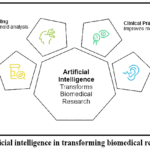 |
Figure 2: Role of artificial intelligence in transforming biomedical research and healthcare. Click here to View Figure |
The figure illustrates the integration of AI-driven analytical frameworks including machine learning, deep learning, and data-driven predictive modeling across multiple biomedical domains such as drug discovery, medical imaging, disease diagnosis, and personalized medicine.
In disease modeling, AI enhances organoid and organ-on-chip systems by integrating microfluidic platforms with advanced computational analysis.28 AI algorithms facilitate automated image analysis, pattern recognition, and integration of multi-omics datasets generated from these complex in vitro models.28 Also, the emergence of digital twin technologies virtual patient-specific models built from genomic, proteomic, phenotypic, and clinical data enables simulation of disease progression and evaluation of personalized therapeutic strategies.28 These approaches have been applied in oncology, neurodegenerative disorders, and cardiometabolic diseases, offering human-relevant alternatives to conventional animal models and supporting precision medicine initiatives.28 AI also plays a critical role in clinical practice and biomedical technologies. Convolutional neural networks (CNNs) are widely used in medical imaging for tasks such as lesion detection, tissue segmentation, and disease classification, often achieving diagnostic accuracy comparable to expert clinicians.28 Recent advances in model optimization have enabled deployment of lightweight AI systems on embedded and edge-computing platforms, expanding diagnostic and decision-support capabilities in low-resource and point-of-care settings.28
In auditory healthcare, AI-driven approaches have significantly improved diagnosis, treatment, and rehabilitation outcomes.29 Adaption of AI algorithms have enhanced cochlear implant programming and speech-processing strategies, resulting in measurable improvements reported in some studies as up to 30% in speech perception accuracy for implant users.29 AI-enabled mobile applications for auditory training employ personalized feedback, real-time performance tracking, and gamification to promote neuroplasticity and patient engagement.29 The development of deep-learning based analytical methodologies has opened up new capabilities for Biomedical AI systems. For instance, Cybersecurity and Image Analysis use cases have applied both scalable data analytic methodologies and deep neural network architectures to detect complex patterns in high-dimensional datasets. The same could be true for interpreting OoC data where Biomedical AI Solutions will require models which will retrieve and process vast amounts of image, sensor and molecular data in order to identify predictive biomarkers and therapeutic responses. The analytical power of machine-learning frameworks to identify complex patterns (clustering) within large data sets is illustrated in both recent and past studies. Machine-learning analytical models, used in consumer behavior studies to detect hidden patterns in very large sets of data (both in time and size), have been demonstrated through the segmentation of customers across different types of products, to successfully model the pattern of consumer behavior using more-generally applicable machine-learning algorithms. Recent studies show that machine-learning can effectively separate and identify different patterns of consumer behavior from large, diverse datasets. There are numerous applications for these types of analytical frameworks in the biomedical science industry and organ-on-chip data from imaging, biosensing and multi-omic profiling produce complex datasets. These advanced machine-learning solutions for use in the analysis of organ-on-chip data could greatly enhance our ability to model drug efficacy, toxicity, or the underlying mechanisms of disease processes. Additionally, AI-integrated telehealth platforms support remote monitoring, fitting, and rehabilitation, highlighting the growing role of AI in patient-centered and accessible auditory care.29
Why to Integrate AI with Organ-on-chip technology? (Gap)
Organ-on-chip (OoC) systems generate highly complex and heterogeneous datasets, including multi-omics profiles, high-content imaging, biosensor outputs, and fluid-dynamics data.10,30 Although artificial intelligence (AI) is well suited for handling large datasets, many AI models struggle to integrate these diverse data streams into unified, interpretable predictive frameworks.30 A major obstacle is the lack of standardized data formats, metadata annotation, and experimental protocols across laboratories, which limits reproducibility, cross-validation, and large-scale model generalization.2,24 In addition, many state-of-the-art AI approaches particularly deep learning models function as “black boxes,” providing limited insight into how predictions are generated.31 This lack of interpretability poses a significant challenge for clinical and regulatory acceptance, as clinicians and regulators require transparent, explainable Artificial Intelligence (XAI) frameworks to trust predictions related to drug efficacy and toxicity. Although methods such as saliency mapping, attention mechanisms, and surrogate models have been proposed, their application to OoC-generated multimodal datasets remains underdeveloped, slowing regulatory approval and clinical translation.30
Variability in OoC fabrication and biological design further complicates AI integration.24 Differences in materials, microfluidic architectures, cell sources, and culture conditions introduce substantial inter-platform variability.24 Without uniform standards, AI models trained on data from one OoC system often fail to generalize across platforms, leading to reproducibility challenges and limited predictive robustness.10 Moreover, high-throughput OoC experiments can generate extremely large dataset soften hundreds of gigabytes per study yet many academic laboratories lack the computational infrastructure and data management pipelines required for efficient AI-driven analysis.29 The successful integration of AI with Ooc platforms also require significant computational resources and interdisciplinary expertise, including bioengineering, data science, and regulatory science, which are not universally available.2 While OoCs reduce reliance on animal testing, ethical concerns persist, particularly regarding the use of patient-derived organoids, including informed consent, data privacy, and ownership of biological and digital data.5 AI further amplifies these concerns through risks of algorithmic bias, lack of transparency, and unclear accountability for automated decisions.29 At present, regulatory agencies have not established comprehensive guidelines for combined AI–OoC platforms, contributing to uncertainty in translational pathways.30 Although promising case studies exist such as AI-assisted identification of COVID-19 drug candidates and OoC-based oncology drug screening most AI–OoC applications remain at the preclinical proof-of-concept stage.32 To date, no fully integrated AI–OoC-driven therapeutic or diagnostic platform has received formal regulatory approval, highlighting the need for standardized validation frameworks, explainable AI methodologies, and coordinated regulatory strategies to enable clinical translation.32
Components of an OOC & AI Integrated Workflow
An integrated organ-on-chip (OoC) and artificial intelligence (AI) workflow comprises multiple interconnected layers (As shown in figure 3), including device engineering, biological modeling, data acquisition, computational analysis, and decision support. Each component plays a critical role in ensuring experimental reproducibility, predictive accuracy, and translational relevance for biomedical and pharmaceutical applications.10
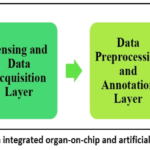 |
Figure 3: Conceptual workflow of an integrated organ-on-chip and artificial intelligence analytical framework. Click here to View Figure |
This workflow highlights how AI facilitates the interpretation of high-dimensional datasets generated by microphysiological systems and supports predictive modeling of drug responses and disease mechanisms.
Device and Biological Design Layer
This foundational layer focuses on the design of single-organ or multi-organ OoC platforms tailored to the target biology or pharmacological question. Key considerations include the selection of appropriate cell sources such as primary human cells, induced pluripotent stem cell (iPSC)-derived tissues, or organoids along with extracellular matrix composition, microchannel geometry, and the incorporation of physiological mechanical cues such as shear stress, cyclic strain, or compression.10 Recent advances in modular OoC architectures, standardized chip layouts, and scalable fabrication approaches have significantly enhanced device reproducibility and predictive performance across laboratories.8
Sensing and Data Acquisition Layer
Modern OoC platforms increasingly integrate embedded and real-time biosensing technologies to enable continuous, non-invasive monitoring of tissue function.21 These include electrical impedance sensors for barrier integrity, electrochemical sensors for metabolic activity, mechanical readouts of tissue contraction, and high-content time-lapse imaging systems. Together, these technologies generate large, multimodal datasets that capture dynamic biological responses with high spatial and temporal resolution, forming the basis for AI-driven data interpretation and modeling24.
Data Preprocessing and Annotation Layer
Prior to computational analysis, OoC-generated datasets require extensive preprocessing, including automated image segmentation, signal denoising, normalization, artifact removal, and quality control. Standardized metadata annotation and data management ideally following the Findable, Accessible, Interoperable, Reusable (FAIR) data principles are essential to enable reproducibility, cross-study comparability, and reliable AI model training. Without robust preprocessing and annotation pipelines, downstream AI analyses risk bias and limited generalizability.
Modeling and Analytics Layer
AI and machine-learning algorithms form the analytical core of the integrated OoC workflow. Supervised learning approaches are commonly applied to classification and regression tasks, such as toxicity prediction, functional phenotyping, and dose–response modeling.29 Deep-learning architectures enable automated feature extraction from complex imaging and time-series datasets generated by OoCs. In parallel, physics-informed models and digital twin frameworks combine mechanistic knowledge with experimental data, supporting pharmacokinetic and pharmacodynamic extrapolation and enhancing translational modeling from in vitro systems to human physiology.32
Decision Support, Validation, and Translation Layer
The final layer of the OoC–AI workflow emphasizes decision support and translational validation. AI-generated predictions guide go/no-go decisions, candidate prioritization, and risk assessment in drug development pipelines.32 Rigorous validation against human clinical datasets, benchmark reference compounds, or established preclinical standards is required to establish confidence, regulatory relevance, and clinical utility. This layer ultimately bridges experimental OoC data with real-world biomedical and pharmaceutical decision-making, facilitating the translation of advanced in vitro models into practical application.10
Recent Highlights and Real-World Use Cases of AI And Organ-On-Chip Integration System
The integration of artificial intelligence (AI) with organ-on-chip (OoC) technologies is gaining substantial traction across the drug discovery and development pipeline, encompassing early research and development (R&D), safety and toxicology assessment, disease modeling, and translational decision-making. By enabling advanced data analytics, predictive modeling, and automated interpretation of complex biological responses, AI-powered OoC platforms significantly accelerate R&D timelines while improving human relevance compared to conventional animal model.10 Recent advances demonstrate the application of AI-integrated OoC systems in oncology, neurodegenerative disease research, infectious disease modeling, vaccine development, and personalized medicine. These platforms generate high-dimensional datasets including imaging, biosensor signals, and multi-omics outputs which AI algorithms transform into actionable insights for drug screening, efficacy prediction, and toxicity assessment.30
AI-Integrated OoC in Toxicological Screening
In toxicological screening, AI algorithms interpret large, multimodal datasets generated by OoC platforms to predict drug safety and efficacy with higher accuracy than traditional in vitro or animal models. Machine-learning and deep-learning approaches analyze electrophysiological signals, barrier integrity metrics, and metabolic readouts to detect early indicators of cardiotoxicity, hepatotoxicity, and nephrotoxicity. These predictive capabilities reduce the likelihood of late-stage clinical trial failures and lower overall drug development costs.26
AI-Integrated OoC in Disease Modeling and Pathogenesis
AI-enabled OoC systems facilitate the construction of mechanistically accurate disease models by integrating dynamic biological data with computational learning frameworks. These systems enable improved understanding of disease pathways, tissue-level responses, and therapeutic mechanisms, thereby supporting personalized treatment strategies and more effective drug discovery pipelines.10
Neurological and Brain Disorders
Brain-on-chip platforms, including blood–brain barrier (BBB) models, combined with AI-based data analysis, allow detailed investigation of neurodegenerative diseases such as Alzheimer’s disease (AD) and Parkinson’s disease.20 AI algorithms analyze barrier permeability, neuronal connectivity, and inflammatory responses, enabling more physiologically relevant modeling of central nervous system disorders than traditional static cultures.19
Cancer Research
Tumor-on-chip systems integrated with AI-driven image and time-series analysis enable high-content screening of anticancer drugs. Deep-learning models automatically quantify tumor growth, invasion, angiogenesis, and drug response heterogeneity, supporting the identification of optimal personalized therapeutic regimens and accelerating oncology drug development.
Communicable and Infectious Diseases
AI-integrated lung-on-chip models have been applied to infectious disease research, including COVID-19. Notably, the antimalarial drug amodiaquine, an FDA-approved compound, was identified as a potential SARS-CoV-2 inhibitor through lung-on-chip testing combined with AI-based data interpretation.32 These platforms provide rapid, human-relevant alternatives for antiviral screening and pandemic preparedness.
Personalized Medicine
In personalized medicine, OoC platforms incorporating patient-derived induced pluripotent stem cells (iPSCs) enable the development of “patient-on-chip” systems. AI-driven pattern recognition and response stratification algorithms analyze individual-specific drug responses, allowing the identification of responders and non-responders prior to clinical trials. This approach supports precision therapeutics while minimizing adverse effect.8
Table 2: Recent Highlights and Real-World Use Cases of AI–Integrated Organ-on-Chip Systems
|
Application Area |
OoC Platform | Integrated AI Contribution | Outcomes |
| Drug toxicity prediction | Heart-, liver-, and kidney-on-chip | ML/DL analysis of electrophysiology, barrier integrity, and metabolic data |
Early detection of cardiotoxicity and hepatotoxicity, reducing late-stage drug failure rates5,30 |
|
ADME and pharmacokinetic/pharmacodynamic (PK/PD) modeling |
Multi-organ (liver–gut–kidney) chips | AI-driven data integration and predictive modeling | Improved human-relevant pharmacokinetic and pharmacodynamic predictions30 |
| High-content drug screening | Cancer or disease-specific OoC models | Deep learning (DL) based image and time-series analysis |
Automated classification of drug response and morphological, physiological changes12 |
|
Personalized medicine |
Patient-derived iPSC-based OoC | AI-based pattern recognition and response stratification | Identification of responder’s vs non-responders prior to clinical trials2 |
| Digital twins and mechanistic modeling | Sensor-integrated OoC platforms | Hybrid AI and physics-informed models |
In silico organ behavior modeling and dose optimization33 |
Regulatory and Ethical Consideration
The convergence of artificial intelligence (AI) and organ-on-chip (OoC) technologies offers transformative potential for improving translational predictability in biomedical research and drug development. However, their integration also introduces significant regulatory and ethical challenges that must be addressed before widespread adoption in pharmaceutical pipelines, regulatory decision-making and clinical support systems. These challenges span validation, standardization, data governance, algorithmic transparency, and ethical use of patient-derived biological materials34.
Regulatory Consideration
Regulatory aspects of Organ-on-chip models-
Global regulatory agencies, including the U.S. Food and Drug Administration (FDA), the European Medicines Agency (EMA), and the UK Medicines and Healthcare Products Regulatory Agency (MHRA), have increasingly accepted organ-on-chip platforms as promising human-relevant tools for drug safety assessment, toxicology testing, and pharmacokinetic/pharmacodynamic (PK/PD) modeling. OoC systems are being evaluated as complementary or alternative approaches to conventional animal models, particularly in areas where animal studies show limited predictive power for human responses1,34.
A major regulatory milestone was achieved with the passage of the FDA Modernization Act 2.0 in late 2022, which removed the mandatory requirement for animal testing prior to human clinical trials and explicitly authorized the use of non-animal methods, including OoCs and computational models, to support Investigational New Drug (IND) applications35.This legislative shift has accelerated regulatory interest in micro-physiological systems and AI-driven in vitro platforms as validated tools for decision-making.
In parallel, regulatory innovation frameworks have been established to facilitate early engagement between technology developers and regulators. These include the FDA’s Emerging Technology Program (ETP), the EMA’s Innovation Task Force (ITF), and the MHRA’s Innovative Licensing and Access Pathway (ILAP). Through these initiatives, regulatory agencies collaborate with OoC developers and pharmaceutical companies to define validation criteria, performance benchmarks, and contexts of use for OoC-based data in regulatory submissions36–38.
Despite growing acceptance, OoC technologies are not yet standardized regulatory tools. Key challenges include variability in device design, cell sources, materials, and experimental protocols, which complicate cross-platform comparison and regulatory qualification. Regulatory agencies therefore emphasize the need for fit-for-purpose validation, reproducibility studies, and comparison with existing gold-standard datasets before OoC data can be routinely accepted for safety or efficacy assessments23,39.
Regulatory Challenges in AI–OoC Integration
The integration of AI further complicates regulatory oversight. AI models used to analyze OoC data must demonstrate robustness, reproducibility, and generalizability across datasets and laboratories. Regulatory bodies increasingly stress the importance of explainable and transparent AI, as “black-box” models limit trust and hinder regulatory review. Without clear understanding of how predictions are generated, it is difficult for regulators to assess model reliability, risk, and applicability in safety-critical contexts such as drug toxicity prediction31. Moreover, regulatory frameworks for AI-enabled biomedical systems are still evolving. While guidelines for software as a medical device (SaMD) exist, there is currently no unified regulatory pathway specifically addressing hybrid platforms that combine living human tissues, microfluidic devices, and adaptive AI algorithms. This regulatory gap slows the clinical and industrial translation of AI-integrated OoC systems, despite strong preclinical evidence of their utility40.
Ethical Consideration
Reduce Animal use
AI-enabled OoC systems present a compelling ethical advantage by supporting the replace, reduce, and refine (3Rs) of animal experimentation. By providing human-relevant models for toxicity testing, disease modeling, and drug screening, OoCs can significantly reduce reliance on in vivo animal studies that often fail to predict human outcomes41. When combined with AI-driven analytics, these platforms further enhance predictive accuracy, accelerating drug development while minimizing animal suffering42.
However, ethical responsibility requires that AI–OoC systems undergo rigorous validation and benchmarking before replacing established preclinical models. Over-reliance on insufficiently validated platforms could create false confidence, potentially leading to unsafe clinical decisions and patient harm. Therefore, transparent reporting, reproducibility studies, and regulatory oversight are critical to ensure that ethical gains do not come at the expense of scientific rigor or patient safety23.
Patient-Derived Materials and Data Management
The use of patient-derived cells, including induced pluripotent stem cells (iPSCs), organoids, and clinical datasets, introduces complex ethical challenges related to informed consent, privacy, and data ownership. Donors must be fully informed about how their biological materials and associated data will be used, including potential secondary analyses enabled by AI and long-term data storage43.
Compliance with international data protection frameworks such as the General Data Protection Regulation (GDPR) in the European Union and the Health Insurance Portability and Accountability Act (HIPAA) in the United States is essential to safeguard personal health information. AI integration further amplifies ethical concerns, as large datasets may be reused, shared, or repurposed in ways that were not originally anticipated by donors. Robust governance structures, anonymization strategies, and transparent data stewardship policies are therefore necessary to maintain public trust and ethical integrity44.
Biosecurity risks
The convergence of artificial intelligence, organ-on-chip (OoC) technologies, and advanced biological data also introduces important biosecurity and dual-use concerns45. Although these integrated platforms accelerate biomedical discovery, they may be misused to simulate high-risk biological scenarios, optimize pathogenic behavior, or facilitate the design of harmful biological agents. AI-driven automation and increased data accessibility further amplify these risks by lowering technical barriers to misuse. Addressing these challenges requires robust global biosecurity frameworks, responsible AI development practices, and controlled access to sensitive biological and computational resources. Ensuring transparency in algorithm design, regulatory oversight of high-risk research, and strong international collaboration will be essential to promote ethical deployment. Proactive governance mechanisms are therefore critical as AI–OoC technologies progress toward clinical and industrial applications46.
Limitations of OOC and AI-Integrated system
Despite rapid technological progress, the integration of artificial intelligence (AI) with organ-on-chip (OoC) platforms has not yet achieved widespread acceptance across industrial, regulatory, and clinical domains. This is largely due to persistent technological, biological, economic, and data-related limitations that restrict scalability, reproducibility, and regulatory confidence.
This is mainly due to-
Manufacturing Inconsistencies
OoC devices are fabricated using a wide range of materials including polydimethylsiloxane (PDMS), thermoplastics, and hydrogel-based matrices and diverse microengineering techniques such as soft lithography, injection molding, and 3D printing.47 This heterogeneity leads to batch-to-batch variability, differences in surface chemistry, compound adsorption, microchannel architecture, and mechanical properties.8 The absence of standardized manufacturing protocols and quality control benchmarks significantly reduces inter-laboratory reproducibility and complicates regulatory validation.14 These inconsistencies also limit the ability of AI models to generalize across datasets generated from different OoC platforms.12
Biological and Physiological Challenges
Although OoC systems represent a substantial improvement over traditional two-dimensional cultures and many animal models, they still cannot fully replicate the complexity of whole-organ or whole-body physiology.8 Limitations remain in achieving full cellular maturity, long-term functional stability, immune system integration, endocrine signaling, and neural regulation9. Consequently, OoCs provide partial representations of human biology, which may be insufficient for modeling systemic diseases or chronic conditions involving multi-organ feedback loops.48 These biological constraints restrict the predictive scope of AI models trained on OoC-derived data.29
High cost
The development and deployment of AI-integrated OoC systems require substantial financial and technical investment.24 Costs arise from advanced microfabrication facilities, specialized biomaterials, integrated biosensors, precision microfluidic pumps, and real-time imaging systems2. In addition, AI integration demands high-performance computing infrastructure, data storage capacity, and specialized interdisciplinary expertise.25These requirements make OoC–AI platforms significantly more expensive than conventional in vitro assays or animal studies, limiting their accessibility to small laboratories and early-stage biotechnology companies.10,25
Data Variability
OoC-generated datasets exhibit considerable variability arising from both biological sources such as heterogeneity in stem-cell-derived tissues and patient-specific responses and technical factors, including microfluidic flow instability, sensor noise, and experimental drift.8 This variability introduces inconsistencies in datasets, complicating AI model training and validation.12,47 Without harmonized experimental protocols and standardized data formats, predictive performance is reduced and cross-study comparability remains limited.49
Need for Large, High-Quality Training Datasets
AI and machine-learning models, particularly deep-learning architectures, require large, diverse, and well-annotated datasets to achieve robust and generalizable predictions.29 However, OoC studies often involve small sample sizes due to high experimental costs, long culture times, and limited throughput.48As a result, datasets are frequently insufficient for training complex AI models, increasing the risk of overfitting, bias, and reduced translational reliability. This limitation remains a major barrier to the clinical and regulatory adoption of AI-driven OoC analytics.49
Limited Interpretability of AI Models
Many AI approaches applied to OoC data especially deep neural networks function as “black boxes,” producing predictions without transparent explanations of how specific inputs influence outputs. This lack of interpretability undermines trust among clinicians, researchers, and regulatory authorities, who require mechanistic insight and explain-ability for safety-critical decisions. Although explainable AI (XAI) techniques are emerging, their application in OoC contexts remains limited, slowing regulatory acceptance and clinical translation.31
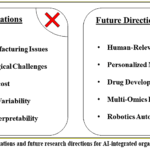 |
Figure 4: Key limitations and future research directions for AI-integrated organ-on-chip systems. Click here to View Figure |
(The schematic summarizes major technical, biological, and computational challenges including device variability, limited datasets for machine learning, computational complexity, and regulatory barriers. The figure also highlights future opportunities such as standardization of OoC platforms, integration of multi-organ systems, explainable AI approaches, and the development of digital twin models for predictive biomedical research.)
Future Directions
Rapid advancements in artificial intelligence (AI) and organ-on-chip (OoC) technologies are enabling increasingly predictive, human-relevant biomedical models.6 By systematically addressing current technical, biological, and regulatory limitations, these hybrid platforms are positioned to transform drug discovery, disease modeling, and personalized medicine over the next decade.10 Continued innovation will depend on coordinated progress in standardization, scalability, systems-level integration, and translational validation.29
Standardization and industrial-scale manufacturing
The future success of OoC technologies critically depends on the establishment of harmonized standards for device fabrication, material selection, microfluidic channel architecture, and sensor integration.10 Standardized protocols would reduce batch-to-batch variability, enhance reproducibility across laboratories, and enable meaningful comparison of datasets used for AI training.2 Advances in industrial-scale manufacturing methods such as injection molding, roll-to-roll processing, and standardized modular chip designs are expected to accelerate commercialization and regulatory acceptance of OoC platforms.6
Multi-Organ and Whole-Body Models
The integration of AI with interconnected multi-organ OoC systems is driving the development of “human-on-chip” or body-on-chip models that better capture systemic physiology.21 By linking organ models such as liver, gut, kidney, heart, and brain through microfluidic circulation and AI-driven data integration, researchers can simulate pharmacokinetics, organ–organ crosstalk, and disease progression with greater fidelity.9,18 These platforms hold promise for predicting complex drug responses, chronic toxicity, and systemic side effects that cannot be captured by single-organ models.18
Integration of Multi-Omics and Systems Biology with AI– OOC Platforms
Combining multi-omics approaches including transcriptomics, proteomics, metabolomics, and epigenomics with AI-enabled OoC systems represents a critical future direction for improving translational predictivity.48OoC platforms provide controllable, human-relevant microenvironments that enable dynamic monitoring of molecular, cellular, and functional responses to drugs or disease stimuli.21 AI-driven systems biology models can integrate these high-dimensional datasets to uncover regulatory networks, identify biomarkers, and generate mechanistic insights that bridge in vitro observations with in vivo human biology.48
Robotics-Enabled Automation in AI–Integrated Organ-on-Chip Systems
The incorporation of robotics and laboratory automation into AI–OoC workflows is expected to significantly improve scalability, throughput, and reproducibility.24 Automated systems can accurately control complex experimental tasks such as cell seeding, media exchange, drug dosing, and long-term culture maintenance, minimizing human-induced variability. When combined with AI-based optimization and adaptive control algorithms, robotics-enabled OoC platforms can support high-throughput screening and closed-loop experimental design, accelerating discovery while maintaining experimental consistency.2,10
Integration of Real-Time Biosensing and Digital Twins
The integration of real-time biosensors with digital twin technologies denotes a transformative advance for AI-enabled OoC systems.2,49 Continuous monitoring of electrophysiological activity, barrier integrity, metabolic flux, and biochemical markers provides rich, time-resolved data streams that can dynamically update digital twins of human organs. AI-driven models can leverage these inputs to simulate organ behavior, predict disease progression or drug response, and perform in silico testing and dose optimization.2,50 This closed-loop interaction strengthens mechanistic understanding, enhances predictive accuracy, and bridges experimental OoC data with patient-relevant physiological modeling.
Discussion
The integration of artificial intelligence (AI) with organ-on-chip (OoC) technology represents a major conceptual and technical advancement in translational biomedical research. Conventional preclinical models, including two-dimensional cell cultures and animal studies, often fail to accurately predict human drug responses, contributing to high clinical trial attrition rates. OoC platforms address these limitations by recapitulating key aspects of human organ physiology within controlled microengineered environments, such as tissue–tissue interactions, biomechanical forces, and perfused blood flow. However, as the biological complexity of OoC systems increases, they generate large, multidimensional datasets that exceed the analytical capacity of traditional data-processing approaches, necessitating advanced computational solutions.
AI provides powerful tools for extracting meaningful insights from complex OoC-generated datasets and significantly enhances their translational relevance. OoC systems continuously generate data related to barrier integrity, metabolic activity, electrophysiological behavior, and molecular signaling, alongside transcriptomic, proteomic, and metabolomic outputs. Machine learning and deep learning algorithms enable automated analysis of these high-dimensional, spatiotemporal datasets, identifying subtle patterns associated with drug efficacy, toxicity, and mechanisms of action. As a result, AI-enhanced OoC platforms offer superior predictive accuracy compared with conventional in vitro assays and animal models.
A key advantage of AI-integrated OoC systems lies in their ability to capture human-specific and patient-specific biological variability. The incorporation of primary human cells and induced pluripotent stem cell (iPSC)-derived tissues allows OoCs to model inter-individual differences in disease progression and drug response. AI-driven data analysis further enables stratification of patient populations into responders and non-responders, supporting the development of targeted and personalized therapeutic strategies. This capability provides valuable insights into disease pathophysiology and treatment outcomes under physiologically relevant conditions that are difficult to replicate using traditional animal models.
The combination of AI with multi-organ and body-on-chip platforms further advances the modeling of systemic human physiology. Interconnected OoC systems enable investigation of organ–organ communication, systemic toxicity, and pharmacokinetic processes such as absorption, distribution, metabolism, and excretion (ADME). AI plays a critical role in integrating data across multiple organ modules over extended time periods, facilitating systems-level analysis. Emerging concepts such as digital twins, which combine experimental OoC data with computational simulations, allow in silico testing of dosing regimens, disease progression, and therapeutic interventions alongside conventional in vitro experimentation.
Despite these advances, several technical, computational, regulatory, and ethical challenges remain. The lack of standardization in OoC fabrication, materials, and cell sourcing limits reproducibility and cross-platform validation. From a computational standpoint, AI models often rely on limited and heterogeneous datasets, increasing the risk of overfitting and reducing generalizability, while the “black-box” nature of many deep learning models raises concerns regarding interpretability and regulatory acceptance. Addressing these challenges will require standardized manufacturing and validation protocols, shared high-quality datasets, and greater adoption of explainable and physics-informed AI approaches. Additionally, regulatory frameworks must ensure transparency, data privacy, and mitigation of algorithmic bias to support responsible clinical translation of AI-integrated OoC technologies.
Comparative Analysis of Existing Approaches
While OoC systems have a greater degree of physiological relevance than traditional in vitro systems, the degree of predictability depends on the type of analytical tools available to interpret data from experiments. Several recent publications have shown that AI-based analytical approaches provide superior predictive capacity for extracting non-linear relationships from high-dimensional OoC data compared with conventional statistical methods. Examples of machine learning algorithms employed for classifying drug responses and identifying early signs of toxicity in microphysiological systems include random forests, support vector machines, and deep neural networks. However, comparative analyses across multiple published studies indicate substantial variability in predictive performance resulting from differences among experimental designs, data set sizes, and model architectures. For instance, some studies observed higher prediction accuracy when multiclass AI toxicity models included data from multiple modes of recording (i.e., imaging, transcriptomics, and biosensor outputs) compared with single parameter measures. Therefore, to enable the generalizability of AI-enabled systems using OoC technology, researchers must develop common dataset standards and perform cross-platform validation.
Even if they yield encouraging outcomes, as of now, AI integrated OoC platforms have many existing limitations that impede their implementation. Several scientific publications use limited quantities of experimental datasets; that means that machine learning models will not have a strong enough predictor performance. Some limitations to reproducibility across labs are due to the variability & Standardization issues regarding chip design, cell sources, & Microfluidics conditions. In order to overcome these limitations, we need to collaborate in data sharing, create standard experimental protocols for use with OoCs & develop explanatory AI frameworks that provide mechanistic knowledge rather than just predictive data.
Conclusion
Combining artificial intelligence (AI) technologies with organ-on-chip (OoC) technology represents a very exciting opportunities for enhancing the translational relevance of preclinical biomedical research. The OoC platform consists of physiologically relevant microenvironments that have the ability to simulate important features of how human tissues function, while AI provides cures to efficiently understand all the complex creative data produced by these systems. Therefore, combining both these technologies enhances the prediction of drug toxicity, disease modelling, and development of personalized therapy. To date, however, the predominant evidence related to the work being performed at OoC in support of AI is experimental studies and proof-of-principle studies in their early stages of development. Currently, there are major barriers (e.g. lack of standardized protocols and tests) preventing the use of AI-enabled OoC systems in pharmaceutical development and clinical decision making. To facilitate the wide use of these technologies in the future, research efforts should focus on the development of standardized validation frameworks for AI-enabled OoC systems, integration of multiple omics datasets with explainable AI models, and large-scale comparisons between different OoC systems. The above-mentioned developments are required to develop the full potential of AI-enabled microphysiological systems in supporting the advancing fields of translational biomedical engineering and drug discovery.
Acknowledgement
Authors are thankful to the Dr. P. V. Burakle, Principal Dr. Rajendra Gode Institute of Pharmacy, Amravati, Maharashtra for proving the necessary library and internet facilities to carry out this review work.
Funding Sources
The author(s) received no financial support for the research, authorship, and/or publication of this article.
Conflict of Interest
The authors do not have any conflict of interest.
Data Availability Statement
This statement does not apply to this article.
Ethics Statement
This research did not involve human participants, animal subjects, or any material that requires ethical approval.
Informed Consent Statement
This study did not involve human participants, and therefore, informed consent was not required.
Clinical Trial Registration
This research does not involve any clinical trials.
Permission to reproduce material from other sources
Not Applicable
Author Contributions-
- Prashant Ajmire: Concept, supervision
- Gitesh Mohokar: Drafting of article
- Ashish Wadekar: Rewrite and supervision
- Tushar Bhatkar: Literature survey and data collection
- Raju Thenge: Data correction and rewriting
References
- Marx U, Akabane T, Andersson TB, et al. Biology-Inspired Microphysiological Systems to Advance Patient Benefit and Animal Welfare in Drug Development. ALTEX. 2020;37:365-394. doi:10.14573/altex.2001241
CrossRef - Ingber DE. Human organs-on-chips for disease modelling, drug development and personalized medicine. Nat Rev Genet. Nature Research. 2022;23:467-491. doi:10.1038/s41576-022-00466-9
CrossRef - Scannell JW, Blanckley A, Boldon H, Warrington B. Diagnosing the decline in pharmaceutical R&D efficiency. Nat Rev Drug Discov. 2012;11:191-200. doi:10.1038/nrd3681
CrossRef - Grimm H, Biller-Andorno N, Buch T, et al. Advancing the 3Rs: innovation, implementation, ethics and society. Front Vet Sci. 2023;10. doi:10.3389/fvets.2023.1185706
CrossRef - Khurram MM, Cinel G, Yeşil Çeliktaş Ö, Bedir E. Organ-on-a-chip platforms for drug development, cellular toxicity assessment, and disease modeling. Turkish Journal of Biology. TUBITAK. 2024;48:348-363. doi:10.55730/1300-0152.2711
CrossRef - Rajpurkar P, Chen E, Banerjee O, Topol EJ. AI in health and medicine. Nat Med. Nature Research. 2022;28:31-38. doi:10.1038/s41591-021-01614-0
CrossRef - Zhang B, Korolj A, Lai BFL, Radisic M. Advances in organ-on-a-chip engineering. Nat Rev Mater. Nature Publishing Group. 2018;3(8):257-278. doi:10.1038/s41578-018-0034-7
CrossRef - Ronaldson-Bouchard K, Vunjak-Novakovic G. Organs-on-a-Chip: A Fast Track for Engineered Human Tissues in Drug Development. Cell Stem Cell. Cell Press. 2018;22:310-324. doi:10.1016/j.stem.2018.02.011
CrossRef - Trapecar M, Wogram E, Svoboda D, et al. Human physiomimetic model integrating microphysiological systems of the gut, liver, and brain for studies of neurodegenerative diseases. Sci Adv. 2021;7. doi:10.1126/SCIADV.ABD1707
CrossRef - Low LA, Mummery C, Berridge BR, Austin CP, Tagle DA. Organs-on-chips: into the next decade. Nat Rev Drug Discov. Nature Research. 2021;20:345-361. doi:10.1038/s41573-020-0079-3
CrossRef - Huh D, Matthews BD, Mammoto A, Montoya-Zavala M, Yuan Hsin H, Ingber DE. Reconstituting organ-level lung functions on a chip. Science (1979). 2010;328:1662-1668. doi:10.1126/science.1188302
CrossRef - Wang Y, Gao Y, Pan Y, et al. Emerging trends in organ-on-a-chip systems for drug screening. Acta Pharm Sin B. Chinese Academy of Medical Sciences. 2023;13:2483-2509. doi:10.1016/j.apsb.2023.02.006
CrossRef - Benam KH, Villenave R, Lucchesi C, et al. Small airway-on-a-chip enables analysis of human lung inflammation and drug responses in vitro. Nat Methods. 2016;13:151-157. doi:10.1038/nmeth.3697
CrossRef - Si L, Bai H, Rodas M, et al. Human organ chip-enabled pipeline to rapidly repurpose therapeutics during viral pandemics. Preprint posted online April 2020. doi:10.1101/2020.04.13.039917
CrossRef - Turnbull IC, Lieu DK, Li RA, Costa KD. Cardiac tissue engineering using human stem cell-derived cardiomyocytes for disease modeling and drug discovery. Drug Discov Today Dis Models. Elsevier Ltd. 2012;9. doi:10.1016/j.ddmod.2012.11.001
CrossRef - Gintant G, Fermini B, Stockbridge N, Strauss D. The Evolving Roles of Human iPSC-Derived Cardiomyocytes in Drug Safety and Discovery. Cell Stem Cell. Cell Press. 2017;21:14-17. doi:10.1016/j.stem.2017.06.005
CrossRef - Mehta V, Karnam G, Madgula V. Liver-on-chips for drug discovery and development. Mater Today Bio. Elsevier B.V. 2024;27. doi:10.1016/j.mtbio.2024.101143
CrossRef - Novac O, Silva R, Young LM, Lachani K, Hughes D, Kostrzewski T. Human Liver Microphysiological System for Assessing Drug-Induced Liver Toxicity In Vitro. Journal of Visualized Experiments. 2022;2022. doi:10.3791/63389
CrossRef - Mesentier-Louro LA, Suhy N, Broekaart D, Bula M, Pereira AC, Blanchard JW. Modeling the Blood-Brain Barrier Using Human-Induced Pluripotent Stem Cells. In: Methods in Molecular Biology. Vol 2683. Humana Press Inc.; 2023:135-151. doi:10.1007/978-1-0716-3287-1_11
CrossRef - Maoz BM. Brain-on-a-Chip: Characterizing the next generation of advanced in vitro platforms for modeling the central nervous system. APL Bioeng. 2021;5:030902. doi:10.1063/5.0055812
CrossRef - Edington CD, Chen WLK, Geishecker E, et al. Interconnected Microphysiological Systems for Quantitative Biology and Pharmacology Studies. Sci Rep. 2018;8. doi:10.1038/s41598-018-22749-0
CrossRef - Turnbull IC, Lieu DK, Li RA, Costa KD. Cardiac tissue engineering using human stem cell-derived cardiomyocytes for disease modeling and drug discovery. Drug Discov Today Dis Models. Elsevier Ltd. 2012;9. doi:10.1016/j.ddmod.2012.11.001
CrossRef - Low LA, Tagle DA. Organs-on-chips: Progress, challenges, and future directions. Exp Biol Med. SAGE Publications Inc. 2017;242:1573-1578. doi:10.1177/1535370217700523
CrossRef - Zhang B, Korolj A, Lai BFL, Radisic M. Advances in organ-on-a-chip engineering. Nat Rev Mater. Nature Publishing Group. 2018;3(8):257-278. doi:10.1038/s41578-018-0034-7
CrossRef - Wang H, Ning X, Zhao F, Zhao H, Li D. Human organoids-on-chips for biomedical research and applications. Theranostics. 2024;14:788-818. doi:10.7150/thno.90492
CrossRef - Vamathevan J, Clark D, Czodrowski P, et al. Applications of machine learning in drug discovery and development. Nat Rev Drug Discov. Nature Publishing Group. 2019;18:463-477. doi:10.1038/s41573-019-0024-5
CrossRef - Li J, Chen J, Bai H, et al. An Overview of Organs-on-Chips Based on Deep Learning. Research (Wash D C). 2022;2022:9869518. doi:10.34133/2022/9869518
CrossRef - Bjornson-Hooper ZB, Fragiadakis GK, Spitzer MH, et al. A Comprehensive Atlas of Immunological Differences Between Humans, Mice, and Non-Human Primates. Front Immunol. 2022;13. doi:10.3389/fimmu.2022.867015
CrossRef - Topol EJ. High-performance medicine: the convergence of human and artificial intelligence. Nat Med. Nature Publishing Group. 2019;25:44-56. doi:10.1038/s41591-018-0300-7
CrossRef - Chou DB, Frismantas V, Milton Y, et al. Author Correction: On-chip recapitulation of clinical bone marrow toxicities and patient-specific pathophysiology (Nature Biomedical Engineering, (2020), 4, 4, (394-406), 10.1038/s41551-019-0495-z). Nat Biomed Eng. Nature Research. 2020;4:477. doi:10.1038/s41551-020-0529-6
CrossRef - Rudin C. Stop explaining black box machine learning models for high stakes decisions and use interpretable models instead. Nat Mach Intell. Nature Research. 2019;1:206-215. doi:10.1038/s42256-019-0048-x
CrossRef - Topol EJ. High-performance medicine: the convergence of human and artificial intelligence. Nat Med. Nature Publishing Group. 2019;25:44-56. doi:10.1038/s41591-018-0300-7
CrossRef - Pandey H, Amod A, Shivang, et al. Digital Twin Ecosystem for Oncology Clinical Operations. Published online September 2024.
- Low LA, Mummery C, Berridge BR, Austin CP, Tagle DA. Organs-on-chips: into the next decade. Nat Rev Drug Discov. Nature Research. 2021;20:345-361. doi:10.1038/s41573-020-0079-3
CrossRef - Han JJ. FDA Modernization Act 2.0 allows for alternatives to animal testing. Artif Organs. NLM (Medline). 2023;47:449-450. doi:10.1111/aor.14503
CrossRef - Uster DW, Cordo’ V, Cormier E, Ehmann F. Insights into Early Interactions on Innovative Developments with European Regulators. Ther Innov Regul Sci. 2024;58:1108-1119. doi:10.1007/s43441-024-00686-7
CrossRef - Review on organ-on-chips for medicines safety assessment: A European regulatory perspective. ALTEX. Published online 2025. doi:10.14573/altex.2502061
CrossRef - Giannuzzi V, Bertolani A, Torretta S, et al. Innovative research methodologies in the EU regulatory framework: an analysis of EMA qualification procedures from a pediatric perspective. Front Med (Lausanne). 2024;11. doi:10.3389/fmed.2024.1369547
CrossRef - Marx U, Andersson TB, Bahinski A, et al. Biology-inspired microphysiological system approaches to solve the prediction dilemma of substance testing. ALTEX. 2016;33:272-321. doi:10.14573/altex.1603161
CrossRef - Hines PA, Gonzalez-Quevedo R, Lambert AIOM, et al. Regulatory Science to 2025: An Analysis of Stakeholder Responses to the European Medicines Agency’s Strategy. Front Med (Lausanne). 2020;7. doi:10.3389/fmed.2020.00508
CrossRef - Huh D, Hamilton GA, Ingber DE. From 3D cell culture to organs-on-chips. Trends Cell Biol. 2011;21:745-754. doi:10.1016/j.tcb.2011.09.005
CrossRef - Zhang B, Korolj A, Lai BFL, Radisic M. Advances in organ-on-a-chip engineering. Nat Rev Mater. Nature Publishing Group. 2018;3:257-278. doi:10.1038/s41578-018-0034-7
CrossRef - Weidema J, de Vries M, Mummery C, de Graeff N. The ethical aspects of human organ-on-chip models: A mapping review. Stem Cell Reports. Cell Press. 2025;20. doi:10.1016/j.stemcr.2025.102686
CrossRef - Yekaterina K. Challenges and Opportunities for AI in Healthcare. International Journal of Law and Policy. 2024;2:11-15. doi:10.59022/ijlp.203
CrossRef - Anishchenko MA, Gidenko I, Kaliman M, Polyvaniuk V, Demianchuk Y V. ARTIFICIAL INTELLIGENCE IN MEDICINE: LEGAL, ETHICAL AND SOCIAL ASPECTS. Acta Bioeth. 2023;29:63-72. doi:10.4067/S1726-569X2023000100063
CrossRef - Pannu J, Bloomfield D, MacKnight R, et al. Dual-use capabilities of concern of biological AI models. PLoS Comput Biol. 2025;21. doi:10.1371/journal.pcbi.1012975
CrossRef - Farhang Doost N, Srivastava SK. A Comprehensive Review of Organ-on-a-Chip Technology and Its Applications. Biosensors (Basel). Multidisciplinary Digital Publishing Institute (MDPI). 2024;14. doi:10.3390/bios14050225
CrossRef - Wu Y, Xie L. AI-driven multi-omics integration for multi-scale predictive modeling of genotype-environment-phenotype relationships. Comput Struct Biotechnol J. Elsevier B.V. 2025;27:265-277. doi:10.1016/j.csbj.2024.12.030
CrossRef - Blay V, Li X, Gerlach J, Urbina F, Ekins S. Combining DELs and machine learning for toxicology prediction. Drug Discov Today. Elsevier Ltd. 2022;27. doi:10.1016/j.drudis.2022.103351
CrossRef - Corral-Acero J, Margara F, Marciniak M, et al. The “Digital Twin” to enable the vision of precision cardiology. Eur Heart J. Oxford University Press. 2020;41:4556-4564B. doi:10.1093/eurheartj/ehaa159
CrossRef
Abbreviations
AI: Artificial Intelligence, Ooc : Organ-on-chip, hiPSC-CMs: Human induced pluripotent stem cell-derived cardiomyocytes, DILI: Drug-Induced Liver Injury, 3Rs: Replace, Reduce, and Refine, AD: Alzheimer’s Disease, ADME: Absorption, Distribution, Metabolism, and Excretion, BBB: Blood–Brain Barrier, CNS: Central Nervous System, iPSC : Induced Pluripotent Stem Cells, FDA: U.S. Food and Drug Administration, ML: Machine Learning, DL: Deep Learning, CNNs : Convolutional Neural Networks, (RF): Random Forest ,XAI: Explainable Artificial Intelligence, EMA : European Medicines Agency, ETP: Emerging Technology Program, FAIR: Findable, Accessible, Interoperable, Reusable, GDPR: General Data Protection Regulation, HIPAA: Health Insurance Portability and Accountability Act, ILAP: Innovative Licensing and Access Pathway, IND: Investigational New Drug, ITF: Innovation Task Force, MHRA: Medicines and Healthcare Products Regulatory Agency, NLP: Natural Language Processing, PDMS: Polydimethylsiloxane, PK/PD: Pharmacokinetic/Pharmacodynamic, QSAR: Quantitative Structure–Activity Relationship, R&D: Research and Development, SaMD: Software as a Medical Device.

Accepted on: 26-06-2026
Second Review by: Dr. Naresh Kumar
Final Approval by: Dr. Prabhishek Singh