The Role of Forkhead Box Transcription Factors in Lung Cancer Progression, Metastasis, and Chemoresistance: A Systematic Review
 , Sri Masyeni2and Pande Ayu Berliana Dekananda Pandit1, 3
 1Department of Pharmacology, Faculty of Medicine and Health Science, Universitas Warmadewa, Denpasar, Indonesia.
2Department of Internal Medicine, Faculty of Medicine and Health Science, Universitas Warmadewa, Denpasar, Indonesia.
3Department of Pulmonology, Faculty of Medicine, Universitas Udayana, Denpasar, Indonesia.
Corresponding Author E-mail: nayakasih@warmadewa.ac.id
Download this article as:
ABSTRACT:Lung cancer is the major cause of cancer-related mortality. The family of regulatory proteins known as Forkhead Box (FOX) transcription factors is involved in cell cycle regulation, programmed cell death, epithelium–mesenchymal transition (EMT), and survival-related signaling. Emerging evidence suggests that dysregulation of FOX family members contributes to lung cancer aggressiveness and therapeutic resistance; however, clinical and translational findings remain heterogeneous.This research intends to comprehensively examinerecent evidence regarding the role of FOX transcription factors as independent molecular variables influencing lung cancer progression, metastasis, and chemoresistance.PubMed/MEDLINE, Scopus, and Embase were searched for relevant articles published from January 2019 to January 2025. Eligible publications comprised original clinical or translational studies, including cohort, case-control, randomized trial, and experimental designs, that evaluated FOX transcription factors in lung cancer.Eight eligible studies were included, most of which focused on non-small cell lung cancer (NSCLC) and used translational experimental approaches. FOXM1 was repeatedly linked with enhanced proliferation, advanced disease, metastatic behavior, and poorer survival. At a mechanistic level, FOXM1 was associated with EMT induction and activation of PI3K/AKT and ERK pathways, supporting its role in therapy resistance. Conversely, FOXO1, FOXO3, FOXP2, and FOXF2 were more often associated with tumor-suppressive activity, including promotion of apoptosis, inhibition of invasion, and improved treatment sensitivity.FOX transcription factors appear to be important regulators of lung cancer biology, particularly in relation to disease progression, metastatic capacity, and response to therapy.
KEYWORDS:Forkhead Box; FOXM1; FOXO1; FOXP2; Lung cancer; Metastasis, Chemoresistance
Introduction
Despite advances in early detection, targeted treatment, and immunotherapy, lung cancer still has a high global burden and remains associated with insufficient life expectancy.1,2 Non–small cell lung cancer (NSCLC) represents a large percentage of lung cancer occurrences, Small cell lung cancer (SCLC) is less prevalent yet physiologically more severe.3 Tumor growth, metastatic spread, and therapeutic resistance are key contributors to treatment failure. Therefore, identifying molecular regulators that drive these processes is essential for improving risk stratification and developing more precise therapeutic strategies.4
Transcription factors coordinate many of the gene networks that support malignant transformation and tumor adaptation. Forkhead Box (FOX) proteins constitute an extensive and highly conserved class of transcriptional regulators, characterized by a characteristic winged-helix motif that enables DNA binding.5,6 FOX proteins participate in the regulation of proliferation, apoptosis, differentiation, metabolism, oxidative stress responses, and EMT. In malignancy, abnormal FOX signaling can contribute to cancer initiation and progression or, conversely, limit malignant growth, with its effects shaped by the biological setting of the cell and the particular FOX family member involved.5,7
Several FOX subfamilies have been implicated in lung cancer. FOXM1 is frequently overexpressed in NSCLC and is linked to cell proliferation, angiogenesis, EMT activation, and metastatic potential.8 By contrast, FOXO family members, particularly FOXO1 and FOXO3, are generally described as tumor-suppressive factors because they promote apoptosis and restrict cell-cycle progression.9,10 FOXP2 and FOXF2 have also been reported to influence invasion, differentiation, key pathways, particularly PI3K/AKT, TGF-β, and Wnt/β-catenin, which are closely related to aggressive tumorbehavior and treatment resistance.11
Metastatic dissemination remains an important driver of mortality in lung cancer. FOX transcription factors may contribute to this process by regulating EMT, extracellular matrix remodeling, and invasive behavior. In addition, intrinsic and acquired chemoresistance remain major barriers to durable treatment response.4 Several studies suggest that FOX proteins influence cellular sensitivity to platinum-based chemotherapy, targeted drugs, and other systemic therapies by modulating apoptosis, DNA repair, and survival signaling.11
Although individual studies have examined specific FOX proteins in lung cancer, the evidence is dispersed across different study models and outcome measures. A focused synthesis is therefore needed to clarify how FOX transcription factors relate to tumor progression, metastasis, and chemoresistance. This systematic review evaluates recent clinical and translational evidence on FOX family members as molecular variables that may influence these integrated lung cancer outcomes.
Material and Methods
Review Design
This systematic review was prepared in accordance with the PRISMA guidelines. review question focused on whether FOX transcription factors act as independent molecular variables associated with lung cancer progression, metastatic behavior, and chemoresistance.
Literature Sources and Search Approach
PubMed/MEDLINE, Scopus, and Embase were systematically searched for articles published between January 2019 and January 2025. Controlled vocabulary, text words, and Boolean operators were used in combination: (“Forkhead Box” OR “FOX transcription factor” OR “FOXM1” OR “FOXO1” OR “FOXO3” OR “FOXP2” OR “FOXF2”) AND (“lung cancer” OR “non-small cell lung cancer” OR “NSCLC” OR “small cell lung cancer” OR “SCLC”) AND (“progression” OR “metastasis” OR “epithelial-mesenchymal transition” OR “EMT” OR “chemoresistance” OR “drug resistance” OR “therapy resistance”). The reference lists of eligible articles were also manually checked to identify additional relevant publications.
Study Selection Criteria
Criteria For Inclusion
- Full-text primary research articles published from 2019 to 2025.
- Studies conducted in human lung cancer, including NSCLC or SCLC.
- Study designs including:
- Clinical Trials (RCTs),
- Observational cohort design,
- Case control trial,
- Translational experimental studies using in vitro or in vivo models with lung cancer-related endpoints.
- Studies in which FOX transcription factors were evaluated as independent molecular variables.
- Studies reporting at least one relevant outcome, including:
- Tumor progression, such as proliferation, tumor size, stage, or growth;
- Metastasis, including invasion, EMT markers, lymph-node involvement, or distant dissemination;
- Chemoresistance, radioresistance, drug response, or therapy sensitivity.
Criteria For Exclusion
Review papers, editorial commentaries, conference-only abstracts without available full text.
Studies focused on cancers other than lung cancer.
Studies that did not directly evaluate FOX transcription factors.
Articles published in languages other than English.
Study Selection
All database-derived records were imported to citation management software, after which repeated records were deleted. All authors performed separate evaluation of titles and abstracts, followed by full-text assessment using the predefined eligibility criteria. Any disagreement was settled through discussion until mutual agreement was reached. Study screening was documented througha PRISMA flowchart.
Synthesis of Findings
Because the included studies varied in design, biological model, and outcome reporting, the evidence was summarized using a qualitative narrative approach. Results were organized by FOX subfamily and then mapped to the main outcomes of interest: progression, metastasis, and chemoresistance. In the original studies, statistical measures were reported qualitatively.
Results
Study Selection
The first database search yielded327 records (PubMed = 148, Scopus = 109, Embase = 70). After excluding 84 duplicate records, 243 titles and abstracts were assessed. Among them, 198 records were omitted because they were unrelated to lung cancer, had non-original study designs, or lacked FOX transcription factor assessment. Forty-five complete articles were evaluated against the selection criteria. Thirty-three were eliminated due to: review articles (n = 16), insufficient lung cancer–specific data (n = 8), absence of progression/metastasis/chemoresistance endpoints (n = 7), or incomplete methodological reporting (n = 6). A total of 8 studies fulfilled the selection requirements and were analyzed qualitatively. A meta-analysis was not conducted due to variations in study design and measured outcomes.
Characteristics of Included Studies
The eligible evidence consisted entirely of translational experimental studies that employed cell-based and/or animal models and, in some studies, were validated with clinical specimens. No randomized clinical trial directly evaluating FOX modulation as a lung cancer intervention was found within the search period.
Across studies with clinical samples, the pooled sample size exceeded 534 patients, with NSCLC as the predominant cancer type. FOX expression was commonly measured using immunohistochemistry, quantitative PCR, or Western blotting.
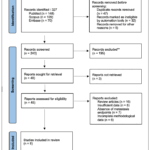 |
Figure 1: PRISM Flowchart
|
Table 1: Description of Eligible Studies (2019–2025)
|
No |
Author (Year) |
Design |
FOX Factor |
Sample Size |
Lung Cancer Type |
Primary Outcome |
Key Findings |
|
1 |
Su et al., 202412 |
Experimental + tissue validation |
FOXP2 |
20 patients |
NSCLC |
Proliferation, migration |
FOXP2 is downregulated in lung cancer (p < 0.001); suppresses invasion via TGF-β inhibition |
|
2 |
Wu et al., 202513 |
Experimental |
FOXO3a |
Cell lines |
NSCLC |
Radiotherapy resistance |
Elevated expression of FOXO3a–PINK1/Parkin associated with poorer survival outcomes and positive correlation with increased cellular resistance to radiotherapy. |
|
3 |
Boyero et al., 202314 |
Experimental |
FOXF2 |
47 patients |
NSCLC |
Potential target gen |
Elevated expression of FOXF2, KLF13, MICA, TCEAL1, and TGFBR2 was significantly correlated with reduced overall survival.FOXF2 (Hazard ratio (HR) = 0.66, 95% CI = 0.58–0.75, p < 0.001), KLF13 (HR = 0.61, 95% CI = 0.52–0.72, p < 0.001), MICA (HR = 0.75, 95% CI = 0.66–0.86, p < 0.001), TCEAL1 (HR = 0.72, 95% CI = 0.63–0.82, p < 0.001) and TGFBR2 (HR = 0.66, 95% CI = 0.58–0.75, p < 0.001). |
|
4 |
Kawasaki et al., 202515 |
Experimental |
FOXA2 |
327 sample |
SCLC |
Metastasis |
FOXA2 supported metastatic spread in SCLC by inducing a fetal neuroendocrine transcriptional program (p 0.04). |
|
5 |
Xu et al., 201916 |
Experimental |
FOXF2 |
Cell lines |
NSCLC |
Overall prognosis |
High FOXF2 expression was associated with poor prognosis and promoted tumor progression. |
|
6 |
Olsen et al., 202117 |
Experimental |
FOXA2 |
Cell lines |
SCLC |
Metastasis |
FOXA2 was predicted to significantly influence the transcription factor network dynamics. |
|
7 |
Chen et al., 201918 |
Experimental |
FOXA1 |
Cell lines |
NSCLC |
Chemoresistance, EMT |
High FOXA1 expression was associated with poor prognosis, shorter PFS/OS, EMT, and chemoresistance in lung adenocarcinoma. |
|
8 |
Tang et al., 202519 |
Experimental |
FOXP1 |
Cell lines |
SCLC |
Chemoresistance |
FOXP1 is a critical mediator and marker of chemoresistance in SCLC |
Discussion
This systematic review synthesizes recent evidence (2019–2025) regarding the role of Forkhead Box (FOX) transcription factors in lung cancer progression, metastasis, and chemoresistance. The findings consistently demonstrate that FOX family members exert context-dependent oncogenic or tumor-suppressive effects, with FOXM1 emerging as the most consistently pro-tumorigenic factor, while FOXO1, FOXO3, FOXP2, and FOXF2 predominantly exhibit tumor-suppressive functions. Although the majority of available evidence derives from observational cohorts and translational experimental studies rather than randomized clinical trials, the mechanistic consistency across studies strengthens the biological plausibility of FOX-driven tumorbehavior.
FOX Transcription Factors and Tumor Progression
FOXM1 was the most extensively studied member across included studies and showed strong associations with tumor proliferation, advanced stage, and reduced overall survival.20 Higher FOXM1 expression has been linked with increased Ki-67 expression, larger tumors, and shorter disease-free survival. Mechanistically, FOXM1 facilitates progression through the G1/S and G2/M phases of the cell cycle, by regulating genes required for mitotic progression.21,22 Its interaction with ERK and PI3K/AKT signaling pathways further enhances oncogenic signaling cascades. These findings are consistent with broader oncologic data positioning FOXM1 as a major factor governing cell-cycle activity and genomic instability.23
In contrast, FOXO1 and FOXO3 demonstrated tumor-suppressive roles. Reduced FOXO expression in lung tumor tissues was associated with decreased apoptosis markers and increased tumor aggressiveness. FOXO proteins are known to transcriptionally activate pro-apoptotic genes such as Bim and p27, and their inactivation via AKT-mediated phosphorylation promotes cell survival. The reciprocal relationship between FOXM1 and FOXO signaling suggests a regulatory balance between proliferation and apoptosis that may be disrupted in lung carcinogenesis.24
FOX Factors in Metastasis and EMT
Metastasis remains the leading contributor to mortality among patients with lung cancer. Several included studies linked FOXM1 overexpression to EMT, as reflected by reduced E-cadherin and increased vimentin expression. EMT supports cytoskeletal reorganization, invasion, and distant spread. The ability of FOXM1 to activate EMT-related transcriptional programs may explain its association with lymph-node metastasis and advanced clinical stage.22,23
Other FOX members further illustrate the context-dependent nature of this transcription factor family. FOXP2 downregulation was reported to enhance aggressive lung cancer behavior, whereas FOXP2 activity appeared to limit invasion by suppressing TGF-beta signaling. Because TGF-beta is a major inducer of EMT and metastatic dissemination, loss of FOXP2-mediated restraint may permit a more invasive phenotype.12
FOXO3a also demonstrated context-dependent behavior. Increased activity of the FOXO3a-PINK1/Parkin axis was linked to worse survival and greater radioresistance in NSCLC. Although FOXO proteins are often considered tumor suppressors, FOXO3a may support mitochondrial quality control and stress adaptation via PINK1/Parkin signaling, enabling tumor cells to survive radiotherapy-induced stress.13
For FOXF2, the evidence was also mixed, indicating a context-dependent role in lung cancer biology. Increased expression of FOXF2 together with KLF13, MICA, TCEAL1, and TGFBR2 correlated with poorer overall survival, suggesting that some FOX-related transcriptional networks may be associated with aggressive tumor behavior.14 In contrast, FOXF2 has been described as a tumor-suppressive factor in several solid tumor settings, where it may inhibit invasion, regulate epithelial differentiation, and restrain EMT-related processes.11 However, in NSCLC, FOXF2 has also been associated with poor prognosis and enhanced proliferation or migration through H19-mediated PTEN downregulation.16 These apparently contradictory findings suggest that FOXF2 does not exert a uniform biological effect across all tumor contexts. Instead, its function may be influenced by the surrounding molecular environment, interacting non-coding RNAs, downstream pathway activation, and the balance between tumor-suppressive and pro-metastatic transcriptional programs. Therefore, FOXF2 should be interpreted cautiously as a biomarker or therapeutic target, and future studies need to clarify whether its prognostic value differs according to lung cancer subtype, expression pattern, and co-activated signaling networks14–16
In SCLC, FOXA2 was identified as an important regulator of metastatic competence. It may promote dissemination to multiple sites by activating a fetal neuroendocrine transcriptional program and shaping transcription factor network dynamics. These findings suggest that FOXA2 could support lineage plasticity and metastatic capacity in neuroendocrine lung tumors. FOXA1 overexpression in lung adenocarcinoma was also associated with shorter progression-free and overall survival, indicating possible prognostic relevance.15,17
FOX Transcription Factors and Chemoresistance
Chemoresistance remains a significant therapeutic barrier in the management of lung cancer. Several experimental studies demonstrated that FOXM1 contributes to resistance to platinum-based chemotherapy by activating survival pathways, particularly PI3K/AKT signaling, and suppressing apoptosis. FOXM1 may also enhance DNA damage repair capacity, thereby reducing cytotoxic efficacy.20
FOXP1 was reported to be both a mediator and a marker of chemoresistance in SCLC, reinforcing the concept that FOX proteins can influence treatment response. Taken together, the findings show that FOX transcription factors regulate not only growth and metastatic spread but also transcriptional and stress-response programs that allow cancer cells to tolerate therapy. The heterogeneity of these effects suggests that FOX-based biomarkers or interventions will require careful molecular stratification.19
In contrast, activation of FOXO3 increased cisplatin sensitivity in vitro, suggesting that restoring tumor-suppressive FOX activity could improve therapeutic response. However, clinical validation of FOX-mediated chemoresistance mechanisms remains limited. No randomized controlled trials directly targeting FOX modulation in lung cancer were identified within the review period, underscoring a significant translational gap.13
Clinical Implication
From a clinical perspective, FOX transcription factors may serve as both biomarkers and therapeutic targets in lung cancer. FOXM1 is particularly relevant because its overexpression is associated with proliferation, EMT, metastasis, and chemoresistance. Therefore, FOXM1 inhibition may represent a potential therapeutic strategy to reduce tumor aggressiveness and improve sensitivity to systemic therapy, especially platinum-based chemotherapy. In contrast, reactivation of tumor-suppressive FOXO signaling may enhance apoptosis, restrict cell-cycle progression, and restore treatment sensitivity. However, the clinical application of FOXM1 inhibitors or FOXO activators remains limited by the absence of robust prospective and interventional evidence. Further multi-center validation and early-phase clinical trials are needed to determine whether FOX-targeted approaches can be safely and effectively integrated into lung cancer management.
Limitations
Several limitations should be considered. First, most included studies were either experimental or observational, limiting causal interpretation. Second, variation in study design, endpoint definitions, and laboratory methods prevented quantitative pooling. Third, publication bias may have favored studies reporting significant associations. Finally, the lack of randomized or prospective interventional studies means that direct clinical applicability remains uncertain.
Future Directions
Future research should prioritize prospective clinical validation of FOX expression as a prognostic and predictive biomarker. Additionally, early-phase clinical trials evaluating FOXM1 inhibitors or strategies to reactivate FOXO signaling may clarify therapeutic potential. Integration of genomic, transcriptomic, and proteomic profiling may further define FOX-driven molecular subtypes within lung cancer.
Conclusion
Forkhead Box (FOX) transcription factors are influential regulators of lung cancer, affecting malignant progression, metastatic spread, and treatment response. FOXM1 consistently acts as an oncogenic driver by promoting proliferation, epithelial–mesenchymal transition, and chemoresistance through activation of survival signaling pathways. In contrast, FOXO1, FOXO3, FOXP2, and FOXF2 generally exhibit tumor-suppressive functions, correlating with enhanced apoptosis and reduced metastatic potential. However, important research gaps remain. Current evidence is still largely derived from preclinical, translational, and observational studies, while randomized controlled trials evaluating FOX-targeted therapeutic strategies in lung cancer are lacking. In addition, multi-center clinical studies with larger and more diverse patient populations are needed to validate FOX proteins as prognostic biomarkers, predictive markers of treatment response, and potential therapeutic targets. Therefore, further prospective and interventional research is essential before FOX-based approaches can be translated into routine lung cancer management.
Acknowledgement
We express gratitude to UniversitasWarmadewa for support given.
Funding Sources
The author(s) received no financial support for the research, authorship, and/or publication of this article.
Conflict of Interest
The authors do not have any conflict of interest.
Data Availability Statement
This statement does not apply to this article.
Ethics Statement
This research did not involve human participants, animal subjects, or any material that requires ethical approval.
Informed Consent Statement
This study did not involve human participants, and therefore, informed consent was not required.
Clinical Trial Registration
This research does not involve any clinical trials.
Permission to reproduce material from other sources
Not Applicable
Author Contributions
- Pande Ayu Naya Kasih Permatananda: Contributed to the conceptualization of the study, development of the research framework, literature search strategy, data interpretation, manuscript drafting, and critical revision of the article.
- Sri Masyeni: Contributed to literature screening, data extraction, interpretation of clinical and translational findings, and revision of the manuscript for important intellectual content.
- Pande Ayu Berliana Dekananda Pandit: Contributed to literature selection, data organization, preparation of the study summary table, and manuscript editing.
References
- Li C, Lei S, Ding L, et al. Global burden and trends of lung cancer incidence and mortality. Chin. Med. J. 2023;136(13):1583-1590. doi:10.1097/CM9.0000000000002529
CrossRef - Smolarz B, Łukasiewicz H, Samulak D, Piekarska E, Kołaciński R, Romanowicz H. Lung Cancer—Epidemiology, Pathogenesis, Treatment and Molecular Aspect (Review of Literature). Int. J. Mol. Sci. 2025;26(5):2049. doi:10.3390/ijms26052049
CrossRef - Molina JR, Yang P, Cassivi SD, Schild SE, Adjei AA. Non-Small Cell Lung Cancer: Epidemiology, Risk Factors, Treatment, and Survivorship. Mayo Clinic Proceedings. 2008;83(5):584-594. doi:10.4065/83.5.584
CrossRef - Sparrer D, Blazquez R, Keil F, et al. Primary and secondary metastatic dissemination: multiple routes to cancer-related death. Mol. Cancer. 2025;24(1):203. doi:10.1186/s12943-025-02389-5
CrossRef - Jin Y, Liang Z, Lou H. The Emerging Roles of Fox Family Transcription Factors in Chromosome Replication, Organization, and Genome Stability. Cells. 2020;9(1):258. doi:10.3390/cells9010258
CrossRef - Dai S, Qu L, Li J, Chen Y. Toward a mechanistic understanding of DNA binding by forkhead transcription factors and its perturbation by pathogenic mutations. Nucleic Acids Res. 2021;49(18):10235-10249. doi:10.1093/nar/gkab807
CrossRef - Sher G, Masoodi T, Patil K, et al. Dysregulated FOXM1 signaling in the regulation of cancer stem cells. Semin. Cancer Biol. 2022;86:107-121. doi:10.1016/j.semcancer.2022.07.009
CrossRef - Khan MA, Khan P, Ahmad A, Fatima M, Nasser MW. FOXM1: A small fox that makes more tracks for cancer progression and metastasis. Semin. Cancer Biol. 2023;92:1-15. doi:10.1016/j.semcancer.2023.03.007
CrossRef - Farhan M, Silva M, Li S, et al. The role of FOXOs and autophagy in cancer and metastasis—Implications in therapeutic development. Med. Res. Rev. 2020;40(6):2089-2113. doi:10.1002/med.21695
CrossRef - Farhan M, Wang H, Gaur U, Little PJ, Xu J, Zheng W. FOXO Signaling Pathways as Therapeutic Targets in Cancer. IJBS. 2017;13(7):815-827. doi:10.7150/ijbs.20052
CrossRef - Zheng Y, Wu L, Hu Z, Liao H, Li X. Role of the Forkhead box family protein FOXF2 in the progression of solid tumor: systematic review. J Cancer Res Clin Oncol. 2024;151(1):14. doi:10.1007/s00432-024-06047-z
CrossRef - Su W, Hu S, Zhou L, Bi H, Li Z. FOXP2 inhibits the aggressiveness of lung cancer cells by blocking TGFβ signaling. Oncol. Lett. 2024;27(5):227. doi:10.3892/ol.2024.14361
CrossRef - Wu X, Huang L, Meng L, et al. FOXO3a regulation of non-small cell lung cancer radiotherapy resistance through the PINK1/Parkin pathway of protective mitophagy. TLCR. 2025;14(4):1320-1339. doi:10.21037/tlcr-2025-181
CrossRef - Boyero L, Noguera-Uclés JF, Castillo-Peña A, et al. Aberrant Methylation of the Imprinted C19MC and MIR371-3 Clusters in Patients with Non-Small Cell Lung Cancer. Cancers. 2023;15(5):1466. doi:10.3390/cancers15051466
CrossRef - Kawasaki K, Salehi S, Zhan YA, et al. FOXA2 promotes metastatic competence in small cell lung cancer. Nat. Commun. 2025;16(1):4865. doi:10.1038/s41467-025-60141-5
CrossRef - Xu JL, Hua T, Ding J, Fan Y, Liu ZJ, Lian JW. FOXF2 aggravates the progression of non-small cell lung cancer through targeting lncRNA H19 to downregulate PTEN. Eur. Rev. Med. Pharmacol. Sci. 2019;23(24):10796-10802. doi:10.26355/eurrev_201912_19782
- Olsen RR, Ireland AS, Kastner DW, et al. ASCL1 represses a SOX9 + neural crest stem-like state in small cell lung cancer. Genes Dev. 2021;35(11-12):847-869. doi:10.1101/gad.348295.121
CrossRef - Chen D, Wang R, Yu C, et al. FOX-A1 contributes to acquisition of chemoresistance in human lung adenocarcinoma via transactivation of SOX5. eBioMedicine. 2019;44:150-161. doi:10.1016/j.ebiom.2019.05.046
CrossRef - Tang Y, Niu Y, Chen Y, et al. Targeting FOXP1 phase separation in small cell lung cancer mechanisms of chemotherapy resistance. Commun. Biol. 2025;8(1):431. doi:10.1038/s42003-025-07804-7
CrossRef - Raghuwanshi S, Gartel AL. FOXM1 induces therapy resistance and inhibits apoptosis in a variety of human cancers. Cell Death & Disease. 2026;17(1):230. doi:10.1038/s41419-025-08321-5
CrossRef - Halasi M, Gartel AL. FOX(M1) News—It Is Cancer. Mol. Cancer Ther.. 2013;12(3):245-254. doi:10.1158/1535-7163.MCT-12-0712
CrossRef - Rida P, Andreae R, Bikhazi N, Jackson B, Wang I, Jinna N. FOXM1 Signaling Network Transcriptionally Upregulates Expression of Proteins Involved in Mitotic Progression to Induce High Proliferation and Chromosomal Instability in Androgen Receptor-Low Triple-Negative Breast Cancer. Int. J. Mol. Sci. 2026;27(4):1823. doi:10.3390/ijms27041823
CrossRef - Zona S, Bella L, Burton MJ, Nestal de Moraes G, Lam EWF. FOXM1: An emerging master regulator of DNA damage response and genotoxic agent resistance. Biochim. Biophys. Acta – Gene Regul. Mech.2014;1839(11):1316-1322. doi:10.1016/j.bbagrm.2014.09.016
CrossRef - Lees J, Hay J, Moles MW, Michie AM. The discrete roles of individual FOXO transcription factor family members in B-cell malignancies. Front. Immunol. 2023;14. doi:10.3389/fimmu.2023.1179101
CrossRef

Accepted on: 21-07-2026
Second Review by: Dr. Nadhim M. H.
Final Approval by: Dr. Ian James Martin