Eicosapentaenoic Acid Attenuates High Glucose- and Palmitic acid-induced VEGF Function via NADPH Oxidase Inhibition in Vascular Smooth Muscle Cells.
 and Gursev Dhaunsi
 Department of Pediatrics, College of Medicine, Kuwait University, Jabriya, Kuwait
Correspondence Address E-mail: maira.alsaeed@ku.edu.kw
DOI : http://dx.doi.org/10.13005/bpj/3525
Download this article as:

High glucose and palmitic acid levels are believed to increase cellular oxidative stress and the risk of cardiovascular complications related to diabetes and obesity. We examined the effect of an Eicosapentaenoic acid (EPA), a cardioprotective agent, on Vascular endothelial growth factor (VEGF) function in rat aortic smooth muscles cells treated high glucose and palmitic acid. Primary cultures of smooth muscle cells were set up by enzymic digestion of the medial layer and maintained in DMEM F-12 medium. Confluent cell cultures were treated with palmitic acid (500 µM) and /or EPA (100 µM) with / without high glucose (25 mM). Mitogenic function of VEGF (100ng/ml) was measured by BrdU incorporation and NADPH oxidase (NOX) activity was assayed by chemiluminescence method. VEGF receptor1 expression was assessed by Western blotting. VEGF-induced BrdU incorporation was increased (p < 0.01) by high glucose and addition of palmitic acid further potentiated DNA synthesis. Both high glucose and palmitic acid increased (p < 0.01) the enzymatic activity of NOX and VEGF receptor levels. Diphenyliodonium, a NOX inhibitor, attenuated glucose or Palmitic acid -mediated increase in VEGF-mediated BrdU incorporation. Further, EPA (100 µM) also markedly reduced the incremental effect on NOX activity, VEGF receptor expression and VEGF mitogenic function. These results suggest that NOX-mediated increase in VEGF mitogenic activity by high glucose and palmitic acid may be involved in diabetes and obesity related events, and EPA is a potential therapeutic agent.
KEYWORDS:Hyperglycemia; NADPH oxidase; Eicosapentaenoic acid; Obesity; Vascular smooth muscle cells VEGF
Introduction
Diabetes mellitus (type-2, T2DM) is a major complication of obesity due to insulin resistance and leads to nephropathy, neuropathy, retinopathy, cardiovascular diseases, cancer and premature mortality.1,2 Cellular/molecular etiology of obesity and associated complications are complex and multifactorial.3,4 Obesity, due to accumulation of lipids in liver and skeletal muscles, induces intracellular signaling by free fatty acids/derivatives, hormones and cytokines to influence cellular glucose uptake.5It has been reported earlier that saturated fatty acids (SFAs) such as palmitic acid (PA), impair insulin-induced glucose uptake, whereas unsaturated fatty acids failed to exert any inhibitory effects.6,7Growing evidence suggests that polyunsaturated fatty acid (PUFA), including Eicosapentaenoic acid (EPA), exert beneficial effects against metabolic syndrome and supplementation with PUFAs prevents insulin-resistance and development of advanced pathological state.8 Type 2 diabetes and metabolic dysfunction-associated events increase cardiovascular risk, and the role of habitual omega-3 polyunsaturated fatty acids (PUFAs) in improving the cardiovascular risk remains unclear. Though SFAs are known to induce inflammation, cellular oxidative stress and insulin resistance, the exact mechanisms of their role in obesity-/T2DM-related pathogenesis remain unknown. Both SFA and high glucose (HG) are known to alter oxidative metabolic reactions and cause oxidative stress.9,10,11 NADPH oxidase (NOX) is a major player in the production of super oxide anions in the cells and vascular NOX plays an important role in the development and progression of metabolic syndrome.12 Growth factors including VEGF are vital for cell cycle and mitogenesis during angiogenesis and pathological conditions, like cancer and atherogenesis.13,14 VEGF is linked with tumor angiogenesis through its cognate receptor 1 (VEGFR-1) and regulates function of endothelial progenitor cells15 through its receptor 2 (VEGFR-2). VEGFR-1 receptors are transmembrane receptor tyrosine kinases that dimerize via activation of receptor-kinase activity and trigger mitogenic response through auto-phosphorylation. VEGF-B has been reported to prevent the development of insulin resistance, T2DM, and diabetic kidney disease by reducing lipid accumulation.16 Role of growth factors, particularly VEGF, in pathogenic mechanisms of obesity and diabetes, especially in relation to cardiovascular complications, remains unclear. We examined the effect of elevated levels of palmitic acid on the mitogenic function of VEGF in vascular tissues under normoglycemic and hyperglycemic conditions and explored whether the reported PUFA-induced beneficial effects against pathogenic events of obesity and / or insulin resistance are VEGF-mediated.
Materials and Methods
Materials
Penicillin / streptomycin, fetal bovine serum (FBS), Bovine serum albumin (BSA), Palmitic acid and eicosapentanoic acid were purchased from Sigma Chemical Company (St. Louis, MO). All reagent and consumables used in cell cultures such as DMEM-Ham’s F-12 (1:1) and trypsin-EDTA were from GIBCO (Grand Island, NY) while Primaria tissue culture plates were obtained from Falcon Becton Dickinson (Oxnard, CA).
Methods
This study was carried out according to the protocols set up by the Kuwait University’s Guide for the Care and Use of Laboratory Animals and was approved by the Health Sciences Center Ethical Committee for Use of Animals in Research. This approval by the Institutional Review Board was needed as Wistar rats (n = 20) weighing about 200-225 g each were sacrificed (by anesthetization with intraperitoneal injection of 45 mg/kg sodium pentobarbital) to isolate aortae for setting up primary cultures of smooth muscle cells.
Primary cultures of rat aortic smooth muscle cells
Primary cell cultures were set up as described earlier17 by enzymic digestion of the aortic tissue. Briefly, aortas were incubated at 37 °C in a digestion mixture that contained BSA, 25U/ml of pancreatic elastase and 200U/ml Collagenase dissolved in DMEM-F12 HAM. Dissociated tissue was gently dispersed to obtain VSMC that were washed twice with sterile DMEM-F12 medium and cultured isolated cells were characterized by smooth muscle α-actin.
VSMC and experimental agents
Cell monolayers were washed twice with serum free DMEM-F/12 medium (SFM) before various experiments were carried out where cells were treated with normal to high concentrations of glucose, HG (5-40 mM) with or without addition of palmitic acid, PA (50-500 µM) and/or eicosapentanoic acid, EPA (0-100 µM) in the presence or absence of VEGF (100ng/ml)VEGF and kept for 24 h at 37oC in cell culture incubator. PA and EPA were dissolved with α-cyclodextrin (0.001% v/v in DMSO). In control groups, cells were treated with α-cyclodextrin without any experimental agents to examine any cytotoxic effects.
BrdU Incorporation
DNA synthesis was assayed by bromodeoxyuridine (BrdU) incorporation in VSMC cultures treated with or without HG, EPA or PA in the presence or absence of VEGF using kits purchased from Calbiochem.
NOX assay
Briefly, known amount of cell homogenates was added to a reaction mixture containing 50 mM phosphate buffer, pH 7.1, 0.01 mM EDTA and 25 μM lucigenin as described elsewhere.18 Chemiluminescence was recorded over a period of 3 min after adding 100 μM of NADPH and specific enzyme activity was calculated as relative light units (RLU) emitted per sec per mg of protein.
Western blot analysis of VEGFR
Cells collected after treatment with experimental agents were dissolved in lysis buffer that contained 50 mM Tris-base, 5 mM EGTA, 150 mM NaCl, 1 % Triton 100, 2 mM Na3VO4, 50 mM NAF, 1 mM PMSF, 20 μM phenylarsine, 10 mM sodium molybdate and protease inhibitors, 10 μg/ml leupeptin and 8 μg/ml aprotinin. Proteins samples were subjected to SDS-PAGE gel electrophoresis (SDS-PAGE) and transfer onto nitrocellulose membrane. Immunoreactive bands of VEGFR-1 were detected using polyclonal antibodies (ab32152) obtained from Abcam (Cambridge, UK) and chemiluminescent substrate followed densitometric quantitation.
Data Collection and Analysis
Data were collected from six experiments (n=6) where DNA synthesis was assayed in triplicates and NOX activity was measured by duplicate assays for technical control. Results are expressed as mean + S.D. of six experiments and means were compared by t-tests and ANOVA followed by Bonferroni post-hoc tests using SPSS software version 25. A p value of less than 0.05 was considered to render the difference as significant.
Results
Effect of Palmitic Acid (PA), Eicosapentanoic acid (EPA) and high-glucose (HG) on VEGF-induced BrdU incorporation
BrdU incorporation as an index of DNA synthesis was examined to investigate any possible protective role of EPA in regulation of VEGF-mediated mitogenesis under conditions of high glucose and or palmitic acid. Figure 1 shows that PA (200-500 µM) significantly enhanced VEGF-induced BrdU incorporation in VSMC cultures.
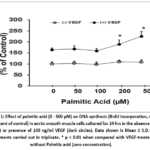 |
Figure 1: Effect of palmitic acid (0 – 500 µM) on DNA synthesis (BrdU incorporation, shown as percent of control) in aortic smooth muscle cells cultured for 24 hrs in the absence (open circles) or presence of 100 ng/ml VEGF (dark circles). |
Addition of HG (20-40 mM) was also observed to exert significant (p < 0.01) incremental effect on VEGF-induced DNA synthesis (Figure 2). Basal- or VEGF-induced DNA synthesis was not affected by EPA (10-100 µM) treatment of the cells (Figure 3).
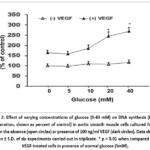 |
Figure 2. Effect of varying concentrations of glucose (0-40 mM) on DNA synthesis (BrdU incorporation, shown as percent of control) in aortic smooth muscle cells cultured for 24 hrs in in the absence (open circles) or presence of 100 ng/ml VEGF (dark circles). |
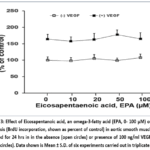 |
Figure 3: Effect of Eicosapentanoic acid, an omega-3-fatty acid (EPA, 0- 100 µM) on DNA synthesis (BrdU incorporation, shown as percent of control) in aortic smooth muscle cells cultured for 24 hrs in in the absence (open circles) or presence of 100 ng/ml VEGF (dark circles). |
Further experiments were performed by addition of EPA to cells cultured in the presence of PA and or HG to examine influence of EPA on the regulation VEGF-mediated DNA synthesis under hyperglycemic and or high palmitic acid conditions. Figure 4 shows that PA- mediated incremental effect on VEGF-induced BrdU incorporation markedly increased (p < 0.01) after addition of HG. EPA significantly (p < 0.05) reduced the PA- and/or HG-mediated stimulation of VEGF-induced DNA synthesis.
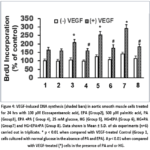 |
Figure 4: VEGF-induced DNA synthesis (shaded bars) in aortic smooth muscle cells treated for 24 hrs with 100 µM Eicosapentaenoic acid, EPA (Group2), 500 µM palmitic acid, PA (Group3), EPA +PA ( Group 4), 25 mM glucose, HG (Group 5), HG+EPA (Group 6), HG+PA (Group7) and HG+EPA+PA (Group 8). |
Role of NADPH oxidase (NOX) in PA- and or HG- stimulated VEGF mitogenic function
As shown in Figure 5, Diphenyliodonium (DPI), a specific inhibitor of NOX, did not alter the basal DNA synthesis, but significantly (p < 0.01) reduced PA- and/or HG-mediated enhancement of VEGF-induced BrdU incorporation.
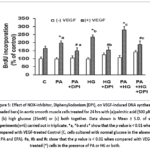 |
Figure 5: Effect of NOX-inhibitor, Diphenyliodonium (DPI), on VEGF-induced DNA synthesis (shaded bars) in aortic smooth muscle cells treated for 24 hrs with (a)palmitic acid (500 µM) or (b) high glucose (25mM) or (c) both together. |
Figure 6 shows that both PA and HG independently increased (p < 0.01) the NOX enzyme activity, however the activation of NOX was more pronounced in cells cultured in medium containing both HG with PA. Addition of EPA to the culture medium significantly (p < 0.01) alleviated PA- and/or HG-induced increase in the NOX enzyme activity.
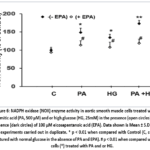 |
Figure 6: NADPH oxidase (NOX) enzyme activity in aortic smooth muscle cells treated with palmitic acid (PA, 500 µM) and or high glucose (HG, 25mM) in the presence (open circles) or absence (dark circles) of 100 µM eicosapentanoic acid (EPA). |
Effect of EPA, PA and HG on VEGF receptor
Figure 7 shows that VEGFR-1 protein expression was increased significantly (p < 0.01) after addition of PA as well as HG to cell cultures, however HG-mediated effect was much more pronounced. EPA did not affect VEGF receptor levels by itself however, it significantly (p < 0.01) blocked the HG- and/or PA- mediated enhancement of VEGF-R protein content.
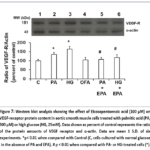 |
Figure 7: Western blot analysis showing the effect of EIcosapentaenoic acid (100 µM) on VEGF-receptor protein content in aortic smooth muscle cells treated with palmitic acid (PA, 500 µM) or high glucose (HG, 25mM). |
Discussion
Obesity and diabetes are associated with hyperlipidemia and hyperglycemia respectively, and elevated levels of SFAs and glucose have been reported to trigger a cascade of biochemical and metabolic events that are believed to cause serious cardiovascular complications and cancer leading to premature death.19, 20This study demonstrates that PA and HG enhance the mitogenic activity of a major angiogenic peptide, VEGF, a bioactive peptide regulates angiogenesis during formation of new vasculature and pathological states like cancer and atherosclerosis.21,22 It has been reported earlier that PA induces formation of VEGF and other growth factors in various tissues including tanycytes in the brain,23 however our finding that PA markedly increases the VEGF-induced DNA synthesis in VSMC provides a new insight into the mechanisms by which SFAs might contribute toward cardiovascular and angiogenic complications of obesity. Role of VEGF in diabetic nephropathy and hyperglycemia-induced retinopathy is well documented in literature.24,25 Our data showing a significant increase in VEGF-mediated mitogenesis by HG in VSMC further supports the notion that hyperglycemia might be contributing towards vascular pathology by modulation of certain growth factors under diabetic conditions. Our findings that PA further enhances HG-mediated increase in VEGF-induced DNA synthesis suggest that SFA and HG complement in promoting mitogenesis during metabolic syndrome. Our finding that treatment of VSMC with both PA and HG markedly increased the VEGF-induced BrdU incorporation strongly suggest a role of VEGF in T2DM-associated increase in cancer incidence and mortality.26 Though this study is the first to indicate a possible role of VEGF in diabetes-linked oncogenesis, antidiabetic medications have been reported to exert antineoplastic effects.27 PUFA have been shown to mitigate adverse effects of PA and hyperglycemia,28 and our finding in this study that EPA markedly abolishes incremental effect of PA and HG on VEGF-induced DNA synthesis strongly demonstrates for the first time a mitogenesis-regulating beneficial effect of PUFA against obesity- and diabetes-mediated pathogenesis.
Cellular oxidative stress is believed to responsible for complications of diabetes and obesity, where proinflammatory cytokines and reactive oxygen species (ROS) are produced in excess.29 Our findings that NOX inhibitor abolished the effect of PA and HG on VEGF-induced DNA synthesis strongly indicate that observed enhancement of VEGF-mitogenic is due to upregulation of NOX enzyme activity. Other studies have shown that both PA and hyperglycemia induce NOX activation in various tissues during various metabolic conditions, including metabolic syndrome, however their combined effect in relation to cardiovascular pathology has remained unexplored. Our data showing a significant increase in the NOX enzyme activity following treatment of VSMC with supraphysiological concentrations of PA and HG supports our notion that ROS overproduction, particularly superoxide anion by NOX activation might be responsible for deleterious effects in vascular tissue of obese and diabetic subjects. Dietary PUFA have been suggested to prevent insulin resistance through regulation of mitochondrial function and anti-inflammatory mechanisms. Our observation that treatment of VSMC with EPA prevented activation of NOX enzyme activity by PA and HG further demonstrates an anti-inflammatory action of PUFA and establishes that EPA abolishes the PA- and HG-mediated enhancement of VEGF mitogenic activity through inhibition/blockage of NOX activation.
Mitogenic action of VEGF involves binding to VEGF receptor that triggers subsequent signaling cascade to upregulate cell proliferation, survival, and angiogenesis. Our results showing significantly increased expression of VEGF receptor protein by HG and PA indicate that the observed enhancement of VEGF mitogenic action was likely due to increased expression of VEGF receptor in response to PA and HG treatment of VSMC. Interestingly, co-treatment with EPA mitigated the PA- and HG-mediated increase in VEGF receptor expression. In view of the observed downregulation of PA-and/or HG-stimulated NOX activity by EPA, it can be speculated that the redox-mitigating ability of PUFA through NOX modulation might be responsible for abolishing the VEGF mitogenic activity.
Conclusion
This study suggests that hyperglycemia and free fatty acids might enhance the function of VEGF by NOX-mediated upregulation of VEGFR-1. Omega-3-fatty acids might be useful against diabetes (high glucose)- and/or obesity (increased fatty acids)-mediated enhancement of VEGF mitogenic function through NOX-mediated modulation of VEGF receptor-1.
Acknowledgement
Authors recognize and appreciate the technical support of Ms. Aya Hasan and Mrs. Anita Kumari.
Funding Sources
Research Sector, Kuwait University, Kuwait [grant number MK 01/20].
Conflict of Interest
The authors do not have any conflict of interest.
Data Availability Statement
This statement does not apply to this article.
Ethics Statement
This research did not involve human participants, animal subjects, or any material that requires ethical approval.
Informed Consent Statement
This study did not involve human participants, and therefore, informed consent was not required.
Clinical Trial Registration
This research does not involve any clinical trials.
Permission to reproduce material from other sources
Not Applicable
Author Contributions
- Maira Alsaeed: Conceived the research study and set up study design. Analyzed data and prepared the manuscript.
- Gursev Dhaunsi: Supervised the laboratory experiments, analyzed data and prepared first draft of the manuscript.
References:
- The GBD 2015 Obesity Collaborators. Health Effects of Overweight and Obesity in 195 Countries over 25 Years. N Engl J Med. 2017; 377:13–27.
CrossRef - Zimmet P, Alberti KG, Kaufman F, et al. The metabolic syndrome in children and adolescents – an IDF consensus report. Pediatr Diabetes 2007; 8:299–306. 10.1111/j.1399-5448. 2007. 00271.x
CrossRef - Reaven G. Metabolic syndrome: pathophysiology and implications for management of cardiovascular disease. Circulation 2002; 106:286–8.
CrossRef - Shulman GI. Cellular mechanisms of insulin resistance. J Clin Invest. 2000; 106:171–6. 10.1172/JCI10583
CrossRef - Samuel VT, Shulman GI. The pathogenesis of insulin resistance: integrating signaling pathways and substrate flux. J Clin Invest. 2016; 126:12–22. 10.1172/JCI77812
CrossRef - Lee JS, Pinnamaneni SK, Eo SJ, et al. Saturated, but not n-6 polyunsaturated, fatty acids induce insulin resistance: role of intramuscular accumulation of lipid metabolites. J Appl Physiol. 2006 May;100(5):1467-74.
CrossRef - Lam YY, Hatzinikolas G, Weir JM, et al. Insulin-stimulated glucose uptake and pathways regulating energy metabolism in skeletal muscle cells: the effects of subcutaneous and visceral fat, and long-chain saturated, n-3 and n-6 polyunsaturated fatty acids. Biochim Biophys Acta 2011 Jul-Aug;1811(7-8):468-75.
CrossRef - Pascual-Morena C, Garrido-Miguel M, Martínez-García I, et al. Efficacy of Omega-3 Polyunsaturated Fatty Acid Supplementation on the Lipid and Glycemic Profile in Type 1 Diabetes: A Systematic Review and Meta-Analysis. Nutr Rev. 2026 Jul 24:nuag105.
CrossRef - Schönfeld P, Wojtczak L. Fatty acids as modulators of the cellular production of reactive oxygen species. Free Radic Biol Med. 2008;45(3):231-41.
CrossRef - Zhou H, Urso CJ, Jadeja V. Saturated Fatty Acids in Obesity-Associated Inflammation. J Inflamm Res. 2020; 13:1-14.
CrossRef - Morishima M, Horikawa K, Funaki M. Cardiomyocytes cultured on mechanically compliant substrates, but not on conventional culture devices, exhibit prominent mitochondrial dysfunction due to reactive oxygen species and insulin resistance under high glucose. PLoS One. 2018;13(8): e0201891.
CrossRef - Inoguchi T, Li P, Umeda F, et al. High glucose level and free fatty acid stimulate reactive oxygen species production through protein kinase C–dependent activation of NAD(P)H oxidase in cultured vascular cells. 2000;49(11):1939-45.
CrossRef - Andrae J, Gallini R, Betsholtz C. Role of platelet-derived growth factors in physiology and medicine. Genes Dev. 2008;22(10):1276-312.
CrossRef - Ricco RC, Ricco RG , Queluz MC, et al. IGF-1R mRNA expression is increased in obese children. Growth Hormone IGF Res. 2018; 39:1-5.
CrossRef - Roskoski R Jr. Vascular endothelial cells and angiogenesis. Pharmacol Res. 2025 Nov;221:107983.
CrossRef - Yang KJ, Choi WJ, Chang YK, Park CW, Kim SY, Hong YA. Inhibition of Xanthine Oxidase Protects against Diabetic Kidney Disease through the Amelioration of Oxidative Stress via VEGF/VEGFR Axis and NOX-FoxO3a-eNOS Signaling Pathway. Int J Mol Sci. 2023;24(4):3807.
CrossRef - Dhaunsi GS, Hassid A. Atrial and C-type natriuretic peptides amplify growth factor activity in primary aortic smooth muscle cells. Cardiovasc Res 1996; 31: 37-47.
CrossRef - Jalil JE, Pérez A, Ocaranza MP, Bargetto J, Galaz A, Lavandero S. Increased aortic NADPH oxidase activity in rats with genetically high angiotensin-converting enzyme levels. Hypertension. 2005;46(6):1362-7.
CrossRef - Lega IC, Lipscombe LL. Review: Diabetes, Obesity, and Cancer-Pathophysiology and Clinical Implications. Endocr Rev. 2020;41(1): bnz014.
CrossRef - McCracken E, Monaghan M, Sreenivasan S. Pathophysiology of the metabolic syndrome. Clin Dermatol. 2018 Jan-Feb;36(1):14-20.
CrossRef - Dabravolski SA, Khotina VA, Omelchenko AV, Kalmykov VA, Orekhov AN. The Role of the VEGF Family in Atherosclerosis Development and Its Potential as Treatment Targets. Int J Mol Sci. 2022 Jan 15;23(2):931.
CrossRef - Carmeliet P. VEGF as a key mediator of angiogenesis in cancer. Oncology. 2005;69 Suppl 3:4-10.
CrossRef - Liu D, Wang T, Zhao X, et al. Saturated fatty acids stimulate cytokine production in tanycytes via the PP2Ac-dependent signaling pathway. J Cereb Blood Flow Metab. 2023; Dec 9:271678X231219115
CrossRef - Kim NH, Oh JH, Seo JA, et al. Vascular endothelial growth factor (VEGF) and soluble VEGF receptor FLT-1 in diabetic nephropathy. Kidney Int. 2005;67(1):167-77.
CrossRef - Osaadon P, Fagan XJ, Lifshitz T, Levy J. A review of anti-VEGF agents for proliferative diabetic retinopathy. Eye (Lond). 2014 May;28(5):510-20.
CrossRef - Rojas A, Schneider I, Lindner C, Gonzalez I, Morales MA. Association between diabetes and cancer. Current mechanistic insights into the association and future challenges. Mol Cell Biochem. 2023 Aug;478(8):1743-1758.
CrossRef - Podhorecka M, Ibanez B, Dmoszyńska A. Metformin – its potential anti-cancer and anti-aging effects. Postepy Hig Med Dosw (Online). 2017 Mar 2;71(0):170-175.
CrossRef - Deng C, Presle N, Pizard A, Guillaume C, Bianchi A, Kempf H. Beneficial Impact of Eicosapentaenoic Acid on the Adverse Effects Induced by Palmitate and Hyperglycemia on Healthy Rat Chondrocyte. Int J Mol Sci. 2024 Feb 2;25(3):1810.
CrossRef - Masenga SK, Kabwe LS, Chakulya M, Kirabo A. Mechanisms of Oxidative Stress in Metabolic Syndrome. Int J Mol Sci. 2023 Apr 26;24(9):7898.
CrossRef
 PlumX:
 Views: 278
  PDF Downloads:
3
PDF Downloads:
3