The Madecassoside Switch: Harnessing Centella Triterpenes and Nanotechnology for Precision Oncology
 , Anis Nadia Zulkifli and Mohamad Azwan Zai
 Faculty of Health Science, Universiti Teknologi MARA Cawangan Pulau Pinang Kampus Bertam, Pulau Pinang, Malaysia.
Corresponding Author E-mail: nabil0600@uitm.edu.my
DOI : http://dx.doi.org/10.13005/bpj/3431
Download this article as:

Madecassoside, a primary pentacyclic triterpenoid saponin derived from Centella asiatica, exhibits a complex and highly versatile pharmacological profile characterized by significant context-dependent signaling modulation. Historically recognized for its therapeutic versatility in wound healing and systemic anti-inflammatory responses, its emerging application in oncology reveals a profound dualism. In normal physiological environments, madecassoside is cytoprotective, acting through the transient activation of the Nrf2 antioxidant axis. Conversely, it acts as a potent pro-apoptotic stimulus in malignant contexts. In triple-negative breast cancer, it induces a reactive oxygen species (ROS) surge that drives mitochondria-dependent apoptosis, while in hepatocellular carcinoma, it functions as a targeted antagonist, effectively blocking the cMET receptor pathway. To reach these anticancer effects, the body needs a specific therapeutic window of 25–100µM. However, achieving this is a challenge because of the "Nrf2 Paradox"—where the same antioxidant pathway that protects healthy cells can accidentally act as a shield for established tumours. Beyond the main drug, madecassoside works within a powerful "Centella Network" alongside its structural sisters, asiaticoside and asiatic acid. Together, these compounds act as "chemosensitizers," helping standard drugs break through tumour resistance and reducing the harsh side effects of chemotherapy. Despite its potential and strong safety record, madecassoside faces a "Metabolic Gap". Upon oral administration, it undergoes rapid microbial degradation, leaving only 14.9% of the drug available to exert systemic effects. To bridge this gap, pharmaceutical engineering has developed "smart" nanogels. These pH-responsive carriers act as a protective barrier, keeping the drug stable until it reaches the acidic environment of a tumour, where it is precisely released. The final step in this roadmap is testing these nanostructures in Patient-Derived Xenograft (PDX) models. By using real human tumour structures instead of simple lab models, we can finally turn the promise of the Centella Network into a reality for precision oncology.
KEYWORDS:Anticancer signaling; Centellaasiatica; Chemosensitization; Madecassoside; pH-responsive nanogels
Introduction
Madecassoside has traditionally been recognized for its therapeutic versatility in wound healing and systemic anti-inflammatory responses.1Its biological activity stems from a sophisticated ability to control key regulatory nodes, such as the PI3K/Akt, MAPK, and NF-kB pathways, which function as essential “switches” for cell growth and inflammation.However, the application of madecassoside in oncology is defined by a distinct “context-dependency,” where the molecular outcome depends on the specific environment of the cell.2In normal tissues, the compound functions as a potent cytoprotective agent, acting as a shield for healthy cells. In malignant cells, however, it can be redirected to act as a pro-apoptotic stimulus, triggering programmed cell death. This dualistic nature is vital to ensure the compound effectively kills tumours without accidentally supporting their survival pathways. Beyond its isolated application, madecassoside is part of a larger family. It is intrinsically linked to its metabolic partner, madecassic acid, and its structural “sisters”asiaticoside and asiatic acid.5 Operating within this synergistic “Centella network,” these compounds demonstrate significant potential as standalone agents and as “chemosensitizers” that help standard drugs overcome resistance in aggressive cancers.1,6,7Despite these potent capabilities, clinical translation is severely hampered by a “Metabolic Gap”.8 Once ingested, the parent drug is rapidly broken down by gut bacteria, leading to poor oral bioavailability of only ~14.9%.5,8,9 To overcome these pharmacokinetic barriers, pharmaceutical engineering has pivoted toward sophisticated, microenvironment-sensing delivery platforms.10,11This review synthesizes these mechanistic insights, evaluates the synergistic potential of the Centella network, and outlines a translational roadmap. By highlighting the role of pH-responsive nanogels12,13 and the necessity of Patient-Derived Xenograft (PDX) models,14,15 we aim to establish a framework for bridging the gap between laboratory discovery and clinical application.
Redox and Oxidative Stress: The NRF2 Paradox
The pharmacological activity of madecassoside is closely tied to the Nrf2 signaling pathway, which serves as the body’s primary defense against oxidative stress.3,4,16In healthy tissues, madecassoside administration leads to a strong upregulation of Nrf2. This process increases the production of antioxidant enzymes that protect cells from damage and prevent the early stages of cancer formation.4,16However, this protection creates a significant “Nrf2 Paradox” once a tumour has already formed.3 While Nrf2 is helpful for cancer prevention, its permanent activation in established tumours plays a harmful role. By lowering metabolic stress within the tumour, Nrf2 creates a favorable environment for malignant cells to survive and grow.4,6High levels of Nrf2 signaling in cancer cells are a major driver of drug resistance. The pathway essentially helps the tumour detoxify and “pump out” chemotherapy drugs before they can work.6,17This suggests that madecassoside’s ability to activate Nrf2 might paradoxically strengthen a tumour’s resilience and lead to chemoresistance in late-stage cancers.3,18Consequently, identifying the optimal therapeutic window is vital for balancing these paradoxical functions to ensure that madecassoside remains a tool for therapy rather than an unintended support for tumour growth.
Tissue-Specific Signaling Divergence
The anticancer efficacy of madecassoside depends heavily on the specific type of cancer and its primary growth drivers. This results in a sharp divergence in how the compound regulates cell death across different tissues.In triple-negative breast cancer cells, specifically the MDA-MB-231 line, madecassoside induces significant reactive oxygen species accumulation.19 This oxidative surge serves as the primary trigger for mitochondria-dependent apoptosis and G2/M phase arrest, effectively suppressing vital survival cascades including the MAPK/STAT3/NF-kB and PI3K/AKT pathways.19 The essentiality of this redox-driven mechanism is underscored by the fact that the addition of ROS scavengers can fully abrogate the compound’s pro-apoptotic effects in these models.19 In contrast, the mechanism of action in hepatocellular carcinoma is primarily characterized by the inhibition of growth factor-induced receptor signaling. In HCC cell lines such as HepG2 and SMMC-77, madecassoside exerts significant pharmacological efficacy by blocking the hepatocyte growth factor-induced phosphorylation of the cMET receptor.20 This targeted inhibition disrupts the downstream cMET-PKC-ERK1/2-COX-2-PGE2 signaling cascade, which is otherwise vital for the aggressive proliferation and invasiveness of HGF-linked liver cancer.20
Pharmacological Analogues: Madecassic Acid and the Triterpene Network
The therapeutic potential of madecassoside is inseparable from its metabolic aglycone, madecassic acid. As a glycoside, madecassoside undergoes extensive metabolism through gut microbiota-driven hydrolysis, which transforms it into madecassic acid.5,8This aglycone possesses its own potent pharmacological activity, particularly in controlling systemic inflammation. It suppresses the NF-κB pathway in macrophages, thereby blocking the production of pro-inflammatory mediators like iNOS and COX-2.21Advancements in chemical engineering have further exploited this structure to develop novel therapeutic agents. Recent synthesis of madecassic acid-silybin conjugates has revealed significant cytotoxic activity against human hepatocellular carcinoma cell lines, including HepG2, Hep3B, and Huh77. Notably, these conjugates demonstrate a distinct biological profile and superior potency compared to their parent compounds, inducing rapid caspase-3 activity and S-phase cell cycle arrest.7 While the parent madecassoside primarily targets cMET-mediated pathways in liver cancer, these hybrid analogues represent a sophisticated expansion of the triterpene’s oncology potential.7,20
Furthermore, madecassoside operates as part of a synergistic “Centella network” alongside other major triterpene constituents, including asiaticoside and asiatic acid.1,5 Collectively, these “Centella sisters” form a robust network of pentacyclic triterpenes with overlapping and complementary bioactivities.1,5 Beyond these primary constituents, the phytochemical matrix of Centellaasiatica contains a diverse array of minor pentacyclic triterpenoids collectively termed centelloids that further expand its pharmacological profile. These structurally related saponins and sapogenins include brahmoside, brahminoside, thankuniside, isothankuniside, and madasiatic acid. While often present in lower concentrations than the primary biomarkers, these minor triterpenes contribute to the broad-spectrum therapeutic actions of the plant’s extracts, ranging from neuroprotection to synergistic tissue repair. This complex composition underscores that the clinical efficacy of Centella derivatives may not solely rely on isolated molecules, but rather on the collective synergy of its extensive triterpene network.22
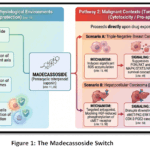 |
Figure 1: The Madecassoside Switch |
Synergistic Potential and Broad-Spectrum Oncology
The application of triterpene signaling extends beyond breast and liver cancers to a wide range of aggressive malignancies. A critical dimension of this therapeutic potential is “chemosensitization,” where madecassoside and its analogues function as synergistic partners to standard chemotherapy. By inhibiting survival pathways such as cMET or modulating the “Nrf2 Paradox,” these compounds effectively reverse acquired drug resistance in established tumours.3,6,20This synergistic interaction with agents like 5-Fluorouracil or doxorubicin may allow for the use of lower, less toxic doses of standard chemotherapy while maintaining or enhancing overall therapeutic efficacy.12,24 For example, the pentacyclic triterpenoid madecassic acid exerts a profound dual function when combined with doxorubicin; it significantly enhances the anti-tumour efficacy of the chemotherapy while simultaneously ameliorating doxorubicin-induced cardiotoxicity.23 Furthermore, by inhibiting oncogenic survival nodes like MDM2, triterpene-based systems enhance pro-apoptotic signaling in prostate cancer.25 Modulating Nrf2-driven protection also regulates resistance in resilient malignancies like human leukemia,17 while similar interventions can sensitize mutant K-Ras-addicted pancreatic cancer cells to gemcitabine.26 Ultimately, these combination strategies are essential for overcoming the metabolic adaptations that typically lead to treatment failure in late-stage cancers.6
Pharmacokinetics, Safety, and Clinical Outlook
Madecassoside has a strong safety record, thanks to its long history of use in dermatological and anti-inflammatory therapies.1,27Studies show that Centellaasiatica extracts are well-tolerated in humans, a fact supported by widespread clinical use and systematic reviews.1,5The most promising feature of madecassoside is its selective toxicity; it attacks cancer cells while remaining non-toxic and even protective to healthy tissues.1,5,16 This ensures a high therapeutic index, which could significantly reduce the harsh side effects typically caused by traditional chemotherapy.However, despite excellent laboratory and animal data, a glaring “clinical trial void” exists in oncology. The lack of human trials remains the primary barrier to progress. To bridge this gap, future Phase I trials must focus on two immediate goals: establishing the Maximum Tolerated Dose and mapping out how the compound behaves in the human body. These safety and dosing assessments are a mandatory first step. Without them, the field cannot realistically move forward with the advanced, “smart” delivery systems required for modern oncology.
Pharmaceutical Engineering and Targeted Delivery
Despite its potent signaling capabilities, the clinical translation of madecassoside is currently hampered by its poor oral bioavailability and rapid hydrolysis8. To overcome these pharmacokinetic barriers, pharmaceutical engineering has shifted toward sophisticated nanocarriers, such as polymeric nanogels and chitosan-based nanostructures10,11. These systems are essential because they provide a protective shield for the saponin, enhancing its stability and bypassing the heavy toll of first-pass metabolism28.A particularly promising strategy is the design of pH-responsive delivery systems that use the acidic tumour microenvironment as a specific trigger for drug release13,29. These chitosan-based nanocarriers are engineered to stay stable at a physiological pH but undergo structural changes once they reach the acidic conditions of a solid tumour, ensuring the drug accumulates only where it is needed11,12. Crucially, recent in vitro tests prove that these pH-responsive nanogels achieve the sustained, targeted delivery necessary to preserve the compound’s apoptotic signaling11. In our view, this technological leap is the most viable way to bridge the current gap between the laboratory and the clinic.
Table 1: Comparative Analysis of Madecassoside Signaling
| Cancer type | Trigger | Signaling pathway | Pharmacological outcome | Concentration |
| Breast Cancer | ROS accumulation | MAPK/STAT3/NF-kB; PI3K/Akt/GSK-3/beta-catenin | Mitochondria-dependent apoptosis & G2/M arrest | Dose-dependent |
| Hepatocellular carcinoma | cMET Inhibition | cMET–PKC–ERK1/2–COX-2–PGE2 | Reduced proliferation and invasiveness | 25–100uM |
Discussion: Bridging The Translational Gap
The findings synthesized in this review highlight that the therapeutic efficacy of madecassoside is entirely dependent on the cellular environment. In our view, the most significant discovery is the “Madecassoside Switch”: the compound’s ability to act as a protector for healthy cells while simultaneously acting as a weapon against malignant ones. This dualism offers a rare opportunity for precision oncology, but it also creates a high-stakes clinical environment where timing and dosage are critical to ensure therapeutic success. We believe the “Nrf2 Paradox” is the most vital consideration for future research. Given the Nrf2-driven detoxification and chemoresistance discussed earlier, our stance is that madecassoside should not be viewed as a standalone “cure-all” for late-stage cancer, but rather as a highly specific tool that must be carefully managed to avoid supporting tumour resilience. This study is important for future development because it identifies why madecassoside has not yet succeeded in human clinical trials, despite excellent lab results. We have identified a “Metabolic Gap” where the parent drug is broken down by gut bacteria into madecassic acid.5,8,30 This results in a low oral bioavailability of approximately 14.9%, making it nearly impossible to reach the effective concentration of 25–100µM required for anti-tumour activity in a clinical setting.8,9 To bridge this gap, we propose that the future of madecassoside lies in pH-responsive nanotechnology. By using chitosan-based nanogels, we can protect the drug from being destroyed in the gut and ensure it only releases its payload when it senses the acidic environment of a solid tumour. This targeted approach is essential to maintain the structural integrity of the glycoside, which is critical for its specific signaling modulatory effects. Furthermore, to improve the success rate of Phase I trials, we recommend a shift in preclinical testing. Standard mouse models are often too simple to represent human disease. We advocate for the use of Patient-Derived Xenograft (PDX) models, which keep the complex human tumour structure and vascularity intact.14,15,31 This is necessary to prove that “smart” nanocarriers can actually penetrate real human tumours and respond to specific pH gradients.24,26,32 Ultimately, this review serves as a roadmap. It moves the conversation away from what madecassoside does in a petri dish and toward how we can realistically use it in patients. By combining the synergistic “Centella Network” including the parent compound and its “sisters” like asiaticoside and asiatic acid—with advanced pharmaceutical engineering, we believe we can move from the laboratory void into meaningful precision medicine.
Conclusion
In our view, madecassoside stands as a compelling example of a phytochemical whose therapeutic value is entirely dictated by the cellular environment. It offers a unique dual mode of action that effectively protects healthy tissues while selectively inducing lethality in malignant cells through context-dependent signaling. However, we conclude that the clinical realization of this potential cannot be achieved through conventional drug delivery. Instead, it relies on a strict, multi-stage roadmap that prioritizes metabolic stabilization and advanced preclinical validation.We believe future research must move away from isolated observations and emphasize the use of pH-responsive polymeric nanogels. Protecting the parent glycoside from rapid hydrolysis is not just a pharmacokinetic goal; it is a mechanistic necessity for maintaining the specific signaling modulatory effects that define the “Madecassoside Switch”. Furthermore, we advocate for the mandatory adoption of PDX models. These models are essential to validate whether nanostructures can navigate the complex human tumour microenvironment, a barrier that standard models fail to replicate.Finally, achieving the translational leap requires a dual focus on precision dosing and engineering. Determining stage-specific dosing is vital to ensure that cytoprotection in normal tissues does not interfere with the efficacy of co-administered chemotherapy. By refining chitosan-based nanostructures to respond to the acidic tumour microenvironment, the therapeutic index can be maximized for patients with solid tumours. Ultimately, this study provides a framework for turning the “Centella Network” from a preclinical promise into a robust clinical reality.
Acknowledgement
The authors would like to thank UniversitiTeknologi MARA for supporting this research work. The Faculty of Health Science, CawanganPulau Pinang KampusBertam of UniversitiTeknologi MARA, is highly appreciated for providing the environment to conduct this study. The authors are also profoundly grateful to PusatKanserTun Abdullah Ahmad Badawi, USM, for providing the necessary facilities.
Funding Sources
This research was supported by the Ministry of Higher Education (MOHE) through the Fundamental Research Grant Scheme (FRGS) (Grant No: FRGS/1/2023/SKK06/UITM/02/17). Additional funding was provided by UniversitiTeknologi MARA under the Strategic Research Partnership (SRP) grant (Grant No: UiTM.800-3/1 SRP INT (009/2025)).
Conflict of interest
The authors do not have any conflict of interest.
Data Availability Statement
This statement does not apply to this article.
Ethics Statement
This research did not involve human participants, animal subjects, or any material that requires ethical approval.
Informed Consent Statement
This study did not involve human participants, and therefore, informed consent was not required.
Clinical Trial Registration
This research does not involve any clinical trials.
Permission to reproduce material from other sources
Not Applicable
Authors’ Contribution
- Anis Nadia Zulkifli: Data Collection, Methodology, Writing – Original Draft.
- Mohamad Azwan Zai: Visualization, Analysis, Writing – Review & Editing.
- Muhammad Nabil: Conceptualization, Supervision, Project Administration, Funding Acquisition.
References
- Tan SC, Bhattamisra SK, Chellappan DK, Candasamy M. Actions and therapeutic potential of madecassoside and other major constituents of Centella asiatica: a review. Appl Sci. 2021;11(18):8475.
CrossRef - Bao X, Zhang Y, Zhang H, Xia L. Molecular mechanism of β-sitosterol and its derivatives in tumor progression. Front Oncol. 2022;12:926975.
CrossRef - Pouremamali F, Pouremamali A, Dadashpour M, Soozangar N, Jeddi F. An update of Nrf2 activators and inhibitors in cancer prevention/promotion. Cell Commun Signal. 2022;20(1).
CrossRef - Tang YC, Chuang Y, Chang HH, et al. How to deal with frenemy NRF2: targeting NRF2 for chemoprevention and cancer therapy. J Food Drug Anal. 2023;31(3):387.
CrossRef - Sun B, Wu L, Wu Y, et al. Therapeutic potential oCentella asiatica and its tof Centella asiatica and its triterpenes: a review. Front Pharmacol. 2020;11:568032.
CrossRef - No JH, Kim YB, Song YS. Targeting Nrf2 signaling to combat chemoresistance. J Cancer Prev. 2014;19(2):111.
CrossRef - Tran CV, Tran TTP, Nguyen AT, et al. Synthesis and cytotoxic activity of madecassic acid-silybin conjugate compounds in liver cancer cells. RSC Med Chem. 2024;15(10):3418.
CrossRef
- Anukunwithaya T, Tantisira MH, Shimada T, Sai Y, Khemawoot P. Multiple oral dosing pharmacokinetics of standardized extract of CentellaasiaticaECa 233 and its inductive effect on efflux transporters in rats. Planta Med Int Open. 2017;4(2).
CrossRef
- Khemawoot P, Hengjumrut P, Anukunwithaya T, Chang LC, Wongwiwatthananukit S, Tantisira MH. Comparison of the pharmacokinetic profiles of a standardized extract of Centella asiatica and a mixture of madecassoside and asiaticoside in rats. Planta Med Int Open. 2018;5(2).
CrossRef
- Arpa MD, Akbuğa J. Chitosan-based nanogels in modern drug delivery: focus on protein and gene applications. Gels. 2025;11(9):735.
CrossRef
- Suhail M, Chiu IH, Ullah A, et al. Formulation and in vitro assessment of polymeric pH-responsive nanogels of chitosan for sustained delivery of madecassoside. ACS Omega. 2024;9(17):19345.
CrossRef
- Sahu P, Kashaw SK, Sau S, et al. pH responsive 5-fluorouracil loaded biocompatible nanogels for topical chemotherapy of aggressive melanoma. Colloids Surf B Biointerfaces. 2018;174:232.
CrossRef
- Zhou D, Liu S, Hu Y, et al. Tumor-mediated shape-transformable nanogels with pH/redox/enzymatic-sensitivity for anticancer therapy. J Mater Chem B. 2020;8(17):3801.
CrossRef
- Au JL, Yeung BZ, Wientjes MG, Lu Z, Wientjes MG. Delivery of cancer therapeutics to extracellular and intracellular targets: determinants, barriers, challenges and opportunities. Adv Drug Deliv Rev. 2015;97:280.
CrossRef
- Salata GC, Hirokawa CM, Melo GB, et al. In vitro methodologies to evaluate nanocarriers for cancer treatment: where are we? Cancer Nanotechnol. 2025;16(1).
CrossRef
- Bandopadhyay S, Mandal S, Ghorai M, et al. Therapeutic properties and pharmacological activities of asiaticoside and madecassoside: A review. J Cell Mol Med. 2023;27(5):593-608.
CrossRef
- Raza A, Khan AQ, Inam A, et al. Role of Nrf2 Signaling Cascade in Breast Cancer: Strategies and Treatment. Front Pharmacol. 2022;13:720076.
CrossRef
- Harder B, Wang T, Clair JJL, et al. Brusatol overcomes chemoresistance through inhibition of protein translation. MolCarcinog. 2016;56(5):1493.
CrossRef
- Hou W, Luo Y, Wu N, et al. Madecassoside induces apoptosis and inhibits migration by regulating ROS-mediated signaling pathways in MDA-MB-231 breast cancer cells. Chem Biol Drug Des. 2025;106(5).
CrossRef
- Li Z, You K, Li J, et al. Madecassoside suppresses proliferation and invasiveness of HGF-induced human hepatocellular carcinoma cells via PKC-cMET-ERK1/2-COX-2-PGE 2 pathway. IntImmunopharmacol. 2016;33:24.
CrossRef
- Liu Y, Shen J, Li Y, et al. Madecassic Acid Ameliorates the Progression of Osteoarthritis: An in vitro and in vivo Study. Drug Des Devel Ther. 2022;16:3555-3568.
CrossRef
- Lee S, et al. Pharmacological effects of pentacyclic triterpenoids isolated from Centella asiatica.Hortic Environ Biotechnol. 2024;65:1-15.
CrossRef
- Li W, Xu K, Lan M, et al. The dual functions of the pentacyclic triterpenoid madecassic acid in ameliorating doxorubicin-induced cardiotoxicity and enhancing the antitumor efficacy of doxorubicin. Int J Biol Sci. 2024;20(14):5396.
CrossRef
- Ray P, Nair G, Ghosh A, et al. Microenvironment-sensing, nanocarrier-mediated delivery of combination chemotherapy for pancreatic cancer. J Cell Commun Signal. 2019;13(3):407.
CrossRef
- Voruganti S, Qin J, Sarkar S, et al. Oral nano-delivery of anticancer ginsenoside 25-OCH3-PPD, a natural inhibitor of the MDM2 oncogene: nanoparticle preparation, characterization, in vitro and in vivo anti-prostate cancer activity, and mechanisms of action. Oncotarget. 2015;6(25):21379.
CrossRef
- Dutta D, Ray P, De A, et al. pH-responsive targeted nanoparticles release ERK-inhibitor in the hypoxic zone and sensitize free gemcitabine in mutant K-Ras-addicted pancreatic cancer cells and mouse model. PLoS One. 2024;19(4).
CrossRef
- Liu M, Li Z, Wang H, Du S. Increased cutaneous wound healing effect of biodegradable liposomes containing madecassoside: preparation optimization, in vitro dermal permeation, and in vivobioevaluation. Int J Nanomedicine. 2016;2995.
CrossRef
- Karanam M, Gottemukkula L. A review of nanogels as novel drug delivery systems. Asian J Pharm Clin Res. 2023;10.
CrossRef
- Mahmudi H, Adili-Aghdam MA, Shahpouri M, Jaymand M, Amoozgar Z, Jahanban‐Esfahlan R. Tumor microenvironment penetrating chitosan nanoparticles for elimination of cancer relapse and minimal residual disease. Front Oncol. 2022;12:1054029.
CrossRef
- Liu J, Li Y, Yang C, Zhao BT. Unraveling the mechanisms of madecassoside derivatives in wound healing: network pharmacology and experimental validation. Pharmaceuticals. 2025;18(9):1292.
CrossRef
- Roma‐Rodrigues C, Pombo I, Raposo LR, Pedrosa P, Fernandes AR, Baptista PV. Nanotheranostics targeting the tumor microenvironment. Front BioengBiotechnol. 2019;7.
CrossRef
- Kwak B, Özçelikkale A, Shin CS, Park K, Han B. Simulation of complex transport of nanoparticles around a tumor using tumor-microenvironment-on-chip. J Control Release. 2014;194:157.
CrossRef
 PlumX:
 Views: 701
  PDF Downloads:
167
PDF Downloads:
167