Multi-Organ Histopathological and Systemic Anti-Inflammatory Effects of Celastrol in High-Fat Diet-Fed ApoE-Knockout Mice
 , ThuhairahHasrah Abdul Rahman3.4, B. Vimala R.M.T Balasubramaniam5, , 6, , 8and Nasibah Azme9, 10*
 1Laboratory Animal Care Unit, Faculty of Medicine, UniversitiTeknologi MARA, Malaysia
2Institute of Medical Molecular Biotechnology, Faculty of Medicine, UniversitiTeknologi MARA, Malaysia
3Cardiovascular Advancement Research Excellence Institute (CARE-i), UniversitiTeknologi MARA, Malaysia
4Department of Pathology, Faculty of Medicine, UniversitiTeknologi MARA, Malaysia
5Nutrition, Metabolism and Cardiovascular Research Centre, Institute for Medical Research, Malaysia
6Department of Clinical Diagnostic Laboratories, Hospital Al-Sultan Abdullah UniversitiTeknologi MARA, Malaysia
7Integrative Pharmacogenomics Institute (iPROMISE), UniversitiTeknologi MARA, Malaysia
8Faculty of Applied Science, UniversitiTeknologi MARA, Malaysia
9Department of Physiology, Faculty of Medicine, UniversitiTenologi MARA, Malaysia
10Department of Medical Education, Faculty of Medicine, UniversitiTenologi MARA, Malaysia
Corresponding Author E-mail:nasibah@uitm.edu.my
DOI : http://dx.doi.org/10.13005/bpj/3467
Download this article as:

High-fat diet (HFD)-induced inflammation is characterized by widespread infiltration of inflammatory cells across multiple organs. Celastrol, an emerging drug derived from Tripterygiumwilfordii, has demonstrated anti-inflammatory effects in multiple models, including ApoE-knockout mice. However, quantitative evaluation of multi-organ histopathological inflammation and its association with systemic inflammatory response remains to be determined. This study aimed to evaluate anti-inflammatory effects of celastrol in multi-organ via Hematoxylin and Eosin (H&E)-stained tissues and its association with systemic inflammation through circulating TNF-α levels in HFD-fed ApoE-knockout mice. Male ApoE-knockout mice were divided into five groups (n=6/group). Four groups were fed an HFD for 12 weeks, while the control group received a normal diet. During the last 4 weeks, three HFD groups received intraperitoneal celastrol (1.5, 2, and 2.5 mg/kg/day), while controls received 2% DMSO/day. At the end of the treatment, the heart, lungs, liver, and kidneys were harvested for H&E staining, and inflammatory cell infiltration was quantified using NDP.view 2. Plasma TNF-α levels were measured using ELISA. The 2.5mg celastrol-treated group showed a significant reduction in the area of inflammatory cell infiltration across all organs compared to the HFD group (heart, p<0.01; lung, p<0.001; liver, p<0.05; kidney, p<0.01). Additionally, 2 and 2.5 mg of celastrol were reported to significantly decrease plasma TNF-α levels (p<0.05). Celastrol attenuates multi-organ histopathological inflammation and reduces circulating TNF-α levels in HFD-fed ApoE-knockout mice, supporting its potential as a multi-target anti-inflammatory agent. Further studies are required to elucidate the underlying mechanisms.
KEYWORDS:ApoE-knockout mice; Celastrol; H and E staining; Inflammatory cell infiltration; TNF-α
Introduction
Inflammation is a biological immune system response triggered by various factors such as pathogen invasion, physical injury, chemical irritants, toxins, autoimmune reactions, or metabolic disturbances. It represents the body’s natural defense mechanism aimed at eliminating harmful stimuli, initiating tissue repair, and restoring homeostasis. However, it can also potentially lead to tissue damage or disease progression. Triggering factors include free radicals, damaged cells, oxidative stress, or foreign pathogens. Chronic inflammation is a major contributor to global morbidity and mortality, as it has been remarked that 3 out of 5 people die from chronic inflammatory diseases.1 The World Health Organization (WHO) has declared that chronic diseases are the greatest threat to human health, driven by the prevalence of inflammation and the rising number of cases over the years.1
Inflammatory cell infiltration is a key hallmark of inflammation, as immune cells move to the injury site to support healing.2These cells include neutrophils, macrophages, lymphocytes, eosinophils, and mast cells, each with a specific role pathologically. However, an excessive accumulation of inflammatory cells and a sustained inflammatory response can lead to a chronic state rather than an acute, self-limited reaction. Persistent inflammation results in ongoing tissue injury and impaired healing, as the balance between pro-inflammatory and reparative mechanisms becomes dysregulated, ultimately causing structural and functional damage.3In metabolic conditions such as high-fat-diet (HFD)-induced disorders, systemic inflammation is often accompanied by widespread tissue infiltration of inflammatory cells across multiple organs, contributing to multi-organ dysfunction.
Celastrol, a quinonemethide triterpene naturally present in Tripterygiumwilfordii, is a potent antioxidant and anti-inflammatory agent, underscoring its role in modulating inflammatory responses.4Celastrolhas been proven to induce various anti-inflammatory cytokines and target multiple signaling pathways, which underlie its mechanism of action in inflamed organs or tissues. For instance, celastrol has been shown to inhibit macrophage-mediated inflammation and reduce the expression of pro-inflammatory cytokines, such as TNF-α, in HFD-fed models,5,6highlighting its therapeutic anti-inflammatory effects in metabolic and inflammatory diseases.
The animal model is a crucial backbone in medical research for studying pathogenesis and uncovering therapeutic strategies. In the past few years, gene-knockout methodologies in mice have provided opportunities to genetically exhaust the different leukocytic lineages, individually or in combination, to scrutinize their function within the wound-healing circuit.7One of these gene knockout models is ApoE-knockout mice, which disrupts cholesterol transportation, specifically in the circulation. After feeding an HFD, these mice develop systemic inflammation and multi-organ pathological changes, making them an ideal model for anti-inflammatory therapy research.8,9
Histopathological evaluation remains a fundamental approach for assessing tissue-level inflammation. Hematoxylin and Eosin (H&E) staining is widely used among the various staining methods available for frozen sections to study inflammatory cell infiltration in organs, either by classifying the degree of inflammation or by calculating the area of inflammation.10,11 It is due to its practicality, inexpensive materials, and relatively simple procedure. Although H&E staining provides an overall assessment of inflammatory cell infiltration, it does not distinguish specific immune cell subtypes or molecular pathways. Apart from that, TNF-α, an inflammatory cytokine, reflects systemic inflammatory responses when measured in plasma and reflects the overall inflammatory status of organs.
Celastrol has shown anti-inflammatory properties in various inflammatory lesions across different organs, such as the heart,12 lung,13 liver,5 and kidney,14 due to its capacity to inhibit pro-inflammatory signaling pathways and cytokine release. Despite this, most studies have examined its effects in single-organ models or in specific disease models. Nevertheless, to date, no research has quantitatively evaluated the impact of celastrol on inflammatory cell infiltration across multiple organs (heart, lung, liver, and kidney) and its association with systemic circulating TNF-α levels in the ApoE-knockout mouse model.
Thus, this study aimed to evaluate the histopathological anti-inflammatory effects of celastrol across multiple organs and to examine its association with systemic inflammation through circulating TNF-α levels in HFD-fed ApoE-knockout mice. By combining quantitative histological evaluation with systemic biomarker analysis, this study provides insight into the coordinated local and systemic effects of celastrol in diet-induced inflammation.
Materials and Methods
Materials and Animals
The high-fat diet (RD Western diet, D12079B) was purchased from Research Diets Inc., while the normal diet (1342) was purchased from AltrominSpezialfutter GmbH & Co. KG. The HFD comprises 21% fat and 0.21% cholesterol, whereas the ND is composed of 24% protein and 11% fat. Absolute dimethyl sulfoxide (D2650-100ML) and celastrol (C0869-10MG) were obtained from Sigma-Aldrich. The H&E Staining Kit, Hematoxylin and Eosin (H&E) kit (ab245880) was acquired from Abcam Limited.
A total of 30 male ApoE-knockout mice were used, with 6 mice included per group. Male gender was specifically chosen as females have estrogen that profoundly interferes with the immune system and inflammatory responses. The neutral-territory introduction method is the safest way for mice to get acquainted, with each sniffing the other before moving into their permanent home. Micewere grouped into strata based on traits, i.e., body weight and blood glucose readings, and then randomly distributed so that each group had a similar average baseline profile. Animals were maintained at a standard relative humidity, a 12-hour light/dark cycle, and a temperature of 20-24˚C with access to food and water ad libitum. Three mice were allocated per cage (dimensions: 290 x 220 x 140 mm). All procedures were approved by the UiTM Research Ethics Committee for Animal Ethics. All institutional and national guidelines for the care and use of laboratory animals were followed during the experiments. No mortality rate is recorded during the experiment.
Experimental Design and Drug Intervention
Male ApoE-knockout mice (8 weeks old) were fed either an HFD or an ND for 12 weeks according to sub-group allocation. (Figure 1). Age of mice is the criterion in this animal experiment to ensure a mature, fully developed immune system to begin with.Mice were randomly assigned to be subdivided into five subgroups (n = 6 per group) and treated as shown in Figure 2. The ApoE-knockout mice on HFD were treated with celastrol in DMSO at doses of 1.5, 2, and 2.5 mg/kg/day, respectively. At the same time, control groups received 2% DMSO/day during the last 4 weeks of diet via intraperitoneal (i.p) injection. At the end of the treatment, blood was collected before the mice were sacrificed at 20 weeks. Heart, lung, liver, and kidney tissues were harvested for analysis.
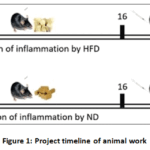 |
Figure 1: Project timeline of animal work |
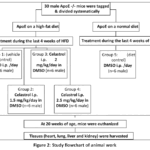 |
Figure 2: Study flowchart of animal work |
Sample Preparation
At the end of the experiment, the collected tissues were washed in 1x PBS to remove any unwanted or residual blood. Tissues were then embedded in an optimal cutting temperature compound and rapidly frozen using a stepwise method. Tissues were then cryosectioned at 7 µm, and blood samples were centrifuged for 15 minutes within 30 minutes of collection.
Histopathological Analysis
H&E is widely used among the various staining methods available in frozen sections to study inflammatory cell infiltration by classifying the degree of inflammation or by calculating the area of inflammation, a lesser-known method.10,11It is due to its practicality, inexpensive materials, and relatively simple procedure. Therefore, this study employed a specific staining method to investigate the effectiveness of celastrol treatment in mitigating inflammatory cell infiltration in the tissues of the heart, lung, liver, and kidney of ApoE-knockout mice fed with an HFD.
The tissue sections were stained with Mayer’s hematoxylin, followed by a bluing reagent. Excess absolute alcohol was removed by dipping and blotting, and an adequate eosin Y solution was applied. The slides were rinsed in two changes of distilled water between each applied chemical, then dehydrated and mounted to seal the sections to transparency. The summary of the standardised protocol of Haematoxylin-eosin staining is depicted below (Table 1).
Table 1: Histological reagents and time of H&E staining for frozen tissue section
| Step | Chemical/Reagent | Time |
| Thaw | – | 15 minutes |
| Nuclear stain | Mayer’s hematoxylin | 5 minutes |
| Washing | Distilled water | 2 changes |
| Bluing | Bluing reagent | 10 seconds |
| Washing | Distilled water | 2 changes |
| Differentiation | Alcohol | Dip once |
| Counterstain | Eosin Y solution | 1 minute |
| Dehydration | Absolute alcohol | 3 changes |
| Clearing and mounting | Permanent mounting (resin) | – |
Evaluation of Inflammatory Cell Infiltration in H and E Staining
The NDP.view 2 software was used to view the digital images of the slides and quantify the area of inflammatory cell infiltration in tissue sections (3 sections per organ per mouse).Tissue normalization, or preprocessing of image data, was performed beforehand to correct staining variability and scanner inconsistencies using digital color normalization.Regions of cellular infiltration within each organ were independently and manually delineated using the freehand region selection tool under blind conditions, where the researcher was unaware of group allocation. The necrotic areas were avoided to ensure the accuracy of the calculation. For the heart, cell infiltration was examinedin the myocardium (the middle muscle layer) and the endocardium (the inner lining), while the lung focused on the expanded interstitium and alveoli. Aside from that, the portal triad and lobules were commonly infiltrated with inflammatory cells, while glomeruli and tubules were observed in the kidney. The total infiltrated area was quantified by summing all selected regions and normalizing to the total tissue area. All measurements were automatically expressed in mm² by the software.11The results were independently reviewed and validated by a histopathologist to ensure analytical reliability. Quantitative data for each organ were subsequently analyzed using GraphPad Prism software.
Enzyme-Linked Immunosorbent Assay (ELISA)
A double-antibody sandwich ELISA was performed using plasma samples to measure the inflammatory cytokine marker TNF-α, as per the FineTest ELISA kit for Mouse TNF-α (EM0183) manufacturer’s instructions (Table 2). Plasma samples were diluted to the appropriate dilution factor and loaded onto plate wells (96 wells) together with a serial standard solution. The biotin-labeled antibody solution was loaded to capture the targeted antibodies in the sample. The SABC solution was then added, followed by treatment with the TMB substrate solution. Each step was incubated at 37°C and adequately washed. The reaction was stopped with the stop solution after the standard wells showed the desired TMB color. At the end of the procedure, the plate was promptly read at 450 nm, and the standard curve and protein concentrations were calculated.
Table 2: Assay loading solutions and time of ELISA procedure for plasma samples
| Step | Loading solution | Time |
| Coating | Standard or sample | 90 minutes |
| Washing | Wash buffer | Wash 2X |
| Binding | Biotin-labeled antibody | 60 minutes |
| Washing | Wash buffer | Wash 3X |
| Binding | SABC | 30 minutes |
| Washing | Wash buffer | Wash 5X |
| Detection | TMB substrate | 20 minutes |
| Termination | Stop solution | – |
Statistical Analysis
All the data were expressed as mean ± standard error of the mean (SEM)together with multiple comparison correction (Bonferroni)which protect dataset against any false positive. The Kruskal-Wallis test was used to compare differences among the five groups (n=6 mice per group) using GraphPad Prism 10 along with a post hoc test (Dunn). The normality of the data distribution was not assumed; therefore, a nonparametric test was applied. The mean difference is considered significant at P<0.05.
Results
Inflammatory cell infiltration is characterized by a clustered accumulation of cells in tissues and around blood vessels under a microscope. In this study, mice treated with 2.5 mg/kg celastrol showed much less infiltration in their heart tissue (0.11 mm² affected, P<0.01) than the HFD group. The ND group showed even less infiltration into the heart tissue (0.09 mm², P<0.0001), resulting in slower infiltration than in the HFD group (Figures 3 and 4). In the lungs, celastrol treatment also reduced infiltration to 0.32 mm² (P<0.001), compared to 1.51 mm² in the HFD group. Mice on the ND also had a significant reduction, with 0.27 mm² (P<0.0001) of affected lung tissue (Figures 5 and 6).
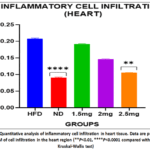 |
Figure 3: Quantitative analysis of inflammatory cell infiltration in heart tissue. Data are presented as mean ± SEM of cell infiltration in the heart region (**P<0.01, ****P<0.0001 compared with HFD group, Kruskal-Wallis test). |
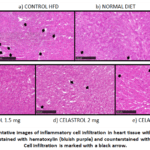 |
Figure 4: Representative images of inflammatory cell infiltration in heart tissue with Hematoxylin and Eosin (H&E, 10X), stained with hematoxylin (bluish purple) and counterstained with eosin (light pink). Cell infiltration is marked with a black arrow. |
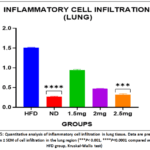 |
Figure 5: Quantitative analysis of inflammatory cell infiltration in lung tissue. Data are presented as mean ± SEM of cell infiltration in the lung region (***P< 0.001, ****P<0.0001 compared with the HFD group, Kruskal-Wallis test). |
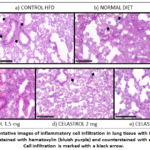 |
Figure 6: Representative images of inflammatory cell infiltration in lung tissue with Hematoxylin and Eosin (H&E, 10X), stained with hematoxylin (bluish purple) and counterstained with eosin (light pink). |
In liver tissue, mice treated with 2.5 mg/kg celastrol had approximately half the total area of inflammatory cell infiltration compared to the HFD control group (0.30 mm², P<0.05). Mice on an ND also showed a significant reduction, with only 0.21 mm² (P<0.001) affected (Figures 7 and 8). In the kidney, celastrol treatment reduced infiltration to 0.47 mm² (P<0.01), which is much less than the 1.57 mm² observed in the HFD group. The ND group also had less infiltration, with a difference of 0.70 mm² (P<0.0001) compared to the HFD group (Figures 9 and 10).
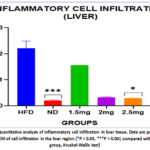 |
Figure 7: Quantitative analysis of inflammatory cell infiltration in liver tissue. Data are presented as mean ± SEM of cell infiltration in the liver region (*P < 0.05, ***P < 0.001 compared with the HFD group, Kruskal-Wallis test). |
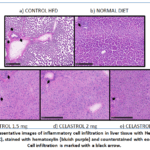 |
Figure 8: Representative images of inflammatory cell infiltration in liver tissue with Hematoxylin and Eosin (H&E, 10X), stained with hematoxylin (bluish purple) and counterstained with eosin (light pink). |
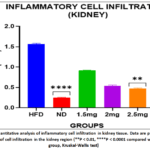 |
Figure 9: Quantitative analysis of inflammatory cell infiltration in kidney tissue. Data are presented as mean ± SEM of cell infiltration in the kidney region (**P < 0.01, ****P < 0.0001 compared with the HFD group, Kruskal-Wallis test). |
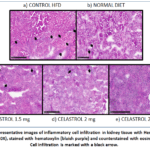 |
Figure 10: Representative images of inflammatory cell infiltration in kidney tissue with Hematoxylin and Eosin (H&E, 10X), stained with hematoxylin (bluish purple) and counterstained with eosin (light pink). Cell infiltration is marked with a black arrow. |
Overall, a consistent reduction in the infiltration of inflammatory cells was observed across all examined organs following celastrol treatments. This reduction in tissue-level inflammatory infiltration was accompanied by changes in systemic inflammatory marker, i.e., circulating TNF-α levels.
Figure 11 shows that HFD-fed mice had high TNF-α levels at 29.36 pg/mL.Celastrol-treated mice had lower TNF-α levels, especially at doses of 2 mg/kg (p<0.05) and 2.5 mg/kg (p<0.05). Mice on an ND had the lowest TNF-α level at 9.49 pg/mL, which suggests less inflammation in their blood.
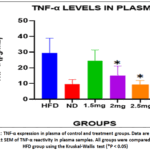 |
Figure 11: TNF-α expression in plasma of control and treatment groups. Data are presented as mean ± SEM of TNF-α reactivity in plasma samples. All groups were compared with the HFD group using the Kruskal-Wallis test (*P < 0.05). |
Discussion
One of the most commonly utilized histological methods of assessing inflammatory cell infiltration in tissue sections is H&E staining. H&E staining provides an overall assessment of inflammatory cell infiltration; however, it does not allow identification of specific immune cell subtypes or molecular pathways. Assessment of inflammatory cell infiltration in tissue sections using H&E staining was performed in the current study, focusing on four major organs that play significant roles in systemic physiology. The findings showed a consistent pattern of celastrol in reducing inflammatory-cell infiltration across all organs, with the most pronounced changes observed at 2.5 mg/kg. The morphological changes in organs, including their cellularity, are also notable in the context of inflammation. In addition, this study demonstrates morphological changes, including alterations in cellularity and tissue architecture, indicating a mitigating effect of celastrol on inflammation. Importantly, the present findings are based on histopathological evaluation using H&E staining, reflecting morphological changes rather than cell-specific or molecular level-mechanisms.
In the current study, a decreased pattern of inflammatory-cell infiltration of the heart was observed following celastrol treatment, as indicated by H&E analysis. This result aligns with the study by Tong et al15 which showed that pretreatment with celastrol, as assessed by H&E staining of cardiac sections, led to less inflammatory cell infiltration, less edema, less hemorrhage, and less disruption of myocardial fibers in the myocardial ischemia/reperfusion injury rat model.15The general cardiac structure was more organized, and myocardial alignment was maintained, consistent with celastrol’sprotective histological effects on cardiac tissue remodeling.The mechanism of celastrol behind this study was attributed to celastrol’s ability to activate the PI3K/Akt signaling pathway and inhibit HMGA expression, thereby alleviating myocardial inflammation, apoptosis, and oxidative stress.15
In lung tissues treated with celastrol, we observed that the alveolar septa were less thickened and had fewer infiltrates, although mild alveolar hyperinflation persisted. Although we analyzed the effects of celastrol on alveolar structures, similar results were reported by Li et al16 in a monocrotaline-induced pulmonary arterial hypertension model, demonstrating celastrol’s ability to reduce pulmonary vascular wall thickening and macrophage infiltration, indicating overall attenuation of lung inflammation and remodeling. These findings indicate that celastrol reduces structural and inflammatory changes in lung tissue, and the reported mechanism of celastrol in this study is the inhibition of the TGF-β1 and NF-κB signaling pathways.16 Moreover, another study found that celastrol helps alleviate structural changes in alveoli that contribute to hyperinflation, and the reported mechanism is inhibiting the NLRP3 inflammasome, thereby reducing inflammation and preventing alveolar damage.17
In the liver tissues of the present study and our previous study,18celastrol treatment appeared to reduce the size of the portal triad and alleviate congested sinusoids associated with inflammatory cell infiltration. This finding coincides with the study by Zhao et al19 which showed that celastrol attenuates hepatic cellular infiltration, reduces hepatic congestion, and prevents necrosis in α-naphthylisothiocyanate (ANIT)- and thioacetamide (TAA)-induced hepatocellular injury models in mice. Those protective effects of celastrol in that study were linked to activation of the SIRT1/FXR signaling pathway and inhibition of NF-κB-mediated inflammation, suggesting that celastrol maintains hepatic architecture and function through both anti-inflammatory and cytoprotective actions.19
In the kidney tissues of the celastrol-treated mice in the current study, fewer congested glomerular and tubular structures were observed, with moderate cell infiltration. This is consistent with the findings of Younis and Ghanim20 who reported that H&E-stained sections of renal tissue in a rat renal ischemia-reperfusion injury model showed restoration of normal glomerular and tubular morphology and decreased necrotic changes following celastrol administration. In this study, these effects of celastrol have been reported to be mediated by activation of the Nrf2/HO-1 pathway, which reduced oxidative stress and promoted antioxidant responses.20 In a separate study on kidney injury and glomerular podocytes, celastrol was reported to inhibit the TGF-β1/Smad3 signaling pathway, which is part of the mechanisms underlying renal fibrosis and inflammation.21 Overall, the consistent pattern of reducing morphological cellular infiltration across multiple organs supports a coordinated histopathological anti-inflammatory effect of celastrol.
Besides, the current study provides new insights into the relationship between tissue type and the extent of inflammatory cell infiltration, which was significantly mitigated by 2.5 mg/kg of celastrol. A visible difference of approximately 0.3 mm2was observed in the heart compared to the lung, liver, and kidney. This situation may be caused by anatomical and physiological factors inherent to each organ, especially microvascular structure. The microvasculature is sensitive to inflammatory stimuli, leading to dysfunction characterized by increased permeability and altered leukocyte recruitment.22Moreover, inflammatory processes can induce morphological changes in microvessels, which may exacerbate or mitigate the effects of therapeutic agents such as celastrol. Thus, understanding the microvascular environment is crucial for optimizing celastrol’s therapeutic potential in inflamed organs. Hyde and Simon23clarified that the lung microvasculature accommodates a rapid leukocyte response, with specific hemodynamic properties that facilitate efficient neutrophil migration during inflammation. In contrast, the heart is less permissive and limits inflammatory cell infiltration. The kidney and liver also exhibit dynamic microvascular structures that facilitate inflammatory cell infiltration, like those in the lung. Their specialized microvascular-like structures, such as glomeruli and sinusoids, allow for distinct leukocyte recruitment that supports the inflammatory process.24In addition, the pathophysiological interaction between the kidney and liver demonstrates that one organ can influence the other; for example, the acute phase of kidney injury can lead to lung complications.25 Taken together, these findings suggest that the anti-inflammatory effects of celastrol can be tailored by organ-specific microvascular properties. These variations imply that the anti-inflammatory effect of celastrol is organ-specific and is not solely dependent on dosage but also on tissue-specific vascular properties.
Interestingly, the maintained patterns below 1.0 mm2 of all tissue areas infiltrated by inflammatory cells are displayed in the ND group. These results build on existing evidence that a standard chow diet does not lead to the same level of immune cell infiltration and inflammatory cytokine expression as an HFD, but does exhibit a noticeable level of inflammation, highlighting its inflammatory nature.26 Another study by Zeeni et al27also showed that the effect of inflammatory cell infiltration in mice fed an ND is significantly lower in organs than in those fed cafeteria or HFD. Even though an ND is generally considered healthier, inflammation still progresses slowly over time. Thus, it marked the dietary impacts on inflammation and organ health.
Apart from celastrol’s attenuation of inflammatory cell infiltration across organs, celastrol also effectively reduces plasma levels of systemic inflammatory cytokines. The reduction in TNF-α levels suggests an association between celastrol treatment and modulation of systemic inflammation. Mechanistically, chronic low-grade systemic inflammation can arise without prior localization, driven by obesity or metabolic syndrome.28ApoE-knockout mice fed an HFD, which fits this scenario, suggest that the treatment modulates plasma inflammation. Fain29 has stated that adipose tissue potentially elevates the release of pro-inflammatory cytokines, e.g., TNF-α and IL-6, into the bloodstream after being enhanced by the obesity factor. Moreover, a previous study on lipopolysaccharide-induced inflammation in rats showed a high TNF-α concentration, whereas the celastrol-treated group showed a significantly reduced TNF-α concentration.30
Besides, the statistically significant effects of celastrol at 2.5 mg/kg, plasma (*P< 0.05) and tissue levels(**P<0.01) are a good indicator of its systemic anti-inflammatory effect. These data suggest that the reduction in tissue inflammation may be associated with the amelioration of systemic inflammation, especially after intraperitoneal administration of the drug, suggesting a strong integration of systemic and local responses to inflammation.31 However, the present findings are opposite to those of Turner et al32 who reported that local tissue inflammation can occur without systemic signs of inflammation. In fact, local inflammation may be mediated by specific cytokines or chemokines not indicated in plasma. Nevertheless, the attenuated inflammatory response observed in the current study supports the potential of celastrol as a dual-acting anti-inflammatory agent, both systemically and locally.
A limitation of this study is that histopathological analysis using H&E staining does not allow identification of specific inflammatory cell types or molecular pathways, and only a single systemic marker (TNF-α) was assessed. Another limitation of the present study is that it did not investigate the molecular mechanisms underlying celastrol’s anti-inflammatory effects; however, the reduced inflammatory cell infiltration observed in H&E-stained tissues provides histopathological evidence of its anti-inflammatory activity. These findings are consistent with previously cited studies showing that celastrol modulates key inflammatory signaling pathways and cytokine production. While mechanistic conclusions cannot be drawn from the current data, the observed histological improvements support the biological plausibility of these reported mechanisms and provide a foundation for future studies exploring the molecular pathways involved.
This study provides additional insight into the diverse roles of celastrol across multiple organs and models. It will also be important in advancing celastrol to the clinical trial (CTR) stage. Even though our animal model and diet holistically represent humans, the generalizability of the results driven by celastrol is limited. Therefore, further research on human tissues is also needed to evaluate their safety and efficacy. Further studies are warranted to elucidate the underlying mechanisms through which celastrol attenuates inflammatory cell infiltration in individual organs and modulates systemic inflammatory responses.
Conclusion
In conclusion, celastrol attenuates histopathological inflammation across multiple organs; heart, lung, liver, and kidney, and reduces circulating TNF-α levels in high-fat diet-fed ApoE-knockout mice. These findings suggest that celastroldemonstrates coordinated anti-inflammatory effects at both tissue and systemic levels. However, further studies incorporating molecular and cell-specific analyses are required to elucidate the underlying mechanisms.
Aknowledgement
The authors express their gratitude to theUniversitiTeknologi MARA and greatly appreciate the facilities provided by the Faculty of Medicine, UniversitiTeknologi MARA, Sungai Buloh, Selangor.
Funding Sources
This study was funded by an internal grant, GeranInsentifPenyeliaan (GIP), from UniversitiTeknologi MARA (UiTM), under grant reference number UiTM.800-3/1 GIP (017/2025).
Conflict of Interest
The authors declare no conflict of interest.
Data Availability Statement
This statement does not apply to this article.
Ethics Statement
All procedures were approved by the UiTM Research Ethics Committee for Animal Ethics, UiTM CARE: 426/2023. All institutional and national guidelines for the care and use of laboratory animals were followed during the experiments.
Informed Consent Statement
This study did not involve human participants, and therefore, informed consent was not required.
Clinical Trial Registration
This research does not involve any clinical trials
Permission to reproduce material from other sources
Not applicable.
Author Contributions
- Arifah Ahmad Damahuri: Perform all the procedures and analysis, and prepare the manuscript.
- Thuhairah Hasrah Abdul Rahman: Contribute to the conception of the study and oversee the lab operations.
- Vimala R.M.T. Balasubramaniam: Participate in the study design and oversee the lab operations.
- Awla Mohd Azraai: Review, validate, and verify the H&E staining images.
- Mohd Salleh Rofiee: Contribute to the conception of the study and oversee the lab operations.
- Nasibah Azme: Supervise overall progress, provide insights, validate and verify the dataset, edit and approve the final manuscript.
References
- Pahwa R, Goyal A, Jialal I. Chronic inflammation. In: StatPearls. StatPearls Publishing; 2026.
- Medzhitov R. Origin and physiological roles of inflammation. Nature.2008;454(7203):428-435.doi: 10.1038/nature07201
CrossRef - Chen L, Deng H, Cui H, et al. Inflammatory responses and inflammation-associated diseases in organs. Oncotarget.2017;9(6):7204-7218.doi: 10.18632/oncotarget.23208
CrossRef - Allison AC, Cacabelos R, Lombardi VR, Álvarez XA, Vigo C. Celastrol, a potent antioxidant and anti-inflammatory drug, as a possible treatment for Alzheimer’s disease. ProgNeuropsychopharmacolBiol Psychiatry. 2001;25(7):1341-1357.doi: 10.1016/s0278-5846(01)00192-0
CrossRef - Zhang Y, Geng C, Liu X, et al. Celastrol ameliorates liver metabolic damage caused by a high-fat diet through Sirt1. MolMetab.2016;6(1):138-147.doi: 10.1016/j.molmet.2016.11.002
CrossRef - Zhu Y, Wan N, Shan X, et al. Celastrol targets adenylyl cyclase-associated protein 1 to reduce macrophage-mediated inflammation and ameliorates high-fat diet-induced metabolic syndrome in mice. ActaPharmSin B.2021;11(5):1200-1212.doi: 10.1016/j.apsb.2020.12.008
CrossRef - Stramer BM, Mori R, Martin P. The inflammation-fibrosis link? A Jekyll and Hyde role for blood cells during wound repair. JInvest Dermatol.2007;127(5):1009-1017.doi: 10.1038/sj.jid.5700811
CrossRef - Naura AS, Hans CP, Zerfaoui M, et al. High-fat diet induces lung remodeling in ApoE-deficient mice: an association with an increase in circulatory and lung inflammatory factors. Lab Invest.2009;89(11): 1243-1251.doi: 10.1038/labinvest.2009.98
CrossRef - Camargo FN, Matos SL, Araujo LCC, Carvalho CRO, Amaral AG, Camporez JP. Western diet-fed ApoE knockout male mice as an experimental model of non-alcoholic steatohepatitis. CurrIssuesMol Biol.2022;44(10):4692-4703.doi: 10.3390/cimb44100320
CrossRef - .Liu Y, Hua X, Zhu S, et al. Automated identification and quantification of myocardial inflammatory infiltration in digital histological images to diagnose myocarditis. arXiv, 2023; arXiv:2307.01098.
CrossRef
- Bergwik J, Liu J, Padra M, et al. A novel quinoline with airway relaxant effects and anti-inflammatory properties. Respir Res.2024;25(1):146.doi: 10.1186/s12931-024-02780-8
CrossRef
- Fan J, Ren M, Chen W, Wang H, He Y. Celastrol relieves myocardial infarction-induced cardiac fibrosis by inhibiting NLRP3 inflammasomes in rats. IntImmunopharmacol. 2023;121: 110511.doi: 10.1016/j.intimp.2023.110511
CrossRef
- Shi K, Chen X, Xie B, et al. Celastrol alleviates chronic obstructive pulmonary disease by inhibiting cellular inflammation induced by cigarette smoke via the Ednrb/Kng1 signaling pathway. FrontPharmacol. 2018;9:1276.doi: 10.3389/fphar.2018.01276
CrossRef
- Chu C, He W, Kuang Y, Ren K, Gou X. Celastrol protects kidney against ischemia-reperfusion-induced injury in rats. JSurg Res. 2014;186(1):398-407.doi: 10.1016/j.jss.2013.07.048
CrossRef
- Tong S, Zhang L, Joseph J, Jiang X. Celastrol pretreatment attenuates rat myocardial ischemia/reperfusion injury by inhibiting high mobility group box 1 protein expression via the PI3K/Akt pathway. BiochemBiophysRes Commun.2018;497(3):843-849.doi: 10.1016/J.BBRC.2018.02.121
CrossRef
- Li H, Liu Q, Yue Y, et al. Celastrol attenuates remodeling of pulmonary vasculature and right ventricle in monocrotaline-induced pulmonary arterial hypertension in rats. CardiovascDiagnTher.2022;12(1):88-102.doi: 10.21037/cdt-21-360
CrossRef
- Yu X, Zhao Q, Zhang X, et al. Celastrol ameliorates inflammation through inhibition of NLRP3 inflammasome activation. Oncotarget.2017;8(40):67300-67314.doi: 10.18632/oncotarget.18619
CrossRef
- Ahmad DA, Abdul RTH, Karemdabeh Y, Azme N. Effectiveness of celastrol in reducing inflammatory cell infiltration via H&E in the liver of high-fat diet-fed apoe-knockout mice. E-BPJ. 2025;10(SI35):195-200. doi: 10.21834/e-bpj.v10iSI35.7505
CrossRef
- Zhao Q, Liu F, Cheng Y, et al. Celastrol protects from cholestatic liver injury through modulation of SIRT1-FXR signaling. Mol Cell Proteomics. 2019;18(3):520-533. doi: 10.1074/mcp.RA118.000817
CrossRef
- Younis NS, Ghanim AMH. The protective role of celastrol in renal ischemia-reperfusion injury by activating Nrf2/HO-1, PI3K/AKT signaling pathways, modulating NF-κB signaling pathways, and inhibiting ERK phosphorylation. Cell BiochemBiophys.2022;80(1):191-202.doi: 10.1007/s12013-022-01064-6
CrossRef
- Tang YW, Yang RC, Wan F, Tang XL, Zhang HQ, Lin Y. Celastrol attenuates renal injury in 5/6 nephrectomized rats via inhibiting epithelial-mesenchymal transition and Transforming growth factor-β1/Smad3 pathway. ExpBiolMed.2022;247(21):1947-1955.doi: 10.1177/15353702221118087
CrossRef
- Bilash SM, Pronina OM, Koptev MM, Vynnyk NI, Shylkina LM. Inflammation-related morphological alterations in the microvasculature. AktualProblSuchasnoi Med. 2021;21(1):155-159.
CrossRef
- Hyde DM, Simon SI. Inflammatory cells of the lung: polymorphonuclear leukocytes. In: Comprehensive Toxicology. Elsevier; 2010:115-127.
CrossRef
- Hickey MJ, Westhorpe CL. Imaging inflammatory leukocyte recruitment in kidney, lung and liver: challenges to the multi-step paradigm. ImmunolCell Biol.2013;91(4):281-289.doi: 10.1038/icb.2012.83
CrossRef - Capalbo O, Giuliani S, Ferrero-Fernández A, Casciato P, Musso CG. Kidney-liver pathophysiological crosstalk: its characteristics and importance. IntUrolNephrol.2019;51(12):2203-2207.doi: 10.1007/s11255-019-02288-x
CrossRef - Nteeba J, Ortinau LC, Perfield JW 2nd, Keating AF. Diet-induced obesity alters immune cell infiltration and inflammatory cytokine gene in mouse ovarian and peri-ovarian adipose depot tissues. MolReprodDev.2013;80(11):948-958.doi: 10.1002/mrd.22231
CrossRef - Zeeni N, Dagher-Hamalian C, Dimassi H, Faour WH. Cafeteria diet-fed mice is a pertinent model of obesity-induced organ damage: A potential role of inflammation. InflammRes. 2015;64(7):501-512.doi: 10.1007/s00011-015-0831-z
CrossRef - Bleau C, Karelis AD, St-Pierre DH, Lamontagne L. Crosstalk between intestinal microbiota, adipose tissue and skeletal muscle as an early event in systemic low-grade inflammation and the development of obesity and diabetes. DiabetesMetab Res Rev.2015;31(6):545-561.doi: 10.1002/dmrr.2617
CrossRef - Fain JN. Release of interleukins and other inflammatory cytokines by human adipose tissue is enhanced in obesity and primarily due to the nonfat cells.VitamHorm.2006;74:443-477.doi: 10.1016/S0083-6729(06)74018-3
CrossRef - Wang YL, Lam KK, Cheng PY, Lee YM. Celastrol prevents circulatory failure via induction of hemeoxygenase-1 and heat shock protein 70 inendotoxemicrats. JEthnopharmacol.2015;162:168-175.doi: 10.1016/j.jep.2014.12.062
CrossRef - Claassen V, ed. Intraperitoneal drug administration. In: Techniques in the Behavioral and Neural Sciences. Vol 12. Elsevier; 1994:46-58.
CrossRef
- Turner N, Wong HL, Templeton A, et al. Analysis of local inflammatory infiltrate combined with systemic inflammation improves prognostication in stage II colon cancer independent of standard clinicopathologic criteria. IntJCancer. 2016;138(3):671-678.doi: 10.1002/ijc.29805
CrossRef
 PlumX:
 Views: 616
  PDF Downloads:
162
PDF Downloads:
162 
Accepted on: 09-06-2026
Second Review by: Dr. Ana Golez and Dr. Md. Sarwar hossain
Final Approval by: Dr. Prabhishek Singh