A Review on the Role of Medicinal Plants Extracts in Androgenic Pathways Reported in South Africa
 , Zukile Mbita2 and Sogolo Lucky Lebelo1*
 1Department of Life and Consumer Sciences, College of Agriculture and Environmental Science, University of South Africa, Florida, South Africa
2Department of Biochemistry, Microbiology and Biotechnology, School of Molecular and Life Sciences, University of Limpopo, Sovenga, South Africa
Corresponding Author E-mail: lebelol@unisa.ac.za
DOI : http://dx.doi.org/10.13005/bpj/3434
Download this article as:

The paper was aimed at exploring the role of various medicinal plant extracts in the androgenic pathways. The following search engines were used to obtain articles to use in the paper: “PubMed, Science direct, google scholar”. Terms such as “medicinal plant extracts”, “testosterone production”, “libido”, “male infertility” were used to search the literature. The findings of the search were that there was variety of plants belonging in different families that had an impact on the male fertility. Thirty (30) papers that reported indigenous plants to South Africa and known to exhibits androgenic effects were reviewed. Some plants were reported to improve sexual desire (aphrodisiac), while others improved spermatogenesis as well as directly increasing male reproductive hormones. The action in which these medicinal plants target the infertility factor revolves around the phytochemicals they contain that signifies them as androgenic promoters. It enhances the expression of steroidogenic acute regulatory (StAR) gene responsible for cholesterol transportation and initiation of testosterone biosynthesis; alkaloids promote biosynthesis of cholesterol precursor needed for testosterone production and saponins up-regulate secretion of luteinising hormone (LH), a gonadotropin responsible for initiation of testosterone production. The insight of such mechanisms offers a breakthrough in discovery of drugs or concoctions that may help in alleviation of male infertility without expressing side effects on patients.
KEYWORDS:Androgenic pathways; Antioxidants; Erectile dysfunction; Medicinal plant extracts; Testosterone
Introduction
The use of medicinal plants to treat various diseases continues to increase worldwide, especially in developing countries such as South Africa.1,2 Moreover, the modern medicines developed recently are mostly derived from medicinal plants.3 This increase in the use of medicinal plants is due to their low cost, accessibility and effectiveness in treating diseases with minor or no side effects.2 The therapeutic use of medicinal plants for various ailments has raised stakes in their scientific exploration to determine the extent of their capabilities and assessment of their toxicity. Plants used to treat infertility has been receiving massive attention; thus, intensive studies had been carried out on them to determine the pathways in which they explore to remedy the condition of infertility.4
Infertility is defined as a state of childlessness of a couple following regular coitus without use of contraceptives, over a period of one year.5 This condition can be caused by both male and female factors. Even though progress has been made in respect to the female factor-related infertility, there are still gaps in terms of addressing the male factor-related infertility.1 In some of the progress made on the male factor-related infertility, most of the widely researched plants which have been identified to improve male fertility, focuses on treating erectile dysfunction (ED) and increasing male libido (serving as aphrodisiac).2 These medicinal plants contain metabolites such as alkaloids, phenols, tannins, antioxidants and saponins which have been shown to improve male fertility by addressing ED or serving as aphrodisiacs when targeting various parts of the body. Antioxidants have been among the widely explored therapeutics for ED for their ability to combat oxidative stress which significantly impairs endothelial cell function and nitric oxide (NO) signalling, consequent in ED condition.6 As such, these antioxidants counteract oxidative stress by improving vasodilation and smooth muscle relaxation in the erectile tissues, which is empirical for erectile response. Furthermore, their individual or synergistic response can scavenge the free radicals and impairing their formation pathways resulting in endothelial NO synthase uncoupling7 (Figure 1.). Medicinal plants have also been shown to possess metabolites that modulate fertility-related process, and these are listed in Table 1, adapted from Owaba et al3, showing their mode of action.
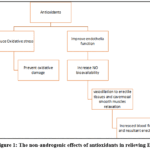 |
Figure 1: The non-androgenic effects of antioxidants in relieving ED |
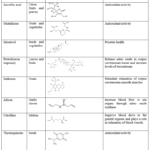 |
Table 1: Some of the metabolites found in medicinal plants, plant sources, structural formulas and their modes of action |
Many factors cause ED and/or decreased libido, amongst those include hormonal abnormalities such as low testosterone.2 Testosterone is a male androgenic hormone that is essential for spermatogenesis and development of male secondary characteristics.8 Testosterone is formed from a biological precursor cholesterol when there is stimulation from gonadotropins (LH and to some extent FSH) secreted from pituitary gland under the innervation of gonadotropin-releasing hormone (GnRH) from the hypothalamus.9 Once the LH binds on LHR found in the Leydig cells of the testis, the STAR gene is activated using the adenylyl cyclase pathway and the increase in cAMP as well as cAMP-dependent proteins. Hence, this allows mediated transportation of cholesterol across the cell membrane from the outer membrane of the mitochondria of Leydig cells and the outer membrane of the smooth endoplasmic
reticulum. 10 Processing cholesterol to testosterone occurs in two ways, which are classic and non-classic pathways.11 In the classic pathway, the progenenolone takes two sub-pathways, one it is hydrolyzed and oxidize to dehydroepindrosterone (DHEA) by the enzyme cytochrome P450 17α-hydroxylase/C17-20 lyase (P450C17), followed by oxidation and tautomerisation of DHEA to anderosterediol by 17β-hydroxysteroid dehydrogenase (17β-HSD), the androsterediol is then metabolized to testosterone by the enzyme 17β-hydroxysteroid dehydrogenase (17β-HSD).12 The second sub-pathway involves pregnenolone being metabolized to progesterone by the enzyme 3β-hydroxysteroid dehydrogenase (3β-HSD), followed by the metabolization of progesterone to androstenedione by the enzyme cytochrome P450 17α-hydroxylase/C17-20 lyase (P450C17), the androstenedione is then metabolized to testosterone by enzyme 17β-hydroxysteroid dehydrogenase (17β-HSD).13 In all the sub-pathways, testosterone would be converted to dihydrotestosterone (DHT) which is the active form of testosterone. While in a non-classic pathway (also known as the “backdoor pathway”), there are series of metabolization of the molecule progesterone to dihydrotestosterone (DHT) rather than to testosterone first, and this conversion is made possible by action of various reductase enzymes such as 5α-reductase.9 (Figure 2).
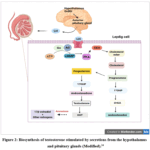 |
Figure 2: Biosynthesis of testosterone stimulated by secretions from the hypothalamus and pituitary glands (Modified).14 |
Major gonadal pathways for testosterone biosynthesis. Gonadotropin-releasing hormone (GnRH) is produced by the hypothalamus and stimulates the secretion of the luteinizing hormone (LH) from the anterior pituitary gland. LH binds to LH receptors on the interstitial cells called the Leydig cells. Stimulatory G proteins (Gs) will be stimulated and there is activation of the cAMP/protein kinase A (PKA) pathway. PKA promotes the transportation of cholesterol into mitochondria and increases the transcription of genes responsible for testosterone biosynthesis. Cholesterol will be converted to pregnenolone, which diffuses into the endoplasmic reticulum for testosterone formation via two pathways. Testosterone is formed by 17β-hydroxysteroid dehydrogenase 3 (HSD17β3) in the first pathway and by 3β-hydroxysteroid dehydrogenase (HSD3β) in the second pathway. Testosterone is converted to dihydrotestosterone (DHT) by 5α-reductase, and other part of the hormone will be aromatized to 17ß-estradiol.
Low testosterone concentration levels are the leading cause of low sex drive (libido) and functioning (ED).15 Most of the medicinal plants may address the challenges of low sex drive and/or functioning in the following mechanisms.
Providing nutritional values to improve sexual performance by promoting penile erection. Example of such nutritional values include potassium, calcium, zinc and magnesium.16
Affecting blood flow and increasing duration of sexual performance.17
Stimulating sexual arousal in the central nervous system.18
Increasing testicular cholesterol, serum cholesterol and testosterone level, which leads to increase in libido.19
Medicinal plants for the treatment of ED with no androgenic effect
Various plants that have been reported to treat and manage ED condition are from different families such as: Zygophyllaceaeas, Polygalaceae, Amaryllidaceous, Cucurbifaceae, Ranunculaceae, Leguminasae, Zingiberaceae, Moraceae, Apocynaceae, Hyacinthaceae and Vitaceae.2,3 Such plants include: Tribulus terrestris L, Securidaca longipedunculata Fresen, Allium sativum L. (garlic), Citrullus lanatus (Thunb), Nigelle sativa L., Eriosema kraussianum Meissnar, Curcuma longa (Linn) (Tumeric), Ficus capensis (Thumb), Terminalia sambesiaca, Mondia whitei (Hook.f.), Drimia elata Jacq, and Eucomis pallidiflora Baker. ssp. pole-evansii (N.E.Br.) Reyneke ex J.C. Manning.3 These plants have commonalities of possessing similar phytochemicals such as saponins, gallic acids, alkaloids etc. However, each of these plants use has been reported to use different mechanisms in alleviating the lack of sexual function. Some plants increase blood flow to the erectile tissues, while other enhances muscle relaxation in the erectile tissue to allow them to engorge with blood for erection to occur and others target the inhibition of oxidative stress that have impact on pathophysiology of ED. In increasing blood flow to the erectile tissues, these medicinal plants use the mechanism of NO. Nitric oxide is a vasodilator which when released it allows more blood to flow through the erectile tissues. In the synthesis of NO, its synthase is saturated more in the brain portion that pertains to sexual behaviours (olfactory bulb, amygdala, septal structures, supraoptic and paraventricular nuclei, etc).20 Once there are stimuli processed in the above-mentioned parts of the brain, NO synthase is released from the brain and transported to the erectile tissues to initiate the release of NO in preparation of sexual act which means increase blood flow and cause the erectile tissue to fill with blood resulting in erection.21 However, in some instances too much secretion of NO can lead to the cause of ED. Nitric oxide (NO) can combine with superoxide (O2−) to form peroxynitrite: a cytotoxic compound that is competent of inducing the formation of lipid peroxidation and nitration, resulting in the formation of malondialdehyde and hydroperoxides: denoting it as a risk factor of the development of ED.22 Hence, this study aims to review the roles of selected South African medicinal plants in androgenic pathways.
Marerials and Methods
The data was collected using various search engines which included Science direct, Google scholar, PubMed and Scifinder. Moreover, other information was gathered from books, reports and thesis published. For maximal results key words and key phrases used were: “aphrodisiacs”; “libido”; “male fertility”; “South African medicinal plants with androgenic properties”; and “erectile dysfunction”. A total of 17 articles were used in reviewing the medicinal plants of interest.
There are many plants used for treatment and management of male infertility in various ways. However, an exact number has not been established as many have been identified but not scientifically proven in their efficiency. This review documented 30 medicinal plants commonly used in South Africa to treat male infertility and the extent to which they have been investigated (Table 2).
Table 2: shows the selected 30 medicinal plants studied, highlighting the metabolites determined and their families
| Plant names | Metabolites | Families and References |
| Tribulus terrestris L. | Saponins | Zygophyllaceaea3,23 |
| Punica granatum | Phenols, tannins, flavonoids, alkaloids, etc. | Punicaceae24 |
| Monsonia angustifolia E. Mey. Ex A. Rich. | Saponins, flavonoids, terpenoids, coumarins and polyphenols | Geraniaceae25 |
| Basella alba L. | Flavonoids, alkaloids, tannins, triterpenoids, etc. | Basellaceae26 |
| Nigelle sativa L. | Alkaloids, phenols, thymoquinone, etc. | Ranunculaceae3 |
| Allium cepa L. | Flavonoids, phenols, tannins, etc. | Liliaceae24 |
| Bulbine natalensis (Baker) | Tannins, phenols, flavonoids, alkaloids, caffeine, etc. | Asphodelaceae3 |
| Withania somnifera (L.) | Alkaloids, saponins, phenols, coumarins, terpenes, etc. | Solanaceae24,26 |
| Eurycoma longifolia | Phenols, quassinoids, alkaloids, volatile oils etc | Simoroubaceae2,27 |
| Curcuma longa (Linn) Tumeric); Zingiber officinale | Diferuloylmethane; phenolic and terpenes | Zingiberaceae3, 28 |
| Moringa oleifera (Lam) | Ascorbic acid, tannins, alkaloids, saponins, phenolics etc | Moringaceae28 |
| Trichilla emetica (Vahl) | Phenols and flavonoids | Meliceae2 |
| Terminalia sambesiaca | Phenols and flavonoids | Combretaceae3 |
| Peltophorum africanum (Sond) Mucuna pruriens; Eriosema kraussianum Meisn. | Phenols, flavonoids, alkaloids, glycosides, terpenoids, saponins and tannins etc. | Fabaceae2,5,23, 24 |
| Ximenia caffra | Phenols and flavonoids | Olacaceae2 |
| Musa (Musa paradisiacal) | Saponins, alkaloids, vitamins, glycosides, triterpenes and sterols | Musaceae27 |
| Ocimum gratissimum | Volatile oils, alkaloids and tannins | Lamiaceae27 |
| Mondia whitei (Hook.f.) Carissa edulis Vahl. | Alkaloids, flavonoids, phenolics and saponins, sesquiterpenes, etc | Apocynaceae5,29 |
| Ficus asperifolia (F. asperifolia) (L) Hook; Ficus sycomorus | Alkaloids, terpenes, tannins, steroids, phlobatannin, cardiac glycosides etc | Moraceae30,31 |
| Commelina benghalensis | Phenols, tannins, alkaloids, saponins, steroids and terpenoids | Commelinaceae32 |
| Drimia sanguinea; Drimia elata Jacq | Alkaloids, tannins, quinones, saponins, flavonoids, glycosides, phytosterols, etc | Hyacinthaceae33, 34,35 |
| Phoenix dactylifera | Flavonoids, phenols, tannins, etc. | Arecaceae5 |
| Typha capensis Rohrb.) N.E.Br. | Flavones, phenols, triterpenoids and phytosteroids | Typhaceae5,36 |
| Tulbaghai violacea Harv. | Saponins, tannins, phenols and flavonoids | Alliaceae37 |
Discussion
Male fertility revolves around the biosynthesis of testosterone and its sensitivity on the sex cells, as it is a crucial to the formation of sperm cells and maintenance of libido.3 Testosterone has androgenic activities (which includes the functioning of the system, the expression of male character and spermatogenesis) and anabolic activities (which includes growth of muscles and bone).38 For this review, the main focus was on the androgenic effects of medicinal plants extracts in treating male infertility. With the understanding of the bio-synthetic mechanisms of testosterone, many studies explored various biomolecules that have the potential to treat male infertility by enhancing influential factors in the mechanisms, which include molecules such as phytochemicals which mostly occur naturally in plants. Flavonoids (such as quercetin, apigenin, chrysin and luteolin) had been identified to enhance the expression of STAR gene and production of testosterone by inhibiting COX2-depedent signaling which is known to suppress expression of STAR gene.39,40 While with other studies it was discovered that total tannins had the potential to up-regulate the expression of the genes STAR and P450scc.41 It was suggested that alkaloids and saponins have androgenic effects by increasing testicular cholesterol and raising secretion of LH or binding to enzymes involved in steroidogenesis, respectively.30 Though modern therapies are employed in treating most of these dysfunctions related to male infertility (including low testosterone secretion, down-regulation of androgenic/or gonadotropin receptors and more), mostly exhibit side effects.42 So medicinal plants with the benefits of phytochemicals have shown efficiency in treating many diseases (infertility included) and with low or absent side effects. These plants contain phytochemicals which grant them the ability of treating many ailments and have been investigated either in in vivo or in vitro experimental tests, while others have been documented on both tests (Table 1). Phytochemicals are secondary metabolites derived from primary metabolites in a plant.43 These phytochemicals include tannins, flavonoids, phenols, alkaloids, saponins and many more. Many of the intensively studied medicinal plants known to treat infertility in males contains tannins, phenols, flavonoids and alkaloids which are collectively known as polyphenols.2 These plants are diverse and not restricted to a specific family, genus or species, which broadens the arena of the exploration of medicinal plants in treating male factor infertility and understanding their pathways. Many of the plants documented in relation to treating male factor- related infertility mainly outline the mechanisms pertaining to ED and aphrodisiac effect.2 The direct proportional relationship between the desire of sexual act (aphrodisiac)/ sexual functioning and testosterone is cemented by the outcomes of most investigations which shows that some of the plants that increases serum testosterone serves as sexual boosters (aphrodisiac) or improve blood flow to the erectile tissues (treating ED).
Medicinal plants with aphrodisiac biological activity by utilizing androgenic effect
The medicinal plants that enhance desire for sexual act include those belonging to families such as Arecaceae, Asphodelaceae, Simoroubaceae, Meliceae, Olacaceae, Musaceae and Apocynaceae. Aphrodisiac agents known to boost and promote sexual desire release nitric oxide (NO) which causes muscle relaxation in the penile erectile tissue and leading to erection.44 While others directly influence levels of reproductive hormones, such as testosterone, which increases spermatogenesis. Plants such as Monsonia angustifolia E. Mey. Ex A. Rich., Bulbine natalensis (Baker), Eurycoma longifolia (Jack), Trichilla emetica (Vahl), Ximenia caffra, Tulbaghai violacea Harv., Carissa edulis (Vahl) and many more have been found to have aphrodisiac effect and studies undertaken reflected mainly on animals with no or few references of their effect on humans. Quercetin in Typha capensis was reported to be responsible for an increasing testosterone level in TM3 Leydig cell lines with maximal impact at 0.1mg/mL in a dose-dependent manner; with no cytotoxic effect revealed.36 While a study on administration of Withania somnifera (L.) extract indicated that the bioactive compounds withaferin-A, withanolide-D and withanone (terpenes) isolated from the extract accounted for the improved sperm quality, increase in antioxidants, reduction in ROS generation and reduction in serum cortisol which was found to be inversely proportional to the levels of testosterone. Nasimi et al45, reported that the treatment of the plant extracts improved sperm morphology by 25.56%,45,46 progressive motility by 21.42% and mean sperm count by 12.5%.24 The androgenic effect of Bulbine natalesis was investigated in in vivo test using Wistar rats, and results indicated aqueous extract of the plant at doses 25 and 50 mg/kg body weight the serum testosterone levels, and concentration of luteinizing hormone were increased significantly due to isolated saponins and alkaloids from the plant extract.36 The eurycomanone from Moringa oleifera (Lam) inhibits phosphodiesterase and aromatase enzymes in steroidogenesis, thereby promoting an increase in testosterone levels, which resulted in enhanced spermatogenesis.28 While gingerol, a bioactive compound from Zingiber officinale, is known to directly increase the levels of FSH, LH and testosterone as well as sex hormone-binding globulin, which result in increased spermatogenesis. However, their biochemical characterization showed similar occurrence of polyphenols which are beneficial on health in various ways.2 Many plants with aphrodisiac effects have exhibited abilities to increase testosterone level or gonadotropins level (more LH than FSH), production of NO and vasodilation at the penile tissues.47 This understanding of the mechanisms of aphrodisiacs establishes the relationship between them and treatment of male infertility. Majority of these medicinal plants are rich in bioactive compounds such as saponins, phenols, flavonoids, sterols, polyphenols and many more.24 These bioactive compounds are central to the androgenic pathway to which the plant extract alleviate the defect in the male reproductive functioning. Though in vitro and in vivo studies are ongoing pertaining to these medicinal plants, more validation studies are required to fully understand the intracellular signalling pathways involved and to provide clarity on how plant extracts improve male infertility at the cellular level.
Conclusion
In conclusion, our review indicated that most of these plants mentioned above contain diverse phytochemicals which include phenols, flavonoids, terpenoids, tannins, saponins, etc. Moreover, they act through various bioactive compounds such as eurycomanone, eurycomanol, gingerol, curcumin and many more. These bioactive compounds act directly by increasing reproductive hormones such as testosterone, which result in an increase in sperm production. Further research needs to be conducted and more plants to be investigated to understand the molecular pathways to which these plant extracts are used in treating male infertility by affecting androgens such as testosterone. While clinical approach to investigating these plants should be considered to ensure exacts dosages and safety of use are eluded because individual response to the treatment may vary based on genetic makeup, environmental and lifestyle factors. As such an individual tailored approach to the use of these medicinal plants is recommended, which require a more high-quality trial investigations which are random and monitored to ensure all factors are accounted for which includes and is not limited to effects of synergism relationship with other medication patients may be taking. Therefore, the use of medicinal plants in treating male infertility is promising and require consult with healthcare professionals to ensure all cautions and care are taken into consideration in promoting these phytotherapeutic option.
Acknowledgement
We would like to express our sincere gratitude to the staff in the Department of Life and Consumer Sciences for their support in writing this manuscript.
Funding Sources
The author(s) received no financial support for the research, authorship, and/or publication of this article.
Conflict of Interest
The author(s) do not have any conflict of interest.
Data Availability Statement
This statement does not apply to this article.
Ethics Statement
This research did not involve animal subjects, human participants, or any material that requires ethical approval.
Informed Consent Statement
This study did not involve human participants, and therefore, informed consent was not required.
Clinical Trial Registration
This research does not involve any clinical trials.
Permission to reproduce material from other sources
Not Applicable.
Author Contributions
- Matsemele Rebecca Choma: Conceptualization, methodology, analyses. Writing – Original draft, reviewing and editing.
- Zukile Mbita: Conceptualization, reviewing and editing, final draft and submission.
- Sogolo Lucky Lebelo: Conceptualization, review and editing, final draft and submission.
References
- Shalaweh, S.M., Erasmus, N., Weitz, F. and Henkel, R.R. Effect of Cissampelos capensis rhizome extract on human spermatozoa in vitro. Andrologia. 2015; 47: 318–327.
CrossRef - Masuku, N.P., Unuofin, J.O. and Lebelo, S.L. Phytochemical content, antioxidant activities and androgenic properties of four South African medicinal plants. Journal of Herbmed Pharmacology. 2020; 9: 245–256.
CrossRef - Owaba, A.D.C., Etim, E.I., Johnson, E.C and Umoh, U.F. Aphrodisiac agents used in traditional medicine and their mechanism of action: A review. Journal of Pharmacognosy and Phytochemistry. 2021; 10: 126–153.
CrossRef - Masevhe, N.A., McGaw, L.J. and Eloff, J.N. The traditional use of plants to manage candidiasis and related infections in Venda, South Africa. Journal of Ethnopharmacology. 2015; 168: 364– 372.
CrossRef - Abdillahi, H.S. and Van Staden, J. Application of medicinal plants in maternal health care and infertility: A South African perspective. Planta Medica. 2013; 79: 591–599.
CrossRef - Ramasamy, R., Bhattacharyya, S., Kohn, T. P. and Miller, L. E. Antioxidant Supplementation for Erectile Dysfunction: Systematic Review and Meta-Analysis of Double-Blind, Randomized, Placebo-Controlled Trials. The World Journal of Men’s Health. 2025; 43: 81-91.
CrossRef - Varadharaj, S., Kelly, O. J., Khayat, R. N., Kumar, P. S., Ahmed, N. and Zweier, J. L. Role of dietary antioxidants in the preservation of vascular function and the modulation of health and disease. Frontiers in Cardiovascular Medicine. 2017; 4: doi: 10.3389/fcvm.2017.00064.
CrossRef - Erasmus, N. Investigations on the in vitro effects of aqueous Eurycoma lo-ngifolia Jack extract on male reproductive functions. Western cape: M.Sc. Dissertation. University of Western Cape. 2012. https://hdl.handle.net/10566/17172.
- Sanderson, J. T. The steroid hormone biosynthesis pathway as a target for endocrine-disrupting chemical (Review). Toxicological Sciences. 2006; 94: 3-21.
CrossRef - Chung, H. J., Noh, Y., Kim, M. S., Jang, A., Lee, C. E. and Myung, S. C. Steroidogenic effects of Taraxacum officinale extract on the levels of steroidogenic enzymes in mouse Leydig cells. Animal Cells and Systems. 2018; 22: 407-414.
CrossRef - Miller, W. L. and Auchus, R. J. The “backdoor pathway” of androgen synthesis in human male sexual development. PLos Biology. 2019; 17: doi: 10.13tt71/journal.pbio.300019t8.
CrossRef - Beattie, M. C., Adekola, L., Papadopoulos, V., Chen, Hand . Zirkin, B. R. Leydig cell aging and hypogonadism. Experimental Gerontology. 2015; 68: 87-91.
CrossRef - Sêdes, L., Thirouard, L., Maqdasy, S., Garcia, M., Caira, F., Lobaccora, J. M. A., Beaudoin, C. and Volle, D. H. Cholesterol: A gatekeeper of male fertility? Frontiers in Endocrinology. 2018; 9: doi: 10.3389/fendo.2018.00t369.
CrossRef - Ayaz, O. and Howlett, S. E. Testosterone modulates cardiac contraction and calcium homeostasis: Cellular and molecular mechanisms. Biology of Sex Differences. 2015; 6: DOI 10.1186/s13293-015-0027-9.
CrossRef - Lasker, G.F., Maley, J.H. and Kadowitz, P.J. A review of the pathophysiology and novel treatments for erectile dysfunction. Advances in Pharmacological Science. 2010; 2010: 1-10.
CrossRef - Samuel, F. M., Tetteh, G., Daniel, H., Gyorgy, D., Kwadwo, N. A., Daniel, B. and Mohamed, A. Bioinorganic elemental content of the Ghanian, aphrodisiac medicinal plant, Paullinia pinnata Linn (Sapindaceae). African Journal of Pharmacy and Pharmacology. 2016; 10: 206-211.
CrossRef - Chen D., Li, H., Li, W., Feng, S. and Deng, D. Kaempferia parviflora and its methoxyflavones chemistry and biological activities. Evidence-based complementary and alternative medicine. 2018; 2018 :1-15.
CrossRef - Gundidza, G. M., Mmbengwa, V. M, Magwa, M. L., Ramalivhana, N. J., Mukwevho, N. T., Ndaradzi, W. and Samie, A. Aphrodisiac properties of Zimbabwean medicinal plants formulations. African Journal of Biotechnology. 2006; 8: 6402-6407.
CrossRef - Yakubu, M. T. and Ogunro, O. Effect of Fadogia agretis stem in alloxan-induced diabetic rats. Bangladesh Journal of Pharmacology. 2014; 9: 356-363.
CrossRef - Dutta, S. and Sengupta, P. Medicinal herbs in the management of male infertility. Journal of Pregnancy and Reproduction. 2018; 2: 1-6.
CrossRef - Burnett, A. L. Nitric Oxide Regulation of Penile Erection: Biology and Therapeutic Implications. Journal of Andrology. 2002; 23: S20-S26.
CrossRef - Akomolafe, S. F., Oboh, G., Oyeleye, S. I. and Boligon, A. A. Aqueous extract from Ficus capensis leaves inhibits key enzymes linked to erectile dysfunction and prevent oxidative stress in rats’ penile tissue. NFS Journal. 2016; 4: 15–21.
CrossRef - Sharma, P., Bhardwaj, P., Arif, T., Khan, I. and Singh, R. Pharmacology, Phytochemistry and Safety of Aphrodisiac Medicinal Plants: A Review. Research and reviews. Journal of Pharmacology and Toxicological Studies. 2014; 2: 1- 18.
- Thakur, A., Sahu, D., Kaur, K., Singh, A., Sahu, G. K., Singh, A., Tamrakar, M., Rajgopal, B. and Sharm, M. A systemic review on use of medicinal plants for management of male infertility. Journal of Natural Remedies. 2024; 24: 721- 736.
CrossRef - Fouche, G., Afolayan, A. J., Wintola, O. A., Khorombi, T. E. and Senabe, J. Effect of the aqueous extract of the aerial parts of Monsonia angustifolia Mey. EX A. Rich., on the sexual behaviour of male Wistar rats. BMC Complementary and Alternative Medicine, 2015; 15: DOI: 10.1186/s12906-015-0880-4.
CrossRef - Chauhan, N. S., Sharma, V., Dixit, V. K. and Thakur, M. A review on plants used for improvement of sexual performance and virility. BioMed Research International. 2014; 2014:1-19.
CrossRef - Nimesh, S., Shubham, Ashwlayan, V. D. and Barman, P. Medicinal Plants as Aphrodisiac Agents: A Current Status. Advances in Pharmacology and Clinical Trials. 2019; 4: https://doi.org/10.23880/apct-16000160.
CrossRef - Noh, S., Go, A., Ki, D. B., Park, M., Jeon, H. W. and Kim, B. Role of Antioxidant Natural Products in Management of Infertility: A Review of Their Medicinal Potential. Antioxidants. 2020; 9: https://doi.org/10.3390/antiox9100957.
CrossRef - Aremu, A. O., Cheesman, L., Finnie, J. F., van Staden, J. Mondia whitei (Apocynaceae): A review of its biological activities, conservation strategies and economic potential. South African Journal of Botany. 2011; 77: 960-971.
CrossRef - Watcho, P., Meli Watio, H., Wankeu-Nya, M., Ngadjui, E., Defo, P. D., Nkeng-Efouet, P. A, Nguelefack, T. B. and Kamanyi, A. Androgenic effects of aqueous and methanolic extracts of Ficus asperifolia in male Wistar rats. BMC Complementary Medicine and Therapies. 2017; 17: https://doi.org/10.1186/s12906-016-1547-5.
CrossRef - Igbokwe, N. A., Sandabe, U. K., Sanni, S., Wampana, B., Wiam, I. M. and Igbokwe, I. O. Aqueous stem-bark extract of Ficus sycomorus increases sperm production and pH of sperm microenvironment in growing albino rat. Animal Reproduction. 2009; 6: 509-509.
- Kansagara, P. A. and Pandya, D. J. A Complete Review on Medicinally Active Herbal Weed: Commelina benghalensis (Commelinaceae). Journal of Pharmaceutical Sciences and Research. 2019; 11: 1165-1171.
- Moeng, T. K. An investigation into the trade of medicinal plants by muthi shops and street vendors in the Limpopo Province, South Africa. Dissertation submitted in fulfilment of the requirements for the degree MSc (Botany) In the Department of Biodiversity School of Molecular and Life science. Limpopo: University of Limpopo, South Africa. 2010. http://hdl.handle.net/10386/326.
- Semenya, S. S., Potgieter M. J., Erasmus, L. J. C. Indigenous plant species used by Bapedi healers to treat sexually transmitted infections: Their distribution, harvesting, conservation and threats. South African Journal of Botany. 2013; 87: 66-75.
CrossRef - Maroyi, A. 2018. Heteromorpha arborescens: A review of botany, medicinal uses, and pharmacological properties. Asian Journal of Pharmaceutical and Clinical Research. 2018; 11: 75–82.
CrossRef - Musara, C. and Aladejana, E. B. Review of studies on Bulbine natalensis Baker (Asphodelaceae): Ethnobotanical uses, biological and chemical properties. Journal of Applied Pharmaceutical Science. 2020; 10: 150- 155.
- Takaidza, S., Pillay, M. and Mtunzi, M. Biological activities of species in the genus Tulbaghia: A review. African Journal of Biotechnology. 2015; 14: 4037- 3043.
CrossRef - Marcoccia, D., Pellegrini, M., Fiocchetti, M., Lorenzetti, S. and Marino, M. Food components and contaminants as (anti)androgenic molecules. Genes & Nutrition. 2017; 12: doi: 10.1186/s12263-017-0555-5.
CrossRef - Wang, X. J. Natural flavonoids in StAR gene expression and testosterone biosynthesis in Leydig cell aging. A chapter in; Basic and Clinical Endocrinology Up to Date. Doctor Akin F (Eds), InTech. Shanghai, China. 2011.
- Li, Z., Li, J., Li, Y., Guo, L., Xu, P., Du., N., Lin, N. and Xu, X. The role of herba and its ingredients in improving reproductive outcomes. A comprehensive review. Phytomedicine. 2024; 129: https://doi.org/10.1016/j.phymed.2024.155681
CrossRef - Li, W., Yao, R., Xie, L., Liu, J., Weng, X., Yue, X. and Li, F. Dietary grape seed tannin extract supplementation stimulated testis development, changed fatty acid profile and increased antioxidant capacity in testis in Hu lambs in pre-puberty. Theriogenology. 2021; 172: https://doi.org/1016/j.theriogenology.202.06.015.
CrossRef - Singh, R., Ali, A., Gupta, G., Semwal, A. and Jeyabalan, G. 2013. Some medicinal plants with aphrodisiac potential: A current status. Journal of Acute Disease. 2013; 2:179-188.
CrossRef - Hussein, R. A. and El-Anssary, A. A. Plants secondary metabolites: The key drivers of the pharmacological actions of medicinal plants. A chapter in IntechOpen: http://dx.doi.org/10.5772/intechopen.76139. 2018.
CrossRef - Singh, B., Gupta, V., Bansal, P., Singh, R and Kumar, D. Pharmacological potential of plant used as aphrodisiacs. International Journal of Pharmaceutical Sciences Review and Research. 2010; 5: 104-113.
- Nasimi, D. A., Afshar, Z., Hossein, N., Seyed, M. B. F, Homayoun, S. B., Fatemeh, N., Arezoo, M. J. and Yadollah, A. A. Effect of Withania somnifera on reproductive system: A systematic review of available evidence. BioMed Research International. 2018; https://doi.org/10.1155/2019/7591541.
CrossRef - Ibrahim, A. M., Dakrory, A. E., Omar, A. R. and Mahmoud A. A. Moringa oleifera leaves aqueous extract mitigates nicotine-induced reproductive toxicity in male rats. Reproductive Biology. 2026, https://doi.org/10.1016/j.repbio.2025.101093.
CrossRef - Banda, D., Nyirenda, J. and Sijumbila, G. Aphrodisiac Properties of Mutimba Vula and Mwana Apeluke Herbs sold in Lusaka, Zambia. Medical Journal of Zambia. 2017; 44: 133-139.
CrossRef
 PlumX:
 Views: 929
  PDF Downloads:
239
PDF Downloads:
239