Principles and Applications of High-Performance Liquid Chromatography (HPLC): A Review

Medical Biochemistry Department, Medical Research and Clinical Studies Institute, National Research Centre. Giza, Egypt.
Corresponding Authors E-mail: jihan_husein@yahoo.com
DOI : http://dx.doi.org/10.13005/bpj/3154
Download this article as:

Chromatography is a process of separation that used to separate constituents in a mixture. This technique included two main phases: The stationary phase and the mobile phase. There are different types of chromatographic devices including gas chromatography, liquid chromatography, and ion exchange chromatography besides initial high performance liquid chromatography (HPLC). In this review we emphasis on the principles and applications of HPLC comparing with other devices of chromatography. Also we highlighted on the role of HPLC and its applications in different fields like medical, pharmaceutical, environmental and others.
KEYWORDS:Advancements; Applications; Column Technology; HPLC; Principle
Introduction
High-Performance Liquid Chromatography (HPLC) remains a keystone analytical method in varied scientific fields due to its high-quality for flexibility, precision, and asset in extrication, classifying, and measuring compounds in multifarious mixtures. Current research remains to enhance HPLC approaches, magnify its application scope, and benchmark its performance against other analytical devices. This review summarizes key findings from recent studies, focusing on the principles, applications, and comparative advantages of HPLC, alongside an overview of the current research landscape
Core Principles of HPLC
HPLC works on the principle of separating analytes based on their differential partitioning between a mobile phase and a stationary phase packed within a cylindrical tube called column.1 A pump of a high-pressure forces the mobile phase containing the sample through the column. Different constituents in the sample interact with the stationary phase to variable points based on their physicochemical properties such as size, polarity, and charge, etc. This results in different movement rates; accordingly, a separation of the components occurred according to their elution from the column and detected by a suitable detector (e.g., UV, fluorescence, electrochemical ,and mass spectrometry). Significant separation modes, include reversed-phase (most common), normal-phase, ion-exchange, size-exclusion, and affinity chromatography, are selected according to specific types of analysts.2
Briefly, HPLC operates on the principle of separating components in a mixture based on their interactions with a stationary phase and a mobile phase. Recent studies have emphasized the efficiency of HPLC in separating complex mixtures, particularly in pharmaceutical analysis.3 In contrast, GC is limited to volatile compounds, while Capillary Electrophoresis (CE) offers advantages in speed and resolution for ionic species. 4
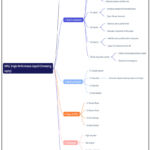 |
Figure 1: mind map of HPLC parts (created by Monica AI)Click here to view Figure |
Current Advancements and Recent State of Research
The field of HPLC is endlessly progressing and the recent advancements focus on:
Ultra-High-Performance Liquid Chromatography (UHPLC)
This is an important development, utilizing columns packed with sub-2 µm particles or core-shell particles. UHPLC systems work at a very high pressures (up to 1000 bar or more), leading to a dramatically reduction of the time of analysis, enhanced resolution, and higher sensitivity compared to predictable HPLC .5
Column Technology
Improvements in the stationary phase ( column chemistry and design) , including monolithic columns and superficially porous particles (core-shell), affect the improvement of separation efficacy and selectivity, additionally , to column lifetime which is a very important target in analysis . Hybrid particles that compromise improved the stability of pH are also noticeable. 6
Detector Enhancements
The connection of HPLC with mass spectrometry (LC-MS and LC-MS/MS) has become essential, providing high discrimination and sensitivity for structural amplification and trace analysis. Developments in other indicators like diode array detectors (DAD) and evaporative light scattering detectors (ELSD) have also prolonged HPLC’s proficiencies. 6
Green Analytical Chemistry
There’s a growing importance on developing more environmentally friendly HPLC processes. This comprises the reduction of solvent consumption through a technique similar to UHPLC, consuming greener solvents, and exploring alternate separation mechanisms alike temperature-responsive liquid chromatography (TRLC) that can consume pure water as a mobile phase. 7
Automation and Method Advancement
Automated method advance, often retaining Quality by Design (QbD) principles and optimization, is restructuring the optimization of HPLC separations, making them faster and more potent. 8
Nano LC
The development of nano-LC systems permits for analysis of samples with very small amounts and high sensitivity, which is typically suitable in metabolomics and proteomics.9
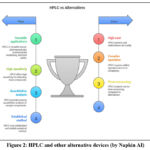 |
Figure 2: HPLC and other alternative devices (by Napkin AI)Click here to view Figure |
Applications of HPLC
HPLC has been applied extensively in pharmaceutical analysis, food safety, and environmental monitoring, 10 and highlighted on the role of HPLC in detecting contaminants in food products, demonstrating its effectiveness compared to other methods. The study concluded that HPLC’s ability to analyze complex matrices makes it indispensable in ensuring food safety.
Pharmaceutical Analysis
This is a major application area. HPLC is used for drug discovery, development {e.g., impurity profiling, stability testing of active pharmaceutical ingredients (APIs)}, quality control of raw materials and ended products, and also pharmacokinetic studies. It shines in analyzing multi-component dosage forms and confirming regulatory 11
Environmental Monitoring
HPLC is critical for detecting and quantifying pollutants and poisons such as pesticides, herbicides, heavy metals, and volatile organic compounds (VOCs) in water, soil, and air samples. Its ability to handle complex media makes it invaluable for ensuring and certifying environmental safety.12
Food Safety and Quality Analysis
HPLC is widely employed for the analysis of food components (e.g., vitamins, lipids, additives), contaminants (e.g., mycotoxins, pesticide residues, preservers), and for ensuring food quality and validity. Recent studies include HPLC-based techniques for monitoring microbial toxins.13
Biochemical and Clinical Research
HPLC is used for the analysis of biological samples, including protein and nucleic acid analysis, metabolomics, and therapeutic drug monitoring. Its high resolution is essential for separating complex biological mixtures and determination of brain neurotransmitters , 14separation of fatty acids,15 assessment of oxidative stress such as determination of urinary 8-hydroxyguanosine, the DNA damage marker , 16 and Co enzyme Q10 and vitamins. 17
Implications of Recent Studies
Recent research underscores HPLC’s persistent rank while highlighting a clear line towards more dominant and effective iterations like UHPLC. The focus on the combination of HPLC with mass spectrometry (MS ) is modernizing analytical proficiencies, particularly for complex sample analysis and trace detection ; in addition to identification and quantitation of drug metabolites using atmospheric pressure ionization techniques. Besides, the drive towards “green” HPLC and automation reflects comprehensive trends in analytical chemistry pointed at sustainability and improved laboratory proficiency. These improvements confirm that HPLC and its interrelated techniques will remain to be critical and very important in scientific research, industrial quality control, and adjusting omission across numerous sectors.
Conclusion
HPLC remains an indispensable analytical tool, offering a powerful combination of separation efficiency, versatility, and quantitative accuracy. Ongoing research continuously enhances its capabilities, particularly through the development of UHPLC, novel column technologies, advanced detection methods (especially MS), and a growing focus on sustainable and automated approaches. While other techniques have their specific advantages, HPLC’s broad applicability and continuous evolution ensure its central role in modern analytical laboratories for the foreseeable future.
Acknowledgement
The author would like to thank the National Research Centre (NRC) for help and unlimited support.
Funding Sources
The author(s) received no financial support for the research, authorship, and/or publication of this article.
Conflict of Interest
The author(s) do not have any conflict of interest
Data Availability Statement
This statement does not apply to this article.
Ethics Statement
This research did not involve human participants, animal subjects, or any material that requires ethical approval.
Informed Consent Statement
This study did not involve human participants, and therefore, informed consent was not required.
Clinical Trial Registration
This research does not involve any clinical trials
Permission to reproduce material from other sources
Not Applicable
Author Contributions
The sole author was responsible for the conceptualization, methodology, data collection, analysis, writing, and final approval of the manuscript.
References
- Ghanjaoui M, Mandil A, Mou AAS, Slimani R. High performance liquid chromatography quality control. International Journal of Advanced Chemistry. 2020;8(1):1-11.
CrossRef - Papp LA, Szabó ZI, Hancu G, Farczádi L, Mircia E. Comprehensive review on chiral stationary phases in single-column simultaneous chiral–achiral HPLC separation methods. Molecules. 2024;29(6):1346.
CrossRef - Zhang C, Chen G, Tang G, et al. Multi-component Chinese medicine formulas for drug discovery: state of the art and future perspectives. Acta Materia Medica. 2023;2(1):106-125.
CrossRef - RANJAN S, Chaitali R, SINHA SK. Gas chromatography–mass spectrometry (GC-MS): a comprehensive review of synergistic combinations and their applications in the past two decades. Journal of Analytical Sciences and Applied Biotechnology. 2023;5(2):72-85.
- Rozing G. Micropillar array columns for advancing nanoflow HPLC. Microchemical Journal. 2021;170:106629.
CrossRef - Guillarme D, Dong M. Newer developments in HPLC impacting pharmaceutical analysis: a brief review. American Pharmaceutical Review. 2013;16(4):36-43.
- Maliyakal J, Patel M. Green Chemistry Approaches in the Analytical Validation of Fosravuconazole Using UV Spectrophotometry and RP-HPLC. Green Analytical Chemistry. 2025:100215.
CrossRef - Yang S, Hu X, Zhu J, et al. Aspects and Implementation of Pharmaceutical Quality by Design from Conceptual Frameworks to Industrial Applications. Pharmaceutics. 2025;17(5):623.
CrossRef - Aydoğan C. Critical review of new advances in food and plant proteomics analyses by nano-LC/MS towards advanced foodomics. TrAC Trends in Analytical Chemistry. 2024:117759.
CrossRef - Siddique I. Unveiling the power of high-performance liquid chromatography: Techniques, applications, and innovations. European Journal of Advances in Engineering and Technology. 2021;8(9):79-84.
- D’Atri V, Fekete S, Clarke A, Veuthey J-L, Guillarme D. Recent advances in chromatography for pharmaceutical analysis. Analytical chemistry. 2018;91(1):210-239.
CrossRef - Kadadou D, Tizani L, Alsafar H, Hasan SW. Analytical methods for determining environmental contaminants of concern in water and wastewater. MethodsX. 2024;12:102582.
CrossRef - Bharti A, Jain U, Chauhan N. Progressive analytical techniques utilized for the detection of contaminants attributed to food safety and security. Talanta Open. 2024;10:100368.
CrossRef - Abdel-Salam OM, Salem NA, El-Shamarka ME-S, Ahmed NA-S, Hussein JS, El-Khyat ZA. Cannabis-induced impairment of learning and memory: effect of different nootropic drugs. Excli Journal. 2013;12:193.
- El-Khayat Z, El-Matty DA, Rasheed W, Hussein J, Shaker O, Raafat J. Role of cell membrane fatty acids in insulin sensitivity in diabetic rats treated with flaxseed oil. Int J Pharm Pharm Sci. 2013;5(2):146-151.
- Mubarak S, Hamid SA, Farrag AR, Samir N, Hussein JS. Cardioprotective effect of date palm against doxorubicin-induced cardiotoxicity. Asian J Pharm Clin Res. 2018;11(7):141-146.
CrossRef - Hussein J, El-matty DA, El-Khayat Z, Abdel-Latif Y. Therapeutic role of coenzyme Q10 in brain injury during experimental diabetes. Journal of Applied Pharmaceutical Science. 2013;3(6):213-217.
 PlumX:
 Views: 22141
  PDF Downloads:
4300
PDF Downloads:
4300