A Review of the Latest Developments and Trends in Biosensors Based on Carbon Nanotubes for Use in Medical Diagnosis
 , Madhuri Desai2and Lingala Syam Sundar3
 1Department of CSR, GreenkoEnergies Foundation, Hyderabad, India.
2Department of Community Medicine, Information and Health Decision Sciences (MEDCIDS), Faculty of Medicine of the University of Porto,Porto, Portugal.
3Department of Mechanical Engineering, College of Engineering, Prince Mohammad Bin FahdUniversity, Al-Khobar, Saudi Arabia.
*Corresponding Authors Email: nandalathippareddyravikumar@gmail.com
DOI : http://dx.doi.org/10.13005/bpj/3424
Download this article as:

Recent days, there have been notable advancements in the field of nanotechnology for various applications. Carbon nanotubes (CNTs) are materials originating from graphite sheets, these graphite layers resemble an indestructible hexagonal mesh structure that is constantly rolled up, with carbon molecules appearing at the apexes of the hexagonal structures. The single-walled carbon nanotubes, double-walled carbon nanotubes, and multi-walled carbon nanotubesare distinguished by the number of carbon layers they contain. The commonly used techniques for creation of CNTs is chemical vapor deposition, electric arc deposition, and laser deposition method.The distinctive qualities of CNTs are high flexibility, and greater chemical inertness. The CNTs are widely used for water purification, medication delivery, and sensing.These materials to make it different molecules or antigens is made possible by surface functionalization, and these are directed towards target cells for immunological therapeutic impact.
KEYWORDS:Antibacterial; Biosensors; Carbon nanotubes; Drug target; Drug delivery
Introduction
Nanostructured materials, which form the basis of nanotechnology, are gaining attention in the sector. Nanomaterials are smaller than 100 nm. Access to a wide range of novel magnetic, electrical, mechanical, and optical properties is made possible by this diverse collection of materials. Among the promising class of nanomaterials are nanotubes. Carbon nanotubes are currently by far the most important group, despite the fact that numerous other nanotubes based on boron and molybdenum have been widely reported. One or more are ranging in diameter of nano-meters, are found within carbon nanotubes.Iijima1early experimental observation of CNTs using TEM, subsequent gives the situation enabling the synthesis of significant amounts of CNTs.One way to think of carbon nanotubes is as cylindrically rolled-up graphite sheets. CNTs have a diameter of roughly 100 nm.2
Three distinct techniques like arc discharge, laser ablation, and chemical vapor depositioncan be used to create CNTs. The high temperature (>3000oC) required to evaporate carbon atoms into a plasma and generate both SWCNTs and MWCNTs is used in the arc discharge process. While MWCNTs does not require the presence of a catalytic agent, individual SWCNTs synthesis necessitates the presence of a catalytic agent. The high converting ratio and high level of purity for the final goods are guaranteed by the graphite purity.
Khan et al.3successfully synthesized carbon nanotube (CNTs) to create nanostructured brushes. In order for cross-linking properties, the oleic acid was used for functionalized CNTsafter being salinized using (3- aminopropyl) triethoxysilane, great properties, unique electrical architecturesare just a few of the exceptional physical and chemical qualities that CNTs display. With the high usefulness of these CNT, the Scientists are very interest. CNT are utilized for a variety of purposes, like biomolecules, drugs, specific organs, as well as in biosensor analysis and diagnostics.
This paper reviews the various clinical uses of CNTs like biosensors, drug targeting and illness diagnostics. The applications of electrochemical, DNA-based, piezoelectric, and gas sensors are briefly described. There is also discussion of some of CNTs’ antifungal and antibacterial properties.
Biomedical applications of CNTs
Because of their many beneficial qualities, which include being higher biocompatible over another materials, having speed moment of electron transfer kinetics. Additionally, they have metallic and semi-conductive qualities that make them a good material for different uses. Additionally, CNTs are important in the development of sensors that can identify different harmful germs and aid in cancer curation. CNTs exhibit a variety of antibacterial properties.4,5.Fig. 1indicated the various synthesis methods of CNTs. Below is a brief discussion of each of these CNT applications is shown in Fig. 2.
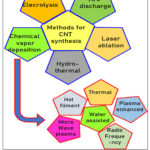 |
Figure 1: Various synthesis methods of CNTs.
|
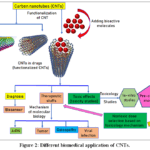 |
Figure 2:Different biomedical application of CNTs.
|
Sensors based on CNTs
The CNTs are very useful for many biosensor uses because they have many great qualities for helping to immobilize proteins, a large surface area. MWCNTs are very hopeful for use in biosensors because they can help proteins stick to surfaces while keeping their natural activity.6
Saxena and Srivastava7explained in their book chapter, the CNT based gas and vapour sensors response faster and monitors industrial safety in chemical, pharmaceutical, and stable sensor for industries, environmental monitoring, biomedicine, homeland security, and many other areas. Kumar et al.8explained in their book, the CNT based chemiresistive sensors have been frequently used in different government and public sectors to detect the toxic and inflammable substances due to their high sensitivity and low operating temperature.MWCNTs integration in biosensor assembly is provided in Fig. 3.
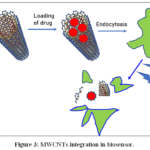 |
Figure 3: MWCNTs integration in biosensor.
|
Electrochemical biosensor
Electrochemical biosensors are self-contained devices that are built in. Biological recognition elements (bio-receptors) are linked to electrode, it turns to recognise into an understandable electrical signal. Because they are specific, quick, portable, and cheap9, biosensors open up a lot of interesting possibilities for screening in the emergency room, monitoring at the bedside, or self-testing at home. Electrochemical biosensors can be broken down into three groups: amperometric, potentiometric, and conductometric.10
These days, an electrochemical sensor is developed using an insulating base with an electrode coating on its surface.11. Nanoscale CNTs exhibit a variety of enhanced properties, making them very suitable for the creation of electrochemical biosensors. Advances in this discipline have continuously surfaced during the last two centuries. Screen-printed carbon electro transducers (SPCEs) were transformed using MWCNTs, which had superior qualities to naked SPCEs. CNT exhibits remarkable properties when combined with other materials, such as polymers and nanoparticles, which further distinguishes and advances the material.Using an electroactive adducts, Beden et al.12created electrochemical sensor for dopamine analysis at subnanomolar levels. The MWCNTs/Au were mixed for sensor to increase their behaviour. When the electrode was altered using nanohybrids, the sensors responded more effectively. This demonstrated a low recognition limit, an excellent wide linear range. Fig. 4 is the schematic representation of electrochemical biosensor.
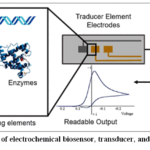 |
Figure 4: Diagram ofelectrochemical biosensor, transducer, and signal processor.13
|
Using MWCNTs on the glassy carbon electrode (GCE) surface, Gutierrez et al.14showed to detect albumin, glucose, and amino acids both qualitatively and quantitatively. The limit at which their probe could detect glucose(Gutierrez et al.14). By using functionalized MWCNTs in sensing, Liu et al.15have able to decrease the fabrication time and enhance the detection limit of sensing. Mercapto-β-cyclodextrinstructure was created by Kan et al.16and anchored onto MWCNTs. The sensor’s low detection limit, high sensitivity, and selectivity all demonstrated strong analytical performance. Quercetin was detected using the sensor that was constructed.Using anchoring nanocomposites as an electron transfer interface, Palisoc et al.17created a very sensitive nanosensor. MWCNT and Ag nanoparticles are the nanocomposites utilized here. In addition to the nanocomposite, a strong interface was developed using nafion membrane. The sensor was used to find heavy metals in vegetable samples, including cadmium and lead. Heavy metal traces in actual samples can be detected by the developed sensor.
Using amine-functionalized MWCNTs, Revathi et al.18created nonenzymatic based electrochemical sensor. Hydrogen peroxide was determined selectively using a variety of amine forms. The results demonstrated that the various types of amine functionalization have a significant impact on how well a biosensor function. The signal acquisition modules process data received from the transducer and display the results. A schematic of this procedure is shown in Fig. 5.19
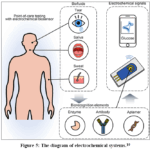 |
Figure 5: The diagram of electrochemical systems.19
|
MWCNTs/Cu-Ni nanosensorwas created by Wang et al.20to detect two N2bases. In an actual samplesensor was perfectly used to identify both bases.Ahammad et al.21created a MWCNTsensor with lead pencil to detect hydroquinone and catechol at the same time. The sensor was used to analyse actual samples. It was discovered that the sensor had good repeatability and reproducibility. The developed sensor uses pencil graphite, which is significantly less expensive than glassy carbon electrode (GCE), in place of GCE.
A nickel-anchored MWCNT-based sensor was created by Wang et al.22to detect phenol. The electroless plating technique was used to fix the nickel onto the MWCNT. In actual sample analysis, the sensor demonstrated exceptional stability, repeatability, sensitivity, and selectivity.
A bilirubin sensor based on MWCNT was independently developed by Thangamuthu et al.23. The graphene-based sensor outperformed the MWCNT-modified SPE electrode in terms of sensitivity, linear range, and detection limit. By using the specially constructed sensor in blood data for inspection of bilirubin, sensor’s feasibility is confirmed. Using nafion iconic membraneprevented the interference. Rahmawati et al.24created an electrochemical sensor creating Fe and MWCNT from iron dust. Sonochemical technique using an ultrasonic horn was employed to create the nanocomposite from iron sand. The viability of using nanocomposites in the design of electrochemical biosensors was determined by a number of investigations. The synthesized nanocomposite demonstrated superior electron transfer kinetics and a wide surface area, according to all studies. Consequently, it is simple to develop an electrochemical biosensor using the produced nanocomposite.
A pencil graphite electrode-based nanosensor was described by SevgiGuney et al.25. MWCNTs and polymer, specifically meldonium imprinted polymer, were used to modify the electrode. Meldonium might be detected by the designed sensor. By contrasting the analytical outcomes of MWCNTs and p-MWCNTs, they were able to verify that the produced sensor’s high sensitivity and specificity are made possible by the use of p-MWCNT. The sensor was used in actual samples to identify meldonium at trace levels in human urine samples. According to the comparison analysis, the created nanosensor outperforms the current biosensors in terms of quick reaction and convenience of use.
A nanosensor using MWCNT and cobalt phthalocyanine (CoPc) on a pencil graphite electrode was created by Laís Sales Porto et al.26. In the pharmaceutical industry, the developed sensor was used to determine pyridoxine effectively. It was discovered that the sensor has great selectivity, quick reaction, ease of preparation, and ease of use in the pharmaceutical sector. The created sensor may turn out to be the most effective substitute for measuring vitamin B6 levels.Eshaghi et al.27created biosensor for detection of the anti-cancer medications Erlotinib HCl (ETHC) and CPT (capecitabine) on the surface of PGE using MWCNT and polyurethane as a nanocomposite. For both medications, it was discovered that the sensor had a low detection limit up to the molar range.Aptamer was coupled with nanocomposites in an electrochemical nanosensor created by Liu et al.28 to detect β-estradiol with specificity and sensitivity. The used nanocomposites were carbon nanotubes and gold nanoparticles, which serve as an immobilization matrix and a sensing interface for the biorecognition component, or aptamer.To measure cholesterol, Basuet al.29developed a nanosensorthrough Poly-L-Lysine-MWCNTs mounted on graphene. The minuscule amounts of cholesterol in femtomolar can be detected by the sensor.
In order to monitor the humidity level, Kim et al.30created a nanosensor based on carbon nanotubes (CNTs) embellished on Ag electrode. Humidity-sensor, core shell materials were used, the humidity level was also ascertained by measuring the resistance. High electrical efficiency was demonstrated by the designed sensor, which was independent of frequency and voltage. Chokkareddy et al.31createdelectrochemical-sensor employing CuOand MWCNTs. Furthermore, docking, redox, and nucleophilic investigations were carried out. The coffee sample’s chlorogenic acid was detectable by the sensor.In order to determine the catechol, resorcinol, and dihydroxybenzene isomers simultaneously,Yang et al.32created CNT electrode, and they improved the created interface’s conductivity. The three analytes’ detection limits fall within the micromolar range. The created nanosensor demonstrated remarkable stability, anti-interference capabilities, and reproducibility. The analytes in actual samples can be detected by the nano-sensor. Using electrodes modified by carbon nanotubes, Shetty et al.33developed biosensor. Methdilazine (MDH), an antihistamine medication, was determined electrochemically using impassive sensor modified with MWCNT in phosphate buffer solution (PBS) at pH 9.0. Several voltammetric approaches were used to examine the effects of concentration, metal ions, excipients, scan rate, pH, accumulation time, and other factors on the MDH voltammetricbehavior. A very low detection limit value between 0.1 10 7M and 0.3 10 6M was discovered. It was possible to identify the amount of methdilazine in urine and other samples using the sensor’s exceptional response and quick results.
The sensor for identifying mefenamic acid and flufenamic acid was created by Shetty et al.34. In order to create RuTiO2/MWCNTs-CPE electrodeidentification and measurement of flufenamic acid (FFA) and mefenamic acid (MFA) medications, a mixture of ruthenium-doped TiO2 and MWCNTs. Very low quantity of 0.68 nM for FFA and 0.45 nM for MFA were displayed by sensor. Using MWCNT on carbon paste electrode adorned with bismuth nanoparticles,Manasa et al.35recently created electro-chemical sensor for sensitiveand specific measurement of gallic acid at neutral pH. Gallic acid was successfully extracted in clove and green trees, with a detection of 1.6 10 7 M, prepared sensor demonstrated a broad linear dynamic range. Perfect detection, under neutral pHwere only a few advantages of the developed sensor. Cetirizine (CTZ) was measured electrochemically utilizing a carbon sensor made of MWCNTs and Ru-TiO2 nanoparticles. Voltammetry methods like square wave voltammetry, and cyclic voltammetry are used to electrochemically analyse CTZ in order to quantify the heterogeneous rate constant and the amount of protontransfer in the oxidation(Fig. 6).
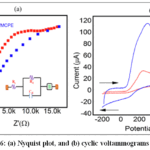 |
Figure 6: (a) Nyquist plot, and (b) cyclic voltammograms plot.35
|
Piezoelectric sensor
By utilizing MWCNT’s electromechanical characteristics, Khan et al.36created polydimethyl siloxane (PDMS) sensor. Furthermore, SEM studies indicates the spray coating approach can produce a homogenous and compact network of CNTs. When creating stretchable sensors, compactness and homogeneity are crucial.Ali et al.37developed piezoresistive sensor using graphene, CNT, and graphene-CNTcomposites. The sensitivity and the percentage drop in resistance were found to be higher than those of pure graphene but lower than those of pure CNTs.Park et al.38prepared the same wearable sensor based on MWCNTusing PDMS. They have used this sensor for two purposes, (1) strain sensing for tissue characterisation, and (2) robotic hand development. Additionally, they discovered that the sensor is very specific, biocompatible, simple to manufacture, small, flexible, and affordable.
Stretchable sensors based on MWCNTs were created by He et al.39 using thermoplastic urethane as the substrate. Wet spinning was used to produce the fibers. Since the stretchy sensor is built into gloves and bandages, it has been used to measure a wide range of human functions. The outcomes are outstanding and could be used in strain-based textile sensors of the future.Another stretchy sensor based on MWCNTs on PDMS substrate was created by Ramalingame et al.40and demonstrated the capacity to sense pressure directly without the need for deformation materials. They are perfect for gait monitoring in insole applications because of their excellent flexibility and compactness.Fig. 7 shows (a) a schematic of the steps used to make Ag NP/MWCNTsensors, (b) a photograph of the samples that were made, and (c) optical pictures of the samples that were made42. The steps used for making of Ag/MWCNstrain sensors are shown in Fig. 8.43
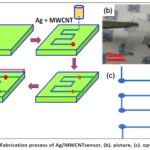 |
Figure 7: (a) Fabrication process of Ag/MWCNTsensor, (b) picture, (c) optical images.42
|
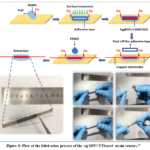 |
Figure 8: Flow of the fabrication process of the Ag/MWCNTbased strain sensors.43
|
Gas sensor
Different gas sensors are developed to fulfil the needs of a variety of applications, including industrial, environmental, and medical. The use of nanomaterials as sensing interfaces in gas sensors provides a clear benefit in terms of both selectivity and sensitivity. For the detection of ammonia gas, Hieu et al.44created sensor for the purpose of identification of NH3 gas. Even at room temperature, the sensor’s responsiveness was significantly improved.The ammonia gas sensor was created by Abdulla et al.45by immobilizing polyaniline polymer using functionalized MWCNTs. When compared to the unaltered electrode, the created sensor demonstrated good analytical performance in terms of reaction time, recovery, and stability.A field-effective transistor-type sensor based on MWCNTs was described by Kim et al.46for the selective detection of NOx. Gold was placed over the formed surface after MWCNTs were secured to the silicon wafer’s surface. At various gate source voltages, the proposed sensor has the inherent ability to detect NOx gas.
The sensor’s working principle is based on resistivity, that decreases as absorbed NOx gas increases. In order to detect methane gas, Cismaru et al.47created radiofrequency gas sensor through electromagnetic resonator with a couplemade of MWCNT. They demonstrated results using a small device size that clearly demonstrate MWCNT’s capabilities in a sensing application. Dilonardo et al.48took advantage of MWCNTs’ gas sensing capabilities. In this work, the surface of Ag and palladium were coated with MWCNTs. A variety of contaminants could be detected by the manufactured sensor. In comparison to gold nanoparticles, the MWCNTs that were adorned on surface of palladium demonstrated superior sensing behaviour.
Sensor for detection of NH3was created by Husseini et al.49, and used OH-MWCNT as sensor, the sensor evaluates capacity to detect ammonia gas selectively at room temperature.For ammonia sensing, Mahajan et al.50 used ZnO, MWCNT, and reduced graphene oxide. Another functional membrane that is a part of the sensing platform is polypyrrole. ZnO serves as a filler in this method. When it came to ammonia gas, the designed sensor was extremely sensitive. MWCNTs/NOA 63 energizing them using supercapacitor, Song et al.51created NO2 gas detection system. Sensor was able to adhere to skin imperfections.Consequently,sensor may evolve wearable gadget which detects NO2 gas. George et al.52developed Ag/MWCNTs that were anchored onto poly (3,4 ethylene dioxythiophene) and polystyrene.
Duong et al.53developed MWCNT/WO3 sensor for identification of NH3 gas. Hydrothermal method was used to create the nanocomposites for ammonia gas detection. The CNT/WO3electrode exhibited gas sensing capabilities. Kim et al.54proposed gas detection system with H2SO4, and NH3all at once. MWCNTs were tethered to a dye-functionalized matrix for the sensor. Fig. 9 indicates the schematic diagram of working principle of gas sensor.55Fig. 10 gives an information about the gas-sensing mechanism of the SWCNT-based sensors depicting the chemisorption of the analyte molecules.56Fig 11 provides the gas-sensing mechanism along with the energy band diagram showing the adsorption of ammonia gas leading to corresponding charge transfer.57
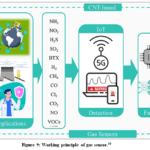 |
Figure 9: Working principle of gas sensor.55
|
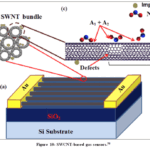 |
Figure 10: SWCNT-based gas sensors.56
|
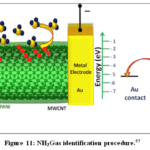 |
Figure 11: NH3Gas identification procedure.57
|
Drug targeting
Drug targeting and controlled release are two applications for multiwalled carbon nanotubes. Potent therapeutic drug is administered to a specific area for a prolonged amount of time, this is known as targeted drug delivery. With the hydrophobic properties the bloodstream remains long time, carbon nanotubes are utilized in drug delivery. Because carbon nanotubes can control a variety of stimuli, including magnetic, electric, and temperature changes, among others, they have been used for targeted and controlled medication delivery.
Meherjuoi et al.58examined the different nanotubes used to administer the medication cisplatin. By using Ag stimulator in CNTs generates a molecular dynamic phenomenon. The function of MWCNT and pHin drug administration of duxorubicin was explained by Seyfoori et al.59The medicine was administered to U-87 glioblastoma cells using a created nanohybrid technology, and it was discovered that this method limited the growth of cancer cells. In order to access electrical properties, Im et al.60created a transdermal patch employing polymer-MWCNT. Through the influence of heating, the scientists have used perfect capabilities of CNTs to expedite medical causes. Mandal et al.61evaluated the effectiveness of biodegradable, biocompatible nanocomposite hydrogel and MWCNT for the sustainability of diclofenac sodium. A better alternative to the transdermal formulation was the polymer composite of MWCNTs, which produces diclofenac sodium. An electroresponsive polymer-MWCNT hybrid was developed by Servant et al.62For the assessment of the controlled released profile, they have used the hydrophilic drug model of radiolabelled sucrose applied with an electric field.
Cancer diagnosis and treatment
Wang et al.63found that, in comparison to larger multiwalled carbon nanotubes (39.5 nm average diameter), narrow multiwalled nanotubes (09.2 nm average diameter) had a better affinity of tissue, particularly for non-reticular endothelium tissues.Through the release method of enzymatic breakage in invitro breast cells, Samori et al.64administered the anticancer medication methotrexate with the use of MWCNT. The doxorubicin (DOX) was delivered at lesser pH using dendrimer-MWCNT. Proteins, and DNA can be carried by MWCNT since these macromolecules are readily brake-down by enzymes found inside or outer surface of CNT. Guo et al.65created carrier cationic in calutumor xenografts, apoptotic siRNA over polo-like kinase (siPLK1) is administered by direct intertumoral injections using multiwalled carbon nanotubes (NH3þ).
Antibacterial activity of CNTs
MWCNTs can demonstrate their antibacterial properties in a number of ways. However, the precise mechanism behind MWCNTs’ antibacterial properties is still unknown. First, a tight contact with the membrane surfaces causes a change in the integrity of the cell membrane.66Second, causing the production of ROS, which eventually results in DNA damage and cell death.67Third, the antibacterial properties of MWCNTs may potentially be significantly influenced by impurities.
Furthermore, derivatives that have been studied have reportedly demonstrated greater action against positive grambacteria relatively less activity over negative gram.68The antibacterial action of SWCNTs in conjunction with iron oxides over E. coli bacteria has been documented through Engel et al.69The antibacterial effectiveness against several bacteria, including Shigellaflexineri, Salmonella species, E. coliexamined by membrane filters treated with carbon nanotubes.70Additionally, it has been shown by Rananga and Magadzu71that MWCNT treated with Ag has increased antibacterial behaviour. The antibacterial properties of Ag–Fe3O4-MWCNT have been shown by Bhaduri et al.72
Zhu et al.73conducted a research to show that MWCNT with a carboxyl group had antibacterial action. There have been reports of antibacterial action against S. aureus and E. coli using a polyaniline/graphene/carbon nanotube nanocomposite. MWCNT shown superior antibacterial activity compared to pristine MWCNTs, according to Zardini et al.74. Both four-gram positive and four-gram negative bacteria were shown to be susceptible to their antimicrobial activity. MWCNTs were utilized by Vecitis et al.75to filter the water in order to eliminate bacteria and destroy viruses.
The antibacterial properties of carbon nanoparticles are demonstrated in Fig. 12. After entering the bacterial nuclei, MWCNTs interact with the DNA to form ROS, which eventually causes cell death. The antibacterial property is enhanced by the combined action of MWCNTs and chitosan. The antibacterial properties of MWCNTs are also significantly influenced by their aspect ratio and orientation.76
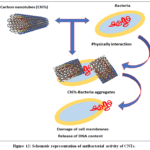 |
Figure 12: Schematic representation of antibacterial activity of CNTs.
|
Conclusion
The structure of CNT is cylindrical, the MWCNT are having large strength and large surface area. Since carbon nanotubes have demonstrated special benefits, they are servingvehicle for efficient movement of biomolecules like lectins, antibioticssubstances. Carbon nanotube-based biosensors have demonstrated improved sensitivity, repeatability, dependability, and affordability. The application of MWCNTs in biosensing technology increases its sensitivity, specificity, and suitability for use in cancer treatment and illness detection. Numerous analytes, including pyridoxine, dopamine, ascorbic acid, uric acidbeen detected using MWCNT biosensors, additionally, it demonstrated antibacterial properties. Therefore, in order to improve human health more examinations are required for effective utilization of CNT sensors.
Acknowledgement
The author (LSS) acknowledge the Prince Mohammad Bin Fahd University.
Funding sources
The author(s) received no financial support for the research, authorship, and/or publication of this article.
Conflict of Interest
The author(s) do not have any conflict of interest.
Data Availability Statement
This statement does not apply to this article.
Ethics Statement
This research did not involve human participants, animal subjects, or any material that requires ethical approval.
Informed Consent Statement
This study did not involve human participants, and therefore, informed consent was not required.
Clinical Trial Registration
This research does not involve any clinical trials.
Permission to reproduce material from other sources
Not Applicable
Author Contributions
- Lingala SyamSundar: Conceptualization, Methodology, Writing – Original Draft.
- Madhuri Desai: Data analysis, Data Collection.
- NandalaThippa Reddy Ravi Kumar: Writing – Review & Editing.
References
- Iijima S. Helical microtubules of graphitic carbon. 1991; 354: 6348-6356.
CrossRef - Polizu S, Savadogo O, Poulin P, et al. Applications of carbon nanotubes based biomaterials in biomedical nanotechnology. Nanoscience and Nanotechnology. 2006; 1883-1904.
CrossRef - Khan MU, Reddy KR, Snguanwongchai T, et al. Polymer brushsynthesis on surface modified carbon nanotubes via in situ emulsionpolymerization. Colloid Polymer Science. 2016; 1599-1610.
CrossRef - Smart SK, Cassady AI, Lu GQ, et al. The biocompatibility of carbon nanotubes. 2006; 1034-1047.
CrossRef - Dey PR,Das NI. Carbon nanotubes: it’s role in modern health care. J. Pharm. Pharmaceut. Sci. 2013; 9-13.
- Marega R,Leo D, Pineux F, et al. Functionalized Fe-filled multiwalled carbon nanotubes as multifunctional scaffoldsfor magnetization of cancer cells. Advanced Functional Materials. 2013; 3173–3184.
CrossRef - Saxena S, Srivastava AK, Chapter 10 – Carbon nanotube-based sensors and their application. Nano-Optics, Fundamentals, Experimental Methods, and Applications: Micro and Nano Technologies. 2020; 265-291.
CrossRef - Kumar S, Singh A, Astakala AK. Chapter 4 – Carbon nanomaterial-based chemiresistive sensors. Carbon Nanomaterials and their Nanocomposite-Based Chemiresistive Gas Sensors, Applications, Fabrication and Commercialization, Micro and Nano Technologies. 2023; 107-131.
CrossRef - Wang J. Electrochemical biosensors: towards point-of-care cancer diagnostics. Bioelectron. 2006; 1887-1892.
CrossRef - Su L, Jia W, Hou C, Lei Y. Microbial biosensors: Review. Bioelectron. 2011; 1788–1799.
CrossRef - Charlton SC, Johnson LD, Musho MK, et al. Inventors, Bayer Corp, Assignee, Electrochemical Biosensor. United States Patent. 1998; 798.
- Beden N,Hamidi H, Palecek E. Subnanomolar determination of dopamine by electrochemical sensor based on Au-NPs-MWCNTs and mannopentose-Os (VI) adducts. Insights Anal. Electrochem. 2015; 1(2).
CrossRef - Hernandez-Vargas G, Sosa-Hernández JE, Saldarriaga-Hernandez S, et al. Electrochemical biosensors: A solution to pollution detection with reference to environmental contaminants. Biosensors. 2018; 8(2): 29.
CrossRef - Gutierrez FA, Rubianes MD,Rivas GA. Electrochemical sensor for amino acids and glucose based on glassy carbon electrodes modified with multi-walled carbon nanotubes and copper microparticles dispersed in polyethylenimine. Electroanal. Chem. 2016; 16-21.
CrossRef - Liu X, Du C, Ni D, et al. A simple and sensitive electrochemical sensor for rapid detection of Clostridium tetani based on multiwalled carbon nanotubes, Methods. 2016; 8280-8287.
CrossRef - Kan X, Zhang T,Zhong M, et al. CD/AuNPs/MWCNTs based electrochemical sensor for quercetin dual-signal detection. Bioelectron. 2016; 638-643.
CrossRef - Palisoc ST, Natividad MT,Jesus ND, et al. Highly Sensitive AgNP/MWCNT/Nafionmodified GCE-based sensor for the determination of heavy metalsin organic and non-organic vegetables. Scientific Reports. 2018; 17445.
CrossRef - Revathi C, Rajavel K, Saranya M, et al. MWCNT based non-enzymaticH2O2 sensor: influence of amine functionalization on the electrochemical H2O2 J. Electrochem. Soc. 2016; B627-B632.
CrossRef - Kim J, Jeong J, Ko Electrochemical biosensors for point-of-care testing. Bio-Design and Manufacturing. 2024; 7: 548-565.
CrossRef - Wang J, Wang Y, Yao Z, et al. Preparation of Fe3O4/MWCNT nano-hybrid and its application as phenol sensor. Res. Express. 2018: 075003.
CrossRef - Ahammad AS, Akter T, Al-Mamun A, et al. Cost-effective electrochemical sensor based on carbon nanotube modified-pencil electrode for the simultaneous determination of hydroquinone and catechol. Electrochem. Soc. 2018; B390–B397.
CrossRef - Wang Y, Wang J, Yao Z, et al. Ni nanoparticle anchored on MWCNT as a novel electrochemical sensor for detection of phenol. 2018; 1850134.
CrossRef - Thangamuthu M, Gabriel W, Santschi C, et al. Electrochemical sensor forbilirubin detection using screen printed electrodes functionalized with carbonnanotubes and graphene. 2018; 800.
CrossRef - Rahmawati R, Taufiq A, Sunaryono, et al. The Synthesis of Fe3O4/MWCNT nanocomposites from local iron sands for electrochemical sensors, 3rd International Conference on the Science and Engineering of Materials (ICoSEM 2017). 2018; 020016-1-7.
CrossRef - Güney S. Electrosynthesis of molecularly imprinted poly-o-phenylenediamine on MWCNT modified electrode for selective determination of meldonium. 2019; 661–670.
CrossRef - Porto LS, Silva DN, Silva MC, Pereira AC. Electrochemical sensor based onmulti-walled carbon nanotubes and cobalt phthalocyanine composite for pyridoxinedetermination. 2019; 820–828.
CrossRef - Eshaghi Z, Moeinpour F. Carbon nanotube/polyurethane modified hollow fiberpencil graphite electrode for in situ concentration and electrochemicalquantification of anticancer drugs Capecitabine and Erlotinib. Life Sci. 2019; 302-314.
CrossRef - Liu X, Deng K, Wang H, et al. Aptamer based ratiometricelectrochemical sensing of 17β-estradiol using an electrode modified with goldnanoparticles, thionine, and multiwalled carbon nanotubes. 2019; 347.
CrossRef - Basu AK, Sah AN, Pradhan A, et al. Poly-L-Lysine functionalised MWCNT-rGOnanosheets based 3-d hybrid structure for femtomolar level cholesterol detection using cantilever-based sensing platform. Rep. 2019; 3686.
CrossRef - Kim HS, Kim JH, Park SY, et al. Carbonnanotubes immobilized on gold electrode as an electrochemical humidity sensor. Actuator. B Chem. 2019; 127049.
CrossRef - Chokkareddy R, Redhi GG, Karthick T. A lignin polymer nanocomposite based electrochemical sensor for the sensitive detection of chlorogenic acid in coffee samples. Heliyon, 2019; e01457.
CrossRef - Yang S, Yang M, Liu Q, et al. An ultrasensitiveelectrochemical sensor based on multiwalled carbon nanotube@ reduced grapheneoxide nanoribbon composite for simultaneous determination of hydroquinone, catechol and resorcinol. Electrochem. Soc. 2019; B547-B553.
CrossRef - Shetti NP, Malode SJ, Nayak DS, et al. Novel biosensor for efficient electrochemical detection of methdilazine using carbon nanotubesmodified electrodes. Res. Express. 2019; 116308.
CrossRef - Shetti NP, Nayak DS,Malode SJ, et al. Sensors based on ruthenium-doped TiO2 nanoparticles loaded into multi-walledcarbon nanotubes for the detection of flufenamic acid and mefenamic acid. Chim. Acta. 2019: 58-72.
CrossRef - Manasa G, Bhakta AK, Mekhalif Z, et al. Bismuth-nanoparticlesdecorated multi-wall-carbon-nanotubes cast-coated on carbon paste electrode; anelectrochemical sensor for sensitive determination of Gallic Acid at neutral pH. Sci. Energy Technol. 2020; 174-182.
CrossRef - Khan S, Lorenzelli L, Dahiya Bendable piezoresistive sensors by screen printing MWCNT/PDMS composites on flexible substrates, IEEE10th Conference on Ph.D. Research in Microelectronics and Electronics (PRIME). 2014; 1-4.
CrossRef - Ali A, Khan A, Karimov KS,et al. Pressure sensitive sensors based on carbon nanotubes, graphene, and its composites. Nanomater. 2018.
CrossRef - Park K, Tran P, Deaton N, et al. Multi-walled carbon nanotube (MWCNT)/PDMS-based flexible sensor for medical applications. Symp. Med. Robot. (ISMR). 2019; 1-8.
CrossRef - He Z, Zhou G, Byun JH, et al. Highlystretchable multi-walled carbon nanotube/thermoplastic polyurethane compositefibers for ultrasensitive, wearable strain sensors. 2019; 5884–5890.
CrossRef - Ramalingame R, Hu Z, Gerlach C, et al. Flexible piezoresistive sensor matrix based on a carbon nanotube PDMS composite for dynamic pressure distribution measurement. Sensor. Sensor Syst. 2019; 1-7.
CrossRef - Nag A, MukhopadhyaySC, Kosel J. Flexible carbon nanotube nanocomposite sensor for multiple physiological parameter monitoring. Sens. Actuators A Phys. 2016, 251, 148-155.
CrossRef - Min SH, Lee GY, Ahn SH. Direct printing of highly sensitive, stretchable, and durable strain sensor based on silver nanoparticle/multi-walled carbon nanotube composites. Part B Eng. 2019; 161: 395-401.
CrossRef - Yuan Z, Pei Z, Shahbaz M, et al. Wrinkle Structured Network of Silver-coated carbon nanotubes for wearable sensors. Nanoscale Res. Lett. 2019; 14: 1-8.
CrossRef - Hieu NV, Thuy LTB, Chien ND. Highly sensitive thin film NH3 gas sensoroperating at room temperature based on SnO2/MWCNTs composite. Actuator. B Chem. 2008; 888-895.
CrossRef - Abdulla S, Mathew TL, Pullithadathil B. Highly sensitive, room temperature gassensor based on polyaniline-multiwalled carbon nanotubes (PANI/MWCNTs)nanocomposite for trace-level ammonia detection. Sensor Actuator. B Chem. 2015; 221: 1523-1534.
CrossRef - Kim HS, Jang KU, Kim TW, NOx gas detection characteristics in FET-type multiwalledcarbon nanotube-based gas sensors for various electrode spacings. Kor. Phys. Soc. 2016; 797-802.
CrossRef - Cismaru A, Aldrigo M, Radoi A, Dragoman M. Carbon nanotube-basedelectromagnetic band gap resonator for CH4 gas detection. Appl. Phys. 2016; 124504.
CrossRef - Dilonardo E, Penza M, Alvisi M, Rossi R, Cassano G et al. Gassensing properties of MWCNT layers electrochemically decorated with Au and Pdnanoparticles. Beilstein J. Nanotechnol. 2017; 592-603.
CrossRef - Al-Husseini AH, Al-Sammarraie A, Saleh WR. Specific NH3 gas sensor worked atroom temperature based on MWCNTs-OH network. Nano Hybrids and Composites Trans. 2018; 23: 8-16.
CrossRef - Mahajan C, Chaudhari P, Mishra S. rGO-MWCNT-ZnO based polypyrrole nanocomposite for ammonia gas sensing. Mater. Sci. Mater. Electron. 2018; 8039-8048.
CrossRef - Song C, Yun J, Lee H,et al. A shape memory highvoltagesupercapacitor with asymmetric organic electrolytes for driving anintegrated NO2 gas sensor. Funct. Mater. 2019; 1901996.
CrossRef - George J, Abdelghani A, Bahoumina P, et al. CNTbased inkjet-printed RF gas sensor: modification of substrateproperties during the fabrication process. 2019; 1768.
CrossRef - Duong VT, Nguyen CT, Luong HB, et al. Enhancement of the NH3 gas sensitivity by using the WO3/MWCNT compositebasedsensors. Nat. Sci. Nanosci. Nanotechnol. 2019; 015001.
- Kim J,Yoo H, Ba VAP, et al. Dye-functionalized sol-gel matrix on carbon nanotubes for refreshable and flexible gas sensors. Scientific Reports. 2018; 11958.
CrossRef - Luo K, Peng H, Zhang B, et al. Advances in carbon nanotube-based gas sensors: Exploring the path to the future. Coordination Chemistry Reviewers. 2024; 518: 216049.
CrossRef - Kumar D, Kumar L, Chaturvedi P, et al. Study of simultaneous reversible and irreversible adsorption on single-walled carbon nanotube gas sensor. Materials chemistry and physics. 2016; 177: 276-282.
CrossRef - Abdulla S, Mathew TL, Pullithadathil B. Highly sensitive, room temperature gas sensor based on polyaniline-multiwalled carbon nanotubes (PANI/MWCNTs) nanocomposite for trace-level ammonia detection. Sensors and Actuators B: Chemical. 2015; 221: 1523-1534.
CrossRef - Mehrjouei E, Akbarzadeh H, Shamkhali AN, et al. Delivery of cisplatin anti-cancer drug from carbon, boron nitride, and siliconcarbide nanotubes forced by ag-nanowire: a comprehensive molecular dynamicsstudy. Molecular pharmaceutics. 2017; 2273-2284.
CrossRef - Seyfoori A, Sarfarazijami S, Ebrahimi SAS. pH-responsive carbonnanotube-based hybrid nanogels as the smart anticancer drug carrier. cell. Nanomed. Biotechnol. 2019; 1437-1443.
CrossRef - Im JS, Bai BC, Lee YS. The effect of carbon nanotubes on drug delivery in anelectro-sensitive transdermal drug delivery system. 2010; 1414-1419.
CrossRef - Mandal B, Das D, Rameshbabu AP, Dhara S, Pal S. A biodegradable, biocompatible transdermal device derived from carboxymethyl cellulose and multiwalled carbon nanotubes for sustained release of diclofenac sodium. RSC Adv. 2016; 19605-19611.
CrossRef - Servant A, Methven L, Williams RP, Kostarelos K. Electroresponsive polymer–carbon nanotube hydrogel hybrids for pulsatile drug delivery in vivo. Advanced Healthcare Materials. 2013; 806-811.
CrossRef - Wang JT, Fabbro C, Venturelli E, Menard-Moyon C, Chaloin O et al. The relationship between the diameter of chemically-functionalizedmulti-walled carbon nanotubes and their organ biodistribution profiles in vivo. 2014; 9517-9528.
CrossRef - Wen S, Liu H, Cai H, Shen M et al. Targeted and pH-responsive delivery ofdoxorubicin to cancer cells using multifunctional dendrimer-modified multi-walledcarbon nanotubes. Healthc. Mater. 2013; 1267-1276.
CrossRef - Guo C, Al-Jamal WT, Toma FM, Bianco A et al. Design of cationic multiwalled carbon nanotubes as efficient siRNA vectors for lung cancer xenograft eradication. Bioconjugate Chem. 2015; 1370-1379.
CrossRef
 PlumX:
 Views: 1331
  PDF Downloads:
226
PDF Downloads:
226