A Comprehensive Review on the Importance of Clinical Trials and Their Advancements in Drug Development and Healthcare

DOI : http://dx.doi.org/10.13005/bpj/3345
Download this article as:

Clinical trials are fundamental to the advancement of evidence-based medicine, providing systematic evaluation of the safety, efficacy, and quality of new therapeutic interventions. This review article outlines the essential principles, phases, regulatory frameworks, and ethical considerations governing clinical trials. Medical research is also referred to as clinical research. People are involved in clinical research, which is typically conducted to assess the effectiveness of a therapeutic medication, a medical or surgical operation, or a gadget as part of treatment and patient management. Furthermore, clinical research can refer to any study that assesses the pathophysiology, risk factors, symptoms, and other elements of a disease. Clinical trials, on the other hand, evaluate a therapeutic drug's or device's potential for illness management, control, and prevention. The focus on clinical research is crucial given the rising prevalence of both communicable and non-communicable diseases, particularly in light of the global influence of Corona Virus Disease-19 (COVID-19) on community health. Clinical research expertise will make it easier to find medications, gadgets, and vaccinations, enhancing readiness for public health catastrophes. Consequently, we thoroughly outline the essential components of clinical research in this study, including clinical trial stages, types, and designs, trial operations, audit, management, and ethical considerations. Clinical trials are essential to improving patient care and expanding medical knowledge. The three-year trial comprised a wide choice of patients who had run out of traditional therapy choices. The intervention group demonstrated a significant reduction in the primary outcome compared to the control group (p < 0.001). Additionally, the experiment highlighted the significance of patient safety because the medication had less side effects than conventional chemotherapy. These results demonstrate the value of rigorous clinical trials in developing novel medicines and giving people with difficult medical problems hope. The trial's findings present encouraging opportunities for additional study and possible advancements in cancer treatment, which would ultimately improve the lives of a great number of people. This review provides a comprehensive overview for clinicians, researchers, and policymakers involved in clinical research and highlights future directions to enhance the quality and accessibility of clinical trials worldwide.
KEYWORDS:Clinical trials; Disease; Drugs; Patient Safety; Research; Traditional
Introduction
In order to administer health care in the best possible way, both now & in the forthcoming, a constant cycle of information generation, dissemination, & uptake is necessary. This includes not only figuring out which interventions are effective but also how to make sure that those who need them receive them.1 Randomized clinical trials (RCTs) are the most rigorous method for figuring out what works in medicine. However, the ability of medicine to effectively serve society is compromised by significant problems with the clinical trials industry & the deficiency of integration of clinical trials through health care delivery.2 Today’s society demands not just the greatest care available today, but also enhanced care in the future.3,4 To achieve these objectives, medical knowledge and practice must come together.5 The finest care for today requires scientific evidence at every stage, from research on novel methods to treat and diagnose to studies on how to organise and provide care. It also requires mechanisms to ensure that this information is rapidly compiled.6,7 However, if we want to offer the finest care imaginable tomorrow, we must do all we can right now to identify methods to improve the existing treatment. Randomised clinical trials (RCTs) are the most effective approach to demonstrate that a drug works in the medical field.8 As a consequence, it should serve as a bridge between research and practice: potential approaches should typically be evaluated in a randomised controlled trial (RCT), and if the findings are satisfactory, practice should implement the required modifications. However, clinical trials and health-care organizations often fail to communicate with one another. Randomised controlled trials (RCTs) may not always provide knowledge that is useful in practice, and practice patterns do not always follow or alter in response to RCT outcomes.9
Clinical trials are vital for learning more about medicine and improving patient care. In these studies, novel drugs, therapies, or interventions are subjected to extensive testing on humans to see if they are safe, effective and have any adverse effects. Oncology clinical trials are critical, as shown by recent research titled Breakthroughs in Cancer Treatment: Promising Results from Phase III Clinical Trial. The study focused mostly on a novel customized medicine that performed well in treating a specific kind of advanced cancer. The new medicine significantly increased overall mortality and illness development. The trial included a large number of individuals who had exhausted all previous therapy options. These findings demonstrate the importance of clinical research in discovering novel and effective medicines, as well as providing hope to patients who have few other treatment alternatives.10-12
The piece discusses the trial’s tight requirements, such as regularly monitoring patients and adhering to legal standards. It also emphasizes the need of collaborative efforts among patients, clinicians, and researchers. Another matter that rises is the necessity for further and larger research to validate the findings and perhaps make the therapy accessible to more individuals. Overall, this work demonstrates the importance of clinical research in the advancement of medicine and providing hope to those who are struggling. Clinical investigations are required to advance medical research and enhance patient care. These trials are carefully designed investigations in which new medications, therapies, or treatments are tested on humans to see how well they work and if they are safe. Before a novel intervention is approved for extensive use, it is carried out in stages and according to a specific procedure to collect critical information and evidence. Clinical studies encompass a wide range of participants, from fit volunteers to those with specific health concerns, depending on the study’s objectives. The primary purpose is to determine how effectively the medicine works, what adverse effects exist, how much to take, and how it interacts with other treatments. 13-14
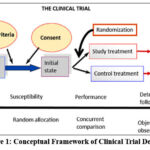 |
Figure 1: Conceptual Framework of Clinical Trial Design
|
Methodological Approach of the Review
Participants in these researches may also get innovative therapies that may not be accessible in standard medical care. Clinical study participants help physicians learn more about medicine and develop novel medicines that potentially benefit millions of people worldwide.15 Moreover, clinical trials are subject to stringent ethical guidelines that safeguard participants are safe and provide their permission prior to, during, and after treatment. All things considered, these investigations aid in relating recent scientific discoveries to practical medical applications. This advances medicine and ultimately improves patient outcomes.
Preclinical Studies and Overview of Clinical Trial Phases
Preclinical research involves laboratory-based studies, including experiments on animals and in-vitro systems. These studies test multiple dose levels of a candidate drug to obtain early information on its effectiveness, safety, and pharmacokinetics, helping pharmaceutical developers decide whether further investigation is justified. There are four diverse kinds of clinical trials.16,17
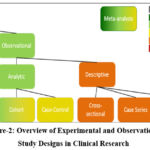 |
Figure 2: Overview of Experimental and Observational
|
Study Designs in Clinical Research
Phase I Trials
Phase I trials of clinical are the initial studies conducted in humans and usually enroll a limited number of healthy volunteers, generally between 20 and 80. The main purpose of this phase is to evaluate safety, tolerability, and how the medication is absorbed, distributed, metabolized, and eliminated, along with its biological effects. These trials are usually achieved in controlled inpatient settings so that participants can be closely monitored by medical staff. Subjects are observed over multiple drug half-lives, and gradually increasing doses are administered to help establish a safe and suitable dose for future therapeutic use. In preclinical animal studies, the doses tested are usually well below levels known to cause harm. Phase I trials generally involve healthy volunteers; however, in certain cases-such as terminal conditions with no effective treatments-patients may be registered instead. This approach is most commonly seen in oncology & HIV drug research. Participants are typically recompensed for their time and the inconvenience associated with staying at the research facility.18
Phase II Trials
Phase II a trial comprises a greater number of participants, usually between 20 and 300, and are designed to assess the treatment’s effectiveness while further monitoring its safety. These studies are conducted after Phase I has confirmed the initial safety of the investigational drug. Many new drugs fail at this stage of expansion, often because they demonstrate unacceptable side effects or lack the desired therapeutic effect. Phase II studies may be subdivided into Phase II A and Phase II B trials. Phase II A focuses on determining appropriate dosing levels, while Phase II B primarily evaluates the treatment’s effectiveness at the selected dose or doses. In some cases, Phase I and Phase II objectives are combined in a single study to simultaneously assess both safety and efficacy.19
Phase III Trials
Phase III trials are large, randomized, controlled & multi-center studies involving extensive patient populations, typically ranging from 300 to several thousand participants
, dependent on the disorder being studied. Their primary aim is to confirm the medication’s effectiveness by comparing it with the existing standard therapy. Because of their scale and extended duration-especially for chronic conditions-Phase III studies are the greatest complex, expensive, and time-intensive to design and carry out. In many cases, these trials may continue while the regulatory approval application is under review by the appropriate authorities.20
After Phase III trials are completed, the findings are assembled into a comprehensive dossier that documents the drug’s manufacturing methods, formulation particulars, stability and shelf life, along with the procedures and results of both animal and human studies. This compiled information forms the regulatory submission that is reviewed by health authorities in different countries. Most drugs that successfully reach Phase III are eligible for approval under regulatory guidelines, such as those of the FDA; however, they must be withdrawn from the market immediately if serious adverse effects are identified. Although not all pharmaceutical companies pursue this stage, many drugs advance through and complete Phase III clinical testing.21
Phase IV Trials
Phase IV studies, often known as post-marketing monitoring trials, take place after a medicine has been licensed for general use. These trials focus on ongoing safety monitoring and technical support to identify any rare or long-term adverse effects. Regulatory authorities or the sponsoring corporation may demand or commence Phase IV research for a variety of reasons, including: exploring additional therapeutic uses, assessing drug-drug interactions, or evaluating safety in specific populations (for example, pregnant women) who are typically understated in previous clinical trials. Post-marketing safety tracking is meant to find rare or long-lasting side effects by keeping an eye on a lot more patients for a longer time than Phases I–III. The results of a Phase IV study could mean that a medicine is taken off the market or can only be used in certain situations. Notable illustrations include rofecoxib (Vioxx), Troglitazone (Rezulin), and Cerivastatin (Baycol/Lipobay).22
Diverse Kinds for Trials Employed
Trials for Treatment
Try novel medication combinations, experimental therapies, or novel surgical or radiation
techniques.23
Preventive Studies
Seek more effective methods for preventing illness in those who have never experienced it or to stop a disease from recurring. These methods could comprise medications, vitamins, immunizations, minerals, or lifestyle modifications.
Trials for Diagnosis
Carried out to identify more effective diagnostic methods or tests for certain illness or condition.
Trials for Screening
Evaluate the most accurate and reliable approach for detecting particular diseases or medical conditions.
Standard of Living
Supportive care trials, also called symptom management trials, focus on strategies to advancement well-being & enhance the eminence of life for personalities living with long-lasting diseases.24
Consequences or Outcomes of Preclinical Trials
Clinical trials are crucial in medical studies because they assist enhance patient outcomes and overall healthcare quality. These studies are designed to assess the safety and efficacy of novel medical therapies such as medications, medical devices, vaccinations, and healing techniques before they are licensed for widespread use.25 The primary determination of a clinical trial is to get credible scientific information on the potential benefits and drawbacks of specific activity.26 Regulatory organisations, such as the United States Food & Drug Administration (FDA) & other international regulatory bodies, need this information to make informed judgements about whether to support and exploit novel medical therapies. Clinical trials can provide essential information to physicians and nurses, allowing them to make fact-based treatment decisions and enhance patient outcomes.27
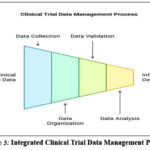 |
Figure 3: Integrated Clinical Trial Data Management Process
|
Ethical Considerations in Preclinical and Clinical Trials
In order to preserve scientific integrity and safeguard the rights, welfare, and dignity of human subjects, ethics are crucial to the conduct of both preclinical and clinical research.28
Preclinical-Trials
Even though preclinical studies mainly comprise animals or in vitro models; ethical guidelines are essential to minimize harm and ensure responsible use of research subjects. Key considerations include:
Animal Welfare:
The 3Rs should be followed: replacement (using alternatives to animals whenever possible), reduction (using fewer animals), & refinement (making processes better to cause less pain and suffering).29-31
Regulatory Compliance
Studies must fulfil with national and institutional regulations, such as approval from an Institutional Animal Ethics Committee (IAEC) or equivalent.
Scientific Justification
Experiments should be carefully designed to maximize information gained while minimizing unnecessary use of animals.
Clinical-Trials
Human research carries additional ethical responsibilities, guided by frameworks such as the Declaration of Helsinki, Good Clinical Practice (GCP), and national regulations. 32,33
Key principles include:
Informed Consent: Participants must voluntarily agree to contribute with a clear understanding of the study objectives, procedures, potential benefits, and risks.
Risk–Benefit Assessment: Studies should ensure that potential benefits justify any risks posed to participants. Trials with extreme or unnecessary risk are ethically unacceptable.
Privacy and Confidentiality: Participant information must be securely managed, and identities protected.
Equitable Selection of Subjects: Participant recruitment should avoid exploitation of vulnerable populations and ensure fair representation.
Independent Review: Prior to commencement clinical trials, Institutional Review Boards (IRBs) or Ethics Committees must get ethical permission.
Ongoing Monitoring: Continuous oversight, including opposing event reporting and Data Safety-Monitoring-Boards (DSMBs), ensures participant safety throughout the trial.
Adhering to these ethical principles is critical not only to safeguard participants but also to maintain public trust, scientific validity, and regulatory compliance. Ethical oversight ensures that both preclinical and clinical trials advance medical knowledge responsibly, without compromising human or animal welfare.34
Adaptive Clinical Trial Designs
Adaptive clinical trial designs are study designs that allow for prospectively planned modifications to one or more aspects of the trial based on interim data analyses, while preserving statistical validity and integrity. Unlike traditional fixed designs, adaptive trials use accumulating data to make pre-specified adjustments without undermining control of type I error.
Common Types of Adaptive Designs
Group Sequential Designs
Sample Size Re-estimation
Adaptive Randomization
Seamless Phase II/III Designs
Adaptive Dose-Finding Designs
Advantages
Increased efficiency and reduced development time
Ethical benefits (fewer patients exposed to inferior treatments)
Potential cost reduction
Greater flexibility in decision-making35
Discussion
The clinical studies help move medical science forward and make patient care better. The important parts of clinical studies, like how they are set up, ethics issues, and the need to use a strict scientific method. Moreover, the pros and cons of clinical studies, with a focus on how they affect healthcare and public health. Clinical studies are necessary to improve the health of patients and learn more about medicine.36-40 These guidelines give a strict, scientifically proven way to check whether new medicines work and are safe. By carefully testing new treatments, clinical trials help find fixes that work while also revealing any possible risks or side effects.41 Clinical studies are very important for coming up with new medical treatments and medicines. Before they are sold to the public, these carefully planned studies test how well and safely medicines, therapies, and medical tools work. As well as giving patients and doctors correct information about the risks and benefits of the drugs being tried, the main goal of clinical trials is to produce strong scientific proof to back regulatory approval. A lot of diverse kinds of clinical trials are done in a planned way, from small studies with only a few people to big trials with thousands of people. People who work in clinical studies are very helpful in finding new medicines, treatments, and fixes. Before drugs, vaccines, medical gadgets, and other new healthcare ideas can be widely used, these carefully planned studies check to see if they are safe and successful.42 Usually, the process includes finding people to take part, giving them either the trial treatment or a fake, and closely watching how things go. This piece explain about how important clinical studies are for medical study and patient care. Adaptive clinical trial designs offer methodological flexibility by permitting prospectively planned modifications based on interim analyses while preserving statistical validity. Approaches such as group-sequential monitoring, sample size re-estimation, and adaptive randomization enhance efficiency and ethical allocation of participants. Incorporating adaptive frameworks in future studies may improve precision, reduce resource utilization, and accelerate clinical translation. Statistical robustness represents a fundamental determinant of validity in clinical trial methodology. Across the literature, rigorous randomization procedures-such as computer-generated allocation sequences, block randomization, and stratified randomization are consistently associated with reduced selection bias and improved internal validity.43 Allocation concealment mechanisms, including centralized randomization and sequentially numbered opaque sealed envelopes, further safeguard against systematic group imbalances.44 Bias control remains a central methodological concern in contemporary trials. Blinding of participants, investigators, and outcome assessors is widely recognized as a critical strategy to minimize performance and detection bias.45 Additionally, adherence to intention-to-treat (ITT) principles, appropriate management of missing data (e.g., multiple imputation), and pre-specified statistical analysis plans significantly enhance the credibility and reproducibility of findings. Sensitivity analyses and subgroup analyses, when properly justified, contribute to the evaluation of result stability. Endpoint selection is another cornerstone of statistical integrity. Robust trials typically employ clinically meaningful, validated, and objectively measurable primary endpoints. Increasingly, composite endpoints and surrogate markers are used; however, their interpretability depends on biological plausibility and prior validation. Secondary and exploratory endpoints must be clearly distinguished to avoid multiplicity-related inflation of type I error.46 Regulatory guidance emphasizes pre-specification and hierarchical testing strategies to maintain statistical control.47 Furthermore, appropriate sample size estimation based on predefined effect sizes, power (commonly 80–90%), and controlled alpha thresholds ensures adequate inferential strength. In recent years, adaptive designs and Bayesian frameworks have emerged as innovative approaches to improve efficiency while preserving statistical validity, provided that error control and pre-specified adaptation rules are maintained.48 Overall, statistical robustness in clinical trials is multidimensional, encompassing methodological rigor, bias mitigation, transparent reporting, and adherence to established regulatory and ethical standards.49 A critical appraisal of these elements is essential when interpreting evidence in both experimental and observational research contexts.
Conclusion
Clinical trials remain the cornerstone of evidence-based medicine; however, their methodological robustness is frequently challenged by structural and operational constraints. Attrition rates in many randomized trials range from 10-30%, potentially compromising statistical power and internal validity if not appropriately addressed through intention-to-treat analysis and missing-data management strategies. Regulatory compliance requirements, while essential for ethical integrity and patient safety, increase trial complexity, duration, and cost-often extending development timelines to 5-10 years and requiring substantial financial investment. Participant representativeness also remains a critical limitation, as underrepresentation of certain demographic groups may affect external validity and generalizability of findings. Additionally, high operational costs and resource-intensive infrastructure continue to limit large-scale implementation, particularly in low-resource settings.
Despite these challenges, emerging innovations-including adaptive trial designs, digital health platforms, decentralized recruitment strategies, and real-world data integration-have demonstrated potential to improve recruitment efficiency, reduce timelines, and enhance data accuracy. These methodological advancements not only strengthen statistical robustness but also increase translational relevance. Overall, while clinical trials face persistent logistical, ethical, and methodological challenges, ongoing innovation in design, data analytics, and regulatory science continues to enhance trial efficiency and reliability. Strengthening methodological rigor and representativeness will be essential to maximize the public health impact of future clinical research and ensure equitable advancement in healthcare delivery.
Acknowledgement
The author would like to sincerely thank their colleagues and peers for the meaningful discussions and helpful suggestions that supported the preparation of this manuscript.
Conflict of Interest
The author(s) declares no conflict of interest.
Funding Source
The author(s) received no financial support for the research, authorship, and/or publication of this article.
Data Availability
This statement does not apply to this article
Ethics Statement
This research did not involve human participants, animal subjects, or any material that requires ethical approval.
Informed Consent Statement
This study did not involve human participants, and therefore, informed consent was not required.
Clinical Trial Registration
This research does not involve any clinical trials.
Permission to Reproduce Material from Other Sources
Not applicable
Author Contribution
The sole author was responsible for the conceptualization, methodology, data collection, analysis, writing, and final approval of the manuscript.
References
- Cruess S.R, Cruess R.L. Professionalism and medicine’s social contract with society. Virtual Mentor. 2004;6(4).
- Lange K.M, Sullivan T.R, Kasza J, Yelland L.N. An online sample size calculator for designing partially clustered trials. Clinical Trials. 2026;0(0).
CrossRef - Karel D, Wendler D. Commentary: Multi-stage consent for time-sensitive clinical trials. Clinical Trials. 2026;0(0).
CrossRef - Liu J, Li C, Qiu Y, et al. Efficacy of internet- delivered universal and tailored transdiagnostic interventions for anxiety and depression: a systematic review and meta-analysis of randomized controlled trials. Psychiatry Res. 2025;344:116324.
CrossRef - Nundy S, Cooper L. A, Mate K.S. The quintuple aim for health care improvement: a new imperative to advance health equity. JAMA. 2022;327(6):521-522.
CrossRef - The good clinical trials collaborative. Guidance for Good Randomized Clinical Trials. May 2022. Accessed February 19, 2024.
- Collins R, Bowman L, Landray M, Peto R. The magic of randomization versus the myth of real-world evidence. N Engl J Med. 2020;382(7):674-678.
CrossRef - Sanchez P, Voisey J.P, Xia T, Watson H.I, Neil A.Q, Tsaftaris S.A. Causal machine learning for healthcare and precision medicine. R Soc Open Sci. 2022;9(8):220638.
CrossRef - Gallifant J, Zhang J, Whebell S, et al. A new tool for evaluating health equity in academic journals; the Diversity Factor. PLOS Glob Public Health. 2023;3(8):e0002252.
CrossRef - Warren K.A, Bahrani H, Fox J.E et al.NSAIDs in combination therapy for the treatment of chronic pseudophakic cystoid macular edema. 2010;30:260-266.
CrossRef - Schoenberger S.D, Miller D.M, Petersen M.R et al.Nepafenac for epiretinal membrane surgery. 2011;118:1482-1482
CrossRef - Friedman D.S, Colmain B.J, Munoz B, et al.Prevalence of age-related macular degeneration in the United States. Ophthalmol. 2004; 122: 564-572.
CrossRef - Maloney S.C, Fernandes B.F, Castiglione E, et al.Expression of cyclooxygenase-2 in choroidal neovascular membranes from age-related macular degeneration Retina. 2009;29:176-180.
CrossRef - Hu W, Criswell M.H, Ottlecz A, et al.Oral administration of lumiracoxib reduces choroidal neovascular membrane development in the rat laser-trauma model. 2005;25:1054-1064.
CrossRef - Chen E, Benz M.S, Fish M.H et al.Use of nepafenac (Nevanac) in combination with intravitreal anti-VEGF agents in the treatment of recalcitrant exudative macular degeneration requiring monthly injections. Clin Ophthalmol. 2010;4:1249-1252.
CrossRef - Del Tacca M, Pasqualetti G, Di Paolo A, et al. Lack of pharmacokinetic bioequivalence between generic and branded amoxicillin formulations. A post-marketing clinical study on healthy volunteers. Br. J. Clin. Pharmacol. 2009;68:34-42.
CrossRef - Zhou J, Wang S, Xia X.Role of intravitreal inflammatory cytokines and angiogenic factors in proliferative diabetic retinopathy. Curr Eye Res. 2012;37:416-420.
CrossRef - Kontrick A.V, Alinger J.B, Goins E.C, Mollo A.F, Cruz D.S, McCarthy D.M. Documentation of incidentally noted hepatic steatosis to emergency department patients: a retrospective study. Emerg. Med. 2025;32(3):284-291.
CrossRef - Kutaiba N. Rotella J.A, Ardalan Z, Testro A. Incidental hepatic steatosis in radiology reports: a survey of emergency department clinicians’ perspectives and current practice, Med. Imaging Radiat. Oncol. 2019;63(5):573-579.
CrossRef - Meester R.G, Doubeni C.A, Zauber A.G, et al., Public health impact of achieving 80% colorectal cancer screening rates in the United States by 2018, 2015;121(13):2281-2285.
CrossRef - Carethers J.M, Racial and ethnic disparities in colorectal cancer incidence and mortality. Cancer Res. 2021;151:197-229.
CrossRef - Glerum P.J, Yu Y, Yamada W.M, Neely M.N, Maliepaard M, Burger D.M, Neef C. Interchangeability of generic drugs: a nonparametric pharmacokinetic model of gabapentin generic drugs. Clin Pharmacol Ther. 2018;104:966-973.
CrossRef - Friedman D.S, Colmain B.J, Munoz B et al. Prevalence of age-related macular degeneration in the United States. Ophthalmol, 2004;122:564-572.
CrossRef - Patel R, Gujja A.R, Bawaskar P. & Yadav, A.M.P. A Randomized, Placebo-Controlled, Double-Blind Study of Phyllanthus Amarusin Combination with Whey Protein Isolate on Skeletal Muscle Strength in Active Males. Open Access Journal of Clinical Trials. 2025;17: 71-94.
CrossRef - Ndahura N.B, Nambooze J, Mangusho G, & Najjuuko R. Effect of Consumption of Cape Gooseberries on Blood Glucose Control Among Patients with Type 2 Diabetes Mellitus in Kampala, Uganda: A Protocol for a Randomized Controlled Trial. Open Access J. Clin. Trials.2025;17:63-70.
CrossRef - Ghareeb A.l, Aboshaiqah S.A, Asiri A, Alanazi M.Y, Rayani H.I. Perceived Stress and Sociodemographic Factors Among Saudi Women with Breast Cancer: A Cross-Sectional Study. Clin. Med. 2026;15:1168.
CrossRef - Mutubuki E.N, Alili M.E, Bosmans J.E et al. The statistical approach in trial- based economic evaluations matters: get your statistics together. BMC Health Serv. Res. 2021;21(1):475.
CrossRef - Round J. Jones L. Morris S. Estimating the cost of caring for people with cancer at the end of life: a modelling study. Med. 2015;29(10):899-907.
CrossRef - Gauthier A, Manca A, Anton S. Bayesian modelling of healthcare resource use in multinational randomized clinical trials. Pharmaco Economics. 2009;27(12):1017-1029,
CrossRef - Cuthbertson B.H, Rubenfeld G. The case for economic analyses in trials with a no effect primary outcome, JAMA Netw. 2025;8(5):e2517477.
CrossRef - Carrandi A, Grove A, Skouteris H. et al., Economic evaluations performed alongside randomized implementation trials in clinical settings: a systematic review. Sci. Communicat. 2024;5(1):24.
CrossRef - Rakam G.K, Satya L.B, Samhitha D, Akash K.K, Krishna M.R.D and Charithaa K. Advances in Anti-Tubercular Agents: A Comprehensive Review. Pharmacol. J. 2025;18(1):547-558.
CrossRef - Rakam G.K, and Kuchi M. Medicinal Herbs and Phytoconstituents Proved for Anticancer Activity-A Comprehensive Review. Current Trends in Pharmacology and Clinical Trials. 2025;8(1):1-16.
- Umscheid C.A, Margolis D.J, Grossman CE. Key concepts of clinical trials: a narrative review. Postgrad Med. 2011;23:194-204.
CrossRef - Krishna R.G, Nausheen A, Shivani B.G, Kingari R, Pallavi K, Saha S. Extraction, Investigation of Phytochemical Composition, and In Vitro Antioxidant Activity of Indigofera cordifolia. Pharma. QAQC. 2025;7(2):27-36.
CrossRef - Rakam G.K, Afshan N, Bethi G.S, Ruthika K, Konale P. Advances in Novel Drugs, Plants and Phytoconstituents proved for Antioxidant Activity – A Comprehensive Review. J. Pharm. Technol. 2026;19(2):946-4.
CrossRef - Kuchi M, and Raja S. Toxicity Studies of Abutilon crispum and Indigofera prostrata Whole Plants on Wistar Rats. J. Nat. Prod. Res. 2024;8(11):9073-9078.
CrossRef - Gopi K.R, Raja S. In vitro antioxidant activity of Bougainvillea glabra and Mucuna Int. J. Res. Pharm. Sci. 2020;11(1):806-812.
CrossRef - Kuchi M and Raja Evaluation of Antidiabetic Activity of Indigofera prostrata on Normal and Streptozotocin Induced Diabetic Albino Wistar Rats. J. Nat. Rem. 2024;24(10):2217-2230.
CrossRef - Rakam G.K, and Raja S. Screening of antioxidant activity of Mucuna pruriens by in vivo Int. J. Res. Pharm. Sci. 2018;10(1):523-530.
CrossRef - Kuchi M and Raja S. Evaluation of Antidiabetic Activity of Abutilon crispum on Normal and Streptozotocin Induced Diabetic Albino Wistar Rats. Pharmacol. Pharmacother. 2024;16(1):64-76.
CrossRef - Cao Z, Zheng X, Yang H, et al. Association of obesity status and metabolic syndrome with site-specific cancers: a population-based cohort study. Br J Cancer., 2020;123(8):1336-1344.
CrossRef - Schmiegelow M, Hedlin H, Mackey R.H, et al. Race and ethnicity, obesity, metabolic health, and risk of cardiovascular disease in postmenopausal women. J Am Heart Assoc., 2015;4(5).
CrossRef - Bao X, Yang C, Fang K, Shi M, Yu G, Hu Y. Hospitalization costs and complications in hospitalized patients with type 2 diabetes mellitus in Beijing, China. J Diabetes. 2016;9(4):405-411.
CrossRef - Tumuhe C.L, Ategeka K, Sunday C, Tibaijuka D, Muhindo C.B. The utilization of traditional and indigenous foods and seeds in Uganda. J Food Security. 2020;8(1):11-21.
- Tonnesen P, Norregaard J, Simonsen K, Sawe A double-blind trial of a 16-hour transdermal nicotine patch in smoking cessation. N. Engl. J. Med. 1991;325(5):311-315.
CrossRef - Horne R, Weinman J. Patients’ beliefs about prescribed medicines and their role in adherence to treatment in chronic physical illness. Psychosom. Res. 1999;47(6):555-567.
CrossRef - Senn S, Testing for baseline balance in clinical trials. Med. 1994;13(17):1715-1726.
CrossRef - Bush K., KivlahanR, McDonell M.B, FihnS.D, Bradley K.A. The AUDIT alcohol consumption questions (AUDIT-C): An effective brief screening test for problem drinking. Ambulatory care quality improvement project (ACQUIP). Alcohol use disorders identification test. Arch. Intern. Med. 1998;158(16):1789-1795.
CrossRef
 PlumX:
 Views: 2419
  PDF Downloads:
370
PDF Downloads:
370