Morphological Features and Chemical Composition of Volatile Compounds of Cultivated Salvia nemorosaL. and Salvia verbenaca L.
 , Bohdana Zakharko1, , 3, Mariya Koval4and Nataliia Hudz5, 6
 1Department of Pharmacognosy and Medical Botany, I. Horbachevsky Ternopil National Medical University, Ternopil, Ukraine
2Department of Pharmacy, I. Horbachevsky Ternopil National Medical University, Ternopil, Ukraine
3Department of Botany and Zoology, Volodymyr Hnatyuk Ternopil National Pedagogical University, Ternopil, Ukraine
4Department of General Chemistry, I. Horbachevsky Ternopil National Medical University, Ternopil, Ukraine
5Department of Pharmacy and Ecological Chemistry, University of Opole, Opole, Poland
6Department of Drug Technology and Biopharmacy, Danylo Halytsky Lviv National Medical University, Lviv, Ukraine
Corresponding author e-mail: shanayda@tdmu.edu.ua
DOI : http://dx.doi.org/10.13005/bpj/3288
Download this article as:

The genus Salvia L. (Sage) comprises over 900 species of aromatic and medicinal plants. Among the numerous sage species, Salvia officinalis and Salvia sclarea are well-known for their healing properties. This study aimed to analyze the morphological features and peculiarities of the compositions of volatile compounds of Salvia nemorosa (cultivar ‘Ostfriesland’) and Salvia verbenaca cultivated in Ukraine, focusing on their chemotaxonomic characteristics. Both representatives of the Salvia genus were introduced in the Ternopil region of Ukraine, making them suitable for the further cultivation and harvesting under controlled conditions. The conducted gas chromatography-mass spectrometry (GC/MS) analysis revealed that the major volatile components of Salvia verbenaca were present in the following descending order: camphor (12.44%), eucalyptol (12.36%), α-pinene (11.45%), p-cymene (11.02%), camphene (5.64%), and (+)-3-carene (5.50%). In contrast, the predominant volatile compounds in Salvia nemorosa were found in such an order: β-caryophyllene (34.98%), caryophyllene oxide (18.92%), p-cymene (9.14%), and germacrene D (7.16%). Overall, monoterpenoids were among the dominant volatile compounds in Salvia verbenaca, while sesquiterpenoids were more prevalent in Salvia nemorosa. The findings of this study highlight the unique chemotaxonomic characteristics of the species examined and underscore their significant potential for further phytochemical and pharmacological research of the leaves of both Salvia verbenaca and Salvia nemorosa. These plants may serve as valuable sources of bioactive molecules for the development of new medical herbal preparations and functional food products.
KEYWORDS:Chemotaxonomic features; Essential oil; Ethnobotanical use; Gas chromatography-mass spectrometry; Medicinal plant; Morphological characteristics; Sage; Terpenoids
Introduction
Medicinal and aromatic plants are among the most significant and abundant sources of bioactive secondary metabolites. Today, there is considerable interest in studying, discovering, and utilizing the biological effects of the valuable metabolites found in medicinal plants to address various health issues that affect modern society.1,2 The recent study provided evidence that essential oils from several Southern Italian Lamiaceae species, including Origanum vulgare and Salvia rosmarinus, can work synergistically with antibiotics by influencing key processes involved in resistance mechanisms, such as biofilm formation.3
The genus Sage (Salvia L.) includes more than 900 species, making it one of the largest in the Lamiaceae family.4 These plants are aromatic, medicinal, and ornamental, and they are distributed worldwide, primarily in temperate and subtropical climates. Salvia species are widely recognized for their various applications in traditional and modern medicine, as well as in the food and cosmetics industries.4-6 Numerous studies have demonstrated the biological effects of Salvia compounds, including their antimicrobial, antioxidant, anti-inflammatory, antidiabetic, immunomodulatory, anticancer and and wound healing properties.6,7 These beneficial activities are primarily linked to the presence of valuable phenolic compounds and terpenoids in these plants.4,8 Like other members of the Lamiaceae family, in addition to volatile terpenoids, non-volatile di- and triterpenoids are also accumulated in the above-ground organs of Salvia species.4,9 Several species of sage are included in the European Pharmacopeia.10
While various Salvia species are cultivated in many European countries, some are still harvested from the wild.6 However, the reports from the International Union for Conservation of Nature indicate that several thousand plant species are threatened with extinction due to intensive harvesting and habitat destruction.11 Therefore, cultivating medicinal plants is essential to meet increasing demand in obtaining plant raw materials and conserve genetic diversity as well as improve the production of targeted bioactive compounds under controlled conditions, while minimizing the risk of contamination.5 The emergence of new varieties and cultivars of some sage species increases interest in studies of their chemical composition and potential biological properties.12
Salvia officinalis, commonly known as sage, is a popular medicinal plant belonging to the European Pharmacopeia.10 However, it contains toxic compounds called thujones, which limit its therapeutic applications.10,13-15 Recently, eight chemotypes of Salvia officinalis essential oil have been identified across several European countries, and thujones were prevalent among the predominant compounds. Therefore, numerous phytochemical and pharmacological studies have been conducted on different Salvia species. It is important to note that among the ten Salvia representatives examined by the researchers,13 such toxic compounds as (E)- and (Z)-thujones were found exclusively in the essential oil of Salvia officinalis. The high levels of thujones found in the volatile compounds of Salvia officinalis have raised concerns among scientists and medical professionals due to their toxic properties. As a result, there is considerable interest in exploring new promising species within the genus that have a lower concentration of the harmful components.
Our attention was drawn to two species of sage – Salvia nemorosa L. and Salvia verbenaca L., which are found both in the wild and gradually spreading in cultivation in Eurasia.16-18 In the wild, the native range of Salvia nemorosa extends from Europe to Western Siberia and Afghanistan. It primarily grows in steppes, on steppe slopes, dry meadows, forest edges, and near roads. It prefers sunny conditions, and is not demanding in terms of soil, and is drought-resistant, making it easy to cultivate. The native range of Salvia verbenaca is Macaronesia, Western Europe, to the Mediterranean and Caucasus. It primarily grows in a temperate biome.19 This species is naturalized in southern Africa, North America, and Australia. It inhabits dry grasslands, rocky shores, and dunes.
Salvia verbenaca is a Mediterranean plant that is widely used in folk medicine as a cholagogue, antiseptic, diuretic, and astringent.20 The ethnobotanical uses of Salvia verbenaca highlight its extensive applications in folk medicine throughout the Mediterranean region.6,19 This herb is traditionally employed to treat various digestive disorders, including abdominal colics, as well as respiratory issues and genitourinary and skin diseases. Additionally, dried leaves of Salvia verbenaca are utilized for treating wounds and abscesses. Salvia nemorosa also has a rich history in ethnomedical use.16,21 It is commonly used as an antiseptic for wounds, a diuretic, and a stomach tonic. Additionally, it can help treat ailments such as diarrhea, flatulence, fever, and coughs. The leaves of this plant are often used in infusions to treat diarrhea in children and furuncles. The study of secondary metabolites, particularly essential oils, aids taxonomists and phytochemists in resolving specific taxonomical issues.21,22
This study aimed to analyze the peculiarities of botanical characteristics and compositions of volatile compounds of Salvia nemorosa and Salvia verbenaca under their cultivation in Ukraine.
Materials and Methods
Plant raw material
The plants were cultivated in the experimental plots located in the Ternopil region of Ukraine. Voucher specimens of the plants are deposited at the herbarium of the Department of Pharmacognosy and Medical Botany, I. Horbachevsky Ternopil National Medical University in Ternopil, Ukraine.
The leaves were collected during the flowering period in June of 2025 and were left to dry in the shade at temperatures not exceeding 35°C.
Botanical description
The morphological peculiarities were studied using plants in the flowering period (Salvia verbenaca and cultivar ‘Ostfriesland’ of Salvia nemorosa). A three-fold magnifying glass was used to analyze some small parts of the plants.
Gas chromatography-mass spectrometry analysis (GC/MS)
We analyzed the composition and quantitative content of volatile compounds in the leaves of the studied plants using GC/MS.23 An Agilent Technologies 6890 gas chromatograph, equipped with an HP-5ms capillary column and a mass spectrometric detector, was employed for this analysis. Tridecan served as the internal standard.
Results
As is known, a detailed description of morphological features contributes to the reliable identification of plant species. This is especially important due to the rise of numerous cultivars and chemotypes of well-known species in recent decades. The results of the observation of the morphological features of the studied representatives of the Salvia genus are presented below.
Salvia verbenaca is a subshrub up to 80 cm tall. Stems are erect, pubescent, tetrahedral, with their lower part woody. The top of the stem is strongly branched and forms inflorescences. Leaves are lanceolate-ovate, on petioles up to 10 cm long. They are slightly wrinkled; the edge of the leaf is pinnately incised-lobed and toothed. Lower leaves are on long petioles, located in a basal rosette; the upper leaves are on shorter petioles or sessile. Inflorescences are strongly branched, up to 35 cm long; semi-rings of flowers form intermittent, almost leafless spikelets. A corolla is 9-15 mm long, two-lipped (with very uneven lips), light blue. Calyces are 6-9 mm long, glandular-pubescent, two-lipped. The flowering period is long (from June to August). Fruits are small coenobia (four-seeded nuts). Each nut is ovoid-oblong, trihedral, smooth, and brown in color.
Salvia nemorosa (cultivar ‘Ostfriesland’) is a perennial herbaceous plant 40-60 cm tall. Leaves are bluish-green, oblong-lanceolate, on short petioles or sessile in the upper part of the stem, slightly wrinkled and toothed along the edge. Leaves are located on the lower part of tetrahedral, straight, pubescent, slightly branched stems; they are 5–11 cm long (the upper leaves are smaller than the lower ones). Inflorescences are vertical, elongated spike-shaped with 4–6-flowered semi-rings; they are slightly branched, straight at the apex, up to 20 cm long. A corolla is two-lipped, 9–14 mm long, and pink-purple in this cultivar. A calyx is broadly bell-shaped, 5–10 mm long; the upper lip of the calyx is tridentate and strongly curved outward during fruiting. The flowering period is long, from June to September. Fruits are small, dark brown, smooth nuts of ovoid-triangular shape. They are a coenobia with 4 chambers, each of which contains one nutlet.
Based on our observations over 3 years, it was concluded that both studied species complete all the stages of growth and development in the Ternopil region (geographic coordinates: 49°38′3″ N, 25°28′32″ E), under temperate climate conditions. They bear fruits and produce fertile seeds. Therefore, we can conclude that the Ternopil region is suitable for further cultivation and obtaining resources of raw materials in controlled conditions.
Over 30 chemicals were identified among the volatile compounds using the GC/MS analysis. Table 1 lists the principal components, each accounting for more than 0.5% of the total content and collectively representing approximately 90% of the studied essential oils. Figures 1 and 2 provide an example of the GC/MS chromatogram.
Table 1: Principal volatile components of the studied Salvia species
| Compound | Time, min | Content, % | |
| Salvia verbenaca | Salvia nemorosa | ||
| α-Thujene | 6.76 | 1.23 | – |
| α-Pinene | 6.95 | 11.45 | 1.58 |
| Camphene | 7.39 | 5.64 | 0.43 |
| ß-Pinene | 8.17 | 4.09 | 0.72 |
| ß-Myrcene | 8.60 | 1.64 | – |
| (+)-3-Carene | 9.15 | 5.50 | 0.94 |
| (+)-4-Carene | 9.33 | 1.93 | 0.30 |
| p-Cymene | 9.52 | 11.02 | 9.14 |
| D-Limonene | 9.64 | – | 0.91 |
| Eucalyptol (1,8-Cineol) | 9.78 | 12.36 | 2.45 |
| ß-Ocimene | 9.91 | 0.67 | – |
| Benzeneacetaldehyde | 10.04 | – | 2.19 |
| ɣ-Terpinene | 10.48 | 4.89 | 1.23 |
| · trans-Sabinenehydrate | 11.03 | 0.51 | – |
| · α-Terpinolene | 11.24 | 0.84 | 0.22 |
| · Camphor | 12.70 | 12.44 | 2.84 |
| · Borneol | 12.87 | 2.97 | 3.15 |
| Terpinen-4-ol | 13.42 | 0.56 | – |
| 3-Methyldodecane | 15.40 | 0.02 | 0.76 |
| Bornyl acetate | 15.79 | 3.10 | 1.02 |
| Thymol | 15.89 | 0.12 | 0.51 |
| Tridecane | 16.02 | Inner standard | |
| β-Caryophyllene | 16.58 | 4.50 | 34.98 |
| α-Terpinene | 17.06 | 1.49 | 0.94 |
| Humulene | 19.14 | 3.56 | 1.73 |
| Сaryophyllene oxide | 19.79 | 0.12 | 18.92 |
| Humulene | 20.59 | 0.90 | – |
| Selina-3,7(11)-diene | 20.71 | 1.03 | – |
| Viridiflorene | 21.59 | 1.96 | – |
| Germacrene D | 22.65 | 0.23 | 7.16 |
| ß-Elemene | 25.12 | 0.11 | 2.95 |
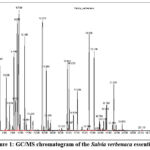 |
Figure 1: GC/MS chromatogram of the Salvia verbenaca essential oil |
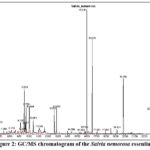 |
Figure 2: GC/MS chromatogram of the Salvia nemorosa essential oil |
Our findings demonstrate that the abundance of the major compounds in Salvia verbenaca decreases in the following order: camphor (12.44%) > eucalyptol (12.36%), α-pinene (11.45%) > p-cymene (11.02 %) > camphene (5.64%) > (+)-3-carene (5.50%). The abundance of the major compounds in Salvia nemorosa decreases in a specified order: β-caryophyllene (34.98%) > сaryophyllene oxide (18.92%) > p-cymene (9.14%) > germacrene D (7.16%). Generally, among the predominant volatile compounds of Salvia verbenaca, monoterpenoids dominated, while sesquiterpenoids prevailed in Salvia nemorosa. The combination of both major and minor volatile compounds influences the distinct differences observed in the GC/MS chromatographic profiles of the volatiles extracted from the leaves of the studied species.
Discussion
It is worth noting that Salvia verbenaca can accumulate a diversity of bioactive volatile constituents that depend on chemotaxonomic peculiarities, locations of growing, phenophase of the development, etc. The study conducted by Ben Farhat et al.24 examined how collection sites and phenophases affected the yield and chemical composition of essential oils from aerial parts of Salvia verbenaca in ten regions of Tunisia. The yield ranged from 0.08 to 0.13% based on dry weight. The major volatile compounds identified in the essential oils included viridiflorol (3.4–17.7%), α-pinene (0.7–15.9%), 1,8-cineol (2.0–12.8%)), β-caryophyllene (1.0–15.3%), epi-13-manool (2.4–10.5%) and p-cymene (1.8–14.2%), ɣ-terpinene (0.4–5.1%) and camphor (1.6–4.7%). The researchers concluded that monoterpene hydrocarbons were predominant during the flowering stage, while oxygenated sesquiterpenes were more prevalent in the early fruiting stage.24 The major volatile compounds of essential oils obtained from Salvia verbenaca ssp. pseudo-jaminiana aerial parts collected in the Southwest of Algeria using GC/MS were such terpenoids as 1,10-di-epi-cubenol (20.9%), germacrene D (20.5%), α-copaene (10.4%), and epi-α-cadinol (11.6%).25
Among the main constituents of the Salvia verbenaca ssp. clandestina collected in Algeria were β-pinene (10.2%), spathulenol (8.7%) and caryophylene oxide (6.1%).26 Generally, it was found that there was a prevalence of sesquiterpenes. In the study conducted by Mannu et al.,27 flowers and leaves of Salvia verbenaca were collected from six different geographical areas in Sardinia, Italy. The results of the GS/MS analysis of their essential oils indicated that the chemical composition of the essential oils depended on the site of growing and altitude. In relation to the geographical distribution of the identified chemicals, sesquiterpenes were found in substantial amounts in three locations, while monoterpenes and hydrocarbons were present in the essential oils from two areas. Additionally, other subgroups of the compounds were predominant only in one site. Сaryophyllene oxide (16.15%), spathulenol (13.18%), 1,8-cineol (11.45%), bicyclogermacrene (11.03%), and borneol (11.00%) dominated in Salvia verbenaca essential oil collected in Turkey.28
Bidabadi et al.29 conducted a study to investigate the effects of foliar-applied melatonin (50-200 μM) on two Salvia representatives cultivated in Iran: Salvia nemorosa and Salvia reuterana, particularly under conditions of water stress. The researchers found that the highest essential oil yield, 0.58%, was achieved when 200 μM of melatonin was applied to Salvia nemorosa grown under mild water stress conditions (60% of the field capacity). The authors found the following correlations between the yield of the essential oils and water deficit. The yield of both Salvia species increased with the decrease in irrigation from 80% to 60% of the field capacity but decresed when there was more severe water deficit (40% of the field capacity). The main components of the essential oil extracted from Salvia nemorosa were identified as β-caryophyllene (37.53–40.13%), germacrene B (19.83–21.37%), spathulenol (6.37–8.72%), and cis-β-farnesene (5.29–7.83%).
The volatiles present in the aerial parts of Salvia nemorosa were analyzed by GC/MS in the plants growing in the different locations on the outskirts of Vienna, Austria.30 The essential oils extracted from the flowers predominantly contained sabinene (37-44%), germacrene D (9-14%), beta-caryophyllene (8-12%), and caryophyllene oxide (2.6-4.4%). In the leaves, the main compounds were β-caryophyllene (14-41%), germacrene D (14-38%), and caryophyllene oxide (5-20%). The essential oils from the stems were characterized by a high percentage of hexadecanoic acid, along with germacrene D and beta-caryophyllene.
The essential oil from the leaves of Salvia nemorosa, collected in Iran, was characterized by a predominance of sesquiterpenoids, including caryophyllene (26.37%), germacrene-D (15.34%), and sabinene (12.86%).31 The recent study demonstrated that the essential oil of Salvia nemorosa cv. ‘May Night,’ cultivated in Idaho (USA) in 2023, primarily consisted of (E)-β-caryophyllene (22.4%), sabinene (18.4%), and germacrene D (17.1%).32 The deep analysis of the various Salvia nemorosa essential oils revealed significant differences in their compositions, identifying several chemotypes namely a sabinene-rich, a spathulenol/caryophyllene oxide, and a (E)-β-caryophyllene-rich one.
The various Salvia species cultivated in Ukraine were characterized by the presence of bicyclic monoterpenoids such as α- and β-pinene as well as camphane derivatives (camphene, camphor, borneol, etc.).13,14 Regarding Salvia nemorosa, p-cymene (42.10%) prevailed. However, the authors did not investigate such species as Salvia verbenaca.13 The primary components of Salvia nemorosa from Iran included oxygenated sesquiterpenes, with caryophyllene oxide being the most abundant compound found in all essential oils from both the leaves and flowers during the flowering stage, across various regions of Iran.32 This study concluded that several factors, such as harvest times, growth stages of the plants, environmental conditions, primary habitats, and climate variations, can all influence the concentration and composition of volatile compounds in the examined plant materials. The essential oil from the aerial part of Salvia memorosa collected in South-Eastern Serbia, predominantly contained bicyclic monoterpene sabinene (75.8%).15
The volatiles of some examples of wild growing Salvia verbenaca of Tunisian origin were analyzed by Taarit et al. at the full fruiting stage.33 The composition of the essential oils was quite different and depended on the place of growing. The principal components from the first locality were viridiflorol (21.8%), camphene (17.6%), methyl eugenol (9.4%), ß-caryophyllene (7.1%), and α-terpineol (5.3%) while among the components of the essential oil collected from the second locality were tricyclene (18.8%), nonane (10.3%), methyl eugenol (7.7%) and terpinolene (7.3%), bornyl acetate (4.9%). In the samples collected from the third locality, among the components were (Z)-ß-ocimene (29.5%), ß-phellandrene (8.2%), ß-thujone (7.9%) and α-pinene (5.5%).33
Taarit et al.34 amalysed the samples of Salvia verbenaca grown in North Tunisia by GC/MS analysis. There were 69 components identified in the essential oils. Among the components of the fruit essential oil were 23.1% of β-caryophyllene, 15.9% of caryophyllene oxide, 6.5% of camphene, 5.6% of α-humulene and 4.3% of viridiflorol. Among the major components of the stem essential oil were camphor 10.9%, viridiflorol 10.3%, terpinolene (6.6%), methyl eugenol (6.1%) and α-pinene 5.9% while the leaf oil contained the labdane type diterpenes (24.7%): 13.7% of epi-13-manool and 11.0% of manool.
The volatile fraction of fresh aerial parts of Salvia verbenaca from Sicily was analyzed by GC/MS. It contained a significant proportion of fatty acids and esters (39.5%) and carbonyl compounds (21.2%).35 Among the main components were identified hexadecanoic acid (23.1%) and (Z)-9-octadecenoic acid (11.1%). Among volatile compounds, viridiflorol, α-pinene, β-caryophyllene and p-cymene prevailed. The in vitro activity of the essential oil was tested against various pathogenic microorganisms and compared to that of chloramphenicol using the broth dilution method. The results showed that the essential oil demonstrated good inhibitory activity against the growth of Gram-positive bacteria (Staphylococcus aureus, Staphylococcus epidermidis and Streptococcus faecalis).
The essential oils of both sage species, which we studied, contain various components that offer therapeutic effects. Among these is β-caryophyllene, the major volatile compound found in the leaves of Salvia nemorosa. This bicyclic sesquiterpene has been the subject of recent research that highlights its protective effects on animal cells, suggesting its potential as a new therapeutic tool.36 The experimental findings indicate that β-caryophyllene may help reduce symptoms of chronic conditions. Both β-caryophyllene and β-caryophyllene oxide demonstrate significant anticancer properties, affecting the growth of various cancer cells.37 These compounds can enhance the effectiveness of traditional anticancer drugs by increasing their concentrations within the cells. Additionally, since chronic pain is often associated with cancer, the dual action of these compounds — both anticancer and analgesic — along with their positive impact on the effectiveness of standard chemotherapy, is especially valuable in oncology. Furthermore, the aromatic monoterpene p-cymene exhibits a range of pharmacological properties, including antimicrobial, anti-inflammatory, antidiabetic, antitumor, and antiparasitic activities.38
Camphor has shown antifungal activities without being toxic to porcine liver cells, making it a promising candidate for developing future anti-candidal treatments.39 The recent research indicates that the essential oils from Pistacia lentiscus, along with its primary compounds limonene and α-pinene, show promise for developing new strategies to enhance skin protection and treat ailments related to diabetes mellitus and oxidative stress.40 Camphene has been found to lower plasma cholesterol and triglyceride levels in hyperlipidemic rats. 41
Eucalyptol, also known as 1,8-cineole, has a long history of use in traditional medicine and displays a broad range of biological effects, including antimicrobial, anti-inflammatory, analgesic, bronchodilatory, and pro-apoptotic properties.42 Recent studies suggest that eucalyptol may help manage conditions such as Alzheimer’s disease, neuropathic pain, and cancer. Its health benefits have been confirmed in clinical trials involving patients with respiratory disorders, including bronchitis, chronic obstructive pulmonary disease, and rhinosinusitis.43 It is effective in treating infections caused by antibiotic-resistant microorganisms.44
The wound healing properties of volatiles from various sage species have recently been comprehensively revealed.45,46 Many monoterpenoids, including 1,8-cineole, carvacrol, and linalool, exhibit the anti-inflammatory and analgesic activity.47,48 In summarizing the data on the potential biological activity of the volatile components found in the leaves of the two Salvia species we studied, we can predict that they possess antiseptic, analgesic, astringent, and anti-inflammatory properties. These findings may serve as a guideline for future pharmacological studies.
Some researchers have noted significant morphological and chemical variability among certain species of the Lamiidae subclass; moreover, there were identified correlations between the plants’ morphological characteristics and the accumulation of biologically active components within them.49,50 These findings highlight a promising direction for further investigations of the species under study.
Conclusion
This study analyzed the chemotaxonomic peculiarities of Salvia nemorosa (cultivar ‘Ostfriesland’) and Salvia verbenaca cultivated in Ukraine, based on their morphological features and chromatographic profiles of volatile compounds. Both species complete all stages of growth and development in the Ternopil region of Ukraine, making them suitable for further cultivation and harvesting of sufficient amounts of plant raw materials in controlled conditions. The conducted GC/MS analysis indicated that the major volatile components in the Salvia nemorosa leaves were β-caryophyllene, сaryophyllene oxide, p-cymene and germacrene D. In the Salvia verbenaca essential oil prevailed camphor, eucalyptol, α-pinene, p-cymene, camphene and (+)-3-carene. The findings of this study emphasize the distinctive chemotaxonomic characteristics of the species examined, as well as their significant potential for further pharmacological research. The phytochemicals revealed in the leaves of the studied species may serve as a valuable source of bioactive molecules for the pharmaceutical industry.
Acknowledgment
The authors would like to express gratitude to the authority of I. Horbachevsky Ternopil National Medical University for their support of the research.
Funding Sources
The author(s) received no financial support for the research, authorship, and/or publication of this article.
Conflict of Interest
The author(s) declare no conflict of interest.
Data Availability
This statement does not apply to this article.
Ethics Statement
This research did not involve animal subjects, human participants, or any material that requires ethical approval.
Informed Consent Statement
This study did not involve human participants, and therefore, informed consent was not required.
Clinical Trial Registration
This research does not involve any clinical trials.
Permission to reproduce material from other sources
Not Applicable
Author Contributions
- Mariia Shanaida: conceptualization, methodology, analyses, writing (original draft).
- Bohdana Zakharko: reference search, analyses and interpretation of the data.
- Ivanna Kernychna: reference search, writing – review & editing.
- Mariya Koval: writing – review & editing.
- Nataliia Hudz: writing – writing of the part of original draft cconcerning Salvia verbenaca and review & editing.
References
- Srivastava J, Chandra H, Nautiyal AR, Kalra SJ. Antimicrobial resistance (AMR) and plant-derived antimicrobials (PDAms) as an alternative drug line to control infections. 3 Biotech. 2014;4(5):451–460. doi:10.1007/s13205-013-0180-y
CrossRef - Quintero-Rincón P, Caballero-Gallardo K, Olivero-Verbel J. Natural anticancer agents: prospection of medicinal and aromatic plants in modern chemoprevention and chemotherapy. Nat Prod Bioprospect. 2025;15(1):25. doi:10.1007/s13659-025-00511-0
CrossRef - Sena G, De Rose E, Crudo M, et al. Essential Oils from Southern Italian Aromatic Plants Synergize with Antibiotics against Escherichia coli, Pseudomonas aeruginosaand Enterococcus faecalis Cell Growth and Biofilm Formation. Antibiotics (Basel). 2024;13(7):605. Published 2024 Jun 28. doi:10.3390/antibiotics13070605
CrossRef - Zhumaliyeva G, Zhussupova A, Zhusupova GE, Błońska-Sikora E, Cerreto A, Omirbekova N, Zhunusbayeva Z, Gemejiyeva N, Ramazanova M, Wrzosek M, et al. Natural Compounds of Salvia Genus and Molecular Mechanism of Their Biological Activity. Biomedicines. 2023; 11(12):3151. https://doi.org/10.3390/biomedicines11123151
CrossRef - Shanaida M, Hudz N, Bialon M, Kryvtsova M, Svydenko L, Filipska A, Wieczorek PP. Chromatographic profiles and antimicrobial activity of essential oils obtained from some species and cultivars of the Mentheaetribe (Lamiaceae). Saudi Journal of Biological Sciences. 2021;28(11):6145–6152.
CrossRef - Esmaeili G, Fatemi H, Baghani avval M, Azizi M, Arouiee H, Vaezi J, Fujii Y. Diversity of Chemical Composition and Morphological Traits of Eight Iranian Wild SalviaSpecies during the First Step of Domestication. Agronomy. 2022; 12(10):2455. https://doi.org/10.3390/agronomy12102455
CrossRef - Hudz N, Yezerska O, Shanaida M, Horčinová Sedláčková V, Wieczorek PP. Application of the Folin-Ciocalteu method to the evaluation of Salvia sclarea Pharmacia. 2019. 66(4):209–215.
CrossRef - Zarivna NO, Vronska LV, Podplietnia OA. Rationale for the choice of active markers in standardization of drug herbal thyme. Pharmaceutical Review. 2011;2:56–60. https://doi.org/10.11603/2312-0967.2011.2.2697
- Shanaida M, Pryshlyak A, Golembiovska O. Determination of triterpenoids in some Lamiaceae species. Research Journal of Pharmacy and Technology. 2018;7:3113–3118.
CrossRef
- European Pharmacopoeia: XII edition. Council of Europe. 2025.
- Kaur N, Kaur N, Saggoo M. Conservation Strategies for Medicinal Plants in the Face of Environmental Challenges. In Environmental Challenges and Medicinal Plants; Springer: Berlin/Heidelberg, Germany, 2022; pp. 461–485.
CrossRef - Chiang N, Dein M, Nguyen TH, Trudelle DM, Ho CT, Munafo JP Jr. Characterization of Odorants in a Commercial Culinary Sage (Salvia officinalis) and Several Cultivars. J Agric Food Chem. 2024;72(14):8081–8091. doi:10.1021/acs.jafc.3c09326
CrossRef - Koshovyi O, Raal A, Kovaleva A, Myha M, Ilina T, Borodina N, Komissarenko A. The phytochemical and chemotaxonomic study of Salvia spp. growing in Ukraine. Appl. Biol. Biotech. 2020, 8(3):29–36. doi:10.7324/JABB.2020.80306
CrossRef - Raal A, Orav A, Ilina T, Kovalyova A, Koliadzhyn T, Avidzba Y, Koshovyi O. Variation in the Composition of the Essential Oil of Commercial Salvia officinalis L. Leaves Samples from Different Countries. Phyton International Journal of Experimental Botany. 2024;93(8):2051–2062.
CrossRef - Kostić E, Kitić D., Vujović M, Marković M, Pavlović A, Stojanović G. A chemometric approach to the headspace sampled volatiles of selected Salvia species from Southeastern Serbia. Botanica Serbica. 2022;46(2):285–294.
CrossRef - Bahadory M.B. BehvarAsghari, Leila Dinparast, Gokhan Zengin, Cengiz Sarikurkcu, Mahdi Abbas-Mohammadi, Shahram Salvia nemorosa L.: A novel source of bioactive agents with functional connections. LWT. 2017;75:42–50.
CrossRef - Plants of the World Online (2025). https://powo.science.kew.org/taxon/urn:lsid:ipni.org:names:456774-1 (Date of access: 110.2025)
- Plants of the World Online (2025).https://powo.science.kew.org/taxon/urn:lsid:ipni.org:names:457495-1 (Date of access: 110.2025)
- Mrabti HN, El Menyiy N, Charfi S, et al. Phytochemistry and Biological Properties of Salvia verbenaca: A Comprehensive Review. Biomed Res Int. 2022;2022:3787818. doi:10.1155/2022/3787818
CrossRef - Guaouguaou FE, Bebaha MAA, Taghzouti K, et al. Cytotoxicological Investigation of the Essential Oil and the Extracts of Cotula cinereaand Salvia verbenaca from Morocco. Biomed Res Int. 2018;2018:7163961. doi:10.1155/2018/7163961
CrossRef - Ghafiyehsanj E, Dilmaghani K, Chaparzadeh N, Saadatmand S. Study on essential oil compositions of sage (Salvia nemorosa) collected from the north west of Iran at different growth stages. Periodico Tche Quimica. 2020;17(35):934–947.
CrossRef - Mahdieh M, Talebi SM, Akhani M. Infraspecific essential oil and anatomical variations of Salvia nemorosa(Labiatae) populations in Iran. Ind. Crops Prod. 2018;123:35–45.
CrossRef - Shanaida M, Lipka K, Kucher T, Kryskiw L, Pryshlyak A, Koval M. Phytochemical Profiling and Antioxidant Activity of Dracocephalum officinale (Blue-Flowered Form) cultivated in Ukraine. Biomedical and Pharmacology Journal. 2025;18(2):1246–1256. https://dx.doi.org/10.13005/bpj/3166
CrossRef - Ben Farhat M, Sotomayor JA, Jordan MJ.Salvia verbenaca essential oil: Variation of yield and composition according to collection site and phenophase. Biochemical Systematics and Ecology. 2019;82:35–43.https://doi.org/10.1016/j.bse.2018.12.002.
CrossRef - Aissaoui M, Chalard P, Figuérédo G, Marchioni E, Zao MJ, Benayache F, Benayache S.Chemical Composition of the Essential Oil of Salvia verbenaca (L.) Briq. ssp.pseudo-jaminiana (Chev.) M. Research Journal of Pharmaceutical, Biological and Chemical Sciences. 2014;5:368–372.
- Smaili T, Belkassam A, Dehimi K, Hadji M, Flamin G. Chemical Constituents of the Essential Oil from Salvia verbenaca clandestina from Algerian Pre-Sahara. Acta Biologica Marisiensis.2022;5(1):34–40.
CrossRef - Mannu A, Melito S, Petretto GL, Manconi P, Pintore GM, Chessa M. Geographical variation of the chemical composition in essential oils extracted from Sardinian Salvia verbenaca. Nat Prod Res. 2022;36(1):367-370. doi:10.1080/14786419.2020.1788021
CrossRef - Demirpolat A. Essential Oil Composition Analysis, Antimicrobial Activities, and Biosystematic Studies on Six Species of Life. 2023;13:634. https://doi.org/10.3390/ life13030634
CrossRef - Bidabadi SS, VanderWeide J, Sabbatini P. Exogenous melatonin improves glutathione content, redox state and increases essential oil production in two Salvia species under drought stress. Sci Rep. 2020;10(1):6883. doi:10.1038/s41598-020-63986-6
CrossRef - Chizzola R. Composition and variability of the essential oil of Salvia nemorosa (Lamiaceae) from the Vienna area of Austria. Nat Prod Commun. 2012;7(12):1671–1672.
CrossRef - Tabei Seyed Mahdi, Alizadeh Ardalan. Phytochemical Constituents And Antimicrobial Activity of Salvia nemorosa of Iran. Bangladesh J. Bot. 2018;47(4):847–854.
CrossRef - Swor K, Poudel A, Satyal P, Setzer Essential oil composition of Salvia nemorosa cv. “May Night” cultivated in Kuna, Idaho. American Journal of Essential Oils and Natural Products. 2025;13(1):15–21. https://doi.org/10.22271/23219114.2025.v13.i1a.266
CrossRef - Taarit MB, Msaada K, Hosni K, Chahed T, Marzouk B. Essential oil composition of Salvia verbenaca growing wild in Tunisia. Journal of Food Biochemistry.2010;34:142–151. https://doi.org/10.1111/j.1745-4514.2009.00270.x
CrossRef - Taarit MB, Msaada K, Hosni K, Amor NB, Marzouk B, Kchouk ME. Chemical Composition of the Essential Oils Obtained from the Leaves, Fruits and Stems of Salvia verbenaca from the Northeast Region of Tunisia. Journal of Essential Oil Research. 2010;22(5):449–453. https://doi.org/10.1080/10412905.2010.9700369
CrossRef - Canzoneri M, Bruno M, Rosselli S, Russo A, Cardile V, Formisano C., Rigano D, Senatore F. Chemical composition and biological activity of Salvia verbenaca essential oil. Natural product communications. 2011;6(7):1023–1026.
CrossRef - Scandiffio R, Geddo F, Cottone E, et al. Protective Effects of (E)-β-Caryophyllene (BCP) in Chronic Inflammation. Nutrients. 2020;12(11):3273. doi:10.3390/nu12113273
CrossRef - Fidyt K, Fiedorowicz A, Strządała L, Szumny A. β-Caryophyllene and β-caryophyllene oxide-natural compounds of anticancer and analgesic properties. Cancer Med. 2016;5(10):3007–3017. doi:10.1002/cam4.816
CrossRef - Balahbib A, El Omari N, Hachlafi NE, et al. Health beneficial and pharmacological properties of p-cymene. Food Chem Toxicol. 2021;153:112259. doi:10.1016/j.fct.2021.112259
CrossRef - Ivanov M, Kannan A, Stojković DS, et al. Camphor and Eucalyptol-Anticandidal Spectrum, Antivirulence Effect, Efflux Pumps Interference and Cytotoxicity. Int J Mol Sci. 2021;22(2):483. doi:10.3390/ijms22020483
CrossRef - El Omari N, Mrabti HN, Benali T, et al. Expediting Multiple Biological Properties of Limonene and α-Pinene: Main Bioactive Compounds of Pistacia lentiscus, Essential Oils. Front Biosci (Landmark Ed). 2023;28(9):229. doi:10.31083/j.fbl2809229
CrossRef - Vallianou I, Peroulis N, Pantazis P, Hadzopoulou-Cladaras M. Camphene, a plant-derived monoterpene, reduces plasma cholesterol and triglycerides in hyperlipidemic rats independently of HMG-CoA reductase activity. PLoS One. 2011;6(11):e20516. doi:10.1371/journal.pone.0020516
CrossRef - Yao B, He B, Peng J, Song X, Zhao R, Sun Y, Zhang Y. The comprehensive review of eucalyptol: synthesis, metabolism, and therapeutic applications in disease treatment. Molecular biology report. 2025;52(1):346. https://doi.org/10.1007/s11033-025-10461-y
CrossRef - Hoch CC, Petry J, Griesbaum L, et al. 1,8-cineole (eucalyptol): A versatile phytochemical with therapeutic applications across multiple diseases. Biomed Pharmacother. 2023;167:115467. doi:10.1016/j.biopha.2023.11546
CrossRef - Navrátilová Z. 1,8-Cineole (eucalyptol) in a therapy of respiratory diseases. Cineol (eukalyptol) v léčbě respiračních onemocnění. Ceska Slov Farm. 2024;73(3):181–186. doi:10.36290/csf.2024.028
CrossRef - Ahmed R, Venkatesan K, Sivadasan D, et al. Mechanistic insights into clary sage oils role in wound healing: targeting oxidative stress and inflammatory pathways. Front Pharmacol. 2025;16:1567205. doi:10.3389/fphar.2025.1567205
CrossRef - Farahpour MR, Pirkhezr E, Ashrafian A, Sonboli A. Accelerated healing by topical administration of Salvia officinalis essential oil on Pseudomonas aeruginosa and Staphylococcus aureus infected wound model. Biomed Pharmacother. 2020;128:110120. doi:10.1016/j.biopha.2020.110120
CrossRef - Gouveia DN, Pina LTS, Rabelo TK, da Rocha Santos WB, Quintans JSS, Guimaraes AG. Monoterpenes as Perspective to Chronic Pain Management: A Systematic Review. Curr Drug Targets. 2018;19(8):960–972. doi:10.2174/1389450118666170711145308
CrossRef - Bjørklund G, Oleshchuk O, Gontova T, et al. Exploring Natural Analgesics for Chronic Pain Management: Cannabinoids and other Phytoconstituents. Curr Med Chem. 2025;32(30):6412–6434. doi:10.2174/0109298673330732241017135054
CrossRef - Ilina T. Research in correlations between morphological features and chemical markers of species of genus Asperula ScienceRise. 2016;2(4(19)):28. DOI:10.15587/2313-8416.2016.62313
CrossRef - Kosakowska O, Czupa Morphological and chemical variability of common oregano (Origanum vulgare L. subsp. vulgare) occurring in eastern Poland. Herba Polonica. 2018;64(1):11–21. DOI: 10.2478/hepo-2018-0001
CrossRef
 PlumX:
 Views: 1231
  PDF Downloads:
400
PDF Downloads:
400