Investigation of Hepatoprotective and Antidepressant Activity of Oil Extracted from the Iceland Plant in Experimental Animals under Study Conditions
 , Dildora Abdumalikovna Nabieva2, Miyassar Babakulovna Dzhabbarova3, Ozodzhon Ilkhomovich Ergashov4, Tokhir Erkiniy Rakhimzoda5, Shukhrat Farkhodovich Ramazonov6, , , 9*
 1Department of Dermatology of Bukhara state medical institute Abu Ali Ibn Sino, Bukhara, Uzbekistan.
2Department of 1st Faculty and Hospital Therapy with Occupational Pathology, Tashkent state medical university, Tashkent, Uzbekistan.
3Department of Rehabilitation sports medicine of Bukhara state medical institute Abu Ali Ibn Sino, Bukhara, Uzbekistan.
4Department of Scientific Research of Tashkent scientific research institute of vaccines and serums, Tashkent, Uzbekistan.
5Department of 1st Faculty and Hospital Surgery of Tashkent State Medical University, Tashkent, Uzbekistan.
6Department of Rehabilitation and sports medicine of Bukhara state medical institute Abu Ali Ibn Sino, Bukhara, Uzbekistan.
7Department of pharmacology and toxicology of the Institute of Chemistry of Plant Substances named after Academician S.Yu. Yunusov of the Academy of Sciences of the Republic of Uzbekistan, Tashkent City, Uzbekistan.
8Department of Clinical Laboratory diagnostics of Republican Specialized Scientific and Practical Medical Center of Pediatrics of the Ministry of Health of the Republic of Uzbekistan, Tashkent City, Uzbekistan,
9Department of Pharmacology of Tashkent State Medical University, Tashkent, Uzbekistan.
Corresponding author: e-mail: tolmas4th@mail.ru
DOI : http://dx.doi.org/10.13005/bpj/3328
Download this article as:

The increased incidence of mental and emotional disorders against the background of ChLD, leading to disability and death due to its severe complications, in turn, leads to a further exacerbation of the existing problem. The high prevalence of depressive states in patients with ChLD compared with healthy people and the hepatotoxicity of existing antidepressants make it imperative to search for hepatoprotectors and antidepressants with a less toxic natural base. In this regard, the main purpose of the presented manuscript is to determine the hepatoprotective and antidepressant activity of the vegetable oil of Iceland in the study conditions. Studies to detect hepatoprotective activity were conducted on white rats and ChTLD was caused by oral administration of 500 mg/kg of pratacetamol and 1 ml of 40% ethanol for two weeks. On the other hand, the hepatoprotective activity of the test substance was assessed by blood biochemical parameters, the amount of bile secretion and its effect on its composition, and the antidepressant activity was realized in white mice using methods C. Hall, R. Porsolt and L. Steru. In the conducted studies, IVO was studied in doses of 100; 150 and 200 mg/kg, which showed high activity in stabilizing biochemical parameters disrupted by chronic administration of toxic substances, normalizing the excretion of bile and its components. It was found that the vegetable oil studied for this activity showed pronounced activity compared to the control dose and lower activity compared to the dose of phosphogliv 50 mg/kg, while apkosul showed similar activity compared to the dose of 100 mg/kg. In addition, the experimental animals showed clear depressive activity due to improved motor and search activity, increased forced swimming time and decreased immobilization time, and in terms of this activity, the comparative drug is not inferior to the studied dose of fluoxetine 10 mg/kg. The results obtained on the basis of research, in turn, dictate the need for large-scale physico-chemical studies based on this vegetable oil in order to obtain separately bioactive phytocomponents for the initial determination of their components. However, structural studies of this vegetable oil may lead to a further expansion of the range of PhTS.
KEYWORDS:Apkosul; Fluoxetine; Iceland roses; Icelandic vegetable oil; Immobilization; Phosphogliv
Introduction
Chronic liver diseases (ChLD) of various etiologies, due to their severe complications leading to disability and death, are today a serious socio-economic problem, not just a medical one. And the observation of depressive states against the background of these diseases can lead to an acceleration of the development of severe complications, exacerbating the course of the disease. Because it is precisely changes in the function of the immune system and conditions accompanied by inflammation that lead to increased levels of depression, especially in patients with serious chronic diseases.1,2,3 Depressive states accompanied by mental disorders such as periodic mood swings, persistent depression, low self-esteem, loss of interest and passion for routine activities are among the leading causes of disability, mainly among the adult population. According to the World Health Organization, today about 5% of the world’s population suffers from depressive disorders. However, over the past decade, it has been suggested that this may become one of the two main pathologies leading to disability in all age groups. The analysis shows that depressive states are much more common in ChLD than in the general population, as with all chronic diseases. Depression is one of the factors contributing to the further deterioration of the physical and mental condition of patients with chronic toxic liver damage (ChTLD), and is one of the most common complications, especially in patients who do not receive antiviral therapy for hepatitis of viral etiology.4,5,6 For this reason, the detection of concomitant conditions or diseases in patients with ChTLD can contribute to the prevention of adverse severe conditions that may be caused by the disease. In particular, timely detection of depression can be useful for controlling smoking or alcohol consumption, bad habits that accelerate the complications of the disease, in order to increase the effectiveness of treatment in patients with ChLD. Thus, the occurrence of depressive states in ChLD of various etiologies complicates the diagnosis of the disease, therapeutic measures and can lead to an increase in the number of deaths., this negatively affects the quality of life of patients due to the development of serious complications.7,8,9
However, the use of antidepressants can lead to existing liver damage and in the conducted studies it was noted that it was in ChLD that the harm associated with the use of antidepressants was more significant and also more serious than in healthy people. This, in turn, can lead to problems with the treatment of depression seen in patients who already have irreversible liver damage. In this regard, it becomes important to search for highly active low-toxic drugs with a natural basis in the treatment of depressive states that occur against the background of ChLD in order to prevent possible side effects.10,11,12,13 Today, phytochemical analysis of medicinal plants used for various purposes, obtaining their bioactive diamonds and conducting pharmaco-toxicological studies are intensively developing on a natural basis. In particular, significant scientific studies have been conducted to study the activity of plant phytocompositions against liver fibrosis and these studies are successfully continuing. And in the presented manuscript, the biological activity of beautiful and fragrant rosehip vegetable oils used in medicine, cosmetology and as a chemical, in particular, against chronic hepatitis and depression, was studied in a research setting. It is known that roses are plants of various varieties and their various parts, especially fruits, flowers, leaves and bark, are widely used in the development of various products such as cosmetics, food, pharmaceuticals and technology.14,15,16,17,18 In this regard, the study examined the acute toxicity, biological activity, in particular, against chronic hepatitis and depression of rose oils of the “Iceland” variety, whose homeland is considered to be Germany and widespread in the Republic of Uzbekistan, in particular, in the Bukhara region.
Materials and Methods
Studies to determine the activity of vegetable oil against chronic toxic hepatitis (ChTH) were conducted in white male rats with a body weight of 180-220 g. with antidepressant activity in laboratory white mice weighing 28-22 g. All experimental animals were kept in a vivarium with the same habitat and nutrition for 14 days before the start of the experiment and throughout the study.19 ChLD in the study conditions occurred in experimental animals using an atraumatic probe between oral administration of 500 mg/kg of paracetamol (Belmed, Belarus) and 1 ml of 40% ethyl alcohol daily for two weeks.20 The diagnosis of chronic toxic hepatitis was confirmed by a biochemical blood test (Cobus® 600) and determination of bile secretion for 4 hours,14 within 15 days of the study after administration of toxic substances. The anti-depressive activity of the test substance was determined by determining motor and search activity using the C Hall method, by determining the time of forced swimming of experimental animals using the R. Porsolt method. and by determining the period of activity of experimental animals suspended by the tail, according to the method of L. Steru.21 The test substance was administered to experimental animals at doses of 100 mg/kg; 150 mg/kg and 200 mg/kg, in the form of comparison preparations Phosphogliv (Pharmstandard-Lexredstva, Russia) at a dose of 50 mg /kg and apcosul at a dose of 100 mg/kg (Ajanta pharm, India), as well as The drug fluoxetine (Valeant LLC, Russia) at a dose of 10 mg / kg is administered orally for 14 days.
Results
The acute toxicity of Icelandic vegetable oil (IVO) was determined in laboratory animals of both species by oral administration and monitoring of the condition of experimental animals for 14 days. In the conducted studies, it was found that the acute toxicity of IVO in laboratory animals of both species, in particular in rats and mice, exceeds LD50 > 5000 mg/kg, and this substance belongs to the VI class of absolutely harmless substances in terms of acute toxicity.22 It should be noted here that the acute toxicity of Phosphogliv is LD50 = 800 mg/kg, while apkosul has LD50 > 3000 mg/kg, and fluoxetine has LD50 = 248 mg/kg.14,23 Thus, according to the acute toxicity of IVO, comparable drugs are considered clearly harmless compared to phosphogliv, apcosul and Fluoxetine.
Evaluation of the effect of IVO on enzyme activity against the background of ChTLD.
In a previous study, it was noted that the studied vegetable oil in all doses to some extent eliminates hyperfermentemia caused by ChTLD, depending on the dose (Table 1). At the same time, directly with regard to the state of liver function, it was noted that informative enzymes stabilized activity at all doses to a significant extent compared with the control group, while a different ratio was observed with respect to comparative drugs. In particular, it was found that the comparative drug at doses of 150 mg/kg and 200 mg/kg showed higher activity than apkosul, while it showed slightly less activity than Phosphogliv.
Table 1: The effect of IVO on blood biochemical parameters against the background of ChLD. (n=10)
| Experimental groups | Intact group | Control group | Iceland vegetable oil | Apcosul | Phosphogliv | ||
| Doses in mg/kg | Dis.water | Paracetamol + etanol | 100 mg/kg | 150 mg/kg | 200 mg/kg | 100 mg/kg | 50 mg/kg |
| ALT u /l | 101,4±1,2 | 234,6±2,4 | 144,8±2,9*a,b | 137,2±1,2* a,b | 131,5±3,12* a,b | 146,2±2,4* | 122,3±3,2* |
| AST u /l | 151,5±3,6 | 327,2±9,6 | 179,4±5,96* a,b | 175,2±2,4* a,b | 169,8±4,8* a,b | 182,1±2,48* | 161,6±4,8* |
| Total bilirubin mkmol/l | 2,2±0,48 | 4,25±0,72 | 3,9±0,12* a,b | 3,6±0,24* a,b | 3,45±0,48* a,b | 3,6±0,96* | 3,12±,048* |
| Total amount of bile (mg/100 g) шт 4 рщгкы | 1100,0±2,41 | 635,5±4,48 | 692,8±3,61*,a,b | 763,4±4,48*,a,b | 803,5±3,61*,a,b | 755,6±2,24* | 825,7±3,86* |
Note: * – reliability compared to the data of the control group-P<0.05; a – reliability compared to the data of the apcosul P<0.05; b – reliability compared to the data of the phosphogliv P<0.05
As shown in the table, IVO has a certain hepetoprotective activity, the manifestation of this activity has been reported with varying degrees of severity depending on the dose.
Evaluation of the effect of IVO on the amount of bile secreted and the composition of bile against the background of ChTH.
While IVO clearly increased bile excretion in all studied doses compared to the control group in the studies, there was a significant increase compared to apkosul mainly in higher doses, and indicators close to phosphogliv in this activity were recorded. Iceland aslo clearly increased bile in all doses studied compared to the control group in the studies, there was a significant increase compared to apkosul, mainly in higher doses, and the following indicators were recorded, close to phosphogliv in comparison with phosphogliv (Table 1). Thus, when controlling the choleretic activity of the studied vegetable oil and predominance over the apical, as shown in the table, the famous drug shows less activity compared to phosphogliv.
Determination of the effect of IVO on the motor and search activity of white mice using the “Open field” C. Hall method against the background of ChLD.
Against the background of ChLD in experimental animals, an increase in the activity of urine and feces excretion was also observed due to a sharp decrease in motor and search activity. This, of course, in turn means that the state of fear, excitement and stress of the experimental animals has surfaced after ChLD in experimental animals, an increase in the activity of urine and feces excretion was also observed due to a sharp decrease in motor and search activity (Fig. 1).
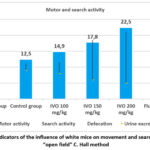 |
Figure 1: IVO Indicators of the influence of white mice on movement and search activity in the “open field” C. Hall method |
As shown in the figure, the activity caused by the test substance was manifested synchronously with motor and search activity, and similar indicators of this activity were noted with the comparative drug fluoxetine.
Determination of the effect of IVO on the time of forced swimming of white mice by the R. Porsolt method on the background of ChLD.
Determining the time of compulsive swimming in experimental animals is one of the main methods of searching for antidepressant drugs, and the periodic prolongation of the time of compulsive swimming in this method indicates the absence of depression, fear and depressive states.21 In the study, it was observed that white mice exposed to the test substance showed a marked increase in the period of forced swimming compared to the control group. In particular, of the observed six minutes or three hundred seconds, the white mice in the control group spent only 151.4 seconds swimming. The rest of the time, they were motionless, in despair, and even watched the beginning of drowning. When exposed to the studied doses of Iceland oil of 100 mg/kg, 150 mg/kg and 200 mg/kg, this forced swimming time was 185.4, 192.8 and 199.8 seconds, respectively. However, in the comparative drug fluoxetine, this time was 210.6 seconds, which exceeded the studied substance in activity (Fig. 2).
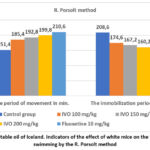 |
Figure 2: Vegetable oil of Iceland. Indicators of the effect of white mice on the time of forced swimming by the R. Porsolt method |
From the data presented in the figure, it can be concluded that the studied vegetable oil has a pronounced antidepressant activity compared to the control one, and the comparative drug for this activity does not show an advantage over fluoxetine.
Determination of the effect of IVO on the time of immobilization of white mice hanging from the tail using the L Steru method against the background of ChLD.
Another of the main methods of searching for antidepressants or biologically active substances is to determine whether experimental animals hanging from their tails can shorten the immobilization time or prolong the period of mobility. In this study, which was observed for six minutes or three hundred seconds, the mobility time of the white mice in the control group was 148.8 seconds, and the immobilization time was 211.2 seconds, respectively. When exposed to the studied doses IVO of 100 mg/kg, 150 mg/kg and 200 mg/kg, the motility period of white mice was 160.3, 167.9 and 172.6 seconds, respectively. Simultaneously, it was found that the immobilization time of white mice exposed to these doses was 199.7, 192.1, and 187.4 seconds, respectively. It was found that when exposed to fluoxetine, which was obtained as a comparative drug, the motility period of white mice was 175.4 seconds and the immobilization period was 184.6 seconds (Fig.3).
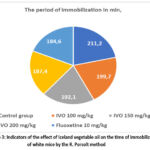 |
Figure 3: Indicators of the effect of Iceland vegetable oil on the time of immobilization of white mice by the R. Porsolt method. |
Thus, IVO showed high antidepressant activity, increasing the period of mobility of white mice hanging from their tails and, accordingly, reducing their immobilization time, and in this activity it is not inferior to the comparable drug fluoxetine.
Discussion
Today, the prevention and treatment of ChLD of various etiologies around the world is one of the urgent problems, and it is the occurrence of mental and emotional disorders against the background of these pathologies that can lead to the formation of more serious complications.1,2,3 Depression is one of the most common conditions not only in healthy people or patients with various neurological pathologies, but also in patients with chronic liver pathology. Early development of severe complications is recognized as one of the factors contributing to disability and death. On the other hand, the use of existing antidepressants can lead to an even greater deterioration in the condition of patients with chronic liver diseases due to their hepatotoxicity. In this regard, studies were conducted in the presented manuscript to determine the hepatoprotective and antidepressant activity of vegetable oil belonging to the Iceland rose variety, which has a natural base that turned out to be low-toxic. This led to toxic liver damage in white rats with chronic oral administration of paracetamol and ethanol, hepatoprotective activity and antidepressant activity were detected in C. Hall, R. Porsolt and L. Steru methods based on biochemical analysis of blood, amount and composition of bile secretions.14,21,22 As a result of toxic liver damage, the levels of enzymes, in particular ALT and AST, increased by 2.31 and 2.16 times, respectively, compared with those of healthy rats in the Intact group, respectively, and, accordingly, proportional changes in head parameters such as total, protein and total bilirubin were also observed. However, when taking IVO orally in various doses for two weeks, dose-dependent positive changes in the stabilization of altered blood biochemical parameters were observed. In particular, it was found that when exposed to doses of 100 mg/kg, 150 mg/kg and 200 mg/kg, ALT levels stabilized to 1.62; 1.71 and 1.78 times, respectively, AST levels-to 1.82; 1.87 and 1.93 times, respectively, and alkaline phosphatase levels to 1 to 1.04 times. This activity was manifested mainly at doses of 150 mg/kg and 200 mg/kg compared to Apkosul, especially at doses of 200 mg/kg, although this activity is considered significantly lower compared to phosphogliv. This indicates the presence of heptoprotective activity in the test substance and although the control over this activity was obvious and slightly exceeded the control over Apkosul, significantly lower activity was observed than that of the well-known drug Phosphogliv. In addition, the activity of the herb, depending on the dose, was observed to varying degrees both in terms of the amount of substance released and the stability of its components. It was observed that IVO increases bile excretion in the studied doses up to 1.1, 1.2 and 13 times, respectively, compared with the control, compared with apkosul mainly in doses of 150 mg / kg and 200 mg/ kg up to 1.01 and 1.06 times, respectively. As for Phosphogliv, according to all the indications studied, it showed significantly less activity.
The psychoemotional state of the experimental animals is evidenced by motor and search activity, as well as the proportional activity of excretion and urine. In the studies conducted by the method proposed by C. Hall, this idea has found its vivid confirmation. When exposed to the studied doses of vegetable oil, there was an increase in motor activity by 1.2, 1.4 and 1.8 times compared with the control, and motor activity by 1.1, 1.5 and 1.7 times, respectively. This included a simultaneous decrease in urine and stool excretion from 1.25 to 1.95 times. In the comparative drug fluoxetine, similar results were also noted with indicators only at a higher dose of the test substance 200 mg/kg. Activity related to the reduction of these depressive symptoms, one of the main methods of finding antidepressants, was also found in a test for compulsive swimming or frustration conducted on white mice. IVO showed high antidepressant activity, increasing the compulsive swimming time of white mice to 1.22; 1.27 and 1.32 times, respectively, in the studied doses compared with the control ones, and it was found that the drug for comparison with this activity has a slightly lower activity than fluoxetine. However, in the analyses of the effect on the immobilization time of white mice hanging from the tail proposed by L. Steru, IVO showed relatively high antidepressant activity. In particular, it was found that in the studied doses, a decrease in the immobilization time of experimental animals increases the period of their mobility to 1.08; 1.13 and 1.16 times, respectively, compared with the control group. A comparison of this activity showed that fluoxetine, taken as a drug, showed similar activity compared to the studied dose. Thus, IVO exhibits hepatoperotective and antidepressant activity, being low-toxic. Although the popular drug has significantly lower activity in terms of hepatoprotective activity compared to phosphogliv, it is believed that it has similar activity compared to the plant-based drug apkosul. In terms of antidepressant activity, the drug is not superior to fluoxetine, has fluoxetine-like activity and is not inferior to it in reducing depressive symptoms. This, in turn, will require large-scale research based on this vegetable oil, and the determination of its components will pave the way for physico-chemical and pharmaco-toxicological studies (PhTS) through individual selection of bioactive phytocomponents.
Conclusion
Thus, IVO, which has medicinal and mainly cosmetic value, is low-toxic and exhibits both hepatoprotective and antidepressant activity. While the control group showed higher activity in terms of hepatoprotective activity than apkosul, significantly lower activity was found compared to phosphogliv. However, in terms of antidepressant activity, the comparative drug is not inferior to fluoxetine.
This, in turn, requires large-scale physico-chemical studies based on this vegetable oil in order to individually extract bioactive phytocomponents for the initial determination of their components. However, structural studies of this vegetable oil may lead to a further expansion of the range of PhTS
Acknowledgment
The authors’ acknowledgements go to the Bukhara state medical institute named Abu Ali Ibn Sino for supporting this work.
Funding Sources
The author(s) received no financial support for the research, authorship, and/or publication of this article.
Conflict of Interest
The author(s) do not have any conflict of interest.
Data Availability Statement-
This statement does not apply to this article.
Ethics Statement
All research work in this article was carried out on the basis of the permission of the Ethics Committee under the Ministry of Health of the Republic of Uzbekistan No. 1/1-1628.
Informed Consent Statement–
This study did not involve human participants, and therefore, informed consent was not required.
Clinical Trial Registration
This research does not involve any clinical trials.
Permission to reproduce material from other sources
Not applicable
Author Contributions
- I.I.Latipov: Conceptualization, Methodology, Writing – Original Draft.
- D.A.Nabieva: Data Collection, Analysis, Writing – Review & Editing.
- M.B. Dzhabbarova: Funding Acquisition, Resources, Supervision.
- O.I. Ergashov: Conceptualization, Methodology, Funding Acquisition.
- T.E. Rakhimzoda: Conceptualization, Methodology, Funding Acquisition.
- Sh.F. Ramazonov: Data Collection, Analysis, Writing – Review & Editing.
- T.Khamroev – Conceptualization, Methodology, Writing – Original Draft. Pharmacological and toxicological experiments, statictical Analysis
References
- Mirabdolhagh Hazaveh M, Dormohammadi Toosi T, Nasiri Toosi M, Tavakoli A, Shahbazi F. Prevalence and severity of depression in chronic viral hepatitis in Iran. Gastroenterol Rep (Oxf). 2015; 3(3):234-7.
CrossRef - Lioznov D.A., Dunaeva N.V., Chung N.H., Gorchakova O.V., Antonova T.V. Chronic hepatitis C: modern condition of the problem. Nephrology (Saint-Petersburg). 2019;23(4):36-46.
CrossRef - Aripov A. N, Akhunzhanova L. L, Nabiev A. U, Aripov A. O, Khamroev T. T.. Antifibrotic Efficacy of a New Phytocomposition of Essential Phospholipids with Glycyrrhizic Acid, Ecdysterone, Lycopene and Proanthacyanidin in Experimental Severe Chronic Hepatitis Compared with Phosphogliv. Biomed Pharmacol J 2023;16 (3). 1815-1825.
CrossRef - Zhu H., Gu Y., Zhang G., Su Y., Wang K., Zheng Y., & Gao, Z. Depression in patients with chronic hepatitis B and cirrhosis is closely associated with the severity of liver cirrhosis. Experimental and Therapeutic Medicine, 2016; 12, 405-409.
CrossRef - Huang X, Liu X and Yu Y. Depression and Chronic Liver Diseases: Are There Shared Underlying Mechanisms? Mol. Neurosci. 2017; 10:134. 1-11.
CrossRef - Diagne B.J., Hakima A., El Harch I., et al. N. Depression and Anxiety in Patients with Hepatitis B and C in a Moroccan Region: A Cross-Sectional Study. Open Access Library Journal, 2022; 9, 1-12.
CrossRef - AbdAllah, A.M. andSharafeddin, M.A. Depression, Anxiety and Stress in Egyptian Patients with Chronic Liver Diseases. The Egyptian Family Medicine Journal, 2020; 4, 42-57.
CrossRef - Najaf, H.N., Kadhim, D.J., Alkofee, A.J. and Al-Mashhadani, D.A. Depression, Anxiety and Stress among a Sample of Chronic Hepatitis C Patients in AL-Najaf Province/Iraq. International Journal of Research in Pharmaceutical Sciences, 2019; 10, 3170-3177.
CrossRef - Sarbarzeh, P.A., Karimi, S., Jalilian, M. and Mosafer, H. Depression, Anxiety, Stress and Social Isolation in Hepatitis Patients. SciMedicine Journal, 2020; 2, 225-233.
CrossRef - Huang CY., You YS., Lai JM. et al. The Association Between Antidepressant Use and Drug-Induced Liver Injury: A Nationwide, Population-Based Case–Control Study in Taiwan. Drugs – Real World Outcomes 2024; 11, 513–520.
CrossRef - Ferrajolo C, Scavone C, Donati M, et al. Antidepressant-Induced acute liver injury: a case–control study in an Italian inpatient population. Drug Saf. 2018;41:95–102.
CrossRef - Todorović Vukotić N, Đorđević J, Pejić S, Đorđević N, Pajović SB. Antidepressants- and antipsychotics-induced hepatotoxicity. Arch Toxicol. 2021;95:767–89.
CrossRef - Licata A, Minissale MG, Calvaruso V, Craxì A. A focus on epidemiology of drug-induced liver injury: analysis of a prospective cohort. Eur Rev Med Pharmacol Sci. 2017;21:112–21.
- Aripov A. N, Akhunzhanova L. L, Nabiev A. U, Aripov O. A, Khamroev T. T. Evaluation of Antifibrotic Activity of a Combination of a New Phytocomposition and Proanthocyanidins in Rats. Biomed Pharmacol J 2024;17(4).2739-2749.
CrossRef - Rakhimova, S.K., Kurbanov, U.K., Mezhlumyan, L.G. et al. Proteins from the Aerial Part of Delphinium leptocarpum and Their Biological Activity. Chem Nat Compd 2023;(59): 750–753.
CrossRef - Wang H. Beneficial medicinal effects and material applications of rose. 2023;10(1):e23530.
CrossRef - Liu W.Y., Chen L.Y., Huang Y.Y., et al. Antioxidation and active constituents analysis of flower residue of Rosa damascena. Chin Herb Med. 2020;12(3):336–341.
CrossRef - Qiu L.Q., Zhang M., Ju R.H., Wang Y.C., Chitrakar B., Wang B. Effect of different drying methods on the quality of restructured rose flower (Rosa rugosa) chips. Technol. 2020;38(12):1632–1643.
CrossRef - National Research Council. 2011. Guide for the Care and Use of Laboratory Animals: Eighth Edition. Washington, DC: The National Academies Press. 2011; (8): 356.
- Blinova E.V., Halzova M.A., Blinov D.S. A protective role for magnesium 2-aminoethansulfonate in paracetamol and ethanol-induced liver injury in pregnant rats. Experimental and Clinical Gastroenterology. 2016;(10):50-53.
- Emily R.T., Rachel S, Julia B, et al. The need for guidance in antidepressant drug development: Revisiting the role of the forced swim test and tail suspension test. Regulatory Toxicology and Pharmacology 2024; 151. 105666-74.
CrossRef - Mironov A. N. Rukovodstvo po provedeniyu doklinicheskix issledovaniy lekarstvennыx sredstv / Pod red.— Moscow, Russian: Grif i K, 2012; (1):
- Letalnye dozy veshestv. chemister.ru. 2001; Updated date 11.01.2021. Accessed date 07.07.2025. St.40. http://chemister.ru/Database/Tables/ld.php?pageNum=40
Abbreviations
IVO – Icelandic vegetable oil
ChLD – Chronic liver diseases
ChTH – chronic toxic hepatitis
ChTLD – chronic toxic liver damage
PhTS – pharmaco-toxicological studies
 PlumX:
 Views: 779
  PDF Downloads:
247
PDF Downloads:
247