Alloimmunization Among Patients with Chronic Diseases Receiving Repeated Blood Transfusions in the Kingdom of Bahrain: A Retrospective Study
 , , Amal Hussain, Dana Alshino1, Sharique Ahmed1, Naeem Anwar1, Fadheela AlAlawi1and Aqeela Abuidrees1
Medical Laboratory Sciences Program, Allied Health Department, College of Health and Sport Sciences, University of Bahrain, Bahrain
Corresponding Author E-mail: myabbas@uob.edu.bh
Download this article as:
ABSTRACT:Alloimmunization is a common complication of repeated red blood cell (RBC) transfusions, resulting from the production of antibodies against foreign RBC antigens. This study aimed to determine the frequency of RBC alloimmunization among patients with chronic diseases receiving repeated blood transfusions in the Kingdom of Bahrain. To the best of our knowledge, this is the first published study on RBC alloimmunization in this patient population in the Kingdom of Bahrain. This retrospective study was conducted at King Hamad University Hospital (KHUH), by reviewing blood bank records of patients who received repeated RBC transfusions over a six-year period. A total of 1200 transfused patients records were screened for RBC alloantibodies, demographic characteristics, underlying chronic diseases, and transfusion history. Among records screened, 90 were identified having RBC alloantibodies, corresponding to an overall alloimmunization rate of 7.5%. A total of 15 different alloantibodies against 7 blood groups of antigens were identified. The most frequently involved blood groups systems were Rhesus (50%), Kell (22.22%) and Kidd (17.77%) systems. The three most common alloantibodies were Anti-E (23.33%), Anti-K (21.11%) and Anti-Jka (15.55%). Most alloimmunized patients were females (74%), among whom 12 different antibodies were detected, whereas males accounted for 26% of cases with 7 different alloantibodies identified. The highest frequency of alloimmunization occurred in patients aged 56-65 years (23.33%). A strong association was observed between repeated transfusion exposure and alloantibody formation. The highest proportion of alloimmunized patients had chronic anemia (40%), followed by cancer (33%); Anti-E was predominant in both groups. Patients with chronic kidney disease accounted for 17% of cases with Anti-K predominating. Smaller proportions were observed in patients with sickle cell disease (5%) and chronic heart disease (4%), while thalassemia accounted for 1% of the cases. The relatively low alloimmunization rate observed in this study compared with other reports from the region may reflect the use of extended RBC antigen matching and routine alloantibody screening in chronically transfused patients.
KEYWORDS:Alloantibodies; Alloimmunization; Blood group system; Blood transfusions; Chronic diseases
Introduction
Blood transfusion is a lifesaving therapy for patients with chronic diseases who require repeated transfusions. However, frequent transfusions carry a high risk of alloantibody formation. During transfusion, patients may be exposed to foreign red blood cell antigens from donor blood. As a result, the patient’s immune system may produce one or more alloantibodies against these foreign antigens. In multi-transfused patients, matching major blood group antigens and performing extended phenotyping for clinically significant minor immunogenic antigens are extremely important to improve transfusion safety and reduce the risk of alloimmunization.1 Identifying risk factors for alloimmunization and developing strategies to reduce its occurrence are important for improving transfusion practice. Understanding its impact on transfusion outcomes and clinical management can help optimize care for patients with chronic diseases.2
The prevalence of alloimmunization varies among countries and populations, as reported in multiple studies, and is influenced by differences in incidence rates and other contributing factors. 3-20Assessment of alloimmunization in patients with chronic diseases requires a comprehensive evaluation of several parameters, including underlying disease pathology, transfusion history, implicated RBC antigens in alloantibody formation, and the potential influence of age and gender. To the best of our knowledge, this is the first study to evaluate the frequency of alloimmunization among Bahraini patients with chronic diseases receiving multiple transfusions, which may provide a basis for further research in this field.
Materials and Methods
Study Design and Setting
This retrospective study was conducted at King Hamad University Hospital (KHUH), Bahrain. Data was obtained through a review of electronic medical records and blood bank records for the period from January 2019 to January 2024. The study focused on patients with chronic transfusion-dependent conditions who had received repeated blood transfusions during the study period. The main objective was to determine the frequency and types of red blood cell alloantibodies identified in these patients.
Study Population
The study population included patients with chronic transfusion-dependent diseases who received blood transfusions at KHUH between January 2019 and January 2024 and met the predefined eligibility criteria.
Inclusion and Exclusion Criteria
Patients were included if they had documented chronic medical condition requiring repeated blood transfusions, had received two or more blood transfusions during the study period, and had available records containing the required demographic, clinical, transfusion, and blood bank information.
Patients with conditions other than chronic transfusion-dependent diseases were excluded, as were patients whose identified alloantibodies were attributable to other immunization events.
Data Collection and Study Variables
Data were retrospectively collected from electronic medical records and the blood bank database. Variables included age, sex, underlying chronic disease, transfusion history, number and frequency of transfusions, and the presence and type of red blood cell alloantibodies. The primary outcome was the presence and type of red blood cell alloantibodies. All data were reviewed for completeness and consistency before analysis.
Sample Size
As this was a retrospective study based on existing hospital records, all patients who met the inclusion and exclusion criteria during the study period were included. Therefore, no formal sample-size calculation was performed. The final sample consisted of 1200 patients.
Statistical Analysis
The data was analyzed using the Statistical Package for Social Sciences (SPSS), version 25, with Microsoft Excel used for data organization and graphical presentation. Categorical variables were summarized as frequencies and percentages, while continuous variables were summarized using appropriate descriptive statistics. Associations between categorical variables were assessed using the chi-square test or Fisher’s exact test, where appropriate. A P-value of <0.05 was considered statistically significant.
Ethical Considerations
The study was approved by the Education and Proficiency Center Research and Ethics Committee at KHUH in May 2024 (Approval No. 2024-793). As this was a retrospective review of existing medical records, the study was conducted in accordance with the committee’s requirements for the protection of patient confidentiality and privacy.
Results
During the six-year study period, a total of 1200 transfused patients were identified through the blood bank records at KHUH. After applying the predefined inclusion and exclusion criteria, 90 patients were eligible and included in the final analysis. The demographic and clinical characteristics of the included patients, including age, sex, underlying chronic diseases, transfusion history, and other relevant clinical variables, were analyzed. Transfusion-related characteristics and identified RBC alloantibodies were also evaluated in accordance with the predefined study objectives and variables described in the Methodology. As shown in Figure 1, 90 patients were identified with RBC alloantibodies, yielding an overall alloimmunization rate of 7.5%. Of these patients, 23 (26%) were male and 67 (74%) were female. The patients’ ages ranged from 15 to 87 years. The highest frequency of alloantibody formation was observed in the 55–65-year age group (21 patients, 23.3%), followed by the 46–55-year age group (19 patients, 21.1%) and the 66–75-year age group (17 patients, 18.9%) (Figure 2).
Among the alloimmunized patients, transfusion frequency differed significantly between males and females (P = 0.003), and age also differed significantly by sex (P = 0.012). A statistically significant association was observed between transfusion frequency and alloantibody occurrence in the overall study population (P < 0.001).
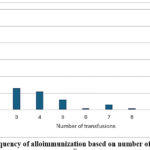 |
Figure 1: Frequency of alloimmunization based on number of transfusions. Click here to View Figure |
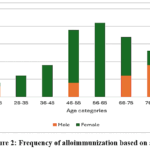 |
Figure 2: Frequency of alloimmunization based on age. Click here to View Figure |
Patients with chronic anemia showed the highest frequency of alloimmunization, accounting for 36 patients (40%). This was followed by patients with cancer, who comprised 30 patients (33%). Patients with chronic kidney disease accounted for 15 cases (17%). In addition, sickle cell disease and chronic heart disease each account for 4 patients (5% and 4%, respectively). The lowest frequency was observed in patients with thalassemia, with only one patient (1%) recorded.
Patients developed alloantibodies against seven blood group antigen systems. The most frequently implicated system was the Rhesus (Rh) blood group system, identified in 45 patients (50%). This was followed by the Kell system in 20 patients (22.22%), the Kidd system in 16 patients (17.77%), and the Lewis system in 6 patients (6.66%). The least frequently observed alloantibodies were directed against the Duffy, MNS, and Lutheran systems, each detected in one patient (1.11%) (Figure 3). The Rh blood group system accounted for 50% of all detected alloantibodies, a proportion equal to the combined frequency of all other blood group systems. Rh antibodies were observed 2.25 times more frequently than Kell antibodies and 2.81 times more frequently than Kidd antibodies, and occurred substantially more frequently than Lewis, Duffy, MNS, and Lutheran blood group systems.
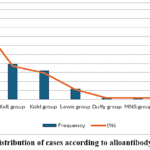 |
Figure 3: Distribution of cases according to alloantibody specificity. Click here to View Figure |
A total of 15 specific alloantibodies were identified against seven blood group antigen systems. The most frequently detected alerts were Anti-E, observed in 21 patients (23.3%). This was followed by Anti-K, with 19 cases (21.11%), and Anti-Jka, detected in 14 patients (15.55%). Anti-D was identified in 8 patients (8.88%), while Anti-c was observed in 7 patients (7.77%). Anti-Lea and Anti-C were each detected in 5 patients (5.55%). Anti-Jkb, Anti-e, and Anti-Cw were each found in 2 patients (2.22%). The least common alloantibodies included Anti-Leb, Anti-S, Anti-Kpa, Anti-Fya, and Anti-Lua, each detected in a single case (1.11%). Based on gender distribution, 12 different alloantibodies were identified among female patients. The most frequently detected alloantibody in females was Anti-K, observed in 15 patients, followed by Anti-E in 14 patients and Anti-Jka in 11 patients. In male patients, seven types of alloantibodies were detected. The most common was Anti-E, identified in 9 patients, followed by Anti-K in 4 patients and Anti-Jka in 3 patients. The distribution of the remaining alloantibodies is illustrated in Figure 4. In terms of alloantibody type according to underlying disease, Anti-E was the most frequently detected alloantibody in patients with chronic anemia (9 patients) and cancer (9 patients). In chronic kidney disease, Anti-K was the most common (6 patients), while Anti-E predominated in sickle cell disease (3 patients). Among patients with chronic heart disease, single cases of Anti-c, Anti-E, Anti-Lea, and Anti-Jka were observed. In the sole patient with thalassemia, Anti-K was identified (Figure 5).
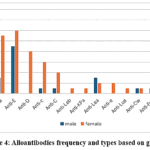 |
Figure 4: Alloantibodies frequency and types based on gender. Click here to View Figure |
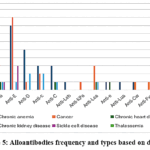 |
Figure 5: Alloantibodies frequency and types based on disease. Click here to View Figure |
The alloimmunization rate of 7.5% observed in the present Bahraini cohort is among the lowest reported in the GCC. Previous studies from Gulf countries have documented higher rates, ranging from 9.3% to 31.6% among patients with transfusion-dependent thalassemia and sickle cell disease, and from 10.2% to 18.3% in broader cohorts of chronically transfused patients (Table 1).
Table 1: Comparison of RBC alloimmunization rates among chronically transfused patients in Gulf countries
|
Country |
Study population | Alloimmunization rate |
| Kingdom of Bahrain | Chronic anemias, cancer, chronic heart disease, chronic kidney disease, SCD, thalassemia |
7.5% |
|
KSA12 |
transfusion-dependent patients | 18.3% |
| KSA13 | SCD, Thalassemia, hematological malignancies |
10.2.3% |
|
KSA14 |
SCD | 17.4% |
| KSA15 | SCD |
16.7% |
|
Thalassemia |
11.97% | |
| KSA16 | SCD, Thalassemia |
12.98 |
|
Kuwait17 |
SCD | 23.6% |
| Oman18 | Thalassemia |
9.3 |
|
Oman19 |
SCD |
31.6% |
Discussion
Repeated blood transfusion is a lifesaving intervention for many chronic diseases; However, repeated exposure to various donor RBCs antigens increases the risk of alloimmunization, which may complicate future transfusions by causing difficulties in finding compatible blood and increasing the risk of many transfusion complications.
The findings of this study should be interpreted in the context of its retrospective study design and defined study population. The study population was identified through a review of blood bank records at KHUH over a six-year period, during which 1200 transfused patients were screened, and 90 patients met the predefined inclusion criteria. The analysis considered relevant demographic and clinical characteristics, underlying chronic diseases, transfusion exposure, and identified alloantibodies. The use of predefined selection criteria and systematic review of blood bank records provided a consistent approach to identifying and characterizing alloimmunization in the study population. Nevertheless, the retrospective design, single-center setting, and relatively small number of eligible patients may limit the generalizability of the findings to other patient populations and healthcare settings.
In the present study, alloimmunization was more common among females than males. This finding is consistent with previous reports which observed higher alloantibody formation among women.8,13,14 Female predominance may partly reflect previous sensitization through pregnancy in addition to transfusion exposure, although pregnancy history was not available in the current study.
The largest proportion of alloimmunized patients had received two transfusions. However, this finding should be interpreted cautiously because it reflects the distribution of patients within the study rather than the risk associated with the number of transfusions. Numerous studies have shown that the risk of alloimmunization generally increases with cumulative transfusion exposure .6,13,14,18 Therefore, future studies should evaluate alloimmunization rates according to the total number of transfused units rather than the absolute number of alloimmunized patients.
Patients with chronic anemia represented the largest proportion of alloimmunized individuals (40%), followed by patients with cancer (33%) and chronic kidney disease (17%). These findings likely reflect differences in the underlying diseases and transfusion requirements rather than disease-specific susceptibility. Comparisons with previous studies should therefore be interpreted cautiously because many published reports focus on specific patient populations, particularly transfusion-dependent hemoglobinopathies, whereas our cohort included a heterogeneous group of chronic diseases.
The relatively low frequencies observed among patients with sickle cell disease (5%), thalassemia (1%), and chronic heart disease (4%) are most likely explained by the small number of patients in these groups rather than a genuinely lower risk of alloimmunization. Additionally, another central tertiary hospital serves patients from other regions of the Kingdom, which may have influenced the distribution of cases observed in the present study. Larger studies focusing on these patient populations are needed to obtain more reliable estimates.
Consistent with previous reports, antibodies against the Rh, Kell, and Kidd blood group systems were the most frequently detected. Anti-E was the most common alloantibody, followed by Anti-K and Anti-Jkᵃ. These findings agree with studies from different populations reporting Rh and Kell antibodies as the predominant clinically significant alloantibodies.10,13 The high immunogenicity of Rh and Kell antigens support the implementation of extended antigen matching, particularly for patients expected to require repeated transfusions. Prophylactic matching for Rh and K antigens has been shown to reduce alloimmunization rates compared when only ABO and RhD matching is performed.1,20
Compared with other studies from Gulf Cooperation Council (GCC) countries, the overall alloimmunization rate observed in Bahrain (7.5%) is relatively low.12–19 This difference may be explained by the heterogeneous study population, which included various chronic diseases rather than predominantly transfusion-dependent patients such as those with sickle cell disease or thalassemia. Differences in donor–recipient antigen compatibility, transfusion practices, ethnic background, and antigen-matching policies may also contribute to the variation in alloimmunization rates across the region.
Overall, the findings reinforce the importance of routine antibody screening and consideration of extended RBC antigen matching for patients requiring repeated transfusions to minimize alloimmunization and improve transfusion safety.
Conclusion
To our knowledge, this study is the first in the Kingdom of Bahrain to describe the frequency and specificity of alloimmunization among patients with chronic diseases receiving repeated blood. Among the study subjects, females, individuals aged group 56-65, those who had received two transfusions, and patients with chronic anemia represented the most frequently observed groups. A total of 15 different alloantibodies targeting 7 blood group systems were identified, with the Rh blood group system being the most frequently represented. Anti-E was the most frequently detected alloantibody followed by anti-K. Observing alloimmunization patterns can lead to targeted preventive measures and personalized treatment strategies. The relatively low alloimmunization rate observed in this study (7.5%) compared with other reports from the region may reflect the use of extended RBC antigen matching and routine alloantibody screening in chronically transfused patients. These findings highlight the importance of continued surveillance of transfusion-related alloimmunization and may support targeted transfusion strategies, including appropriate antibody screening and provision of antigen-matched blood for patients at increased risk. Further multicenter studies involving larger and more diverse patient populations are recommended to better characterize risk factors for alloimmunization and to support ongoing efforts to optimize transfusion safety and patient care in the Kingdom of Bahrain.
Acknowledgement
We would like to express our sincere gratitude to the Scientific Research & Development Directorate at King Hamad University Hospital (KHUH), Kingdom of Bahrain for approving this project and offering the essential research resources.
Funding Sources
The author(s) received no financial support for the research, authorship, and/or publication of this article.
Conflict of Interest
The authors do not have any conflict of interest.
Data Availability Statement
All data analyzed in this study are presented in the manuscript. The raw data is not publicly available due to privacy and confidentiality restrictions..
Ethics Statement
This research did not involve human participants, animal subjects, or any material that requires ethical approval.
Informed Consent Statement
This study did not involve human participants, and therefore, informed consent was not required.
Clinical Trial Registration
This research does not involve any clinical trials.
Permission to reproduce material from other sources
Not Applicable
Author Contributions
- Mohammed Yousif Mohammed: Conceptualization, Supervision, Formal Analysis, Data Curation, Writing – Original Draft, and Writing – Review & Editing. Corresponding Author.
- Bashayer Saeed Mohammed: Investigation, Data Curation, Formal Analysis, Data Interpretation, and Writing – Original Draft.
- Khawla Ahmed Alkooheji: Investigation, Data Curation, Formal Analysis, Data Interpretation, and Writing – Original Draft.
- Amal Mohammed Hussain: Investigation, Data Curation, Formal Analysis, Data Interpretation, and Writing – Original Draft.
- Dana Abdulhakeem Alshino: Investigation, Data Curation, Formal Analysis, Data Interpretation, and Writing – Original Draft.
- Sharique Ahmed: Data Curation, Validation, Review & Editing.
- Naeem Anwar: Formal Analysis, Data Curation, Validation, Review & Editing.
- Fadheela AlAlawi: Review & Editing.
- Aqeela Abuidrees: Review & Editing.
Reference
- Chou ST, Alsawas M, Fasano RM, et al. American Society of Hematology 2020 guidelines for sickle cell disease: transfusion support. Blood Adv. 2020;4(2):327-355. doi:10.1182/bloodadvances.2019001143
CrossRef - Castilho L. Transfusion with blood group genotype matching: advances, limitations, and challenges: a narrative review. Ann Blood. 2025;10. doi:10.21037/aob-25-37
CrossRef - Al-Allawi N, Al-Mousawi MM, Al Allawi S, Ibrahim KJ. Alloimmunization in β-thalassemia and sickle cell disease in Middle Eastern countries: a systematic review. Hemoglobin. 2025;49(2):126-140. doi:10.1080/03630269.2025.2471923
CrossRef - Yusoff SM, Bahar R, Hassan MN, et al. Prevalence of red blood cell alloimmunization among transfused chronic kidney disease patients in Hospital Universiti Sains Malaysia. Oman Med J. 2020;35(5):e177. doi:10.5001/ omj.2020.95
CrossRef - Wafa AYN, Tambunan BA, Andarsini MR. The correlation between frequency of transfusion and alloimmunization in transfusion-dependent thalassemia patients. Int J Sci Adv. 2023;4(1). doi:10.51542/ijscia.v4i1.18
CrossRef - Aldakheel FM, Alali BH, Alduraywish SA, et al. Associations between alloantibodies and multiple red blood cell transfusions in patients with sickle cell anemia. J King Saud Univ Sci. 2022;34(6):102161. doi:10.1016/j. jksus. 2022.102161
CrossRef - AlDawood R. The prevalence of cumulative alloimmunization in patients with sickle cell disease at King Fahad University Hospital. J Appl Hematol. 2022;13(1):35. doi:10.4103/joah.joah_122_21
CrossRef - Das SS, Biswas RN, Safi M, et al. Alloimmunization to erythrocyte antigens in patients receiving multiple blood transfusions: clinico-immunohematological and demographic risk factors and impact of extended red cell phenotyping. Glob J Transfus Med. 2021;6(2):171. doi:10.4103/GJTM.GJTM_68_21
CrossRef - Nadwan E, Nasreldin W, Zaki N, et al. Prevalence of red cell alloantibodies among multi-transfused Egyptian patients. Medicine Updates. 2022;0(0). doi:10.21608/muj.2022.116360.1089
CrossRef - Valle Neto OGD, Alves VM, Pereira GA, et al. Clinical and epidemiological profile of alloimmunized and autoimmunized multi-transfused patients against red blood cell antigens in a blood center of Minas Gerais. Hematol Transfus Cell Ther. 2018;40(2):107-111. doi:10.1016/j.htct.2017.08.001
CrossRef - Mohammed A, Bolad A, Jiefri N, et al. Red blood cell alloimmunization among Sudanese homozygous sickle cell disease patients. Am J Med Med Sci. 2013;3(4):61-67. doi:10.5923/j.ajmms.20130304.02
- Shaikh A, Asiri A, Alasmari S, et al. Alloimmunization rates and associated factors in transfusion-dependent patients: a regional study from Saudi Arabia. Clin Lab. 2026;72(1). doi:10.7754/Clin.Lab.2025.250507
CrossRef - Jusstanih M, Rawas S, Alzahrani H, et al. Prevalence, specificity, and risk factors of red blood cell alloimmunization in chronic blood transfusion therapy: a retrospective cohort study. Rev Diabet Stud. 2025:870-877. doi:10.70082/tbsajn32
CrossRef - Al-Asmari B, Baothman A, Almohammadi M, et al. Prevalence of red blood cell alloimmunization among pediatric patients with sickle cell disease in Saudi Arabia. J Pediatr Hematol Oncol. 2024;46(5):e284-e289. doi:10.1097/MPH.0000000000002889
CrossRef - Kuriri FA, Ahmed A, Alanazi F, et al. Red blood cell alloimmunization and autoimmunization in blood transfusion-dependent sickle cell disease and β-thalassemia patients in Al-Ahsa region, Saudi Arabia. Anemia. 2023;2023:3239960. doi:10.1155/2023/3239960
CrossRef - Halawani AJ, Mobarki AA, Arjan AH, et al. Red cell alloimmunization and autoimmunization among sickle cell disease and thalassemia patients in Jazan Province, Saudi Arabia. Int J Gen Med. 2022;15:4093-4100. doi:10.2147/IJGM.S360320
CrossRef - Ameen R, Al Shemmari S, Al-Bashir A. Red blood cell alloimmunization among sickle cell Kuwaiti Arab patients who received red blood cell transfusion. Transfusion. 2009;49(8):1649-1654. doi:10.1111/j.1537-2995.2009.02185.x
CrossRef - Al-Riyami AZ, Al-Muqbali A, Al-Sudiri S, et al. Risks of red blood cell alloimmunization in transfusion-dependent β-thalassemia in Oman: a 25-year experience of a university tertiary care reference center and a literature review. Transfusion. 2018;58:871-878. doi:10.1111/trf.14508
CrossRef - Alkindi S, AlMahrooqi S, AlHinai S, et al. Alloimmunization in patients with sickle cell disease and thalassemia: experience of a single centre in Oman. Mediterr J Hematol Infect Dis. 2017;9(1):e2017013. doi:10.4084/MJHID. 2017.013
CrossRef - Israelyan N, Vege S, Friedman DF, et al. RH genotypes and red cell alloimmunization rates in chronically transfused patients with sickle cell disease: a multisite study in the USA. Transfusion. 2024;64(3):526-535. doi:10.1111/trf.17740
CrossRef

Accepted on: 06-10-2026
Second Review by: Dr. Nicolas Padilla
Final Approval by: Dr. Anton Kiselev