Phenotypic and Genotypic Detection of Aminoglycoside-Resistant Klebsiella pneumoniae Isolated from Sputum Samples of Patients with Respiratory Tract Infections in Iraq
 , Izdehar Mohammed Jasim and Shahad Saad Alwan*
 Department of Biology, College of Science, University of Diyala, Diyala, Iraq
Corresponding author E-mail: Saadshahad060@gmail.com
DOI : http://dx.doi.org/10.13005/bpj/3497
Download this article as:

A major source of respiratory tract infections, especially in hospitalized patients, the elderly, and people with weakened immune systems, Klebsiella pneumoniae is a clinically significant opportunistic pathogen. Antimicrobial resistance in K. pneumoniae is becoming more common, which is a major global health problem since it restricts treatment options and raises rates of morbidity and mortality. Since aminoglycoside antibiotics are commonly used to treat severe Gram-negative bacterial infections, resistance to these medicines is particularly significant among the several resistance mechanisms. Thus, the goal of the current investigation was to examine the genotypic and phenotypic traits of aminoglycoside-resistant K. pneumoniae that were isolated from sputum samples taken from patients suffering from respiratory tract infections. Standard microbiological techniques were used to process 40 sputum samples that were obtained from patients at Baqubah Teaching Hospital. Biochemical tests and the VITEK 2 automatic identification system was used to provide additional validation. In addition, polymerase chain reaction (PCR) targeting the rpoB gene was employed to ensure accurate molecular confirmation of the bacterial isolates. The antimicrobial susceptibility testing of Klebsiella pneumoniae isolates against aminoglycoside antibiotics revealed variable resistance patterns. The highest resistance rate was observed against streptomycin (72.7%), followed by neomycin (68.18%), while amikacin showed comparatively lower resistance (22.7%) . Genotypic analysis was subsequently performed using PCR to detect aminoglycoside resistance genes, with particular emphasis on the aph (3')-VI gene. The results revealed that 22 (55%) of the 40 sputum samples were identified as K. pneumoniae. Among these isolates, 10 (45.5%) exhibited resistance to aminoglycoside antibiotics and were selected for molecular investigation. PCR analysis demonstrated that all 10 aminoglycoside-resistant isolates (100%) carried the aph (3')-VI resistance gene, indicating a strong association between this gene and the observed aminoglycoside resistance phenotype. In conclusion, aminoglycoside-resistant K. pneumoniae represents a significant therapeutic and epidemiological challenge in respiratory tract infections. The integration of phenotypic identification methods with molecular diagnostic techniques provides a reliable approach for the accurate detection and surveillance of resistant strains. Continuous monitoring of resistance genes and antimicrobial susceptibility patterns is essential for guiding appropriate antibiotic therapy, improving patient outcomes, and strengthening infection control strategies in healthcare settings.
KEYWORDS:Aminoglycoside-resistant gene; Aminoglycoside antibiotics; Gram-negative bacterial infections; Klebsiella pneumoniae; Sputum
Introduction
One of the main causes of infections linked to healthcare, especially respiratory tract infections like pneumonia in hospitalized and immunocompromised patients, is Klebsiella pneumoniae, a Gram-negative opportunistic bacterium. Because of its capacity to colonize mucosal surfaces and endure in hospital settings, it is accountable for a sizable percentage of nosocomial infections globally.1 Both upper and lower respiratory tract infections are closely associated with morbidity and mortality, especially in older adults, those with weakened immune systems, and those with a history of lung disease.2 Due to its ease of collection and lack of intrusive treatment procedures, sputum is the sample most frequently used to diagnose lower respiratory tract infections.3 The increasing clinical impact of K. pneumoniae is largely attributed to its remarkable capacity to acquire and disseminate antibiotic resistance determinants.4
A variety of GNB, including Acinetobacter baumannii (A. baumannii), Pseudomonas aeruginosa (P. aeruginosa), Escherichia coli (E. coli), and Klebsiella pneumoniae (K. pneumoniae), are susceptible to the bactericidal effects of aminoglycosides like tobramycin, gentamicin, and amikacin.5,6 Aminoglycoside resistance in K. pneumoniae is primarily mediated by aminoglycoside-modifying enzymes like acetyltransferases, nucleotidyltransferases, and phosphotransferases. By chemically altering antibiotics, these enzymes render them inactive and lessen their ability to bind to bacterial ribosomes. Horizontal gene transfer across bacterial populations is facilitated by the presence of genes encoding these enzymes, such as the aph (3′)-VI , aac, and ant families, on mobile genetic elements such plasmids and transposons.7
Aminoglycoside resistance genes are highly prevalent in clinical isolates of K. pneumoniae, according to recent molecular research. These genes are frequently linked to multidrug-resistant phenotypes and co-existence with other resistance determinants. For example, resistant isolates frequently have genes like aph (3″)-Ib, ant (2″)-Ia, and aac (3)-IIa, which contribute to high levels of resistance to aminoglycosides such as amikacin, gentamicin, and tobramycin 8,9.Acetyltransferases (aac), nucleotidyltransferase (ant), and phosphotransferases (aph) are aminoglycoside-modifying enzymes (AMEs) that inactivate medicines and are often carried on mobile genetic elements that allow rapid spread. These enzymes are the main cause of aminoglycoside resistance in K. pneumoniae.10 The prevalence and content of AME genes vary significantly between locations and healthcare settings, according to international studies; frequently found genes include aac(6′)-Ib, aac(3′)-II, ant(2′)-Ia, and aph(3”)-Ia; reported rates range greatly (≈20–80% or higher) based on antibiotic selection pressures and local epidemiology.11,12
The purpose of this study is to use the rpoB gene to identify Klebsiella pneumoniae isolates that were recovered from sputum samples. Additionally, it seeks to identify the aph (3′)-VI gene that causes aminoglycoside resistance by PCR and to assess their resistance to aminoglycoside antibiotics using phenotypic techniques. Additionally, the study aims to determine the frequency of resistant strains and their function in respiratory infections, as well as the relationship between phenotypic and genotypic resistance patterns.
Materials and methods
Samples and bacterial isolation
Forty sputum specimens were collected from patients with respiratory tract infections attending Baqubah Teaching Hospital, Diyala, Iraq, between October 2025 and the end of December 2025 for the isolation and identification of Klebsiella pneumoniae. The sputum samples were collected aseptically in sterile containers and transported immediately to the laboratory for microbiological processing. The study protocol was approved by the Scientific and Ethical Committee of the College of Science, University of Diyala, Iraq (Ethical Approval No. 26-ASJ-Sci-189).
Identification of Bacteria
Conventional biochemical tests, such as growth on MacConkey (MAC) agar (Merck, Darmstadt, Germany), blood agar plates, assessment of colony morphologies and Gram stain characteristics, oxidase test, catalase test, citrate utilization test, nitrate reduction test, indole production, motility, lactose fermentation, H2S production, urease activity, Methyl Red (MR) test, and Voges Proskauer (VP) test and capsule test.13 The VITEK 2 automatic identification system was used to provide additional validation. Following identification, molecular analysis targeting the rpoB gene.14
Antibacterial susceptibility test
The Kirby-Bauer disc diffusion technique was used to determine the isolates’ susceptibility to aminoglycoside medications. Amikacin (30 μg/disk), gentamicin (10 μg/disk), tobramycin (10 μg/disk), kanamycin (30 μg/disk), Neomycin (30 μg/disk), and streptomycin (10 μg/disk) were tested for antibacterial sensitivity. Isolates resistant to at least one of these aminoglycoside agents were classified as aminoglycoside-resistant. Sterilized cotton swabs were used to inoculate Mueller-Hinton agar plates with bacterial cultures that showed a 0.5 McFarland turbidity standard. The plates were incubated at 37 °C after antibacterial discs were placed. The Clinical and Laboratory Standards Institute’s guidelines were followed in the analysis of the millimetre-scale measurements of the inhibitory zones (CLSI 2024).15
Molecular detection of aminoglycoside-resistant genes
The PCR experiment involved the extraction of DNA using the DNA Extraction Kits (Qiagen; Germany). The purity of the isolated DNA was assessed utilising a Nanodrop spectrophotometer (Sigma; USA). The PCR technique was employed to investigate the existence of the rpoB and aph (3′)-VI genes in a PCR mixture of 1µl of template DNA at a concentration of 50-100 ng/ml, along with 1µl of forward and reverse primers from Bioneers, South Korea. 9.5 µM DDW and 12.5 µL of Green Master Mix 2X (Ampliqon Company, Denmark) in a total volume of 25 µL.16 The specific primers with PCR conditions are listed in Table 1. The PCR reaction was performed on a thermal cycler (Eppendorf, Mastercycler Gradient; Eppendorf, Hamburg, Germany) under the following condition: 1 cycle at 95 °C for 3min, followed by 35 cycles at 94 °C for 1 min, annealing at 55 °C for 40 s, and then extension step at 72 °C for 1 min followed by a final extension step at 72 °C for 5 min. PCR products were analyzed on a 1.5% agarose gel, stained with DNA-safe stain (SinaClon, Tehran, Iran), and visualised under (UV) light (UVItec, Cambridge, UK). 17
Table 1: Primers utilised in this work from Macrogen/ Korea
|
Primer |
Primer sequence | Product Size | Annealing temperature | Reference |
| rpoB | F: CAACGGTGTGGTTACTGACG
R: TCTACGAAGTGGCCGTTTTC |
108 bp | 55 |
14 |
|
aph(3)-VI |
F: ATGGAATTGCCCAATATTATT
R: TCAATTCAATTCATCAAGTTT |
780 bp | 55 |
18 |
Statistical analysis
Data were analyzed using statistical software (e.g., SPSS). Differences in resistance rates among the tested aminoglycoside antibiotics were analyzed using (e.g., Chi-square test), with p-value < 0.05 considered statistically significant.
Results
A total of 40 sputum samples were collected from patients with respiratory tract infections. Out of these, 22 (55%) isolates were identified as Klebsiella pneumoniae based on cultural, morphological, and biochemical characteristics, as shown in Table 2. Identification of Klebsiella pneumoniae was confirmed using the VITEK 2 system for biochemical analysis. Molecular confirmation was performed by PCR targeting the rpoB gene Figure (1), and the amplified products were verified by agarose gel electrophoresis based on the expected band size.
Table 2: Biochemical identification profile of clinical Klebsiella pneumoniae isolates.
|
Test |
Result |
| Gram stain |
-ve |
|
Catalase |
+ve |
| Oxidase |
-ve |
|
Indole |
−ve |
| Methyl Red |
−ve |
|
Voges–Proskauer |
+ve |
| Citrate utilization |
+ve |
|
Urease |
+ve |
| Lactose fermentation |
+ve |
|
Motility |
−ve |
| Hydrogen sulfide (H₂S) |
−ve |
|
Capsule |
+ve |
The antimicrobial susceptibility testing of Klebsiella pneumoniae isolates against aminoglycoside antibiotics revealed variable resistance patterns. The highest resistance rate was observed against streptomycin (72.7%), followed by neomycin (68.18%), while amikacin showed comparatively lower resistance (22.7%) as shown in (Table 3).
Table 3: Aminoglycosides Susceptibility Pattern of Klebsiella pneumoniae isolated from sputum (n=22)
|
Antibiotic disc |
Disc Potency | No. of Resistant Isolates |
Resistance (%) |
|
Amikacin |
30 μg/disk | 5 | 22.7% |
| Gentamicin | 10 μg/disk | 10 |
45.4% |
|
Tobramycin |
10 μg/disk | 10 | 45.4% |
| Streptomycin | 10 μg/disk | 16 |
72.7% |
|
Kanamycin |
30 μg/disk | 12 | 54.5% |
| Neomycin | 30 μg/disk | 15 |
68.18% |
The resistance rates to aminoglycoside antibiotics ranged from 22.7% to 72.7%. The highest resistance was observed for streptomycin (72.7%), followed by neomycin (68.2%) and kanamycin (54.5%), whereas the lowest resistance was detected for amikacin (22.7%). Statistical analysis using the Chi-square test showed no significant difference in resistance rates among the tested aminoglycosides
PCR analysis revealed that the aph(3′)-VI gene was detected in all ten (100%) Klebsiella pneumoniae isolates examined, indicating the widespread distribution of this aminoglycoside resistance determinant among the selected isolates. Similarly, the rpoB gene was successfully amplified in all isolates (10/10, 100%), confirming its suitability as a reliable molecular marker for the identification of K. pneumoniae. These findings are presented in Figures 1 and 2.
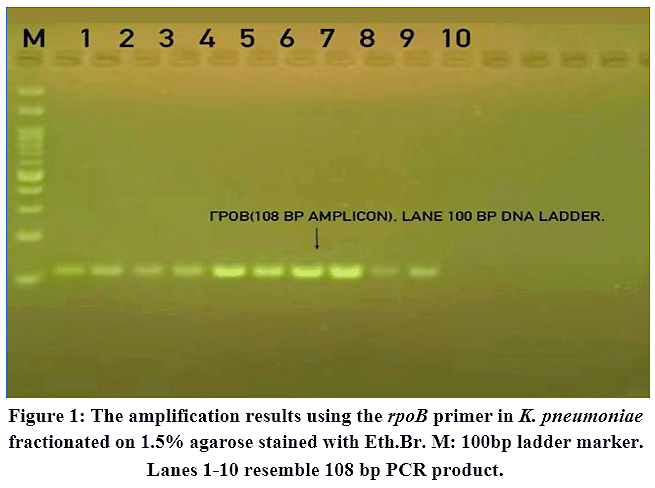 |
Figure 1: The amplification results using the rpoB primer in K. pneumoniae fractionated on 1.5% agarose stained with Eth.Br. M: 100bp ladder marker. Lanes 1-10 resemble 108 bp PCR product. |
 |
Figure 2: The amplification results using aph (3) -VI primer in K. pneumoniae fractionated on 1.5% agarose stained with Eth.Br. M: 100bp ladder marker. Lanes 1-10 resemble a 780 bp PCR product. |
Overall, the results highlight a considerable prevalence of aminoglycoside-resistant Klebsiella pneumoniae in sputum samples, supported by both phenotypic and genotypic findings.
Discussion
The present study demonstrated that Klebsiella pneumoniae was isolated from sputum samples of patients with respiratory tract infections, which is consistent with its well-established role as a major opportunistic pathogen associated with pulmonary infections, particularly in hospitalized and immunocompromised patients. Recent studies confirm that K. pneumoniae remains one of the leading causes of healthcare-associated respiratory infections and contributes significantly to morbidity and mortality worldwide.14,18
The use of phenotypic methods, including culture characteristics and biochemical tests, remains essential for primary identification. However, these methods alone may not always provide sufficient accuracy, especially in distinguishing closely related Enterobacteriaceae. Automated systems such as VITEK 2 have improved the speed and reliability of bacterial identification and antimicrobial susceptibility testing, making them widely used in clinical laboratories.19 Molecular confirmation using PCR targeting the rpoB gene significantly enhanced diagnostic accuracy in the current study. The rpoB gene is considered a highly conserved housekeeping gene and has been widely used for precise bacterial identification. Recent molecular studies have highlighted that PCR-based techniques offer superior sensitivity and specificity compared to phenotypic methods, particularly in detecting clinically relevant pathogens directly from clinical isolates.14
The present study revealed variable resistance patterns among Klebsiella pneumoniae isolates against the tested aminoglycosides. The overall resistance rates indicated a high level of resistance to several commonly used antibiotics, reflecting the growing challenge of antimicrobial resistance in clinical settings. Among the tested antibiotics, streptomycin exhibited the highest resistance rate (72.7%), followed by neomycin (68.18%) and kanamycin (54.5%). These findings suggest that these antibiotics may have limited clinical effectiveness against K. pneumoniae isolates in this study. The high resistance rates could be attributed to the widespread use of these antibiotics over time, which has facilitated the selection of resistant strains, particularly those harbouring aminoglycoside-modifying enzyme genes.14
Gentamicin and tobramycin showed moderate resistance levels (45.4% each), suggesting some efficacy but also a worrying degree of resistance. In contrast, amikacin demonstrated the lowest resistance rate (22.7%), indicating that it is still the most effective aminoglycoside among those tested. These results are in line with earlier research that documented rising resistance to these drugs among Gram-negative bacteria, including K. pneumoniae. It is a more dependable alternative for treating infections brought on by resistant strains because of its structural resistance to enzymatic modification by typical aminoglycoside-modifying enzymes. The generation of aminoglycoside-modifying enzymes, such as acetyltransferases, phosphotransferases, and adenyl transferases, which render the antibiotics inactive, is largely responsible for the observed resistance patterns. The resistance seen in these isolates may potentially be caused by additional mechanisms, such as decreased membrane permeability, efflux pumps, and target site changes. The findings of the antimicrobial susceptibility test showed a high degree of resistance to aminoglycosides, especially to gentamicin (50%) and tobramycin (55%), but amikacin showed relatively lesser resistance (37.5%).20 These results are consistent with recent worldwide patterns showing a slow reduction in aminoglycoside effectiveness as a result of resistance genes spreading widely. The findings of the current investigation are corroborated by a number of recent studies (2023–2024) that found gentamicin and tobramycin resistance rates in K. pneumoniae above 50%. Amikacin’s limited clinical use and structural resistance to specific modifying enzymes may be responsible for its comparatively retained efficacy.
By permanently attaching to the 30S ribosomal subunit, aminoglycosides limit protein synthesis and produce nonfunctional proteins, which ultimately cause bacterial cell death. However, resistance strains have emerged as a result of the extensive and improper use of these antibiotics, particularly in clinical isolates of K. pneumoniae.20 The results show that the synthesis of aminoglycoside-modifying enzymes, such as acetylation, phosphorylation, and adenylation, which render the antibiotic inactive and less effective, is one of the main routes of resistance. An enzyme that phosphorylates aminoglycosides and reduces their antibacterial action is encoded by the aph (3′)-VI gene, which was found in 100% of the samples in this investigation. These findings are in line with earlier research showing that these resistance genes are widely distributed among clinical isolates.21 Nevertheless, some phenotypically resistant isolates lack the aph (3′)-VI gene, indicating the presence of other resistance mechanisms. These could include alterations in membrane permeability, overexpression of efflux pumps, or more aminoglycoside-modifying enzymes. On the other hand, the identification of the gene in a limited number of isolates that are phenotypically sensitive could suggest low-level expression, silent gene carriage, or regulatory factors influencing gene expression. These differences between genotypic and phenotypic results highlight the complexity of antibiotic resistance and have been observed more frequently in recent molecular epidemiology research.22 Crucially, the substantial association found between the existence of the aph (3′)-VI gene and phenotypic resistance highlights the need for molecular diagnostics in verifying resistance mechanisms. Combining PCR-based detection with traditional susceptibility testing improves diagnostic precision, speeds up turnaround times, and offers vital information about the genetic foundation of resistance.23
A substantial correlation between aminoglycoside resistance and the presence of the aph (3′)-VI gene was found in the correlation analysis between phenotypic resistance and genotypic detection.24 However, the identification of the gene in certain phenotypically susceptible isolates may indicate low-level resistance or silent gene expression that is undetectable by conventional susceptibility testing. This emphasises how crucial it is to integrate molecular and phenotypic methods for a more thorough comprehension of antibiotic resistance.
This study’s high incidence of aminoglycoside-resistant K. pneumoniae raises concerns because it restricts treatment options and may result in treatment failure. The issue is made worse by the transfer of resistance genes via mobile genetic elements, which makes it easier for resistance to proliferate in clinical settings.
Conclusion
Aminoglycosides have been considered adequate therapeutic agents against both Gram-negative and Gram-positive pathogens, so simultaneous detection of resistance-creating agents to aminoglycosides in these strains is of clinical importance. Emphasis on the suitable use of antibiotics, effective infection control measures, and identification of antibiotic resistance mechanisms by molecular procedures are necessary to reduce the incidence of infections caused by antibiotic-resistant organisms. This study shows that Klebsiella pneumoniae isolates have a high prevalence of aminoglycoside resistance, which is mostly linked to the aph (3′)-VI gene. To accurately identify and comprehend resistance mechanisms, phenotypic and genotypic approaches had to be integrated. To stop the spread of resistant strains, it is highly advised to conduct ongoing surveillance and use antibiotics sensibly.
Acknowledgement
The authors gratefully acknowledge the Department of Biology, College of Science, University of Diyala, Diyala, Iraq, for providing the facilities and academic support necessary to conduct this research.
Funding Sources
The author(s) received no financial support for the research, authorship, and/or publication of this article.
Conflict of Interest
The authors have no conflicts of interest.
Data Availability Statement
This statement does not apply to this article.
Ethics Statement:
This research did not involve human participants, animal subjects, or any material requiring ethical approval.
Informed Consent Statement
This study did not involve human participants, and therefore, informed consent was not required.
Clinical Trial Registration
This research does not involve any clinical trials.
Permission to reproduce material from other sources
Not Applicable
Author Contributions
- Naseer Hafedh Ibrahim: Data Collection, Analysis, Writing – Review & Editing.
- Izdehar Mohammed Jasim: Supervision, Project Administration. Funding Acquisition, Resources,
- Shahad Saad Alwan: Conceptualisation, Methodology, Writing – Original Draft.
References
- Karami-Zarandi, M., Rahdar, H. A., Esmaeili, H., & Ranjbar, R. Klebsiella pneumoniae: an update on antibiotic resistance mechanisms. Future Microbiology, 2023; 18(1), 65-81.2217/fmb-2022-0097 C⃝ 2023 Future Medicine Ltd
CrossRef - Liu, Y., Huang, L., Cai, J., Zhu, H., Li, J., Yu, Y., … & Feng, Y. (2023). Clinical characteristics of respiratory tract infection caused by Klebsiella pneumoniae in immunocompromised patients: a retrospective cohort study. Frontiers in Cellular and Infection Microbiology, 13, 1137664.DOI 3389/fcimb.2023.1137664
CrossRef - García-Vázquez, E.; Marcos, M.A.; Mensa, J.; de Roux, A.; Puig, J.; Font, C.;” Assessment of the usefulness of sputum culture for diagnosis of community-acquired pneumonia using the PORT predictive scoring system”. Arch Intern Med.; 2004. 13; 164 (16):1807–11. DOI: 1001/ archinte. 164. 16. 1807.
CrossRef - Magill S.S., Edwards J.R., Bamberg et al. Multistate point-prevalence survey of health care-associated infections. Engl. J. Med. 2014;370(13):1198–1208. doi: 10.1056/NEJMoa1306801. [DOI] [PMC free article] [PubMed] [Google Scholar][Ref list] CrossRef
- Garneau-Tsodikova S, Labby KJ. Mechanisms of resistance to aminoglycoside antibiotics: overview and perspectives. Medchemcomm. 2016;7(1):11–27. doi: 10.1039/C5MD00344J. [DOI] [PMC free article] [PubMed] [Google Scholar][Ref list],
CrossRef - Teixeira B, Rodulfo H, Carreno N, Guzman M, Salazar E, Donato MD. Aminoglycoside resistance genes in Pseudomonas aeruginosa isolates from Cumana, Venezuela. Rev Inst Med Trop São Paulo. 2016; 58 [ https://doi.org/10.1590/S1678-9946201658013] [PMC free article] [PubMed][Ref list] CrossRef
- Ahmed, O. B., Asghar, A. H., Bamaga, M., Bahwerth, F. S., & Ibrahim, M. E. Characterization of aminoglycoside resistance genes in multidrug-resistant Klebsiella pneumoniae collected from tertiary hospitals during the COVID-19 pandemic. PLoS One. 2023; 18(7), e0289359.https://doi.org/10.1371/journal.pone.0289359
CrossRef - El-Badawy, M. F., Tawakol, W. M., El-Far, S. W., Maghrabi, I. A., Al-Ghamdi, S. A., Mansy, M. S., … & Shohayeb, M. M.. Molecular identification of aminoglycoside‐modifying enzymes and plasmid‐mediated quinolone resistance genes among Klebsiella pneumoniae clinical isolates recovered from Egyptian patients. International journal of microbiology, 2017(1), 8050432..https://doi.org/10.1155/2017/8050432
CrossRef - Poole K. Aminoglycoside resistance in Pseudomonas aeruginosa. Antimicrobe. Agents Chemother. 2005;49(2):479–487. doi: 10.1128/AAC.49.2.479-487.2005. [DOI] [PMC free article] [PubMed] [Google Scholar][Ref list] CrossRef
- Botelho, J.; Grosso, F.; Peixe, L. Antibiotic resistance in Pseudomonas aeruginosa—Mechanisms, epidemiology and evolution. Drug Resist. Updates. 2019, 44, 100640.https://doi.org/10.1016/j.drup.2019.07.002 [Google Scholar] [CrossRef] CrossRef
- Galani, I.; Nafplioti, K.; Adamou, P.; Karaiskos, I.; Giamarellou, H.; Souli, M.; Study, C. Nationwide epidemiology of carbapenem resistant Klebsiella pneumoniae isolates from Greek hospitals, with regards to plazomicin and aminoglycoside resistance. BMC Infect. Dis. 2019; 19, 167, https://doi.org/10.1186/s12879-019-3801-1
CrossRef - Esmaeel, N. E., Gerges, M. A., Hosny, T. A., Ali, A. R., & Gebriel, M. G. Detection of chromosomal and plasmid-mediated quinolone resistance among Escherichia coli Isolated from urinary tract infection cases; Zagazig University Hospitals, Egypt. Infection and drug resistance.2020; 413-421. https://doi.org/10.2147/IDR.S240013
CrossRef - MacFaddin, J.F. Biochemical tests for identification of medical bacteria. . Lippincott Williams and Wilkins, USA.;2000;3rded
- Monawer, A. T. Molecular Analysis of Klebsiella Pneumoniae Isolates Collected from Sputum Samples in Duhok Iraq. Al-Nahrain Journal of Science. 2025; 28(1).doi. 10.22401/ANJS.28.1.10
CrossRef - Clinical and Laboratory Standards Institute. (2024). Performance Standards for Antimicrobial Susceptibility Testing (34th ed., CLSI Supplement M100). Clinical and Laboratory Standards Institut.
CrossRef - Jasim, I. M., Abd, R. N., Jasim, G. M., & Khalaf, S. A. (2026). Prevalence of plasmid–mediated quinolone resistance in clinical isolates of Klebsiella pneumoniae in Diyala province, Iraq. Journal of Biological Studies, 9(2), 120-131.doi.org/10.62400/jbs.v9i2.18148
CrossRef - Lee, P. Y., Costumbrado, J., Hsu, C. Y., & Kim, Y. H. (2012). Agarose gel electrophoresis for the separation of DNA fragments. Journal of Visualized Experiments, 62, e3923. doi: 10.3791/3923
CrossRef - Swedan, S., Alabdallah, E. A., & Ababneh, Q. Resistance to aminoglycoside and quinolone drugs among Klebsiella pneumoniae clinical isolates from northern Jordan. Heliyon. 2024; 10(1).https://doi.org/10.1016/j.heliyon.2023.e23368
CrossRef - Coşkun, U. S. Ş., & Dagcioğlu, Y. Investigation of genotyping and phenotyping characteristics of carbapenem-resistant Klebsiella pneumoniae isolates. Anais da Academia Brasileira de Ciencias.2024; 96(2), e20231322. DOI 10.1590/0001-3765202420231322
CrossRef - Alotaibi, B. S., Syed, F., Almufarriji, F. M., & Tantry, B. A. . Antimicrobial resistance and real-time PCR detection of blaKPC in Klebsiella pneumoniae isolated from wound infections in a tertiary care hospital. Frontiers in Antibiotics. 2026; 4, 1700157.https://doi.org/10.3389/frabi.2025.1700157
CrossRef - Khoshnood, S., Akrami, S., Saki, M., Motahar, M., Masihzadeh, S., Daneshfar, S., … & Farshadzadeh, Z. Molecular evaluation of aminoglycosides resistance and biofilm formation in Klebsiella pneumoniae clinical isolates: A cross‐sectional study. Health Science Reports. 2023; 6(5), e1266.DOI: 10.1002/hsr2.1266
CrossRef - Vaez H, Yazdanpour Z.Distribution of virulence-associated and aminoglycoside resistance genes among clinical isolates of Klebsiella pneumoniae (2019–2023). Health Science Reports. 2024;7(12):e70309.https://doi.org/10.1002/hsr2.70309
CrossRef - Sajerli, B., Makai, K., Lakatos, L., Sarkadi-Nagy, Á., Burián, K., & Orosz, L. Aminoglycoside resistance dynamics and its predictive value for carbapenem resistance in multidrug-resistant Klebsiella pneumoniae. Journal of Global Antimicrobial Resistance.2025;43, 309–318.https://doi.org/10.1016/j.jgar.2025.05.012
CrossRef - Sherry, N. L., Lee, J. Y., Giulieri, S. G., Connor, C. H., Horan, K., Lacey, J. A., … & Howden, B. P. (2025). Genomics for antimicrobial resistance—progress and future directions. Antimicrobial agents and chemotherapy, 69(5), e01082-24. doi.10.1128/aac.01082-24
CrossRef
 PlumX:
 Views: 296
  PDF Downloads:
4
PDF Downloads:
4