Economic Value and Cost-Effectiveness of Respiratory Syncytial Virus Vaccination in Adults: A Systematic Review
 , Hilmi Amirul Haq, M. Iyad Madani and Rivandy Hartono
 Department of Public Health, Universitas Sebelas Maret, Surakarta, Indonesia
Corresponding Author E-mail: dr.aryoseto@staff.uns.ac.id
DOI : http://dx.doi.org/10.13005/bpj/3491
Download this article as:

Background: Respiratory syncytial virus (RSV) is a major cause of acute respiratory infections among older adults and individuals with chronic medical conditions. Recently developed RSV vaccines have demonstrated clinical efficacy, but their economic value remains unclear across different healthcare settings and target populations. Objective: This systematic review aimed to evaluate the cost-effectiveness of RSV vaccination strategies in adults and older adults and to identify key factors influencing economic outcomes. Methods: A systematic review was conducted according to the Preferred Reporting Items for Systematic Reviews and Meta-Analysis (PRISMA) guideline. PubMed, ScienceDirect, and Scopus were searched from inception to 9 January 2026. Eligible studies included full economic evaluations assessing RSV vaccination compared with no vaccination or standard care. Primary outcomes were willingness-to-pay (WTP) thresholds, quality-adjusted life years (QALYs), and incremental costs. Secondary outcomes included vaccine waning efficacy and number needed to vaccinate (NNV). Methodological quality was assessed using the ECOBIAS checklist. Results: Eleven model-based economic evaluations were included. Most studies employed static multi-cohort Markov models, with study horizons ranging from one to five years. Vaccination generally demonstrated favorable cost-effectiveness profiles among adults aged 60 years and older, particularly in populations with chronic comorbidities such as chronic obstructive pulmonary disease (COPD), cardiovascular disease, diabetes mellitus (DM), obesity, and renal disease. Reported WTP thresholds ranged from 29.72 to 100,000 per QALYs gained. Cost-effectiveness varied substantially according to vaccine price, RSV incidence, hospitalization risk, duration of protection, and analytical perspective. Studies evaluating the NNV reported values ranging from 8 to 28 to prevent one RSV-associated acute respiratory infection case, while waning efficacy analyses demonstrated declining vaccine protection over time. Targeted vaccination strategies for high-risk populations consistently produced more favorable economic outcomes than universal age-based vaccination approaches. Conclusion: RSV vaccination is generally cost-effective, specifically under the risk-based strategies applied in older adults with underlying comorbidities that provide greater economic value than widespread programs, although future research should incorporate aligned transmission models and extended real effectiveness data to address long-term waning immunity and support sustainable policies.
KEYWORDS:Cost-effectiveness; Economic evaluation; Health economics; Older adults; Respiratory syncytial virus; RSV vaccine
Introduction
Respiratory syncytial virus (RSV) is the main factor of acute respiratory illness worldwide.1 The clinical burden in older adults is now demonstrated as comparable to that of seasonal influenza.2,3 Every year, older adults (aged ≥60 years old) in wealthy nations experience significant illness from the virus, which causes an estimated 5.2 million acute respiratory illnesses. This resulting disease burden translates to 470,000 hospitalizations and 33,000 deaths in hospital settings annually.3,4 Long retrospective cohorts indicate a significant incidence among adults ages 60 and older, regularly resulting in serious clinical outcomes, including severe acute respiratory illness, pneumonia, and emergency hospital admissions.5 RSV could be a potent trigger for the acute attack of pre-existing cardiopulmonary diseases. The risk of hospitalization due to RSV rises significantly in older individuals who have underlying chronic conditions. This is particularly evident in patients diagnosed with congestive heart failure, chronic obstructive pulmonary disease, coronary artery disease, or obesity. In this demographic, these underlying comorbidities serve as principal predictors for severe disease progression and all-cause mortality, ultimately exacting a clinical burden that rivals seasonal influenza.6,7
Recent advances in RSV vaccine development have led to the availability of RSVPref3, RSVpreF, and mRNA-1345.8 Those targeted vaccines prevent acute respiratory illness in elderly populations and burdened underlying disease populations.9 Among these vaccines, RSVPref3 demonstrated the highest durability and protection against hospitalization, maintaining approximately 62.9% efficacy over three seasons extended follow-up and achieving the highest protection against RSV-related hospitalization (~83%), compared with RSVpreF (~73%) and mRNA-1345 (~50–58%), both of which showed more pronounced declines in efficacy over time.7,8,10,11,12 Consequently, while a vaccine efficacy decrease happens over time, clinical protection remains consistent across varying age demographics and among the most vulnerable, especially high-risk groups with underlying comorbidities. Although these clinical efficacy findings support the biological rationale for RSV vaccination, translating efficacy into real-world public health policy requires evidence on economic value, since limited healthcare budgets mean that clinical benefit alone is insufficient to justify large-scale implementation.
Although the clinical efficacy of RSVPref3 with Adjuvant is well established, integrating this intervention into healthcare systems could demand rigid economic justification because of the limited healthcare budget.13,14 Policymakers encounter the strategic dilemma considering age-based vaccination (e.g. all adults ≥ 60 years) versus targeted, risk-based comorbidities strategies and seasonal or year-round vaccination strategies that ignore seasonal incidence dynamics.14 Epidemiological evidence explained that adults with specific underlying conditions hold a high risk of severe RSV-associated high risk of severe RSV-associated hospitalizations.15 Therefore, current economic models reveal that vaccination toward these comorbidity groups maximizes the public health impact, those optimize the decreasing in Quality-Adjusted Life Years (QALY) loss and yielding highly favorable Incremental Cost-Effectiveness Ratios (ICER) compared to broad age approaches.7,11
Discrepancies in existing pharmacoeconomic methodologies hinder the standardization of cost-effective public health strategies globally. While previous systematic reviews have primarily focused on the clinical efficacy, safety, and immunogenicity of RSV vaccines, none have systematically synthesized the economic evidence specific to RSVPreF3 across the range of modeling approaches, time horizons, and analytical perspectives currently available. This represents a critical gap, as clinical efficacy data alone cannot inform resource allocation decisions in constrained healthcare budgets. This review addresses this gap by systematically examining key economic indicators, including QALYs, incremental costs, willingness-to-pay (WTP) thresholds, and ICERs, across all available model-based economic evaluations of RSVPreF3, thereby providing decision-makers with consolidated evidence to support sustainable vaccination policy.
Materials and Methods
Methods
This systematic review was conducted in strict accordance with the PRISMA (Preferred Reporting Items for Systematic Reviews and Meta-Analyses) guidelines. To ensure methodological transparency, the study protocol was registered prospectively in the PROSPERO database prior to commencement (CRD420261443546).
Searching Strategy
We systematically searched databases, including PubMed, ScienceDirect, and Scopus until 9th January 2026. We designed a comprehensive search protocol by combining a wide array of terms specific to the topic of ‘respiratory syncytial virus vaccine’ and ‘economic evaluation’. When available, we incorporated Medical Subject Headings terms, while specific keywords were adjusted according to each database function (Supplementary Table S1).
Table 1: PICO(s)
|
Population |
Adults and Older Adult |
|
Intervention |
RSVPref3 |
|
Control |
No Treatment |
|
Outcome |
Primary: WTP, QALY, and Incremental Cost Secondary: Waning Efficacy and Number Needed to Vaccine |
|
Study |
Economic Evaluation Modelling |
Inclusion Criteria
Studies were deemed eligible for selection if they satisfied several strict parameters. First, the research had to execute a complete economic appraisal, such as a cost-utility, cost-effectiveness, cost-minimization, or cost-benefit analysis. Second, the study must have assessed RSV immunization programs by comparing them directly against alternative strategies, routine clinical care, or a no-vaccination scenario. Finally, the eligible literature was restricted to complete, full-text manuscripts issued within peer-reviewed scientific journals.
Exclusion Criteria
Conversely, publications were rejected from this review if they fell into specific categories. Non-original or secondary research, including narrative reviews, systematic reviews, meta-analyses, letters, commentaries, editorials, and trial protocols, was systematically omitted. Conference abstracts were similarly excluded if they lacked comprehensive economic datasets or detailed methodologies. Any publication in languages other than English were excluded due to translation constraints, this restriction is recognized as a potential source of selection bias.
Study selection and data extraction
Literature screening and data abstraction were performed independently by two investigators (HAH and MIM), with any discrepancies resolved through discussion with a third researcher (RH). Once the final sample was determined, data collection was managed using a dedicated Google Sheets template designed specifically for this review. The extraction of health economic metrics was guided by the Consolidated Health Economic Evaluation Reporting Standards (CHEERS) framework.16
The information retrieved from the included literature comprised the primary authors and publication year, geographic location or research institution, modeling technique and design, patient age parameters, and the specific intervention and comparator cohorts. Additionally, data were gathered on the analytical time horizon, estimated duration of vaccine efficacy, economic perspective, currency utilized, sensitivity analyses applied, discount rates for financial and health outcomes, and the baseline comorbidity profiles of the target populations.
For comparative consistency, non-United States currencies were adjusted to USD based on the year the data were documented. Financial values were then adjusted to January 2026 price levels using the purchasing power parity conversion for Pounds. In instances where the baseline cost year was omitted in the text, the publication year served as the proxy, adhering to established methodological recommendations.
Outcomes
The primary endpoints evaluated in this analysis encompassed willingness-to-pay (WTP) thresholds, quality-adjusted life years (QALYs), and incremental expenditures assessed from both healthcare and societal standpoints. Secondary parameters focused on vaccine efficacy waning rates and the number needed to vaccinate (NNV). To quantify both the duration and quality of survival, the QALY was utilized as a standardized metric to evaluate intervention value, anchored between scores of 0 representing death and 1 representing ideal health.17 These utilities were predominantly derived using established instruments such as the EuroQol (EQ-5D)18 and the Short Form 6D (SF-6D).19 Regarding analytical scopes, the healthcare system perspective was restricted to direct medical expenditures, whereas the broader societal perspective accounted for the full spectrum of financial impacts, integrating both direct and indirect costs. The included economic evaluations exhibited substantial heterogeneity in modeling structures, economic perspectives, and health metrics, a narrative synthesis was conducted without a quantitative meta-analysis.
Because this systematic review synthesized economic modeling studies narratively without a quantitative meta-analysis, formal statistical and graphical assessments of publication bias, such as Funnel plots, Egger’s regression, or Begg’s test, were not applicable. Instead, qualitative aspects of publication and reporting bias, including selective outcome reporting, industry sponsorship bias, and structural model assumptions, were systematically evaluated using the ECOBIAS risk of bias appraisal tool.
Quality Assessment
To evaluate the methodological rigor and susceptibility to bias within the selected economic analyses, the ECOBIAS checklist was deployed, serving as a framework tailored for model-based economic evaluations. This instrument appraises potential biases across multiple domains, including architectural model design, source data inputs, underlying assumptions, therapeutic efficacy, cost estimations, health utilities, discount rates, and characterizations of uncertainty. Each parameter was evaluated against the data provided in the literature and categorized as “yes,” “partly,” “no,” or “not applicable.”
The ECOBIAS appraisal was executed independently by two investigators (HAH and RH). Divergent assessments were settled via mutual discussion, with a third reviewer (LA) acting as an arbitrator to resolve any persistent disagreements. Ultimately, the findings from this quality appraisal served to contextualize the overall validity, clarity, and methodological constraints of the synthesized economic data.
Results
PRISMA
The literature selection process is illustrated in the PRISMA diagram (Figure 1). Initial database searches across PubMed, Scopus, and ScienceDirect yielded a total of 1,719 records. Prior to screening, 279 duplicates were identified and discarded, leaving 1,440 citations for title and abstract review. During this initial screening phase, 1,407 reports failed to meet the selection criteria and were removed. Out of the remaining 33 articles earmarked for full-text retrieval, 3 papers were omitted because the complete texts were unavailable. The eligibility of the remaining 30 manuscripts was then rigorously evaluated. After comprehensive full-text review, an additional 21 articles were excluded because they contained inapplicable or irrelevant datasets, leaving the final cohort for analysis.
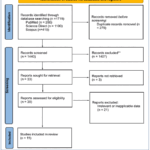 |
Figure 1: PRISMA Screening Workflow Click here to View Figure |
Study Characteristics
Table 2: Study Characteristics
| Author, Year | Design/Model | Age Range | Horizon / Protection | Perspective | Currency | Sesitivity | Discount (%), cost/outcome | Comorbidity |
| Postma et al., 2023 | Static Markov + decision-tree | ≥65y | 3/3 | Healthcare | EUR 2022 | PSA | 3/- | – |
| Puggina et al., 2025 | Static Markov (multi-cohort) | >75y / >60y HR | 3/3 | Healthcare | EUR 2022 | UDSA | 3/3 | Yes* |
| Singer et al., 2025 | Static Markov (multi-cohort) | 50-59y HR | 5/5 | Society | USD 2024 | PSA | 3/3 | Yes* |
| Tuite et al., 2024 | Static microsimulation | 60-70 / 70-75 / >75 HR | 3/2 | Society & Healthcare | CAD 2023 | PSA | 1.5/1.5 | Yes* |
| Wang et al., 2023 | Static decision-tree | ≥60y | 2/2 | Healthcare | USD 2022 | DSA, PSA | 3/3 | – |
| Hutton et al., 2024 | Static Markov (multi-cohort) | ≥60y | 2/2 | Society | USD 2022 | DSA, PSA, Scenario | 3/3 | – |
| La et al., 2024 | Static Markov (multi-cohort) | ≥60y | 5/5 | Society & Healthcare | USD 2024 | DSA, PSA, Scenario | 3/3 | – |
| Mizukami et al., 2024 | Static Markov (multi-cohort) | ≥60y | 3/3 | Payer & Society | JPY 2022-23 | DSA, PSA, Scenario | 2/2 | – |
| Moghadas et al., 2023 | Discrete-event simulation | ≥60y | 1/1 | Society | USD 2023 | PSA | 3/3 | – |
| Rudd et al., 2025 | Static Markov (multi-cohort) | ≥60y | 2/2 | Payer | CAD 2023 | SSA, PSA | 1.5/1.5 | Yes* |
| Shoukat et al., 2024 | Static DES + Markov | ≥60y | 1/1 | Society & Healthcare | CAD 2023 | Scenario | 1.5/1.5 | – |
*Comorbidity subgroups: Puggina et al. 2025 (chronic respiratory, circulatory, hepatic, renal disease, diabetes); Singer et al. 2025 (base case COPD, scenario analyses for heart failure, coronary artery disease, diabetes, asthma); Tuite et al. 2024 (chronic respiratory, circulatory, hepatic, renal disease, diabetes); Rudd et al. 2025 (COPD, obesity, hypertension, cancer, heart disease, stroke, diabetes, dementia)
Note: DSA = Deterministic Sensitivity Analysis; HR = High Risk; PSA = Probabilistic Scenario Analysis/Probabilistic Sensitivity Analysis; SSA = Scenario Sensitivity Analysis; UDSA = Univariate Deterministic Sensitivity Analysis.
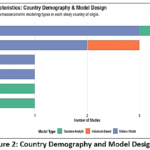 |
Figure 2: Country Demography and Model Design. Click here to View Figure |
Of the eleven included studies, seven employed static multi-cohort Markov models, three used decision-analytic models, and one used an individual-based model (Table 2). All studies incorporated some form of sensitivity analysis (PSA, DSA, UDSA, or SSA), and several stratified cohorts by high-risk comorbidities such as COPD, heart failure, and diabetes to enable a more granular population risk assessment. Analytical perspectives, discount rates, time horizons, and study settings varied considerably across studies, as detailed in Table 2; notably, all included studies originated from high-income countries.
Outcome
Table 3: Outcomes Data
| Author, Year | WTP/λ | ΔQALY (SE) | ΔCost (SE) | ICER | Population (n) |
| Singer et al., 2025 (<60 yo) | 50,000 | 9,360 (NR) | 627,199,067 (1.42) | 67008 | 100,000 |
| Tuite et al., 2024 (60 yr HR) | 37,050 | 24.51 (NR) | 2,517,016 (NR) | 102693 | 20,000 |
| Tuite et al., 2024 (70 yr HR) | 37,050 | 18.30 (NR) | 904,907 (NR) | 49448 | 20,000 |
| Tuite et al., 2024 (75 yr HR) | 37,050 | 16.71 (NR) | 695,572 (NR) | 41626 | 20,000 |
| Wang et al., 2023 (>60 yo) | 49,594 | 5.68 (0.5) | 269,700 (0.02) | 47482 | 10,000 |
| Hutton et al., 2024 (>60 yo) | 100,000 | 18,545 (NR) | 2,087,960,000 (NR) | 112588 | 75,000,000 |
| La et al., 2024 (>60 yo) | 50,000 | 244,424 (NR) | 4,504,734,996 (NR) | 18430 | 100,000 |
| Mizukami et al., 2024 (>60 yo) | 29.72 | -109,119 (9,973.5) | 3,354,233,748.77 (NR) | -30739 | 35,829,155 |
| Moghadas et al., 2023 (>60yo) | 93,981 | 59.19 (0.47) | 5,562,363 (NR) | 93974 | 10,000 |
| Rudd et al., 2025 (>60 yo) | 37,338 | 130 (NR) | 3,749,001 (NR) | 28838 | 10,000 |
| Shoukat et al., 2024 (>60 yo) | 36,826 | 8.13 (NR) | 298,623 (NR) | 36731 | 10,000 |
Note: ICER = Incremental Cost-Effectiveness Ratio; QALY = Quality-Adjusted Life Year; SE = Standard Error; WTP = Willingness-To-Pay.
Table 4: Outcomes Data (continued).
|
Author, Year |
Number Needed to Vaccinate | Waning Efficacy | |
|
Postma et al., 2023 |
11 (to prevent 1 case of RSV-ARI in a 3-year protection duration). |
1 Years |
70% |
|
Alternative scenarios: NNV = 28 (1 year) and NNV = 8 (5 years). |
2 Years | 57% | |
| 3 Years |
57% |
||
| Author, Year | Number Needed to Vaccinate |
Waning Efficacy |
||
|
Puggina et al., 2025 |
RSV-ARI (Respiratory Syncytial Virus-Associated Acute Respiratory Infection) | 15 to prevet 1 case | RSV-ARI (Respiratory Syncytial Virus-Associated Acute Respiratory Infection) | Peak efficacy 74.2% with constant decrease -2.26% per month till 3 years |
| RSV-LRTD (Respiratory Syncytial Virus-associated Lower Respiratory Tract Disease) | 23 to prevent RSV-LRTD at ≥75 years old population and 22 to prevent RSV-LRTD at
≥60 years old population |
RSV-LRTD (Respiratory Syncytial Virus-associated Lower Respiratory Tract Disease) |
Peak efficacy 88.0% with constant decrease -2.10% per month till 3 years |
|
Note: NNV = Number Needed to Vaccinate; RSV-ARI = Respiratory Syncytial Virus-Associated Acute Respiratory Infection; RSV-LRTD = Respiratory Syncytial Virus-Associated Lower Respiratory Tract Disease.
Reported WTP thresholds and simulated cohort sizes varied substantially across the eleven included studies, as summarized in Table 3. All studies used incremental QALYs as the primary metric of cost-utility, applied across both older adult and high-risk comorbidity populations. Several studies additionally reported NNV and waning efficacy outcomes (Table 4).
This two studies explained discrete annual efficacy step-down (maintaining 57% in subsequent years) and a continuous linear decline (-2.10% to -2.26% per month from peak efficacies), Additionally, Puggina et al21 employs 15 vaccinated samples to prevent one case of Respiratory Syncytial Virus-Associated Acute Respiratory Infection (RSV-ARI). Meanwhile, this study also identified NNV of 22 to 23 to prevent one Lower Respiratory Tract Disease (RSV-LRTD) event in the older population. Another modelling study found that NNV optimization could be obtained by extending horizons, where increasing the evaluation period from 1 year to 5 years improved the NNV from 28 to 8.20
From the included paper, we highlighted that routine vaccination of younger, lower-risk adults exhibited inefficient choice. The subgroup analysis in Hutton et al26 displayed incremental cost-effectiveness ratio (ICER) values of $385,829/QALY for RSVPref3 and $331,486/QALY for bivalent RSVPref vaccine with multivariable probabilistic confirming that these ratios exceed the $200,000/QALY threshold in 98% of simulation cycles. Despite that, other economic modelling also validated that the vaccination programs dedicated for ≥ 60 years old could increase ICER beyond $200,000/QALY, indicating them economically inefficient.28,30 Nevertheless, this economic efficiency is favouring age-dependent. In the older age cohorts (≥ 75 years old) group, where pre-existing comorbidity incidence and severe outcomes increased, the ICER drops significantly into $101,567/QALY for RSVPref3 and $92,664/QALY for RSVPref vaccine.26
In another side the scenario sensitivity analyses and deterministic models proved these economic profiles are highly relied on market pricing, vaccine durability, and diagnostic surveillance metrics. The cost-effectiveness of RSV prefusion F subunit vaccines exhibits a high price elasticity regarding their current wholesale acquisition cost (WAC) of $280 per dose for RSVpref3 vaccine and $295 per dose for bivalent RSVpref vaccine. To maximize these economic models and decrease the ICER below $100,000 per QALY benchmark when vaccinating individuals aged 65 years, specific prices are required, lowering per-dose costs to under $195 for RSVPref3 and $222 for bivalent RSVpreF.26 Furthermore, the economic justification for these prevention programs relies heavily on a critical epidemiological pivot pointL a 1.5x diagnostic under-detection multiplier applied to compensate for the low clinical sensitivity of standard reverse transcription-polymerase chain reaction (RT-PCR) testing in adult populations Changing from this empirical baseline correction factor to an unadjusted model effectively decreases the estimated disease incidence that could escalating the estimated ICER past $250,000/QALY for RSVPref3 and bivalent RSVpreF.
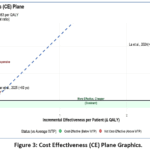 |
Figure 3: Cost Effectiveness (CE) Plane Graphics. Click here to View Figure |
We also included other qualitative interpretations mapped on the Cost-Effectiveness (CE) Plane including highly cost-effective strategies (La et al22 for >60 years), as well as non-cost-effective and dominated scenarios (Singer et al23 for <60 years). Another study employs standard cost-effectiveness per simulated patient.
Results of the methodological quality assessment
The methodological quality of all eleven included studies was appraised using ECOBIAS checklist (Table 5). The composite scores per study varied from 9 (Wang et al24) to 36 (Singer et al23), indicating substantial heterogeneity in methodological rigor. Studies were broadly classified into higher methodological quality (score ≥29: Singer et al23 [36]; Moghadas et al25 [32]; Hutton et al26 [29]), moderate quality (score 21–28: La et al22 [28]; Shoukat et al27 [28]; Tuite et al28 [27]; Mizukami et al29 [27]; Postma et al20 [21]; Puggina et al21 [21]), and lower methodological quality (score <21: Rudd et al30 [14]; Wang et al24 [9]).
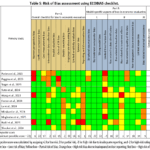 |
Table 5: Risk of Bias assessment using ECOBIAS checklist. Click here to View Table |
Composite score was calculated by assigning +2 for low risk, 0 for partial risk, -1 for high risk due to inadequate reporting, and -2 for high-risk ratings. Green box = Low risk of bias; Yellow box = Partial risk of bias; Orange box = High risk bias due to inadequate/unclear reporting; Red box = High risk of bias
Most studies demonstrated low risk of bias in several key methodological domains. Inefficient comparator bias, no treatment comparator bias, and wrong model bias achieved the highest composite scores (22 each), indicating that the selected comparators and modelling approaches were generally appropriate for the decision problems being evaluated. Similarly, inappropriate discounting bias (20), non-transparent data incorporation bias (18), cost measurement bias (17), baseline data bias (17), data identification bias (16), and limited sensitivity analysis bias (16) showed predominantly low-risk ratings across studies, suggesting that most evaluations applied accepted economic modelling practices.
However, several domains demonstrated notable methodological concerns. Limited time-horizon bias received the lowest composite score (-4), indicating that some studies may have adopted time horizons that were insufficient to fully capture the long-term clinical and economic consequences of RSV vaccination. Reporting and dissemination bias also received a low composite score (1), reflecting inadequate reporting of model assumptions, parameter sources, and analytical procedures in several studies. In addition, intermittent data collection bias (2), double-counting bias (2), and bias related to treatment effects (3) were identified in a number of evaluations, suggesting potential uncertainty in the estimation and application of clinical effectiveness data.
Moderate concerns were also observed for narrow perspective bias (6), sponsor bias (12), valid valuation bias (13), quality-of-life data bias (14), limited scope bias (14), and structural assumptions bias (15). These findings indicate that some studies may have excluded relevant costs or outcomes, relied on utility estimates with limited justification, or adopted modelling assumptions that were not fully explored through alternative scenarios.
Despite these limitations, the overall ECOBIAS assessment suggests that the available economic evidence supporting RSV vaccination is methodologically acceptable. The strongest aspects of the included studies were the appropriate selection of comparators, model structure, discounting methods, and incorporation of model inputs. Nevertheless, future economic evaluations would benefit from longer analytic horizons, more transparent reporting practices, and more comprehensive assessments of treatment effects and long-term vaccine protection to further strengthen the evidence base for RSV vaccination policy.
Discussion
The findings of this systematic review indicate that the decision to implement RSV vaccination should not be interpreted as a simple binary choice between using or not using the vaccine. RSV vaccination strategies should instead prioritize risk-based application rather than relying solely on universal age-based recommendations, as populations with comorbidities such as diabetes mellitus, cardiovascular disease, chronic respiratory disease, obesity, renal impairment, and other metabolic conditions consistently show more favorable economic outcomes compared to general older-adult populations.4,9,10,11,12 This pattern likely reflects the disproportionate burden of severe RSV disease among medically vulnerable populations, who are more susceptible to RSV-associated hospitalization, lower respiratory tract complications, intensive care utilization, and mortality.2,9,11,12 Consequently, preventing infection in these groups produces larger reductions in healthcare utilization, QALY loss, and indirect societal burden per vaccinated individual, indicating that comorbidity burden may serve as a stronger determinant of vaccine value than chronological age alone.3,4,6,7,8,10,11 In contrast, universal vaccination strategies targeting broad age categories may generate smaller incremental benefits among healthier older adults with lower baseline risk while requiring substantially greater financial investment, a distinction that becomes especially important in healthcare systems with tight fiscal capacity and substantial opportunity costs.1,4,10
These findings have important implications for public health policy and healthcare resource allocation. A phased implementation strategy focusing initially on high-risk populations may represent a more likely and economically sustainable approach during the early introduction of the vaccination programs, particularly given the current uncertainty surrounding vaccine price, long term effectiveness, and waning immunity.1,4,5 However, successful implementation of risk-based vaccination also depends on the ability of the healthcare systems to identify the medically vulnerable individuals through matters like integrated chronic disease registries, surveillance systems, or accessible primary healthcare services. Therefore, RSV vaccination policy should not be interpreted solely as a pharmaceutical intervention, but also as a part of a broader precision public health strategy aimed at optimizing preventive care according to population level risk.9,12
It is important to note that cost-effectiveness results were not uniformly favorable across the included studies. For instance, Mizukami et al. reported a dominant (cost-saving) scenario in Japan, whereas Hutton et al. reported an ICER exceeding $112,000/QALY in the United States, well above conventional willingness-to-pay thresholds. This divergence illustrates that RSV vaccine cost-effectiveness is highly context-dependent, shaped by differences in vaccine pricing, baseline RSV incidence, discount rates, and the specific population modeled, rather than reflecting a uniformly favorable or unfavorable economic profile for RSV vaccination overall.
These divergent findings may also partly reflect underlying differences in healthcare system structure across the study settings. Countries with single-payer or predominantly public healthcare systems (Canada, the United Kingdom-influenced systems) tend to concentrate direct medical costs within a single payer perspective, which can produce more conservative ICER estimates compared with mixed public-private systems such as the United States, where fragmented reimbursement structures and higher baseline healthcare costs may inflate the incremental cost component of the ICER. This suggests that cost-effectiveness thresholds and results derived in one healthcare system context may not be directly transferable to countries with differently structured financing and delivery systems.
A second implication of this review is that uncertainty in RSV cost-effectiveness estimates is strongly influenced by limitations in diagnostic infrastructure and model structure. Many included studies used static decision-tree, Markov, cohort, or individual-based models, which are useful for estimating direct vaccine benefits but generally do not capture transmission dynamics, herd protection, or indirect population-level effects.4,8,9,10 This limitation is important because RSV transmission occurs across age groups, meaning that static models may underestimate the broader population-level value of vaccination when indirect protection is excluded.8,10 Dynamic transmission models, by contrast, explicitly simulate person-to-person RSV transmission and can therefore capture indirect protection effects, such as reduced transmission from vaccinated to unvaccinated individuals, which static cohort or decision-tree models structurally cannot represent. Incorporating dynamic modeling approaches in future RSV economic evaluations would allow indirect protection benefits to be quantified, potentially revealing more favorable cost-effectiveness profiles than currently estimated, particularly for vaccination strategies with broader population coverage.
Uncertainty is further increased by limited evidence on waning vaccine efficacy. Several studies modeled protection over two, three, or five years and found that longer duration of protection improved projected clinical benefits and economic value.1,2,8 However, many models relied on short-term clinical trial follow-up and extrapolated vaccine effectiveness beyond the available observation period, indicating the need for longer-term real-world effectiveness data.2,4,9
Under-ascertainment of RSV burden was also a recurring limitation. Several studies reported that RSV disease burden may be underestimated because of limited testing, low clinical suspicion, non-specific symptoms, incomplete surveillance, or the absence of RSV in routine public health reporting.2,3,9 Some models therefore applied under-detection multipliers or adjusted RSV incidence estimates to account for incomplete case ascertainment.1,4,7 These findings directly support the need to strengthen molecular diagnostic infrastructure, standardize RSV surveillance, and adopt dynamic transmission models so that future evaluations can better reveal the true value of RSV vaccination.
A third implication of this review is that RSV vaccine implementation must be financially sustainable. Vaccine price and RSV disease burden were among the most consistent drivers of cost-effectiveness across the included studies. Studies from the United States, Hong Kong, Ontario, and Canada showed that vaccine acquisition cost, RSV incidence, attack rate, and hospitalization risk strongly influenced ICER results.1,5,6,7 These findings indicate that vaccine price negotiation is not only an economic preference but a policy requirement for implementing RSV vaccination without placing excessive pressure on healthcare budgets.
The strong dependence of cost-effectiveness on vaccine price and healthcare system structure carries specific implications for low- to middle- income countries. Where per-capita healthcare budgets and willingness-to-pay thresholds are substantially lower than in the high-income settings represented in this review, the vaccine prices reported here ($280–295 per dose) would likely render RSV vaccination far less cost-effective unless accompanied by tiered pricing agreements, external subsidy mechanisms, or inclusion in existing immunization programs supported by global health initiatives. Risk-based prioritization of high-comorbidity populations, rather than broad age-based rollout, may be a particularly relevant strategy for resource-limited settings seeking to maximize health impact per dollar spent.
Consistent with this pattern, studies from Canada and Italy found that targeting individuals with chronic medical conditions, very old adults, or other high-risk groups produced better economic efficiency than broad age-based strategies.4,9,10 Singer et al. further showed that vaccination among adults aged 50–59 years with comorbidities could be cost-saving from a societal perspective.11
The choice of economic perspective is also crucial. Studies that included a societal perspective accounted for indirect costs such as productivity losses, caregiver burden, transportation costs, and non-medical costs, which can increase the estimated value of vaccination compared with a narrow healthcare payer perspective.1,3,5,6,11 Evidence from Sweden also suggests that vaccination may offset initial investment costs through future healthcare savings.12 Thus, comprehensive vaccine price negotiation and inclusion of indirect cost parameters through a societal perspective are necessary to ensure that RSV vaccine programs do not disrupt the financial stability of local health systems.
This systematic review has several limitations that should be considered when interpreting the findings. First, substantial heterogeneity was observed across the included studies, particularly in terms of model type, population characteristics, time horizon, assumed duration of vaccine protection, waning efficacy assumptions, analytical perspective, and types of comorbidities included in the analyses. These variations may limit direct comparability across studies and make it difficult to generate a single overall conclusion regarding the cost-effectiveness of RSV vaccination. In addition, many studies relied on static decision-tree, Markov, cohort, or individual-based models, which are useful for estimating direct vaccine benefits but may not fully capture RSV transmission dynamics, herd protection, or indirect population-level effects. As a result, the broader population-level value of RSV vaccination may have been underestimated.
Another limitation relates to differences in cost reporting, currency conversion, and inflation adjustment across countries and study years, which may distort economic estimates because of exchange rate fluctuations, purchasing power differences, and variation in local healthcare prices. Moreover, none of the included results provided standard error data for QALY estimates and incremental costs, limiting the ability to formally quantify uncertainty around these key economic outcomes or conduct a more robust comparative synthesis across studies. The evidence base was also largely region-specific, with most studies conducted in high-income countries or settings with established healthcare infrastructure and limited or no representation from developing countries. This restricts the generalizability of the findings to low and middle income settings, where RSV burden, diagnostic capacity, vaccine affordability, healthcare access, and budget constraints may differ substantially. The scarcity of low- and middle- income countries studies most likely reflects the current concentration of RSVPreF3 rollout and pricing in high-income settings, combined with limited local data on RSV incidence and healthcare costs needed to conduct robust economic evaluations, rather than a deliberate exclusion in our eligibility criteria. Future cost-effectiveness studies using low- and middle- income countries-specific epidemiological and cost data are therefore needed before these findings can be extrapolated to low- and middle-income settings.
Conclusion
While RSV vaccination is generally cost-effective in high-income settings, particularly via risk-based strategies for older adults with comorbidities, these findings cannot be directly generalized to low- and middle-income countries (LMICs). High vaccine prices and lower willingness-to-pay thresholds render such programs economically unfeasible in resource-limited settings without tiered pricing, subsidies, or global immunization initiatives. Consequently, future economic evaluations employing dynamic transmission models alongside local epidemiological and cost data are critical to informing sustainable, equitable RSV vaccination policies in LMICs.
Acknowledgement
The authors would like to express their gratitude to all individuals who provided support during the preparation of this study. No external funding was received for this research.
Conflict of Interest
The authors do not have any conflict of interest.
Funding Source
The author(s) received no financial support for the research, authorship, and/or publication of this article.
Data Availability Statement
This statement does not apply to this article.
Ethics Statement
This research did not involve human participants, animal subjects, or any material that requires ethical approval.
Informed Consent Statement
This study did not involve human participants, and therefore, informed consent was not required.
Clinical Trial Registration
This research does not involve any clinical trials.
Permission to Reproduce Material from other Sources
Not Applicable
Author Contributions
- Lukman Aryoseto: Conceptualization, Methodology, Writing – Original
- Hilmi Amirul Haq: Data Collection, Analysis, Writing – Review &
- Iyad Madani: Data Collection, Analysis, Writing – Review & Editing.
- Rivandy Hartono: Visualization, Supervision, Project
Reference
- Branche AR, Saiman L, Walsh EE, et al. Incidence of respiratory syncytial virus infection among hospitalized adults, 2017–2020. Clin Infect Dis. 2022;74(6):1004–1011. https://doi.org/10.1093/cid/ciab595
CrossRef - Nam HH, Ison MG. Respiratory syncytial virus infection in adults. BMJ. 2019;l5021. https://doi.org/10.1136/bmj.l5021
CrossRef - Belongia EA, King JP, Kieke BA, et al. Clinical features, severity, and incidence of RSV illness during 12 consecutive seasons in a community cohort of adults ≥60 years old. Open Forum Infect Dis. 2018;5(12). https://doi.org/10.1093/ofid/ofy316
CrossRef - Savic M, Penders Y, Shi T, Branche A, Pirçon Respiratory syncytial virus disease burden in adults aged 60 years and older in high-income countries: a systematic literature review and meta-analysis. Influenza Other Respir Viruses. 2023;17(1). https://doi.org/10.1111/irv.13031
CrossRef - Cherukuri A, Patton K, Gasser R, Zuo F, Esser MT, Tang R. Adults 65 years old and older have reduced numbers of functional memory T cells to respiratory syncytial virus fusion protein. Clin Vaccine Immunol. 2013;20(2):239–247. https://doi.org/10.1128/cvi.00580-12
CrossRef - Hamilton MA, Liu Y, Calzavara A, et al. Predictors of all-cause mortality among patients hospitalized with influenza, respiratory syncytial virus, or SARS-CoV-2. Influenza Other Respir Viruses. 2022;16(6). https://doi.org/10.1111/irv.13004
CrossRef - Ison MG, Papi A, Athan E, et al. Efficacy and safety of respiratory syncytial virus prefusion F protein vaccine (RSVPreF3 OA) in older adults over 2 RSV seasons. Clin Infect Dis. 2024;78(6):ciae010. https://doi.org/10.1093/cid/ciae010
CrossRef - Mazur NI, Terstappen J, Baral R, et al. Respiratory syncytial virus prevention within reach: the vaccine and monoclonal antibody landscape. Lancet Infect Dis. 2022;23(1). https://doi.org/10.1016/s1473-3099(22)00291-2
CrossRef - Papi A, Ison MG, Langley JM, et al. Respiratory syncytial virus prefusion F protein vaccine in older adults. N Engl J Med. 2023;388(7):595–608. https://doi.org/10.1056/nejmoa2209604
CrossRef - Li Y, Wang X, Blau DM, et al. Global, regional, and national disease burden estimates of acute lower respiratory infections due to respiratory syncytial virus in children younger than 5 years in 2019: a systematic analysis. Lancet. 2022;399(10340):2047–2064. https://doi.org/10.1016/S0140-6736(22)00478-0
CrossRef - Ison MG, Papi A, Athan E, et Efficacy, safety, and immunogenicity of the AS01E-adjuvanted respiratory syncytial virus prefusion F protein vaccine (RSVPreF3 OA) in older adults over three respiratory syncytial virus seasons (AReSVi-006): a multicentre, randomised, observer-blinded, placebo-controlled, phase 3 trial. Lancet Respir Med. 2025;13(6). https://doi.org/10.1016/s2213-2600(25)00048-7
CrossRef - Li Q, Li H, Li Z, Wang Y. Vaccine and therapeutic agents against the respiratory syncytial virus: resolved and unresolved issue. MedComm. 2024;5(12):e70016. https://doi.org/10.1002/mco2.70016
CrossRef - Waize M, Marijic P, Marijam A, et al. Public health impact and cost-effectiveness of the adjuvanted RSVPreF3 vaccine for respiratory syncytial virus prevention among adults aged 50 years and older in Germany. Expert Rev Vaccines. 2025;24(1). https://doi.org/10.1080/14760584.2025.2539887
CrossRef - Tanriover MD, Azap A, Cakir Edis E, et al. Respiratory syncytial virus (RSV) infections in adults: current trends and recommendations for prevention – a global challenge from a local Hum Vaccin Immunother. 2025;21(1). https://doi.org/10.1080/21645515.2025.2514357
CrossRef - Prasad N, Walker TA, Waite B, et al. Respiratory syncytial virus-associated hospitalizations among adults with chronic medical conditions. Clin Infect Dis. 2021;73(1):e158–e163. https://doi.org/10.1093/cid/ciaa730
CrossRef - Husereau D, Drummond M, Petrou S, et al. Consolidated Health Economic Evaluation Reporting Standards (CHEERS) statement. Value Health. 2013;16(2):e1–e5. https://doi.org/10.1016/j.jval.2013.02.010
CrossRef - Weinstein MC, Torrance G, McGuire QALYs: the basics. Value Health. 2009;12(1):S5–S9. https://doi.org/10.1111/j.1524-4733.2009.00515.x
CrossRef - Feng Y, Devlin NJ, Shah KK, Mulhern B, van Hout New methods for modelling EQ-5D-5L value sets: an application to English data. Health Econ. 2017;27(1):23–38. https://doi.org/10.1002/hec.3560
CrossRef - Mukuria C, Rowen D, Mulhern B, et al. The Short Form 6 Dimensions (SF-6D): development and evolution. Appl Health Econ Health Policy. 2024;23(1). https://doi.org/10.1007/s40258-024-00919-8
CrossRef - Postma M, Cheng CY, Buyukkaramikli N, et Predicted public health and economic impact of respiratory syncytial virus vaccination with variable duration of protection for adults ≥60 years in Belgium. Vaccines (Basel). 2023;11(5):990. https://doi.org/10.3390/vaccines11050990
CrossRef - Puggina A, Rumi F, Zarkadoulas E, Marijam A, Calabró GE. The potential public health impact of the adjuvanted respiratory syncytial virus prefusion F protein vaccine among older adults in Italy. Vaccines (Basel). 2025;13(3):212. https://doi.org/10.3390/vaccines13030212
CrossRef - La EM, Graham J, Singer D, et al. Cost-effectiveness of the adjuvanted RSVPreF3 vaccine among adults aged ≥60 years in the United States. Hum Vaccin Immunother. 2024;20(1). https://doi.org/10.1080/21645515.2024.2432745
CrossRef - Singer D, La EM, Graham J, et al. Public health impact and cost-effectiveness of adjuvanted RSVPreF3 vaccination among adults in the USA aged 50–59 years at increased risk of severe RSV Infect Dis Ther. 2025;14(12):2743–2761. https://doi.org/10.1007/s40121-025-01238-8
CrossRef - Wang Y, Fekadu G, You JHS. Comparative cost-effectiveness analysis of respiratory syncytial virus vaccines for older adults in Hong Kong. Vaccines (Basel). 2023;11(10):1605. https://doi.org/10.3390/vaccines11101605
CrossRef - Moghadas SM, Shoukat A, Bawden CE, et Cost-effectiveness of prefusion F protein-based vaccines against respiratory syncytial virus disease for older adults in the United States. Clin Infect Dis. 2023;78(5). https://doi.org/10.1093/cid/ciad658
CrossRef - Hutton DW, Prosser LA, Rose AM, et al. Cost-effectiveness of vaccinating adults aged 60 years and older against respiratory syncytial virus. Vaccine. 2024;42(24):126294. https://doi.org/10.1016/j.vaccine.2024.126294
CrossRef - Shoukat A, Bawden CE, Röst G, et al. Impact and cost-effectiveness analyses of vaccination for prevention of respiratory syncytial virus disease among older adults in Ontario: a Canadian Immunization Research Network (CIRN) study. Vaccine. 2024;42(7):1768–1776. https://doi.org/10.1016/j.vaccine.2024.02.041
CrossRef - Tuite AR, Simmons AE, Rudd M, et al. Respiratory syncytial virus vaccination strategies for older Canadian adults: a cost-utility analysis. CMAJ. 2024;196(29):E989–E1005. https://doi.org/10.1503/cmaj.240452
CrossRef - Mizukami A, Preckler V, Verelst F, et al. Cost-effectiveness analysis of respiratory syncytial virus vaccination with the adjuvanted prefusion F protein vaccine (RSVPreF3 OA) for adults ≥60 years old in Japan. Expert Rev Vaccines. 2024;23(1):986–996. https://doi.org/10.1080/14760584.2024.2410898
CrossRef - Rudd M, Simmons AE, Gebretekle GB, Tuite Cost-effectiveness of respiratory syncytial virus vaccination strategies for older Canadian adults: a multi-model comparison. Can Commun Dis Rep. 2025;51(2/3):54–67. https://doi.org/10.14745/ccdr.v51i23a01
CrossRef
 PlumX:
 Views: 313
  PDF Downloads:
3
PDF Downloads:
3 
Accepted on: 14-08-2026
Second Review by: Dr. Nataliya Kitsera and Dr. S Shahi
Final Approval by: Dr. Ian Martins