Pharmacopeial Quality Assessment of Five Commercially Available Enteric-Coated Esomeprazole Magnesium Tablets in Bangladesh
 , Owaliullah Khan Ovi, Rejuan Kaif Rohan, Israt Jahan Bulbul, Nusratun Naharand Sherejad Sanam
 Department of Pharmacy, Southeast University, Dhaka, Bangladesh
Corresponding author E-mail: sabiha.ferdousi@seu.edu.bd
DOI : http://dx.doi.org/10.13005/bpj/3504
Download this article as:

Esomeprazole, the optically active S-isomer of omeprazole, is extensively used as a proton pump inhibitor for the treatment of gastroesophageal reflux disease and other gastric acid-related conditions. The present investigation was undertaken to assess the pharmaceutical quality of enteric-coated esomeprazole magnesium tablets available from five different Bangladeshi manufacturers. Evaluation was performed by analyzing key physicochemical characteristics including tablet hardness, friability, disintegration behavior, dissolution performance, and drug content assay. All analyses were conducted according to recognized pharmacopeial procedures to determine the uniformity and quality consistency among the selected brands. During disintegration testing in 0.1N hydrochloric acid for two hours, no tablets showed signs of disintegration, indicating satisfactory integrity of the enteric coating and resistance to gastric conditions. When transferred to phosphate buffer solution (pH 6.8), complete tablet disintegration occurred within 30 minutes for all tested samples. The hardness of tablets ranged between 5.443 and 6.509 kg/cm², demonstrating acceptable mechanical durability. Dissolution testing revealed limited drug release in acidic medium, ranging from 2.54% to 4.45%, which complies with the pharmacopeial requirement where stated the value is of less than 10%. In contrast, dissolution in phosphate buffer (pH 6.8) showed rapid and complete drug release within 60 minutes, with release values ranging from 100.9% to 102.4%. Assay analysis confirmed that the active pharmaceutical ingredient content of all brands remained within the accepted pharmacopeial range of 96.32% to 99.20%. These results suggest that the evaluated brands meet established pharmacopeial quality requirements and are likely to ensure reliable therapeutic effectiveness in the treatment of acid-related disorders.
KEYWORDS:Assay; Dissolution study; Enteric-coating; Esomeprazole magnesium; Pharmacopeial compliance; Quality evaluation
Introduction
Esomeprazole, the S-isomer of omeprazole, is a proton pump inhibitor (PPI) widely prescribed for the treatment of gastroesophageal reflux disease (GERD) and other acid-related gastrointestinal disorders due to its potent inhibition of gastric acid secretion.1 By providing prolonged acid suppression, esomeprazole enhances mucosal healing and symptom relief, making it superior in efficacy to several other PPIs.2,3 Its favorable pharmacokinetic profile, including higher bioavailability and an extended half-life, allows for greater acid control and therapeutic consistency.4,5
Global usage of PPIs, particularly among elderly patients with comorbidities, has steadily increased.6,7 This widespread consumption emphasizes the importance of quality in generic formulations, as inconsistent drug performance may compromise therapeutic outcomes. Furthermore, long-term PPI therapy has been associated with potential adverse effects such as nutrient mal-absorption, renal impairment, and drug interactions.8,9 Consequently, regulatory authorities stress the necessity of stringent quality assessments to guarantee efficacy and safety.10
Therapeutic Indications
Esomeprazole is primarily indicated for GERD, where it alleviates heartburn, heals erosive esophagitis, and maintains remission.11,12 It is also effective in treating peptic ulcer disease (PUD), particularly when combined with antibiotics for Helicobacter pylori eradication, thereby preventing recurrence.13,14 In Zollinger-Ellison syndrome, a rare condition characterized by excessive gastric acid secretion, esomeprazole provides symptom control through potent acid suppression.15
Additionally, esomeprazole plays an essential role in preventing NSAID-induced gastric ulcers, particularly in high-risk patients requiring long-term NSAID therapy.16 It is also used for the management of dyspepsia and functional heartburn, providing symptomatic relief,17 and in critical care settings to prevent stress-related gastric ulceration and gastrointestinal bleeding.18
Mechanism of Action
Esomeprazole functions by selectively and irreversibly inhibiting the gastric H⁺/K⁺-ATPase enzyme system located on the luminal surface of parietal cells. Administered as a prodrug, it is absorbed in the intestine and activated within the acidic canaliculi of parietal cells, where it converts to its active sulfenamide form.19 The active compound covalently binds to cysteine residues of the proton pump, irreversibly blocking acid secretion.20 This suppression leads to a significant reduction in gastric acidity, thereby increasing gastric pH and promoting mucosal healing.21
Pharmacokinetically, esomeprazole is rapidly absorbed with peak plasma concentrations within 1-2 hours. It undergoes hepatic metabolism primarily via CYP2C19, with a plasma half-life of 1-2 hours. Despite the short half-life, its pharmacodynamic effect is prolonged due to irreversible inhibition of the proton pump, resulting in sustained acid suppression and symptom relief.22-24
Importance of Quality Control
Ensuring the quality of esomeprazole tablets is critical for maintaining therapeutic efficacy, safety, and patient confidence. Quality evaluation involves testing physical and chemical parameters, including dissolution rate, potency, assay, hardness, friability, and impurity levels, all of which affect clinical performance. Substandard quality can lead to treatment failure, poor symptom management, or adverse effects. Therefore, rigorous quality control and pharmacopeial compliance are necessary to uphold therapeutic reliability.25-27
Materials and Methods
Materials
Esomeprazole Tablets
Esomeprazole magnesium trihydrate tablets (20 mg) were obtained from various Bangladeshi pharmaceutical brands, including Brand E01, Brand E02, Brand E03, Brand E04 and Brand E05. The tablets were stored under controlled temperature and humidity conditions prior to analysis.
Reagents: All reagents used were of analytical grade and included:
- Hydrochloric acid (HCl) and sodium hydroxide (NaOH) for pH adjustments.
- Phosphate Buffer for dilutions and preparations.
- Standard esomeprazole for calibration curves, obtained from pharmaceutical company
- Phosphate buffer
Apparatus:
- A UV-Visible spectrophotometer for absorbance measurements.
- A digital balance for weight measurements.
- A pH meter for pH assessments.
- A disintegration tester and a dissolution tester for relevant tests.
Methods
Identification of Esomeprazole
The identification of esomeprazole in the tablet formulations was performed using a UV-Visible spectrophotometric method. A standard solution of esomeprazole was prepared, and its absorbance was measured at the λmax of 302 nm in a suitable solvent (phosphate buffer). The samples were compared against the standard to confirm the presence of esomeprazole in the tablets.
Weight Variation
Weight variation was assessed by randomly selecting 20 tablets from each brand. Each tablet was weighed individually using a digital balance. The average weight was calculated, and the percentage deviation was determined according to the following formula:
Percentage Deviation=(Individual Weight−Average Weight)/Average Weight×100
This method followed the guidelines set by the United States Pharmacopeia (USP) (28).
Friability test
Friability of five marketed brands of enteric-coated esomeprazole tablets was assessed using a Roche friabilator (Electro Lab, India). For each brand, ten tablets were individually weighed and subjected to rotation at 25 rpm for 4 minutes (100 rotations). Following removal, tablets were de-dusted and reweighed, and friability (%) was calculated as [(initial weight – final weight)/initial weight] × 100.
Hardness
The thickness of the tablets was measured using a Monsanto hardness tester for tablet and result was recorded.28-29
Disintegration Test
Disintegration tests were conducted using a disintegration tester according to the USP guidelines. Six tablets from each brand were tested, and the time taken for each tablet to disintegrate completely in phosphate buffer (pH 6.8) and 0.1 N HCl medium.30
Dissolution Test
Dissolution studies were performed using a paddle method dissolution apparatus. Each tablet was placed in 0.1 N HCl and later 900 mL of phosphate buffer at 37°C with a stirring speed of 50 rpm. Samples were withdrawn at specified time intervals (15, 30, 45, and 60 minutes) and analyzed spectrophotometrically at 302 nm. The percentage of drug released was calculated.31,32
Potency Calculation
Using the UV-Vis spectrophotometric technique, the efficacy of five commercial brands of enteric-coated esomeprazole tablets was assessed. Ten (10) tablets from each sample brand were weighed individually, and the average weight was then calculated. Using a mortar and pestle, each sample was crushed, and the necessary quantity was weighed. A 50 ml volumetric flask was filled with prepared phosphate buffer (pH 6.8). The various samples were placed in 50 ml volumetric flasks, each of which was properly labeled. After that, a small quantity of the produced phosphate buffer was added to each flask until it reached the 50 ml. To obtain a clear solution, the solutions were filtered after being sonicated for 15 minutes using a sonicator. Using a 5 ml pipette, 2.5 ml of the filtrate was taken out of each volumetric flask and transferred into a fresh 50 ml conical flask, filling it to the 50 ml mark. A small quantity was extracted from each flask and placed in a cuvette. The regular esomeprazole was then subjected to the same process. The UV spectrophotometer was used to measure the absorbance at a wavelength of 302 nm. Each sample’s amount and percentage contents were then calculated and compared to the standard. The % of the assay calculated by following formula,
% of the assay= (Absorbance of test/Absorbance of Standard) x100
Results
Table 1: Weight variation test of five brands of Esomeprazole tablet
|
|
E01 | E02 | E03 | E04 | E05 |
| T1 | 0.25 | 0.255 | 0.257 | 0.259 |
0.258 |
|
T2 |
0.255 | 0.265 | 0.261 | 0.253 | 0.259 |
| T3 | 0.258 | 0.262 | 0.251 | 0.254 |
0.254 |
|
T4 |
0.262 | 0.261 | 0.258 | 0.25 | 0.26 |
| T5 | 0.257 | 0.256 | 0.261 | 0.259 |
0.263 |
|
T6 |
0.265 | 0.258 | 0.262 | 0.261 | 0.261 |
| T7 | 0.259 | 0.251 | 0.263 | 0.25 |
0.258 |
|
T8 |
0.254 | 0.254 | 0.255 | 0.262 | 0.257 |
| T9 | 0.263 | 0.26 | 0.252 | 0.263 |
0.262 |
|
T10 |
0.266 | 0.261 | 0.251 | 0.255 | 0.262 |
| T11 | 0.261 | 0.254 | 0.251 | 0.255 |
0.251 |
|
T12 |
0.27 | 0.26 | 0.265 | 0.266 | 0.255 |
| T13 | 0.256 | 0.263 | 0.254 | 0.259 |
0.263 |
|
T14 |
0.264 | 0.261 | 0.25 | 0.261 | 0.26 |
| T15 | 0.27 | 0.259 | 0.253 | 0.254 |
0.251 |
|
T16 |
0.258 | 0.255 | 0.259 | 0.253 | 0.253 |
| T17 | 0.269 | 0.252 | 0.254 | 0.25 |
0.262 |
|
T18 |
0.26 | 0.263 | 0.255 | 0.265 | 0.25 |
| T19 | 0.263 | 0.255 | 0.253 | 0.264 |
0.26 |
|
T20 |
0.27 | 0.252 | 0.251 | 0.265 | 0.252 |
| Mean | 0.262 | 0.25785 | 0.256 | 0.258 |
0.258 |
|
STD |
0.005 | 0.00398 | 0.0046 | 0.0054 |
0.004 |
Table 2: Friability Test of five brands of Esomeprazole tablet
|
Brand |
Friability (%) | USP Limit ≤ 1% | Compliance |
| E01 | 0.379 ± 0.005 | ≤ 1% |
Pass |
|
E02 |
0.225 ± 0.003 | ≤ 1% | Pass |
| E03 | 0.698 ± 0.004 | ≤ 1% |
Pass |
|
E04 |
0.354 ± 0.007 | ≤ 1% | Pass |
| E05 | 0.320 ± 0.003 | ≤ 1% |
Pass |
In the quality control (QC) assessment of esomeprazole 20 mg tablets, friability testing is a critical parameter for evaluating the mechanical strength of tablets during handling, packaging, and transport.
Table 3: Hardness of five brands of Esomeprazole tablet
|
|
E01 | E02 | E03 | E04 | E05 |
| T1 | 6.22 | 5.55 | 6.54 | 6.85 |
5.23 |
|
T2 |
6.17 | 5.63 | 6.53 | 6.05 | 5.85 |
| T3 | 6.53 | 5.23 | 6.38 | 6.54 |
5.29 |
|
T4 |
6.15 | 5.85 | 6.25 | 6.32 | 5.36 |
| T5 | 6.85 | 5.42 | 6.39 | 6.25 |
5.05 |
|
T6 |
6.22 | 5.26 | 6.78 | 6.89 | 5.11 |
| T7 | 6.38 | 5.21 | 6.86 | 6.85 |
5.96 |
|
T8 |
6.54 | 5.13 | 6.36 | 6.33 | 5.23 |
| T9 | 6.55 | 5.25 | 6.45 | 6.25 |
5.75 |
|
T10 |
6.9 | 5.95 | 6.55 | 6.73 | 5.6 |
| Mean | 6.453 | 5.448 | 6.509 | 6.506 |
5.443 |
|
SD |
0.269 | 0.28631 | 0.1895 | 0.3055 |
0.323 |
In evaluating the hardness of 20 mg esomeprazole tablets for quality control according to USP standards, the data gathered indicates varied mean hardness values across samples (E01 to E05) tested across ten tablets (T1 to T10).
Six tablets from each brand were tested. No tablet showed disintegration during 2 h of exposure to 0.1 N HCl.
Table 4: Disintegration time of various brands of Esomeprazole tablet in phosphate buffer
|
|
E01
(min) |
E02
(min) |
E03
(min) |
E04
(min) |
E05
(min) |
| T1 | 29.05 | 26.80 | 19.65 | 26.25 |
28.34 |
|
T2 |
29.0 | 25.75 | 25.76 | 26.87 | 26.43 |
| T3 | 28.65 | 23.56 | 24.67 | 24.0 |
27.09 |
|
T4 |
26.0 | 26.87 | 21.0 | 25.3 | 25.0 |
| T5 | 24.57 | 29.67 | 28.78 | 25.0 |
22.4 |
|
T6 |
26.65 | 28.56 | 25.76 | 24.80 | 26.89 |
| Mean | 27.32 | 26.87 | 24.27 | 25.37 |
26.02 |
|
SD |
1.86 | 2.14 | 3.38 | 1.04 |
2.08 |
The disintegration time of six esomeprazole 20 mg tablets from each brands, as shown by the data, is a crucial parameter in ensuring the quality and efficacy of the product.
Table 5: Potency table for Esomeprazole tablets (n=3)
|
Sample Code |
Potency (%) | SD |
| E01 | 98.28% |
1.14 |
|
E02 |
98.45% | 1.25 |
| E03 | 99.20% |
0.95 |
|
E04 |
96.33% | 1.44 |
| E05 | 98.23% |
0.89 |
Dissolution rate of various brands of Esomeprazole tablet
Table 6: Percent of drug release after two hours in 0.1 N HCl
|
Sample code |
Percent of drug release | SD |
| E01 | 2.54 |
0.56 |
|
E02 |
2.64 | 0.85 |
| E03 | 3.87 |
0.46 |
|
E04 |
4.45 | 0.25 |
| E05 | 2.94 |
0.65 |
Table 7: Dissolution in Phosphate buffer (pH 6.8) (n=6)
|
Sample code |
Percent of drug release |
|||
|
|
after 15 min | after 30 min | after 45 min | after 60 min |
| E01 | 38.45 ± 1.85 | 72.36 ± 2.10 | 95.84 ± 1.35 |
100.9 ± 0.95 |
|
E02 |
41.28 ± 1.65 | 75.42 ± 1.95 | 97.65 ± 1.25 | 101.6 ± 0.88 |
| E03 | 44.10 ± 1.72 | 78.90 ± 2.05 | 98.84 ± 1.15 |
102.4 ± 0.92 |
|
E04 |
39.75 ± 1.90 | 73.15 ± 2.15 | 96.72 ± 1.30 | 101.2 ± 0.90 |
| E05 | 42.36 ± 1.68 | 76.54 ± 2.00 | 97.95 ± 1.20 |
101.8 ± 0.85 |
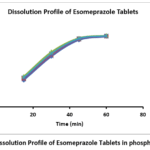 |
Figure 1: Dissolution Profile of Esomeprazole Tablets in phosphate buffer Click here to View Figure |
Discussion
Weight variation test
The results for the weight variation analysis of 20 mg esomeprazole tablets (brands T1-T20) were evaluated according to the United States Pharmacopeia (USP) standards, which require that tablets within a batch should not deviate from the mean weight by more than a specific percentage. For tablets with an average weight between 130 mg and 324 mg, the USP specifies that the weight variation must not exceed ±7.5% of the mean weight in order to meet quality control (QC) standards.33,34
In this study, the mean weights across each brand generally ranged from 0.251 g to 0.270 g, while standard deviation (SD) values were relatively low, indicating minimal fluctuation within each brand’s batch. The lowest SD observed was 0.00398 g, as seen in E02, suggesting good uniformity in weight distribution. Meanwhile, E4 exhibited the highest SD (0.0054 g), though still conforming to the acceptable weight variation limit.35
Friability Test
According to the United States Pharmacopeia (USP <1216>), the acceptable limit for tablet friability is not more than 1.0% of weight loss during the test, as tablets must be robust enough to resist chipping or breaking under stress.35-36 This study assesses the friability results of five different brands of 20 mg esomeprazole tablets, coded E01 to E05, to determine compliance with USP standards.
The results indicate that all brands fall within the acceptable friability range of less than 1.0%, with values ranging from 0.225% to 0.698%. Specifically, brand E03 had the highest friability result at 0.698% ± 0.004, while brand E02 exhibited the lowest at 0.225% ± 0.003. These results confirm that each tablet brand meets the USP requirements, suggesting adequate structural integrity for commercial distribution.37 The variance among brands could stem from differences in excipient formulation or manufacturing processes, which can impact friability levels.
Hardness Test
The hardness mean values range from 5.443 kgf (E02) to 6.509 kgf (E03), with standard deviations between 0.323 and 0.1895, reflecting the consistency of each sample. According to USP guidelines, the recommended hardness for immediate-release tablets generally lies within 4-8 kgf, and the variability within each tablet batch should be controlled to ensure product stability, resistance to mechanical stress, and uniform dissolution profiles.38 In this study, all mean hardness values fall within the USP(<1217>) acceptable range, indicating compliance with quality control standards. Sample E03 demonstrated the highest mean hardness (6.509 kgf), while E05 was the lowest (5.443 kgf). Although within limits, E02 exhibited the highest variability, suggesting a need for monitoring to avoid batch-to-batch variability that could affect tablet performance.39 This data supports the quality and consistency of the esomeprazole tablets in terms of mechanical integrity, ensuring suitability for consumer use and adherence to regulatory standards.
Disintegration Time Analysis
Enteric‑coated esomeprazole tablets resist disintegration in acidic medium and disintegrate rapidly upon reaching intestinal pH, typically within approximately 20-30 min in phosphate buffer (pH 6.8), supporting appropriate site‑specific drug release The disintegration time of the tablets across various tests (T1 to T6) ranges from 24.27 to 27.32 minutes, with the mean times being 27.32 minutes for E01, 26.87 minutes for E02, 24.27 minutes for E03, 25.37 minutes for E04, and 26.02 minutes for E05. The standard deviations (SD) indicate that E02 and E03 have relatively higher variations compared to E01, E04, and E05, suggesting that the disintegration behavior in these formulations is less consistent.40-42
Potency Assessment
Potency is an essential indicator of a tablet’s therapeutic effectiveness. The potency values ranged from 96.33% to 99.20%. All brands met the regulatory standards, indicating that they contain sufficient active ingredient levels to exert the intended pharmacological effects.43 This finding supports the reliability of these formulations, though the variation in potency suggests that manufacturing processes may differ, warranting quality control measures to ensure consistency
Dissolution Rate Evaluation
The dissolution rate is critical for predicting the absorption of the active ingredient. The drug release percentages after two hours in 0.1N HCl ranged from 2.54% (E01) to 4.45% (E04), with E04 demonstrating the highest release rate. The dissolution profiles indicate that all brands have low drug release in acidic conditions which complies with the enteric coated drug characteristics.
The dissolution profiles of five brands of enteric-coated esomeprazole tablets were evaluated in phosphate buffer (pH 6.8) to assess drug release under simulated intestinal conditions. All formulations exhibited a time-dependent increase in drug release, ranging from 38.45%-44.10% at 15 minutes and 72.36%-78.90% at 30 minutes. More than 95% drug release was achieved by all brands at 45 minutes, while cumulative release reached 100.9%-102.4% at 60 minutes, indicating nearly complete drug release. Minor variations in dissolution rates were observed, with sample E03 demonstrating relatively faster release.
According to USP(<711>) specifications for delayed-release esomeprazole tablets, the drug release in the acidic stage should not exceed 10%, and at least 80% of the drug should be released in the buffer stage within the specified time. The evaluated samples showed minimal drug release in acidic medium, confirming effective enteric coating integrity. In phosphate buffer (pH 6.8), all formulations released more than 80% of the drug within 45 minutes and achieved nearly complete drug release at 60 minutes. Therefore, all tested brands complied with USP dissolution requirements for delayed-release esomeprazole tablets, indicating satisfactory formulation quality and therapeutic equivalence.
Conclusion
This study evaluated the quality parameters of esomeprazole tablets from different Bangladeshi pharmaceutical brands, focusing on friability, hardness, disintegration time, potency, and dissolution rates. The results indicate that the tablet brands exhibit variability in their physicochemical properties, which can significantly affect their therapeutic efficacy.
The weight variation test results show that the mean tablet weights across all brands ranged between 0.256-0.262 g, which is very close to the expected uniformity. The standard deviation values (0.0039-0.0054) indicate only slight fluctuations, suggesting that the tablets are within acceptable pharmacopeial limits.
The friability test results ranged from 0.225% to 0.698%, indicating that all brands met the acceptable criteria for mechanical stability. The mean hardness of the tested tablets ranged from 5.443 ± 0.323 kg/cm² (E05) to 6.509 ± 0.190 kg/cm² (E03). The relatively low SD values (0.190–0.323 kg/cm²) indicated good uniformity in tablet hardness among the tested units.
Enteric-coated esomeprazole tablets resist disintegration in acidic medium and rapidly disintegrate in phosphate buffer (pH 6.8), typically within 20-30 min, ensuring site-specific drug release. Across five brands, the mean disintegration times ranged from 24.27 min (E03) to 27.32 min (E01), with higher variability observed in E02 and E03, indicating slightly less consistent disintegration behavior in these formulations.
The dissolution tests revealed that Brand E04 had the highest drug release (4.45%) in 0.1 N HCl after two hours, which complies with the pharmacopeial requirement where indicated the value is of less than 10%. In contrast, dissolution data in phosphate buffer (pH 6.8) showed 100.9% to 102.4% indicating rapid and complete drug release within 60 minutes.
In terms of potency, all brands met or exceeded the minimum potency requirement of 90%, with Brand E03 exhibiting the highest potency at 99.2%. This suggests that it is a reliable option in terms of active ingredient concentration.
Acknowledgment
Authors offer sincere gratitude to Department of Pharmacy of Southeast University, Bangladesh for all kind of assistance.
Funding Sources
The author(s) received no financial support for the research, authorship, and/or publication of this article.
Conflict of Interest
The authors do not have any conflict of interest.
Data Availability Statement
This statement does not apply to this article.
Ethics Statement
This research did not involve human participants, animal subjects, or any material that requires ethical approval.
Informed Consent Statement
This study did not involve human participants, and therefore, informed consent was not required.
Clinical Trial Registration
This research does not involve any clinical trials.
Permission to reproduce material from other sources
Not Applicable
Author Contributions
- Sabiha Ferdowsy Koly: Created concept and Supervised study.
- Israt Jahan Bulbul: Created concept and Supervised study.
- Owaliullah Khan Ovi: Conducted the lab experiment.
- Rejuan Kaif Rohan: Conducted the lab experiment.
- Nusratun Nahar: Drafted the manuscript.
- Sherejad Sanam: Reviewed the manuscript.
References
- Hassan-Alin M. Pharmacokinetics and pharmacodynamics of esomeprazole: Updated clinical overview. J Clin Pharmacol. 2023;63:512-520.
- Katz PO, Dunbar KB, Schnoll-Sussman FH, et al. ACG clinical guideline for the diagnosis and management of gastroesophageal reflux disease. Am J Gastroenterol. 2022;117:27-56.
CrosssRef - Kim SE, Lee AC, Jung BH, et al. Pharmacokinetics and pharmacodynamics of a novel dual delayed-release esomeprazole formulation in healthy subjects. Drug Des Devel Ther. 2023;17:1009-1021.
CrosssRef - Scarpignato C, Gatta L, Zullo A, Blandizzi C. Effective and safe proton pump inhibitor therapy in acid-related diseases: Updated evidence and clinical implications. Ther Adv Gastroenterol. 2022;15:1-20.
- Andrawes M, Siau K, Das A. Proton pump inhibitors: Benefits, risks, and deprescribing strategies in long-term therapy. BMJ Open Gastroenterol. 2024;11:e001234.
- Lee SW, Park CH, Kim HS, et al. Comparative efficacy of esomeprazole versus omeprazole in acid suppression therapy: A systematic review and meta-analysis. Dig Dis Sci. 2023;68:3421-3432.
CrosssRef - European Medicines Agency. Guideline on Quality of Oral Modified-Release Products. EMA/CHMP/QWP/428693/2013 Rev.1. 2023.
- Reimer C. Long-term safety of proton pump inhibitors: Updated evidence on adverse effects. Curr Gastroenterol Rep. 2024;26:45-55.
- Hossa K, Małecka-Wojciesko E. Novel acid-suppressive therapies in gastroesophageal reflux disease: Beyond proton pump inhibitors. 2025;18:699.
CrosssRef - Rahman MS, Islam MS, Sultana R, et al. Quality evaluation of esomeprazole magnesium tablets from different pharmaceutical manufacturers in Bangladesh. J Pharm Anal Qual Assur. 2023;12:145-153.
- Gyawali CP, Fass R. Gastroesophageal reflux disease: contemporary diagnosis and management. Gastroenterol Clin North Am. 2024;53:1-22.
- Vakil N, Fass R, Gyawali CP. Modern diagnosis and personalized management of gastroesophageal reflux disease. Clin Gastroenterol Hepatol. 2023;21:2847-2858. doi:10.1016/j.cgh.2023.03.021.
CrosssRef - Almadi MA, Lu Y, Alali AA, Barkun AN. Peptic ulcer disease. 2024;404:68-81. doi:10.1016/S0140-6736(24)00155-7.
CrosssRef - Chey WD, Leontiadis GI, Howden CW, Moss SF. AGA clinical practice update on the management of Helicobacter pylori infection: expert review. 2024;167:309-334.
- Yadlapati R, Katzka DA, Kahrilas PJ. AGA clinical practice update on integrating potassium-competitive acid blockers into clinical practice. 2024;167:1228-1238.
CrosssRef - Lanas A, Chan FKL. Peptic ulcer disease and NSAID-related ulcer complications: current prevention and management strategies. 2023;72:1170-1181.
- Black CJ, Ford AC. Functional dyspepsia and reflux symptoms: current role of proton pump inhibitors. Aliment Pharmacol Ther. 2023;58:389-402.
- Lewis K, Alhazzani W, Guyatt G, et al. Stress ulcer prophylaxis in critically ill adults: updated evidence and practice recommendations. Crit Care. 2024;28:115.
- Kim SE, Lee AC, Jung BH, Kim JH, Lee S, Park MI, et al. Pharmacokinetics and pharmacodynamics of a novel dual delayed-release esomeprazole formulation in healthy subjects. Drug Des Devel Ther. 2023;17:1009-1021.
CrosssRef - Andrawes M, Andrawes W, Das A, Siau K. Proton pump inhibitors: an evidence-based review of indications, efficacy, harms, and deprescribing. Medicina (Kaunas). 2025;61:1569.
CrosssRef - Strand DS, Kim D, Peura DA. Twenty-first century updates in the management of acid-related disorders. Aliment Pharmacol Ther. 2023;58:115-132. doi:10.1111/apt.17521.
CrosssRef - Shin JM, Kim N. Pharmacokinetics and pharmacodynamics of proton pump inhibitors: current status and clinical implications. Clin Pharmacokinet. 2022;61:1041-1058. doi:10.1007/s40262-022-01120-4.
- Kim HC, Yang E, Ban MS, et al. Pharmacokinetics and pharmacodynamics of Esomezol DR, a new dual delayed-release formulation of esomeprazole 20 mg or 40 mg, in healthy subjects. Drug Des Devel Ther. 2023;17:1115-1124.
CrosssRef - Liu Y, Wang X, Zhang H, Chen J. Population pharmacokinetics of esomeprazole and its metabolites in healthy adults: influence of CYP2C19 polymorphism. Eur J Drug Metab Pharmacokinet. 2024;49:57-68. doi:10.1007/s13318-023-00856-9.
- Alshammari TM, Alanzi TM, Alharbi FF. Pharmaceutical quality assurance and quality control systems: current trends and regulatory perspectives. Saudi Pharm J. 2023;31:101756. doi:10.1016/j.jsps.2023.101756.
CrosssRef - Patel DK, Sharma P, Verma A, Singh R. Physicochemical evaluation and in vitro quality assessment of enteric-coated esomeprazole tablets marketed in Asia. J Drug Deliv Sci Technol. 2022;76:103787. doi:10.1016/j.jddst.2022.103787.
CrosssRef - Bendari A, Al-Shehi B, Ahuja A. Comparison of pharmaceutical properties of different marketed brands of metronidazole tablets available in Oman. Int J Pharm Arch. 2015;4(2):9-21.
- United States Pharmacopeial Convention. United States Pharmacopeia and National Formulary (USP 48-NF 43). Rockville (MD): United States Pharmacopeial Convention; 2025.
- European Directorate for the Quality of Medicines & HealthCare. European Pharmacopoeia. 12th ed. Strasbourg: Council of Europe; 2025.
- Kaur H, Gupta AK, Sharma V. Comparative evaluation of tablet disintegration and dissolution characteristics among commercially available oral solid dosage forms. Pharm Technol Hosp Pharm. 2022;7:215-224. doi:10.1515/pthp-2022-0018.
- El-Massik MA, Darwish IA, Hassan MA, Salem MY. Comparative dissolution profile analysis of enteric-coated esomeprazole magnesium formulations using validated UV spectrophotometry. Dissolution Technol. 2023;30:18-27. doi:10.14227/DT300223P18.
- Ding Y, Chu N, Que L, et al. Pharmacokinetics and bioequivalence study of esomeprazole magnesium enteric-coated tablets 20 mg in healthy subjects under fasting and fed conditions. Front Pharmacol. 2023;14:1169103. doi:10.3389/fphar.2023.1169103.
CrosssRef - Alburyhi MM, Saif AA, Noman MA, Algorafy M. Comparative study of certain commercially available brands of paracetamol tablets in Sana’a City, Yemen. Eur J Pharm Med Res. 2018;5(12):36-42.
- Kar A, Amin MN, Hossain MS, Mukul MEH, Rashed MSU, Ibrahim M. Quality analysis of different marketed brands of paracetamol available in Bangladesh. Int Curr Pharm J. 2015;4(9):432-435. doi:10.3329/icpj.v4i9.24473.
CrosssRef - S. Food and Drug Administration. Guidance for Industry: Tablet Scoring: Nomenclature, Labeling, and Data for Evaluation. Silver Spring (MD): FDA; 2023.
- Augsburger LL, Hoag SW, editors. Pharmaceutical Dosage Forms: Tablets. 4th ed. Boca Raton (FL): CRC Press; 2023.
- Zhang Q, Liu S, Wang J, Li X, Sun C. Influence of formulation composition on tablet mechanical strength and compaction behavior. J Pharm Sci. 2022;111:456-465. doi:10.1016/j.xphs.2021.11.018.
CrosssRef - Qiu Y, Chen Y, Zhang GGZ, Liu L, Porter W, editors. Developing Solid Oral Dosage Forms: Pharmaceutical Theory and Practice. 3rd ed. Cambridge (MA): Academic Press; 2024.
- Alqahtani MS, Aodah AH, Alfaleh MA, Alshahrani SM. In vitro quality evaluation of marketed tablet formulations: hardness, friability, disintegration, and dissolution performance. Saudi Pharm J. 2023;31:101742. doi:10.1016/j.jsps.2023.101742.
- Verma RK, Singh SK, Patel A. Correlation of tablet disintegration time with dissolution behavior in immediate-release solid oral dosage forms. Pharm Dev Technol. 2022;27:813-822. doi:10.1080/10837450.2022.2091456.
- Patel DK, Sharma P, Verma A, Singh R. Physicochemical evaluation and in vitro quality assessment of enteric-coated esomeprazole tablets marketed in Asia. J Drug Deliv Sci Technol. 2022;76:103787. doi:10.1016/j.jddst.2022.103787.
CrosssRef - Abebe K, Beressa TB, Yimer BT. In-vitro evaluations of quality control parameters of paracetamol tablets marketed in Gondar City, Northwest Ethiopia. Drug Healthc Patient Saf. 2020;12:273-279. doi:10.2147/DHPS.S282420.
CrosssRef - Narra J, Daria S, Ankhi AA, Sultana S, Rahman MA, Islam MR. Pharmaceutical quality evaluation of marketed vildagliptin tablets in Bangladesh based on United States Pharmacopeia specifications. Narra J. 2022;2:e84. doi:10.52225/narra.v2i2.84.
CrosssRef
 PlumX:
 Views: 308
  PDF Downloads:
4
PDF Downloads:
4