Down Syndrom in Newborns with Congenital Hypothyroidism: A Cross-Sectional Analysis of Data from Trisomy Newborns
 Mochhoury Latifa2Iaziji Lamya3 Barkat Amina3and Chebabe Milouda2
 1Laboratory of Health Sciences and Technologies, Higher Institute of Health Sciences, Hasan 1st Settat University, Morocco
2Laboratory of Health Sciences and Technologies, Higher Institute of Health Sciences, Hassan 1st Settat University, Morocco
3The Neonatal Resuscitation Department at the Children’s Hospital in Rabat, research team in health and nutrition mother child laboratory of biostatistics and epidemiological studies of the faculty of medicine Rabat, Mohammed 5 Rabat University, Morocco
Corresponding Author E-mail: boumehdibouty@gmail.com
DOI : http://dx.doi.org/10.13005/bpj/3475
Download this article as:

Down syndrome newborns often have abnormal levels of thyroid hormones, requiring systematic screening for congenital hypothyroidism (HC) if untreated, which can lead to stunted growth and cognitive deficits. A better understanding of the links between Down syndrome and HC is essential to improve care and quality of life for those affected. This study examined the records of 108 trisomy newborns between January 2013 and December 2023, comparing 33 cases with trisomy 21 with HC to 75 trisomy controls without HC. Data included risk factors such as sex, environment, maternal age, birth weight, term of pregnancy, date of delivery, and associated malformations. The analysis was performed with Epi Info, using statistical methods with a p-value < 0.05 considered significant. The results highlight the importance of increased clinical attention for children with Down syndrome, especially in CH. Factors such as seasonality, namely winter season [OR= 3.63 (1.47-8.91)] and spring season [OR= 3.41 (1.34-8.66)], consanguinity [OR= 11.2(4.20-30.24)], prematurity [OR= 4.2 (1.75- 10.31)], Advanced maternal age [OR= 4.42 (1.83-10.6)] and heart defects [OR= 3.41 (1.34- 8.66)] may increase the risk of HC in these newborns. It is essential to consider these factors to prevent this pathology in this vulnerable population better. These findings reinforce our understanding of the issues related to Down syndrome and CH. Several factors contribute to the development of CH in Down syndrome newborns. A multidimensional approach is essential for better understanding these mechanisms and for improving prenatal care and counseling strategies.
KEYWORDS:Congenital hypothyroidism; Consanguinity; Prematurity; Risk factor; Seasonality; Trisomy 21
Introduction
People with trisomy 21, given the genetic abnormalities and physiological factors associated with this condition, are at increased risk of developing various health complications, including endocrine disorders such as hypothyroidism, which affects nearly 50% of Down syndrome adults over their lifetime.1,2About one in four children and more than one in two adults with Down syndrome will develop thyroid disease during their lifetime, highlighting the importance of regular screening and proper management to preserve their development and improve their quality of life.3
Trisomy infants often have lower thyroxine (T4) levels and higher thyrostimulin (TSH) levels compared to non-trisomy infants,4which highlights the need for systematic screening of congenital hypothyroidism (CH), which is defined as an endocrine disorder that manifests itself in inadequate production of thyroid hormones at birth, affecting approximately 1 in 2000 to 1 in 4000 newborns.5The causes may be related to either thyroid dysgenesis (ectopia, lack, or failure of thyroid development) or dyshormonogenesis (failure in one of the stages of thyroid hormone biosynthesis.6
If CH is not diagnosed and treated early, it can lead to significant growth retardation and cognitive impairment, especially as the incidence of persistent primary CH in infants with Down syndrome is estimated at 1 out of 141; this represents a risk 28 times higher than in the general newborn population.7 For example, a 1998 longitudinal descriptive study (Uppsala) of the thyroid function of 85 trisomy children followed up to age 25 reported 35% hypothyroidism.8 It is therefore essential to track and know the specific characteristics of the disease and treat it properly. A thorough understanding of these conditions is crucial to preserving the developmental potential of people with Down syndrome and ensuring a better quality of life.7
Although trisomy 21 does not directly cause HC, it increases the risk of developing this condition due to genetic and physiological factors. It is therefore crucial that children with Down syndrome are regularly monitored for thyroid disorders to ensure proper care.
Hence, the relevance of in-depth studies relating the relationship between trisomy 21 and HC to understanding the specificities of these conditions in the Moroccan context by taking into account genetic, physiological, and environmental factors.
Investment in research could not only help in clarifying the underlying mechanisms of this predisposition but also in developing more effective screening and treatment strategies, thus improving the quality of life of those affected.
Materials and methods
Study type and environment
This retrospective study involved the records of newborns treated from January 2013 to December 2023. A case-control study on newborns with Down syndrome diagnosed with CH (cases) matched to newborns with Down syndrome without CH (controls) at the neonatal unit of the Children’s Hospital of Rabat’s UH, according to the criteria of sex and environment.
Inclusion and exclusion criteria
Only newborns recruited at the neonatal department of the Rabat children’s hospital with a diagnosis of T21 confirmed and having benefited from the measures of TSH and T4 during the neonatal period were included. Infants with incomplete records or other non-trisomy-related birth defects were excluded.
Ethical statement
Institutional Ethics Committee (CERB) of Mohammed 5 Rabat University (reference 41/25) has undertaken a study after approval
Variables studied
Data collected with records included risk factors likely to promote HC in T21, including the mother’s age, parity, and date of birth. The route of delivery, the sex of the newborn, gestational age, birth weight, Apgar score at 5 minutes, psychomotor development and stature-weight, and the presence of congenital heart defects and/or thyroid and/or gastrointestinal malformations were also recorded.
Each case was matched to 1, 2, or 3 controls. Finally, 16 cases were matched with 48 controls, 10 series with 20 controls, and 7 series with 7 controls, according to sex and environment criteria. The total population studied is 108 newborns.
Statistical analysis
After data collection, we used the Epi Info software version 7.2.6.0 to perform the various tests, namely the descriptive statistics to describe the population characteristics. The bivariate analysis allowed us to assess exposure risk by comparing maternal characteristics and variables of case newborns with those of controls using the chi-square test, considering a value of p < 0.05 as statistically significant.
Finally, multivariate analysis was performed for factors with statistical differences between the study groups to evaluate the difference explained by the different variables, expressed in odds ratio (OR) adjusted, with their respective 95% confidence intervals (CI).
Results
To enhance the stages of selecting our target population for this study, we have developed a flow chart. This visual tool helps to clarify and organize the different phases of the process, thus facilitating the understanding of the criteria and uses in our research approach. (Fig.1)
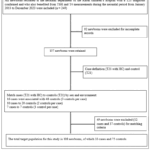 |
Figure 1. Flow chart of target population selection for the study |
Description of the population under study according to matching criteria
Out of 108 participants in this study, 33 newborns with T21 and CH (cases) were matched to 75 newborns with T21 without CH (controls) based
on sex and environment. Of the 33 cases, 22 were female (67%) and 11 were male (33%). As for the controls, 50 were female (67%) and 25 male (33%). 73% of the cases and 69% of the controls
were from urban areas (Table 1).
Table 1: Description of the population studied
| Variables | Cases (n=33) | Controls (n=75) | X² (P value) | statistical significance | ||
| Size | Percent | Size | Percent | |||
| GenderFemale
Male |
22
11 |
67%
33% |
50
25 |
67%
33% |
00 (1.00)
00 (1.00) |
N.S[1]
N.S |
| AreaUrban
Rural |
24
9 |
73%
27% |
52
23 |
69%
31% |
0.12 (0.72)
0.12 (0.72) |
N.S
N.S |
Characteristics of the target population of the study
For parity, 33% of cases and 31% of controls have less than 2 children, 45% of cases and 41% of controls have between 2 and 5 children, and 22% of cases and 28% of controls have more than 5 children. The relation between parity and the presence or absence of CH in trisomy patients is insignificant.
For pregnancy follow-up, 21% of cases followed their pregnancy against 41% of controls, while 36% of cases and 59% of controls did not. A significant relationship was found between pregnancy follow-up and the presence of CH (p < 0.05).
Normal delivery was observed in 33% of cases and 44% of controls, while 67% of cases and 57% of controls were delivered by caesarean section. The relationship between delivery mode and CH development is insignificant.
Apgar score is <7 in 33% of cases and 56% of controls, and >7 in 67% of cases and 44% of controls, showing a significant relationship between the Apgar score and the presence or absence of CH in people with Down syndrome.
Birth weight between 1500 g and 1999 g was raised in 49% of cases and 25% of controls, and 42% of cases and 22% of controls between 2000 g and 2499 g. A significant relationship was noted between birth weights < 2999 g and the development of CH. 15% of cases and 37% of controls have a developmental delay before 2 years, 24% of cases and 53% of controls between 2 and 5 years, and 61% of cases and 13% of controls after 5 years. A significant relationship was observed (p < 0.05). (Table 2)
Table 2: Characteristics of the population studied
| Variables | Cases | Controls | p |
| N=33 (n) % | N=75 (n) % | ||
| Parity | |||
| <2 | (11) 33% | (23) 31% | NS[2] |
| [2-5] | (15 )45% | (31) 41% | |
| >5 | (7) 22% | (21) 28% | |
| Pregnancy follow-up | |||
| Yes | (21) 64% | (31) 41% | <0.05 |
| No | (12) 36% | (44) 59% | |
| mode of delivery | |||
| Normal | (11) 33% | (33) 44% | NS |
| Cesarean section | (22) 67% | (42) 56% | |
| Apgar score 5 min | |||
| <7 | (11) 33% | (42) 56% | <0.05 |
| >7 | (22) 67% | (33) 44% | |
| Birth weight | |||
| ]1500- 1999] | (16) 49% | (18) 25% | <0.05 |
| [2000- 2499] | (14) 42% | (16) 22% | |
| [2500- 2999] | (1) 3% | (22) 27% | |
| [3000- 3499] | (1) 3% | (10) 14% | NS |
| [3500- 4000[ | (1) 3% | (9) 12% | |
| Delayed psychomotor development | |||
| <2 years | (5) 15% | (28) 37% | <0.05 |
| [2- 5 years] | (8) 24% | (40) 53% | |
| >5 years | (20) 61% | (10) 13% |
The bivariate analysis of the main determinants
Our study showed a significant relationship between the birth season of Down syndrome infants and the presence of CH. Of the 33 cases examined, 15 newborns, or 45%, were born in winter, while 13 cases, representing 34%, were born in the spring. For the control group, 14 individuals, or 18%, were born in winter and 12, or 16%, in spring (p< 0.05). The risk of developing the disease in newborns with Down syndrome in winter and spring is more than 3 times higher.
Consanguinity, which refers to marriage and reproduction between individuals with close kinship links such as cousins, was observed in 61% of newborns with trisomy HC, versus 12% without trisomy CH (p<0.05). The risk of developing CH was 11.2 times higher compared to those without any notion of consanguinity.
The present study shows that CH is statistically significantly related to prematurity (p < 0.05), with a 4.2 times higher risk of developing HC than those born at term.
The mean maternal age was 38 ± 2 years for cases vs 42 ± 2 years for controls. The 30 to 40 age group is the most prevalent, with 55% of cases and 21% of controls, while almost 40% of cases and 79% of controls are in the over 40 age group (p < 0.05). Our result showed that 6% of cases had the HC’s cause a hypotrophy of the thyroid gland at birth by thyroid ultrasound. (Table 3)
Table 3: The bivariate analysis of the main factors related to HC in trisomy 21
| Variables | Cases (n=33) | Controls (n=75) | X² (P value) | OR (IC at 95%) | Statistical Signifiance | ||
| Size | % | Size | % | ||||
| Season
Winter |
15 | 45% | 14 |
18% |
8.37 (0.003) | 3.63 (1.47- 8.91) | High SS[3] |
| Spring | 13 | 40% | 12 | 16% | 7.05 (0.0079) | 3.41 (1.34- 8.66) | High SS |
| Summer | 3 | 9% | 29 | 39% | 9.61 (0.0019) | 0.15 (0.04- 0.56) | Low SS[4] |
| Autumn | 2 | 6 % | 20 | 27% | 5.99 (0.014) | 0.17 (0.03- 0.81) | Low SS |
| Consanguinity | 20 | 61% | 9 | 12% | 27.5 (0.00000015) | 11.2 (4.20-30.24) | High SS |
| Term of pregnancy | |||||||
| Preterm | 17 | 52% | 15 | 20% | 10.91(0.00095323) | 4.2 (1.75- 10.31) | High SS |
| Full-term | 16 | 48% | 60 | 80% | 10.91(0.00095) | 0.39 (0.23- 0.68) | Low SS |
| Maternal age | |||||||
| <30 years | 2 | 6% | 0 | – | 4.63 (0.031) | – | N.S |
| [30-40 ans[ | 18 | 55% | 16 | 21% | 11.71(0.00061) | 4.42 (1.83-10.6) | High SS |
| >40 years | 40% | 59 | 79% | 15.90(0.00066) | 0.17 (0.02- 0.42) | Low SS | |
| Congenital heart malformation | 13 | 40% | 12 | 16% | 7.05 (0.0079) | 3.41 (1.34- 8.66) | High SS |
Discussion
This study aims to analyze the determinants related to CH in people with Down syndrome. By collecting the transcribed data on the records, we are looking to clarify the implications of these comorbidities, which could thus improve the management and follow-up of these vulnerable patients. To this end, it is essential to recognize the various determinants of this predisposition to develop appropriate screening and monitoring strategies, ensuring early and effective management of thyroid disorders in children with Down syndrome.
The main determinants related to HC in trisomy
Thus, our study has highlighted several main determinants, including seasonality, consanguinity, pregnancy term, and maternal age.
The seasonality
45% of newborns with Down syndrome, 21 with CH (cases), were born in winter, while 34% were born in spring. In the control group, 18% were born in winter and 16% in spring (p< 0.05). The risk is higher at 3.63 (1.47-8.91) times to develop HC in Down syndrome in those born in winter and 3.41 (1.34-8.66) in spring.
Our study confirms the literature, because Abbasi et Harrari (2022) highlight the significant association between winter and CH9.Similarly, the study by Hall et al. (1999) examines the incidence of CH on seasonality in the West Midlands, England, concluding that there is a significant relationship, particularly during winter and spring10.
This variable may be crucial in the development of CH in newborns with trisomy 21. In winter, iodine deficiency, particularly in low-iodine regions, increases the risk of CH, as iodine is essential for thyroid hormone synthesis. In addition, winter is marked by respiratory infections affecting maternal health and fetal development.6in spring, dietary variations may influence nutrient intake, such as iodine and selenium, while increased seasonal allergies may also impact maternal health and fetal development as a result.9 This analysis highlights environmental factors often overlooked in the development of CH in Down syndrome infants. Iodine deficiency, especially in winter, is a concern and highlights the importance of adequate nutrition. In addition, seasonal infections and allergies show how maternal health is interlinked with fetal health, requiring special attention during these periods.
The consanguinity
In our study, 61% of Down syndrome infants with consanguinity developed CH (p <0.05); the risk of developing CH is 11 times higher in people with Down syndrome who have consanguinity.
Several studies have confirmed our findings. One by Hall and Hutchesson (1999) reveals a potential link between consanguinity and increased CH cases in the West Midlands, England, and the combination of consanguinity and Down syndrome can increase the risk of thyroid dysfunction.10 G. Allen et al. point out that Infants with Down syndrome have an increased risk of CH, with a 26-fold incidence compared to the general population.11
Consanguinity is, therefore, a major risk factor for the development of genetic disorders, as it increases the likelihood of transmitting recessive alleles that may contribute to chromosomal abnormalities.
Maternal age
Our research results state that the average maternal age for cases is 38 ± 2 6 years, while it is 42 ± 2, 2 years for controls. Age analysis shows that 55% of cases and 21% of controls are in the 30-40 year age group, with a risk of 4.42 (1.83-10.6) times to develop CH,demonstrating a strong statistical relationship between the [30-40 [ age group in mothers giving birth to Down’s disease and the presence of CH. Those born to mothers over 40 years old have a risk of 0.17 (0.02- 0.42), which shows a weak statistical relationship with maternal age of more than 40 years, giving birth to trisomy and the presence of CH.
Several studies show that the risk of trisomy 21 increases with age, reaching about 1 in 128 for mothers aged 40.11 The study by Zhou (2020) identifies perinatal risk factors associated with CH in a retrospective cohort in China, highlighting significant associations with maternal age.12
Hakim (2022) examines risk factors in Iran and reveals correlations between maternal age and CH incidence, highlighting the importance of increased awareness and early detection to improve health outcomes.13 Inaddition, the study by Zhang (2018) shows that maternal age significantly influences levels of thyroid-stimulating hormone (TSH) in newborns in a prospective cohort in China.14
This research highlights the significant impact of maternal age on CH risk in Down syndrome newborns. The results highlight the importance of increased awareness for women over 30, who should be given careful medical follow-up. In addition, promoting early screening is crucial to improving health outcomes for these vulnerable newborns.
The term of pregnancy
Our study also shows that the presence of CH in Down syndrome newborns is linked to increased rates of preterm births, with a 4.2 (1.75- 10.31) times higher risk of developing CH.
Premature births are more common in children with Down syndrome than in the general population. Studies show that trisomy have an increased risk of obstetric complications, which can lead to early births.15 A study by Zhou (2020) highlights significant associations between the pregnancy term and CH in a retrospective cohort in China.14 Similarly, Hakim (2022) reveals a correlation between the term of pregnancy and the incidence of CH in southwestern Iran, highlighting the importance of increased awareness and early detection.12
It is a concern that Down syndrome infants are more likely to be born prematurely, which highlights the importance of enhanced medical surveillance. The studies result highlight the need for early detection to anticipate and manage potential complications. Increased awareness could help improve health outcomes for these vulnerable newborns.
Heart defects
In our research, 40% of the cases had a heart malformation with a 3.41 (1.34- 8.66) times higher risk of developing CH, indicating a high statistical significance among trisomy with heart malformations associated with CH.
Congenital heart defects affect about 40 to 50% of individuals with trisomy 21, including anomalies such as the atrioventricular canal and septal defects. HC is also more common in this population, with an incidence 26 times higher than in the general population16. The study by Iqbal and Schimer (2007) highlights the importance of monitoring thyroid function in cardiac patients to better understand interactions between thyroid health and cardiac performance.17
These results highlight the importance of early detection and appropriate medical follow-up. Given the link between thyroid hormones and neurological development, it is essential to integrate thyroid monitoring into the care of patients with Down syndrome. A better understanding of these interactions could improve interventions and outcomes for these vulnerable children.
The delay of psychomotor development
Our research also found that all cases and controls developed a psychomotor developmental delay (p < 0.05). Delayed psychomotor development is common in individuals with trisomy 21, and about 50% of these individuals have thyroid disorders, including CH. This condition, often underdiagnosed, can aggravate neurological deficits due to the importance of thyroid hormones in central nervous system maturation.18
These results highlight the importance of early detection and appropriate medical follow-up. Given the link between thyroid hormones and neurological development, it is essential to integrate thyroid monitoring into the care of patients with Down syndrome. A better understanding of these interactions could improve interventions and outcomes for these vulnerable children.
In summary, our study confirmed the critical importance of clinical care for children with Down syndrome, especially with CH. Several factors, such as seasonality, consanguinity, prematurity, advanced maternal age, and congenital heart defects, can significantly influence the risk of developing this pathology in Down syndrome newborns. This association reinforces the validity of the conclusions drawn and suggests significant implications for the understanding of the phenomena studied.
Study limitations
This study has certain limitations, including a lack of available data on parity and socio-economic levels, and the absence of prior similar studies in this specific region for comparison
In addition, the non-self-reporting nature of the case-control study restricted the ability to supplement certain information with interviews with parents in the target population, limiting the depth of data collected. It is also important to note that the specificity of rare diseases such as CH requires a long-term approach.
However, these limitations do not alter the scientific relevance of this research, and the results obtained can be used as a basis for developing a policy to raise awareness and systematically screen HC while considering socio-economic considerations.
Conclusion
This study highlights the importance of special clinical attention for children with Down syndrome, especially regarding CH. It highlights several crucial determinants that influence the risk of developing this pathology.
Among the known pedagogical aspects, it is recognized that the link between maternal age and the risk of trisomy 21 intensifies with age, especially after 30 years. In addition, consanguinity history is a major risk factor for genetic disorders, including Down syndrome.Finally, it is well established that newborns with Down syndrome are more likely to be born prematurely, which increases their risk of complications such as CH.In addition, research demonstrates a strong correlation between the presence of heart defects and the increased risk of HC in newborns with Down syndrome. Finally, she points out that all the cases studied presented a delay in psychomotor development, thus accentuating the need for early thyroid monitoring.
However, this study also reveals innovative elements. It highlights the significant impact of seasonality on the development of CH in trisomy, highlighting often-overlooked environmental influences.
Acknowledgement
The authors sincerely thank all the healthcare professionals who support this study. Their valuable insights and time were instrumental to its success.
Funding Sources
The author(s) received no financial support for the research, authorship, and/or publication of this article.
Conflict of Interest
The authors do not have any conflict of interest.
Data Availability Statement
This statement does not apply to this article.
Ethics Statement
This research did not involve human participants, animal subjects, or any material that requires ethical approval.
Informed Consent Statement
This study did not involve human participants, and therefore, informed consent was not required.
Clinical Trial Registration
This research does not involve any clinical trials.
Permission to reproduce material from other sources
Not Applicable
Author Contributions
- Boumehdi Boutaina: Conceptualization, Data collection,Methodology, analysis, Writing –Original Draft
- Mochhoury Latifa: Data Collection, Methodology, Analysis,
- Iaziji Lamya: Analysis, Visualization.
- Barkat Amina: Visualization, Supervision.
- Chebabe Milouda, Visualization, Supervision.
References
- Antonarakis SE. Down syndrome. Nat Rev Dis Primer. 2020;6(1):9. doi: 10.1038/s41572-019-0143-7.
CrossRef - Freminville B. The support of children with trisomy 21. Med Ther Pediatr. 2007;10:1-7. doi: 10.1684/mtp.2007.0119.
CrossRef - Chemli J, Braham N, Boughattas S, and Harbi A. Graves’ disease associated with celiac disease in a 21-year-old adolescent. Rev Internal Medicine. 2006;27(10):791-793. doi: 10.1016/j.revmed.2006.04.017.
CrossRef - Cygler M. Congenital hypothyroidism: new American recommendations. Medscape. 2023. Available on: https://francais.medscape.com/voirarticle/3610090.
- Karlsson B, Gustafsson J, Hedov G, Ivarsson SA, Annerén G. Thyroid dysfunction in Down’s syndrome: relation to age and thyroid autoimmunity. Arch Dis Child. 1998;79(3):242-245.
CrossRef - Hypothyroidism in infants and children – Pediatrics. Professional edition of the MSD Manual. 2020. Available on: com/fr/professional/pédiatrie/pathologies-endocriniennes-pédiatriques/hypothyroïdie-chez-le-nourrisson-et-l’enfant.
- Thyroid dysfunctions and trisomy 21. 2021. Available on: https://t21learning.institutlejeune.org/ dysfonctions-thyroidiennes-et-trisomie-21/.
- Serpe P. Le cas clinique du mois : syndrome de Down et myxœdème : description d’un cas et revue de la littérature. Rev Med Liege. 2010; 65 (12):750-756.
- Abbasi R, Harari-Kremer R, Haim A, Raz R. Risk factors of congenital hypothyroidism in Israel. Isr Med Assoc J. 2022; 25 (12):808-814.
- Hall SK, Hutchesson AC, Kirk JM. Congenital hypothyroidism, seasonality, and consanguinity in the West Midlands, England. Acta Paediatr. 1999; 88(2):212-215.
CrossRef - Allen EG, et al. Maternal age and risk for trisomy 21 assessed by the origin of chromosome nondisjunction: a report from the Atlanta and National Down Syndrome Projects. Hum Genet. 2009; 125 (1):41-52.
CrossRef - Zhou J. Perinatal risk factors for congenital hypothyroidism: A retrospective cohort study performed at a tertiary hospital in China. Medicine (Baltimore). 2020; 99 (26):e20838.
CrossRef - Hakim A. Investigation of risk factors of congenital hypothyroidism in children in Southwestern Iran. Glob Pediatr Health. 2022; 9:2333794X221089764.
CrossRef - Zhang Y. Effect of maternal and neonatal factors on neonatal thyroid-stimulating hormone: Results from a population-based prospective cohort study in China. J Trace Elem Med Biol. 2018; 49:151-155.
CrossRef - Canfield MA, e. National estimates and race/ethnic-specific variation of selected birth defects in the United States, 1999-2001. Birth Defects Res A Clin Mol Teratol. 2006; 76 (11):747-756.
CrossRef - Main benchmarks on congenital anomalies. 2023. Available on: https://www.who.int/fr/news-room/fact-sheets/detail/birth-defects.
- Iqbal A, Schirmer H, Lunde P, Figenschau Y, Rasmussen K, Jorde R. Thyroid stimulating hormone and left ventricular function. J Clin Endocrinol Metab. 2007; 92(9):3504-3510.
CrossRef - Canadian Paediatric Society. The evaluation of the child with an overall developmental delay or intellectual disability. 2018. Available at: https://cps.ca/fr/documents/position/levaluation-de-lenfant-ayant-un-retard-global-du-developpement-ou-un-handicap-intellectuel.
Abbreviations
CH: Congenital hypothyroidism
OR: Odds Ratio
 PlumX:
 Views: 1026
  PDF Downloads:
291
PDF Downloads:
291