Sensitivity and Specificity of Mahasarakham Hospital Upper Airway Obstruction Score (MSKH-UAO Score) for Predicting Emergency Airway Intervention
 , Akkharadet Nammuntri1and Patorn Piromchai2*
 1Department of otolaryngology, Mahasarakham hospital, Mahasarakham, Thailand.
2Department of otorhinolaryngology, Faculty of Medicine, KhonKaen University, Thailand.
Corresponding Author E-mail: patorn@kku.ac.th
DOI : http://dx.doi.org/10.13005/bpj/3464
Download this article as:

Upper airway obstruction (UAO) is a potentially life-threatening condition requiring prompt recognition and timely airway intervention. Accurate bedside assessment tools are essential to facilitate early detection, effective communication, and appropriate management. The Mahasarakham Hospital Upper Airway Obstruction score (MSKH-UAO score) was developed to standardize clinical assessment and guide urgent decision-making; however, its diagnostic accuracy has not yet been systematically assessed. This study aimed to determine the sensitivity and specificity of the Mahasarakham Hospital Upper Airway Obstruction scorefor predicting the need for emergency airway intervention.This retrospective diagnostic study was conducted at Mahasarakham Hospital, Thailand. Medical records of patients diagnosed with UAO and assessed using the MSKH-UAO score between February 1, 2023, and July 31, 2024, were reviewed.Patients with incomplete data or those scheduled for prophylactic tracheostomy were excluded. The primary outcome was the requirement for emergency airway intervention, defined as immediate endotracheal intubation or emergency tracheostomy based on clinical assessment by the attending physician. Diagnostic performance was assessed using sensitivity, specificity, and receiver operating characteristic (ROC) curve analysis was performed, including estimation of the area under the curve (AUC).A total of 90 patients were included in the final analysis, with an average age of 54.29 years (ranging from 4 to 94 years).Infection was the most common etiology of UAO, followed by head and neck malignancy. The MSKH-UAO score demonstrated high diagnostic accuracy for predicting airway intervention, with an AUC of 0.9409. A cutoff score of ≥ 6 provided a favorable balance between sensitivity (75.0%) and specificity (98.65%). Higher cutoff values yielded increased specificity but reduced sensitivity.The MSKH-UAO score is a reliable and accurate bedside assessment tool for identifying patients with upper airway obstruction who require urgent airway intervention. A cutoff score of 6 may serve as an effective early warning threshold, supporting timely clinical decision-making and potentially reducing morbidity and mortality associated with delayed airway management.
KEYWORDS:Score; Sensitivity; Specificity; Upper airway obstruction; UAO
Introduction
Upper airway obstruction (UAO) is a common condition encountered in otorhinolaryngology practice.1–4It can result from various causes leading to airway narrowing, including malignancies of the pharynx and larynx, deep neck infections, facial and airway trauma, post-intubation tracheal stenosis, laryngeal or tracheal masses, and foreign bodies.4UAO is a critical medical emergency that can become life-threatening if not identified and treat in a timely manner.5Patients with this condition often require urgent airway interventions such as endotracheal intubation, emergency tracheotomy, direct laryngoscopy, or bronchoscopy.6–9
Therefore, accurate assessment of disease severity and effective, timely communication are crucial for rapid treatment planning, reducing complications, and lowering mortality in this patient population.10
The Department of Otorhinolaryngology at Mahasarakham Hospital began using a severity assessment tool for upper airway obstruction, around the year 2000. The first version was a checklist used by nurses to assess and observe patients, including dental infection, chin swelling, sublingual swelling, oxygen saturation, suprasternal notch1 retraction, hoarseness or voice change, and the presence of a midline neck mass. Nurses reported the presence and number of these findings to physicians on duty.
In 2009, the assessment tool was revised into a scoring table; however, the severity of symptoms was not yet stratified. The tool is primarily used for communication between the emergency department and the otorhinolaryngology department, as well as between nurses and ENT physicians.
In 2015, symptom severity was formally stratified by prioritizing five key clinical indicators: presence of stridor (5 points), suprasternal notch retraction (5 points), oxygen saturation < 95% (2 points), inability to lie supine (3 points), respiratory rate > 24 breaths/min (1 point), stridor and suprasternal notch retraction were weighted highest (5 points each) as they are key indicators of severe upper airway obstruction. Inability to lie supine was assigned 3 points as an important but less specific sign, which may also occur in other conditions such as congestive heart failure or pleural effusion. Oxygen saturation < 95% and respiratory rate > 24 breaths/min were assigned 2 points, as these findings indicate severity but may be present in non-UAO conditions. Items 6–12 included restlessness, mouth opening < 2 cm, dyspnea, sublingual swelling, submental or neck swelling, hoarseness or voice change, and a midline neck mass, each assigned 1 point.
Patients scoring 0–5 points were monitored every 2 hours; those scoring 6–12 points were assessed hourly and physicians were notified immediately; patients scoring > 12 points required urgent physician notification and monitoring every 15 minutes. During this period, the assessment tool was distributed to community hospitals within Mahasarakham Province to facilitate standardized evaluation and referral communication to the tertiary center.
In 2021, the tool was further revised by highlighting the first five critical items. If at least one of these items was present, immediate physician notification was required, even if the total score was below 6. Sepsis assessment based on SIRS criteria was added as a distinct component, as upper airway obstruction (UAO) frequently occurs in patients with deep neck space infections that may be complicated by bacteremia. The inclusion of sepsis assessment enhances clinical efficacy by ensuring timely management of infection and vigilant monitoring for septic shock.However, these parameters are recorded separately and are not calculated into the cumulative UAO score. A section for identifying the site of infection or abscess in deep neck spaces was also included.
The most recent revision and official implementation of the UAO assessment tool occurred in 2023. The current version includes 12 assessment items: stridor, suprasternal notch retraction, oxygen saturation < 95%, inability to lie supine, respiratory rate > 24 breaths/min, restlessness, mouth opening < 2 cm, dyspnea, sublingual swelling, submental or neck swelling, hoarseness or voice change, midline neck mass.
Weighted scoring is applied to findings with higher specificity for UAO: stridor (5 points), suprasternal notch retraction (5 points), oxygen saturation < 95% (2 points), and inability to lie supine (3 points). Notably, following consensus during the meeting, sublingual swelling was assigned 2 points, recognizing it as a hallmark sign of Ludwig’s angina that may lead to rapid and life-threatening airway obstruction. The remaining items are assigned 1 point each. The maximum total score is 24 points. A score > 12 or the presence of any of the first five critical items mandates immediate physician notification.
This study aimed to assess the sensitivity and specificity of the Mahasarakham Hospital Upper Airway Obstruction (MSKH-UAO) score.
Materials and Methods
Study Design and Setting
This diagnostic study was carried out at Mahasarakham Hospital, a tertiary care referral center in Thailand. It included a retrospective review of inpatient medical records for patients diagnosed with upper airway obstruction.
Participants
All patients diagnosed with upper airway obstruction who were evaluated using the Upper Airway Obstruction Assessment Tool (MSKH-UAO score) at Mahasarakham Hospital between February 1, 2023, and July 31, 2024, were considered eligible for inclusion.
Inclusion criteria
Patients who underwent evaluation using the MSKH-UAO score.
Exclusion criteria
Patients with incomplete assessment data and patients who had a pre-planned prophylactic tracheostomy. Four patients who underwent planned prophylactic tracheostomy were excluded.
A total of 90 patients met the inclusion criteria and were included in the final analysis.
Assessment Tool and Scoring System
Patients suspected of Upper Airway Obstruction (UAO) at Mahasarakham Hospital were evaluated using the Mahasarakham Hospital Upper Airway Obstruction Score (MSKH-UAO score). This clinical assessment tool consists of 12 weighted parameters, totaling 24 points. The scoring distribution is as follows:
Critical Indicators (5 points each)
Presenceof stridor and suprasternal notch retraction. These are heavily weighted as they directly indicate severe airway narrowing and increased work of breathing requiring immediate intervention.
Physiological Indicators:
Oxygen saturation < 95% (2 points), given that hypoxia may result from various comorbidities (e.g., pneumonia, heart failure); respiratory rate > 24 breaths/min (1 point); and agitation/restlessness (1 point).
Physical & Anatomical Indicators (1 point each):
Inability to lie flat, mouth opening < 2 cm, subjective dyspnea, sublingual edema, submental/neck swelling, hoarseness or voice change, and the presence of a midline neck mass.
Clinical Protocol and Monitoring Frequency
The evaluation begins with recording the date and time of the initial assessment. Scoring is performed by healthcare providers, including Otolaryngologists, general practitioners, interns, medical students, and nurses. The frequency of monitoring is determined by the cumulative MSKH-UAO score. (Table 1)
Table 1. Current protocol of management according to MSKH-UAO score
|
Cumulative Score |
Severity level |
Monitoring Frequency |
Action required |
|
0-5 |
Mild |
Every 2 hours |
Routine observation |
|
6-12 |
Moderate |
Every 1 hour |
Immediate physician notification |
|
>12 |
Severe |
Every 15 minutes |
Urgent physician notification; prepare for tracheostomy or intubation |
Source: Author
Variables
The primary outcome was the requirement for emergency airway intervention. Independent variables included demographic characteristics (age and sex) and clinical indicators incorporated in the MSKH-UAO score, namely stridor, suprasternal notch retraction, oxygen saturation, inability to lie supine (orthopnea), respiratory rate, restlessness, trismus, dyspnea, sublingual swelling, submental or neck swelling, hoarseness or voice change, midline neck mass, and sepsis.
Data Sources and Measurement
All information was obtained from inpatient electronic medical records through the Mahasarakham Hospital computerized database.Clinical variables were recorded as documented at the time of initial assessment using the MSKH-UAO score. Outcome data regarding airway management were obtained from procedural and physician documentation.
Bias
To minimize information bias, data extraction was performed using standardized data collection forms based on the MSKH-UAO assessment tool. Patients with incomplete data were excluded to reduce misclassification. As a retrospective study, selection bias related to clinical documentation could not be entirely eliminated.
Study Size
The study encompassed all eligible patients who satisfied the inclusion criteria during the study period, and no formal sample size calculation was undertaken owing to the retrospective design of the study.
Statistical Methods
Descriptive statistical methods were applied to summarize patient characteristics, with continuous variables presented as mean and categorical variables reported as frequencies and percentages.
The diagnostic accuracy of the MSKH Upper Airway Obstruction (UAO) score was evaluated through receiver operating characteristic (ROC) curve analysis. Sensitivity and specificity were determined at various score thresholds, while the area under the ROC curve (AUC) measured the overall ability to discriminate between outcomes. The optimal cutoff value was selected based on a balance of sensitivity, specificity, and clinical relevance.
All statistical tests were two-tailed, with a p-value of less than 0.05 considered statistically significant. Data analyses were conducted using Stata software (Stata Corp, USA).
Results
Initially, 94 patients were identified. Four patients who underwent a planned prophylactic tracheostomy were excluded, resulting in 90 patients included in the analysis. Of these, 50 were male and 40 were female, with a mean age of 54.29 years (range: 4–94 years).
Among the patients evaluated using the MSKH-UAO score, the most frequent cause of acute upper airway obstruction wasinfection, accounting for 75 cases. Ludwig’s angina was identified in 23 patients. Deep neck and pharyngeal infections were observed in 22 patients, including parapharyngeal space abscesses in 10 cases and submandibular space abscesses in 12 cases. Peritonsillar abscess was diagnosed in 7 patients, parotid space abscess in 7 patients, and acute supraglottitis in 4 patients.
The second most frequent cause of upper airway obstructionwas head and neck malignancy, identified in 12 patients. These included laryngeal carcinoma (6 cases), thyroid carcinoma with true vocal cord paralysis (2 cases), hypopharyngeal carcinoma (2 cases), oropharyngeal carcinoma (1 case), and nasopharyngeal carcinoma (1 case). Other causes included tracheal stenosis (2 cases) and laryngeal trauma secondary to injury (1 case). (Table 2)
Table 2: Demographic data
|
Characteristics |
Number (n) |
Percentage (%) |
|
Gender |
||
|
· Male |
50 |
55.56% |
|
· Female |
40 |
44.44% |
|
Age(years) |
||
|
· Mean(range) |
54.29 (4-94) |
– |
|
Primary Etiology |
||
|
1.Infection |
75 |
83.33% |
|
· Ludwig’s angina |
23 |
25.56% |
|
· Submandibular space abscess |
12 |
13.33% |
|
· Parapharyngeal space abscess |
10 |
11.11% |
|
· Peritonsillar space abscess |
7 |
7.78% |
|
· Parotid space abscess |
7 |
7.78% |
|
· Acute supraglottitis |
4 |
4.44% |
|
· Others infection |
12 |
13.33% |
|
2. Head and neck malignancy |
12 |
13.33% |
|
· Laryngeal carcinoma |
6 |
6.67% |
|
· Thyroid carcinoma with VCP* |
2 |
2.22% |
|
· Hypopharyngeal carcinoma |
2 |
2.22% |
|
· Oropharyngeal carcinoma |
1 |
1.11% |
|
· Nasopharyngeal carcinoma |
1 |
1.11% |
|
3. Other causes |
3 |
3.33% |
|
· Tracheal stenosis |
2 |
2.22% |
|
· Laryngeal trauma |
1 |
1.11% |
* VCP= True vocal cord palsy
Source: Author
The sensitivity and specificity of different MSKH-UAO score thresholds for predicting the need for airway intervention. Lower cutoff scores demonstrated higher sensitivity but lower specificity, whereas higher cutoff scores were associated with increased specificity at the expense of sensitivity. A UAO score of ≥6 offered an optimal balance between sensitivity (75.0%) and specificity (98.65%). When the threshold was raised to ≥7, specificity reached 100%, but sensitivity decreased gradually.(Table 3).
Table 3: Sensitivity and Specificity of UAO score for airway intervention
|
Scores |
Sensitivity (95% CI) |
Specificity (95% CI) |
|
≥ 4 |
80.00 (56.30 to 94.30) |
95.95 (88.60 to 99.20) |
|
≥ 5 |
75.00 (50.90 to 91.30) |
97.30 (90.60 to 99.70) |
|
≥ 6 |
75.00 (50.90 to 91.30) |
98.65 (92.70 to 100.00) |
|
≥ 7 |
65.00 (40.80 to 84.60) |
100 (95.10 to 100.00) |
|
≥ 8 |
50.00 (31.50 to 76.90) |
100 (83.20 to 100.00) |
|
≥ 9 |
35.00 (15.40 to 59.20) |
100 (84.90 to 100.00) |
Source: Author
ROC curve analysis demonstrated good discriminative performance of the MSKH-UAO score for predicting airway intervention. A cutoff value of ≥ 6 provided a favorable balance between sensitivity and specificity, while higher cutoffs achieved perfect specificity at the expense of sensitivity.The ROC curve analysis yielded an area under the curve (AUC) of 0.9409, demonstrating excellent diagnostic accuracy. (Figure 1)
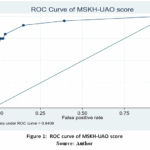 |
Figure 1: ROC curve of MSKH-UAO score
|
Source: Author
Discussion
Principal Findings
This study evaluated 90 patients with acute upper airway obstruction (UAO) treated at Mahasarakham Hospital. The mean age was 54.29 years, with a wide age range (4–94 years), indicating that acute UAO can occur across all age groups. Infectious etiologies were the most common cause of UAO, accounting for the majority of cases, followed by head and neck malignancies. Key clinical features significantly associated with airway obstruction included stridor, suprasternal notch retraction, sublingual swelling, dyspnea, and a midline neck mass.
The Mahasarakham Hospital Upper Airway Obstruction score (MSKH-UAO score) demonstrated good diagnostic performance in identifying patients requiring urgent airway intervention. Receiver operating characteristic (ROC) analysis demonstrated strong discriminatory performance, as reflected by the area under the curve (AUC)of 0.9409, indicating excellent overall accuracy. A cutoff score of 6 provided high sensitivity for predicting the need for airway intervention, supporting its use as an early warning threshold.
Comparison With Previous Studies
This study was aligns with the Difficult Airway Society (DAS) 2015 guidelines,11 which emphasize a structured, stepwise approach and the prioritization of “oxygenation over intubation”.2 Unlike traditional tools such as the direct laryngoscopy scoring,12 which is primarily used during the intubation procedure itself the MSKH-UAO score functions as a proactive bedside assessment tool that guides decision-making prior to the onset of a crisis.
The predominant etiologies identified in our cohort—infection and head and neck malignancy—reflect the complex nature of UAO, which requires integrated clinical judgment.13 For instance, in advanced laryngeal cancer (T3–T4), having an objective score can assist clinicians in choosing between minimally invasive techniques like endoscopic laser debulking—which may offer better survival outcomes—and traditional tracheotomy.14,15 Similarly, in cases of laryngeal or laryngotracheal trauma, where symptoms may evolve subtly, the MSKH-UAO score can facilitate continuous monitoring to prevent delayed diagnosis and subsequent morbidity1,16,17
Compared with previous studies, Apichat et al.9 reported that most patients requiring tracheostomy for upper airway obstruction had malignancies of the larynx and hypopharynx, while Sumon and Jitsupa6found that malignancy was the leading cause of acute airway obstruction in an anesthetic cohort, followed by infection and trauma. In contrast, the present study identified infection as the primary cause, reflecting differences in population characteristics and referral patterns.
Stridor is a critical clinical sign of airway narrowing and represents a medical emergency. Prior studies have demonstrated that the presence of stridor is strongly associated with impending respiratory failure, cardiac arrest, and death if not promptly managed. Similarly, suprasternal notch retraction reflects increased work of breathing and severe airway compromise.
In the present study, statistically significant predictors of upper airway obstruction included stridor, suprasternal notch retraction, floor-of-mouth swelling, dyspnea, and the presence of a midline neck mass. These findings support the clinical relevance of the MSKH-UAO score, which emphasizes early recognition based on symptoms and physical signs before definitive airway examination.
Other airway scoring systems, such as the Downes and Raphaelly18 upper airway obstruction score, and institutional tools like the Modified Early Warning Signs for Upper Airway Obstruction2 (MEWS-UAO), focus on symptom assessment and physiological parameters but lack standardized severity scoring thresholds.
Clinical Implications
The MSKH-UAO score offers a practical, bedside assessment tool based on clinical signs and symptoms, without requiring immediate endoscopic evaluation. Lowering the alert threshold from a score of 12 to 6 points may allow earlier identification of impending airway obstruction and facilitate timely airway management, including intubation or surgical airway procedures. This approach may reduce morbidity and mortality associated with delayed intervention, particularly in resource-limited or high-volume emergency settings.
Furthermore, the MSKH-UAO score supports the goal of achieving high first-pass success (FPS), a key indicator of patient safety in emergency airway management.19 By identifying high-risk patients early, teams can better prepare for advanced techniques, such as video laryngoscopy (VL). Evidence suggests that VL, particularly GlideScope®, shows a significant learning curve and superior FPS rates compared to direct laryngoscopy.11,20,21In the most severe “Cannot Intubate, Cannot Oxygenate” (CICO) scenarios, the score justifies the rapid transition to front-of-neck access (FONA), such as cricothyroidotomy or proactive catheter-guided tracheotomy, thereby reducing the risks associated with multiple failed intubation attempts.22,23
Limitations
This study has several limitations. First, its retrospective nature may introduce incomplete documentation and information bias. Second, being conducted at a single center could limit the generalizability of the results to other hospitals or healthcare settings. Third, the relatively small sample size, especially for non-infectious causes of airway obstruction, may reduce the precision of subgroup analyses. Finally, inter-observer variability in clinical assessment and scoring was not assessed. The score may influence decision-making for airway intervention among experts. Future prospective, multicenter studies with larger populations are needed to validate the MSKH-UAO score and to refine the optimal cutoff values further.
Conclusion
The MSKH-UAO score showed outstanding diagnostic performance, with an area under the curve (AUC) of 0.9409.A cutoff score of 6 may serve as an effective early warning threshold for urgent airway intervention. Incorporation of this scoring system into routine clinical practice may enhance early detection, improve patient safety, and optimize airway management outcomes.
Acknowledgement
The authors would like to thank the KhonKaen Ear, Hearing, and Balance Research Group for their support.
Funding Sources
The author(s) received no financial support for the research, authorship, and/or publication of this article.
Conflict of Interest
The authors do not have any conflict of interest.
Data Availability Statement
This statement does not apply to this article.
Ethics Statement
This research did not involve human participants, animal subjects, or any material that requires ethical approval.
Informed Consent Statement
This study did not involve human participants, and therefore, informed consent was not required.
Clinical Trial Registration
This research does not involve any clinical trials.
Permission to reproduce material from other sources
Not Applicable
Author Contributions
- Intira Anantpinijwatna: Drafted the protocol, collected data, performed data analysis, interpreted results, and drafted the manuscript.
- Akkharadet Nammuntri: Collected data, performed data analysis and revised the manuscript.
- Patorn Piromchai: Conceptualized, designed, interpreted results, and revised the manuscript.
References
- Hogg G, Goswamy J, Khwaja S, Khwaja N. Laryngeal Trauma Following an Inhalation Injury: A Review and Case Report. J Voice. 2017;31(3):388.e27-388.e31. doi:10.1016/j.jvoice.2016.09.017
CrossRef - Frerk C, Mitchell VS, McNarry AF, et al. Difficult Airway Society 2015 guidelines for management of unanticipated difficult intubation in adults. British Journal of Anaesthesia. 2015;115(6):827-848. doi:10.1093/bja/aev371
CrossRef - Worawut Tantithaviwat, Thitiwat Sriprasart. Non Malignant Central Airway Obstruction. The journal of tuberculosis chest disease and critical care. 2019;38(1):1-8.
- Pfleger A (last), Eber E. Management of acute severe upper airway obstruction in children. Paediatr Respir Rev. 2013;14(2):70-77.
CrossRef - Mattila T, Vasankari T, Rissanen H, Knekt P, Puukka P, Heliövaara M. Airway obstruction and the risk of myocardial infarction and death from coronary heart disease: a national health examination survey with a 33-year follow-up period. Eur J Epidemiol. 2018;33(1):89-98. doi:10.1007/s10654-017-0278-3
CrossRef - Sumon Mantaga, Jitsupa Nithiuthai. Acute Airway Obstruction Management in Patients with Ear Nose Throat Problems. Thai J Anesthesiol. 2021;47(3):271-279.
- Szmuk P, Ezri T, Evron S, Roth Y, Katz J. A brief history of tracheostomy and tracheal intubation, from the Bronze Age to the Space Age. Intensive Care Med. 2008;34(2):222-228. doi:10.1007/s00134-007-0931-5
CrossRef - Feinstein Aj, Goel A, Raghavan G, et al. Endoscopic Management of Subglottic Stenosis. JAMA Otolaryngology–Head & Neck Surgery. 2017;143(5):500. doi:10.1001/jamaoto.2016.4131
CrossRef - Apichat Buranawangsila. Treatmentof Upper Airway ObstructionbyTracheostomy. J Prapokklao Hosp Clin Med Educat Center. 2010;27(4):256-2561.
- Cordeiro AMG, Souza DC, Quinzani RH, Troster EJ. [Comparison between an upper airway obstruction score and airway endoscopy to detect airway injury associated with endotracheal intubation in children]. J Pediatr (Rio J). 2003;79(6):543-549.
CrossRef - Joon Ki Lee, Hyunggu Kang, Hyuk Joong Choi. Changes in the first-pass success rate with the GlideScope video laryngoscope and direct laryngoscope: a ten-year observational study in two academic emergency departments. Clin Exp Emerg Med. 2016;3(4):213-218. doi:10.15441/ceem.16.148
CrossRef - Yentis SM, Lee DJH. Evaluation of an improved scoring system for the grading of direct laryngoscopy. Anaesthesia. 1998;53(11):1041-1044. doi:10.1046/j.1365-2044.1998.00605.x
CrossRef - Eskander A, Almeida JRD, Irish JC. Acute Upper Airway Obstruction. Longo DL, ed. N Engl J Med. 2019;381(20):1940-1949. doi:10.1056/NEJMra1811697
CrossRef - Semdaie D, Haroun F, Casiraghi O, et al. Laser debulking or tracheotomy in airway management prior to total laryngectomy for T4a laryngeal cancer. Eur Arch Otorhinolaryngol. 2018;275(7):1869-1875. doi:10.1007/s00405-018-4994-4
CrossRef - Du E, Smith RV, Ow TJ, Tassler AB, Schiff BA. Tumor Debulking in the Management of Laryngeal Cancer Airway Obstruction. Otolaryngol–head neck surg. 2016;155(5):805-807. doi:10.1177/0194599816661326
CrossRef - Sethi RKV, Khatib D, Kligerman M, Kozin ED, Gray ST, Naunheim MR. Laryngeal fracture presentation and management in United States emergency rooms. Laryngoscope. 2019;129(10):2341-2346. doi:10.1002/lary.27790
CrossRef - Randall DR, Rudmik LR, Ball CG, Bosch JD. External laryngotracheal trauma: Incidence, airway control, and outcomes in a large Canadian center. Laryngoscope. 2014;124(4):E123-133. doi:10.1002/lary.24432
CrossRef - Downes JJ, Vidyasagar D, Boggs TR, Morrow GM. Respiratory distress syndrome of newborn infants. I. New clinical scoring system (RDS score) with acid–base and blood-gas correlations. Clin Pediatr (Phila). 1970;9(6):325-331. doi:10.1177/000992287000900607
CrossRef - Park L, Zeng I, Brainard A. Systematic review and meta‐analysis of first‐pass success rates in emergency department intubation: Creating a benchmark for emergency airway care. Emerg Medicine Australasia. 2017;29(1):40-47. doi:10.1111/1742-6723.12704
CrossRef - Sakles Jc, Mosier J, Patanwala Ae, Dicken J. Improvement in GlideScope® Video Laryngoscopy performance over a seven-year period in an academic emergency department. Antimicrob Agents Chemother. 2014;9(7):789-794. doi:10.1007/s11739-014-1122-3
CrossRef - Cook TM, Boniface NJ, Seller C, et al. Universal videolaryngoscopy: a structured approach to conversion to videolaryngoscopy for all intubations in an anaesthetic and intensive care department. British Journal of Anaesthesia. 2018;120(1):173-180. doi:10.1016/j.bja.2017.11.014
CrossRef - Cole Rr, Aguilar Ea. Cricothyroidotomy versus tracheotomy: an otolaryngologist’s perspective. Laryngoscope. 1988;Feb;98(2):131-135. doi:10.1288/00005537-198802000-00002
CrossRef - Terlinden N, Van Boven M, Hamoir M, Schmitz S. An innovative approach to tracheotomy in patients with major obstruction of the upper airway. American Journal of Otolaryngology. 2014;35(3):445-448. doi:10.1016/j.amjoto.2013.12.012
CrossRef
 PlumX:
 Views: 149
  PDF Downloads:
55
PDF Downloads:
55