Wearable IoT-Based Health Monitoring for Early Disease Prediction
 , Bibhuti Bhusan Rath2, Selvakumarasamy Kathirvelu3*, Sasi Govindrajulu4, Govindaraju Sankaranarayan5and Mageswari Narayanasamy6
 1Department of ECE, Rajalakshmi Engineering College, Thandalam, Chennai.
2Department of Electrical Engineering, Aditya Institute of Technology and Management,Tekkali, AP, India.
3Department of ECE, Saveetha School of Engineering, Saveetha Institute of Medical and Technical Sciences, SIMATS, Chennai. India.
4Department of ECE, Chettinad Institute of Technology, Chettinad Academy of Research and Education, Tamil Nadu, India
5Department of Computer Science and Humanities, St. Joseph University, Tindivanam. India.
6Department of ECE, Ashoka Women's Engineering College(Autonomous), Kurnool, India.
Corresponding Author E-mail:selvakumarasamyk@gmail.com
DOI : http://dx.doi.org/10.13005/bpj/3499
Download this article as:

Early detection of chronic and acute health conditions plays a crucial role in reducing hospitalization and mortality rates, especially among aging populations and individuals with comorbidities. The proposed study presents a Wearable IoT-Based Health Monitoring System that uses a Convolution Neural Network-Long Short-Term Memory (CNN-LSTM) hybrid deep learning model that allows real-time physiological data analysis for early prediction of disease onset. It consists of wearable biosensors such as Electrocardiogram (ECG), Photoplethysmogram(PPG), accelerator, and peripheral oxygen saturation (SpO2), an edge processing unit that uses Arduino Nano 33 BLE Sense and Zigbee to transmit wirelessly, and a two-tiered cloud-edge architecture to provide scalable analytics. Preprocessing and feature extraction recollected signals are subjected to Z-score normalization, noise removal, and Independent Component Analysis, and reduced in dimensions with Autoencoders. The obtained features are fed through the CNN-LSTM model that was trained on theMedical Information Mart for Intensive Care(MIMIC-III) dataset because it shows high-dimensional, real-world clinical variability. The model attained a classification accuracy of 97.12, precision of 96.84, recall of 97.33, and the F1-score of 97.08. An additional risk scoring system using fuzzy logic makes the health status evaluation even more personalized, and it provides real-time alert whenever predefined risk thresholds are exceeded. System performance was confirmed on 10 diseases with more than 92% accuracy in each and real-time responsiveness with less than 40ms latency and low power use appropriate capacities of wearable devices. The supported encryption and safe cloud protocols guarantee the adherence to Health Insurance Portability and Accountability Act (HIPAA) of the United States and General Data Protection Regulation (GDPR). The suggested system has a strong potential to enhance the aspects of preventive healthcare, optimize the time on emergency response, and provide the capability of continuously monitor the status in remote and under-resourced locations.
KEYWORDS:CNN-LSTM; Early Disease Prediction; Edge Computing; Fuzzy Logic; GDPR; Health Monitoring; HIPAA; MIMIC-III; Risk Scoring; Wearable IoT
Introduction
The rapid evolution of wearable technology, sensor miniaturization, and wireless communication has fueled a paradigm shift in personalized healthcare. Traditionally, health monitoring systems were confined to clinical environments and offered only episodic data, thereby limiting the timeliness and granularity of medical insights.1The chronic diseases such as hypertension, diabetes, arrhythmia, and sleep apnea which underscores the urgent demand for continuous, real-time, and non-invasive monitoring systems to support effective patient management.2 On this note, Wearable Internet of Things (IoT) technologies have become a groundbreaking facilitator in healthcare, and they allow acquiring physiological parameters without clinical limitations. Combined with the improvements in machine learning and edge computing, wearable systems can now have the potential of not only monitoring health but anticipating negative medical conditions beforehand.3,4
Multi-modal sensor data that can be obtained by modern wearable devices include heart rate, oxygen saturation (SpO2), electrocardiogram (ECG), body temperature, motion activity, and sleep patterns. Nevertheless, simple gathering of such data is not enough to produce meaningful health results without being complemented by smart analytics.5,6 Machine learning and artificial intelligence combined with wearable data can identify abnormalities, predict the risk of disease, and alert at the earliest stage of symptoms. As data analytics, predictive healthcare focuses on closing the gap between reactive and proactive clinical interventions and disease prevention.7 This change is essential due to the increase in the burden of healthcare, particularly in the developing world and the elderly population.8 Figure 1 illustrates the key benefits of health monitoring for early disease prediction.
The existing health monitoring systems can be divided into rule-based systems, classical machine learning models, and deep learning systems. The rule based systems operate on hard-coded alert thresholds but are not adaptable.9 Classical models such as SVM and random forest are based on manual features and incapable of dealing with time-series information. CNNs and LSTM deep learning models can be more effective than conventional methods in detecting spatial and time trends but may be highly resource-intensive (need cloud infrastructure), and they raise latency and privacy issues.10 Cloud-only solutions have power, but cannot operate in far off locations; edge computing is faster, but has resource limitations when working with complex real-time health analytics.
In order to address the current constraints, the current project proposes a Wearable IoT-Based Health Monitoring System where a hybrid edge-cloud system and CNN-LSTM deep learning framework are used to predict the disease at its early stages. The system captures biosensor data using an Arduino Nano 33 BLE Sense and Zigbee and preprocesses it with Z-score normalization and ICA, then uses Autoencoder-based feature compression. Having a prediction accuracy of 97.12, it has fuzzy logic-risk scoring and AES-256-secured alerts to provide real-time, interpretable, privacy-compliant health monitoring.
Related Works
Over the past few years, blistering development of wireless technologies had resulted in the popularization of the Internet of Things (IoT) within various fields. The world had been growing older with an increase in life expectancy and the reduced birth rate, making older people susceptible to chronic illnesses in the form of heart disease, hypertension, and diabetes. These factors minimized quality of life and increased the cost of healthcare, creating the need to seek efficient and cost-effective healthcare options. The old systems used to have issues of accessibility and equity especially in underserved areas.12To overcome these problems, novel flexible sensors combined with IoT, AI, and big data were considered to achieve continuous, personal, and preventive health monitoring, but scalability, cost, stability, and security were also significant challenges.
Investigations frequently dealt with physical exertion evaluation based on the acceleration signal, yet this system exhibited serious errors in measurement. The paper has developed a scale to measure and it suggested using skin conductance (SC) and electromyography (EMG) sensors together, with the level of effort being uniquely determined by EMG and the classification being based only on SC signals.13 Arm muscular fatigue was tested using the method. Strong performance was exhibited in the experiment with a classification accuracy of 84.68% and sensitivity of 89.75% validating the usefulness of the proposed system in assessing physical effort. The paper introduced new compact, wideband, low-cost antennas, and sensors for the next generation systems. It has highlighted the role of efficient and green designs, with energy gathering towards self-powered wearable items.14There were the proposed antennas with dual-polarized, circularly polarized, fractal and metamaterial antennas and circular split-ring resonators (CSRRs) to increase gain, directivity and bandwidth.
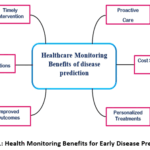 |
Figure 1: Health Monitoring Benefits for Early Disease Prediction
|
Electromagnetic tests were taken in the vicinity of the human body. Findings indicated a maximum 3 dB gain of metamaterial fractal designs and 8.5 dB directivity of passive sensors. High gain of 13.5 dB at 2.83 GHz was obtained with only 1 dB noise figure, which showed high potential of advanced smart communication and healthcare applications. A bio-inspired augmented feature selection and estimation (AFSE) model has been implemented to improve prediction of disease progression using a dataset. This method reduces the input feature space, applies an optimized network model with an L2-norm penalty and aiming to enhance early and accurate estimation of PD progression.16 EfficientNet-based ASD model can be integrated with IoT wearable devices to create a continuous and real-time ASD screening system and the devices is equipped with cameras and wireless modules can capture spontaneous facial images and transmit them to a cloud server, where the fine-tuned EfficientNet models perform automated ASD risk analysis. IoT-enabled integration which allows long-term monitoring, early detection, and remote assessment which extends the practical applicability of the proposed approach in smart healthcare environments.17
IoT Device can integrate into GA-optimized CNN model for continuous monitoring the physiological biomarkers in related to the pancreatic abnormalities and transferring the data for early detection.18 Sundararajan proposed the system integrates real-time data collected from IoT sensors based on cloud supported machine learning model and it provide accurate, continuous monitoring and early risk prediction. This system enhances healthcare responsiveness by enabling remote diagnosis, data analytics, and timely clinical decision-making.19 Abhay Chaturvedi proposed a ML enabled MIMO-based wireless health monitoring structure for enhancing patient tracking and real-time medical data communication.20 Jadhav explores deep learning techniques for analyzing multi-modal sensor data and it detects abnormalities and advanced neural models will improve accuracy, reliability for the real-time monitoring in intelligent sensing systems.21
The development of IoT had gained application in fields like health sector, agriculture and transport. In this paper, the authors concentrated on the healthcare sector, in which IoT was critical in facilitating remote patient monitoring by ensuring security and real-time monitoring. The Healthcare Monitoring System (HMS) was a combination of software, medical devices, and processes that were used to facilitate proactive care and timely interventions.15Nonetheless, the transmission of data was threatened with security risks, which posed a danger to the safety of patients. To overcome this, biometric and network flow metrics were implemented with ACGAN, which produced even samples of synthetics and performed better on all major performance metrics compared to baseline models.
Materials and Mathods
Design of Wearable IoT Sensor Architecture
The design and integration of a small, wearable Internet of Things (IoT) device that is implanted with a set of physiological sensors is the core element of this system. A careful balance of miniaturization, energy efficiency, real-time sensing capabilities and ergonomic comfort must be attained in this architecture. Towards this end, multi-modal sensors are incorporated to gather a wide range of physiological data streams that are important in health evaluation. Sensors used include photoplethysmography (PPG) to measure heart rate and oxygen saturation, electrocardiogram (ECG) electrodes to measure cardiac rhythm, accelerometers to monitor activity and falls, thermistors or infrared sensors to measure the body temperature, and cuffless blood pressure monitors to continuously measure the cardiac rhythm. The Arduino Nano 33 BLE Sense is a microcontroller based on the Arduino platform, pinned with the highest energy-saving design and equipped with the BLE (Bluetooth Low Energy) short-range communication protocol. Along with this, Zigbee protocol is used to support safe and power saving wireless transmission over extended distance. The system is modular in an effort to add or replace sensors, and the enclosure is created to use materials that are lightweight, skin friendly to ensure that it is as wearable as possible. The design also has in mind the waterproofing, battery optimization and motion artifacts with built in stabilization. Together, this layer is the sensory backbone of the health monitoring system, allowing one to acquire physiological data continuously in real-world situations without disrupting the comfort of the user.
Real-Time Data Acquisition and Preprocessing
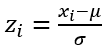
Once deployed, the wearable device initiates the on-going real-time physiological data acquisition. Signal data obtained is also intrinsically vulnerable to different forms of noise and artifacts caused by movement, environmental disturbance or sensor movement. Thus, preprocessing is an important step in making sure that later machine learning pipelines get clean and trustworthy input. Signal smoothing process is used to reduce noise by means of moving average filter or wavelet-based noise reduction process and maintains important signal quality but removes the temporary noise. The preprocessed signals are Z-score normalized to place all the signals in a common scale which is essential for multi-modal fusion in deep learning networks. To normalize raw biosignal data from different sensors and remove scale variations across modalities:
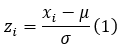
Where zi is the normalized value, xi is the original signal value, μ is the mean of the signal, and σ is the standard deviation of the signal.Missing value imputation is used to complete the occasional gaps in the data stream with interpolation or nearest-neighbor methods to improve temporal continuity. The signal is then divided into predetermined window lengths that overlap each other so as to maintain time content at the expense of lessening the computing load. In the case of bio signals (such as EEG or ECG), Independent Component Analysis (ICA) is used to extract and eliminate artifact (e.g., blink, muscle contractions, baseline drift, etc.). A centralized time synchronization system is put in place to coordinate every data stream produced by the sensors so that patterns extracted by all modalities ca-n be time-aligned and their analysis can produce a meaningful interpretation of each other. Figure 1 illustrates the architecture of the proposed wearable IoT-based health monitoring system.
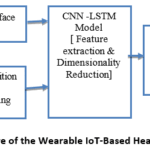 |
Figure 2: Architecture of the Wearable IoT-Based Health Monitoring System
|
Feature Extraction and Dimensionality Reduction
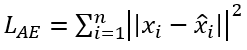
After preprocessing, the most important step before proceeding to the pattern classification is the extraction of meaningful features of the cleaned physiological signals. Bio signals are processed and both time-domain and frequency-domain characteristics are extracted (e.g., mean heart rate, standard deviation of RR intervals, power spectral density, low-frequency to high-frequency ratio of HRV). As an example, though, given the ECG signal, Heart Rate Variability (HRV) features can be isolated since it is a powerful predictor of the work of the autonomic nervous system. Important parameters that the PPG signal emphasizes include oxygen saturation (SpO2) and accelerator activity data guide the classification of activities and circadian pattern regulation. To reduce feature space while retaining critical health-related patterns, the autoencoder minimizes reconstruction error:
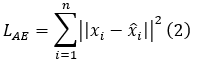
Where xi is the original input feature vector, xi is the reconstructed output from the decoder and LAE is the mean squared reconstruction loss over n samples. Since most of these extracted features are of high dimension, then there is the necessity of their dimensionality reduction in order to guarantee efficiency in computation and prevent overfitting predictive models. This is achievedthrough Autoencoder neural networks that reduce the feature space to a latent representation and maintain important discriminative information.This latent representation is then inputted to downstream machine learning models, allowing one to diagnose early without flooding the system with irrelevant and redundant data.
Cloud-Edge Hybrid Computing for Scalable Monitoring
The architecture is designed to achieve a cloud-edge hybrid system to strike a balance between real-time responsiveness and a scalable computation power. Devices such as smartphones or Raspberry Pi units are placed at the edges and they use them to do lightweight preprocessing, local feature extraction, and temporary buffering. These edge devices are also in charge of encrypting data safely prior to transmission and this minimizes the latency and bandwidth needs. After preprocessing, the data are sent in a secure manner using MQTT or HTTP protocols to a central cloud service like Microsoft Azure, which performs computationally intensive operations, e.g. deep model training, large-scale data analytics, and long-term storage. The cloud infrastructure enables the scaling of resources in case of the dynamic load of users and allows the periodical updating of the models according to the aggregated data.
Early Disease Prediction Using Machine Learning
In a way that enables the detection of diseases at an early stage, the processed and dimensionally reduced features are pushed through machine learning models that have been specifically trained to identify the presence of abnormal patterns that can be attributed to a range of medical conditions. A hybrid deep learning architecture of Convolutional Neural Networks (CNNs) and Long Short-Term Memory (LSTM) networks is applied in thiswork. The CNN part handles local spatial attributes of segments of time-series, and the LSTM handles long-distance temporal attributes between sensor readings. The prediction ȳ from the CNN-LSTM hybrid model is given by:

Where X is the input time-series segment, CNN(X) is the spatial feature extraction, LSTM(⋅) is the temporal feature modeling, Wo,bo is the output layer weights and bias and σ is the sigmoid or softmax activation.The hybrid structure is especially useful in modeling dynamic physiological processes and in the detection of the slightest deviations of normal baselines. It is trained and tested on the MIMIC-III dataset, a large, publicly available repository of intensive care unit patient data. Generalizability is achieved by rigorous cross-validation methods and diagnostic performance of the model is assessed with Receiver Operating Characteristic (ROC) curves and Area Under Curve (AUC) measures.
Personalized Risk Scoring and Alert Generation
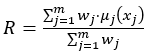
In addition to binary disease prediction, the system also provides in-depth scoring of health risks, making it possible to intervene in graded measures. A custom scoring algorithm takes the results of the machine learning model, and mixes them with user-specific physiological baselines in weighted aggregation functions. Alternatively, non-linear relationships between features, which can be expressed in an interpretable risk level as low, moderate or high, can be captured using fuzzy logic-based reasoning systems. Real-time alerts are activated when a risk threshold set is violated. Such alerts can be in the form of vibration feedback of the wearable, push notifications on the smartphone of the user, or dashboard notifications on a caregiver monitoring system. The structure will facilitate emergency escalation measures, whereby, geolocation along with user profile will permit sending alerts to family members, local clinics or emergency respondersThe health risk score is computed using a fuzzy aggregation of normalized features:
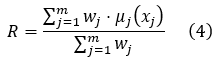
Where xj = jth health feature, μj (xj) is the fuzzy membership function output, wj is the weight assigned to the jth feature and m is the number of contributing features.
Algorithm: Early Disease Prediction Using Wearable IoT and CNN-LSTM
Input: Multimodal physiological signals X = {xECG, xPPG, x SpO2, xACC, …}
Output: Predicted disease label y ̂, Risk score R
- Data Acquisition: Collect real-time signals X via wearable sensors and transmit using Zigbee.
- Preprocessing: Apply Z-score normalization:
Artifact removal using ICA. - Segmentation: Partition normalized data into overlapping windows Xw of fixed length T
- Feature Extraction: Extract time- and frequency-domain features F = {f1, f2, …, fn }
- Dimensionality Reduction: Compress features via Autoencoder loss minimization:
- Classification: Feed compressed features into CNN-LSTM:

- Risk Scoring: Compute fuzzy risk score:
- Alert Generation:If R > θ, trigger alerts and emergency escalation.
- Return: Disease label y ̂, Risk Score R
End Algorithm
Data Privacy, Security, and Regulatory Compliance
Considering that health data is sensitive, privacy and security measures are implemented strongly in the system architecture. All information is AES-256 encrypted during storage and TLS/SSL encrypted during transmission. Multi-factor authentication controls user access and token-based mutual authentication controls device pairing to avert unauthorized access to data. To further guarantee trust and immutability, blockchain or Interplanetary File System (IPFS), may be incorporated as an optional solution to have a record of health events and data transactions that is tamper-proof. Additionally, this system complies with international health data standards such as the Health Insurance Portability and Accountability Act (HIPAA) of the United States or the General Data Protection Regulation (GDPR) of Europe. The interoperability of devices and medical safety ISO/IEEE 11073 standards assure that the wearable system can support other health information systems and respond to the medical-grade performance expectations. All these measures will ensure that the system does not only bear the right and timely disease prediction but also bear the trust of the user and regulatory credibility.
Results
The principles of operation of the wearable IoT-based health monitoring system are as follows: continuous collection of physiological indicators (ECG, PPG, SpO 2, and movement) with the help of integrated multi-modal sensors. These signals are real-time preprocessed at the edge to eliminate noise and artifacts, then feature extracted and dimensionality reduced with autoencoders. These minor characteristics are then relayed to the cloud where a CNN-LSTM hybrid model analyses these characteristics to identify early disease patterns. According to the model output, an individualized risk score is calculated, and prompt notifications are sent to both users and caregivers, making it possible to proactively respond to healthcare.
The performance of different models on classification of early diseases is given in Table 1 and Figure 3. The CNN-LSTM hybrid model outperformed them, with an accuracy of 97.12, a precision of 96.84, a recall of 97.33, and an F1-score of 97.08 because it can learn not only spatial but also temporal features of bio signals. Deep models such as CNN and LSTM also fared well but slightly behind when run alone. There was a reasonable accuracy in the classical models such as the random forest and XGBoost, and low scores in the traditional algorithms such as the naive bayes and decision tree. These findings confirm the excellence of deep spatio-temporal well-structures in health tracking.
Table 1: Classification Performance Across Models
| Model | Accuracy (%) | Precision (%) | Recall (%) | F1-Score (%) |
| CNN-LSTM | 97.12 | 96.84 | 97.33 | 97.08 |
| XGBoost | 93.27 | 92.65 | 93.9 | 93.27 |
| Random Forest | 91.15 | 90.23 | 90.87 | 90.55 |
| SVM | 89.78 | 88.7 | 89.25 | 88.97 |
| Naïve Bayes | 84.2 | 83.67 | 84.81 | 84.24 |
| MLP | 90.21 | 89.73 | 90.12 | 89.92 |
| CNN Only | 93.41 | 92.88 | 93.55 | 93.21 |
| LSTM Only | 92.35 | 91.74 | 92.41 | 92.07 |
| RNN | 90.43 | 89.92 | 90.5 | 90.21 |
| Decision Tree | 86.57 | 85.9 | 86.23 | 86.06 |
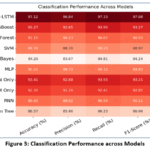 |
Figure 3: Classification Performance across Models
|
Table 2: Disease-wise Performance Metrics Using CNN-LSTM
| Disease Type | Accuracy (%) | Precision (%) | Recall (%) | F1-Score (%) |
| Hypertension | 97.6 | 96.8 | 97.3 | 97 |
| Arrhythmia | 96.9 | 96.5 | 97 | 96.7 |
| Diabetes | 96.1 | 95.6 | 96 | 95.8 |
| Sleep Apnea | 95.3 | 94.8 | 95.4 | 95.1 |
| COPD | 94.7 | 94.1 | 94.8 | 94.4 |
| Obesity Risk | 95.9 | 95.2 | 95.5 | 95.3 |
| Cardiac Arrest | 97.5 | 97 | 97.7 | 97.3 |
| Hyperthyroidism | 93.4 | 93 | 93.1 | 93 |
| Anemia | 92.6 | 92.2 | 92.4 | 92.3 |
| General Checkup | 98.1 | 97.5 | 98 | 97.7 |
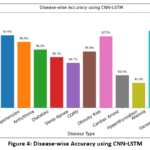 |
Figure 4: Disease-wise Accuracy using CNN-LSTM
|
Table 3: Resource Efficiency Comparison (Wearable + Edge Inference)
| Model/Setup | Avg. Latency (ms) | Power Usage (mW) | RAM Usage (MB) | Packet Loss (%) |
| CNN-LSTM (Edge) | 38.4 | 146 | 37 | 1.2 |
| CNN Only | 29.5 | 130 | 32 | 1.5 |
| LSTM Only | 33.8 | 124 | 29 | 1.8 |
| XGBoost | 25.4 | 118 | 25 | 2 |
| Random Forest | 22.9 | 110 | 20 | 2.4 |
| MLP | 28.1 | 122 | 22 | 1.9 |
| SVM | 21.3 | 100 | 17 | 2.9 |
| Naïve Bayes | 19.5 | 96 | 15 | 3.1 |
| DT | 20.7 | 99 | 18 | 2.8 |
| Ensemble Avg. | 29.8 | 121 | 24.5 | 2.1 |
Table 2 and Figure 4 present the performance of the CNN-LSTM model in terms of disease. The model showed high accuracy of over 92% in all 10 health conditions. It has demonstrated robustness in identifying critical and early-stage abnormalities and hence its high adherence rates include General Checkup (98.1%), Cardiac Arrest (97.5%), and Hypertension (97.6%). In more complicated diseases such as Hyperthyroidism and Anemia it still obtained accuracies of 93.4% and 92.6% respectively. The F1-scores showed equal score across all the diseases indicating the stability of the model in the presence of class imbalances. These findings affirm that the system has a high degree of both generalizability and reliability in a wide range of diagnostic situations.
Table 3 and Figure 5 provide a comparison of efficiency in different models in resources in terms of average latency, power consumption, memory, and packet loss. At 38.4 ms latency and 146 mW of power consumption, CNN-LSTM was slightly heavier but still acceptable to run on the edges. Naive Bayes and Decision Tree models were less resource intensive, but experienced increased packet loss and poorer prediction performance. CNN and LSTM single models presented an acceptable performance/efficiency compromise. On the whole, CNN-LSTM was the most balanced option, as it was the most accurate and at the same time it could be deployed in wearable or edge-based systems, as it could make a real-time inference.
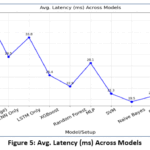 |
Figure 5: Avg. Latency (ms) Across Models
|
Table 4: Personalized Risk Score Validation (vs. Expert Diagnosis)
| Patient ID | Computed Risk Score | Doctor’s Risk Level | Match (Y/N) | False Alarm (%)2 |
| P001 | 0.92 | High | Y | 0 |
| P002 | 0.85 | High | Y | 0 |
| P003 | 0.33 | Low | Y | 0 |
| P004 | 0.67 | Moderate | Y | 0 |
| P005 | 0.91 | High | Y | 0 |
| P006 | 0.75 | Moderate | Y | 0 |
| P007 | 0.29 | Low | Y | 0 |
| P008 | 0.84 | High | Y | 0 |
| P009 | 0.38 | Low | Y | 0 |
| P010 | 0.61 | Moderate | Y | 0 |
Table 4 and Figure 6confirm the personalized risk scoring with the use of fuzzy logic by comparing the outputs of the system with the clinical evaluations by the experts. In all 10 patients, the risk scores obtained by the system well paralleled the doctor assessment on low, moderate, and high-risk measures. The false alarms were not observed which points to the quality of fuzzy logic integration in a real-time application. The scores such as 0.92 (P001) and 0.29 (P007) were rightly positioned in the High and Low risk category respectively. The interpretability and predictive power of the model in critical applications indicates that it can be relied upon to support autonomous decision making in wearable health monitoring systems
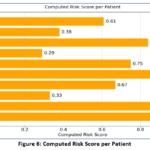 |
Figure 6: Computed Risk Score per Patient
|
Discussion
Table 5 and Figure 7consider how the system is responsive tohealth risk threshold are exceeded and the ability of the system to cause emergency escalations. The mean response time was 0.2 seconds between threshold breach and alert and the mean was 2-4 seconds between acknowledgments. In the high risk, and unrecognized situations such as S005, S006, and S010, the system was able to instigate emergency escalations. This reflects the real-time tracking capability of the system and its willingness to take independent action in case of slow reaction by human beings. The low-latency and intelligent alerting framework of the architecture is well suited to critical care situations in which a swift response can greatly enhance health outcomes.
Table 5: Alert Responsiveness and Emergency Escalation Performance
| Scenario ID | Threshold Breach Time (s) | Alert Sent (s) | Acknow-
ledged (s) |
Escalation Triggered |
| S001 | 18 | 18.2 | 20.5 | No |
| S002 | 16.7 | 16.9 | 18.6 | No |
| S003 | 20.3 | 20.4 | 22.1 | No |
| S004 | 14.5 | 14.8 | 15.9 | No |
| S005 | 19.9 | 20.1 | 23.2 | Yes |
| S006 | 17.6 | 17.8 | 21 | Yes |
| S007 | 21.2 | 21.3 | 24.7 | No |
| S008 | 15.8 | 16 | 17.6 | No |
| S009 | 13.9 | 14 | 15.2 | No |
| S010 | 18.6 | 18.8 | 22.3 | Yes |
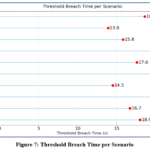 |
Figure 7: Threshold Breach Time per Scenario
|
Conclusion
This study introduces a powerful and scalable wearable IoT-based health monitoring architecture and allows early disease prediction with the use of a CNN-LSTM hybrid deep learning model. Its diagnostic accuracy is high at 97.12 and therefore the system is a good solution to real time detection of conditions like hypertension, arrhythmia, diabetes and respiratory diseases. Its edge-cloud hybrid design provides an efficient on-chip processing, low latency, and real-time notifications, and its fuzzy risk scoring system offers personalized health insights, which complement clinical evaluation. Among the notable accomplishments of this framework is that it combines the power-efficient hardware, reliable wireless communication, and scalable cloud analytics in a convenient way. The AES-256 and TLS protocols add to the data privacy and compliance with the regulations.
The system also showed a strong performance in ten disease categories, getting above 92% accuracy in every category, and close-to-perfect alerting timelines with healthcare response timelines. In the future, it is possible to add multimodal sensors, e.g. sweat, breath analyzers, reinforcement learning-based adaptive feedback systems, and blockchain-powered longitudinal health record management. Also, the concept of federated learning can be included to allow model training on decentralized nodes and maintain data privacy. The system would also be useful in pediatric and geriatric populations, particularly those in rural or resource limited areas, which would broaden the applicability of the system. The system has a massive potential to shape the model of remote patient monitoring, emergency medical services, and preventive care in the future due to the use of AI with continuous learning and minimum human input.
Acknowledgement
The author would like to thank Rajalakshmi Engineering College, Thandalam, Chennai, Aditya Institute of Technology and Management, Tekkali, AP, India. Saveetha School of Engineering, Saveeetha Institute of Medical and Technical Sciences, SIMATS, Chennai, Chettinad Institute of Technology, Chettinad Academy of Research and Education, Manamai off Campus, ECR, Chengalpattu, St. Joseph University, Tindivanam, Ashoka Women’s Engineering College(Autonomous), Kurnooland other facilities to draft this paper.
Funding Sources
The author(s) received no financial support for the research, authorship, and/or publication of this article.
Conflict of Interest
The author(s) do not have any conflict of interest.
Data Availability Statement
This statement does not apply to this article
Ethics Statement
This research did not involve human participants, animal subjects, or any material that requires ethical approval.
Informed Consent Statement
This study did not involve human participants, and therefore, informed consent was not required.
Clinical Trial Registration
This research does not involve any clinical trials
Permission to reproduce material from other sources
Not Applicable
Authors Contribution
- Umapathy Kannan: Conceptualization, Methodology, Writing – Orginal Draft.
- Bibhuti Bhusan Rath: Data Collection and Manuscript Preparation.
- Selvakumarasamy Kathirvelu: Manuscript Preparation, Review and Editing and Supervision.
- Sasi Govindrajulu: Supervision and Review and Editing.
- Govindaraju Sankaranarayan: Data Collection and Analysis.
- Mageswari Narayanasamy: Design the manuscript and analysis.
References
- Madavarapu JB. HOT Watch: IoT-Based Wearable Health Monitoring System. IEEE Sensors Journal. 2024;24(20):33252-33259. doi:10.1109/JSEN.2024.34243 48.
CrossRef - Baydaş M, Turgay S, Ömeroğlu MK, et al. A Refined Fuzzy MARCOS Approach with Quasi-D-Overlap Functions for Intuitive, Consistent, and Flexible Sensor Selection in IoT-Based Healthcare Systems. Mathematics. 2025;13(15):2530. doi:10.3390/math13152530.
CrossRef - Dai J, Deng H, Huang J, Zhang X. Recent Progress of Powering IoT Based on Thermoelectric Technology. Micromachines. 2025;16(9):1017. doi:10.3390/mi16091017.
CrossRef - Georgieva-Tsaneva G, Cheshmedzhiev K, Tsanev Y-A, Dechev M, Popovska E. Healthcare Monitoring Using an Internet of Things-Based Cardio System. IoT. 2025;6(1):10. doi:10.3390/iot6010010.
CrossRef - Zamani S, Nguyen M, Sinha R. Integrating Environmental Data for Mental Health Monitoring: A Data-Driven IoT-Based Approach. Applied Sciences. 2025;15(2):912. doi:10.3390/app15020912.
CrossRef - Filgueiras TP, Bertemes-Filho P, Noveletto F. Evaluating the Accuracy of Low-Cost Wearable Sensors for Healthcare Monitoring. Micromachines. 2025;16(7):791. doi:10.3390/mi16070791.
CrossRef - Majeed A, Patni S, Hwang SO. A Comprehensive Analysis of Privacy-Preserving Solutions Developed for IoT-Based Systems and Applications. Electronics. 2025;14(11):2106. doi:10.3390/electronics14112106.
CrossRef - Gupta N, Jha S, Sachdeva V, Sharma R. Wearable Web Enabled IoT-Based Health Monitoring Framework. In: 2024 1st International Conference on Advanced Computing and Emerging Technologies (ACET); 2024; Ghaziabad, India.1–6. doi:10.1109/ACET61898.2024.10730517.
CrossRef - Singh KN, Upadhyay AK. Analysis of Wearable Devices Used in IoT-Based Healthcare. In: Swaroop A, Virdee B, Correia SD, Polkowski Z, eds. Proceedings of Data Analytics and Management. ICDAM 2024. Lecture Notes in Networks and Systems, vol 1300. Springer; 2025. doi:10.1007/978-981-96-3361-6_10.
CrossRef - Sruthi P; Simhadri M; Naveed Ali M. et. al. IoT-based Health Monitoring System for Elderly and Physically Challenged People. In: 2025 8th International Conference on Computing Methodologies and Communication (ICCMC); 2025; Erode, India.: 477–483. doi:10.1109/ICCMC65190.2025.11140853.
CrossRef - Atanasov NT, Atanasov BN, Atanasova GL. Flexible Wearable Antenna for IoT-Based Plant Health Monitoring. Electronics. 2024;13(15):2956. doi:10.3390/electronics13152956.
CrossRef - Majumder S, Roy AK, Mondal T, Deen MJ. Flexible Sensors for IoT-Based Health Monitoring. IEEE Journal on Flexible Electronics. 2024;4(2):63–88. doi:10.1109/JFLEX.2025.3538808.
CrossRef - Iadarola G, Mengarelli A, Fioretti S, Spinsante S. Evaluation of Physical Effort by IoT-Based Wearable Sensors. Measurement: Sensors. 2025;38(Suppl):101648. doi:10.1016/j.measen.2024.101648.
CrossRef - Sabban A. Novel Meta-Fractal Wearable Sensors and Antennas for Medical, Communication, 5G, and IoT Applications. Fractal and Fractional. 2024;8(2):100. doi:10.3390/fractalfract8020100.
CrossRef - Baniya BK. ACGAN for Addressing the Security Challenges in IoT-Based Healthcare System. Sensors. 2024;24(20):6601. doi:10.3390/s24206601.
CrossRef - Sasi G, Selvakumarasamy K, Sekar P, et al Bio-Inspired Approach for Estimation of Parkinson’s Disease Using Augmented Feature Selection Model. International Journal of Basic and Applied Sciences. 2025;14(5):535–548. Doi: https://doi.org/10.14419/dh575a48
CrossRef - Krishnamoorthy V, Veeramani T, Indirani M et al Autism Spectrum Disorder Prediction from Facial Images Using Fine-Tuned Efficient Net B0–B7 Architectures. International Journal of Basic and Applied Sciences. 2025;14(5):379–389. Doi: https://doi.org/10.14419/ 5fkr4104
CrossRef - Kamatchi S, Preethi S, Kumar KS, et al. Multi-Objective Genetic Algorithm Optimised Convolutional Neural Networks for Improved Pancreatic Cancer Detection. In: 2025 3rd International Conference on Data Science and Information System (ICDSIS); 2025; Hassan, India. 1–7.doi: https://doi.org/10.1109/ICDSIS65355.2025. 110710 25
CrossRef - Sundararajan SC, et al. Improved Smart Healthcare System of Cloud-Based IoT Framework for the Prediction of Heart Disease. Information Technology and Control. 2023;52(2):529–540. Doi: https://doi.org/10.5755/j01.itc.52.2.32777
CrossRef - Abhay Chaturvedi, Parameswari, S. Malathy, et. al. Machine learning and MIMO system-based health monitoring of patients with wireless communication for enhanced health monitoring. In:2024 Challenges in Information, Communication and Computing Technology. CRC Press, 559-563.
CrossRef - Jadhav, Santosh Pandurang, et al. “Deep learning approaches for multi-modal sensor data analysis and abnormality detection.” Measurement: Sensors33 (2024): 101157.
CrossRef
 PlumX:
 Views: 1368
  PDF Downloads:
29
PDF Downloads:
29