GC-MS Characterization and Biomedical Prospects of Essential Oils from Three Salvia Spp.
 , Tetiana Gontova2, Mariana Chubka3, Iryna Krut1, Mariia Svyshch1and Yurii Shanaida4
 1Department of Pharmacognosy and Medical Botany, I. Horbachevsky Ternopil National Medical University, Ternopil, Ukraine
2Department of Pharmacognosy and Nutriciology, National University of Pharmacy, Kharkiv, Ukraine
3Department of Postgraduate Education and Professional Development of Pharmacists, I. Horbachevsky Ternopil National Medical University, Ternopil, Ukraine
4Department of Biotechnical Systems, Ternopil Ivan Puluj National Technical University, Ternopil, Ukraine
Corresponding author E-mail: shanayda@tdmu.edu.ua
Download this article as:
ABSTRACT:This study aimed to analyze the volatile compound compositions of three cultivars of Salvia spp. (Salvia officinalis 'Maxima', Salvia farinacea ‘Victoria Blue’, and Salvia yangii ‘Blue Steel’) grown in Ukraine, with a focus on their chemotaxonomic features. To the best of our knowledge, the essential oil compositions of the above-mentioned Salvia cultivars are presented herein for the first time. Based on their key gas chromatography-mass spectrometry (GC-MS) characteristics, 49 volatile compounds were identified in the essential oil of Salvia officinalis 'Maxima', 41 in Salvia farinacea ‘Victoria Blue’, and 32 in Salvia yangii ‘Blue Steel’. The essential oils of all three species are represented mainly by monoterpenoids. Among the oxygenated monoterpenoids, 1,8-cineole was the major compound found in the essential oils of Salvia yangii ‘Blue Steel’ (16.34%) and Salvia officinalis 'Maxima' (14.26%). Cis-salvene, an acyclic monoterpene hydrocarbon, was the key component of Salvia farinacea ‘Victoria Blue’ (12.68%) and Salvia yangii ‘Blue Steel’ (11.51%). The monocyclic monoterpene D-limonene was exclusively identified in the essential oil of Salvia farinacea ‘Victoria Blue’ (12.01%). Among the bicyclic monoterpenoids, α-thujone and borneol were prominent constituents in both Salvia farinacea ‘Victoria Blue’ and Salvia officinalis 'Maxima.' Meanwhile, such bicyclic monoterpenoids as α- and β-pinene were found in significant quantities across all three studied cultivars. It was found that the studied taxa exhibit substantial differences in the qualitative composition of their minor components. Based on the ratio of the predominant compounds in the essential oils, the certain chemotypes of the studied taxa were determined. Considering the proven therapeutic properties of the dominant components of essential oils, the studied taxa could serve as valuable sources of phytosubstances for the development of new medicinal herbal products.
KEYWORDS:Chemotaxonomic peculiarities; Essential oil; Gas chromatography-mass spectrometry; Sage; Terpenoids; Volatile compounds
Introduction
The Mint (Lamiaceae Martinov) family is one of the largest families of flowering plants, encompassing over 7,000 species distributed worldwide.1 Its largest subfamily is Nepetoideae, which includes 105 genera and 3,600 species. Some of the best-known genera are Salvia L., Thymus L., Satureja L., Ocimum L., Mentha L., and Lavandula L.1-3
The genus Sage (Salvia) includes about 1,000 species of herbaceous and semi-woody plants distributed around the globe. 4-8 Species within this genus are recognized for their diverse morphological characteristics, particularly their amazing inflorescences. As it was summarized recently, some Salvia species are economically significant as sources of medicine, spices, and flavorings, while others are cultivated for ornamental purposes.8,9 Various studies has shown that Salvia species possess significant health benefits, including antioxidant, anti-inflammatory, astringent, antimicrobial, anticancer, and antidiabetic properties.10-12 Ornamental Salvia varieties and cultivars are particularly prized for their diverse fragrances and vibrant colors, making them popular choices for gardens and flower beds.13 They are also attracting the attention of scientists in terms of their chemical composition and potential medicinal properties.
Plants in the genus Salvia accumulate various secondary metabolites, such as terpenoids, flavonoids, and phenolic acids.14 These compounds exhibit a wide range of biological activities and are utilized in the pharmaceutical industry due to their therapeutic properties, as well as in the food industry as natural preservatives and additives. However, only a few Salvia spp. have been investigated comprehensively from the phytochemical point of view. The primary challenge researchers face is selecting suitable phytochemical markers for the quality control of herbal drugs.15,16
Terpenoids, especially the volatile compounds, are fundamental secondary metabolites in Salvia species and play a crucial role in their biological properties.8, 17-19 While some studies have focused on specific Salvia species, the majority have concentrated on those with established medicinal uses or commercially available raw materials. Certain species of the Salvia genus are known to be valuable sources of essential oils used in medicine, cosmetics, and perfumery. It is estimated that the production volume of essential oil from Pharmacopoeial species (Salvia officinalis, S. sclarea, and S. lavandulifolia) reaches several tons per year.20,21
As it is known, the production and accumulation of bioactive secondary metabolites in plants are influenced by both genetic and environmental factors. Essential oils are secondary metabolites — substances that a plant produces to protect itself from stressful factors, both abiotic and biotic. Therefore, any change in the environment causes essential oil-bearing plants to change their chemical composition.23 Thus, it is important to compare the essential oil content and composition of different sage taxa under the same cultivation conditions. To obtain essential oil from a particular Salvia spp. cultivar with stable medicinal properties, it is not enough to simply choose the right variety (genotype); it is also necessary to strictly control the geographical area and cultivation condition and harvest the plants at a clearly defined phenophase.24
Nowadays, it is important to highlight the lack of comparative chromatographic analyses of various Salvia cultivars grown under uniform environmental conditions. This gap in research underscores the need for more comprehensive studies in this area. In our ongoing comparative research on phytochemicals from medicinal and aromatic plants, we selected three taxa of Salvia to examine the essential oil compositions of their leaves using the GC-MS method. The studied taxa include Salvia officinalis ‘Maxima’, Salvia yangii ‘Blue Steel’, and Salvia farinacea ‘Victoria Blue’; additionally, we established the chemotypes of the studied cultivars. In this context, the abovementioned cultivars were investigated for the first time.
Materials and Methods
Plant raw material
The plants (Salvia officinalis ‘Maxima’, Salvia yangii ‘Blue Steel’, and Salvia farinacea ‘Victoria Blue’) were grown in experimental plots located in the Ternopil region of Ukraine. Voucher specimens of these plants are stored at the Department of Pharmacognosy and Medical Botany at I. Horbachevsky Ternopil National Medical University (Ternopil, Ukraine). The leaves were collected during the flowering period in June 2026 and then were dried in the shade at temperatures not exceeding 35°C.
GC-MS analysis
For the analysis of volatile compounds in the studied raw materials, we employed gas chromatography-mass spectrometry (GC-MS). An Agilent Technologies 6890 gas chromatograph, equipped with an HP-5ms capillary column and a mass spectrometric detector, was used for this analysis.6 Tridecane served as the internal standard.
Results
Based on their mass spectra and retention times, 41 volatile compounds were identified in the essential oil of Salvia farinacea ‘Victoria Blue’, 32 in Salvia yangii ‘Blue Steel’ and 49 in Salvia officinalis ‘Maxima (Table 1, Figures 1-3).
Table 1: Volatile components of the studied Salvia cultivars revealed by GC-MS
|
Compound |
Retention time,
min |
Content (%) | ||
| Salvia farinacea ‘Victoria Blue’ | Salvia yangii ‘Blue Steel’ | Salvia officinalis ‘Maxima’ | ||
| 1 | 2 | 3 | 4 |
5 |
|
Cyclene |
6.5 | – | – | 1.34 |
| Tricyclene | 6.6 | – | 0.27 |
– |
|
α-Thujene |
6.8 | 0.44 | – | 0.99 |
| α-Pinene | 6.9 | 6.92 | 17.23 |
7.14 |
|
1-octene-3-ol |
7.4 | 9.75 | tr | – |
| Camphene | 7.4 | 0.11 | 6.04 |
8.65 |
|
β-Thujene |
7.6 | tr | – | 0.29 |
| β-Pinene | 8.2 | 8.17 | 3.43 |
7.30 |
|
β-Myrcene |
8.6 | 2.42 | 1.78 | 3.44 |
| α-Phellandrene | 8.9 | 0.10 | 0.33 |
0.37 |
|
(+)-3-Carene |
9.1 | – | 4.57 | – |
| 2-Carene | 9.3 | 0.29 | 1.96 |
0.78 |
|
p-Cymene |
9.5 | 0.38 | – | – |
| D-Limonene | 9.7 | 12.01 | – |
– |
|
1,8-Cineole |
9.8 | tr | 16.34 | 14.26 |
| β-Ocimene | 9.9 | 0.73 | 0.39 |
1.16 |
|
γ-Terpinene |
10.5 | – | 5.82 | 1.24 |
| cis-Sabinene hydroxide | 10.7 | 0.16 | – |
0.16 |
|
Linalool oxide |
10.8 | – | – | tr |
| α-Terpinolenе | 11.2 | 0.47 | 0.66 |
0.84 |
|
α-Thujone |
11.8 | 10.58 | 0.27 | 8.77 |
| β-Thujone | 12.0 | 1.51 | – |
2.06 |
|
Cis-Salvene |
12.6 | 12.68 | 11.51 | – |
| Camphor | 12.8 | 0.18 | 0.29 |
9.20 |
|
Isoborneol |
12.9 | – | – | 0.18 |
| trans-Pinocamphone | 13.0 | 0.73 | – |
1.10 |
|
Borneol |
13.2 | 6.44 | 1.59 | 8.28 |
| Terpinen-4-ol | 13.4 | 0.27 | – |
– |
Note: ‘tr’ – the concentration of the component in the sample was less than 0.10%; ‘-‘ – the component was not detected
Table 2: Cont. of Table 1
|
1 |
2 | 3 | 4 |
5 |
|
α-Terpineol |
13.7 | tr | – | 0.15 |
| Myrtenol | 13.9 | 0.50 | – |
0.52 |
|
Verbenone |
14.2 | tr | – | tr |
| Cyclofenchene | 15.1 | – | – |
0.61 |
|
Bornyl acetate |
15.8 | 3.10 | 1.72 | – |
| p-Thymol | 15.9 | – | 0.56 |
– |
|
Tridecane |
16.0 | Inner standard | ||
| α-Terpinene | 17.1 | – | 0.87 |
0.40 |
|
Ylangene |
17.5 | – | – | 0.78 |
| α-Copaene | 17.6 | 0.44 | 0.53 |
1.30 |
|
cis-Muurola-3.5-diene |
17.8 | tr | – | 0.11 |
| 1H-Cyclopropazulene | 18.1 | 0.19 | – |
0.15 |
|
α-Gurjunene |
18.3 | – | tr | 0.32 |
| Caryophyllene | 18.5 | – | 4.20 |
2.03 |
|
β-Copaene |
18.7 | 0.45 | – | 0.80 |
| Maaliene | 18.8 | – | – |
0.39 |
|
Aromandendrene |
18.9 | 3.12 | – | 2.15 |
| Selinene | 19.0 | 0.26 | – |
0.31 |
|
γ-Cadinene |
19.1 | 5.05 | – | 0.14 |
| Humulene | 19.2 | – | 2.34 |
3.98 |
|
Alloaromadendrene |
19.3 | 0.22 | tr | 0.25 |
| γ-Muurolene | 19.5 | 0.87 | 0.12 |
1.11 |
|
Germacrene D |
19.6 | 1.30 | 0.62 | – |
| β-Selinene | 19.7 | – | tr |
0.12 |
|
β-Maaliene |
19.8 | – | 0.22 | 0.92 |
| α-Muurolene | 19.9 | 0.22 | – |
0.19 |
|
δ-Cadinene |
20.1 | – | 0.42 | 0.11 |
| γ-Cadinene | 20.2 | 0.30 | – |
0.34 |
|
Cadina-1(6).4-diene |
20.3 | 1.09 | – | 1.19 |
| β-Panasinsene | 20.7 | – | 0.54 |
– |
|
Spatulenol |
21.3 | – | – | 0.13 |
| Caryophyllene oxide | 21.6 | 1.41 | 1.31 |
1.09 |
|
β-Elemene |
25.1 | 0.64 | – | – |
| Manool | 28.5 | – | – |
0.69 |
|
Total amount |
93.50 | 86.29 |
97.83 |
|
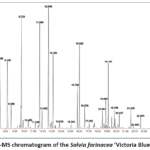 |
Figure 1: GC-MS chromatogram of the Salvia farinacea ‘Victoria Blue’ essential oil Click here to View Figure |
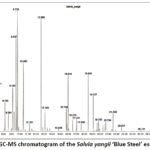 |
Figure 2: GC-MS chromatogram of the Salvia yangii ‘Blue Steel’ essential oil Click here to View Figure |
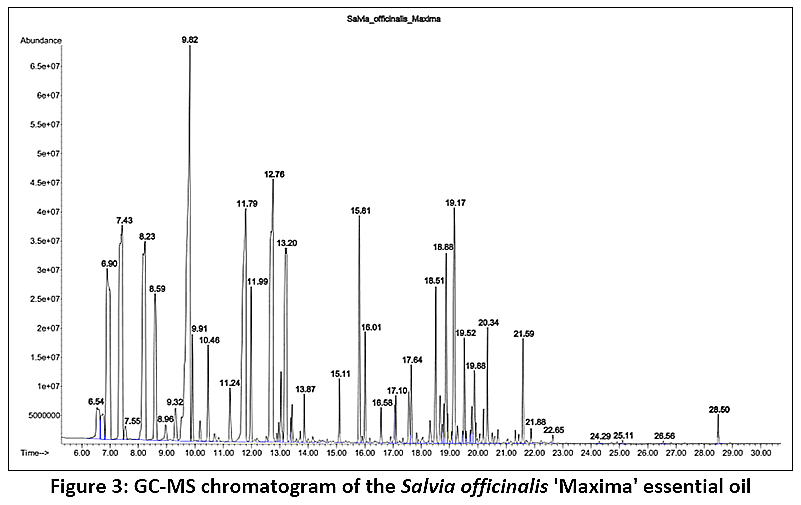 |
Figure 3: GC-MS chromatogram of the Salvia officinalis ‘Maxima’ essential oil Click here to View Figure |
The total content of the identified components was in the range of 86.29-97.83%, depending on the species. As it can be seen from Table 1, the volatiles of the studied cultivars were represented mainly by monoterpene hydrocarbons, oxygen-containing monoterpenoids, sesquiterpene hydrocarbons, and oxygen-containing sesquiterpenoids. The major volatile components of the studied taxa are presented in Figures 4-6.
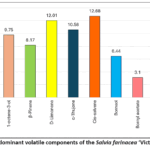 |
Figure 4: Ratio of dominant volatile components of the Salvia farinacea ‘Victoria Blue’ leaves Click here to View Figure |
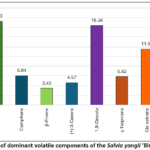 |
Figure 5: Ratio of dominant volatile components of the Salvia yangii ‘Blue Steel’ leaves Click here to View Figure |
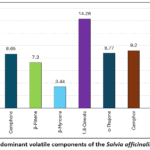 |
Figure 6: Ratio of dominant volatile components of the Salvia officinalis ‘Maxima’ leaves Click here to View Figure |
Among the oxygenated monoterpenoids, 1,8-cineole was the predominant compound found in the essential oils of Salvia officinalis ‘Maxima’ and Salvia yangii ‘Blue Steel.’ Cis-Salvene, an acyclic monoterpene hydrocarbon, was the key component of Salvia farinacea ‘Victoria Blue’ and Salvia yangii ‘Blue Steel’. The monocyclic monoterpene D-limonene was exclusively identified in the essential oil of Salvia farinacea ‘Victoria Blue’. Among the bicyclic monoterpenoids, α-thujone and borneol were prominent constituents in both Salvia farinacea ‘Victoria Blue’ and Salvia officinalis ‘Maxima’. Meanwhile, α-pinene and β-pinene were found in significant quantities across all three studied cultivars. Regarding sesquiterpenoids, the moderate humulene content was found in Salvia farinacea ‘Victoria Blue’ (5.05%) and Salvia officinalis ‘Maxima’ (3.98%), and caryophyllene in Salvia yangii ‘Blue Steel’ (4.20%). Thus, the essential oils of all three taxa are represented mainly by monoterpenoids. It is important to note that the cultivars examined exhibit substantial differences in the qualitative composition of their minor components.
Based on the qualitative composition of major components in the essential oils, the chemotypes of the studied taxa were determined. Thus, the chemotype of the Salvia farinacea ‘Victoria Blue’ is cis-salvene/D-limonene/α-thujone/1-octene-3-ol/β-pinene. Salvia yangii ‘Blue Steel’ is represented by the chemotype α-pinene/1,8-cineole/cis-salvene/camphene, and Salvia officinalis ‘Maxima’ by 1,8-cineole/camphor/α-thujone/camphene/borneol.
Discussion
As has been established by a large number of studies, the content and qualitative composition of essential oils of the Nepetoideae taxa depend on many factors: the place of growth, altitude, climatic conditions (temperature, amount of precipitation), soil composition, genetic features, the phase of vegetation and the plant organ chosen for analysis.24,25 The production of terpenoids is also determined by the influence of the ecological factors, since these compounds serve as a protective mechanism for plants against microorganisms, insects, and herbivorous animals. Therefore, various chemotypes of Salvia spp. reflect the natural chemical variability of essential oils, driven by genetic and environmental factors. Their determination is important for the standardization of raw materials in pharmacy, aromatherapy, and cosmetology, since the qualitative composition of the essential oil directly affects its aromatic, therapeutic, and toxicological properties. Thus, Craft et al. in their studies of Salvia officinalis identified several chemotypes, among which the dominant one was α-thujone/camphor/1,8-cineole.26 Other studies of European populations of Salvia officinalis have described three basic chemotypes: α-pinene/camphor/β-thujone, α-thujone/camphor/1,8-cineole, and β-thujone/camphor.27
It should be noted that, according to the European Pharmacopoeia, 1,8-cineole, α-thujone, and β-thujone are the key markers for quality identification of Salvia officinalis leaves.21 Generally, our studies showed results for the cultivar ‘Maxima’ of Salvia officinalis that are largely consistent with the Pharmacopoeia data.
The main volatile constituents of Salvia officinalis collected in Uzbekistan were cis-thujone (18.6%), camphor (12.2%), 1,8-cineole (8.9%), and α-humulene (6.1%).28 Tundis et al.29 announced that the Southern Italian populations of Salvia officinalis may represent distinct varieties within the species’ variability, located at the southwestern edge of its native distribution area. Chromatographic analyses of the essential oils showed that oxygenated monoterpenes are the predominant class of constituents across all studied populations, with camphor and 1,8-cineole being the most abundant compounds.29 The essential oils isolated from the Salvia officinalis aerial part collected in Croatia were mixtures of terpene compounds, among which dominated α-thujone, β-thujone, 1,8-cineol and camphor.30
Seven populations of Salvia officinalis native to Greece were evaluated using modern metabolomic tools to identify the most promising genotypes.31 Based on the composition of their essential oils, the detected populations were classified into two chemotypes: 1,8 cineole/α-thujone and α-thujone/1,8 cineole. Mot et al.32 identified two distinct chemotypes of Salvia officinalis from Romania based on chemical composition of the essential oils. The first chemotype was characterized by a high dominance of terpenoids, with their content decreasing in the following order: α-thujone, camphor, 1,8-cineole, and β-thujone. In contrast, the second chemotype had a greater abundance of 1,8-cineole, followed by borneol and α-thujone. In samples of Salvia officinalis ‘La Marsa’ leaves collected in the North of Tunisia, the camphor content was 33.61%, and 1,8-cineole was 22.22%.33 Among several Salvia spp. from Greece, Salvia officinalis and Salvia tomentosa exhibited the highest percentages of thujones.7
Generally, the content of thujone among the members of the genus Salvia varies significantly. In particular, 18.83% of α-thujone and 4.46% of β-thujone were found in the essential oil of Salvia officinalis from Tunisia,34 while in samples of the same species from other regions its content was 7.2-27.4%.26, 33 In commercial samples of the Salvia officinalis leaves from several European regions, the content of α-thujone ranged from 3.0 to 34.0%, and β-thujone from 1.5 to12.9%.35 At the same time, α-thujone was the main compound in all commercial Salvia officinalis essential oil samples from Romania, where its concentration was 31.23-52.86%.36
It is worth noting that the bioactive components of such representatives of the sage genus as Salvia farinacea and Salvia yangii have been studied scientifically an order of magnitude less than those of Salvia officinalis. The volatile oil components of Salvia farinacea grown in various Turkish regions with distinct climatic conditions and soil types showed significant variation.37 The primary constituents included caryophyllene, which was found at levels ranging from 4.50% to 18.92% in Çanakkale and from 10.64% to 15.97% in Balıkesir during the first and second years of study. Additionally, β-bisabolene was present in Çanakkale at concentrations of up to 11.74% in both the first and second years.
The aerial part of Salvia farinacea collected from the Dallas Arboretum and Botanical Garden (Texas, USA) was characterized by dominating 1-octen-3-ol (30%) and (Z)-3-hexenal (23%) in the essential oil.13 The flowers of Italian Salvia farinacea were characterized by the highest soluble sugars among phytonutritional compounds investigated in the edible flowers of different plant species.38 Afonso et al. found that the decoction from the aerial parts of Salvia farinacea ‘Victoria Blue’, collected in Portugal, was rich in polyphenols and exhibited significant antioxidant, anti-inflammatory, cytotoxic, and antimicrobial activities.39
Recent findings indicate that mycorrhizal colonization modulates the essential oil profile and antioxidant properties of Salvia yangii and Salvia abrotanoides, which formerly were classified under the genus Perovskia, harvested in Iran. It was due to the adverse effects of water deficit.22 Root colonization showed a positive correlation with relative water content and leaf phosphorus concentration. When considering essential oil compositions, colonization by arbuscular mycorrhizal fungi increased the levels of certain essential oil components, including oxygenated monoterpenes such as camphor, 1,8-cineol, and borneol. In contrast, the main sesquiterpenes, such as α-humulene and E-β-caryophyllene, significantly decreased.22
The revealed predominant volatile compounds of the studied Salvia representatives (see Table 1) has been shown to exhibit prominent biomedical potential. Many of them possess the antioxidant, anti-inflammatory, and antimicrobial effects against various bacteria and fungi.40 The oxygen-containing monoterpene 1,8-cineole also exhibits bronchodilating, analgesic, and proapoptotic effects. 1,8-cineole is used for such conditions as depression, epilepsy, peptic ulcer disease, diarrhea, heart diseases related to the cardiovascular system, and diabetes mellitus.41 Limonene has healing properties that help prevent various chronic and degenerative diseases, including anti-inflammatory, antioxidant, antidiabetic, anticancer, cardioprotective, hepatoprotective, immune modulatory, and anti-genotoxic effects.42 Limonene and α-pinene have shown antioxidant, antidiabetic, and skin-protective properties.43 In general, antioxidant activity of various substances is a key mechanism in suppressing a variety of health disorders.44
Camphor demonstrates an antibacterial/antifungal effect that may be indirectly related to its anti-inflammatory properties (reduction of the inflammatory microenvironment), and the synergism between camphor and 1,8-cineole enhances the antimicrobial effect.45 Camphene exhibits anti-inflammatory and analgesic effects.46
Lee et al.47 investigated the anticancer properties of α-thujone and β-thujone, finding that both compounds inhibited the proliferation of cancer cells and induced cell death through caspase-dependent intrinsic apoptotic pathways. Their research demonstrated the therapeutic potential of α-thujone and β-thujone in treating human ovarian cancer. However, these monoterpene ketones have neurotoxic properties which somewhat limits the scope of their application.48 Borneol possesses various pharmacological properties and is especially beneficial for treating cardio-cerebrovascular disorders.45 Its important role in enhancing drug delivery and increasing bioavailability has garnered significant attention. Moreover, borneol is also widely used in the industries for daily chemicals, fragrances, and flavors.49
Conclussion
The chemical profile of volatiles from the leaves of three cultivars of Salvia spp. (Salvia officinalis ‘Maxima’, Salvia farinacea ‘Victoria Blue’, and Salvia yangii ‘Blue Steel’) cultivated under uniform conditions in the west of Ukraine is reported here for the first time. Based on the ratio of the predominant compounds in the essential oils, certain chemotypes of the studied taxa were determined. Thus, the chemotype of the Salvia farinacea ‘Victoria Blue’ is cis-salvene/D-limonene/α-thujone/1-octene-3-ol/β-pinene. Salvia yangii ‘Blue Steel’ is represented by the chemotype α-pinene/1,8-cineole/cis-salvene/camphene, and Salvia officinalis ‘Maxima’ by 1,8-cineole/camphor/α-thujone/camphene/borneol. The distinct traits of the studied taxa highlight their considerable potential for further research into their bioactivities.
This study highlights the unique chemotaxonomic characteristics of the examined Salvia taxa. Future research on these cultivars should focus on analyzing their polyphenolic compounds abd pharmacological properties. This approach will help establish a foundation for the standardization of the raw materials from these cultivars.
Acknowledgement
The authors would like to express gratitude to the authority of I. Horbachevsky Ternopil National Medical University for their support of the research.
Funding Sources
The author(s) received no financial support for the research, authorship, and/or publication of this article.
Conflict of Interest
The authors declare no conflict of interest.
Data Availability Statement
This statement does not apply to this article.
Ethics Statement
This research did not involve animal subjects, human participants, or any material that requires ethical approval.
Informed Consent Statement
This study did not involve human participants, and therefore, informed consent was not required.
Permission to reproduce material from other sources
Not Applicable.
Сlinical trials
This research does not involve any clinical trials.
Author Contributions
- Mariia Shanaida: conceptualization, methodology, resources, analyses, writing (original draft).
- Tetiana Gontova: reference search, interpretation of the data, writing (original draft).
- Mariana Chubka: interpretation of the data, writing – review & editing.
- Iryna Krut: reference search, interpretation of the data.
- Mariia Svyshch: reference search, interpretation of the data.
- Yurii Shanaida: software (visualization), writing – review & editing.
References
- Harley RM., Atkins S, Budantsev AL, Cantino PD, Conn BJ, Grayer R, Upson T. Labiatae / In J. W. Kadereit (Ed.), Flowering рlants Dicotyledons: Lamiales. Springer Berlin Heidelberg, 2004:167- doi.org/10.1007/978-3-642-18617-2_11
CrossRef - Shanaida M, Pryshlyak A, Golembiovska O. Determination of triterpenoids in some Lamiaceae species. Research Journal of Pharmacy and Technology. 2018;7: 3113- doi:10.5958/0974-360X.2018.00571.1
CrossRef - Moshari-Nasirkani A, Alirezalu A, Alipour H, Amato J. Screening of 20 species from Lamiaceae family based on phytochemical analysis, antioxidant activity and HPLC profiling. Sci Rep. 2023; 9;13(1):16987. doi:1038/s41598-023-44337-7.
CrossRef - Li, B.; Zhang, C.; Peng, L.; Liang, Z.; Yan, X.; Zhu, Y.; Liu, Y. Comparison of essential oil composition and phenolic acid content of selected Salvia species measured by –MS and HPLC methods. Industrial Crops and Products. 2015;69:329-334. doi:10.1016/j.indcrop.2015.02.047.
CrossRef - Kilic O. Chemical Composition of Four Salvia Species from Turkey, a Chemotaxonomic Approach. Essent. Oil Bear. Plants. 2016;19:229-235. doi:10.1080/0972060X.2014.958560
CrossRef - Shanaida M, Zakharko B, Kernychna I, Koval M, Hudz N. Morphological Features and Chemical Composition of Volatile Compounds of Cultivated Salvia nemorosa and Salvia verbenacaL. Biomed Pharmacol J. 2025;18(4):2715-2725. https://dx.doi.org/10.13005/bpj/3288
CrossRef - Tziakas S, Tomou E-M, Fraskou P, Goula K, Dimakopoulou K, Skaltsa H. Characterization of Essential Oils from Seven SalviaTaxa from Greece with Chemometric Analysis. Agronomy. 2025; 15(1):227. https://doi.org/10.3390/agronomy15010227
CrossRef - Kozłowska W, Matkowski A, Zielińska S. Light Intensity and Temperature Effect on Salvia yangii(B. T. Drew) Metabolic Profile in vitro. Front Plant Sci. 2022;13:888509. doi:10.3389/fpls.2022.888509.
CrossRef - Giacomini I, Sarill M, Cocetta V, Montopoli M. Sage (Salvia s) as a multi-target resource for healthy aging: Current evidence and perspectives. Mech Ageing Dev. 2026; 232:112204. doi:10.1016/j.mad.2026.112204.
CrossRef - Ahmad M, Khan MP, Mukhtar A, Zafar M, Sultana S, Jahan S. Ethnopharmacological survey on medicinal plants used in herbal drinks among the traditional communities of Pakistan. J Ethnopharmacol. 2016;184:154-186. doi:10.1016/j.jep.2016.02.039
CrossRef - Shanaida M, Hudz N, Białoń M, et al. Chromatographic profiles and antimicrobial activity of the essential oils obtained from some species and cultivars of the Mentheaetribe (Lamiaceae). Saudi J Biol Sci. 2021;28(11):6145-6152. doi:10.1016/j.sjbs.2021.06.068
CrossRef - Demirpolat A. Essential Oil Composition Analysis, Antimicrobial Activities, and Biosystematic Studies on Six Species of Salvia. Life (Basel). 2023;24;13(3):634. doi:10.3390/life13030634.
CrossRef - Tabanca N, Demirci B, Turner JL, Pounders C, Demirci F, Başer KH, Wedge DE. Microdistillation and analysis of volatiles from eight ornamental Salvia Nat Prod Commun. 2010;5(9):1421-1426. doi:10.1177/1934578X1000500915
CrossRef - Myha M.M., Koshovyi O.M., Gamulia O.V., Ilina T.V., Borodina N.V., Vlasova I. Phytochemical study of Salvia grandiflora and Salvia officinalis leaves for establishing prospects for use in medical and pharmaceutical practice. ScienceRise: Pharmaceutical Science, 2020;23(1):23-28. doi:15587/2519-4852.2020.197299
CrossRef - Desai S, Tatke P. Phytochemical Markers: Classification, Applications and Isolation. Curr Pharm Des. 2019;25(22):2491-2498. doi:10.2174/1381612825666190709203239
CrossRef - Vlasova I., Gontova T., Grytsyk L., Zhumashova G., Sayakova G., Boshkayeva A., Shanaida M., Kоshovyi O. Determination of standardization parameters of Oxycoccus macrocarpus (Ait.) Pursh and Oxycoccus palustris leaves. ScienceRise: Pharmaceutical Science. 2022;3(37):48-57. doi.org/10.15587/2519-4852.2022.260352
CrossRef - Miroliaei M, Aminjafari A, Ślusarczyk S, Nawrot-Hadzik I, Rahimmalek M, Matkowski A. Inhibition of Glycation-induced Cytotoxicity, Protein Glycation, and Activity of Proteolytic Enzymes by Extract from Perovskia atriplicifolia Pharmacogn Mag. 2017;13(Suppl.3):676-683. doi:10.4103/pm.pm_559_16.
CrossRef - Najar B, Mecacci G, Nardi V, Cervelli C, Nardoni S, Mancianti F, Ebani VV, Giannecchini S, Pistelli L. Volatiles and Antifungal-Antibacterial-Antiviral Activity of South African Salvia Essential Oils Cultivated in Uniform Conditions. Molecules. 2021;26(9):2826. doi:10.3390/molecules26092826.
CrossRef - Khodadadi F, Ahmadi FS, Talebi M, Matkowski A, Szumny A, Afshari M, Rahimmalek M. Metabolic and Transcriptomic Approaches of Chitosan and Water Stress on Polyphenolic and Terpenoid Components and Gene Expression in Salvia abrotanoides(Karl.) and yangii. Int J Mol Sci. 2023;24(20):15426. doi:10.3390/ijms242015426.
CrossRef - Tomou EM, Fraskou P, Dimakopoulou K, Dariotis E, Krigas N, Skaltsa H. Chemometric Analysis Evidencing the Variability in the Composition of Essential Oils in 10 SalviaSpecies from Different Taxonomic Sections or Phylogenetic Clades. 2024;29(7):1547. doi:10.3390/molecules29071547.
CrossRef - European Pharmacopoeia, 12th ed.; European Directorate for the Quality of Medicines & HealthCare (EDQM). (2025).
- Afshari M, Rahimmalek M, Sabzalian MR, Szumny A, Matkowski A, Jezierska-Domaradzka A. Mycorrhizal Colonization Modulates the Essential Oil Profile and Enzymatic and Non-Enzymatic Antioxidants to Mitigate the Adverse Effects of Water Deficit in Salvia Perovskia. Biology (Basel). 2022 Dec 2;11(12):1757. doi:10.3390/biology11121757.
CrossRef - Mohammadi YV, Khorshidi J, Nazari F. Fatty Acids Pattern, Essential Oil Content and Constituents of Some Sage Species (Salvia) Native to Iran: Usable in Food Industry. Food Sci Nutr. 2025;13(12):e71308. Published 2025 Nov 30. doi:10.1002/fsn3.71308
CrossRef - Ben Farhat M, Sotomayor JA, Jordan MJ. Salvia verbenaca L. essential oil: Variation of yield and composition according to collection site and phenophase. Biochemical Systematics and Ecology. 2019;82:35-43.https://doi.org/10.1016/j.bse.2018.12.002
CrossRef - Raal, A.; Gontova, T.; Ivask, A.; Orav, A.; Koshovyi, O. Yield, Composition, and Chemotypes of Essential Oils from Origanum vulgare L. Aerial Parts Cultivated in Different European Countries. 2024;14:3046. https://doi.org/10.3390/agronomy14123046
CrossRef - Craft JD, Satyal P, Setzer WN. The Chemotaxonomy of Common Sage (Salvia officinalis) Based on the Volatile Constituents. Medicines (Basel). 2017;4(3):47. doi:10.3390/medicines4030047.
CrossRef - Sharopov FS, Satyal P, Ali NA, Pokharel S, Zhang H, Wink M, Kukaniev MA, Setzer WN. The Essential Oil Compositions of Ocimum basilicum from Three Different Regions: Nepal, Tajikistan, and Yemen. Chem Biodivers. 2016;13(2):241-8. doi:10.1002/cbdv.201500108.
CrossRef - Gad HA, Mamadalieva RZ, Khalil N, Zengin G, Najar B, Khojimatov OK, Al Musayeib NM, Ashour ML, Mamadalieva NZ. GC-MS Chemical Profiling, Biological Investigation of Three Salvia Species Growing in Uzbekistan. 2022;27(17):5365. doi:10.3390/molecules27175365.
CrossRef - Tundis R, Leporini M, Bonesi M, Rovito S, Passalacqua NG. Salvia officinalis from Italy: A Comparative Chemical and Biological Study of Its Essential Oil in the Mediterranean Context. Molecules. 2020 Dec 10;25(24):5826. doi:10.3390/molecules25245826.
CrossRef - Jažo Z, Glumac M, Paštar V, Bektić S, Radan M, Carev I. Chemical Composition and Biological Activity of Salvia officinalis Essential Oil. Plants (Basel). 2023;12(9):1794. doi:10.3390/plants12091794.
CrossRef - Sarrou E, Ganopoulos I, Xanthopoulou A, Masuero D, Martens S, Madesis P, Mavromatis A, Chatzopoulou P. Genetic diversity and metabolic profile of Salvia officinalis populations: implications for advanced breeding strategies. 2017;246(2):201-215. doi:10.1007/s00425-017-2666-z.
CrossRef - Mot MD, Gavrilaș S, Lupitu AI, Moisa C, Chambre D, et al. Salvia officinalis Essential Oil: Characterization, Antioxidant Properties, and the Effects of Aromatherapy in Adult Patients. Antioxidants (Basel). 2022;11(5):808. doi:10.3390/antiox11050808.
CrossRef - Kammoun El Euch, D.B. Hassine, S. Cazaux, N. Bouzouita, J. Bouajila Salvia officinalis essential oil: Chemical analysis and evaluation of antienzymatic and antioxidant bioactivities. South African Journal of Botany.2019;10:253-260. https://doi.org/10.1016/j.sajb.2018.07.010
CrossRef - Khedher MRB, Khedher SB, Chaieb I, Tounsi S, Hammami M. Chemical composition and biological activities of Salvia officinalis essential oil from Tunisia. EXCLI J. 2017;16:160-173. Published 2017 Mar 6. doi:10.17179/excli2016-832
- Raal, A. Orav, T. Ilina, A. Kovalyova, T. Koliadzhyn, Yu. Avidzba, O. Koshovyi. Variation in the composition of the essential oil of commercial Salvia officinalis leaves samples from different countries. Phyton. 2024;93(8):2051-2062. doi:https://doi.org/10.32604/phyton.2024.052790.
CrossRef - Oniga I, Oprean R, Toiu A, Benedec D. Chemical composition of the essential oil of Salvia officinalis from Romania. Rev Med Chir Soc Med Nat Iasi. 2010;114(2):593-595.
- Karayel Hasan Basri A. Study on The Change in the Components of Volatile Oil of Salvia farinacea Grown in Different Environments. Journal of Multidisciplinary Engineering Science and Technology (JMEST). 2018;5(12):9259-9262. https://www.jmest.org/wp-content/uploads/JMESTN42352781.pdf
- Marchioni I, Rodolfi M, Najar B, Ruffoni B, Machado J, Pistelli L. Phytonutritional compounds and antioxidant activity of eight new edible flowers. Nat Prod Res. 2024;38(21):3728-3734. doi:10.1080/14786419.2023.2261140.
CrossRef - Afonso AF, Pereira OR, Fernandes ÂSF, Calhelha RC, Silva AMS, Ferreira ICFR, Cardoso SM. The Health-Benefits and Phytochemical Profile of Salvia apiana and Salvia farinacea Victoria Blue Decoctions. Antioxidants. 2019;8(8):241. doi: 10.3390/antiox8080241.
CrossRef - Rivas da Silva AC, Lopes PM, Barros de Azevedo MM, Costa DC, Alviano CS, Alviano DS. Biological activities of α-pinene and β-pinene enantiomers. 2012;17(6):6305-16. doi:10.3390/molecules17066305.
CrossRef - Hoch CC, Petry J, Griesbaum L, et al. 1,8-cineole (eucalyptol): A versatile phytochemical with therapeutic applications across multiple diseases. Biomed Pharmacother. 2023;167:115467. doi:10.1016/j.biopha.2023.115467
CrossRef - Anandakumar P, Kamaraj S, Vanitha MK. D-limonene: A multifunctional compound with potent therapeutic effects. J Food Biochem. 2021;45(1):e13566. doi:10.1111/jfbc.13566.
CrossRef - El Omari N, Mrabti HN, Benali T, et al. Expediting Multiple Biological Properties of Limonene and α-Pinene: Main Bioactive Compounds of Pistacia lentiscus, Essential Oils. Front Biosci. 2023;28(9):229. doi:10.31083/j.fbl2809229
CrossRef - Kachur O,Fira L,LynkhatskyiP, Fira D,Stechyshyn I. The state of pro- and antioxidant systems in rats with DMH-induced colon carcinogenesis on the background of extracorporeal detoxification. Pharmacia.2021;68(4):941–946. doi:3897/pharmacia.68.e71840
CrossRef - Lee SH, Kim DS, Park SH, Park H. Phytochemistry and Applications of Cinnamomum camphoraEssential Oils. Molecules. 2022;27(9):2695. doi:10.3390/molecules27092695
CrossRef - Gadotti VM, Huang S, Zamponi GW. The terpenes camphene and alpha-bisabolol inhibit inflammatory and neuropathic pain via Cav3.2 T-type calcium channels. Mol Brain. 2021;14(1):166. doi:10.1186/s13041-021-00876-6
CrossRef - Lee JY, Park H, Lim W, Song G. Therapeutic potential of α,β-thujone through metabolic reprogramming and caspase-dependent apoptosis in ovarian cancer cells. J Cell Physiol. 2021;236(2):1545-1558. doi:10.1002/jcp.30086
CrossRef - Radulović NS, Genčić MS, Stojanović NM, Randjelović PJ, Stojanović-Radić ZZ, Stojiljković NI. Toxic essential oils. Part V: Behaviour modulating and toxic properties of thujones and thujone-containing essential oils of Salvia officinalis, Artemisia absinthium L., Thuja occidentalis L. and Tanacetum vulgare L. Food Chem Toxicol. 2017;105:355-369. doi:10.1016/j.fct.2017.04.044
CrossRef - Hu X, Yan Y, Liu W, et al. Advances and perspectives on pharmacological activities and mechanisms of the monoterpene borneol. Phytomedicine. 2024;132:155848. doi:10.1016/j.phymed.2024.155848
CrossRef

Accepted on: 18-09-2026
Second Review by: Dr. Ravi Nandan A P
Final Approval by: Dr Patorn Piromchai