Cytotoxic Constituents from the Stem Bark and Leaves of Cinnamomum Bejolghota: Isolation, Structure Elucidation, and Molecular Docking Studies
 , Lam Hoang2, Nguyen Duc Hieu3and Do Dang Truc An4
 1Hue University, Hue, Vietnam
2University of California Santa Cruz, Santa Cruz, CA, USA
3Edulight Education - Communication Joint Stock Company, Hanoi, Vietnam
4Hanoi - Amsterdam High School for the Gifted, Hanoi, Vietnam
Corresponding author E-mail: phuonglethi.vast@gmail.com
DOI : http://dx.doi.org/10.13005/bpj/3519
Download this article as:

The genus Cinnamomum (Lauraceae) is a rich source of bioactive metabolites, yet the Vietnamese species Cinnamomum bejolghota remains incompletely characterised. This study aimed to characterise the constituents of the stem bark and leaves of C. bejolghota, evaluate their cytotoxicity, and explore their molecular targets by docking. Compounds were isolated by chromatographic methods and identified by spectroscopic analysis. Cytotoxicity was assessed against KB, HepG2, MCF-7 and SK-LU-1 cell lines using the MTT assay. Molecular docking against five protein targets and in silico ADME profiling were performed. Sixteen compounds were obtained, including the steroid ergosta-4,6,8(14),22-tetraen-3-one and the flavonol glycoside afzelin, both reported for the first time in this species. Of the 16 compounds, 14 had been reported by our group in two preliminary communications; only the steroid and the flavonol glycoside are newly described from this species. The bis(dimethoxyphenyl)pyridine alkaloid showed moderate cytotoxicity (IC50 31.1 to 45.9 µM), whereas the steroid was weakly active. Docking indicated that the active alkaloid bound topoisomerase IIα and tubulin more strongly than its inactive analogue, and the β-carboline alkaloid bound monoamine oxidase A as strongly as harmine. C. bejolghota produces a structurally diverse set of metabolites; the integrated cytotoxicity, docking and ADME data provide a rationale for the observed bioactivities and candidates for further study.
KEYWORDS:Alkaloids; Cinnamomum bejolghota; Cytotoxicity; Molecular docking; Phytochemistry
Introduction
Natural products remain a cornerstone of drug discovery, accounting for a large share of approved small-molecule drugs.1,2 The genus Cinnamomum (Lauraceae), comprising over 250 species across South and Southeast Asia, is a prolific source of terpenoids, phenylpropanoids, lignans and flavonoids, whereas alkaloids remain comparatively rare.3,4
Beyond their taxonomic rarity, the pyridine, isoquinoline and β-carboline scaffolds encountered in this genus correspond to privileged structures in medicinal chemistry,5,6 several of which interact with topoisomerases, tubulin and monoamine oxidases.7–9 Establishing which scaffolds occur in a given species, and pairing that knowledge with bioactivity and target-level reasoning, is a useful step toward prioritising leads.
Several Cinnamomum metabolites display notable bioactivity. Cinnamaldehyde induces G1 arrest in HepG2 cells;4 spirodienone neolignans and subamolides from C. subavenium show anti-inflammatory and cytotoxic effects;10 and C. cassia extracts suppress non-small-cell lung cancer proliferation.11
More than 300 compounds have been described from the genus, but fewer than 15 alkaloids were known before the recent reports on this species, making the alkaloid chemistry of Cinnamomum of particular interest.3,4
The pharmacological breadth of the genus is well documented: cinnamaldehyde and related phenylpropanoids exhibit antimicrobial, anti-inflammatory and anticancer effects, several lignans display cytotoxicity against solid-tumour cell lines, and essential-oil constituents show larvicidal and antifungal activity.12,13 Despite this, comprehensive single-collection studies that combine isolation, bioassay and computational target prediction remain scarce for individual species, particularly those native to Vietnam.
Cinnamomum bejolghota (Buch.-Ham. ex Nees) Sweet is a large evergreen tree reaching 20 to 30 m in height, distributed across Vietnam, Nepal, India, Myanmar and southern China. Its aromatic bark is used locally as a substitute for true cinnamon and in traditional preparations for digestive and respiratory complaints, and earlier work showed that its ethyl acetate extract inhibited KB cells, providing the rationale for a detailed phytochemical investigation.14,15
As part of a programme on cytotoxic metabolites from Vietnamese plants, the present authors previously reported, in two short communications, three new pyridine and isoquinoline alkaloids from the stem bark16 and one new β-carboline alkaloid together with one new aromadendrane sesquiterpenoid from the leaves of this collection.17 In total, 14 of the 16 compounds described here were characterised in those preliminary reports; the present study does not claim their re-isolation as new. Rather, its purpose is to provide the first unified and comprehensive metabolite profile of both the bark and the leaves of a single C. bejolghota collection, bringing together data that were previously dispersed across two short papers. To this profile it adds two constituents not previously recorded in the species (CBT10 and CBT11), a complete cytotoxicity screen across four human cancer cell lines, and molecular docking with in silico ADME prediction — analyses that were not performed in the earlier communications. By linking chemistry to bioactivity and to plausible molecular targets, the study offers a more complete account than the preliminary reports and a basis for prioritising future pharmacological work.
Materials and Methods
General and plant material
NMR spectra were recorded on Bruker 500 and 600 MHz instruments and HR-ESI-MS on an Agilent 6530 Q-TOF. The stem bark (950 g) and leaves (1 kg) of C. bejolghota were collected in Dakrong District, Quang Tri Province, Vietnam, in June 2019 and authenticated at the Institute of Ecology and Biological Resources (voucher VN-1450).
Optical rotations were measured on a polarimeter and infrared spectra were recorded as potassium bromide pellets. Column chromatography used silica gel and Sephadex LH-20, and medium-pressure liquid chromatography was performed on pre-packed silica columns; thin-layer chromatography on pre-coated silica plates was used to monitor fractions, with alkaloids detected by Dragendorff’s reagent. All solvents were of analytical or chromatographic grade.
Extraction and isolation
Dried material was extracted with MeOH/NH3 (99:1). An acid–base protocol partitioned the extract into alkaloid-enriched and non-alkaloid fractions, which were separated by Sephadex LH-20, silica gel column chromatography, MPLC and preparative TLC to afford 11 compounds from the bark (CBT1 to CBT11) and 5 from the leaves (CBL1 to CBL5). Full isolation details and spectroscopic data are provided in the Supplementary Material.
Briefly, the air-dried, powdered stem bark and leaves were each macerated with ammoniacal methanol (MeOH containing 1% aqueous NH3, v/v) at room temperature, and the combined filtrates were concentrated under reduced pressure. Each crude extract was suspended in water, acidified, and washed to remove neutral material; the aqueous layer was then basified and extracted to furnish the alkaloid-enriched fraction. Repeated chromatography of these fractions, monitored by thin-layer chromatography and staining with Dragendorff’s reagent for alkaloids, afforded the individual compounds, whose purity was confirmed by NMR before bioassay.
It should be noted that the acid–base protocol enriches basic (alkaloidal) constituents; neutral or acidic compounds partitioned into the non-alkaloid fractions were also chromatographed, but the design does not assume that all cytotoxic principles are basic, and any neutral cytotoxic constituents present at low abundance may not have been recovered.
Percentage yields relative to dry plant material are provided in the Supplementary Material (for example, CBT11 23 mg, 0.0024%; CBT10 2.5 mg, 0.00026%; CBL2 13 mg, 0.0013%).
Cytotoxicity assay
Cytotoxicity against KB, HepG2, MCF-7 and SK-LU-1 cells (ATCC) was determined by the MTT assay18,19 at five concentrations spanning 0.5 to 128 µg/mL, with ellipticine as the positive control. Vehicle controls containing the same dimethyl sulfoxide concentration as the test wells were run in parallel, and absorbance was read after 72 h of exposure. IC50 values were obtained by nonlinear regression and expressed as the mean ± SD of three independent experiments; for comparison across compounds, they were converted from µg/mL to µM using each compound’s molecular weight. Following widely used screening criteria for pure compounds, a compound was regarded as active when its IC50 was at or below 4 µg/mL.20
Of the 16 isolated compounds, 11 were selected for testing on the basis of available quantity, since a full five-point, triplicate assay required at least 2 mg of pure material; the remaining five were obtained in insufficient amounts and were not assayed. No other inclusion or exclusion criterion was applied.
Molecular docking and in silico ADME
Docking used the CB-Dock2 server, which integrates AutoDock Vina with automated cavity detection.21,22 Ligand structures were generated from SMILES with Open Babel and minimised (MMFF94). Targets retrieved from the Protein Data Bank were topoisomerase IIα (1ZXM), tubulin (1SA0), monoamine oxidase A (2Z5X), DYRK1A (3ANR) and aromatase (3EQM). For each run, the cavity matching the known active site (verified by its catalytic residues) was selected. The protocol was validated using ellipticine and harmine as reference binders.23 Drug-likeness and ADME properties were predicted from the optimised structures.24
For each ligand–target pair the five top-ranked cavities were inspected, and the one whose contacting residues coincided with the documented catalytic or substrate-binding residues was retained for interpretation; the most negative Vina score within that cavity was taken as the representative binding affinity. Hydrophobicity, hydrogen-bond donor and acceptor counts, topological polar surface area, the number of Lipinski violations,25 and qualitative gastrointestinal absorption and blood–brain-barrier permeability were derived for the same set of optimised structures.
The software versions used were CB-Dock2 (2022 release, accessed June 2024), Open Babel 3.1.1, AutoDock Vina 1.2.5 (integrated within CB-Dock2), and SwissADME (web version, accessed June 2024). The canonical SMILES strings of all docked ligands, the protein PDB identifiers, and the docking input parameters are provided in the Supplementary Material to permit exact reproduction; no custom code was used.
Results
Identification of constituents
Chromatographic separation of the bark and leaf fractions afforded 16 compounds (Table 1), brought together here as a single profile for the first time. Fourteen of these were characterised in the authors’ two earlier communications16,17 — nine from the bark (including the new alkaloids CBT1–CBT3) and five from the leaves (including the new alkaloid CBL1 and the new sesquiterpenoid CBL2) — and their full spectroscopic data are reproduced in the Supplementary Material rather than re-described here. The two remaining compounds, the steroid ergosta-4,6,8(14),22-tetraen-3-one (CBT10) and the flavonol glycoside afzelin (CBT11), are reported for the first time from C. bejolghota. CBT10 (C28H40O) showed a conjugated tetraene and a 3-ketone consistent with literature data,26 whereas CBT11 displayed kaempferol and α-rhamnose signals characteristic of afzelin.27
Table 1: Compounds isolated from Cinnamomum bejolghota.
|
Code |
Compound | Class | Source | Status |
| CBT1 | 3,4-Bis(3,4-dimethoxyphenyl)pyridine | Alkaloid | Bark |
Ref. 16 |
|
CBT2 |
1-(4-Hydroxybenzyl)-6-hydroxyisoquinoline | Alkaloid | Bark | Ref. 16 |
| CBT3 | 4-(3,4-Dimethoxyphenyl)-2-methylpyridine | Alkaloid | Bark |
Ref. 16 |
|
CBT4 |
Spathulenol | Sesquiterpene | Bark | Ref. 16 |
| CBT5 | 5,7-Di-O-methyl-3′,4′-methylenedioxyflavan-3-ol | Flavonoid | Bark |
Ref. 16 |
|
CBT6 |
3,4-Dimethoxycinnamyl alcohol | Phenylpropanoid | Bark | Ref. 16 |
| CBT7 | 3,4-Dimethoxycinnamaldehyde | Phenylpropanoid | Bark |
Ref. 16 |
|
CBT8 |
Veratric acid | Phenolic acid | Bark | Ref. 16 |
| CBT9 | Veratraldehyde | Aldehyde | Bark |
Ref. 16 |
|
CBT10 |
Ergosta-4,6,8(14),22-tetraen-3-one | Steroid | Bark | This study |
| CBT11 | Afzelin | Flavonol glycoside | Bark |
This study |
|
CBL1 |
3,6-Dimethoxy-9H-pyrido[3,4-b]indole | Alkaloid | Leaves | Ref. 17 |
| CBL2 | 4α,10α-Dihydroxyaromadendrane-13-oic acid | Sesquiterpene | Leaves |
Ref. 17 |
|
CBL3 |
4β,10α-Dihydroxyaromadendrane | Sesquiterpene | Leaves | Ref. 17 |
| CBL4 | Litseachromolaevane A | Sesquiterpene | Leaves |
Ref. 17 |
|
CBL5 |
Curcumin | Polyphenol | Leaves |
Ref. 17 |
CBT10 was obtained as a yellow amorphous powder; its molecular formula C28H40O was established by HR-ESI-MS, and the 1H-NMR spectrum displayed three olefinic resonances of a conjugated ring-B triene together with a trans-disubstituted side-chain double bond and six methyl signals, while the 13C NMR spectrum revealed a ring-A ketone near 202 ppm. These features matched reported data for ergosta-4,6,8(14),22-tetraen-3-one.26
CBT11 was likewise a yellow amorphous powder and the most abundant bark constituent. Its 1H-NMR spectrum showed a para-substituted B-ring, two meta-coupled A-ring protons and an anomeric proton with a small coupling constant indicative of an α-linked rhamnose, together with the rhamnose methyl doublet; the 13C-NMR spectrum contained a flavonol carbonyl near 179 ppm and an anomeric carbon near 103 ppm, consistent with afzelin.27
The planar structures of the new compounds were established by COSY and HMBC correlations, and their relative configurations by NOESY correlations. For the new sesquiterpenoid CBL2, the 4α,10α relative configuration was deduced from key NOESY correlations, and the absolute configuration was inferred by comparison of the specific optical rotation ([α]D +97.7) with those of related aromadendrane sesquiterpenoids; no ECD or X-ray analysis was performed.
The other previously reported constituents comprised phenylpropanoids (CBT6, CBT7), a flavan-3-ol (CBT5), simple aromatic acids and aldehydes (CBT8, CBT9), a sesquiterpene alcohol (CBT4) and the leaf aromadendrane sesquiterpenoids and curcumin (CBL3–CBL5), all identified by comparison of their spectroscopic data with published values.16,17 Their assignments are listed in the Supplementary Material.
Cytotoxicity
Eleven compounds were screened (Table 2). The bis(dimethoxyphenyl)pyridine alkaloid CBT1 was moderately active (IC50 31.1 to 45.9 µM), being most potent against SK-LU-1. The flavan-3-ol CBT5 and the steroid CBT10 were weakly active (IC50 72 to 118 µM), and the remaining compounds were inactive.
Table 2: Cytotoxicity (IC50, µM) of compounds from Cinnamomum bejolghota. Values are IC50 (µM, mean ± SD; n = 3), converted from µg/mL using each compound’s molecular weight. NA: not active at the highest tested concentration (128 µg/mL, ≈ 296–560 µM depending on molecular weight). Ellipticine was the positive control.
|
Compound |
KB | MCF-7 | HepG2 | SK-LU-1 |
| CBT1 | 45.9 ± 2.7 | 42.0 ± 2.1 | 37.0 ± 1.9 |
31.1 ± 2.1 |
|
CBT5 |
118.3 ± 8.0 | 110.7 ± 10.4 | 90.2 ± 3.8 | 95.8 ± 7.8 |
| CBT10 | 117.3 ± 3.3 | 107.8 ± 3.0 | 72.3 ± 0.1 |
NA |
|
CBT2, CBT3, CBT4, CBT11, CBL1–CBL4 |
NA | NA | NA | NA |
| Ellipticine | 1.66 ± 0.20 | 1.33 ± 0.16 | 1.50 ± 0.16 |
1.54 ± 0.16 |
The growth-inhibition curves of CBT1 were concentration-dependent across all four cell lines, with negligible inhibition at the lowest concentration and near-complete inhibition at the highest. Among the four cell lines, SK-LU-1 lung adenocarcinoma was the most sensitive to CBT1 and KB epidermoid carcinoma the least, although the differences were modest and within roughly a two-fold window. The weakly active flavan-3-ol CBT5 produced shallow concentration–response curves.
The new steroid CBT10 was active against three of the four cell lines, being most potent toward HepG2 and inactive toward SK-LU-1. Overall, only three of the eleven tested compounds showed measurable activity.
Molecular docking and ADME
Docking affinities at each active site are summarised in Table 3, and predicted ADME properties in Table 4. The protocol was validated by strong binding of the controls: ellipticine to topoisomerase IIα (−9.0 kcal/mol) and harmine to MAO-A (−8.7) and DYRK1A (−9.5).
Table 3: Molecular docking binding affinities (kcal/mol) at the biological active site.
|
Compound |
Topo IIα | Tubulin | MAO-A | DYRK1A | Aromatase |
| CBT1 | −8.3 | −8.2 | — | — |
— |
|
CBT2 |
−9.0 | −8.3 | — | — | — |
| CBT3 | −7.5 | −7.0 | — | — |
— |
|
CBL1 |
— | — | −8.7 | −7.8 | — |
| CBT10 | — | — | — | — |
−9.9 |
|
Ellipticine |
−9.0 | — | — | — | — |
| Harmine | — | — | −8.7 | −9.5 |
— |
Table 4: Predicted physicochemical and drug-likeness properties.
|
Compound |
MW | cLogP | HBD | HBA | TPSA | Lipinski viol. | GI abs. |
| CBT1 | 351.4 | 4.45 | 0 | 5 | 49.8 | 0 |
High |
|
CBT2 |
251.3 | 3.24 | 2 | 3 | 53.4 | 0 | High |
| CBT3 | 229.3 | 3.07 | 0 | 3 | 31.4 | 0 |
High |
|
CBL1 |
228.2 | 2.73 | 1 | 4 | 47.1 | 0 | High |
| CBT10 | 392.6 | 7.46 | 0 | 1 | 17.1 | 1 |
Low |
|
Ellipticine |
246.3 | 4.49 | 1 | 2 | 28.7 | 0 | High |
| Harmine | 212.2 | 3.03 | 1 | 3 | 37.9 | 0 |
High |
In every case the selected cavity contained the characteristic active-site residues, including Asn91, Lys123, Lys168 and Thr215 for topoisomerase IIα, the aromatic-cage residues Tyr407 and Tyr444 for MAO-A, and the heme-coordinating Cys437 for aromatase, confirming that binding occurred at the biologically relevant site rather than at an arbitrary surface pocket. The predicted binding modes of the principal complexes are illustrated in Figures 1–3.
CBT1 bound topoisomerase IIα (−8.3 kcal/mol) and tubulin (−8.2) (Figure 1) more strongly than its analogue CBT3, which lacks one aryl group (−7.5 and −7.0). The isoquinoline alkaloid CBT2 also bound both targets strongly (−9.0 and −8.3) despite being inactive in cells.
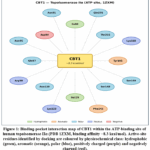 |
Figure 1: Binding-pocket interaction map of CBT1 within the ATP-binding site of human topoisomerase IIα (PDB 1ZXM, binding affinity −8.3 kcal/mol). Click here to View Figure |
The β-carboline CBL1 bound MAO-A (−8.7 kcal/mol) as strongly as harmine, engaging the aromatic-cage residues Tyr407 and Tyr444 (Figure 2). At DYRK1A, CBL1 bound more weakly (−7.8) than harmine (−9.5).
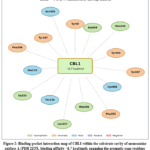 |
Figure 2: Binding-pocket interaction map of CBL1 within the substrate cavity of monoamine oxidase A (PDB 2Z5X, binding affinity −8.7 kcal/mol), engaging the aromatic-cage residues Tyr407 and Tyr444. |
The steroid CBT10 showed the strongest affinity in the study toward aromatase (−9.9 kcal/mol), contacting the heme-coordinating Cys437 (Figure 3). All compounds except CBT10 satisfied Lipinski’s rule, and CBT1 was predicted to have high gastrointestinal absorption.
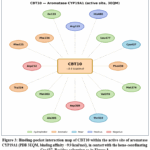 |
Figure 3: Binding-pocket interaction map of CBT10 within the active site of aromatase CYP19A1 (PDB 3EQM, binding affinity −9.9 kcal/mol), in contact with the heme-coordinating Cys437. Click here to View Figure |
Organ distribution of the isolated metabolites
The pyridine and isoquinoline alkaloids were confined to the bark, whereas the β-carboline occurred only in the leaves. The bark furnished three alkaloid types alongside phenylpropanoids, a flavan-3-ol, simple aromatic acids and aldehydes, a sesquiterpene alcohol, a steroid and a flavonol glycoside, whereas the leaves yielded a β-carboline alkaloid together with aromadendrane sesquiterpenoids and curcumin.28
Discussion
Structural diversity of the isolated set
The structural diversity of the isolated set is noteworthy. Such breadth within one species is uncommon in the genus and indicates a versatile secondary-metabolite network, the organ-specific features of which are considered further below.
Cytotoxicity
For CBT10, a substantially more potent activity (IC50 ≈ 25–40 µM) has been reported in the same HepG2 line,26 and the difference likely reflects differences in assay conditions and exposure time. Relative to cinnamaldehyde, the most studied cytotoxic constituent of the genus, the potency of CBT1 is lower by roughly an order of magnitude, indicating that structural optimisation would be required to reach drug-like potency.4
The shallow concentration–response curves of the weakly active flavan-3-ol CBT5 are in keeping with the generally reduced cytotoxicity of O-methylated flavanols and with its previously reported antioxidant activity.29 The cell-line-selective pattern of CBT10 — most potent toward HepG2 and inactive toward SK-LU-1 — may reflect differential expression of its molecular target. The substantially greater potency reported for this steroid elsewhere underscores the difficulty of comparing cytotoxicity values across laboratories that use different cell panels, exposure times and readouts.20,26
A tentative structural comparison between the active CBT1 and the inactive CBT3 suggested that the number of electron-rich aryl substituents on the pyridine nucleus influences cytotoxic potential.30–32 Because this comparison involves only two analogues, it was treated as a hypothesis to be examined by docking rather than as an established structure–activity relationship.
As this comparison rests on a single pair of analogues differing in one structural feature, alternative explanations for the activity difference such as differing aqueous solubility or non-specific colloidal aggregation of CBT1 cannot be excluded without further analogues and counter-screens.
Placed in the wider context of Cinnamomum cytotoxic chemistry, the moderate potency of CBT1 is intermediate: it is markedly less potent than cinnamaldehyde and the subamolide lignans reported from related species, yet it is comparable to common Lauraceae alkaloids and represents, to the best of current knowledge, the first cytotoxicity data for a bis(3,4-dimethoxyphenyl)pyridine of this type. The inactivity of the kaempferol glycoside CBT11 is consistent with the general observation that glycosylation attenuates the cytotoxicity of flavonol aglycones, and the inactivity of the remaining sesquiterpenoids and simple phenolics accords with their typical biological profiles.33,34
Cytotoxic potency in the moderate micromolar range is rarely sufficient on its own to warrant development. The value of these data therefore lies not in the absolute IC50 values but in the structure–activity trend they reveal, which is examined computationally below.
Molecular docking and ADME
That CBT1 bound topoisomerase IIα and tubulin more strongly than its analogue CBT3 parallels their cytotoxicity and indicates that the second 3,4-dimethoxyphenyl group of CBT1 confers additional contacts, including with the dimerisation-critical Lys168.
The isoquinoline alkaloid CBT2 bound both targets strongly despite being inactive in cells. Its physicochemistry accounts for this (Table 4): two hydrogen-bond donors and a lower cLogP (3.24) than CBT1 (4.45) likely limit membrane permeability, so the lack of cellular activity reflects a pharmacokinetic constraint rather than absent target affinity, a distinction docking alone cannot resolve.
This permeability explanation derives entirely from in silico descriptors (cLogP and hydrogen-bond donor count) and is unverified; a parallel artificial membrane permeability assay (PAMPA) or a Caco-2 monolayer study would be required to confirm that reduced cellular uptake underlies the inactivity of CBT2.
That the β-carboline CBL1 bound MAO-A as strongly as harmine, engaging the aromatic-cage residues Tyr407 and Tyr444, suggests its target may be a CNS rather than an oncological protein and explains the absence of cytotoxicity despite the reported anticancer mechanisms of some β-carbolines.35 Its weaker binding at DYRK1A relative to harmine is consistent with the absence of the 1-methyl and 7-methoxy groups that optimise harmine binding.36
The strong affinity of the steroid CBT10 toward aromatase, contacting the heme-coordinating Cys437, is reminiscent of other steroidal natural products that modulate enzyme activity.37 This score should be interpreted with caution: given the high lipophilicity of CBT10 (cLogP 7.46), part of the predicted affinity may reflect non-specific hydrophobic contacts with the large, lipophilic aromatase active site rather than a specific interaction, and an experimental aromatase-inhibition assay would be needed to distinguish these possibilities.
Re-docking of the co-crystallised reference ligands and the strong, active-site-localised binding of ellipticine and harmine indicate that the docking set-up reproduced biologically meaningful poses; native-ligand re-docking was not, however, performed for tubulin (1SA0), DYRK1A (3ANR) or aromatase (3EQM), so the accuracy for these targets is assumed rather than independently validated. The scoring function provides only an approximate estimate of binding free energy and neglects receptor flexibility, explicit water and entropic effects; the docking results are therefore best interpreted qualitatively and as a guide for experimental validation rather than as quantitative affinity predictions.
The cell-based potency, the docking affinities at validated active sites, and the predicted absorption properties point in the same direction: the most cytotoxic compound binds its proposed targets and is predicted to enter cells readily, the strongly binding but inactive analogue is predicted to be poorly absorbed, and the leaf alkaloid appears directed toward a central-nervous-system target. Linking these three types of data is the main interpretive aim of the study.
Chemotaxonomic implications of the bark and leaf metabolite profiles
The restriction of the pyridine and isoquinoline alkaloids to the bark and of the β-carboline to the leaves suggests organ-specific alkaloid biosynthesis.38 The co-occurrence of three distinct alkaloid classes within one Cinnamomum species is unusual, as previously reported alkaloids of the genus were chiefly aporphines.39
From a chemotaxonomic standpoint, the phenylpropanoids and spathulenol identified here are typical of the Lauraceae, whereas the simultaneous presence of pyridine, isoquinoline and β-carboline alkaloids points to more than one alkaloid biosynthetic route operating within a single species. The tissue-specific distribution suggests differential expression of the relevant pathways, although the selective acid–base extraction and the single collection site mean that these observations should be regarded as preliminary and worthy of confirmation across seasons and provenances.
If substantiated, such compartmentalisation would be of biosynthetic interest, because the pyridine, isoquinoline and β-carboline skeletons derive from different precursors and would imply that distinct enzymatic machineries are differentially active in the bark and the leaves. Comparative transcriptomic or metabolomic profiling of the two tissues would be a natural next step to test this proposition.39
This caveat deserves emphasis: the inferences about organ-specific alkaloid distribution rest on a single collection from one location at one time-point, whereas metabolite production in Cinnamomum varies with environmental, seasonal and geographic factors. The chemotaxonomic interpretation is therefore strictly preliminary and must not be generalised without multi-site, multi-season sampling.
Limitations
No non-cancerous cell line was tested, precluding selectivity assessment, and the MTT assay cannot distinguish cytostatic from cytotoxic effects.40–42 Docking scores are approximate and do not account for protein flexibility or solvation43; the binding of inactive CBT2 illustrates that affinity alone does not predict cellular efficacy. Enzyme-inhibition assays are required to confirm these predictions.
In addition, the cytotoxicity screen relied on a single viability endpoint and did not include mechanistic readouts such as cell-cycle analysis or markers of apoptosis, and the limited quantities of some constituents precluded their testing. The docking study addressed a focused set of targets chosen on mechanistic grounds rather than an unbiased proteome-wide search, so the possibility of additional or alternative targets cannot be excluded. Compound purity was assessed by thin-layer chromatography and by full 1D/2D NMR assignment rather than by quantitative HPLC, and HPLC purity profiling remains to be performed. These constraints temper the conclusions but also delineate clear directions for confirmatory work.
Conclusion
Sixteen compounds were characterised from C. bejolghota, including the first reports of a steroid and a flavonol glycoside in the species. CBT1 was moderately cytotoxic, and docking with ADME profiling provided a coherent rationale for the observed structure–activity trend and identified candidate targets for the active alkaloid and the β-carboline. These findings warrant mechanistic and enzyme-based follow-up studies.
Specifically, topoisomerase IIα and tubulin-polymerisation inhibition assays for CBT1, monoamine oxidase A and DYRK1A inhibition assays for CBL1, and an aromatase inhibition assay for CBT10 would test the computational predictions, while evaluation against non-cancerous cells would establish selectivity. The differential organ distribution of the alkaloid classes also invites biosynthetic investigation of this underexplored Vietnamese species.
Acknowledgement
The authors thank Dr. Nguyen The Cuong of the Institute of Ecology and Biological Resources, Vietnam Academy of Science and Technology, for authenticating the plant material. The authors also thank the Vietnam Academy of Science and Technology for access to the spectroscopic and chromatographic facilities used in this work.
Funding Sources
This research was funded by the National Foundation for Science and Technology Development (NAFOSTED), Vietnam, under grant number 104.01-2018.313.
Conflicts of Interest
The authors do not have any conflict of interest.
Data Availability Statement
The data supporting the findings of this study are available from the corresponding author upon reasonable request. Full isolation procedures, spectroscopic data, percentage yields, canonical SMILES strings of all docked ligands, protein PDB identifiers and docking input parameters are provided in the Supplementary Material.
Ethics Statement
This research did not involve human participants, animal subjects, or any material that requires ethical approval. The plant material was collected in Dakrong District, Quang Tri Province, Vietnam, in compliance with national regulations; the species is not listed as endangered or protected, and a voucher specimen (VN-1450) was deposited at the Institute of Ecology and Biological Resources, Vietnam Academy of Science and Technology.
Informed Consent Statement
This study did not involve human participants, and therefore, informed consent was not required.
Clinical Trial Registration
This research does not involve any clinical trials.
Permission to Reproduce Material from other Sources
Not applicable.
Author Contributions
Each author mentioned has significantly and directly contributed intellectually to the project and has given their approval for its publication.
- Le Thi Phuong: Conceptualization, Methodology, Investigation, Writing — Original Draft, Writing — Review & Editing.
- Lam Hoang: Investigation, Formal Analysis, Validation, Writing — Review & Editing.
- Nguyen Duc Hieu: Software, Investigation, Visualization, Data Curation, Writing — Review & Editing.
- Do Dang Truc An: Investigation, Resources, Writing — Review & Editing.
References
- Newman DJ, Cragg GM. Natural products as sources of new drugs over the nearly four decades from 01/1981 to 09/2019. J Nat Prod. 2020;83(3):770-803. https://doi.org/10.1021/acs.jnatprod.9b01285
CrossRef - Atanasov AG, Zotchev SB, Dirsch VM, Supuran CT. Natural products in drug discovery: advances and opportunities. Nat Rev Drug Discov. 2021;20(3):200-216. https://doi.org/10.1038/s41573-020-00114-z
CrossRef - Wang R, Wang R, Yang B. Extraction of essential oils from five cinnamon leaves and identification of their volatile compound compositions. Innov Food Sci Emerg Technol. 2009;10(2):289-292. https://doi.org/10.1016/j.ifset.2008.12.002
CrossRef - Davoudi F, Ramazani E. Antioxidant and anti-inflammatory effects of Cinnamomum species and their bioactive compounds: an updated review of the molecular mechanisms. Physiol Pharmacol. 2024;28(2):99-116
CrossRef - Welsch ME, Snyder SA, Stockwell BR. Privileged scaffolds for library design and drug discovery. Curr Opin Chem Biol. 2010;14(3):347-361. https://doi.org/10.1016/j.cbpa.2010.02.018
CrossRef - Yun D, Yoon SY, Park SJ, Park YJ. The anticancer effect of natural plant alkaloid isoquinolines. Int J Mol Sci. 2021;22(4):1653. https://doi.org/10.3390/ijms22041653
CrossRef - Maiti M, Kumar GS. Molecular aspects on the interaction of plant alkaloids with nucleic acid structures and biological perspectives. Med Res Rev. 2007;27(5):649-695. https://doi.org/10.1002/med.20087
CrossRef - Nitiss JL. Targeting DNA topoisomerase II in cancer chemotherapy. Nat Rev Cancer. 2009;9(5):338-350. https://doi.org/10.1038/nrc2607
CrossRef - Kaur R, Kaur G, Gill RK, Soni R, Bariwal J. Recent developments on tubulin inhibitors driven by natural products. Eur J Med Chem. 2014;87:89-124. https://doi.org/10.1016/j.ejmech.2014.09.051
CrossRef - Rao L, You YX, Su Y, et al. Lignans and neolignans with antioxidant and human cancer cell proliferation inhibitory activities from Cinnamomum bejolghota confirm its functional food property. J Agric Food Chem. 2020;68(33):8825-8835. https://doi.org/10.1021/acs.jafc.0c02885
CrossRef - Lin LT, Wu SJ, Lin CC. Cinnamomum cassia extracts suppress lung cancer cell proliferation through modulation of TGF-β1 signaling. J Ethnopharmacol. 2016;193:567-573
- Atiphasaworn P, Monggoot S, Pripdeevech P. Chemical composition, antibacterial and antifungal activities of Cinnamomum bejolghota bark oil from Thailand. J Appl Pharm Sci. 2017;7(4):69-73. https://doi.org/10.7324/JAPS.2017.70409
CrossRef - Nguyen MH, Nguyen TT, Le VS, Tran TH, Pham QL. Chemical composition and biological activities of essential oil of Cinnamomum bejolghota (Buch.-Ham.) Sweet from Xuan Son National Park, Vietnam. Asian J Plant Sci. 2023;22:337-343
CrossRef - Kittiwattanokhun A, Innajak S, Tashiro E, Imoto M, Watanapokasin R. Cinnamomum bejolghota extract inhibits colorectal cancer cell metastasis and TGF-β1-induced epithelial-mesenchymal transition via Smad and non-Smad signaling pathway. Sci Pharm. 2022;90(2):30. https://doi.org/10.3390/scipharm90020030
CrossRef - Pham HH. Cay Co Viet Nam [An Illustrated Flora of Vietnam]. Vol 1. Ho Chi Minh City: Tre Publishing House; 2003
- Le TP, Truong BN, Litaudon M, Nguyen TL, Doan TMH, Pham VC. New alkaloids from the stem bark of Cinnamomum bejolghota. Phytochem Lett. 2023;55:164-168. https://doi.org/10.1016/j.phytol.2023.05.012
CrossRef - Le TP, Nguyen TL, Truong BN, Litaudon M, Doan TMH, Pham VC. New alkaloid and sesquiterpenoid from the leaves of Cinnamomum bejolghota. Chem Biodivers. 2025;22(12):e202502118. https://doi.org/10.1002/cbdv.202502118
CrossRef - Mosmann T. Rapid colorimetric assay for cellular growth and survival: application to proliferation and cytotoxicity assays. J Immunol Methods. 1983;65(1-2):55-63. https://doi.org/10.1016/0022-1759(83)90303-4
CrossRef - van Meerloo J, Kaspers GJL, Cloos J. Cell sensitivity assays: the MTT assay. Methods Mol Biol. 2011;731:237-245. https://doi.org/10.1007/978-1-61779-080-5_20
CrossRef - Suffness M, Pezzuto JM. Assays related to cancer drug discovery. In: Hostettmann K, ed. Methods in Plant Biochemistry. London: Academic Press; 1990:71-133
- Liu Y, Yang X, Gan J, Chen S, Xiao ZX, Cao Y. CB-Dock2: improved protein-ligand blind docking by integrating cavity detection, docking and homologous template fitting. Nucleic Acids Res. 2022;50(W1):W159-W164. https://doi.org/10.1093/nar/gkac394
CrossRef - Trott O, Olson AJ. AutoDock Vina: improving the speed and accuracy of docking with a new scoring function, efficient optimization, and multithreading. J Comput Chem. 2010;31(2):455-461. https://doi.org/10.1002/jcc.21334
CrossRef - Herraiz T, Guillén H, Arán VJ, Salgado A. Identification, occurrence and activity of quinazoline alkaloids in Peganum harmala. Food Chem Toxicol. 2017;103:261-269. https://doi.org/10.1016/j.fct.2017.03.010
CrossRef - Daina A, Michielin O, Zoete V. SwissADME: a free web tool to evaluate pharmacokinetics, drug-likeness and medicinal chemistry friendliness of small molecules. Sci Rep. 2017;7:42717. https://doi.org/10.1038/srep42717
CrossRef - Chen X, Li H, Tian L, Li Q, Luo J, Zhang Y. Analysis of the physicochemical properties of acaricides based on Lipinski’s rule of five. J Comput Biol. 2020;27(9):1397-1406
CrossRef - Wi SG, Cho EJ, Lee DS, Lee SJ, Lee YJ, Bae HJ. Cytotoxic effects of ergostane-type steroids on human cancer cell lines. Arch Pharm Res. 2015;38(6):1086-1092
- Zhu L, Bi W, Xia R, Chen H. Afzelin attenuates asthma phenotypes by downregulating inflammatory responses. Int J Mol Med. 2015;35(5):1377-1383. https://doi.org/10.3892/ijmm.2015.2125
CrossRef - Yan X, Lin J, Liu Z, et al. The recent progress of tricyclic aromadendrene-type sesquiterpenoids: biological activities and biosynthesis. Biomolecules. 2024;14(9):1133. https://doi.org/10.3390/biom14091133
CrossRef - Kumar S, Pandey AK. Chemistry and biological activities of flavonoids: an overview. Sci World J. 2013;2013:162750. https://doi.org/10.1155/2013/162750
CrossRef - Altaf AA, Shahzad A, Gul Z, et al. A review on the medicinal importance of pyridine derivatives. J Drug Des Discov. 2015;2(4):149-165
- Alrooqi M, Khan S, Alhumaydhi FA, et al. A therapeutic journey of pyridine-based heterocyclic compounds as potent anticancer agents: a review (from 2017 to 2021). Anticancer Agents Med Chem. 2022;22(15):2775-2787. https://doi.org/10.2174/187152062 26662203 24102849
CrossRef - Villa-Reyna AL, Perez-Velazquez M, González-Félix ML, et al. The structure-antiproliferative activity relationship of pyridine derivatives. Int J Mol Sci. 2024;25(14):7640. https://doi.org/10.3390/ijms25147640
CrossRef - Ortiz LM, Lombardi P, Tillhon M, Scovassi AI. Berberine, an epiphany against cancer. Molecules. 2014;19(8):12349-12367. https://doi.org/10.3390/molecules190812349
CrossRef - Cao R, Peng W, Wang Z, Xu A. β-Carboline alkaloids: biochemical and pharmacological functions. Curr Med Chem. 2007;14(4):479-500. https://doi.org/10.2174/092986707779940998
CrossRef - Mishra S, Gupta A, Jain S, Vaidya A. Anticancer mechanisms of β-carbolines. Chem Biol Drug Des. 2024;103(4):e14521. https://doi.org/10.1111/cbdd.14521
CrossRef - Boni J, Rubio-Perez C, López-Bigas N, Fillat C, de la Luna S. The DYRK family of kinases in cancer: molecular functions and therapeutic opportunities. Cancers (Basel). 2020;12(8):2106. https://doi.org/10.3390/cancers12082106
CrossRef - Ghosh S, More P, Derle A, et al. Diosgenin from Dioscorea bulbifera: novel hit for treatment of type II diabetes mellitus with inhibitory activity against α-amylase and α-glucosidase. PLoS One. 2014;9(9):e106039. https://doi.org/10.1371/journal.pone.0106039
CrossRef - Facchini PJ. Alkaloid biosynthesis in plants: biochemistry, cell biology, molecular regulation, and metabolic engineering applications. Annu Rev Plant Biol. 2001;52:29-66. https://doi.org/10.1146/annurev.arplant.52.1.29
CrossRef - Teles MMRS, Pinheiro AAV, Dias CS, Tavares JF, Barbosa Filho JM, Da Cunha EVL. Alkaloids of the Lauraceae. Alkaloids Chem Biol. 2019;82:1-298. https://doi.org/10.1016/bs.alkal.2018.11.002
CrossRef - Riss TL, Moravec RA, Niles AL, et al. Cell viability assays. In: Markossian S, et al, eds. Assay Guidance Manual. Bethesda, MD: Eli Lilly & Company and the National Center for Advancing Translational Sciences; 2013
- Stepanenko AA, Dmitrenko VV. Pitfalls of the MTT assay: direct and off-target effects of inhibitors can result in over/underestimation of cell viability. Gene. 2015;574(2):193-203. https://doi.org/10.1016/j.gene.2015.08.009
CrossRef - Ghasemi M, Turnbull T, Sebastian S, Kempson I. The MTT assay: utility, limitations, pitfalls, and interpretation in bulk and single-cell analysis. Int J Mol Sci. 2021;22(23):12827. https://doi.org/10.3390/ijms222312827
CrossRef - Chen YC. Beware of docking! Trends Pharmacol Sci. 2015;36(2):78-95. https://doi.org/10.1016/j.tips.2014.12.001
CrossRef
 PlumX:
 Views: 405
  PDF Downloads:
0
PDF Downloads:
0