Computational Design of Novel Pyridine Derivative as Potent Inhibitors of Insulin Receptor (IR) as Potential Anti-cancer Agent
 , Anju Goyal3*, Madhukar Garg1, Anjoo Kamboj2, Puneet Sudan3, Neelam Jain4 and Sandeep Jain5
 1Chitkara College of Pharmacy, Chitkara University, Punjab, India
2Chandigarh College of Pharmacy, CGC, Landran, Mohali, India
3University School of Pharmaceutical Sciences, Rayat Bahra University, Greater Mohali, Punjab, India
4Department of Pharmaceutical Sciences, Guru Jambheshwar University of Science and Technology, Hisar, India.
5Department of Pharmaceutical Edu. and Research, B.P.S. Mahila Vishwavidyalaya, Sonipat, India.
Corresponding author E-mail: anju_goyal2003@rediffmail.com
DOI : http://dx.doi.org/10.13005/bpj/3494
Download this article as:

Modern cancer chemotherapy places a strong emphasis on developing target-based strategies rather than traditional ones due to advances in biochemistry, advanced exploitation of knowledge regarding genetics, genomes and successful research about various forms of human cancer. Protein tyrosine kinases (PTKs) are the most explored of the numerous targets that have been found, confirmed, and inhibited at various cancer hallmarks. Owing to their synthetic accessibility, favorable pharmacokinetic and pharmacodynamic optimization potential—including absorption, distribution, metabolism, excretion, and toxicity (ADMET) profiles—oral bioavailability, reduced off-target effects, and cost efficiency, small-molecule inhibitors of IGF-1R have emerged as prominent candidates in recent therapeutic research. The Insilco techniques are in use now-a days can affects the entire drug development process as identifying and discovering new potential drug is time and cost effective. Here, we are applying multiple Insilco techniques to examine IR inhibition activity. To find a powerful molecule, we employed the best pharmacophore and the structure-based pharmacophore as 3D queries. Following lead generation and optimisation using Structure-Based Drug Design (SBDD), 100 novel derivatives were created. Molecular docking experiments were then conducted to anticipate interactions and pinpoint structural characteristics. Drug-likeness and ADMET tests were also used to evaluate pharmacokinetics features. According to Swiss ADME and docking investigations, only the three L12, L50, and L6 exhibited the best performance and were selected for additional processing. They were also thought to be appropriate for high-grade IR inhibitors. Further, directional approach is also need in clinical trials and commercialization.
KEYWORDS:ADME; Cancer; Drug likeness; Docking studies; PTKs; Toxicity
Introduction
Cancer is described as condition in which cells of your body form branches at accelerated rate than normal. These irregular cells extend and form lump or tumor. Metastasis is a degree of cancer at which the growth of abnormal cells is uncontrollable and it leads to death. Numerous visible as well as intrinsic aspects are known for origin of cancer, for example: radiations, infectious organism, tobacco, hormones, random & inherited mutations etc. After knowing all these aspects still cancer causes are complex and only partially understood. Globally after cardio vascular disorders, cancer is weighed as another extensive consideration for death. On the basis of effected tissues, cancer is classified in to five different types,1,2 as shown in Fig. 1
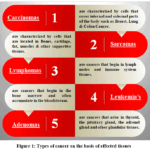 |
Figure 1: Types of cancer on the basis of effected tissues Click here to View Figure |
From previous research, around 120 types of Organs based cancer were already detected.3 They provide the intact list of cancer arranged in alphabetical order from A to Z. From the whole list, there are some common examples given in Fig. 2:
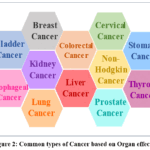 |
Figure 2: Common types of Cancer based on Organ effected Click here to View Figure |
According to the World Health Organization (WHO) report, around eighteen-point one ton society was diagnosed cancer all around the world and this figure doubles in next few decades. Through directory of cancer, frequently occurred cancers are stomach, lung, breast and colorectal cancer accounted for 41% of the world’s total. Various anticancer agents were developed and various are under development but still their toxicity is a major issue and restricted their use as anticancer agents. For this reason, scientists are still search for new chemo therapeutic agents having low toxicity and considerable efficacy.
Pyridine are the compounds containing aromatic ring with six carbon atoms and one is replaced by nitrogen atom, showing formula of C5H5N (Fig. 3). In 1869, Dewar and Korner identified the cyclic nature of Pyridine. Pyridines are a class of heterocyclic compounds which are present in natural products as well as genetic materials. The pyridine nucleus is well-studied heterocyclic moiety having major role in various biological and therapeutic processes.2
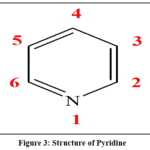 |
Figure 3: Structure of Pyridine Click here to View Figure |
In recent years, many anticancer drugs are reported having pyridine nucleus as major part of their structure. Therefore, various pyridine- based chemotherapeutic agents have been prosper based on their structural modifications such as substitution at ring, conjugations with moieties and coordination with metal ions etc.
Now days, pyridine became important scaffold in more than 7000 existing drug molecules. Pyridine nucleus mainly found from plant source such as alkaloids and atropine (cholinergic drug) comprising of pyridine moiety. Pyridine nucleotide is also involved in numerous enzymatic reactions.4 Number of biological active compounds bearing pyridine- based molecular framework having antiviral, anticancer, antibacterial, anti- inflammatory, antimicrobial, anti- tubercular and antimalarial activities.5
About human protein kinases counted as 518, or 1.7% approximately of all human genes, were found by human genome sequence sequencing. Of these, around 90 tyrosine kinases (TKs) were identified, of which 58 were receptor tyrosine kinases and 32 were non-receptor tyrosine kinases. TKs are involved in a variety of cellular signalling metabolic cycles, including proliferation, metabolism, differentiation, and apoptosis, both in healthy cells and in diseased ones. They are distinguished on the basis of their capacity to catalyse the phosphorylation of tyrosine amino acid residues in proteins. With a high therapeutic index against chronic myelogenous leukaemia (CML), imatinib, which targets the bcrabl tyrosine kinase, served as the model for effective tyrosine kinase inhibitors (TKIs) that received FDA approval. Researchers are creating new TKIs to treat various cancers, such as renal cell carcinoma, non-small-cell lung cancer, colon cancer, and many more, as a result of imatinib’s efficacy against CML. Furthermore, a thorough study of TKIs’ potential for treating additional conditions has been conducted, including glomerulonephritis, atherosclerosis, rheumatoid disorders, lung fibrosis, cardiac hypertrophy, pulmonary hypertension, and in-stent restenosis.6-8 The insulin-like growth factor (IGF) axis encompasses the receptor tyrosine kinases—insulin receptor (IR) and insulin-like growth factor-1 receptor (IGF-1R)—as well as the non-tyrosine kinase insulin-like growth factor-2 receptor (IGF-2R). This signaling network is further regulated by its endogenous ligands, including insulin, IGF-I, and IGF-II, in conjunction with a family of six high-affinity IGF-binding proteins (IGFBP-1 to IGFBP-6), which modulate ligand bioavailability, receptor interaction, and downstream signaling dynamics.9
In addition to causing phosphorylation of the receptor and abnormally activating important downstream signalling pathways, excessive tyrosine kinase activity also leads to unchecked cellular proliferation and survival, which frequently initiates and advances cancer. Tyrosine kinases involved in tumour cell transduction are thus found to be a unique target for the development of tyrosine kinase inhibitors. These inhibitors have the ability to stop tyrosine kinase over expression and return the body to equilibrium.10, 11
The conventional method of medication discovery and development is time-consuming and extremely expensive. Conventional drug discovery techniques rely on the meticulous synthesis and filtration of many compounds in order to identify a lead molecule 12.Nearly every contemporary drug discovery endeavour regularly uses computational methods, and computer-aided lead creation and optimisation have achieved strong success. These methods are generally more accurate, quicker, and economical.13
We discovered 1-(5-(1H-indol-3-yl) pyridin-3-yl) urea with the general structure (L) to be micromolar inhibitors of the Insulin Receptor (IR) tyrosine kinase during our attempts to produce leads for the inhibition of protein kinases. Following lead generation and optimisation using Structure-Based Drug Design (SBDD), 100 novel derivatives were created. Molecular docking experiments were then conducted to anticipate interactions and pinpoint structural characteristics. Drug-likeness and ADMET tests were also used to evaluate pharmacokinetics features.14
Materials and Methods
Preparation of Insulin Receptor (IR) protein and Ligands optimization
The 3D crystal-structural file of the IR Protein (PDB Id: 3ETA) was acquired in PDB format from the Protein Data Bank (www.rcsb.org) as a reference drug IR inhibitor. Using Chem Draw Ultra (Cambridge Soft Corporation, USA), ligands L1–L100 were constructed. For docking, mol files were saved and SMILES were made for every ligand. The structures were optimised to be taken into consideration for ADMET and in silico research to reach the least energy structures in order to obtain the theoretical validation.15
Virtual screening
Finding possible leads with various scaffolds and strong IR receptor inhibitory activity is the aim of virtual screening. To find a powerful molecule, we employed the best pharmacophore and the structure-based pharmacophore as 3D queries.
Molecular docking
Molecular docking studies were carried out using Autodock tools, Discovery Studio 2021 software, and the AutodocVina module of PyRx 0.8 software. The high-resolution X-ray crystallographic structure of the insulin receptor (IR) complexed with 351 ligand molecules (PDB ID: 3ETA) was obtained from the Protein Data Bank (www.rcsb.org). Structural preprocessing was performed using Discovery Studio Visualizer 2021, wherein all crystallographic water molecules and non-essential heteroatoms were removed, polar hydrogen atoms were added to facilitate proper protonation states, and the structure was rigorously inspected for missing residues and backbone discontinuities. Any structural anomalies were addressed to ensure suitability for molecular docking and simulation studies.The resulting file was stored in the.pdb format. ChemDraw Professional was used to create the target compounds’ 2D structures, which were then saved as.pdb files. The crystallographic structure of the target protein was converted from .pdb to .pdbqt format using the macromolecule preparation module in AutoDock Tools, integrated within the PyRx virtual screening platform (version 0.8). Ligand structures were preprocessed using Open Babel, where geometry optimization was performed under energy minimization conditions with the force field parameter disabled to preserve conformational integrity. Conformational ensembles were subsequently generated and exported in AutoDock-compatible .pdbqt format.
For molecular docking, AutoDock Vina (via Vina Wizard) was employed. The prepared receptor (.pdbqt) and ligand libraries were imported, and the docking grid was centered on the orthosteric binding pocket defined by the coordinates of the co-crystallized ligand in the reference complex (PDB ID: 3ETA). The grid box was parameterized to encompass all key interacting residues within the binding interface to ensure comprehensive sampling of the ligand conformational space. Ligand–receptor complexes were ranked based on their binding free energies (ΔG, kcal/mol), with the most negative scores indicative of higher binding affinity. Post-docking pose refinement and molecular interaction profiling, including hydrogen bonding, hydrophobic contacts, and π-π stacking analyses, were carried out using Discovery Studio Visualizer 2021 to elucidate binding mode characteristics and evaluate structure–activity relationships (SAR).16
Drug-likeness and ADMET analysis
ADMET (absorption, distribution, metabolism, elimination, toxicity) study was performed after the compounds that best matched the structure-based pharmacophore’s features and the best 3D-QSAR pharmacophore model were retrieved and subsequently filtered using Lipinski’s rule. In accordance with Lipinski’s Rule of 5 for drug candidates (< 5 H-bond donors, < 10 H-bond acceptors, < 500 Da, and < 5 Log P (Log P), ADMET properties were assessed using the Swiss ADME or ADMET lab 2.0 algorithm (http://www.swissadme.ch) in terms of physicochemical, lipophilicity, water-solubility, pharmacokinetics, drug-likeness, and medicinal chemistry. Hits can only be defined as compounds that meet Lipinski’s criteria, have strong projected activity, and have good ADMET characteristics. Additionally, the ten active compounds we gathered were included in the ADMET study to compare the ADMET characteristics of the hits with the known inhibitors.17
Results
Computer-Aided Drug Design (CADD) represents a rational and systematic approach for the identification and optimization of bioactive compounds by enabling early prediction of physicochemical, pharmacokinetic, and toxicological parameters essential for drug-likeness. Among these, unfavorable absorption, distribution, metabolism, excretion, and toxicity (ADMET) properties have been recognized as a principal cause of late-stage clinical failure and attrition in drug development pipelines. As such, in silico ADMET profiling has become a pivotal component of early-phase lead optimization, allowing for the prioritization of compounds with favorable pharmacological and safety profiles.
In this study, a rationally designed ligand (denoted as L) was developed with the intent of targeting the insulin receptor (IR) as a potential therapeutic intervention point. The compound was subjected to comprehensive in silico evaluation, including ADMET prediction using the Swiss ADME web server to assess pharmacokinetic viability and compliance with established drug-likeness criteria. Furthermore, molecular docking studies were conducted to characterize the binding affinity and interaction landscape of ligand L within the active site of the IR, providing mechanistic insights into its potential as a novel IR inhibitor candidate.
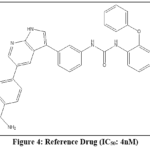 |
Figure 4: Reference Drug (IC50: 4nM) Click here to View Figure |
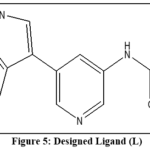 |
Figure 5: Designed Ligand (L) Click here to View Figure |
Target identification using Swiss Similarity: Pie chart shows new designed ligand (L) is active against kinases as 20% in top 15 activities.
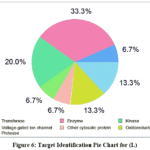 |
Figure 6: Target Identification Pie Chart for (L) Click here to View Figure |
ADMET Properties of Designed Ligand using Swiss ADME & ADMET lab 2.0
Table 1: Comparison of ADMET properties of Designed Ligand (L) with reference drug:
|
Physiochemical Parameter |
Specified Range | Designed Ligand (L) | Reference Drug |
| Lipophilicity (XLOGP3) | -0.7 to + 5.0 | 1.21 |
5.97 |
|
Molecular Weight |
150- 500 g/ mol | 252.27 | 610.70 |
| Polarity (TPSA) | 20 – 120 Å2 | 83.80 |
111.38 |
|
Solubility (Log S) |
≤ 6 | -2.55 (Soluble) | -7.06 (Poorly Soluble) |
| Saturation (Csp3) | ≥ 0.25 | 0.00 |
0.11 |
|
Flexibility (Rotatable bonds) |
≤ 9 | 3 | 13 |
| Lipinski Rule of Five | Violation | Pass, 0 violation |
Pass, 1 violation |
|
GI Absorption |
High/ Low | High | Low |
| Bioavailability Score | 0.55 | 0.55 |
0.55 |
|
PAINS |
Alerts | 0 alert | 0 alert |
| Human Hepatotoxicity (H-HT) | 0 – 0.3 | 0.254 |
0.89 |
|
Mutagenicity (AMES Toxicity) |
0 – 0.3 | 0.104 | 0.84 |
| Carcinogenicity | 0 – 0.3 | 0.055 |
0.031 |
From the Table 1 it can be observed that considerable ADMET properties evaluated for designed ligands (L) (Lipophilicity Log Po/w (XLOGP3) = 1.21; Water solubility = soluble; Pharmacokinetics = high GI absorption; Drug likeness = Lipinski allowed and Medicinal Chemistry = + Lead likeness& Synthetic accessibility value of 2.33; Human hepatotoxicity, mutagenicity and carcinogenicity = all in specified range) in comparison with reference drug. Results of ADMET properties (L) displayed the best performance and were found suitable to be high-quality IR inhibitors.
Docking Study of Designed Ligand (L) with Insulin receptor (IR)
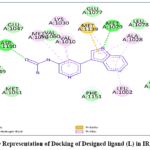 |
Figure 7: 2D Representation of Docking of Designed ligand (L) in IR binding site Click here to View Figure |
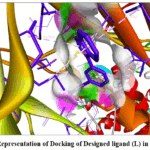 |
Figure 8: 3D Representation of Docking of Designed ligand (L) in IR binding site Click here to View Figure |
Molecular docking revealed that the designed ligand (L) formed a hydrogen bond MET1079 with the nitrogen attached to the indole ring at a distance of 2.98 Å and ASP1150 with the oxygen of urea ring at distance of 2.79 Å. Results of docking represent best performance and was found suitable to be high-quality IR inhibitors.
Following ADMET and docking study results, we used Chem Draw Ultra (Cambridge Soft Corporation, USA) to create 100 derivatives of the proposed ligand (L), Ligands L1-L100, and produced SMILES for each ligand.For docking, mol files were saved. Using the Auto Dock Vina program, virtual docking was done for all 100 ligands. The top 10 were chosen based on the docking score for additional ADMET and docking analysis. L1-L100 with structural and docking results are displayed in Table 2.
 |
Table 2: Structure and Docking results of L1-L100: Click here to View Table |
From above Table 2, L12, L50, L6, L45, L8, L5, L17, L7, L42, L44 were the top 10 derivatives showing best docking score with Insulin receptor (IR). These ligands were further evaluated for ADME properties using Swiss ADME and individual docking studies were performed using PyRx Virtual docking 0.8 software.
Table 3: Results of ADME and Docking studies of Top 10 derivatives:
|
Ligands |
Physiochemical properties | Lipophilicity | Water Solubility | Pharmaco
kinetics |
Drug likeness | Medicinal chemistry | Docking results Binding energy |
| L12 | MF= C28H20N4O5
MW= 492.48 g/mol Fraction (Csp3) = 0.00 nHBA = 6 nHBD = 5 MR= 139.61 TPSA= 144.41 Å2 |
Log Po/w (iLOGP)= 2.30
Log Po/w (XLOGP3) = 3.85
|
Log S (ESOL)= -5.33
Class= Moderately soluble |
GI absorption = Low
BBB permeant = No P-gp substrate = No CYP1A2 inhibitor = Yes CYP2C19 inhibitor = Yes |
Lipinski = Yes, 0 violation Ghose = No, 2 violations
Veber = No, 1 violationBioavailability Score =0.56 |
PAINS = 0 alert
Lead likeness = No, 0 violation Synthetic accessibility = 3.50 |
-13.9 |
|
L50 |
MF= C34H28N8O
MW= 564.64 g/mol Fraction (Csp3) = 0.06 nHBA = 4 nHBD = 3 MR= 168.76 TPSA= 105.45 Å2 |
Log Po/w (iLOGP)= 3.37
Log Po/w (XLOGP3) = 4.97
|
Log S (ESOL)= -6.45
Class= Poorly soluble |
GI absorption = Low
BBB permeant = No P-gp substrate = No CYP1A2 inhibitor = Yes CYP2C19 inhibitor = No |
Lipinski = Yes, 1 violation Ghose = No, 4 violations Veber = Yes
Bioavailability Score = 0.55 |
PAINS = 0 alert
Lead likeness = No, 3 violations Synthetic accessibility = 4.13 |
-13.9 |
|
L6 |
MF= C33H27N5O2
MW= 525.60 g/mol Fraction (Csp3) = 0.03 nHBA = 4 nHBD = 4 MR= 159.88 TPSA= 105.06 Å2 |
Log Po/w (iLOGP)= 3.54
Log Po/w (XLOGP3) = 5.18
|
Log S (ESOL)= -6.38
Class= Poorly soluble |
GI absorption = Low
BBB permeant = No P-gp substrate = No CYP1A2 inhibitor = No CYP2C19 inhibitor = Yes |
Lipinski = Yes, 1 violation Ghose = No, 3 violationsVeber = Yes
Bioavailability Score = 0.55 |
PAINS = 0 alert
Lead likeness = No, 3 violations Synthetic accessibility = 3.87 |
-13.8 |
|
L45 |
MF= C26H16Cl2F2N4O
MW= 509.33 g/mol Fraction (Csp3) = 0.00 nHBA = 4 nHBD = 3 MR= 135.62 TPSA= 69.81 Å2 |
Log Po/w (iLOGP)= 3.19
Log Po/w (XLOGP3) = 6.25
|
Log S (ESOL)=-7.11
Class= Poorly soluble |
GI absorption = Low
BBB permeant = No P-gp substrate = No CYP1A2 inhibitor = Yes CYP2C19 inhibitor = Yes |
Lipinski =No, 2 violations Ghose = No, 3 violations Veber = Yes
Bioavailability Score = 0.17 |
PAINS = 0 alert
Lead likeness = No, 2 violations Synthetic accessibility = 3.31 |
-13.8 |
|
L8 |
MF= C34H30N6O3S
MW= 602.71 g/mol Fraction (Csp3) = 0.06 nHBA = 5 nHBD = 4 MR= 176.03 TPSA= 127.60 Å2 |
Log Po/w (iLOGP)= 3.80
Log Po/w (XLOGP3) = 5.48
|
Log S (ESOL)= -6.92
Class= Poorly soluble |
GI absorption = Low
BBB permeant = No P-gp substrate = No CYP1A2 inhibitor = No CYP2C19 inhibitor = Yes |
Lipinski =Yes, 1 violation Ghose = No, 4 violationsVeber = Yes Bioavailability Score = 0.55 | PAINS = 0 alert
Lead likeness = No, 3 violations Synthetic accessibility = 4.36 |
-13.7 |
| L5 | MF= C28H21F4N5O
MW= 519.49 g/mol Fraction (Csp3) = 0.07 nHBA = 7 nHBD = 4 MR= 138.32 TPSA= 95.83 Å2 |
Log Po/w (iLOGP)= 3.13
Log Po/w (XLOGP3) = 4.64
|
Log S (ESOL)= -5.98
Class= Moderately soluble |
GI absorption = Low
BBB permeant = No P-gp substrate = No CYP1A2 inhibitor = Yes CYP2C19 inhibitor = Yes |
Lipinski = Yes, 1 violation Ghose = No, 3 violations Veber = Yes Bioavailability Score = 0.55 | PAINS = 0 alert
Lead likeness = No, 3 violations Synthetic accessibility = 3.56 |
-13.7 |
|
L17 |
MF= C28H21F4N5O
MW= 519.49 g/mol Fraction (Csp3) = 0.07 nHBA = 7 nHBD = 4 MR= 138.32 TPSA= 95.83 Å2 |
Log Po/w (iLOGP)= 3.13
Log Po/w (XLOGP3) = 4.64
|
Log S (ESOL)=-5.98
Class= Moderately soluble |
GI absorption = Low
BBB permeant = No P-gp substrate = No CYP1A2 inhibitor = YesCYP2C19 inhibitor = Yes |
Lipinski = Yes, 1 violation Ghose = No, 3 violationsVeber = Yes Bioavailability Score = 0.55 | PAINS = 0 alert
Lead likeness = No, 3 violations Synthetic accessibility = 3.56 |
-13.7 |
| L7 | MF= C31H29ClN6O2
MW= 553.05 g/mol Fraction (Csp3) = 0.13 nHBA = 4 nHBD = 4 MR= 161.01 TPSA= 102.15 Å2 |
Log Po/w (iLOGP)= 3.45
Log Po/w (XLOGP3) = 4.74
|
Log S (ESOL)= -6.03
Class= Poorly soluble |
GI absorption = Low
BBB permeant = No P-gp substrate = No CYP1A2 inhibitor = Yes CYP2C19 inhibitor = Yes |
Lipinski =Yes, 1 violation Ghose = No, 3 violations Veber = No, 1 violation Bioavailability Score = 0.55 | PAINS = 0 alert
Lead likeness = No, 3 violations Synthetic accessibility = 3.77 |
-13.4 |
|
L42 |
MF= C29H19N5O
MW= 453.49 g/mol Fraction (Csp3) = 0.00 nHBA = 3 nHBD = 3 MR= 137.32 TPSA= 104.50 Å2 |
Log Po/w (iLOGP)= 2.33
Log Po/w (XLOGP3) = 5.30
|
Log S (ESOL)= -6.17
Class= Poorly soluble |
GI absorption = Low
BBB permeant = No P-gp substrate = No CYP1A2 inhibitor = Yes CYP2C19 inhibitor = Yes |
Lipinski = Yes Ghose = No, 2 violations Veber = Yes Bioavailability Score = 0.55 | PAINS = 0 alert
Lead likeness = No, 2 violations Synthetic accessibility = 3.15 |
-13.4 |
|
L44 |
MF= C27H21N5O5
MW= 495.49 g/mol Fraction (Csp3) = 0.00 nHBA = 5 nHBD = 5 MR= 142.38 TPSA= 156.24 Å2 |
Log Po/w (iLOGP)= 0.00
Log Po/w (XLOGP3) = 4.59
|
Log S (ESOL)= -5.98
Class= Moderately soluble |
GI absorption = Low
BBB permeant = No P-gp substrate = No CYP1A2 inhibitor = Yes CYP2C19 inhibitor = Yes |
Lipinski = Yes
Ghose = No, 3 violations Veber = No, 1 violation Bioavailability Score = 0.55 |
PAINS = 0 alert
Lead likeness = No, 3 violations Synthetic accessibility = 3.65 |
-13.4 |
 |
Table 4: Docking Results of Top 10 derivatives Click here to View Table |
Discussion
ADME qualities are used in the methodical process of Computer-Aided Drug Design (CADD) to forecast the characteristics of superior medications. Water solubility, lipophilicity, drug-likeness, pharmacokinetics, and medicinal chemistry, such as Lipinski’s rule of five, were used to evaluate the ADME or physicochemical features of all chosen ligands in comparison to the reference standard medication (L). According to SwissADME and docking investigations, only the three L12, L50, and L6 exhibited the best performance and were selected for additional processing. They were also thought to be appropriate for high-grade IR inhibitors.
Conclusion
From the last few decades, the research focused on the inexpensive, potent, safe and sustainable items for world. In our present investigation, top ten compounds were taken and only three L12, L50 and L6 exhibited a remarkable binding energy, therapies activity in addition to pharmacological activity. Our in-silico method revealed that L12, L50, and L6 had outstanding binding energies of -13.9, -13.9, and -13.8, respectively, a noteworthy bioavailability score, and good drug-likeness characteristics. Additionally, clinical trials and commercialisation require a directed approach. All of the chosen ligands were accepted well, and a new agent was created.
Acknowledgement
The authors are very thankful to Chitkara College of Pharmacy, Chitkara University, Punjab, CGC Group of Colleges, Landarn and University School of Pharmaceutical Sciences, Rayat-Bahra University, Mohali for providing us necessary facilities to carry out research work.
Funding Sources
The author(s) received no financial support for the research, authorship, and/or publication of this article.
Conflict of Interest
The authors do not have any conflict of interest.
Data Availability Statement
This statement does not apply to this article.
Ethics Statement
This research did not involve human participants, animal subjects, or any material that requires ethical approval.
Informed Consent Statement
This study did not involve human participants, and therefore, informed consent was not required.
Clinical Trial Registration
This research does not involve any clinical trials.
Permission to reproduce material from other sources
Not Applicable
Author Contributions
- Amandeep Kaur: Methodology, Writing of Original Draft.
- Anju Goyal: Analysis, Review & Editing.
- Madhukar Garg: Visualization
- Anjoo Kamboj: Review & Editing
- Puneet Sudan: Review & Editing
- Neelam Jain : Data Analysis
- Sandeep Jain: Conceptualization
References
- Mathur G, Nain S, Sharma PK. Cancer: An Overview. Acad J Cancer Res. 2015;8(1):1–9. doi:10.5829/idosi.ajcr.2015.8.1.9336.
- Sahu R, Mishra R, Kumar R, Majee C, Salahuddin, Mazumderi A, Kumar A. Pyridine Moiety: Recent Advances in Cancer Treatment. Indian J Pharm Sci. 2021;83(2):162–85. doi:10.36468/pharmaceutical-sciences.4109.
CrossRef - American Society of Clinical Oncology. Cancer Types [Internet]. Available from: https://www.cancer.net/cancer-types
- De S, Ashok Kumar SK, Shah SK, Kazi S, Sarkar N, Banerjee S, Dey S. Pyridine: the scaffolds with significant clinical diversity. RSC Adv. 2022;12:15385–15406. doi:10.1039/D2RA01571D.
CrossRef - Ziarani GM, Kheilkordi Z, Mohajer F, Badiei A, Luque R. Magnetically recoverable catalysts for the preparation of pyridine derivatives: an overview. RSC Adv. 2021;11:17456–17477. doi:10.1039/D1RA02418C.
CrossRef - Xue M, Cao X, Zhong Y, Kuang D, Liu X, Zhao Z, Li H. Insulin-like Growth Factor-1 Receptor (IGF-1R) Kinase Inhibitors in Cancer Therapy: Advances and Perspectives. Curr Pharm Des. 2012;18(18):2901–13. doi:10.2174/138161212800672858.
CrossRef - Hu GF, Wang C, Hu GX, Wu G, Zhang C, Zhu W, et al. AZD3463, an IGF-1R inhibitor, suppresses breast cancer metastasis to bone via modulation of the PI3K-Akt pathway. Ann Transl Med. 2020;8(6):336. doi:10.21037/atm.2020.02.94.
CrossRef - Pashaa MK, Jabeena I, Samarasinghe S. 3D QSAR and pharmacophore studies on inhibitors of insulin-like growth factor 1 receptor (IGF-1R) and insulin receptor (IR) as potential anti-cancer agents. Curr Res Chem Biol. 2022;2:100019. doi:10.1016/j.crchbi.2021.100019.
CrossRef - Negi A, Ramarao P, Kumar R. Recent advancements in small molecule inhibitors of insulin-like growth factor-1 receptor (IGF-1R) tyrosine kinase as anticancer agents. Mini Rev Med Chem. 2013;13(5):653–81. doi:10.2174/1389557511313050004.
CrossRef - Guo T, Ma S. Recent advances in the discovery of multi-targeted tyrosine kinase inhibitors as anticancer agents. ChemMedChem. 2020;15(4):600–20. doi:10.1002/cmdc.202000658.
CrossRef - Patnaik S, Stevens KL, Gerding R, Deanda F, Shotwell JB, Tang J, et al. Discovery of 3,5-disubstituted-1H-pyrrolo[2,3-b]pyridines as potent inhibitors of the insulin-like growth factor-1 receptor (IGF-1R) tyrosine kinase. Bioorg Med Chem Lett. 2009;19(11):3136–40. doi:10.1016/j.bmcl.2008.12.110.
CrossRef - Abdulrahman HL, Uzairu A, Uba S. Computational pharmacokinetic analysis on some newly designed 2-anilinopyrimidine derivative compounds as anti-triple negative breast cancer drug compounds. Bull Natl Res Cent. 2020;44:63. doi:10.1186/s42269-020-00321-z.
CrossRef - Abdulrahman HL, Uzairu A, Uba S. Computer modeling of some anti-breast cancer compounds. Struct Chem. 2021;32(2):679–87. doi:10.1007/s11224-020-01608-7.
CrossRef - Gagic R, Ruzic D, Djokovic N, Djikic T, Nikolic K. In silico methods for design of kinase inhibitors as anticancer drugs. Front Chem. 2020;7:873. doi:10.3389/fchem.2019.00873.
CrossRef - Yusuf M, Khan SA. Assessment of ADME and in silico characteristics of natural-drugs from turmeric to evaluate significant COX2 inhibition. Biointerface Res Appl Chem. 2023;13(1):5. doi:10.33263/BRIAC131.005.
CrossRef - Podila N, Penddinti NK, Rudrapala M, Rakshit G, Konidala SK, Pulusu VS, et al. Design, synthesis, biological and computational screening of novel pyridine-based thiadiazole derivatives as prospective anti-inflammatory agents. Heliyon. 2024;10(8):e29390. doi:10.1016/j.heliyon.2024.e29390.
CrossRef - Fei J, Zhou L, Liu T, Tang XY. Pharmacophore modelling, virtual screening, and molecular docking studies for discovery of novel Akt2 inhibitors. Int J Med Sci. 2013;10(3):265–75. doi:10.7150/ijms.5586.
CrossRef
 PlumX:
 Views: 313
  PDF Downloads:
1
PDF Downloads:
1