Therapeutic Potential of Silymarin-Loaded Nanostructured Lipid Carrier Hydrogel in Psoriasis Management
 , Sukeshani Ankush Borde1, Dinanath Tukaram Gaikwad1, Firoj Allaudin Tamboli2, Vijaykumar Tanajirao Pawar3 and Asha Sambhaji Jadhav4
 1Department of Pharmaceutics, Bharati Vidyapeeth College of Pharmacy, Near Chitranagari, Kolhapur (M.S), India,
2Department of Pharmacognosy, Bharati Vidyapeeth College of Pharmacy, Near Chitranagari, Kolhapur (M.S), India
3Department of Pharmaceutical chemistry, Bharati Vidyapeeth College of Pharmacy, Near Chitranagari, Kolhapur (M.S), India
4Department of Pharmacology, Bharati Vidyapeeth College of Pharmacy, Near Chitranagari, Kolhapur (M.S.) India.
Corresponding Author E-mail:ajshinde70@gmail.com
DOI : http://dx.doi.org/10.13005/bpj/3438
Download this article as:

The present study was focused on the formulation and characterisation of nanostructured lipid carrier based topical hydrogel of silymarin for the treatment of psoriasis. NLCs dispersion was characterised for particle size, Polydispersity index, Zeta potential, Entrapment efficiency, morphology, differential scanning calorimetry, and an in vitrorelease study. Optimized NLC incorporated into the hydrogel and characterized for rheological properties, drug content, in-vitro drug release, stability study, skin irritation and antipsoriatic activity by using Perry’s scientific tail model.The optimized NLC batch (B7) was exhibited spherical shape with particle size of 116.9nm, poly dispersity index 0.355, Zeta potential -26.2Mv and entrapment efficiency of 94.63 % respectively. The drug release of optimized batch was 9.23 % and 92.58±0.08% at 1h & 8h respectively. The primary skin irritation index was found to be 0.0757, it indicates barely perceptible irritation. Histopathological studies showed that, in psoriasis-induced animal treated with silymarin loaded NLC hydrogel, marked reduction in thickness of epidermis, as compared to conventional gel formulation. It shows the increase % orthokeratosis 90.28% and % drug activity 58.29 %. Stability studies conducted over 90 days, confirmed that no significant loss in drug content and maintained formulation integrity, which would enhance completeness. The developed NLC based formulation has showed to be a promising carrier system for psoriasis management.
KEYWORDS:Herbal; Hydrogel; Nanostructured Lipid Carriers; Psoriasis; Silymarin; Topical
Introduction:
Psoriasis is a long-term autoimmune condition characterized by abnormal skin patches that range in colour from white to red, sometimes with scaling and itching.1It is a long-term skin condition that affects 2% of individuals globally. People of various ages are impacted by psoriasis diseases. Between 0.09% and 11.43% of nations report having a high prevalence of psoriasis, making it a major global issue that affects at least 100 million people.2-5
The use of creams and ointments as conventional topical administration systems for psoriasis treatment has several disadvantages, including low percutaneous absorption, patient discomfort from stickiness and greasiness. NLCs are capable drug carriers for topical application because of their enhanced skin retention properties.6-8 NLCs improved skin retention qualities make them suitable medication carriers for topical administration.Psoriasis herbal treatments are becoming more and more common.Psoriasis can be effectively treated with plant-based polyphenols because of their notably strong antioxidant activity. 9-12 Antioxidants lower the blood levels of hydroxyl or free radicals and nitric acid in psoriasis patients. Polyphenols also have anti-inflammatory and antiproliferative properties.13-17 Silymarin is obtained from the seeds of the plant Silybum mariamum also known as Milk thistle belonging to the family called Asteraceae. It is a composition of flavolignan including Silibinin, Silydianin, Silychristin, and isosilybinin. It is used as anticancer, hepatoprotective, Anti-Inflammatory, Anti-fibrotic, Anti-oxidant, Immunomodulatory a Liver Regenerating action, skin protection property. There are different types of formulation of Silymarin available in market in the form of tablet, capsule, syrup, suspension, nanoparticles.18-21
Psoriasis is thought to be caused by elevated amounts of leukotrienes and cyclic AMP; a decrease in these levels may cause the condition to go away. Silymarin enhances the liver’s capacity to promote endotoxin elimination, cyclic AMP phosphodiesterase inhibition, and leukotriene production inhibition. Each of these elements helps to lessen psoriasis symptoms.22-24While herbal remedies possess similar potential effects as synthetic pharmaceuticals, they are confronted with issues such as instability, poor bioavailability, and insolubility. NLC’s are potential carriers for overcoming these issues related with herbals.25-29The present work was to develop Silymarin loaded NLCs based hydrogel formulation.
Materials and Methods
Materials
Silymarin was procured from Yucca Enterprises, Mumbai, Cetyl Palmitate and Capmul® MCM C8was kindly gifted by Mohini Organics Pvt. Ltd and Abitec, Mumbai respectively. Tween 80 &Methanol were purchased from LobachemPvt. Ltd, Mumbai. Glycerine, Triethanolamine, Methyl paraben, Mannitol were procured from Research lab. Mumbai. All other chemicals used were of standard quality.
Methods
Solubility Study
The solubility of Silymarin in various liquid lipids and surfactants was determined, the glass vials were then vortexed for 15 min. and kept in Orbital shaker incubator at 37 ±1.0 0C for 72 h furthermore the samples were filtered, dilutions were made using methanol and analyse by using UV Spectrophotometer at 281 nm. The solid lipids were also screened on the basis of solubility. It was done by adding Silymarin in increments until saturation accrued in molten lipids. The quantity of solid lipids required to solubilisedSilymarin was noted.8
Design for optimizing formulations
The optimization NLCs were done by Design Expert software STATEASE 360 (Version 11.0).To obtain the optimized batches with appropriate particle size and entrapment efficiency of Silymarin-NLC, a 32 factorial design was employed to evaluate the effects of drug and liquid lipid (X1) and solid lipid concentrations, surfactant concentrations (X2) and three responses of Particle size, zeta potential, poly dispersity index, shown in Table1.
Table 1: Number of Variables in a 32 Factorial Design Formulation
| Coded Value | Actual Value | |
| Amount of Drug and Capmul® MCM C8 |
Amount of Cetyl Palmitate and Tween 80 |
|
| -1 | 50 | 280 |
| 0 | 55 | 290 |
| +1 | 60 | 300 |
Preparation of NLC’S
The NLC was formulated by using High Pressure homogenizer method. The solid lipid (Cetyl Palmitate) and Liquid lipid (Capmul MCM C8) melted above 800C in which drug was added with constant stirring until dissolved to form a lipid phase. At the same time and temperature, surfactant (Tween 80) and water were mixed to form aqueous phase. By maintaining temperature of both phases aqueous phase was added dropwise into lipid phase to form microemulsion. Further stirring was carried out using mechanical stirrer at 1200 rpm for 30 mins. For the size reduction the dispersion was passed through the high-pressure homogenizer at 700 bars up to 20 cycles.30-32
Characterization of NLC Dispersion
To measure the stability of NLC dispersion, particle size, zeta potential measurement was carried out using a Zetasizer (Horiba Scientific Nanoparticle Size Analyzer, Model number SZ-100-Z2) Percentage entrapment efficiency was measured.33
Preparation of Silymarin Loaded NLC Based Hydrogels
The optimized batch of NLC formulation was selected for the preparation of hydrogel. Various gelling agents were assessed for gel preparation, including Carbopol 940, poloxamer 188, HPMC K4M, and Xanthum gum. Carbopol 940 was chosen as a gelling agent due to its viscosity, ease of spreading, and compatibility with NLC dispersion. To form the gel, the Carbopol was soaked in water in addition to Glycerine as a hydrating agent for overnight to form a gel base. The formed gel base Silymarin loaded NLC was dispersed using magnetic stirrer, and neutralized by adding triethanolamine to it.
Characterization of Silymarin loaded NLC based hydrogels
The prepared hydrogel formulations were observed viscosity. A volume of 100 ml Silymarin-NLC loaded hydrogel in PBS absorbance was measured at λmax 281 nm.
In vitro diffusion study
In vitro drug diffusion study was conducted using drug-loaded NLC hydrogelswith phosphate buffer solution pH 7.4 as a diffusion media at 281 nm wavelength.
Ex vivo drug diffusion studies
Ex vivodrug diffusion study, was conducted by using goat skin. The skin was hydrated in normal saline and removed fats and other cartilage tissues. After the skin was removed, it was placed in between the half cells, so that the dermis was in contact with the receptor fluid (PBS, pH 7.4). The skin was then given an hour to acclimate. 1ml aliquots were taken out at specific intervals of 0,1,2,3, and up to 8h. Fresh phosphate buffer solution was added in an amount equal to the aliquots that were removed. After appropriate dilutions, absorbance measured by UV spectrophotometer at different time points.
Skin Irritation Studies
Skin irritation studies of formulation was carried out as per the guidelines of CPCSEA.
Antipsoriatic activity
All animals were cared for in accordance with CCCSEA norms and with ethical considerations. The study on animals was granted by the institutional ethical council in accordance with CPCSEA rules (Approval No: BVCPK/CCSEA/IAEC/12/24).
Percent orthokeratosis was calculated by using equation 1 and 2.

Drug activity (DA) was calculated using following equation 2.

Where, OK represents percent orthokeratosis.
Stability Studies
Stability studies were carried out according to ICH guidelines Q1A (R2)for a period of 30, 60, 90 days (3 months) at 40±2°C/75±5% (RH).
Results
Preformulation study
The solubility of drug in various solid and liquid lipids is shown in Table 2. Among the different solid lipids and liquid lipids, Cetyl Palmitate and Capmul® MCM C8achieved highest solubility respectively.
Table 2: Screening of components
| Components | Solubility (mg/mL) |
| Cetyl Palmitate | 6 |
| Precirol® ATO 5 | 4 |
| Compritol® 888 ATO 5 | 2 |
| Glyceryl Monostearate | 2 |
| Stearic Acid | 1.8 |
| Capmul® MCM C8 | 29.3 |
| Labrafac™ MC60 | 21.7 |
| Olive oil | 10.2 |
| Oleic Acid | 8.7 |
| Castor Oil | 4.36 |
| Clove Oil | 2.18 |
| Labrafil® M 1944 CS | 1.4 |
Characterization of Silymarin loaded NLCs
The prepared NLCs batches sizes were analysed and results shown that NLCsmean diameter of optimized batch was about 143.7nm, and polydispersity index 0.355 respectively. The zeta potential allows prediction of physical stability of colloidal dispersion. Negative values indicate the stability of dispersion due to electrostatic repulsion between particles with same electric charge. Zeta potential of the optimized batch was found to be -26.2. The entrapment efficiency was observed to increase with increasing concentration of lipids. The percentage entrapment was found to be 94.63 %. High incorporation in lipid mixture can be attributed to lipophilic nature of Silymarin.Characterization of Silymarin loaded NLCs of all batches shown in Table 3 and figure 1.
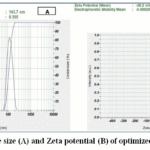 |
Figure 1: Particle size (A) and Zeta potential (B) of optimized NLC formulation |
Table 3: Characterization of Silymarin loaded NLCs
| Batches | X1 | X2 | Particle size (nm) | Entrapment efficiency (%) | Zeta potential (mv) | PDI |
| B1 | -1 | -1 | 300 | 86.3 | -39 | 0.532 |
| B2 | -1 | 0 | 143.6 | 91.5 | -28 | 0.13 |
| B3 | 0 | 0 | 143.7 | 87 | -30.2 | 0.331 |
| B4 | -1 | +1 | 140.5 | 79.3 | -25 | 0.283 |
| B5 | -1 | -1 | 310.7 | 80.96 | -40 | 0.631 |
| B6 | 0 | -1 | 181.6 | 91.36 | -34 | 0.465 |
| B7 | +1 | +1 | 143.7 | 94.63 | -26.2 | 0.355 |
| B8 | -1 | -1 | 151.5 | 88.4 | -31 | 0.017 |
| B9 | 0 | 0 | 129.9 | 92.5 | -23 | 0.219 |
X1 – Amount of Drug and Capmul MCM C8, X2 – Amount of Cetyl Palmitate and Tween 80
* -1, 0, +1 – Low, Medium and High amount of drug and Capmul MCM C8 and Cetyl Palmitate and Tween
NLC formulation
This 3D response curves showed that the effect of surfactants on the respective parameters particle size, PDI & Zeta potential shown in figure 2, 3 & 4 respectively.According to the polynomial equation, SL:LL ratio was direct impact on the particle size. It was discovered that when the lipid ratio increases, rises the particle size. The independent variable, as the surfactant concentration increases there was decrease in the particle size. Zeta potential increases with the increase in concentration of surfactant. When we decrease the surfactant, the PDI increases. Increased concentration of surfactant, produces steric barrier on the surface of particle to protect from coalescence and causes stabilization of NLCs. According to the polynomial equation, SL:LL ratio was direct impact on the entrapment efficiency. On increasing surfactant concentrations, decreases entrapment efficiency. Because of higher concentration of surfactant accelerated drug partition from the medium internal to external phase. According to the polynomial equation, zeta potential decreased as surfactant concentration increased.
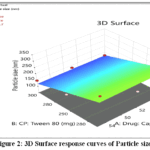 |
Figure 2: 3D Surface response curves of Particle size |
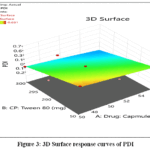 |
Figure 3: 3D Surface response curves of PDI |
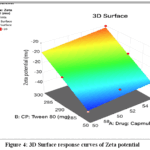 |
Figure 4: 3D Surface response curves of Zeta potential |
Characterization of Silymarin loaded NLC hydrogel
Different concentrations of hydrogels were prepared and observed visually. The gel with 1.5 % Carbopol concentration resulted in clear and firm gel having pH within acceptable range for topical formulations. The gel application on the diseased skin would be more comfortable and easier if it can be spreads easily. Increase in Carbopol 940 concentration results in decrease in spreadability. The viscosity of gel increases with the increasing concentrations of Carbopol.Characterization of Silymarin loaded NLC hydrogel was presented in Table 4.
Table 4: Characterization of Silymarin loaded NLC hydrogel
| Concentration | pH | Spreadability (cm) | Viscosity (cps) | Drug content % |
| 0.5% | 7.74 | 29.4 | 1226 | 70.90 |
| 1% | 7.76 | 20.8 | 1076 | 72.80 |
| 1.5% | 7.77 | 11.38 | 2033 | 89.71 |
| 2% | 7.80 | 10.2 | 2215 | 78.95 |
In vitro release studies
The cumulative release of NLC hydrogel with 1.5 % concentration showed significant release compared with pure drug gel and other 3 concentration of hydrogel. The ex vivo studies of NLC loaded hydrogel and pure gel were carried out using goat skin, permeation parameters like flux and permeability coefficient (KP) were also determined. NLC based hydrogel showed slow permeation of drug compared to pure drug hydrogel. In vitro and Ex vivo studies of NLC hydrogel formulation & permeation parameters were shown in figure 5&Table 5.
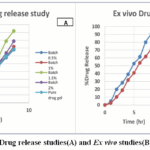 |
Figure 5: In vitro Drug release studies(A) and Ex vivo studies(B) of NLC hydrogel |
Table 5: Permeation parameters of hydrogel
| Parameters | Flux(ug/cm2/h) | Permeability Coefficient (cm/h) |
| Pure Drug gel | 3.186 | 8.946 |
| NLC based hydrogel | 1.592 | 5.476 |
FTIR studies results that the fundamental peaks of Silymarin were retained and absence of any chemical interaction between Silymarin and excipients,FTIR peaks of drug,physical mixture & NLC Formulationpresented in figure 6, 7 & 8 respectively.
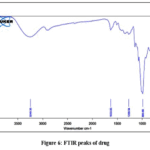 |
Figure 6: FTIR peaks of drug |
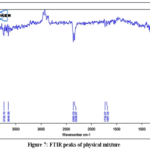 |
Figure 7: FTIR peaks of physical mixture |
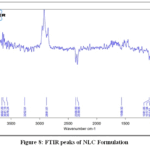 |
Figure 8: FTIR peaks of NLC Formulation |
DSC studies of pure drug showed the melting point peak at 2280C corresponding to the melting point of the drug. It was seen that there is absence of peak of the drug in the thermogram of NLC, because of the encapsulation of drug into NLC due to solubilisation. DSC of Pure drug, optimized NLC formulation shown in figure 9&10. Pure drug sample showed the intense peaks. In the XRD of optimised batch peaks were lowered showing the reduction in the crystallinity compared to the pure drug due to the presence of liquid lipid in the lipid matrix. XRD of Pure drug, optimized NLC formulation shown in figure 11 &12 respectively.
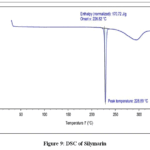 |
Figure 9: DSC of Silymarin |
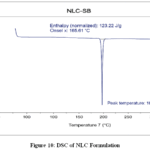 |
Figure 10: DSC of NLC Formulation |
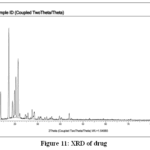 |
Figure 11: XRD of drug |
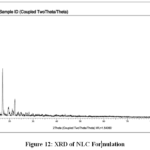 |
Figure 12: XRD of NLC Formulation |
Skin irritation studies
Skin irritation studies results predict that, there was a no sign of either erythema or edema. So the study concluded that developed hydrogel formulations were free from the skin irritation presented in figure 13 and Table 6.
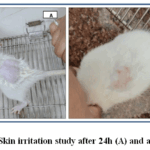 |
Figure 13: Skin irritation study after 24h (A) and after 72h (B) |
Table 6: Skin Irritation Test
| Rat No | Reaction | Standard | Test | ||
| 24 h | 72 h | 24 h | 72 h | ||
| 1 | Erythema | 2 | 2 | 0 | 0 |
| Edema | 1 | 2 | 0 | 0 | |
| 2 | Erythema | 1 | 2 | 0 | 1 |
| Edema | 1 | 2 | 0 | 0 | |
| 3 | Erythema | 1 | 2 | 0 | 0 |
| Edema | 1 | 2 | 0 | 0 | |
| Average | Edema | 1.16 | 2.00 | 0.0741 | 1 |
The histometric measurement demonstrates that control group, standard group (Cortrima® Cream)&Silymarin-NLC hydrogel shows 42.28%, 69.53% &90.28 % degree of orthokeratosis respectively shown in figure 14 and Table 7. Thus, it’s reveals that optimized hydrogel formulation, shown for better psoriasis management.
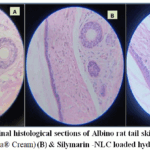 |
Figure 14: Longitudinal histological sections of Albino rat tail skin at 40X Control (A), (Cortrima® Cream)(B) & Silymarin -NLC loaded hydrogel(C) |
Table 7: Effect of control, standard and NLC formulations
| Groups | Degree of Orthokeratosis (%) |
Drug Activity (%) |
| Control | 42.28 | 00.00 |
| Standard(Cortrima® Cream) | 69.53 | 40.65 |
| Silymarin -NLC loaded hydrogel | 90.28 | 58.29 |
Discussion
The solid lipid (Cetyl Palmitate) and Liquid lipid (Capmul® MCM C8) melted above 800C in which drug was added with constant stirring until dissolved to form a lipid phase. At the same time and temperature, surfactant (Tween 80) and water were mixed to form aqueous phase. By maintaining temperature of both phases aqueous phase was added dropwise into lipid phase to form microemulsion, adjusting the proper solid-lipid ratio might be further improved skin retention.FTIR studiesrevealedthat the fundamental peaksofSilymarin wasretained in the optimizedformulationandindicatingabsenceofany chemicalinteractionbetween Silymarin and excipientsused.
In the XRD of formulation the peaks are lowered showing the reduction in the crystallinity compared to the pure drug due to the presence of liquid lipid in the lipid matrix to enhanced drug delivery and antipsoriatic efficacy.The efficacy of formulation was confirmed by in vivo studies.The primary skin irritation index was found to be 0.0757, it indicates barely perceptible irritation.The skin irritation test of the hydrogel formulation showed a skin irritation score (erythema and edema) of less than 1. Histopathological studies showed that, in psoriasis-induced animal treated with silymarin loaded NLC hydrogel, marked reduction in thickness of epidermis, as compared to conventional gel formulation.In the mouse tail test, carbopol based Silymarin-NLC hydrogel produced significant increase in orthokeratosis region, when compared to control and standard formulations.Thus, Silymarin-NLC hydrogel formulation, which proves that its use as an antipsoriatic drug formulation for better management of psoriasis.
Stability Studies
Stability studies were performed,Silymarin NLC loaded hydrogels were stored at40±2°C/75±5%(RH) for 90 days showed no significant loss in drug content. The appearance was found to be smooth; pH was found to be 7.25 and drug content 87.46 respectively after 3 months indicating the stability of the prepared formulationthroughout the study period of 3 months presented in table 8.
Table 8: Evaluation of optimized batch after stability studies
| Time period | Appearance | pH | Drug content (%) |
| Initial | Homogenous | 7.25 | 87.75 |
| 30 days | Homogenous | 7.25 | 87.61 |
| 60 days | Homogenous | 7.25 | 87.50 |
| 90 days | Homogenous | 7.25 | 87.46 |
Conclusion
In conclusion, the results showed that theNLCs exhibit high entrapment efficiency with sustained release of drug up to the period of 8h. DSC and XRD studies confirm the transformation of crystalline nature of drug into amorphous that plays an important role in enhancement of absorption rate followed by bioavailability. it shown that the percentage drug release of optimized batch was found to be 9.23 % and 92.58±0.08% at 1h & 8h respectively. The optimized batch of Hydrogel were no irritation to the skin. The skin irritation test of the hydrogel formulation showed a skin irritation score of less than 1. Hence, it concluded that the Silymarin NLC loaded hydrogelswere free from the skin irritation. Anti-psoriatic activity of 2% NLC hydrogel formulation showed the significant orthokeratosis. Thus, it concluded that the silymarin-NLCs hydrogel formulation is a promising management tool for psoriasis.
Acknowledgement
Anilkumar Jalindar Shinde, Sukeshni Arun Borude& all co-authors are thankful to Abitec Corporation, Janesville, USA for gift sample of Capmul® MCM C8.
Funding Sources
The author(s) received no financial support for the research, authorship, and/or publication of this article.
Conflict of Interest
The author(s) do not have any conflict of interest.
Data Availability Statement
This statement does not apply to this article.
Ethics Statement
All animals were cared for in accordance with CCCSEA norms and with ethical considerations. The study on animals was granted by the institutional ethical council in accordance with CPCSEA rules (Approval No: BVCPK/CCSEA/IAEC/12/24).
Informed Consent Statement
This study did not involve human participants, and therefore, informed consent was not required.
Clinical Trial Registration
This research does not involve any clinical trials.
Permission to reproduce material from other Sources
Not Applicable
Author contributions
- Anilkumar Jalindar Shinde: Conceptualization, methodology, supervised the project, writing –original draft, review and editing;
- Sukeshni Ankush Borade: Conceptualization, methodology, writing – original draft, review and editing;
- Dinanath Tukaram Gaikwad:Data collection, analysis, review & editing;
- Firoj Allaudin Tamboli: Data collection, analysis, review & editing;
- Vijaykumar Tanajirao Pawar: visualization, validation, review & editing.
- Asha Sambhaji Jadhav: Data Analysis, review & editing
References
- Shrivastav S, Sindhu R, Kumar S.et al,. Anti-Psoriatic and Phytochemical evaluation of Thespesia Populnea bark extracts. J. Pharm. Pharm. Sci. 2009;1:176-85.
- Shaikh R, Arya K. Nano phyto-pharmaceuticals: An alternative road to Psoriasis treatment, Journal of Emerging Technologies and Innovative Research, 2021:248-59. DOI:10.1201/9781003274124.
CrossRef - Sumit K, Bhatt D. Preparation and Evaluation of Isoniazid Loaded Chitosan Nanostructures. Res J Pharm Technol. 2020; 13(9):4219-4223.DOI: 10.5958/0974-360X.2020.00745.3
CrossRef - Kaur N, Sharma N, Bedi R. et al,. Topical Nanostructured Lipid Carrier based Hydrogel of Mometasone Furoate for the treatment of Psoriasis. Pharm Nanotechnol. 2018:133-43 DOI:10.2174/2211738506666180523112513
CrossRef - Lebwohl M. Future Psoriasis Therapy. Dermatologic Clinics.1995; (13):915-23. DOI: 10.1016/S0733-8635(18)30054-8
CrossRef - Muhesen R, Rajab N. Formulation and Characterization of Olmesartan medoxomil as a Nanoparticle. Res J Pharm Technol. 2023; 16(7):3314 -3320. DOI: 10.52711/0974-360X.2023.00547.
CrossRef - Daniyal M. et al, Progress and prospects in the management of psoriasis and developments in Phyto‐therapeutic modalities, Dermatologic Therapy. 2019; 32(3):e12866 DOI: 10.1111/dth.12866
CrossRef - Khedekar Y, Mojad A, Malsane P. et al,. “Formulation, development, and evaluation of Silymarin loaded topical gel for fungal infection.” Journal Adv. Pharm. 2019; 8(1):6-9. DOI: 10.7439/ijap
CrossRef - Negi L, Jaggi M, Talegaonkar S.et al. Development of protocol for screening the formulation components and the assessment of common quality problems of nano-structured lipid carriers. J. Pharm.2014;46(1-2):403-410. DOI: 10.1016/j.ijpharm.2013.12.006
CrossRef - Chen Y. Preparation and characterization of a nanostructured lipid carrier for a poorly soluble drug. Colloids Surf. A Physicochem. Eng. Asp.2014; 455:36-43. DOI: 10.1016/j.colsurfa.2014.04.032
CrossRef - Sachan A, Gupta A, Arora M.et al. Formulation & characterization of nanostructured lipid carrier (NLC) based gel for topical delivery of etoricoxib. J Drug Deliv Ther. 2016; 6(2):4-13. DOI: 10.22270/jddt. v6i2.1222
CrossRef - Gaba B.et al. Nanostructured lipid carrier system for topical delivery of terbinafine hydrochloride. Bulletin of Faculty of Pharmacy, Cairo University. 2015; 53(2):147-159. DOI:10.1016/j.bfopcu.2015.10.001
CrossRef - Sarma A, Das M. et al. Formulation by Design (FbD) approach to develop Tenofovir Disoproxil Fumarate loaded Nanostructured Lipid Carriers (NLCs) for the aptness of nose to brain delivery. J Drug Deliv Ther. 2019; 9(2):148-159. DOI:10.22270/jddt. v9i2.2391
CrossRef - Joshi M, Patravale V. et al. Formulation and evaluation of nanostructured lipid carrier (NLC) based gel of Valdecoxib. Drug Dev Ind Pharm. 2006; 32(8):911-918. DOI: 10.1080/03639040600814676
CrossRef - Hajra P, Kondi V, Alluri R.et al. Application of 32 Factorial Design in Formulation and Evaluation of Olmesartan Medoxomil Floating Microsponges. Pharmacol. Pharm. 2023;11(2):102-116. DOI: 10.13189/app.2023.110203
CrossRef - Alam M.et al. Statistically Optimized Tacrolimus and Thymoquinone Co-Loaded Nanostructured Lipid Carriers Gel for Improved Topical Treatment of Psoriasis. Gels.2023; 9(7):515. DOI:10.3390/gels9070515
CrossRef - Sonawane R.et al. Solid lipid nanoparticles-loaded topical gel containing combination drugs: an approach to offset psoriasis. Expert Opin. Drug Deliv. 2014; 11(12):1833-1847. DOI:10.1517/17425247.2014.938634
CrossRef - Negi P.et al. Thymoquinone-loaded lipid vesicles: a promising nanomedicine for psoriasis. BMC Complement. Altern. Med.2019;19:1-9. DOI:10.1186/s12906-019-2675-5
CrossRef - Lee S.et al. Topical formulation of retinyl retinoate employing nanostructured lipid carriers. Pharm. Investig.2012;42:243-250. DOI: 10.1007/s40005-012-0036-1
CrossRef - Iriventi P, Gupta V.et al. Topical delivery of curcumin and caffeine mixture-loaded nanostructured lipid carriers for effective treatment of psoriasis. Mag. 2020;16: 206-217. DOI: 10.4103/pm.pm 26019
CrossRef - Anagha B, Shivanand H, Manoj A, et al. Effect of Lipids and Surfactants on Solid Lipid Nanoparticle Engineering. Res J Pharm Technol. 2011; 4(4): 521–526.
- Kalimuthu S, Yadav A. Nanobased Drug Delivery System: A Review. Res J Pharm Technol. 2009; 2(1):21–27.
- Jaiswal A, Senthil V, Das T. Design and Development of Valsartan Loaded Nanostructured Lipid Carrier for the Treatment of Diabetic wound Healing. Res J Pharm Technol.2019;12(6):2922-2928.
CrossRef - Majumdar A, Dubey N, Dubey N. Cisplatin loaded Nano Lipid Carriers for the Treatment of Skin Cancer. Res J Pharm Technol. 2020; 13(3):1483-1488.
CrossRef - Jangde R, Khute S. Design and Development of Ciprofloxacin Lipid Polymer Hybrid Nanoparticle by Response Surface Methodology. Research J. Pharm. and Tech.2020;13(7):3249-3256.
CrossRef - Rajinikanth PS, Lakshmi PK, Karthikeyan R, et al. Development and evaluation of nanostructured lipid carrier-based hydrogel for topical delivery of 5-fluorouracil. Int J Nanomedicine. 2016;11:5379–5394.
CrossRef - Viegas C, Sanches S, Pires T, et al. Solid Lipid Nanoparticles vs. Nanostructured Lipid Carriers: formulation, stability and applications — review. Pharmaceutics (MDPI). 2023;15(6):1593.
CrossRef - Joukhadar R, et al. Functional NLC-enriched hydrogel for epidermal barrier repair: formulation and compatibility/biocompatibility evaluation. Polymers (MDPI). 2024;10(7):466.
CrossRef - Momin FM, Kevlani V, Rawal SU, et al.Antipsoriatic Effect of Silymarin-Loaded Nanostructured Lipid Carrier Gel: In Vitro and In Vivo Activity. AAPS PharmSciTech. 2024;25:195. doi:10.1208/s12249-024-02910-x.
CrossRef - Rani A, Kaur R, Aldahish A, et al.Nanostructured Lipid Carriers (NLC)-Based Topical Formulation of Hesperidin for Effective Treatment of Psoriasis. Pharmaceutics. 2025;17(4):478.
CrossRef - Iqbal B., Ali J., Ganguli M., Mishra S., Baboota S.Silymarin-Loaded Nanostructured Lipid Carrier Gel for the Treatment of Skin Cancer. Nanomedicine.2019;14(9):1077–1093. DOI:10.2217/nnm-2018-0235
CrossRef - Sindhoor S. M., Koland M.Topical Delivery of Apremilast Loaded Nanostructured Lipid Carrier Based Hydrogel for Psoriasis Therapy. J Pharm Res Int.2021;33(28B):7–20. DOI:10.9734/jpri/2021/v33i28B31531
CrossRef - Patil T. S., Gujarathi N. A., Aher A. A., et al.Recent Advancements in Topical Anti-Psoriatic Nanostructured Lipid Carrier-Based Drug Delivery. J. Mol. Sci.2023;24(3):2978. DOI:10.3390/ijms24032978
CrossRef
 PlumX:
 Views: 1049
  PDF Downloads:
227
PDF Downloads:
227