Stability-Indicating RP-HPLC Method for the Simultaneous Determination of Tenoxicam, Meloxicam, and Piroxicam in Bulk Drug Samples
 , Marwah Thamer Abbas Al-Saadi2and Mohammad Majed Hailat3*
 1Clinical Pharmacy Department, College of Pharmacy, Al-Muthanna University, Samawah, Iraq.
2Pharmaceutics Department, Pharmacy College, Al-Muthanna University, Samawah, Iraq.
3Department of Pharmacy, Faculty of Pharmacy, Al-Zaytoonah University of Jordan, Amman, Jordan.
Corresponding Author E-mail:m.hailat@zuj.edu.jo
DOI : http://dx.doi.org/10.13005/bpj/3469
Download this article as:

A novel isocratic reversed-phase high-performance liquid chromatographic (RP-HPLC) procedure was developed and extensively validated for the simultaneous quantitative determination of three structurally related oxicam anti-inflammatory drugs (Tenoxicam sodium, Meloxicam and Piroxicam) in bulk form in pharmaceutical formulations. Chromatographic separation was achieved on a Syncronis C-18 column (250 × 4.5 mm, 5 µm) using a methanol–water mobile phase (70:30, v/v; pH 3.3) delivered at 0.80 mL/min with ultraviolet detection at 248 nm. Following the ICH Q2(R1) guidance, a comprehensive study of the parameters was carried out, which resulted in excellent linear ranges (r² ≥0.997) for all three compounds, a mean recovery of 99–103%, percent RSD values of intraday and interday repeatability of the method that were less than 2.0% and limits of detection and quantification that were adequate. ICH Q1A(R2) facilitates chemical stress testing under acidic, alkaline, oxidative, thermal and photolytic conditions, resulting in chromatographically distinguishable, baseline-resolved peaks for byproducts, confirming the stability-indicating property of the assay. The elution times for the analytes were 3.874 min (Meloxicam), 4.920 min (Piroxicam), and 6.404 min (Tenoxicam sodium). The validated assay provides an accurate and convenient analytical tool for the simultaneous quality assurance and chemical stability assessment of these three oxicam drugs in pharmaceutical development and regulatory environments.
KEYWORDS:Forced Degradation; ICH Validation; Meloxicam; Oxicam NSAIDs; Piroxicam; RP-HPLC; Stability-Indicating Method; Tenoxicam
Introduction
The oxicam derivatives in the category of non-steroidal anti-inflammatory drugs (NSAIDs) are prominent in therapeutic practice today, especially Tenoxicam sodium, Meloxicam and Piroxicam for their long half-lives, which facilitate once-a-day dosing and enhance patient compliance.1–3
The archetypal oxicam derivative, piroxicam, is known for its strong inhibitory potential and is widely used as an analgesic-anti-inflammatory drug for the treatment of arthropathies and acute gout.
The medicinal use of these chemicals isn’t limited to their analgesic properties. Recent studies suggest that exposure to NSAIDs may disrupt the regulation of transcription of cytochrome P450 (CYP450) enzymes that biotransform arachidonic acid in metabolically active tissues. In an important study, Jarrar et al. showed that several NSAID metabolites and degradation products significantly affect the expression of CYP450 genes in the murine heart, kidney and liver and highlighted the need for accurate and validated analytical methods that can detect the intact drug and multiple metabolites and degradation products to allow detailed pharmacodynamic characterization.4
However, no fully validated, stability-indicating simultaneous determination protocol for all three oxicam drugs in a single analytical sequence has been reported in the literature. Thus, under the guidance of ICH Q1A(R2),5, the methods should be able to separate the parent compound from all degradation products formed from it under stress conditions.
The present investigation was therefore conducted to develop and validate a stability-indicating RP-HPLC assay to enable the simultaneous determination of Tenoxicam sodium, Meloxicam and Piroxicam in bulk pharmaceutical material. The assay design follows the ICH Q2(R1) criteria for validation6 and is intended to ensure that the three analytes undergo systematic chemical stress profiling to separate degradation byproducts from the main peaks.7
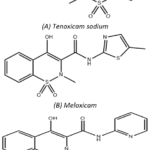 |
Figure 1: Chemical structures of (A) Tenoxicam sodium, (B) Meloxicam, and (C) Piroxicam. |
Materials and Methods
Chemicals and Reagents
Tenoxicam sodium (purity ≥99.0%) and Piroxicam (purity ≥98.5%) were obtained from JPM Pharmaceuticals (Amman, Jordan). Meloxicam (purity ≥ 99.2%) was purchased from Hikma Pharmaceuticals (Salt, Jordan). HPLC-grade methanol, acetonitrile and purified water from CDH Chemicals (Jordan) through the Petra University supply chain were used. Orthophosphoric acid (analytical reagent grade) was used to adjust the pH during eluent preparation. Water of the highest purity was prepared in the laboratory using an ultrapure water purification unit from Milli-Q (Millipore, USA).
Instrumentation
Chromatographic measurements were performed on a Shimadzu LC-Prominence liquid chromatography system (Shimadzu Corporation, Kyoto, Japan) equipped with an LC-20AD quaternary pump, an SPD-20A UV/Vis spectrophotometric detector and a SIL-20A autosampling system, coupled with the Shimadzu LC-Solution data acquisition software. Samples were introduced using an AZURA® dual-position injection valve coupled to a 20 µL sample loop (both from KNAUER, Berlin, Germany). Analyte resolution was accomplished on a Syncronis™ C-18 bonded-phase column (250 × 4.5 mm, 5 µm spherical particles; Thermo Fisher Scientific, Waltham, MA, USA). A Shimadzu UV-1800 scanning UV/Vis spectrophotometer was used to optimize the wavelength.
Selection of Detection Wavelength
Tenoxicam sodium, Meloxicam and Piroxicam solutions (all 10 µg/mL) were each scanned in methanol–water (70:30, v/v) and the spectra superimposed. A common iso-absorptive wavelength of 248 nm was found for the three analytes and was used as the monitoring wavelength (Figure 2) to ensure uniform sensitivity during simultaneous detection. The absorption maxima for the three drugs Tenoxicam, Meloxicam and Piroxicam were found at 239 nm, 245 nm and 295 nm, respectively.
Chromatographic Conditions
Optimized eluents were methanol–water (70:30, v/v) with orthophosphoric acid buffer (pH 3.3) for the aqueous part. The mobile fluid was filtered through a nylon membrane before use (0.20 µm) and degassed with an ultrasonic bath (10 min). Elution was carried out isocratically at 0.80 mL/min using a 248-nm photometric detection system. The injection volume and the chromatographic run time were 20 µL and 12 min, respectively.
Preparation of Standard Solutions
Precisely weighed 10 mg aliquots of each compound were dissolved in 70:30 (v/v) methanol–water to prepare primary stocks at 100 µg/mL, designated as reference standard solutions. Appropriate serial dilutions were obtained for the working concentrations for calibration and validation experiments in the same solvent system.
Method Validation
Systematic validation was carried out in accordance with harmonized guidelines (ICH Q2(R1))6 and included the following parameters.
Linearity and Range
The calibration points were set at six concentration levels for Tenoxicam sodium (5, 10, 15, 20, 25, 30 µg/mL) and Meloxicam and Piroxicam (2, 4, 6, 8, 10, 12 µg/mL), respectively, which were evenly distributed over the concentration range. Peak areas were plotted against nominal concentrations, and linear regression parameters, including slope, intercept, and correlation coefficient (r²), were obtained.
Precision
Intraday (within-day) precision was determined using six replicate injections at three concentrations conducted during a single working session, and between-day (interday) precision was determined over three days of injections using the same procedure. All data were presented as percentage relative standard deviation (%RSD).
Accuracy
Method accuracy was assessed using standard-addition recovery experiments at 80%, 100%, and 120% of the target analytical concentration (n = 3 per level). Mean percentage recovery and associated %RSD values were documented.
Limits of Detection and Quantification
LOD = 3.3σ/S and LOQ = 10σ/S were used to calculate the limit of detection (LOD) and limit of quantification (LOQ) using calibration data, where S is the calibration slope and σ is the standard deviation of the regression y-intercept.
Robustness
Ruggedness was examined by introducing incremental variations in the flow rate (±0.1 mL/min), UV detection wavelength (±1 nm), and mobile-phase methanol proportion (±1%) at a fixed concentration of 10 µg/mL, and recording the effect on the %RSD of peak area.
Forced Degradation Studies
Chemical stability profiling was performed in conformance with ICH Q1A(R2) guidelines.5 Standardised drug solutions (20 µg/mL) underwent the following treatments: (i) acid-mediated hydrolysis in 0.1 N HCl at 60 °C for 6 h; (ii) alkali-mediated hydrolysis in 0.1 N NaOH at 60 °C for 6 h; (iii) peroxide-induced oxidation in 5% H₂O₂ maintained in darkness for 6 h; (iv) dry-heat exposure in a thermostatted oven at 60 °C for 6 h; and (v) photolytic irradiation under direct solar light for 12 h. Samples were neutralized where necessary, diluted to 20 µg/mL, and immediately chromatographed.
Results
Method Development and Optimization
Spectral overlay of the three analytes confirmed a shared iso-absorptive point at 248 nm (Figure 2), which was selected to ensure equivalent and simultaneous UV sensitivity across the analytes. The mobile phase composition, pH, and flow rate were systematically optimized to determine the most favorable combination of peak symmetry, resolution, and run time, yielding a binary methanol–water mixture (70:30, v/v) at pH 3.3 and a flow rate of 0.80 mL/min. When optimized, the elution times for Meloxicam, Piroxicam and Tenoxicam sodium were 3.874, 4.920 and 6.404 minutes, respectively, resulting in well-resolved and symmetrical peaks, as shown in Figure 3. The tailing factors were ≤2.0, and the theoretical plate values were >2000 for all three compounds, which was satisfactory for the column (Table 1).
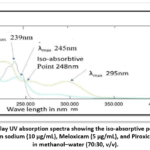 |
Figure 2: Overlay UV absorption spectra showing the iso-absorptive point at 248 nm for Tenoxicam sodium (10 µg/mL), Meloxicam (5 µg/mL), and Piroxicam (5 µg/mL) in methanol–water (70:30, v/v). |
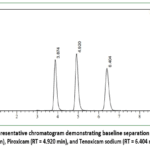 |
Figure 3: Representative chromatogram demonstrating baseline separation of Meloxicam (RT = 3.874 min), Piroxicam (RT = 4.920 min), and Tenoxicam sodium (RT = 6.404 min) at 248 nm. |
Table 1: System Suitability Parameters at 248 nm
| Parameter | Acceptable Limit | Tenoxicam Sodium | Meloxicam | Piroxicam |
| Retention Time (min) | — | 6.404 | 3.874 | 4.920 |
| Tailing Factor | ≤2.0 | 1.099 | 1.249 | 1.301 |
| Resolution (Rs) | ≥2.0 | — | 4.370 | 5.108 |
| Theoretical Plates (USP) | ≥2000 | 5,684 | 5,652 | 7,926 |
Linearity
The calibration plotted was linear within the ranges evaluated for each analyte. The regression parameters are tabulated in Table 2. The signal response is well correlated with concentration over the ranges studied for Tenoxicam sodium (r = 0.9977), Meloxicam (r = 0.9995), and Piroxicam (r = 0.9983) (Figures 4–6).
Table 2: Summary of Validated Performance Parameters
| Parameter | Tenoxicam Sodium | Meloxicam | Piroxicam |
| Linear Range (µg/mL) | 5 – 30 | 2 – 12 | 2 – 12 |
| Regression Equation | y = 36,944x + 81,868 | y = 41,407x + 134,895 | y = 91,050x + 147,818 |
| r² | 0.9977 | 0.9995 | 0.9983 |
| % Recovery | 99.10 – 99.50% | 99.06 – 103.09% | 99.79 – 99.99% |
| Intraday %RSD | ≤2.0% | ≤2.0% | ≤2.0% |
| Interday %RSD | ≤2.0% | ≤2.0% | ≤2.0% |
| LOD (µg/mL) | 1.649 | 0.317 | 0.577 |
| LOQ (µg/mL) | 5.022 | 0.961 | 1.750 |
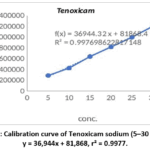 |
Figure 4: Calibration curve of Tenoxicam sodium (5–30 µg/mL); y = 36,944x + 81,868, r² = 0.9977. |
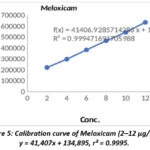 |
Figure 5: Calibration curve of Meloxicam (2–12 µg/mL); y = 41,407x + 134,895, r² = 0.9995. |
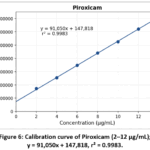 |
Figure 6: Calibration curve of Piroxicam (2–12 µg/mL); y = 91,050x + 147,818, r² = 0.9983. |
Precision
The results for within-day and between-day precision are shown in Tables 3 and 4, respectively. The %RSD values for all analytes across all three concentrations were within the ICH acceptability criterion of ≤ 2.0%, demonstrating high reproducibility of the chromatographic procedure.
Table 3: Intraday Precision of Tenoxicam Sodium, Piroxicam, and Meloxicam (n = 3.
| Conc. (µg/mL) | Tenoxicam Sodium Mean Area ± SEM | Tenoxicam %RSD | Piroxicam Mean Area ± SEM | Piroxicam %RSD | Meloxicam Mean Area ± SEM | Meloxicam %RSD |
| 10 | 451,308 ± 4,638 | 1.78 | 1,058,318 ± 3,911 | 0.64 | 549,065 ± 4,184 | 1.32 |
| 15 | 636,028 ± 6,206 | 1.69 | 1,513,568 ± 5,593 | 0.64 | 756,000 ± 3,055 | 0.70 |
| 20 | 820,748 ± 6,302 | 1.33 | 1,968,818 ± 5,911 | 0.52 | 963,035 ± 3,892 | 0.70 |
*n = 3 replicates; SEM = standard error of the mean; %RSD = percentage relative standard deviation.
Table 4: Interday Precision of Tenoxicam Sodium, Piroxicam, and Meloxicam over Three Consecutive Days (n = 3/day)
| Day | Conc. (µg/mL) | Tenoxicam Mean Area ± SEM | Tenoxicam %RSD | Piroxicam Mean Area ± SEM | Piroxicam %RSD | Meloxicam Mean Area ± SEM | Meloxicam %RSD |
| 1 | 10 | 451,308 ± 4,768 | 1.83 | 1,058,318 ± 4,155 | 0.68 | 548,965 ± 6,402 | 2.02 |
| 15 | 636,028 ± 6,279 | 1.71 | 1,513,568 ± 6,030 | 0.69 | 756,000 ± 2,793 | 0.64 | |
| 20 | 820,748 ± 8,245 | 1.74 | 1,968,818 ± 8,184 | 0.72 | 963,035 ± 3,892 | 0.70 | |
| 2 | 10 | 447,698 ± 4,368 | 1.69 | 1,049,851 ± 4,849 | 0.80 | 544,573 ± 3,773 | 1.20 |
| 15 | 630,940 ± 5,828 | 1.60 | 1,501,459 ± 5,548 | 0.64 | 749,952 ± 3,767 | 0.87 | |
| 20 | 814,182 ± 6,111 | 1.30 | 1,953,067 ± 6,427 | 0.57 | 955,331 ± 4,412 | 0.80 | |
| 3 | 10 | 454,016 ± 4,902 | 1.87 | 1,064,668 ± 4,303 | 0.70 | 552,259 ± 3,507 | 1.10 |
| 15 | 639,844 ± 6,613 | 1.79 | 1,522,649 ± 5,538 | 0.63 | 760,536 ± 3,513 | 0.80 | |
| 20 | 825,672 ± 6,054 | 1.27 | 1,980,631 ± 4,803 | 0.42 | 968,813 ± 3,915 | 0.70 |
Accuracy
The mean recovery values for the spiking levels of Tenoxicam sodium, Meloxicam and Piroxicam were 99.10–99.50%, 99.06–103.09% and 99.79–99.99%, respectively (Table 5). No significant bias and %RSD values ≤2.0% across all experiments indicate that the method provides accurate quantitative estimates with minimal matrix interference.
Table 5: Accuracy Data (Recovery Studies) for Tenoxicam Sodium, Meloxicam, and Piroxicam
| Drug | Unfortified Conc. (µg/mL) | Unfortified Mean Area ± SEM | Fortified Conc. (µg/mL) | Fortified Mean Area ± SEM | % Recovery |
| Tenoxicam Sodium | 5 | 309,889 ± 564 | 5 + 10 | 703,916 ± 2,230 | 99.25% |
| 10 | 467,849 ± 700 | 10 + 10 | 859,251 ± 602 | 99.10% | |
| 15 | 701,784 ± 2,729 | 15 + 10 | 1,000,976 ± 1,796 | 99.50% | |
| Meloxicam | 5 | 351,372 ± 1,214 | 5 + 10 | 912,138 ± 1,514 | 99.06% |
| 10 | 559,118 ± 903 | 10 + 10 | 113,971 ± 1,961 | 103.09% | |
| 15 | 902,034 ± 1,714 | 15 + 10 | 159,612 ± 579 | 99.96% | |
| Piroxicam | 5 | 603,068 ± 1,210 | 5 + 10 | 1,512,384 ± 3,064 | 99.87% |
| 10 | 1,058,318 ± 2,140 | 10 + 10 | 1,966,906 ± 4,205 | 99.79% | |
| 15 | 1,513,568 ± 3,120 | 15 + 10 | 2,423,977 ± 5,900 | 99.99% |
Limits of Detection and Quantification
The calculated LOD values were: 1.649 µg/mL for Tenoxicam sodium, 0.317 µg/mL for Meloxicam, and 0.577 µg/mL for Piroxicam; the LOQ values were: 5.022 µg/mL for Tenoxicam sodium, 0.961 µg/mL for Meloxicam, and 1.750 µg/mL for Piroxicam. The figures show that the assay has sufficient analytical sensitivity and can detect even small concentrations of all compounds, including low-level degradation products.
Robustness
Each of the flow rate and UV wavelength was intentionally varied within narrow limits, and %RSD values for peak area responses were determined to be below 2.0% for all analytes (Table 6), indicating that the procedure has performance characteristics that remain consistent to minor unintentional variations in operation that are common in routine laboratory applications.
Table 6: Robustness Results of the Proposed RP-HPLC Method.
| Drug | Parameter | Optimized Value | Tested Value | Peak Area | RT (min) | Theoretical Plates | Tailing Factor |
| Tenoxicam Sodium | Flow Rate | 0.8 mL/min | 0.7 mL/min 0.9 mL/min | 988,307 696,643 | 7.2 5.6 | 6,690 6,374 | 1.176 1.159 |
| Wavelength | 248 nm | 247 nm 249 nm | 981,934 732,636 | 6.3 6.3 | 6,512 6,473 | 1.170 1.165 | |
| Meloxicam | Flow Rate | 0.8 mL/min | 0.7 mL/min 0.9 mL/min | 791,639 650,994 | 3.9 3.3 | 4,417 3,969 | 1.120 1.174 |
| Wavelength | 248 nm | 247 nm 249 nm | 714,242 739,384 | 3.6 3.6 | 4,219 4,991 | 1.899 1.991 | |
| Piroxicam | Flow Rate | 0.8 mL/min | 0.7 mL/min 0.9 mL/min | 222,418 199,947 | 5.6 4.0 | 5,613 5,009 | 1.542 1.109 |
| Wavelength | 248 nm | 247 nm 249 nm | 213,796 196,780 | 6.3 6.3 | 5,700 5,590 | 1.099 1.001 |
Forced Degradation Studies
Results of chemical stress profiling experiments are summarized in Table 7 and presented in Figures 7, 8 and 9. The most extensive degradation was achieved using an acid-promoted hydrolytic treatment: 21% for Tenoxicam sodium, 45% for Meloxicam and 27% for Piroxicam. The degradation extents were 25%, 38% and 18%, respectively, in the alkaline hydrolysis. Moderate losses (6–14%) were observed under oxidative challenge, and losses under photolytic challenge were 8–16%. Dry-heat stress caused the least chemical breakdown among the three compounds (2–9%), indicating relative thermal resistance. In each case, there was an unambiguous chromatographic separation of additional peaks identified as degradation byproducts, with retention times distinct from those of the parent analytes, confirming the stability-indicating nature of the method.
Table 7: Forced Degradation Study Data for Tenoxicam Sodium, Meloxicam, and Piroxicam
| Stress Condition | Tenoxicam Area | Tenoxicam % Deg. | Tenoxicam % Rec. | Meloxicam Area | Meloxicam % Deg. | Meloxicam % Rec. | Piroxicam Area | Piroxicam % Deg. | Piroxicam % Rec. |
| Acid Hydrolysis | 648,391 | 21% | 79% | 529,669 | 45% | 55% | 1,437,237 | 27% | 73% |
| Base Hydrolysis | 615,561 | 25% | 75% | 597,082 | 38% | 62% | 1,614,431 | 18% | 82% |
| Oxidation | 730,466 | 11% | 89% | 828,210 | 14% | 86% | 1,850,689 | 6% | 94% |
| Thermal | 746,881 | 9% | 91% | 943,774 | 2% | 98% | 1,791,624 | 9% | 91% |
| Photolytic | 722,258 | 12% | 87% | 808,949 | 16% | 84% | 1,811,313 | 8% | 92% |
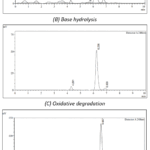 |
Figure 7: Chromatograms of Tenoxicam sodium subjected to (A) acid hydrolysis, (B) base hydrolysis, (C) oxidative stress, (D) thermal stress, and (E) photolytic stress. |
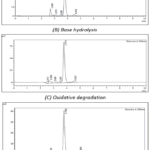 |
Figure 8: Chromatograms of Meloxicam subjected to (A) acid hydrolysis, (B) base hydrolysis, (C) oxidative stress, (D) thermal stress, and (E) photolytic stress. |
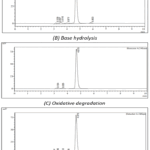 |
Figure 9: Chromatograms of Piroxicam subjected to (A) acid hydrolysis, (B) base hydrolysis, (C) oxidative stress, (D) thermal stress, and (E) photolytic stress. |
Discussion
The chromatographic conditions given in this study are the result of a moderate optimization to achieve the best compromise between separation efficiency, analysis speed and eluent simplicity. Suppression of the enol and sulfonamide ionization using a reversed-phase C-18 column and a methanol–water eluent at pH 3.3 enhances hydrophobic retention and peak shape. The short runtime of 12 min and clean baseline separation of all three analytes, with Rs values ≥4.3 (Table 1), are favorable compared to previously reported individual/binary HPLC methods.8,9
These findings are consistent with the physicochemical characteristics of the oxicam pharmacophore: a class of NSAIDs whose anti-inflammatory mechanisms are well established,10 including the extensively documented pharmacological profile of Tenoxicam,11 and the preferential COX-2 selectivity of Meloxicam.12 The present simultaneous HPLC method also demonstrates advantages over previously reported high-performance thin-layer chromatographic procedures for individual oxicam analytes.13
The LOD for Meloxicam is extremely low (0.317 µg/mL), attributable to its high molar absorptivity at 248 nm relative to the other two analytes, consistent with its well-characterized spectral and analytical profile.14 The LOQ values for all three compounds are significantly below the concentrations likely to be observed during pharmaceutical degradation, making them suitable for monitoring trace levels of impurities.
The forced degradation profiling showed that the three oxicam structures and the stress modalities were susceptible in different ways. Meloxicam was found to be the most sensitive compound to acid-catalyzed hydrolysis, with 45% degradation, possibly due to the hydrolytic lability of the thiazolamide linkage under strongly acidic conditions. All three compounds (≤9% degradation at 60 °C for 6 h) are comparably thermally stable, which is a pharmacokinetically favorable characteristic of the physical stability of oxicam solids. The chromatographic resolution of each degradation product peak relative to its parent peak was also unambiguous across all five stress modalities for all three analytes, confirming the method’s ability to separate the intact API from chemically altered species, a requirement for stability-indicating designation.
Other pharmacologic factors complement these analytical studies. Concurrently, the simultaneous quantification of Tenoxicam sodium, Meloxicam and Piroxicam is not only a quality control requirement but also a prerequisite for comprehensive pharmacokinetic and pharmacodynamic studies of combination treatments involving these agents, ensuring accurate and validated quantification.4
Conclusion
A stability-indicating RPHPLC method has been fully validated for the simultaneous analysis of Tenoxicam sodium, Meloxicam and Piroxicam in bulk pharmaceutical formulation. All analytes were separated from the baseline in 12 min by isocratic elution using methanol-water (70:30, v/v; pH 3.3) at 0.80 mL/min and detected at 248 nm. Intra-day and inter-day precision were validated using ICH Q2(R1) criteria; r2 was greater than 0.997, recovery was 99-103 percent, and %RSD was less than 2.0 percent. By-product peaks have been fully resolved across all forced degradation conditions, thereby providing a stability-indicating characteristic. This validated assay is a deployable analytical tool for pharmaceutical quality assurance, stability programs and pharmacokinetic studies of these oxicam NSAIDs.
Acknowledgement
The authors thank Al-Zaytoonah University of Jordan’s Faculty of Pharmacy for their assistance and the College of Pharmacy, Al-Muthanna University, for providing access to laboratory instrumentation and analytical resources throughout this work.
Funding Sources
This manuscript was supported financially by Al-Zaytoonah University of Jordan (Grant No. 2026-2025/09/07).
Conflict of Interest
The authors do not have any conflict of interest.
Data Availability Statement
This statement does not apply to this article.
Ethics Statement
This research did not involve human participants, animal subjects, or any material that requires ethical approval.
Informed Consent Statement
This study did not involve human participants, and therefore, informed consent was not required.
Clinical Trial Registration
This research does not involve any clinical trials.
Permission to reproduce material from other sources
Not Applicable
Author Contributions
- Noor Thamer Ali Al-Saadi: Conceptualization, Methodology, Investigation, Data Collection, Writing – Original Draft.
- Marwah Thamer Ali Al-Saadi: Methodology, Investigation, Formal Analysis, Data Curation.
- Mohammad Mahmoud Hailat: Supervision, Writing – Review & Editing, Project Administration, Funding Acquisition.
References
- Bhatt DL, Scheiman J, Abraham NS, et al. ACCF/ACG/AHA 2008 expert consensus document on reducing the gastrointestinal risks of antiplatelet therapy and NSAID use. Circulation. 2008;118(18):1894-1909.
CrossRef - Warner TD, Mitchell JA. Cyclooxygenases: new forms, new inhibitors, and lessons from the clinic. FASEB J. 2004;18(7):790-804.
CrossRef - Furst DE. Meloxicam: selective COX-2 inhibition in clinical practice. Semin Arthritis Rheum. 1997;26(6 Suppl 1):21-27.
CrossRef - Jarrar YB, Jarrar Q, Abed A, Abu-Shalhoob M. Effects of nonsteroidal anti-inflammatory drugs on the expression of arachidonic acid-metabolizing Cyp450 genes in mouse hearts, kidneys and livers. Prostaglandins Other Lipid Mediat. 2019;141:14-21.
CrossRef - International Conference on Harmonisation. Q1A(R2): Stability testing of new drug substances and products. ICH; 2003.
- International Conference on Harmonisation. Q2(R1): Validation of analytical procedures: text and methodology. ICH; 2005.
- Bakshi M, Singh S. Development of validated stability-indicating assay methods – critical review. J Pharm Biomed Anal. 2002;28(6):1011-1040.
CrossRef - Al-Ghannam SM, Belal F. Simultaneous determination of piroxicam and tenoxicam by HPLC and its application to pharmaceutical preparations. Il Farmaco. 2004;59(2):107-113.
- El-Gindy A, El-Zeiny BA, Nassar MW. Stability-indicating methods for the determination of piroxicam in the presence of its degradation products. J Pharm Biomed Anal. 2001;24(4):637-645.
- Vane JR, Botting RM. Anti-inflammatory drugs and their mechanism of action. Inflamm Res. 1998;47(Suppl 2):S78-S87.
CrossRef - Todd PA, Clissold SP. Tenoxicam: a review of its pharmacology and therapeutic efficacy. Drugs. 1991;41(4):625-646.
CrossRef - Hinz B, Brune K. Cyclooxygenase-2: 10 years later. J Pharmacol Exp Ther. 2002;300(2):367-375.
CrossRef - Attimarad M, Ahmed KK, Aldhubaib BE, Harsha S. High-performance thin-layer chromatography: a powerful analytical technique in pharmaceutical drug discovery. Pharm Methods. 2011;2(2):71-75.
CrossRef - Belal F, Al-Badr A, Al-Majed AA. Analytical profile of meloxicam. Profiles Drug Subst Excip Relat Methodol. 2006;31:115-177.
 PlumX:
 Views: 1015
  PDF Downloads:
235
PDF Downloads:
235