Evaluation of a Childbirth Preparation Program Regarding Anxiety, Depression, and Body Image Among Pregnant Women: A Single-Group Pre-Post Cohort Study in the Province of Settat (Morocco).
 , Ismail Sahlaoui, Latifa Mochhoury, Fatima zahra Laamiriand Milouda Chebabe
 Department of Health Sciences and Technologies, Higher Institute of Health Sciences, Hassan First University of Settat, Settat, Morocco
Corresponding Author E-mail:i.aitkaddour@uhp.ac.ma
DOI : http://dx.doi.org/10.13005/bpj/3465
Download this article as:

Childbirth preparation is an essential component of prenatal care, helping to improve pregnant women’s knowledge, reduce anxiety, and promote their psychological well-being, particularly in areas with low socioeconomic status, where childbirth is often perceived as a stressful experience. In this context, it appears necessary to assess the impact of these interventions on the mental health of pregnant women. This study aims to evaluate the effect of a structured childbirth preparation program on the psychological well-being of pregnant women in the province of Settat. A single-group pre-post cohort study was conducted over a 10-month period between February and December 2025, including 205 pregnant women, with ethical approval obtained prior to data collection. The intervention consisted of a structured childbirth preparation program comprising four sessions led by a midwife, incorporating educational, psychological, and physical components. Data were collected using sociodemographic questionnaires, the Hospital Anxiety and Depression Scale (HADS), and the Body Image Scale (BIS), with assessments conducted at baseline (pre-test, T0) and immediately after the final session of the program (post-test, T1). Participants had a mean age of 28.07 ± 6.19 years, with the majority coming from lower-income backgrounds (53.7%) and reporting a high baseline fear of childbirth. Following the intervention, a significant reduction in psychological scores was observed; for anxiety (HADS-A), the mean score decreased from 12.42 ± 4.44 to 7.37 ± 2.97, and the depression score (HADS-D) decreased from 12.50 ± 4.74 to 7.44 ± 3.04. Furthermore, the BIS score also showed a significant decrease, moving from 23.32 ± 7.86 to 12.89 ± 2.62. These pre-post differences were statistically significant with large Cohen's effect sizes (0.94, 0.86 and 1.22, respectively), indicating a meaningful trend toward better psychological adaptation. In conclusion, the positive outcomes observed following this childbirth preparation program suggest the potential value of systematically integrating such interventions into prenatal care in Morocco, particularly in resource-limited regions.
KEYWORDS:Anxiety; Body image; Childbirth preparation; Depression; Pregnant women
Introduction
Childbearing represents a major milestone in a woman’s life, involving complex physical, psychological, emotional, social, and cultural transitions. However, this experience is frequently accompanied by fear and anxiety. Pregnancy is a critical period characterized by profound transformations that extend far beyond physiological alterations to encompass psychological dimensions.1 During this transitional phase, women are highly vulnerable to psychological distress, marked by an increased risk of anxiety, depression, and body dissatisfaction.2
Anxiety during pregnancy is a psychological construct closely associated with negative temporal perception and a stressful orientation toward the future.1 High levels of maternal anxiety and prenatal stress are strongly associated with an increased risk of adverse perinatal outcomes, including preterm birth and low birth weight.3 Depressive symptoms are equally prevalent during the antenatal period and significantly elevate the risk of long-term health problems for both the mother and the infant.2 Antenatal depression and anxiety represent the primary risk factors for postpartum depression, a major complication affecting 10% to 15% of women globally.4
Furthermore, rapid gestational weight gain and rapid morphological adjustments often lead to complex, mixed feelings regarding body image, triggering severe body dissatisfaction and weight-related anxiety.5 In this context, robust evidence highlights a significant association where body dissatisfaction directly compounds prenatal depression and anxiety symptoms.6
To safeguard the physical and psychological well-being of expectant mothers, structured childbirth preparation programs are essential. The World Health Organization (WHO) explicitly recommends comprehensive antenatal education as an integral component of routine prenatal care to ensure a positive pregnancy experience.7 Participation in these programs plays a crucial role in enhancing both the physical and psychosocial preparedness of expectant mothers. Antenatal education significantly enhances women’s knowledge of the physiological and emotional stages of labor while simultaneously lowering childbirth-related fears.8 Additionally, these structured classes assist women in identifying early symptoms of postpartum affective disorders, facilitating timely healthcare-seeking behaviors.9 International evidence from diverse socio-cultural contexts including China, the Netherlands, Turkey, and the United States confirms that structured childbirth preparation programs yield significant, positive outcomes for maternal mental health and overall childbirth satisfaction.10
Despite the proven benefits of childbirth preparation programs in various international settings, their implementation remains limited in Morocco. Indeed, these programs are not systematically integrated into prenatal care services, particularly in public health facilities and in resource-limited areas. This lack of access may contribute to maintaining high levels of anxiety and negative perceptions of childbirth among pregnant women in Morocco. To our knowledge, national scientific data evaluating the effectiveness of these interventions on maternal mental health particularly in terms of anxiety, depression, and body image remain scarce, if not nonexistent. In this context, it appears necessary to conduct intervention studies tailored to the Moroccan context in order to document the actual impact of these programs.
Therefore, the present research aims to evaluates the effects of childbirth preparation program on depression, anxiety and dissatisfaction of body image during pregnancy and postpartum psychological health.
Materials and Methods
Study design
This study adopts a quasi-experimental, single-group pre/post-intervention design aimed at evaluating the psychological impact of a childbirth preparation program on pregnant women in Morocco. Participants underwent psychological assessments before entering the program and after its completion. Given the absence of a concurrent control group, each participant served as her own control. The study was conducted in urban and rural public primary healthcare facilities in the province of Settat, Morocco, over a 10-month period, from February 2025 to December 2025.
Sample/Participants
The study population consisted of pregnant women in their first second and third trimesters of pregnancy who had no complications. The women had normal pregnancies, with no identified maternal or fetal conditions at the time of enrollment were included. Pregnant women who were excluded from the study were those with high-risk pregnancies, obstetric histories requiring specific monitoring, or medical contraindications to physical preparation for childbirth.
Initially, 304 pregnant women were recruited to participate in the study. The sample size was determined based on feasibility and similar studies using convenience sampling, which included participants who were available and willing to participate at the time of the study. To reduce selection bias, participants were recruited from multiple centers from urban and rural environment. After applying exclusion criteria, including the presence of pregnancy-related conditions, as well as discontinuation of the childbirth preparation program or refusal to continue participating in the study, 99 participants were excluded. The final sample thus comprised 205 pregnant women who completed the entire childbirth preparation program and participated in the pre- and post-
intervention assessments (Figure 1).
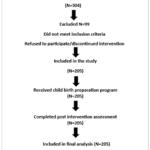 |
Figure 1: Flow diagram of participant recruitment |
Instrument
General characteristics
The general characteristics of the study population are collected using a questionnaire completed by collecting information from the participants in person. The questionnaire containing sociodemographic data and data on obstetric history.
Psychological assessment tools
The psychological assessment of the participants was conducted using validated questionnaires administered in person to the participants. Anxiety and depression levels were assessed using the Hospital Anxiety and Depression Scale (HADS) developed by Zigmond et al 11 this scale includes 14 items. Body Image Scale (BIS) developed by Hopwood et al 12 this 10-item scale was employed to evaluate the participants’ perception of their body image.
These instruments were administered at two times: before the start of the intervention (time T0) and at the end of the birth preparation program (time T1). The questionnaires were completed by the participants under standardized conditions that guaranteed confidentiality and the absence of influence from the practitioner. Scores were calculated in accordance with the specific recommendations for each scale.
An analysis of the internal consistency of the scales used shows that Cronbach’s alpha coefficients are high for both instruments. Indeed, the HADS scale has an alpha of 0.83, indicating good internal consistency among its items. Similarly, the BIS scale has an even higher alpha of 0.93, reflecting excellent internal consistency, with very strong homogeneity among the items.
Educational Program Protocol
This study evaluates a structured health education and support program. In accordance with the World Health Organization (WHO) guidelines, this program constitutes a routine, non-interventional educational practice and does not qualify as a clinical trial, as it does not modify standard medical surveillance or clinical management.
The program comprised four structured group sessions, each lasting an average of 90 minutes, led by a certified midwife. To ensure the strict reproducibility of this multimodal approach, each 90-minute session was systematically divided into two balanced phases: 45 minutes of psychological/educational support and 45 minutes of physical preparation. The active participation of the women was encouraged to promote knowledge acquisition. While conducted according to a standardized protocol to ensure content consistency, the facilitator allowed for individual adaptations based on the needs expressed.
The specific contents and progression of the four sessions were operationalized as follows:
Session 1: Physiology of Pregnancy and Body Awareness
- Psychological & Educational Component (45 min): Interactive education on the anatomy and physiology of late pregnancy, coupled with guided group discussions aimed at expressing maternal representations, expectations, and early emotions related to childbirth.
- Physical Component (45 min): Practical exercises focusing on diaphragmatic breathing, pelvic mobilization (using Swiss balls), and teaching ergonomic postures adapted to the end of pregnancy to relieve lumbar discomfort.
Session 2: Stages of Labor and Pain Regulation
- Psychological & Educational Component (45 min): Detailed breakdown of the first stages of labor (uterine contractions, cervical dilation) and cognitive reframing regarding labor pain, focusing on stress regulation and anxiety reduction.
- Physical Component (45 min): Practice of active labor positions (squatting, asymmetrical kneeling), implementation of rhythmic breathing techniques, and non-pharmacological pain management exercises (such as relaxation and sacral counter-pressure).
Session 3: Delivery Dynamics and Empowerment
- Psychological & Educational Component (45 min): Psychological preparation for the birth process, addressing fear of the unknown, strengthening maternal self-efficacy, and discussion of the birth plan.
- Physical Component (45 min): Expulsion dynamics, including practical training on physiological pushing techniques (exsufflation and open-glottis pushing) and body mobilization techniques to facilitate fetal descent while protecting the perineum.
Session 4: Postpartum Transition and Neonatal Care
- Psychological & Educational Component (45 min): Psychological anticipation of the postpartum period, prevention of the “baby blues,” adjustments to family dynamics, and education on the neurobiology of early maternal-infant attachment.
- Physical Component (45 min): Introduction to early postpartum physical recovery, including gentle hypopressive breathing for deep core activation, relaxation techniques for sleep hygiene, and ergonomic guidelines for safe newborn handling.
Data collection
The data collection process was carried out in a systematic manner to evaluate the effectiveness of the childbirth preparation program. Data were collected at two distinct phases: at baseline, prior to the intervention (T0), and immediately following the completion of the program (T1).
Participants were recruited and interviewed in person within the healthcare facilities of the Settat Province. To ensure the integrity of the results, all questionnaires were administered under standardized conditions. The researchers ensured a private and quiet environment for the participants to complete the tools, guaranteeing confidentiality and minimizing potential observer bias or practitioner influence.
A structured, self-administered questionnaire was used to gather the general characteristics of the study population and the psychological impact of the program was measured using two internationally validated scales Hospital Anxiety and Depression Scale (HADS) and Body Image Scale (BIS).
All scores were calculated strictly following the specific scoring instructions provided by the original authors of each scale.
- For the HADS, sub-scores for anxiety (HADS-A) and depression (HADS-D) were derived separately.
- For the BIS, a total score was calculated where higher scores indicate greater body image distress.
Data were then coded and entered into a database for subsequent statistical analysis, ensuring that each participant was assigned a unique identification code to maintain anonymity throughout the longitudinal follow-up (T0 to T1).
Data analysis
Statistical analyses were performed using the Statistical Package for the Social Sciences (SPSS) software. The variables were described using the mean, frequencies, and standard deviation. The comparison of psychological scores obtained before (T0) and after the intervention (T1) was performed using Student’s t-test for paired samples, as the same group of participants was assessed at both measurement times. The relationships between the different psychological variables were explored using Pearson’s correlation coefficient. The threshold for statistical significance was set at p < 0.05.
All included participants (n = 205) completed both assessments, therefore, no missing data were present in the final dataset, as only participants who completed the pre- and post-intervention assessments were included in the final analysis.
Ethical Consideration
The protocol for our study was approved by the Ethics Committee of the Faculty of Medicine and Pharmacy at Hassan 2 University in Casablanca under the approval number N 02/DRC/00. After explaining to the participants that the data collected was for scientific research purposes only, their consent to participate in the study was obtained. A commitment was drawn up guaranteeing the participants anonymity and the right to confidentiality throughout the study.
Informed Consent Statement
Informed consent was obtained from all individual participants included in this study prior to their participation in the childbirth preparation program. All procedures performed involving human subjects were conducted in strict accordance with the ethical standards of the institutional research committee and conform to the legislative and ethical standards currently applied in Morocco regarding medical and epidemiological research. The privacy and confidentiality rights of all human subjects were strictly observed throughout the study, and all collected data were anonymized.
Results
The characteristics of the study population show that the pregnant women have a mean age of 28.07 ± 6.19 years, indicating a young population in their prime reproductive years. The majority have a low socioeconomic status, with 53.7% having a monthly income of less than 2,800 MAD. From a sociodemographic perspective, nearly all participants are married (98%) (Table1). Educational attainment remains generally low to intermediate, with a low proportion having completed higher education (9.7%) (Table1).
From an obstetric perspective, participants had an average gestational age of (2.34 ± 1.25) and an average parity of (1.22 ± 1.19), and were primarily in the second trimester of pregnancy (69.3%), suggesting relatively late initiation of prenatal care. However, the pregnancy follow-up rate is high (92.7%), primarily provided in the public sector (67.3%) and at health centers, although access to specialists remains limited (Table1).
Table 1: Characteristics of pregnant women (N=205)
| Variable | Category / Parameter | n (%) or m ± sd |
| SOCIO-DEMOGRAPHICS | ||
| Age (years) | Mean ± Standard Deviation | 28.07 ± 6.19 |
| Income (MAD) | < 28002800-5000
> 5000 |
110 (53.7%)84 (41%)
11 (5.3%) |
| Marital status | MarriedOther / Unmarried | 201 (98%)4 (2.0%) |
| Education | Illiterate or Elementary School Level | 102 (49.8%) |
| Middle School or High School | 83 (40.5%) | |
| Higher Education | 20 (9.7%) | |
| Professional | Active (Yes) | 26 (12.7%) |
| Residence | UrbanRural | 134 (65.4%)71 (34.6%) |
| OBSTETRIC PROFILE | ||
| Parity | Mean ± Standard Deviation | 1.22 ± 1.19 |
| Trimester | 1st2nd
3rd |
18 (8.8%)142 (69.3%)
45 (21.9%) |
| Pregnancy monitoring | Monitored (Yes)Not monitored (No) | 190 (92.7%)15 (7.3%) |
| Healthcare sector | PublicPrivate
Semi public |
138 (67.3%)58 (28.3%)
9 (4.4%) |
| Pathology | Normal pregnancy (Yes)Pathological pregnancy (No) | 113 (55.1%)92 (44.9%) |
However, the results highlight a significant gap in prenatal education. In fact, 72.7% of women received no information about childbirth preparation, and knowledge regarding its objectives, components, and benefits remains generally insufficient. Attendance at preparation classes is very low (3.9%), with a limited average number of sessions (2 ± 0.81). Furthermore, the perception of childbirth is predominantly negative, being associated with stress (35.6%) and pain (35.1%), which results in a significant fear of childbirth among 90.2% of the participants (Table 2).
Furthermore, specific knowledge regarding maternal and neonatal health remains limited, particularly concerning newborn care, perineal rehabilitation (2%), and pain management techniques (5.4%). Nevertheless, a marked interest in childbirth preparation is observed, as 96.6% of women express a desire to participate in these sessions during a future pregnancy (Table 2).
Table 2: Information and knowledge about childbirth preparation (N=205)
| Variable | Category / Parameter | n (%) or m ± sd |
| Information received | YesNo | 56 (27.3%)149 (72.7%) |
| Source of information | Social MediaMidwife
Family |
40 (71.4%)7 (12.5%)
9 (16.1%) |
| Knowledge (Yes) | Comprehensive support (physical and psychological) | 38 (18.5%) |
| Plan de naissance | 18 (8.8%) | |
| Newborn Care | 47 (22.9%) | |
| Prevention of Postpartum Depression | 27 (13.2%) | |
| Fear of childbirth | YesNo | 185 (90.2%)20 (9.8%) |
| Warning signs | Knowledge of signs (Yes) | 122 (59.5%) |
| Breastfeeding | Awareness of importance (Yes) | 130 (63.4%) |
| Future wish | Desire to attend classes (Yes) | 198 (96.6%) |
The results showed a significant improvement in psychological scores between the pre-test and post-test for all variables studied. With regard to anxiety measured by the HADS-A scale, the mean score decreased from 12.42 ± 4.44 to 7.37 ± 2.97, with a statistically significant difference (p < 0.001). This significant decrease reflected a notable reduction in anxiety levels following the intervention. Similarly, the depression score (HADS-D) decreased significantly, from 12.50 ± 4.74 to 7.44 ± 3.04 (p < 0.001) (Table3).
Furthermore, the BIS score, which assesses body image or perceived stress depending on the tool used, also showed a significant decrease, from 23.32 ± 7.86 to 12.89 ± 2.62 (p < 0.001) (Table3).
The effect size analysis confirmed the clinical relevance of these results. Indeed, Cohen’s d values are high for all three variables, indicating large to very large effects of the intervention. This means that the observed changes are not only statistically significant but also clinically significant (Table3).
In summary, these results demonstrated that the intervention had a major positive impact on reducing anxiety and depression and on improving the participants’ psychological well-being.
Table 3: Results of pre-test and post-test of HADS and BIS tools (N=205)
| Variable | Pre-test (Mean ± Sd) | Post-test (Mean ± Sd) | Paired Test t (t, df) | IC [Lower; Upper] | P-value | Cohen’s d size of the effect | |
| Hads_A | 12.42 ± 4.44 | 7.37 ± 2.97 | t= 13.549, df= 204 | [4.31; 5.78] | p<0.001 | 0.94 | |
| Hads_D | 12.50 ± 4.74 | 7.44 ± 3.04 | t=12.416, df= 204 | [4.21;5.79] | p<0.001 | 0.86 | |
| BIS | 23.32 ± 7.86 | 12.89 ± 2.62 | t=17.579, df= 204 | [9.26; 11.60] | p<0.001 | 1.22 | |
*Note: HADS-A: Hospital Anxiety and Depression Scale-Anxiety. HADS-D: Hospital Anxiety and Depression Scale-Depression. BIS: Body image scale.
* Calculation of Cohen’s d size of the effect: with t: test t value and N: sample size.
Adverse events
Regarding the adverse effects of the intervention, as long as it remains a purely educational intervention no adverse events or unintended effects related to this action were reported during the study period.
Discussion
An analysis of the sociodemographic data for the study population reveals a high proportion of women with low socioeconomic status and low levels of education, confirming their significant vulnerability. Recent studies have shown that low educational attainment is significantly associated with reduced use of maternal health services and a lack of knowledge.13 Furthermore, low-income women face an increased risk of psychological disorders during pregnancy.14
With regard to prenatal care, although the rate of care is high (92.7%), the fact that the majority of women are in their second trimester suggests a delay in the initiation of care. Several recent studies confirm that late initiation of care is common in low- and middle-income countries.15
The results also highlight a major gap in prenatal education, with 72.7% of women having received no information on childbirth preparation. This finding is consistent with the conclusions of a recent systematic review showing that access to prenatal education remains inadequate in many settings.16 A more recent meta-analysis confirms that prenatal education programs significantly improve knowledge, childbirth preparation, and psychological well-being.17
The very low participation in childbirth preparation classes (3.9%) observed in this study is also reported in the literature, where the main barriers include lack of information, limited accessibility, and sociocultural factors.18
Furthermore, the predominantly negative perception of childbirth and the high prevalence of fear (87.8%) are consistent with recent data. A meta-analysis showed that fear of childbirth is strongly associated with a lack of information and can be significantly reduced through prenatal education.17 Similarly, a randomized controlled trial demonstrated that educational interventions significantly reduce fear and improve confidence among pregnant women.19
Regarding knowledge of maternal health, the results reveal significant gaps, particularly in perineal rehabilitation (2%) and pain management techniques (5.4%). These findings are consistent with a study conducted in Saudi Arabia showing that 84.17% of pregnant women had a low level of knowledge regarding perineal massage.20 In contrast, the higher level of knowledge regarding breastfeeding observed (63.4%) can be attributed to international awareness campaigns led by UNICEF.
The significant reduction in anxiety (HADS-A) and depression (HADS-D) scores observed following the intervention is consistent with several recent studies. A systematic review21 and earlier work22 suggest that psychoeducational interventions during pregnancy are associated with lower levels of anxiety and depression.
Furthermore, a recent meta-analysis17 highlighted a general trend toward decreased anxiety and depression following prenatal education programs.
The decrease in the BIS score observed in this study also tends to support an improvement in overall psychological well-being. These results align with recent studies indicating that mindfulness-based interventions and prenatal education may contribute to better emotional adaptation during pregnancy.23
This study has several significant methodological and scientific strengths. First, the sample size (n = 210) is relatively large, providing sufficient statistical power to detect significant differences between the two measurement time points.
Furthermore, the use of validated psychometric assessment tools (HADS and BIS) with excellent internal consistency (α = 0.83 and 0.93) ensures the reliability of the psychological measurements.
Despite its contributions, this study has certain limitations that should be taken into account, since the majority of participants came from modest socioeconomic backgrounds and were predominantly urban, the results may not be easily generalizable to other social contexts.
Acknowledging these findings, several methodological limitations inherent to the single-group pre-post design must be considered. In the absence of a randomized control group, we cannot completely rule out alternative explanations for the observed reductions in anxiety, depression, and body image dissatisfaction. First, natural psychological adaptations as pregnancy progresses such as moving past the uncertain first trimester or adjusting to the maternal role might inherently alleviate certain anxieties for some women. Second, the repeated measurement effect cannot be excluded, as participants might score lower during the post-test simply due to familiarity with the HADS and BIS questionnaires. Lastly, concurrent routine prenatal care and standard clinical interactions with healthcare providers during the 10-month study period could have acted as confounding factors that independently supported the participants’ emotional well-being. Future research employing randomized controlled trials is warranted to isolate the specific therapeutic effects of this childbirth preparation program.
To build on this study, several avenues can be explored. Among these, the primary focus should be on expanding the study to a larger and more diverse sample, including different regions and socioeconomic levels, which would enhance the generalizability of the results.
Finally, the integration of childbirth preparation programs into Moroccan public health policies warrants further exploration, given the strong interest expressed by the participants.
Conclusion
In conclusion, participation in the birth preparation program was associated with a significant and potentially meaningful improvement in pregnant women’s mental health, reflected by lower scores in anxiety and depression and higher psychological well-being. These results suggest the potential value of integrating and strengthening this type of program within prenatal care in Morocco.
Acknowledgement
The authors thank all the participants who accept to participate in this research.
Funding Sources
The author(s) received no financial support for the research, authorship, and/or publication of this article.
Conflict of Interest
The authors do not have any conflict of interest.
Data Availability Statement
This statement does not apply to this article.
Ethics Statement
The protocol for our study was approved by the Ethics Committee of the Faculty of Medicine and Pharmacy at Hassan 2 University in Casablanca under code of ethics number N 02/DRC/00. After explaining to the participants that the data collected was for scientific research purposes only, their consent to participate in the study was obtained. A commitment was drawn up guaranteeing the participants anonymity and the right to confidentiality throughout the study.
Informed Consent Statement
Informed consent was obtained from all individual participants included in this study prior to their participation in the childbirth preparation program. All procedures performed involving human subjects were conducted in strict accordance with the ethical standards of the institutional research committee and conform to the legislative and ethical standards currently applied in Morocco regarding medical and epidemiological research. The privacy and confidentiality rights of all human subjects were strictly observed throughout the study, and all collected data were anonymized.
Clinical Trial Registration
This research does not involve any clinical trials.
Permission to reproduce material from other sources
Not Applicable
Author Contributions
- Ait kaddour Imane: Conceptualization, Methodology. Writing – Original Draft, Visualization
- Ait kaddour Imane and Sahlaoui Ismail: Data Collection, Formal Analysis
- Ait kaddour imane and laamiri Fatima zahra: Writing – Review & Editing
- Chebabe milouda, laamiri Fatima zahra and mochhoury latifa: Supervision
- Ait kaddour imane and Chebabe milouda: Project Administration
References
- Diotaiuti P., Corrado S., Mancone S., Falese L. and Andrade A. Influence of temporal orientation on prenatal anxiety and birth expectations. Psychol., 2022; 13: 861053..
- Santanziela M., et al. The impact of prenatal maternal stress and anxiety on birth outcomes: A systematic review. BMC Pregnancy Childbirth., 2023; 23: 412.
- Chan C. Y., Lee A. M., Koh Y. W., et al. Associations of body dissatisfaction with anxiety and depression in the pregnancy and postpartum periods: A longitudinal study. Affect. Disord., 2020; 263: 582-592.
- Gao L., et al. Global prevalence and risk factors of antenatal and postpartum depression: A systematic review and meta-analysis. J. Nurs. Stud., 2024; 149: 104612.
- Meireles J. F. L., et al. Body image dissatisfaction among pregnant women: A systematic review of protective and risk factors. Womens. Ment. Health., 2022; 25: 543-557.
- Prete G., et al. The mediating role of body image dissatisfaction in the relationship between prenatal anxiety and depressive symptoms. Psychosom. Obstet. Gynaecol., 2023; 44: 2181045.
- World Health Organization. WHO recommendations on antenatal care for a positive pregnancy experience. World Health Organization, 2016; 1-152.
- Hassanzadeh R., et al. Effect of childbirth preparation classes on prenatal anxiety and coping strategies. Matern. Fetal. Neonatal. Med., 2019; 32: 3782-3788.
- Solnes Miltenburg A., et al. Maternity care and prenatal education components. BMC Pregnancy Childbirth., 2015; 15: 281.
- Çankaya S. and Şimşek B. Effects of prenatal education on fear of childbirth, birth anxiety, and breastfeeding self-efficacy. Psychiatr. Nurs., 2021; 12: 291-299.
- Zigmond AS., et al. The Hospital Anxiety and Depression Scale. Acta Psychiatr Scand., 1983; 67(6): 361‑70. doi:10.1111/j.1600-0447.1983.tb09716.x
CrossRef - Hopwood P., et al. A body image scale for use with cancer patients. Eur J Cancer., 2001; 37(2): 189‑97. doi:10.1016/S0959-8049(00)00353-1
CrossRef - Hassanzadeh R., Abbas-Alizadeh F., Meedya S., Mohammad-Alizadeh-Charandabi S. and Mirghafourvand M. Comparison of childbirth experiences and postpartum depression among primiparous women based on their attendance in childbirth preparation classes. Matern. Fetal. Neonatal. Med., 2022; 35(18): 3612-3619.
CrossRef - Birmeta K., Yohannes Dibaba. and Desalegn Woldeyohannes. Determinants of maternal health care utilization in Holeta town, central Ethiopia. BMC Health. Serv. Res., 2013; 13: 256.
CrossRef - Biaggi A., Conroy S., Pawlby S. and Pariante C. M. Identifying the women at risk of antenatal anxiety and depression: A systematic review. Res., 2016; 246: 12-22.
CrossRef - Estifanos T. M., Sengal K. T., Tekleab E. E., et al. Factors associated with late antenatal care booking in selected health facilities of Zoba Maekel, Eritrea: a cross-sectional study. BMC Pregnancy. Childbirth., 2025; 25: 415.
CrossRef - Mohseni M., Mousavi Isfahani H., Moosavi A., et al. Health system-related barriers to prenatal care management in low- and middle-income countries: a systematic review of the qualitative literature. Health. Care. Res. Dev., 2023; 24: e15.
CrossRef - Xu Y., Han Y., Wang L., et al. Effect of antenatal education and midwifery-led care on maternal anxiety, depression, and birth outcomes: A meta-analysis of clinical trials. Birth., 2026; 39(1): 102138.
CrossRef - Berman R. O. Perceived Learning Needs of Minority Expectant Women and Barriers to Prenatal Education. Perinat. Educ., 2006; 15(2): 36-42.
CrossRef - Kaya L., Bi̇lge Y., Keles E., Erkok U. and Kaya Z. Effect of antenatal education on fear of childbirth, mental health, and perceived stress in primigravid pregnant women: a prospective randomized controlled trial. BMC Pregnancy. Childbirth., 2025; 25(1): 1342
CrossRef - Baradwan S., Banasser A. M., Tawfiq A., et al. Patient awareness, knowledge, and acceptability of antenatal perineal massage: A single-center cross-sectional study from Saudi Arabia. Med. J., 2024; 45(11): 1105-1112.Dennis C. L. and Dowswell T. Psychosocial and psychological interventions for preventing postpartum depression. Cochrane. Database. Syst. Rev., 2013; 2013(2): CD001134.
- Dennis C. L. and Dowswell T. Psychosocial and psychological interventions for preventing postpartum depression. Database. Syst. Rev., 2013; 2013(2): CD001134.
CrossRef - Nikoozad S., Safdari-Dehcheshmeh F., Sharifi F. and Ganji F. The effect of prenatal education on health anxiety of primigravid women. BMC Pregnancy. Childbirth., 2024; 24(1): 541.
CrossRef
 PlumX:
 Views: 801
  PDF Downloads:
193
PDF Downloads:
193