Effects of Plant-Derived Polyphenols on Thyroid and Stress-Related Hormonal Alterations in Experimental Hypothyroidism
 , Nodira Gulomdjanovna Abdulladjanova2, Rustamjon Rasuljonovich Makhmudov2, Damira Turdibekovna Atabayeva1, Zulkhumor Shukhradovna Mirzayeva1, Farangiz Oybek qizi Alimova1 and Umidakhon Rakhmonovna Yusupova3
 1Department of Biology, Chirchik State Pedagogical University, Chirchik, Uzbekistan
2Laboratory of Protein and Peptide Chemistry of the Institute of Bioorganic Chemistry named after A. Sadykov, Academy of Sciences of the Republic of Uzbekistan, Tashkent, Uzbekistan.
3Department of Human and Animal Physiology, National University of Uzbekistan named after Mirzo Ulugbek, Tashkent, Uzbekistan.
Corresponding Author Email:Jahongirazamovbillur@gmail.com.
DOI : http://dx.doi.org/10.13005/bpj/3471
Download this article as:

Hypothyroidism is a condition characterized by insufficient production of thyroid hormones and impaired adaptive mechanisms of the body to stress. The present study aimed to evaluate the corrective effects of plant-derived polyphenols on thyroid function and stress-related hormonal alterations in a Mercazolil-induced experimental model of hypothyroidism. In experimental hypothyroid rats, the phytosubstanceRutan, Providin, and Anakardin-2 were administered at doses of 50 and 100 mg/kg, as well as Dehydroquercetin at a dose of 5 mg/kg. The levels of free T3, T4, adrenaline, and cortisol in blood serum were determined using standard enzyme-linked immunosorbent assay methods. Statistical analysis was performed using Python software, and the graphs were generated using Matplotlib.As a result of mercazolil administration, a significant decrease in free T3, T4, and adrenaline levels, along with an increase in cortisol concentration, was observed compared to the healthy control group (p < 0.05–0.001). This condition reflects a reduction in thyroid and sympathoadrenal system activity, accompanied by activation of the hypothalamic–pituitary–adrenal axis, which ensures the body’s adaptive mechanisms to stress. Treatment with polyphenols led to a dose-dependent normalization of hormonal parameters. In groups receiving the higher dose of 100 mg/kg, a significant restoration of free T3, T4, and adrenaline levels, as well as a reduction in cortisol concentration, was observed compared to the hypothyroid group. The most pronounced corrective effects were observed in the Providin and Dehydroquercetin groups, with the parameters reaching physiological levels.The obtained results confirm that plant-derived polyphenols exert corrective and restorative effects on thyroid function and the imbalance of the hypothalamic–pituitary–adrenal axis under experimental hypothyroid conditions.
KEYWORDS:Adrenaline; Cortisol; Hypothyroidism; Tetraiodothyronine (T4); Triiodothyronine (T3)
Introduction
Currently, hypothyroidism is rapidly increasing worldwide. In terms of prevalence, it ranks second after diabetes mellitus. Experimental models of hypothyroidism are crucial for studying the extensive systemic effects of the disease, as thyroid hormones regulate almost all organs and tissues. Pharmacologically induced experimental models allow researchers to replicate hypothyroid conditions in laboratory animals, facilitating the study of key pathophysiological mechanisms and the evaluation of potential corrective interventions.1,3,5 Hypothyroidism may present as overt, subclinical, congenital, primary, central, or iatrogenic forms, differing in etiology, hormonal profile, and systemic manifestations.6,7 Although levothyroxine is considered the standard replacement therapy, experimental models remain important for investigating hypothyroidism-associated oxidative, biochemical, and neuroendocrine disturbances and for evaluating potential supportive antioxidant approaches.8,9
Thyroid hormonestriiodothyronine and thyroxine -often decrease under stress conditions and show a significant correlation with stress hormones such as cortisol and adrenaline. Under stress, the hypothalamic-pituitary-adrenal (HPA) axis is activated, leading to increased cortisol secretion. Elevated cortisol levels may, in turn, suppress the synthesis and release of thyroid hormones, resulting in reduced T3 and T4 concentrations.2,4 The results of the study show that an increase in cortisol levels is inversely correlated with T3 concentration in patients with cardiovascular diseases under additional stress. That is, an increase in cortisol is accompanied by a decrease in triiodothyronine levels, indicating a functional weakening of thyroid activity.10 Hypothyroidism not only disrupts thyroid function but also impairs neuroendocrine balance and affects the activity of the hypothalamic–pituitary–target organ axes. The hypothalamic–pituitary–thyroid system is in complex interaction with other neuroendocrine systems, and dysfunction in one system can influence others through central and peripheral mechanisms, which complicates the processes of diagnosis and treatment.12 Thyroid hormones play a critical role in brain development and function, orchestrating neuronal activity and synaptic processes.
In hypothyroidism, insufficient thyroid hormone levels result in cognitive deficits and neuromuscular dysfunction.13-15 If congenital hypothyroidism during childhood is not diagnosed and treated promptly, it may lead to permanent neurological impairments. In adults, hypothyroidism is linked to structural brain alterations and psychiatric disorders, including depression and anxiety.15-16 These effects extend beyond the thyroid gland, potentially disrupting neuroendocrine homeostasis and overall brain function, underscoring the significance of complex, integrated endocrine regulation.17 Polyphenols isolated from plants have shown promise as potential agents for restoring endocrine balance in experimental models of hypothyroidism by improving thyroid hormone levels and reducing biochemical disturbances. In mercazolil-induced rat models, polyphenols derived from plants such as Geranium sanguineum, Vitisvinifera, and Pistacia vera positively influenced certain cognitive functions, hematological parameters, and body weight.18 Extracts of Commiphoramukul were found to significantly restore serum T3 and T4 levels and exhibit antioxidant effects. Additionally, they reduced oxidative stress markers and helped maintain tissue integrity.19 Similarly, flaxseed powder and extracts rich in polyphenols improved thyroid hormone profiles, normalized lipid metabolism, and restored liver and kidney function in hypothyroid rats.20 Leaf extracts rich in pentacyclic triterpenes markedly increased free T3 and T4 levels. Thyrotropic hormone levels were associated with reductions in inflammation and oxidative stress markers, confirming their pharmacological efficacy.21These findings suggest that plant-derived polyphenols may serve as a complementary natural intervention in hypothyroidism therapy by regulating thyroid function and mitigating oxidative damage alongside conventional treatments.22,23
Considering the potential corrective effects of plant-derived polyphenolic compounds on hormonal disturbances associated with hypothyroidism, their further investigation remains scientifically relevant. The main objective of this study was to evaluate the effects of Rutan, Providin, and Anakardin-2 on thyroid and stress-related hormonal parameters in rats with mercazolil-induced hypothyroidism. The secondary objectives were to compare the effects of these compounds at doses of 50 and 100 mg/kg and to assess their influence on free T3, free T4, cortisol, and adrenaline levels. The obtained findings were also compared with those of dihydroquercetin, which was used as a reference antioxidant compound.
Materials and Methods
The study was conducted at the vivarium of the Laboratory of Human and Animal Physiology, National University of Uzbekistan, and at the Institute of Bioorganic Chemistry, Academy of Sciences of the Republic of Uzbekistan. Male albino rats weighing 180–200 g were used in the experiments. The animals were housed under standard laboratory conditions in individual clean cages, maintained under a natural light–dark cycle, and provided with free access to water and standard vivarium feed. The ambient temperature was maintained at 22–24 °C, and relative humidity was kept within 40–60%.
The experimental protocol lasted 66 days. During the first 15 days, the animals were acclimatized to standard laboratory conditions. After the adaptation period, experimental hypothyroidism was induced by administering Mercazolil for 30 days. In the subsequent stage, correction therapy using the tested plant-derived polyphenolic compounds was performed for 21 days.
Plant-derived polyphenolic compounds and their chemical composition
The plant-derived polyphenolic compounds used in this study were Rutan, Providin, and Anakardin-2. These compounds were obtained as ready-to-use purified polyphenolic fractions from the Institute of Bioorganic Chemistry, Academy of Sciences of the Republic of Uzbekistan, for experimental evaluation; therefore, extraction and isolation procedures were not performed within the present study.
Rutan is a sum of polyphenolic compounds isolated from the leaves of tanner’s sumac, Rhuscoriaria L. family Anacardiaceae, cultivated in the Republic of Uzbekistan. The main constituents of Rutan are hydrolysable tannins, including 3,6-bis-O-digalloyl-1,2,4-tri-O-galloyl-β-D-glucose, 2,3-di-O-galloyl-β-D-glucose, mono-O-galloyl-β-D-glucose derivatives, 1,4,6-tri-O-galloyl-β-D-glucose, and 1,2,3,4,6-penta-O-galloyl-β-D-glucose. Minor constituents include rutin, quercetin, kaempferol, and gallic acid.26
Providin is a tannin-rich polyphenolic composition isolated from the seeds of different cultivated grape varieties, Vitis vinifera L. family Vitaceae, grown in the Republic of Uzbekistan. Its main constituents are catechins and proanthocyanidins, including proanthocyanidin fractions, (+)-catechin, (±)-gallocatechin, (-)-epicatechin, and (-)-epicatechin gallate. Minor components include anthocyanin derivatives such as chrysanthemin, delphinidin, oenin, malvin, callistephin, and pelargonin.26
Anakardin-2 is a sum of polyphenolic compounds isolated from the leaves of Pistacia vera L. family Anacardiaceae. Its major constituents are gallotannins, including pentagalloyl glucose, hexagalloyl glucoside, heptagalloyl glucose, octagalloyl glucose, nonagalloyl glucose, as well as (+)-catechin and gallic acid 3-O-gallate.26
The experimental procedures were carried out under in vivo conditions. The study design included a healthy control group, a group of rats with experimentally induced hypothyroidism, and hypothyroid animals treated with antioxidant compounds.
Table 1: Experimental design for the induction and polyphenol-based correction of hypothyroidism in rats.
| Group | Experimental model | Administered substance (treatment) | Dose | Route of administration | Duration |
| I | Intact control | No treatment | |||
| II | Hypothyroidism | Mercazolil suspension | 2.5 mg/100 g body weight | Per os | 30 days |
| III | Hypothyroidism | Rutan | 50 mg/kg | Peros | 21 days |
| IV | Hypothyroidism | Rutan | 100 mg/kg | Peros | 21 days |
| V | Hypothyroidism | Providin | 50 mg/kg | Peros | 21 days |
| VI | Hypothyroidism | Providin | 100 mg/kg | Peros | 21 days |
| VII | Hypothyroidism | Anakardin-2 | 50 mg/kg | Peros | 21 days |
| VIII | Hypothyroidism | Anakardin-2 | 100 mg/kg | Peros | 21 days |
| IX | Hypothyroidism | dehydroquercetin | 5 mg/kg | Peros | 21 days |
The above methodology was carried out with slight modifications based on the work of Kozlov and colleagues.24,25Each experimental group consisted of six animals (n = 6). Mortality among animals in the experimental hypothyroidism groups was also recorded.
Hormonal analysis
Serum levels of free T3, free T4, cortisol, and adrenaline were determined using enzyme-linked immunosorbent assay (ELISA) kits according to the manufacturer’s instructions. Optical density was measured using an MR-96A microplate reader (Mindray, China). Hormone concentrations were calculated based on standard calibration curves provided with the assay kits.
Statistical Analysis
The obtained experimental data were statistically processed using Python software. The results are presented as mean ± standard error of the mean (SEM). The SEM was calculated using the formula SEM = SD/√n, where SD represents the standard deviation and n represents the number of animals in each group. Differences between the experimental groups were evaluated by pairwise comparison using Student’s t-test formula based on the difference between group means and their SEM values. The test statistic was calculated as t = |M₁ − M₂| / √(SEM₁² + SEM₂²). Differences were considered statistically significant at p < 0.05. The levels of significance were indicated as *p < 0.05, **p < 0.01, and ***p < 0.001. In the tables and figures, “a” indicates a significant difference compared with the intact control group, “b” indicates a significant difference compared with the hypothyroid control group, and “ab” indicates significant differences compared with both groups. Graphical representations were prepared using Matplotlib.
Results
In the experimental hypothyroidism model, significant disruptions were observed in thyroid and stress-related hormonal parameters, including decreases in free T3 and T4 levels and alterations in cortisol and adrenaline concentrations. Treatment with plant-derived polyphenols effectively corrected these changes and contributed to the restoration of endocrine balance.
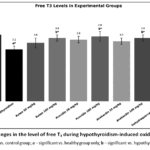 |
Figure 1: Changes in the level of free T3 during hypothyroidism-induced oxidative stress |
In the experimental hypothyroidism model, free T3 levels significantly decreased compared to the control group, dropping from 4.1 ± 0.3 pg/mL (95% CI: 3.33–4.87) to 3.2 ± 0.2 pg/mL (95% CI: 2.69–3.71; a*, p < 0.05). This indicates a disruption in thyroid hormone metabolism and peripheral hormonal balance.
Treatment with plant-derived polyphenols led to a restoration of T3 levels. Specifically, in the Rutan 50 mg/kg and Anakardin 50 mg/kg groups, T3 levels reached 3.6 ± 0.3 pg/mL (95% CI: 2.83–4.37) and 3.7 ± 0.2 pg/mL (95% CI: 3.19–4.21), respectively.
In the Rutan 100 mg/kg, Providin 100 mg/kg, Anakardin 100 mg/kg, and Dehydroquercetin groups, T3 levels ranged from 3.9 to 4.0 pg/mL, showing a statistically significant increase compared to the hypothyroid group. Specifically, T3 levels were 3.9 ± 0.2 pg/mL in the Rutan 100 mg/kg group (95% CI: 3.39–4.41; b, p < 0.05), 4.0 ± 0.3 pg/mL in the Providin 100 mg/kg group (95% CI: 3.23–4.77; b, p < 0.05), 3.9 ± 0.2 pg/mL in the Anakardin 100 mg/kg group (95% CI: 3.39–4.41; b, p < 0.05), and 4.0 ± 0.2 pg/mL in the Dehydroquercetin 5 mg/kg group (95% CI: 3.49–4.51; b, p < 0.05).
In conclusion, treatment with plant-derived polyphenols in hypothyroid conditions effectively restores thyroid hormone metabolism and helps bring T3 levels closer to physiological values.
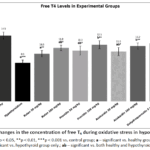 |
Figure 2: Changes in the concentration of free T4 during oxidative stress in hypothyroidism |
In the experimental hypothyroidism model, free T4 levels significantly decreased compared to the healthy control group, dropping from 14.5 ± 0.8 pmol/L (95% CI: 12.44–16.56) to 8.5 ± 0.6 pmol/L (95% CI: 6.96–10.04; a***, p < 0.001), indicating a marked impairment of thyroid function.
Treatment with plant-derived polyphenols led to a gradual increase in T4 levels. In the Rutan 50 mg/kg group, T4 reached 10.5 ± 0.7 pmol/L (95% CI: 8.70–12.30; a**, p < 0.01), remaining significantly lower than the healthy control. In contrast, in the Rutan 100 mg/kg group, T4 increased to 11.8 ± 0.6 pmol/L (95% CI: 10.26–13.34; ab*, p < 0.05), showing a statistically significant difference compared to both the healthy control and hypothyroid groups.
Similar results were observed in the Providin and Anakardin-2 groups. In the Providin 50 mg/kg and Anakardin-2 50 mg/kg groups, T4 levels reached 11.2 ± 1.0 pmol/L (95% CI: 8.63–13.77; ab*, p < 0.05) and 11.0 ± 0.9 pmol/L (95% CI: 8.69–13.31; ab*, p < 0.05), respectively, both showing statistically significant differences compared to the relevant comparison groups.
In the Providin 100 mg/kg and Anakardin-2 100 mg/kg groups, T4 levels increased to 12.5 ± 0.9 pmol/L (95% CI: 10.19–14.81; b**, p < 0.01) and 12.2 ± 0.7 pmol/L (95% CI: 10.40–14.00; b**, p < 0.01), respectively, demonstrating a significant rise compared to the hypothyroid group, although differences with the healthy control group remained.
The highest T4 levels were observed in the Dihydroquercetin 5 mg/kg group, reaching 12.8 ± 0.6 pmol/L (95% CI: 11.26–14.34; b***, p < 0.001). These results indicate a substantial restoration of thyroid hormone levels under hypothyroid conditions. The findings suggest that plant-derived polyphenols are capable of modulating physiological alterations and possess pharmacological and therapeutic significance.
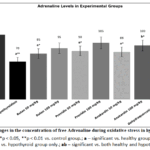 |
Figure 3: Changes in the concentration of free Adrenaline during oxidative stress in hypothyroidism |
In the experimental hypothyroidism model, adrenaline levels significantly decreased compared to the healthy control group, dropping from 120 ± 10 pg/mL (95% CI: 94.29–145.71) to 70 ± 8 pg/mL (95% CI: 49.43–90.57; a**, p < 0.01), indicating impaired sympathoadrenal system activity under hypothyroid conditions.
Treatment with plant-derived polyphenols led to a restoration of adrenaline levels. In the Rutan 50 mg/kg, Providin 50 mg/kg, and Anakardin-2 50 mg/kg groups, adrenaline levels reached 85 ± 9 pg/mL (95% CI: 61.86–108.14; a*, p < 0.05), 90 ± 9 pg/mL (95% CI: 66.86–113.14; a*, p < 0.05), and 88 ± 9 pg/mL (95% CI: 64.86–111.14; a*, p < 0.05), respectively, showing increases compared to the hypothyroid group, although differences with the healthy control group remained significant.
In the groups receiving higher doses, adrenaline levels further increased. In the Rutan 100 mg/kg, Providin 100 mg/kg, and Anakardin-2 100 mg/kg groups, adrenaline levels reached 95 ± 10 pg/mL (95% CI: 69.29–120.71), 105 ± 11 pg/mL (95% CI: 76.72–133.28), and 100 ± 10 pg/mL (95% CI: 74.29–125.71), respectively. The highest value was observed in the Dehydroquercetin 5 mg/kg group, with adrenaline levels reaching 108 ± 10 pg/mL (95% CI: 82.29–133.71; b*, p < 0.05).
These results indicate that plant-derived polyphenols, as biologically active compounds, exert significant corrective effects and contribute to the normalization of sympathoadrenal system function.
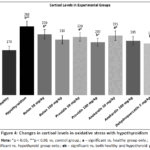 |
Figure 4: Changes in cortisol levels in oxidative stress with hypothyroidism |
In the experimental hypothyroidism model, cortisol levels significantly increased compared to the healthy control group, rising from 170 ± 15 nmol/L (95% CI: 131.44–208.57) to 260 ± 20 nmol/L (95% CI: 208.58–311.42; a**, p < 0.01), indicating activation of the hypothalamic–pituitary–adrenal (HPA) axis under hypothyroid conditions.
Treatment with plant-derived polyphenols resulted in a gradual decrease in cortisol levels. In the Rutan 50 mg/kg, Providin 50 mg/kg, and Anakardin-2 50 mg/kg groups, cortisol levels reached 230 ± 18 nmol/L (95% CI: 183.72–276.28), 220 ± 16 nmol/L (95% CI: 178.86–261.14), and 225 ± 18 nmol/L (95% CI: 178.72–271.28), respectively, showing a reduction compared to the hypothyroid group, although differences with the healthy control group remained significant (a*, p < 0.05).
In the higher-dose groups, cortisol levels decreased further. In the Rutan 100 mg/kg, Providin 100 mg/kg, and Anakardin-2 100 mg/kg groups, cortisol levels were 210 ± 16 nmol/L (95% CI: 168.86–251.14), 200 ± 15 nmol/L (95% CI: 161.44–238.57), and 205 ± 16 nmol/L (95% CI: 163.86–246.14), respectively.
The lowest values were observed in the Dehydroquercetin 5 mg/kg group, with cortisol decreasing to 195 ± 15 nmol/L (95% CI: 156.44–233.57; b*, p < 0.05).
Discussion
These results indicate that plant-derived polyphenols have modulatory effects on stress responses and contribute to the restoration of hormonal balance under hypothyroid conditions.This study demonstrates that in rats with experimentally induced hypothyroidism, thyroid hormone levels in the circulatory system and tissues decrease significantly and persistently. Administration of antithyroid agents such as Mercazolil and propylthiouracilhas been reported to reduce plasma T3 and T4 concentrations by approximately 40–50% within 2–4 weeks. Conversely, thyroid-stimulating hormone levels increase by approximately 90–130%, confirming the establishment of a hypothyroid state.34,35,36 This reflects the compensatory activation of the hypothalamic–pituitary–thyroid axis. Consistently, our results showed significant decreases in free T3 and T4 in the experimental hypothyroid group, while treatment with polyphenols restored these hormonal imbalances and improved endocrine homeostasis.At the tissue level, numerous studies have shown that hypothyroidism causes a marked reduction in T3 levels in the heart, liver, kidneys, adipose tissue, and brain. In some cases, tissue T3 can drop to as low as 1–6% of baseline values. Notably, the decrease in tissue T3 is more profound than that in plasma, where T3 typically falls to approximately 30% of the initial concentration.33 In response, tissue T4 concentrations remain relatively stable or decrease to a lesser extent than T3, resulting in a significant shift in the T3/T4 ratio; this effect is particularly pronounced in the brain. These findings indicate that in hypothyroid conditions, peripheral tissue thyroid hormone metabolism—particularly the conversion of T4 to T3 via deiodinase enzymes—is substantially altered.Moreover, in neuropathic pain models, reductions in peripheral T3 and T4have also been observed. However, the expected compensatory response, namely increased TSH secretion, does not consistently occur in all cases. This suggests that in certain pathological conditions, the neuroendocrine regulation of the HPT axis may be disrupted, highlighting the complex interactions between central and peripheral mechanisms.32In genetic hypothyroidism characterized by functional deficits in TSH receptors, free T3 and T4 levels are markedly decreased. Concurrently, TSH levels are significantly elevated to compensate for reduced thyroid activity. Levothyroxine substitution therapy partially normalizes these hormonal alterations, although values may not always return fully to physiological levels.36Our results similarly confirmed significant reductions in free T3 and T4 under experimental hypothyroid conditions. Importantly, corrective treatment with polyphenols restored these parameters, suggesting improved peripheral hormone metabolism and conversion processes. These findings demonstrate that thyroid hormone imbalances in hypothyroidism are not only systemic but also profound at the tissue level and that plant-derived polyphenols have the potential to modulate these processes.
Therefore, evaluating plasma cortisol levels together with indicators of thyroid function provides a deeper understanding of the severity and progression mechanisms of hypothyroidism. Typically, in this model, a decrease in cortisol or corticosterone levels is accompanied by an increase in epinephrine, indicating disruption of neuroendocrine balance. Specifically, in hypothyroidism induced by propylthiouracil, plasma epinephrine levels increase while cortisol decreases.27Previous clinical studies have reported that patients with hypothyroidism may exhibit elevated cortisol levels. Cortisol concentration is directly correlated with thyroid-stimulating hormone and inversely correlated with T3 and T4 levels, indicating that cortisol production increases as disease severity progresses. These changes reflect activation of the hypothalamic–pituitary–adrenal axis, where the organism perceives hypothyroidism as a stressor and responds by increasing cortisol secretion. Notably, in severe cases, elevated cortisol levels demonstrate the robust function of this adaptive mechanism.31In patients with hypothyroidism, cortisol levels are significantly elevated, particularly in primary hypothyroidism, whereas in other thyroid disorders, cortisol levels generally remain within normal ranges. These findings confirm that cortisol increases as a compensatory mechanism and underscore the complex endocrine interactions between the thyroid and adrenal glands.30 Thyroid disorders are among the most common endocrine problems, with hypothyroidism being the most prevalent form. In hypothyroidism, especially primary cases, plasma cortisol levels rise significantly, which may be attributed to prolonged half-life and reduced metabolic clearance of cortisol. In other thyroid pathologies, cortisol levels typically remain within the normal range. These results indicate that in hypothyroid conditions, cortisol elevation serves as a compensatory response and reflects the complex endocrine interplay between the thyroid and adrenal glands.29Hence, assessing plasma cortisol alongside thyroid function markers provides a comprehensive evaluation of hypothyroidism severity and developmental mechanisms. Cortisol and epinephrine are considered primary stress hormones, and under acute stress, both typically increase simultaneously. However, in certain situations, this hormonal response may vary: a decrease in epinephrine may occur alongside an increase in cortisol. This “high cortisol–low epinephrine” pattern is often associated not with the immediate stress response but with the recovery phase or chronic dysregulation of the stress system. Various studies indicate that chronic stress is often accompanied by elevated cortisol, whereas data on basal catecholamines (epinephrine and norepinephrine) are inconsistent, partly due to methodological challenges in accurately measuring epinephrine.28Our study confirmed disruptions in both epinephrine and cortisol levels under hypothyroid conditions and demonstrated that correction with polyphenols significantly restores hormonal balance. These findings suggest that plant-derived polyphenols can modulate not only thyroid function but also adrenal stress response mechanisms.
The possible mechanism underlying the observed corrective effects may be related to the antioxidant and endocrine-modulating properties of the studied polyphenols. Thyroid hormone action is mediated through thyroid hormone receptors, particularly thyroid hormone receptor beta 1 (TRβ1), which regulates thyroid hormone-responsive genes and metabolic processes.37 Therefore, the partial recovery of T3 and T4 levels observed in this study may reflect an improvement in peripheral thyroid hormone metabolism and signaling.
In this regard, the chemical composition of the tested phytosubstances may be important for explaining their corrective effects. Rutan contains hydrolysable tannins, galloyl-glucose derivatives, rutin, quercetin, kaempferol, and gallic acid, whereas Providin is rich in catechins and proanthocyanidins. Anakardin-2 mainly contains gallotannins, catechin, and gallic acid derivatives. These phenolic constituents are known to exhibit antioxidant and redox-modulating properties, which may help reduce lipid peroxidation, support endogenous antioxidant defense, and attenuate oxidative stress associated with hypothyroid conditions. Therefore, the partial normalization of free T3, free T4, cortisol, and adrenaline levels observed in the present study may be partly related to the combined antioxidant and endocrine-modulating actions of tannins and other polyphenolic constituents of Rutan, Providin, and Anakardin-2
The hypothalamic-pituitary-thyroid (HPT) axis is also regulated by thyrotropin-releasing hormone (TRH), which acts through the TRH receptor and stimulates pituitary TSH secretion.38,39 Although TRβ1 and TRH receptor expression were not directly assessed in the present study, the restoration of thyroid and stress-related hormonal parameters may be partly associated with improved neuroendocrine regulation and reduced oxidative stress.40 Thus, these mechanisms should be considered as possible explanatory pathways rather than direct experimental findings.
A dose-related tendency was observed in the corrective effects of the tested polyphenolic compounds. In general, the 100 mg/kg doses of Rutan, Providin, and Anakardin-2 produced more pronounced changes than the corresponding 50 mg/kg doses. This was reflected by a greater recovery of free T3, free T4, and adrenaline levels, together with a more evident reduction in cortisol concentration. These findings suggest that the endocrine-modulating effects of the studied polyphenols may be influenced by dose. However, additional studies are required to determine the optimal effective dose and to assess the long-term safety of these compounds.
These findings provide an experimental basis for further investigation of plant-derived polyphenols in hypothyroidism-associated hormonal and stress-related disturbances. The comparative assessment of several compounds and both thyroid and stress-related hormones strengthens the study. Further pharmacological and mechanistic studies are needed to clarify their broader practical significance.
Conclusion
In hypothyroid conditions, decreased T3 and T4 levels reduce sympathetic nervous system activity and diminish the effects of epinephrine. Concurrently, stress induces activation of the hypothalamic-pituitary-adrenal (HPA) axis, resulting in elevated cortisol secretion. Consequently, under hypothyroid conditions, the sympathoadrenal response is suppressed, and a cortisol-based compensatory mechanism predominates.Our results demonstrate that plant-derived polyphenols are capable of restoring this neuroendocrine imbalance. The increase in free T3 and T4 indicates improved thyroid function and enhanced peripheral hormone conversion processes. Normalization of cortisol levels and stabilization of epinephrine suggest reestablishment of HPA axis homeostasis. A potential mechanism underlying these effects is the antioxidant and anti-inflammatory activity of polyphenols, which may reduce oxidative stress in thyroid and adrenal tissues, thereby improving hormone synthesis and receptor sensitivity.Therefore, hypothyroidism is not merely a thyroid pathology but a complex disorder affecting the entire neuroendocrine system. Plant-derived polyphenols exert multi-level regulatory effects and represent a promising therapeutic approach for restoring functional balance between the HPT and HPA axes.
Acknowledgement
The authors express their sincere gratitude to the staff of the National University of Uzbekistan and the A.S. Sadykov Institute of Bioorganic Chemistry, Academy of Sciences of the Republic of Uzbekistan, for providing the necessary facilities to carry out this research.
Funding sources
The author(s) received no financial support for the research, authorship, and/or publication of this article.
Conflict of Interest
The author(s) declare that they have no conflict of interest.
Data Availability Statement
The data supporting the findings of this study are available from the corresponding author upon reasonable request.
Ethics Statement
The experimental protocols were conducted in accordance with the established standards for the humane treatment of laboratory animals and the requirements of the Ethics Committee of the National University of Uzbekistan. Permission for the use of laboratory animals was approved based on Protocol No. 7 BEC/IBB-NUU dated 4 July 2022.
Informed Consent Statement
This study did not involve human participants; therefore, informed consent was not required.
Clinical Trial Registration
Not applicable, as this study was conducted in an experimental animal model and did not involve human participants or clinical intervention.
Permission to reproduce material from other sources
Not applicable.
Author Contributions
- Jaxongir Ismoiljono‘g‘li Tuychiboyev: Conceptualization, Methodology, Writing – review & editing, Writing – Original Draft.
- Umidakhon Rakhmonovna Yusupova: Conceptualization, Methodology, Writing – review & editing, Supervision, Resources, Funding acquisition.
- Nodira Gulomdjanovna Abdulladjanova: Data Collection, Analysis, Review & Editing.
- Rustamjon Rasuljonovich Makhmudov :Data Collection, Analysis, Review & Editing.
- Damira Turdibekovna Atabayeva: Data Curation, Formal analysis.
- Zulkhumor Shukhradovna Mirzayeva: Investigation, Formal analysis.
- Farangiz Oybekqizi Alimova: Investigation, Formal analysis.
References
- Chaulin A, Grigorieva J, Suvorova G, Duplyakov D. Experimental modeling of hypothyroidism: principles, methods, several advanced research directions in cardiology. Russ Open Med J. 2021;10(3):e0311. doi:10.15275/rusomj.2021.0311
CrossRef - Yu P, Yuan H, Chen H, Li X. Thyroid function spectrum in Cushing’s syndrome. BMC EndocrDisord. 2024;24(1):1-10. doi:10.1186/s12902-024-01614-4
CrossRef - Chaulin A, Grigorieva J, Suvorova G. Experimental models of hypothyroidism. MorpholNewsl. 2021;29(1):69-76. doi:10.20340/mv-mn.2021.29(1).69-76
CrossRef - Helmreich DL, Parfitt DB, Lu XY, Akil H, Watson SJ. Relation between the hypothalamic-pituitary-thyroid (HPT) axis and the hypothalamic-pituitary-adrenal (HPA) axis during repeated stress. Neuroendocrinology. 2005;81(3):183-192. doi:10.1159/000087001
CrossRef - Chaulin A, Grigoryeva J, Svechkov N, Suvorova G. Fundamental principles and techniques of experimental modeling of hypothyroidism: a literature review. Arch Euromedica. 2020;10(4):11-18. doi:10.35630/2199-885x/2020/10/4.11
CrossRef - Chaker L, Razvi S, Bensenor IM, Azizi F, Pearce EN, Peeters RP. Hypothyroidism. Nat Rev Dis Primers. 2022;8:30. doi:10.1038/s41572-022-00357-7
CrossRef - Chaker L, Bianco AC, Jonklaas J, Peeters RP. Hypothyroidism. Lancet. 2017;390(10101):1550-1562. doi:10.1016/S0140-6736(17)30703-1
CrossRef
- Jonklaas J, Bianco AC, Bauer AJ, et al. Guidelines for the treatment of hypothyroidism: prepared by the American Thyroid Association Task Force on Thyroid Hormone Replacement. Thyroid. 2014;24(12):1670-1751. doi:10.1089/thy.2014.0028
CrossRef - Mancini A, Di Segni C, Raimondo S, et al. Thyroid hormones, oxidative stress, and inflammation. Mediators Inflamm. 2016;2016:6757154. doi:10.1155/2016/6757154
CrossRef - Javid M, Khan SU, Akram M, et al. Higher cortisol level and reduced circulating triiodothyronine in patients with cardiovascular diseases: a case-control study. JRSM Cardiovasc Dis. 2025;14:1-12. doi:10.1177/20480040251340609
CrossRef - Peter M. The role of thyroid hormones in stress response of fish. Gen Comp Endocrinol. 2011;172(2):198-210. doi:10.1016/j.ygcen.2011.02.023
CrossRef - Feldt-Rasmussen U, Effraimidis G, Klose M. The hypothalamus-pituitary-thyroid (HPT) axis and its role in physiology and pathophysiology of other hypothalamus-pituitary functions. Mol Cell Endocrinol. 2021;525:111173. doi:10.1016/j.mce.2021.111173
CrossRef - Nandi-Munshi D, Taplin C. Thyroid-related neurological disorders and complications in children. Pediatr Neurol. 2015;52(4):373-382. doi:10.1016/j.pediatrneurol.2014.12.005
CrossRef - Salazar P, Cisternas P, Martínez M, Inestrosa NC. Hypothyroidism and cognitive disorders during development and adulthood: implications in the central nervous system. MolNeurobiol. 2019;56(4):2952-2963. doi:10.1007/s12035-018-1270-y
CrossRef - Amano I, Ninomiya A, Koibuchi N. Neurological consequences of adult-onset hypothyroidism. Endocr J. 2025;72(11):1175-1187. doi:10.1507/endocrj.EJ25-0163
CrossRef - Samuels M. Psychiatric and cognitive manifestations of hypothyroidism. CurrOpinEndocrinol Diabetes Obes. 2014;21(5):377-383. doi:10.1097/MED.0000000000000089
CrossRef - Jurado-Flores M, Warda F, Mooradian A. Pathophysiology and clinical features of neuropsychiatric manifestations of thyroid disease. J Endocr Soc. 2022;6(2):bvab194. doi:10.1210/jendso/bvab194
CrossRef - Mamadaliyeva SRQ, Abdulladjanova NG, Raimova KV, Rakhimov RN, Makhmudov RR, Yusupova UR. Effects of several polyphenols on some hematological and weight parameters in rats with experimental hypothyroidism. Trends Sci. 2025;22(10):10531. doi:10.48048/tis.2025.10531
CrossRef - Sharma HR, Sur S, Jha AK, et al. Investigation of the thyromodulatory and antioxidant potential of bioactive fractions of Commiphoramukul in PTU-induced experimental hypothyroidism. Int J Environ Sci. 2025;11(19s):1545-1556. doi:10.64252/xtwghe57
CrossRef - M E, Elsemelawy S. Antihypothyroidism effects of flax seeds (Linumusitatissimum) powder and extract in rats. J Spec Educ Stud Res. 2024;10(2):115-130. doi:10.21608/jsezu.2024.384702
CrossRef - Ashwini S, Bobby Z, Sridhar M, Cleetus C. Insulin plant (Costuspictus) extract restores thyroid hormone levels in experimental hypothyroidism. Pharmacognosy Res. 2017;9(1):51-59. doi:10.4103/0974-8490.199766
CrossRef - Jabeen Q. Insight into therapeutic role of plant-derived medicines in thyroid dysfunction. Am J Biomed Sci Res. 2021;12(3):1802. doi:10.34297/ajbsr.2021.12.001802
CrossRef - Pistollato F, Masias M, Agudo P, Giampieri F, Battino M. Effects of phytochemicals on thyroid function and their possible role in thyroid disease. Ann N Y Acad Sci. 2019;1443(1):3-19. doi:10.1111/nyas.13980
CrossRef - Kozlov VN. Thyroid transformation during modeling of the endemic effect in white rats in the experiment. Baikal Med J. 2006;63(5):27-30.
- Kamilov FK, Mamtsev AN, Abdullina GM, Lobyreva OV. Evaluation of the efficiency of iodopolysaccharide complex in correction of oxidative metabolism in experimental hypothyroidism. VestnOrenbgGos Univ. 2009;106(12):118-121.
- Mamadaliyeva et al., “Effects of Several Polyphenols on Some Hematological and Weight Parameters in Rats with Experimental Hypothyroidism,” Trends in Sciences, 2025;22(10):10531, DOI: 10.48048/tis.2025.10531.
CrossRef - Ajeel MT, Saleh HS, Din AM, Alashkam FA, Said RM. Efficacy of vitamin B12 treatment on the adrenal gland of propylthiouracil-induced hypothyroid rats. Open Vet J. 2025;15(6):2395-2407. doi:10.5455/OVJ.2025.v15.i6.12
CrossRef - Walsh C, Bovbjerg D, Marsland A. Glucocorticoid resistance and β2-adrenergic receptor signaling pathways promote peripheral pro-inflammatory conditions associated with chronic psychological stress: a systematic review across species. NeurosciBiobehav Rev. 2021;128:117-135. doi:10.1016/j.neubiorev.2021.06.013
CrossRef - Sah SK, Sah AK, Yadav N, Marasini S, Sah NK. Pattern of serum cortisol levels in different thyroid disorders. MedPhoenix. 2024;9(1):29-32. doi:10.3126/medphoenix.v9i1.67182
CrossRef - Yaamarthy V, Rani CJ, Hemamalini R, Ahmed MI. Evaluation of serum cortisol levels in patients with hypothyroidism at a tertiary care hospital in Telangana, India: a case-control study. J ClinDiagn Res. 2023;17(5):17588. doi:10.7860/JCDR/2023/59976.17588
CrossRef - Sinha SR, Prakash P, Keshari JR, Kumari R, Prakash V. Assessment of serum cortisol levels in hypothyroidism patients: a cross-sectional study. Cureus. 2023;15(12):e50199. doi:10.7759/cureus.50199
CrossRef - Kilburn-Watt E, Banati R, Keay K. Altered thyroid hormones and behavioural change in a sub-population of rats following chronic constriction injury. J Neuroendocrinol. 2010;22(8):931-940. doi:10.1111/j.1365-2826.2010.02038.x
CrossRef - Donzelli R, Colligiani D, Kusmic C, et al. Effect of hypothyroidism and hyperthyroidism on tissue thyroid hormone concentrations in rat. Eur Thyroid J. 2016;5(1):27-34. doi:10.1159/000443523
CrossRef - Abdreshov SN, Demchenko GA, Bulekbaeva LE, Nurmakhanova BA, Nauryzbai UB, Koganezawa UN. Changes of the thyroid hormones concentration and the biochemical parameters/features of lymph and blood of rat with hypothyroidism. News Natl AcadSciRepub Kazakhstan Ser Biol Med. 2018;6:30-36. doi:10.32014/2018.2518-1629.14
CrossRef - Bozbek Ç, Şentürk M, Senturk M. Effect of levothyroxine administration on oxidative stress and cytokine levels in rats with experimental hypothyroidism. J Hell Vet Med Soc. 2023;74(2):28743. doi:10.12681/jhvms.28743
CrossRef - Yang J, Yi N, Zhang J, et al. Generation and characterization of a hypothyroidism rat model with truncated thyroid stimulating hormone receptor. Sci Rep. 2018;8:4004. doi:10.1038/s41598-018-22405-7
CrossRef - Mullur R, Liu YY, Brent GA. Thyroid hormone regulation of metabolism. Physiol Rev. 2014;94(2):355-382. doi:10.1152/physrev.00030.2013
CrossRef - Nillni EA. Regulation of the hypothalamic thyrotropin releasing hormone (TRH) neuron by neuronal and peripheral inputs. Front Neuroendocrinol. 2010;31(2):134-156. doi:10.1016/j.yfrne.2010.01.001
CrossRef - Trubacova R, Drastichova Z, Novotny J. Biochemical and physiological insights into TRH receptor-mediated signaling. Front Cell Dev Biol. 2022;10:981452. doi:10.3389/fcell.2022.981452
CrossRef - Kochman J, Jakubczyk K, Bargiel P, Janda-Milczarek K. The influence of oxidative stress on thyroid diseases. Antioxidants. 2021;10(9):1442. doi:10.3390/antiox10091442
CrossRef
 PlumX:
 Views: 1028
  PDF Downloads:
205
PDF Downloads:
205