Comparative Evaluation of Cardiovascular Biomarkers in Diabetic and Non-Diabetic Myocardial Infarction Patients in Saudi Arabia
 , Yahia Ali Kaabi1, Fakhra Jabeen2, Mohammad Mazharul Hoque3, Alaa Alhazmi1, Mohammad Suhail Akhter1, Yahia Mjery1, Kamal Upreti4*and Rituraj Jain5
 1Department of Medical Laboratory Technology, College of Nursing and Health Sciences, Jazan University, Jazan, Saudi Arabia
2Department of Physical sciences, College of Science, Jazan University, Jazan, Saudi Arabia
3Department of Emergency Medicine, College of Nursing and Health Sciences, Jazan University, Jazan, Saudi Arabia
4Department of Computer Science, Chrıst University, Delhi NCR, Ghaziabad, India
5Department of Information Technology, Marwadi University, Rajkot, Gujarat, India
Corresponding Author E-mail:kamalupreti1989@gmail.com
DOI : http://dx.doi.org/10.13005/bpj/3442
Download this article as:

This study discusses the effect of diabetes mellitus (DM) and the importance of biochemical markers in the timely diagnosis, management and prognostication of acute myocardial infarction (AMI) through the measurement of cardiac enzymes in diabetic and non-diabetic patients with AMI.A cohort of 300 individuals of ages of 55-80 years were selected for case control study. Three groups of participants were identified: normal (N), Diabetic Acute Myocardial Infarction (D-AMI), and Non-diabetic Acute Myocardial Infarction (ND-AMI).Each participant underwent a thorough history, medical evaluation, and assessment of cardiovascular parameters.These parameters included fasting blood glucose, glycated hemoglobin (HbA1c), systolic and diastolic blood pressure, total cholesterol (TC), triglycerides (TG), low-density lipoprotein (LDL), high-density lipoprotein (HDL), and the ratios of TC/HDL and LDL/HDL.The cardiac biomarkers measured included aspartate aminotransferase (AST), lactate dehydrogenase (LDH), C-reactive protein (CRP), creatine phosphokinase (CPK), creatine kinase-MB (CK-MB), and troponin-I.While TC, TG, and LDL-C levels were high, HDL-C levels were considerably lower in the D-AMI group than in the N-AMI group. Irrespective of whether they had diabetes mellitus, the study's findings demonstrated that individuals with myocardial infarction had considerably higher rates of cardiac biomarkers, including troponin I, CPK, CK-MB, AST, LDH, and CRP.Research indicates that individuals with D-AMI have higher cardiac indicators than those with ND-AMI.
KEYWORDS:Acute Myocardial Cardiac Biomarkers; Diabetes Mellitus; Dyslipidemia; Infarction; Inflammatory Markers
Introduction
Acute myocardial infarction (AMI) and other cardiovascular diseases (CVDs) are the major causes of death worldwide, causing high morbidity and healthcare costs. AMI is a major cardiovascular disease caused by myocardial ischemia, which leads to ischemic injury and the following myocardial necrosis.1 People with diabetes have a significant clinical burden of AMI. Diabetes mellitus (DM) is a metabolic disease characterized by chronic hyperglycemia due to insulin resistance or insufficiency. Diabetic persons are 2 to 4 times more likely to experience AMI than are non-DM, and their prognosis is often impaired because of prolonged ischemic insult, delayed diagnosis and atypical presentations.2
Globally, Saudi Arabia is showing a rapid increase in both DM and CVDs as a result of rapid urbanization, sedentary lifestyles and changes in people’s diets.3The prevalence of diabetes is estimated to be 18-20% in Saudi Arabia among adult population, however, in certain areas like Jazan, the prevalence rate is even higher. The Jazan region in the south-western part of Saudi Arabia is especially affected by high rates of diabetes and its complications such as cardiovascular events. This regional disparity highlights the need for investigations specific to this issue that can focus on addressing the unique population health issues in the region.3–5
AMI diagnosis, treatment, and prognosis all heavily depend on biochemical markers.6 Cardiac biomarkers, specifically troponin I and creatine kinase -MB (CK -MB) are indispensable for identification of myocardial injury. Lipid panels provide important information on dyslipidemia, an underlying pathophysiological contributor to atherogenesis and subsequent evolution to AMI. Moreover, inflammatory markers, including C- reactive protein (CRP) and high sensitivity CRP (hs-CRP), are a measure of systemic inflammation which is typically high in diabetic populations and promotes the progression of cardiovascular pathology.7–9
Chronic hyperglycemia exacerbates oxidative stress, systemic inflammation, and endothelial dysfunction in diabetes mellitus patients, all of which increase the severity of cardiac damage in AMI.10–12Glycaemic control as measured by glycated haemoglobin (HbA1c) has been shown to be closely related to cardiovascular outcomes in diabetics. The interaction of these biochemical indicators in patients with and without diabetes still has to be researched fully in the geographical environment of Jazan.11,13,14
Given the high burden of diabetes and cardiovascular diseases in Jazan, elucidating the differences in biochemical markers between patients with and without diabetes with AMI is critically important.This study aimed to provide data on differences in cardiac injury, lipid abnormalities, and inflammatory responses that may be useful for early diagnosis, better treatment, and improved risk stratification.These findings could inform clinicians to implement personalized management strategies that would lead to improved outcomes for patients with AMI in nearby regions.
Materials and Method
Study Design and Population
This case-control study included 300 participants divided into three groups.The first group was the control group and consisted of 100 people (45 men and 55 women) with normal blood glucose levels and ECG readings (normal).The second group included 100 participants (65 men and 35 women) with normal blood glucose levels but with a diagnosis of acute myocardial infarction (non-diabetic and AMI, ND-AMI).The third group consisted of 100 participants (82 men and 18 women) with diabetes in conjunction with acute myocardial infarction (diabetic and AMI, D-AMI).All participants provided written informed consent.The institute is indebted to offer services to the local population of the Jazan region. The study was carried out following the Declaration of Helsinki.15 The study protocol was reviewed and approved by the Institutional Research Ethics Committee (Approval No.: REC-43/02/017; Approval Date: 16 September 2021)
The inclusion criteria were as follows
Adults aged 55-80 years with confirmed diabetic and non-diabetic AMI diagnosis.
Availability of complete biochemical and clinical data.
The exclusion criteria were as follows
Patients with chronic kidney disease (CKD) or renal failure.
Major operations or trauma occurred in the past three months.
Patients with acute infections or inflammatory disorders at admission.
Sample Collection and Biochemical Analysis
Upon admission, venous blood samples were collected after obtaining informed consent from the patients.Blood samples were processed immediately for biochemical analyses.The following parameters were measured.
Cardiac Troponins (cTnI): Quantitative analysis was performed using high-sensitivity immunoassays to detect myocardial injury.
Creatine Kinase-MB (CK-MB): Measured using automated enzymatic assays.
C-Reactive Protein (CRP): Immunoturbidimetric methods were used to measure the level of serum CRP to determine systemic inflammation.
Lipid Profiles: The enzymatic colorimetric analyses were done to assess the levels of total cholesterol, TG, LDL, and HDL.
All tests were performed in certified hospital laboratories under strict quality control.All participants were recorded regarding demographic and clinical information, such as age, sex, blood pressure, glycemic condition, and history of diabetes.
Statistical Analysis
Data analysis was performed using IBM Corp.’s Version 25 SPSS, Armonk, NY, USA.For continuous variables, which are represented as mean ± standard deviation (SD), independent t-tests were performed. A Bonferroni post hoc test was used to look for particular inter-group contrasts after a one-way analysis of variance (ANOVA) was performed to look for variances among the three groups. Statistical significance was defined as a two-tailed p-value of less than 0.05.
Results
Demographic characteristics of subjects
Based on their medical circumstances, the research participants were split into three groups: the normal group (100 persons), the ND-AMI group (100 non-diabetic patients with acute myocardial infarction (AMI)), and the D-AMI group (100 diabetic patients with AMI).The average age of patients with ND-AMI was 67.2 ± 19.0 years, whereas the average age of patients with D-AMI was 70.2 ± 11.4 years.Both the D-AMI and ND-AMI groups had higher systolic and diastolic blood pressures than the normal group.Compared to the normal and ND-AMI groups, the D-AMI group had substantially higher fasting blood glucose and glycated hemoglobin (HbA1c) concentrations (p < 0.001).Table 1 displays the fundamental demographic characteristics.
Table 1: Demographic characteristics of the participants
| Characteristics | Normal(100 subjects) | ND-AMI group (100 subjects) | D-AMI group (100 subjects) | p-Value |
| Male/Female (n) | 45/55 | 65/35 | 82/18 | |
| Age (years) | 65.0 ± 10.1 | 67.2 ± 18.9 | 70.2 ± 11.4 | <0.002*, @ |
| FBG (mm/L) | 4.3± 0.32 | 4.9 ± 0.43 | 7.2 ± 1.03 | <0.002*, @, # |
| HbA1c (%) | 4.1 ± 1.12 | 5.6 ± 1.47 | 8.5 ± 1.29 | <0.005*, @, # |
| SBP (mm Hg) | 121 ±4 | 130 ± 15 | 155 ± 20 | <0.005*, @, # |
| DBP (mm Hg) | 81± 5 | 85 ± 10 | 94± 15 | <0.005*, @, # |
| All values are shown as mean ± standard deviation. *D-AMI vs. N-AMI p value. @D-AMI vs N group p value. #N-AMI vs N group p value.SBP refers to systolic blood pressure, DBP refers to diastolic blood pressure and FBG refers to fasting blood glucose, HbA1c refers to glycated hemoglobin, N refers to the latter commonly evaluated parameter, and D-AMI refers to the concurrence of acute myocardial infarction and diabetes mellitus. |
||||
Assessment of cardiovascular parameters
Figure 1 shows how the concentrations of each lipid element changed during the study.The D-AMI cohort showed a significantly higher prevalence of total cholesterol (TC; 284.71 ± 8.2 mg/dL), triglycerides (TG; 309.34 ± 12.4 mg/dL), and low-density lipoprotein (LDL; 292.67 ± 18.7 mg/dL) compared to the ND-AMI cohort, which had a TC of 236.46 ± 9.6 mg/dL, TG of 211.43 ± 7.6 mg/dL, and the Normal cohort manifested TC levels of 179.21 ± 11.5 mg/dL, TG levels of 149.56 ± 8.5 mg/dL, and LDL levels of 134.56 ± 11.5 mg/dL, respectively (Fig. 1A-C). The D-AMI group also showed much lower high-density lipoprotein (HDL) concentration (24.67 5.4 mg/dL) than the ND-AMI group (32.54 2.7 mg/dL) and the Normal group (39.64 4.6 mg/dL) (Fig. 1D). As a result, levels of LDL/HDL and TC/HDL ratios were significantly greater in subjects in the D-AMI category compared to the ND-AMI cohort (Fig. 1E & 1F).
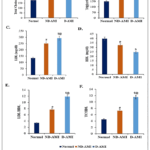 |
Figure 1: Comparative Assessment of Biomarkers of Cardiovascular Disease – Where (A) TC, (B) TG, (C) LDL, (D) HDL, (E) LDL/HDL ratio, |
Data are presented as mean ± SD.
Assessment of cardiac markers
Patients in the D-AMI group had a significantly elevated troponin I (TnI; 3.46 ± 0.7 ng/mL) compared with those in the ND-AMI group (1.42 ± 0.5 ng/mL) (Fig. 2A). Additionally, the D-AMI group had substantially higher C-reactive protein (CRP) levels (7.8 ± 0.8 mg/L) than the ND-AMI cohort (4.3 ± 0.4 mg/L).The data showed significant increases in creatine phosphokinase (CPK; 1134.0 ± 24.8 IU/L) and creatine kinase-MB (CK-MB; 246.0 ± 13.6 IU/L) in the D-AMI group compared to the ND-AMI group, which had a CPK of 410.0 ± 17.9 IU/L and CK-MB of 104.0 ± 6.4 IU/L (Fig. 2B-D). Serum lactate dehydrogenase (LDH) levels were significantly increased in the D-AMI group (1024.0 ± 26.4 IU/L) compared those to in the ND-AMI group (610.0 ± 15.9 IU/L).In addition, aminotransferase activity, as measured by aspartate aminotransferase (AST), was significantly elevated in the D-AMI cohort (101.34 ± 5.3 IU/L) compared to that in the ND-AMI cohort (60.87 ± 16.7 IU/L) (Fig.2E and F).
Discussion
Myocardial infarction (AMI) develops as a secondary event to myocardial ischemia triggered by enhanced formation of reactive oxygen species (ROS), activation of pro-inflammary pathways, failure of antioxidant system, and enhanced lipid peroxidation.16–18 These pathophysiological processes collectively lead to the development of atheromatous plaques and to coronary obstruction and, subsequently, infarction of the myocardium.19–21 A large proportion of the population of Jazan suffers from acute myocardial infarction (AMI). There are a range of risk factors involved in the genesis of acute myocardial infarction, these include diabetes, dyslipidaemia, hypertension, tobacco addiction, obesity and aging.22–24 According to Henning’s theory, people with diabetes are at higher risk of cardiovascular disease than people who do not have the disease.25,26 The effect of diabetes, hypertension and dyslipidemia on people suffering from diabetic AMI (D-AMI) was the main theme of this research. Atherogenic dyslipidemia is the outcome of lipid and lipoprotein metabolism changes induced by type 2 diabetes, according to research27,28 According to our results, the patients with D-WAMI had significantly higher levels of TC, TG, and LDL and lower levels of HDL, which suggested that atherogenic dyslipidemia play an important role in the pathophysiology of AMI in diabetics.
Proteins and lipids, also especially LDL, become subject to oxidative modification due to atherogenic dyslipidemia, which results in local and systemic inflammatory responses.29,30 Serum C-reactive protein (CRP) levels can be used to measure the level of damage that these inflammatory cascades are causing to the cardiac tissue.31-33 A source of predictive data for cardiovascular events including atherosclerosis and coronary artery disease (CAD), CRP is a systemic inflammatory measure.34,35 In comparison to those who have non-diabetic AMI (ND-AMI), results of the current investigation showed significantly higher CRP values in patients with D-AMI.
Cardiac contractility is evaluated by myocardial tissue-specific protein Troponin I (Trop-I) that is highly specific and sensitive biomarker of myocardial damage and has been used in the diagnosis of AMI in previous studies.36 The present study reported the significant higher Trop-I levels in D-AMI patients compared with ND-AMI patients, thus showing the higher incidence of cardiomyocyte death in diabetics.
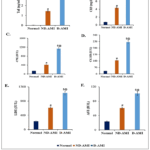 |
Figure 2: Evaluation of Cardiac Biomarkers – The panels represent the concentrations of (A) TnI, (B) CRP, (C) CPK, (D) CK -MB, (E) LDH, and (F) AST. |
CPK and CK- MB are important myocardial necrosis markers and were significantly elevated in the D- AMI cohort during this study.34 LDH and AST values were also significantly different between D-AMI and ND-AMI groups (these are traditionally proposed as markers of infarction).
Our findings support the importance of atherosclerosis and its sequelae, that is, inflammation and dyslipidemia, in patients with D-AMI.Accordingly, both non-conventional cardiac indicators, such as CRP, and conventional indicators, such as CPK, CK MB, LDH, and AST, were found to be significantly higher in patients with D-AMI than in those with non-diabetic AMI.These observations are meant to be used by clinicians to inform the management of myocardial infarction in patients with diabetes mellitus.
When interpreting the findings of this study, a number of limitations should be noted. Due to resource constraints, historical data were used.Data collection was conducted over a short period and was obtained from numerous local hospitals.This represents the first compiled dataset of a local population of patients with diabetes and AMI, despite existing research in this field.
Limitations of the study
The current investigation has several limitations that must be considered when interpreting the results.Owing to a lack of resources, the scope of this investigation was limited, and pre-existing datasets had to be used.To the best of our knowledge, despite previous findings on similar groups, this study is the first to systematically arrange a scientific study of local community diabetic patients and those with acute myocardial infarction.
Conclusion
This study showed that biochemical indicators between diabetes and non-diabetic AMI patients have significant variations compared to normal subjects in the Jazan region of Saudi Arabia.Diabetic patients with acute myocardial infarction show more myocardial injury, lipid abnormalities, and inflammatory responses; hence, the need for customized healthcare measures.Timely identification and vigorous management of diabetes are crucial for minimizing these risks and improving cardiovascular outcomes.The findings require comprehensive diabetes treatment programs, including community awareness programs, regular cardiovascular monitoring, and lifestyle modification programs directed towards glycemic and lipid control.To obtain a more complete picture of the relationship between diabetes and acute myocardial infarction, further studies should address the genetic and environmental factors specific to the Jazan population.
Acknowledgement
The authors would like to express their sincere gratitude to the administration of Jazan University and Jazan University Hospital for providing laboratory facilities and institutional support for conducting this study. The authors also thank all participants who voluntarily contributed to this research. Their cooperation and participation were essential for the successful completion of this work.
Funding Sources
The author(s) received no financial support for the research, authorship, and/or publication of this article.
Conflict of Interest
The author(s) do not have any conflict of interest.
Data Availability Statement
This statement does not apply to this article.
Ethics Statement
Ethical approval for this study was obtained from the Standing Committee for Scientific Research, Jazan University, Kingdom of Saudi Arabia (HAPO-10-Z-001) under Reference No. REC-43/02/017, dated 16 September 2021. All procedures involving human participants were conducted in accordance with institutional guidelines.
Informed Consent Statement
This study did not involve human participants, and therefore, informed consent was not required.
Clinical Trial Registration
This research does not involve any clinical trials.
Permission to reproduce material from other sources
Not Applicable.
Author Contributions
- Mohammad Shane Alam: Conceptualization, Formal analysis, Methodology, Validation, Visualization, Writing – original draft, Writing – review & editing.
- Yahia Ali Kaabi: Conceptualization, Formal analysis, Methodology, Validation, Visualization, Writing – original draft, Writing – review & editing.
- Fakhra Jabeen: Visualization, Writing – original draft, Writing – review & editing.
- Mohammad Mazharul Hoque: Validation, Visualization, Writing – original draft, Writing – review & editing.
- Alaa Alhazmi: Validation, Visualization, Writing – original draft, Writing – review & editing.
- Mohammad Suhail Akhter: Conceptualization, Formal analysis, Methodology, Validation, Visualization, Writing – original draft, Writing – review & editing.
- Yahia Mjery: Formal analysis, Methodology, Validation, Visualization, Writing – original draft, Writing – review & editing.
- Kamal Upreti: Validation, Visualization, Writing – original draft, Writing – review & editing.
- Rituraj Jain: Validation, Visualization, Writing – original draft, Writing – review & editing.
References
- Dera A, Algamdi B, Ahmad I, Shahrani M, Alraey Y, Hashlan I et al. Association of serum leptin and resistin levels among obese Saudi patients with acute myocardial infarction in Asir region. Cell Mol Biol. 2023;69(6):1-7. doi:10.14715/cmb/2023.69.6.1
CrossRef - Noreldin A, Elameer D, Khalil H. Impact of Prediabetes on Acute Coronary Syndrome in Sohag University Hospital. SVU-International Journal of Medical Sciences. 2024;7(1):26-37. doi:10.21608/svuijm.2023.211663.1599
CrossRef - Munawir M, Shibli K, Hamed W, Felemban G, Alluhaybi H, Majrashi B et al. Influence of Lifestyle Changes on Cardiovascular Diseases in Saudi Arabia: A Systematic Literature Review.
Cureus. 2023;7;15(6):e40075. doi:10.7759/cureus.40075
CrossRef - Almaleki F. Establishing the Association of Type 2 Diabetes and Insulin Resistance with Tuberculosis and Coronary Heart Diseases among Euglycaemic and Diabetic Patients in Saudi Arabia. The University of Liverpool; 2019.
- Fallatah A. Exploring Type Two Diabetes Mellitus in the Kingdom of Saudi Arabia: Studying the Socio-Economic Environment. University of Southampton; Doctoral Thesis. 2020.
- Afshin A, Micha R, Khatibzadeh S, Fahimi S, Shi P, Powles J et al. The impact of dietary habits and metabolic risk factors on cardiovascular and diabetes mortality in countries of the Middle East and North Africa in 2010: a comparative risk assessment analysis. BMJ Open. 2015;5(5):e006385. doi:10.1136/bmjopen-2014-006385
CrossRef - Kumar S, Jain J, Singh K, Gautam P. Analysis of biochemical markers in diabetic and non-diabetic acute myocardial infarction patients: a comparative study. International Journal of Academic Medicine and Pharmacy. 2023;5(5):11-14.
- Hussien F, Abdinibi K. Evaluation of lipid parameters in Diabetic and Non-Diabetic Acute Myocardial infarction patients in Al-Bayda. AlQalam Journal of Medical and Applied Sciences. 2023;6(2):327-330.
- Chavan S, Birajdar S, Urade A. Study of Clinical Profile of Acute Myocardial Infarction in Diabetic and Non Diabetic Patients. Scholars Journal of Applied Medical Sciences. 2022;10(5):776-780. doi:10.36347/sjams.2022.v10i05.016
CrossRef - Petyunina O. Myocardial Mechanical Dispersion Predicts Adverse Cardiac Remodeling in Patients with ST Segment Elevation Myocardial Infarction Who Underwent Primary Percutaneous Coronary Intervention. Archives of the Turkish Society of Cardiology. Published online 2023:119-128. doi:10.5543/tkda.2022.31531
CrossRef - Izere C, Chitrasree V, Jayanthi S, Deepa C, Musthafa V, Chitkara E et al. A study of biochemical parameters in patients with and without diabetes mellitus diagnosed for myocardial infarction. World J Pharm Res. 2025;7(5):607-620.
- Yılmaz G, Genc A. Prognostic Significance of High-Sensitivity Troponin T in Nonischemic Heart Failure with Reduced Ejection Fraction. Archives of the Turkish Society of Cardiology. 2023;51(2):129-134. doi:10.5543/tkda.2023.26900
CrossRef - Ali H, Rizwan M, Ahmad S, Niaz F, Ilyas M, Usama M. Assessment of Serum Electrolyte Imbalance in Dehydrated Children with Acute Diarrhea. Medical and Pharmaceutical Journal. 2025 Oct 20;4(3):166-73
CrossRef - Gao S, Liu Q, Chen H, Yu M, Li H. Predictive value of stress hyperglycemia ratio for the occurrence of acute kidney injury in acute myocardial infarction patients with diabetes. BMC Cardiovasc Disord. 2021;21(1):157. doi:10.1186/s12872-021-01962-2
CrossRef - World Medical Association. World Medical Association Declaration of Helsinki. JAMA. 2013;310(20):2191. doi:10.1001/jama.2013.281053
CrossRef - Geest B, Mishra M. Role of Oxidative Stress in Diabetic Cardiomyopathy. Antioxidants. 2022;11(4):784. doi:10.3390/antiox11040784
CrossRef - Karwi Q, Zhang L, Wagg C, Wang W, Ghandi M, Thai D et al. Targeting the glucagon receptor improves cardiac function and enhances insulin sensitivity following a myocardial infarction. Cardiovasc Diabetol. 2019;18(1):1. doi:10.1186/s12933-019-0806-4
CrossRef - Sarhat E, Mohammed I, Mohammed N, Khairy B, Hassan G. Evaluation of Salivary Oxidative Stress Marker (Lipid Peroxidation), and Non-Enzymatic Antioxidants (Vitamin C and Vitamin E) in Patients with Acute Myocardial Infarction. Tikrit Journal for Dental Sciences. 2019;7(1):20-26. doi:10.25130/tjds.7.1.3
CrossRef - Jortveit J, Pripp A, Langørgen J, Halvorsen S. Incidence, risk factors and outcome of young patients with myocardial infarction. Heart. 2020;106(18):1420-1426. doi:10.1136/heartjnl-2019-316067
CrossRef - Yao B, Meng L, Hao M, Zhang Y, Gong T, Guo Z. Chronic stress: a critical risk factor for atherosclerosis. Journal of International Medical Research. 2019;47(4):1429-1440. doi:10.1177/0300060519826820
CrossRef - Altun İ. Role of Cardiac CT and Circulating Biomarkers in Coronary Artery Disease: Recent Advances for Expanding Cardiac Imaging Access. Archives of the Turkish Society of Cardiology. 2023;51(4):231-234. doi:10.5543/tkda.2023.00557
CrossRef - Wang W, Xie Y, Huang X, Zhou Y, Luo L. The value of N-terminal pro-brain natriuretic peptide and hs-CRP in predicting acute kidney injury after acute myocardial infarction. Am J Transl Res. 2025;17(9):7308-7320.
- Zakirova D. Association of the Single Nucleotide Polymorphisms in the Renin-Angiotensin-Aldosterone System with Hypertension in the Uzbek Population. Archives of the Turkish Society of Cardiology. 2024;52(3):182-188. doi:10.5543/tkda.2023.67866
CrossRef - Omur S. The Association of SYNTAX and Mehran Scores with Inflammation in Patients with Contrast-Induced Nephropathy Secondary to Acute Coronary Syndrome. Archives of the Turkish Society of Cardiology. 2024;52(8):543-552. doi:10.5543/tkda.2024.76756
CrossRef - De R, Arcidiacono B, Chiefari E, Brunetti A, Indolfi C, Foti D. Type 2 Diabetes Mellitus and Cardiovascular Disease: Genetic and Epigenetic Links. Front Endocrinol (Lausanne). 2018;9. doi:10.3389/fendo.2018.00002
CrossRef - Şimşek E. Digital Technologies in Heart Failure Management. Archives of the Turkish Society of Cardiology. Published online 2024;52(1):52-60. doi:10.5543/tkda.2023.79776
CrossRef - Shahwan M, Jairoun A, Farajallah A, Shanabli S. Prevalence of dyslipidemia and factors affecting lipid profile in patients with type 2 diabetes. Diabetes & Metabolic Syndrome: Clinical Research & Reviews. 2019;13(4):2387-2392. doi:10.1016/j.dsx.2019.06.009
CrossRef - Warraich H, Rana J. Dyslipidemia in diabetes mellitus and cardiovascular disease. Cardiovasc Endocrinol. 2017;6(1):27-32. doi:10.1097/XCE.0000000000000120
CrossRef - Al-Hussaniy HA, Mohammed ZN, Alburghaif AH, Naji MA. Panax ginseng as Antioxidant and Anti-inflammatory to reduce the Cardiotoxicity of Doxorubicin on rat module. Research Journal of Pharmacy and Technology. 2022 Oct 1;15(10):4594-600
CrossRef - Wolf D, Ley K. Immunity and Inflammation in Atherosclerosis. Circ Res. 2019;124(2):315-327. doi:10.1161/CIRCRESAHA.118.313591
CrossRef - Al-juhaishi AM, Aziz ND. Safety and Efficacy of antiviral drugs against covid-19 infection: an updated systemic review. Medical and Pharmaceutical Journal. 2022;1(2):84-94.doi: 10.55940/medphar20226
CrossRef - ALhussnaiy HA. Cholecystokinin (CCK): Biology, Physiology, Pathophysiology, and Clinical Applications—a Comprehensive Review. Iraqi Journal of Pharmacology. 2024;1(1):38-48. 10.55940/iraqijpharm2024147
- Al-hussaniy HA, Al-Shammari AH, Sameer HN, Oraibi AI. The relationship between statin therapy and adipocytokine/inflammatory mediators in dyslipidemic nondiabetic patients: A comparative study. Pharmacia. 2023;70:581-5. 10.3897/pharmacia.70.e109800.
CrossRef - Zhang W, Speiser J, Ye F, Tsai M, Cainzos-Achirica M, Nasir K et al. High-Sensitivity C-Reactive Protein Modifies the Cardiovascular Risk of Lipoprotein(a). J Am Coll Cardiol. 2021;78(11):1083-1094. doi:10.1016/j.jacc.2021.07.016
CrossRef - Ramos-Regalado L, Alcover S, Badimon L, Vilahur G. The Influence of Metabolic Risk Factors on the Inflammatory Response Triggered by Myocardial Infarction: Bridging Pathophysiology to Treatment. Cells. 2024;13(13):1125. doi:10.3390/cells13131125
CrossRef - Linden N, Wildi K, Twerenbold R, Pickering J, Than M, Cullen L et al. Combining High-Sensitivity Cardiac Troponin I and Cardiac Troponin T in the Early Diagnosis of Acute Myocardial Infarction. Circulation. 2018;138(10):989-999. doi:10.1161/CIRCULATIONAHA.117.032003
CrossRef - Gaudino M, Jaffe A, Milojevic M, Sandoval Y, Devereaux P, Thygesen K et al. Great debate: myocardial infarction after cardiac surgery must be redefined. Eur Heart J. 2024;45(39):4170-4177. doi:10.1093/eurheartj/ehae416
CrossRef
 PlumX:
 Views: 807
  PDF Downloads:
181
PDF Downloads:
181