Comparative Efficacy of Non-Pharmacological Adjuncts to Cognitive Behavioral Therapy for Insomnia in Middle-Aged and Older Adults: A Network Meta-Analysis
 , Indria Hafizah2, Hilmi Amirul Haq3, Bryan Naufal Abdullah3, Ahmad Fikri Albab3, Elizabeth3, Liza Fitria Fajariatussamsiah3and Farida Murtiani4
 1Department of Psychiatry, DR. Moewardi General Hospital, Surakarta, Indonesia
2Faculty of Medicine, Halu Oleo University, Kendari, Indonesia
3Faculty of Medicine, Sebelas Maret University, Surakarta, Indonesia
4Department of Research, Sulianti Saroso Infectious Disease Hospital, Jakarta, Indonesia
Corresponding Author Email: yuni.jiwa1982@gmail.com
DOI : http://dx.doi.org/10.13005/bpj/3470
Download this article as:

Insomnia is among the most prevalent sleep disorders worldwide, affecting approximately one-tenth to one-third of adults and disproportionately impacting aging populations because of circadian and neurophysiological changes. Cognitive Behavioral Therapy for Insomnia (CBT-I) remains the recommended first-line non-pharmacological intervention. However, complete symptom remission is not consistently achieved. 25–40% of patients experience suboptimal remission, highlighting the need for effective adjunctive interventions. This network meta-analysis evaluated the comparative efficacy of non-pharmacological adjuncts to CBT-I on subjective and objective sleep outcomes among middle-aged and older adults diagnosed with insomnia according to DSM-5 or ICD criteria. A systematic search of PubMed, ScienceDirect, Scopus, and Cochrane Library databases identified randomized controlled trials (RCTs), with risk of bias assessed using the Cochrane RoB 2.0 tool. Continuous outcomes were synthesized as mean differences (MDs) using a frequentist random-effects network meta-analysis model in RStudio—the evidence synthesis incorporated 9 randomized controlled trials involving 874 participants diagnosed with insomnia. For subjective sleep outcomes, CBT-I (MD −6.30) and Meditative Movement Therapy (MMT) (MD −5.50) demonstrated the greatest reductions in Pittsburgh Sleep Quality Index (PSQI) scores, while MMT showed the highest efficacy in reducing Insomnia Severity Index (ISI) scores (MD −13.42). Regarding objective measures, conventional acupuncture significantly increased actigraphy-measured total sleep time (MD 91.30 minutes), whereas combined electro- and conventional acupuncture produced the greatest improvement in sleep efficiency (MD 12.96%). These interventions may alleviate physiological and cognitive hyperarousal associated with insomnia. Despite limitations in sample size and follow-up duration, the findings suggest that MMT is particularly effective in improving subjective sleep outcomes. In contrast, acupuncture-based interventions may provide superior benefits for objective sleep duration and efficiency, supporting their role as adjunctive therapies in comprehensive insomnia management.
KEYWORDS:Acupuncture; Cognitive Behavioral Therapy for Insomnia (CBT-I); Insomnia; Meditative Movement Therapy; Older adults; Pittsburgh Sleep Quality Index (PSQI)
Introduction
Insomnia is the most prevalent sleep disorder worldwide and imposes a substantial health burden. Estimates indicate that insomnia affects a substantial proportion of adults worldwide. However, prevalence varies according to diagnostic definitions and assessment criteria, the use of DSM-5 or ICD criteria yields more conservative estimates of insomnia disorder, in the range of 6–10%.1,2 Clinically, insomnia disorder is characterized by persistent difficulty initiating sleep, maintaining sleep continuity, or experiencing early morning awakening despite adequate opportunity for sleep, accompanied by significant daytime functional impairment.3 The impact of insomnia extends beyond nocturnal sleep complaints. It encompasses a broad spectrum of functional consequences, including chronic fatigue, attentional and concentration deficits, mood dysregulation, reduced work productivity, and overall diminished quality of life.4–6Collectively, this epidemiological and functional burden positions insomnia as a public health priority that necessitates effective, scalable, and sustainable evidence-based management approaches.
Contemporary clinical guidelines consistently recommend CBT-I as the preferred initial intervention for chronic insomnia across adult age groups, including those with comorbidities, as recommended by the 2023 European Insomnia Guideline with the highest level of evidence. CBT‑I integrates psychoeducation, sleep hygiene, sleep restriction, stimulus control, relaxation, and cognitive restructuring, delivered face‑to‑face or digitally.7 Meta‑analyses show it significantly reduces insomnia severity and improves sleep parameters, as well as comorbid depression, anxiety, fatigue, and sleep‑related cognitions, with benefits sustained up to 12–24 months.8–11However, access barriers and the risks of residual sedation, psychomotor impairment, and dependence with hypnotics and sedating antidepressants,12,13underscore the need to evaluate non‑pharmacological adjuncts.
Adjunctive non-pharmacological approaches have attracted increasing attention because a considerable proportion of patients experience incomplete therapeutic response following CBT-I alone, as 25–40% of patients fail to achieve full remission, and no standardized protocol exists for suboptimal responders.7,14 Bright light therapy (BLT) is a neurobiologically rational candidate, countering circadian‑phase misalignment mediated by suprachiasmatic nucleus dysregulation and impaired melatonin secretion. 7,15 A meta-analysis showed significant improvements in actigraphy- and diary‑assessed wake after sleep onset. However, effects on sleep onset latency and total sleep time were inconsistent.16Mindfulness‑based interventions (MBIs) attenuate cognitive hyperarousal via prefrontal regulation and are increasingly considered adjuncts or alternatives to CBT‑I.7,15Acupuncture benefits subjective sleep quality, but evidence is limited by sham‑control validity, protocol heterogeneity, and blinding issues,17,18.At the same time, non‑invasivebrainstimulation (rTMS, tDCS) has plausible mechanisms yet inconsistent results due to parameter and outcome heterogeneity.19,20 Overall, the available literature remains fragmented, lacks an integrated comparative framework, and does not yet provide sufficient head‑to‑head evidence to guide clinical prioritization of various non‑pharmacological adjuvant strategies to CBT‑I.
The relevance of non‑pharmacological adjuvants to CBT‑I is particularly strong in the context of aging. Insomnia is not limited to late life: cohort data show that middle‑aged adults entering their fifth and sixth decades already display increased short sleep and higher insomnia burden, with worsening trajectories in more recent birth cohorts.21 In older adults, age‑related changes reduced circadian amplitude, weaker suprachiasmatic nucleus output, blunted melatonin secretion, less slow‑wave sleep, and greater sleep fragmentation, which heighten insomnia vulnerability and may alter treatment response.22,23 Older adults also face disproportionate multimorbidity and polypharmacy, affecting both sleep disturbance and intervention outcomes.24In middle‑aged women, menopausal transition introduces additional complexity, as estrogen and progesterone fluctuations, vasomotor symptoms, and disrupted melatonin rhythms contribute to sleep disturbances and may reduce CBT‑I response, particularly for sleep‑onset and sleep‑maintenance difficulties.25,26 Thus, middle‑aged and older adults represent an aging continuum with distinct profiles, requiring tailored evaluation of CBT‑I adjuvants rather than extrapolation from younger adult samples.
Several previous systematic reviews and meta‑analyses have evaluated non‑pharmacological interventions for insomnia, but most treated them as standalone therapies rather than adjuvants to CBT‑I, and none specifically targeted middle‑aged and older adults.7 Thus, the comparative efficacy hierarchy of non‑pharmacological CBT‑I adjuvants in this group remains unclear. Objective sleep outcomes from PSG and actigraphy have also not been systematically integrated with subjective measures, despite the known mismatch between subjective and objective improvement having critical implications for interpreting efficacy.27 In the absence of robust head‑to‑head trials and amid heterogeneous findings, network meta‑analysis (NMA) offers the most appropriate framework for ranking efficacy. Therefore, this NMA aims to compare and rank non‑pharmacological CBT‑I adjuvants in middle‑aged and older adults with DSM‑5/ICD‑diagnosed insomnia for both subjective and objective sleep outcomes.
Materials and Methods
This systematic review and network meta-analysis (NMA) was conducted in accordance with the Preferred Reporting Items for Systematic Reviews and Meta-Analyses (PRISMA 2020) guidelines.28The review protocol was prospectively registered in the International Prospective Register of Systematic Reviews (PROSPERO), registration number CRD1373441. The study was conducted between October 2025 and March 2026.
Search strategy
A comprehensive database search was performed using predefined keywords and MeSH terms across four electronic databases: PubMed, ScienceDirect, Cochrane Library, and Scopus, covering all studies published up to January 5, 2025, with no restriction on the starting year. The search strategy integrated Medical Subject Headings (MeSH) terms and specific keywords, using search sensitivity that was optimized through combinations of Boolean logic and database-tailored filtering approaches. The search terms comprised: (“transcranial direct current stimulation” OR “slow oscillatory tdcs” OR “non-invasive brain stimulation” OR electroacupuncture OR stimulation OR exercise OR Meditative OR Taichi OR Acupuncture) AND (insomnia OR primary insomnia OR “chronic insomnia*” OR “sleep quality” OR “sleep initiation and maintenance disorder*”) AND (elder* OR aged OR elderly OR “older adult*” OR Middle Age OR senior* OR geriatric*). Boolean operators and database‑specific filters were applied to maximize search sensitivity and specificity.
The literature identification process was independently managed by three researchers (HAH, BNA, and ELI). Rayyan software was used to facilitate reference management, automatic deduplication, and blinded screening of titles and abstracts. Full eligibility assessment of articles was conducted by the same research team (HAH, BNA, ELI), with any disagreements resolved through consensus or discussion with LFF.
Study Eligibility Criteria
Study selection was strictly guided by the population, intervention, comparison, outcome, and study design (PICOS) framework as follows:
Table 1: PICO(s) Framework
| Population | Middle-aged and older adult patients with primary insomnia. |
| Intervention | Electroacupuncture, Transcutaneous Electric Nerve Stimulation, Laser Auricular Acupuncture (LAT), Magnetic Auricular Acupuncture (MAT), Tai Chi Chih (TCC), Cognitive behavioral therapy for insomnia (CBT-I), Acupuncture, Bright Light Morning, Bright Light Evening, Dim Light Evening, Mindfulness-based Stress Reduction, Mindfulness and Relaxation Training for Insomnia. |
| Comparison | Usual Care and Waitlist |
| Outcome |
|
| Study | Randomized Controlled Trial (RCT) |
The inclusion criteria were randomized controlled trials (RCTs) reporting continuous outcome data in populations with primary insomnia diagnosed using international diagnostic instruments such as ICD, DSM, or ICSD. Participants included middle‑aged adults aged 45 to 60 years and older adults aged 60 to 70 years, with the requirement that articles were original peer‑reviewed research. The exclusion criteria comprised irretrievable full‑text articles and study protocols without accompanying results or extractable quantitative data.
Data Extraction and Quality Assessment
The data extraction process was performed independently by four researchers (HAH, BNA, ELI, and LFF). All data from studies meeting the inclusion criteria were systematically compiled using a standardized extraction form in Google Sheets. The extracted variables encompassed the following categories: 1) Study and Sample Characteristics: including author, year of publication, country, diagnostic criteria used (e.g., DSM‑IV, DSM‑5, or ICSD), subject allocation per study arm, and mean participant age (mean ± SD), intervention details: including technical parameters such as intervention frequency (number of sessions per week), session duration (in minutes), and delivery setting (supervised, home‑based, hybrid, or interventional). 2) Outcome Data: quantitative data in the form of mean and standard deviation values for the Insomnia Severity Index (ISI), Pittsburgh Sleep Quality Index (PSQI), Wake After Sleep Onset (WASO), Total Sleep Time (TST), and Sleep Efficiency (SE) at pre‑ and post‑intervention phases for data synthesis. Any discrepancies in extracted data were resolved through team discussion to reach consensus, ensuring data accuracy and integrity for analysis.
Internal validity of included studies was assessed using the revised Cochrane Risk of Bias framework (RoB 2).29The assessment was conducted across five primary domains using 28 signaling questions, focusing on the randomization process, deviations from intended interventions, missing outcome data, outcome measurement, and selection of reported results. Evaluation was independently performed by three researchers (EE, IH, and FM), with secondary verification by SW to mitigate subjectivity and ensure assessment integrity. Any disagreements were resolved through discussion. A summary and visualization of risk of bias were produced using RoBVIS software by BNA to facilitate a comprehensive interpretation of results.
Outcome Measurement
This study employed six outcomes comprising both subjective and objective parameters. Subjective parameters were obtained using the Pittsburgh Sleep Quality Index (PSQI) and the Insomnia Severity Index (ISI). The PSQI is a self‑report instrument that measures sleep quality over the preceding month across seven components: subjective sleep quality, sleep latency, sleep duration, sleep efficiency, sleep disturbances, use of sleep medication, and daytime dysfunction. The seven component scores are summed to yield a global score ranging from 0 to 21, with scores >5 indicating poor sleep quality and scores ≤5 indicating good sleep quality.30 The ISI consists of seven items assessing the severity of insomnia over the preceding two weeks using a 0–4 Likert scale. Total scores range from 0 to 28 and are categorized as: no clinically significant insomnia (0–7), subthreshold insomnia (8–14), moderate clinical insomnia (15–21), and severe clinical insomnia (22–28).
Objective parameters of insomnia were measured using actigraphy and polysomnography (PSG), each serving distinct clinical roles. The objective parameters included Total Sleep Time (TST), Sleep Efficiency (SE), Wake After Sleep Onset (WASO), and Sleep Onset Latency (SOL). For PSG, TST was calculated as the total duration of all sleep stages after subtracting WASO, whereas for actigraphy, TST was estimated from the immobility period following SOL. SE was defined as the ratio of TST to time in bed, with SE <85% on PSG and <75% on actigraphy indicating significant disturbance; thus, a low SE on actigraphy requires confirmation by PSG. WASO exceeding 20–30 minutes and SOL exceeding 30–60 minutes (mild‑to‑moderate) to >60 minutes (severe) on both methods indicate insomnia and fragmented sleep.
Statistical Analysis and Data Synthesis
The network meta‑analysis was conducted using RStudio with the netmeta, meta, and metaphor packages 31. Quantitative outcomes were pooled as mean differences with corresponding 95% confidence intervals. Heterogeneity was estimated using the restricted maximum likelihood (REML) method within a random-effects model and categorized as low (0–30%), moderate (40–50%), substantial (60–90%), or high (91–100%). Statistical significance was set at p < 0.05. A random-effects model was applied for data synthesis and forest plot construction to account for between-study variation.
Intervention efficacy was ranked using P-scores (range 0 to 1), with higher scores indicating greater effectiveness. Ranking results were visualized using rankograms (heat plots).32The assumption of transitivity was evaluated based on the similarity of study and population characteristics across comparisons, and consistency within the network was assessed using global and local inconsistency approaches. Publication bias was assessed through visual inspection of comparison-adjusted funnel plots and quantified using Egger’s regression test. The Cochrane RoB-ME tool was used to address missing evidence. Finally, the credibility of the NMA results was evaluated using the CINeMA (Confidence in Network Meta-Analysis) framework, which adapts the GRADE domains: risk of bias, imprecision, indirectness, and incoherence.
Results
Study Selection
In the PRISMA flowchart (Figure 1), a total of 5,810 records were identified across four databases: ScienceDirect (n = 892), PubMed (n = 598), Scopus (n = 2,472), and Cochrane Library (n = 1,848). After removing 370 duplicate records, 1,816 articles remained for screening. During the title screening stage, 3,624 records were excluded. Subsequently, 1,324 articles were excluded after abstract screening, leaving 492 articles for further assessment based on the inclusion and exclusion criteria. Among these, 361 articles were excluded, resulting in 131 articles assessed for data eligibility. Following further evaluation, 122 articles were excluded for irrelevance or insufficient data; 9 studies were ultimately included in the review.
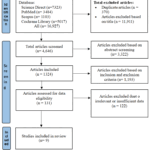 |
Figure 1: PRISMA flow diagram of study selection |
Source: Adapted from PRISMA 2020 Statement33
Study Characteristic
The characteristics of the included studies showed that most were conducted in East Asia, particularly China and Hong Kong, with participant mean ages ranging from 48 to 79 years. The interventions were heterogeneous, including acupuncture-based therapies, mindfulness interventions, transcutaneous electrical nerve stimulation (TENS), Tai Chi, bright light therapy, and CBT-I. Study durations ranged from 3 to 12 weeks, and most studies used DSM-IV or DSM-5 diagnostic criteria. This variability in intervention modality, duration, and population characteristics supports the need for a network meta-analysis approach to enable indirect comparisons and efficacy ranking across multiple treatments Table 2.
Quality Assessment
The Cochrane RoB 2.0 tool assessment across 9 included studies revealed 1 (11.1%) study at low risk of bias, 4 (44.4%) at some concern, and 4 (44.4%) at high risk. Some concerns were primarily driven by deviations from intended interventions (lack of blinding, n=5), missing outcome data, and high attrition, while selective reporting risks were uniformly low. High risk predominantly stemmed from performance bias (non-blinded interventions) and attrition impacting results, with inaccessible protocols contributing to concerns in selective reporting (n=6). Overall methodological quality supports NMA applicability but warrants caution for subjective (Figure 2).
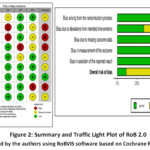 |
Figure 2: Summary and Traffic Light Plot of RoB 2.0 |
Source: Generated by the authors using RoBVIS software based on Cochrane RoB 2 assessment34
Table 2. Characteristics of Included Studies
| Study | Country | Sample size (n) | Mean age (years) | Intervention | Comparator | Duration | Diagnostic criteria |
| Yeung, 2009 35 | Hong Kong | 60 | 48.0 | Electroacupuncture | Sham | 3 weeks | DSM-IV |
| Garcia, 201836 | Brazil | 30 | 55.9 | Mindfulness training | Usual care | 8 weeks | DSM-5 |
| Lee, 202237 | Korea | 160 | 60.2 | TENS | Sham | 4 weeks | DSM-5 |
| Suen, 201938 | China | 151 | 75.3 | Auricular acupuncture | Placebo | 6 weeks | DSM-5 |
| Zhang, 201539 | China | 60 | 78.1 | MBSR | Wait-list | 8 weeks | DSM-IV |
| Irwin, 201740 | USA | 90 | 59.8 | Tai Chi Chih | CBT-I | 12 weeks | DSM-IV-TR |
| Cao, 202241 | China | 144 | 64.4 | Acupuncture | Usual care | 4 weeks | DSM-5 |
| Chung, 201842 | Hong Kong | 128 | 53.4 | Acupuncture + Electroauricular | Wait-list | 3 weeks | DSM-5 |
| Friedman, 200943 | USA | 51 | 63.6 | Bright light therapy | Dim light/usual care | 12 weeks | ICSD |
Source: Compiled and synthesized by the authors from included studies
Subjective Outcome Measures
The netgraph visualization maps the comparative relationships among the available interventions. The size of each node represents the cumulative sample size (n). At the same time, the thickness of each edge reflects the frequency with which studies make direct comparisons between the corresponding intervention pairs. The netgraph reveals a heterogeneous distribution of samples, with the Usual Care group having the largest number of participants (n = 192). In contrast, Cognitive Behavioral Therapy for Insomnia (CBT-I) comprises the smallest sample (n = 45). The network structure forms three closed loops: the first involves acupuncture-based interventions (Magnetic, Electro-Laser, and Combined); the second includes Acupuncture, Combined-Electro, Conventional Acupuncture, and Waitlist; and the third connects Usual Care, Acupuncture, Waitlist, and Meditative Movement Therapy.
Comparative effect estimates indicated three interventions exhibit the highest and statistically significant efficacy in reducing PSQI scores compared with Usual Care, with moderate heterogeneity (I² = 54.4%). Cognitive Behavioral Therapy for Insomnia (CBT-I) provides the strongest evidence, confirming its role as the gold standard, with a mean difference (MD) of −6.30 (95% CI: −8.19 to −4.40). Meanwhile, Meditative Movement Therapy (MMT) shows substantial efficacy (MD: −5.50; 95% CI: −6.97 to −4.02), positioning it as a leading adjunctive or intervention of choice alongside CBT-I or benzodiazepines (BDZ). Furthermore, Conventional Acupuncture also demonstrates high efficacy (MD: −2.52; 95% CI: −3.78 to −1.26) (Figure 3).
The analysis of the netgraph indicates a heterogeneous distribution of samples, with Acupuncture having the largest sample size (n = 168), while Electro-Laser Acupuncture has the smallest (n = 30). The network structure consists of a single closed loop, encompassing three interventions: Acupuncture, Combined Electro, Conventional Acupuncture, and Waitlist. The forest plot analysis reveals that two interventions exhibit the highest and statistically significant efficacy in reducing ISI scores compared with Usual Care, with moderate heterogeneity (I² = 95.1%). Meditative Movement Therapy (MMT) provides the strongest evidence, showing a mean difference (MD) of −13.42 (95% CI: −15.53 to −11.31). Meanwhile, Acupuncture demonstrates substantial efficacy with a mean difference (MD) of −4.20 (95% CI: −5.52 to −2.28) (Figure 4).
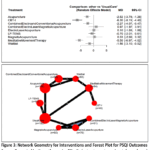 |
Figure 3: Network Geometry for Interventions and Forest Plot for PSQI Outcomes |
Source: Generated by the authors using RStudio (netmeta, meta, and metafor packages) based on data extracted from included studies.
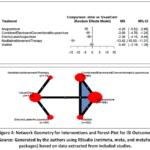 |
Figure 4: Network Geometry for Interventions and Forest Plot for ISI Outcomes |
Source: Generated by the authors using RStudio (netmeta, meta, and metafor packages) based on data extracted from included studies.
The risk of publication bias was addressed for ISI and PSQI outcomes. The Egger’s regression valuewas not statistically significant for the PSQI outcome (ER = 0.77; p = 0.46). Meanwhile, a visual inspection of the funnel plot suggeststhat the PSQI and ISI outcomes are symmetrical. Consequently, while small-study effects cannot be completely ruled out, there is no significant statistical evidence for publication bias.
Objective Outcome Measures
Total Sleep Time (TST) on Polysomnography
Overall, the TST analysis showed no statistically significant differences across all intervention comparisons, as evidenced by confidence intervals that included zero. Although not statistically significant, the forest plot suggested that Bright Morning was associated with the greatest increase in TST compared with the other comparisons. The largest increases were observed in Bright Morning versus Bright Evening (MD = 17.2; 95% CI: −16.86 to 51.26) and Bright Morning versus Usual Care (MD = 14.6; 95% CI: −24.32 to 53.52). However, the wide confidence intervals indicate substantial uncertainty in the estimates.
Sleep Efficiency (SE) on Polysomnography
Based on the polysomnography analysis, Tai Chi Chih (TCC) was shown to produce significantly lower sleep efficiency than Cognitive Behavioral Therapy for Insomnia (CBT-I). This reduction in efficacy was objectively indicated by a mean difference (MD) of −6.20 (95% CI: −7.05 to −5.35). Thus, CBT-I was superior to TCC in improving objective sleep efficiency.
Sleep Onset Latency (SOL) with Actigraphy
Two studies were included in the analysis and showed very high between-study heterogeneity (I² = 95.3%; p < 0.0001). The forest plot analysis indicated a reduction in SOL of 0.28; however, the 95% CI was very wide (−164.79 to 164.23) and crossed zero, indicating that the result was not statistically significant. Therefore, the estimate cannot be generalized to the wider population.
Wake After Sleep Onset (WASO) with Actigraphy
Three studies were included in the analysis and showed low heterogeneity (I² = 24.3%; p = 0.267). The random-effects analysis showed an increase in WASO of 0.11 minutes, with a 95% CI of −31.12 to 31.33. Although heterogeneity was low, the wide confidence interval that crosses zero suggests that the intervention effect was not statistically significant and cannot be confidently generalized to the broader population.
Discussion
The present network meta-analysis highlights differential efficacy among adjunctive non-pharmacological therapies for insomnia. At the same time, objective improvements remained largely non-significant, reflecting a well-recognized but underexplored phenomenon in insomnia research: the structural dissociation between subjective and objective sleep improvement. This dissociation is not merely a measurement artifact but rather reflects the neurobiological complexity of insomnia, in which hyperarousal, conditioned wakefulness, and sleep-related cognitive distortions may respond differentially to behavioral versus somatic interventions, without necessarily producing concurrent changes in polysomnographic architecture or actigraphy-derived parameters.44 The pattern observed in this NMA therefore challenges the assumption that subjective and objective improvement are interchangeable endpoints. It underscores the need for theoretical models that accommodate treatment-specific pathways of change.
Existing evidence continues to support CBT-I as the benchmark intervention for chronic insomnia management. However, the integration of certain non-pharmacological adjuncts offers significant additional benefits, particularly for patients who do not achieve full remission with CBT-I monotherapy. Based on PSQI (Pittsburgh Sleep Quality Index) scores, CBT-I demonstrated the highest efficacy with a Mean Difference (MD) of -6.30. These findings reinforce the recommendations of the 2023 European Insomnia Guideline, which positions CBT-I as the first-line treatment for all adults, including those with medical or psychiatric comorbidities.7
The emergence of MMT as the highest-ranked intervention on ISI outcomes and the second-highest on PSQI, approaching the magnitude of CBT-I, cannot be adequately explained by a simple relaxation effect. The theoretical underpinning of MMT’s efficacy lies in its dual action on the two dominant pathways perpetuating insomnia: somatic hyperarousal and cognitive rumination. Mind-body movement practices, including Tai Chi, modulate the autonomic nervous system by enhancing parasympathetic tone through heart rate variability-mediated pathways, simultaneously dampening hypothalamic-pituitary-adrenal axis reactivity and sympathetic overdrive, the physiological substrate of conditioned hyperarousal.40 This dual-pathway mechanism distinguishes MMT from passive relaxation and positions it as a potentially more accessible and contextually adaptable adjunct than CBT-I, particularly for older adults in East Asian settings where movement-based therapies carry strong cultural acceptability and low perceived stigma. Crucially, Tai Chi demonstrated improvements in both subjective and actigraphy-verified objective sleep parameters at 24-month follow-up in a recent large RCT, providing longitudinal corroboration that its benefits are durable and not solely attributable to expectancy effects.45
The significant and consistent efficacy of Conventional Acupuncture across PSQI, ISI, and actigraphy-assessed TST nodes warrants careful theoretical contextualization rather than straightforward endorsement. At the neurobiological level, acupuncture has been shown to upregulate GABAergic and serotonergic neurotransmission, modulate cerebral blood flow in the putamen, a region implicated in basal ganglia-mediated sleep regulation, and normalize HPA axis activity via the microbiota-gut-brain axis, providing a credible multitarget mechanism that extends beyond placebo.46,47However, the magnitude of these effects in the current NMA must be interpreted cautiously against the backdrop of high between-study heterogeneity in actigraphy-derived TST. This finding likely reflects variability in needling protocols, acupuncture point selection, and session frequency rather than genuine biological inconsistency. The fundamental limitation of acupuncture research, the absence of a credible inert sham control, means that the specific attributable effect remains difficult to disentangle from non-specific contextual and expectancy contributions. This issue continues to limit the epistemic strength of acupuncture evidence even in methodologically rigorous trials.48
Despite a strong neurobiological rationale for bright light therapy in phase-advanced older adults, morning light suppresses residual nocturnal melatonin via entrainment of the suprachiasmatic nucleus, thereby advancing circadian timing. The failure of any light therapy arm to reach statistical significance on PSG-derived TST in this NMA raises questions about the translational gap rather than the mechanistic invalidity. The directional trend favoring Bright Morning across all TST comparisons is clinically coherent and consistent with prior work demonstrating actigraphy-assessed reductions in WASO with scheduled bright light.16,43The absence of statistical significance in this NMA is most parsimoniously attributed to the small sample sizes inherited from the single eligible trial contributing to these nodes, rather than indicating a null effect. This interpretation underscores a broader gap in the circadian intervention literature: the transition from mechanistic plausibility to adequately powered clinical evidence remains incomplete, particularly between diagnostically confirmed insomnia disorder and sub-threshold sleep disturbances.
A recurring and theoretically significant observation throughout this NMA is the divergence between subjective improvement, large, consistent, and statistically robust, and objective improvement, small, imprecise, and largely non-significant. This discordance is not unique to this review and represents one of the most contentious and clinically consequential unresolved questions in insomnia research. The hyperarousal model of insomnia posits that the phenomenological experience of poor sleep is maintained by a cascade of attentional biases, catastrophic cognitions, and heightened cortical arousal that are partially independent of objective sleep architecture.14,44Non-pharmacological interventions may preferentially target the cognitive and physiological arousal components of this cycle, producing subjective relief without proportionate changes in polysomnographically measured sleep stages or actigraphic movement patterns, a phenomenon particularly pronounced in older adults, for whom the subjective objective mismatch is known to be greater than in younger populations. Future trials should pre-specify both subjective and objective endpoints as co-primary outcomes and report their concordance explicitly to advance understanding of treatment-specific pathways of change.
Strength and Limitation Study
This network meta-analysis has several strengths, including the use of strict DSM-5/ICD diagnostic criteria, the integration of subjective and objective data, and a specific focus on the aging population, which is often underrepresented in clinical trials. However, several limitations must be acknowledged.
Most of the included studies had a significant risk of bias, particularly related to the inability to double-mask behavioral and physical interventions (such as acupuncture or Tai Chi). This may lead to an overestimation of subjective effects due to patient expectations. Additionally, heterogeneity in acupuncture protocols (point location, session duration, and frequency) complicates comparisons across studies.
Conclucion
Findings from the current evidence synthesis suggest that CBT-I remains the most efficacious and objectively validated non-pharmacological intervention for insomnia in middle-aged and older adults, particularly for polysomnography-derived sleep efficiency. MMT emerged as the highest-ranking adjunctive strategy for subjective outcomes, approaching CBT-I’s effect size on the ISI and substantially outperforming other comparators on the PSQI, positioning it as a clinically meaningful option for patients with limited access to CBT-I or a partial response to it. Conventional Acupuncture demonstrated consistent and statistically significant benefits across subjective and actigraphy-based objective outcomes, though its evidence base remains constrained by protocol heterogeneity.
Acknowledgement
The authors would like to express their sincere gratitude to Dr. Moewardi General Hospital, Surakarta, for the support and facilities provided during the completion of this research. The authors also highly appreciate the Faculty of Medicine, Universitas Sebelas Maret, Surakarta, for the academic guidance, institutional support, and valuable resources that contributed significantly to the conduct and completion of this study.
Funding Sources
The author(s) received no financial support for the research, authorship, and/or publication of this article.
Conflict of Interest
The authors have no conflicts of interest.
Data Availability Statement
This statement does not apply to this article.
Ethics Statement
This research did not involve human participants, animal subjects, or any material requiring ethical approval.
Informed Consent Statement:
This study did not involve human participants; therefore, informed consent was not required.
Clinical Trial Registration
This research does not involve any clinical trials.
Permission to reproduce material from other sources
Not Applicable
Authors’ contribution
- Siti Wahyuni = Conceptualization, Methodology, Supervision, Validation, Funding acquisition.
- Indria Hafizah = Data curation, Investigations, Validation, and Writing – original draft.
- HilmiAmirul Haq = Methodology, Data curation, Investigation, Validation, and Writing – original draft.
- Bryan Naufal Abdullah = Formal analysis, Investigation, Validation, Visualization, and Writing – original draft.
- Ahmad Fikri Albab = Data curation, Investigation and Validation; Elizabeth = Methodology, Investigation, Validation, and Writing – original draft.
- Liza Fitria Fajariatussamsiah = Formal analysis, Investigation, Validation, Visualization, and Writing – original draft.
- Farida Murtiani = Methodology, Supervision, Validation, Funding acquisition.
References
- Pradhan MR, Saikia D. Prevalence and predictors of insomnia and its treatment-seeking among older adults in India. Journal of Activity, Sedentary, and Sleep Behaviors. 2024;3(1). doi:10.1186/S44167-024-00044-W
CrossRef - Bhaskar S, Hemavathy D, Prasad S. Prevalence of chronic insomnia in adult patients and its correlation with medical comorbidities. J Family Med Prim Care. 2016;5(4):780. doi:10.4103/2249-4863.201153
CrossRef - van Straten A, Weinreich KJ, Fábián B, et al. The Prevalence of Insomnia Disorder in the General Population: A Meta-Analysis. J Sleep Res. 2025;34(5). doi:10.1111/JSR.70089
CrossRef - Cross NE, Carrier J, Postuma RB, et al. Association between insomnia disorder and cognitive function in middle-aged and older adults: a cross-sectional analysis of the Canadian Longitudinal Study on Aging. Sleep. 2019;42(8). doi:10.1093/SLEEP/ZSZ114
CrossRef - Grandner M, Olivieri A, Ahuja A, Büsser A, Freidank M, McCall W V. The burden of untreated insomnia disorder in a sample of 1 million adults: a cohort study. BMC Public Health. 2023;23(1). doi:10.1186/S12889-023-16329-9
CrossRef - Brownlow JA, Miller KE, Gehrman PR. Insomnia and Cognitive Performance. Sleep Med Clin. 2020;15(1):71-76. doi:10.1016/J.JSMC.2019.10.002
CrossRef - Riemann D, Espie CA, Altena E, et al. The European Insomnia Guideline: An update on the diagnosis and treatment of insomnia 2023. J Sleep Res. 2023;32(6). doi:10.1111/JSR.14035
CrossRef - Edinger JD, Arnedt JT, Bertisch SM, et al. Behavioral and psychological treatments for chronic insomnia disorder in adults: an American Academy of Sleep Medicine clinical practice guideline. J Clin Sleep Med. 2021;17(2):255-262. doi:10.5664/JCSM.8986
CrossRef - Wu JQ, Appleman ER, Salazar RD, Ong JC. Cognitive Behavioral Therapy for Insomnia Comorbid With Psychiatric and Medical Conditions: A Meta-analysis. JAMA Intern Med. 2015;175(9):1461-1472. doi:10.1001/JAMAINTERNMED.2015.3006
CrossRef - Xu D, Cardell E, Broadley SA, Sun J. Efficacy of Face-to-Face Delivered Cognitive Behavioral Therapy in Improving Health Status of Patients With Insomnia: A Meta-Analysis. Front Psychiatry. 2021;12:798453. doi:10.3389/FPSYT.2021.798453/TEXT
CrossRef - Huang K, Li S, He R, et al. Efficacy of cognitive behavioral therapy for insomnia (CBT-I) in older adults with insomnia: A systematic review and meta-analysis. Australas Psychiatry. 2022;30(5):592-597. doi:10.1177/10398562221118516
CrossRef - Andrade C. Sedative Hypnotics and the Risk of Falls and Fractures in the Elderly. J Clin Psychiatry. 2018;79(3). doi:10.4088/JCP.18F12340
CrossRef - Glass J, Lanctôt KL, Herrmann N, Sproule BA, Busto UE. Sedative hypnotics in older people with insomnia: meta-analysis of risks and benefits. BMJ. 2005;331(7526):1169-1173. doi:10.1136/BMJ.38623.768588.47
CrossRef - Riemann D, Dressle RJ, Spiegelhalder K. Insomnia Guidelines—The European Update 2023. Clinical and Translational Neuroscience 2024, Vol 8. 2024;8(1):10. doi:10.3390/CTN8010010
CrossRef - Ong JC, Kalmbach DA. Mindfulness as an Adjunct or Alternative to CBT-I. Sleep Med Clin. 2023;18(1):59-71. doi:10.1016/J.JSMC.2022.09.002
CrossRef - Chambe J, Reynaud E, Maruani J, Fraih E, Geoffroy PA, Bourgin P. Light therapy in insomnia disorder: A systematic review and meta-analysis. J Sleep Res. 2023;32(6). doi:10.1111/JSR.13895
CrossRef - Pei W, He T, Yang P, et al. Acupuncture combined with cognitive–behavioural therapy for insomnia (CBT-I) in patients with insomnia: study protocol for a randomized controlled trial. BMJ Open. 2022;12(12):e063442. doi:10.1136/BMJOPEN-2022-063442
CrossRef - Kutana S, Mao JJ, Garland SN. Acupuncture as an Adjunct Treatment to Cognitive-Behavioral Therapy for Insomnia. Sleep Med Clin. 2023;18(1):113-122. doi:10.1016/J.JSMC.2022.10.005
CrossRef - Khosravi K, Khosravi M, Khosravi R. Effectiveness of non-invasive brain stimulation in improving sleep quality in insomnia: a systematic review. Sleep Science and Practice 2025 9:1. 2025;9(1):18-. doi:10.1186/S41606-025-00137-8
CrossRef - Rektorová I, Pupíková M, Fleury L, Brabenec L, Hummel FC. Non-invasive brain stimulation: current and future applications in neurology. Nat Rev Neurol. 2025;21(12):669-686. doi:10.1038/S41582-025-01137-Z
CrossRef - Sheehan CM, Infurna FJ. An Emerging 21st-Century Midlife Sleep Crisis? Cohort Differences in Sleeping Patterns Among Americans in Midlife and Older Adulthood. J Gerontol B Psychol Sci Soc Sci. 2024;79(5). doi:10.1093/GERONB/GBAE016
CrossRef - Münch M, Knoblauch V, Blatter K, et al. Age-related attenuation of the evening circadian arousal signal in humans. Neurobiol Aging. 2005;26(9):1307-1319. doi:10.1016/J.NEUROBIOLAGING.2005.03.004
CrossRef - Auger RR, Burgess HJ, Emens JS, Deriy L V., Thomas SM, Sharkey KM. Clinical Practice Guideline for the Treatment of Intrinsic Circadian Rhythm Sleep-Wake Disorders: Advanced Sleep-Wake Phase Disorder (ASWPD), Delayed Sleep-Wake Phase Disorder (DSWPD), Non-24-Hour Sleep-Wake Rhythm Disorder (N24SWD), and Irregular Sleep-Wake Rhythm Disorder (ISWRD). An Update for 2015: An American Academy of Sleep Medicine Clinical Practice Guideline. J Clin Sleep Med. 2015;11(10):1199-1236. doi:10.5664/JCSM.5100
CrossRef - Spira AP, Kaufmann CN, Stone KL. Sleep, Circadian Rhythms, and Aging: Advancing Knowledge to Promote Older Adults’ Health. J Gerontol A Biol Sci Med Sci. 2023;78(10):1812-1815. doi:10.1093/GERONA/GLAD195
CrossRef - Ding Z, Li Q, Zhang R, et al. Personalized neoantigen pulsed dendritic cell vaccine for advanced lung cancer. Signal Transduct Target Ther. 2021;6(1). doi:10.1038/S41392-020-00448-5
CrossRef - Pengo MF, Won CH, Bourjeily G. Sleep in Women Across the Life Span. Chest. 2018;154(1):196-206. doi:10.1016/J.CHEST.2018.04.005
CrossRef - Harvey AG, Tang NKY. (Mis)Perception of sleep in insomnia: a puzzle and a resolution. Psychol Bull. 2012;138(1):77-101. doi:10.1037/A0025730
CrossRef - Hutton B, Salanti G, Caldwell DM, et al. The PRISMA extension statement for reporting of systematic reviews incorporating network meta-analyses of health care interventions: checklist and explanations. Ann Intern Med. 2015;162(11):777-784. doi:10.7326/M14-2385
CrossRef - Sterne JAC, Savović J, Page MJ, et al. RoB 2: a revised tool for assessing risk of bias in randomized trials. BMJ. 2019;366. doi:10.1136/BMJ.L4898
CrossRef - Buysse DJ, Reynolds CF, Monk TH, Berman SR, Kupfer DJ. The Pittsburgh Sleep Quality Index: a new instrument for psychiatric practice and research. Psychiatry Res. 1989;28(2):193-213. doi:10.1016/0165-1781(89)90047-4
CrossRef - Balduzzi S, Rücker G, Nikolakopoulou A, et al. netmeta: An R Package for Network Meta-Analysis Using Frequentist Methods. J Stat Softw. 2023;106(2):1-40. doi:10.18637/JSS.V106.I02
CrossRef - Rücker G, Schwarzer G. Ranking treatments in frequentist network meta-analysis works without resampling methods. BMC Med Res Methodol. 2015;15(1). doi:10.1186/S12874-015-0060-8
CrossRef - Page MJ, McKenzie JE, Bossuyt PM, et al. The PRISMA 2020 statement: an updated guideline for reporting systematic reviews. BMJ. 2021;372. doi:10.1136/BMJ.N71
CrossRef - Sterne JAC, Savović J, Page MJ, et al. RoB 2: a revised tool for assessing risk of bias in randomized trials. BMJ. 2019;366:l4898. doi:10.1136/bmj.l4898
CrossRef - Yeung WF, Chung KF, Zhang SP, Yap TG, Law ACK. Electroacupuncture for Primary Insomnia: A Randomized Controlled Trial. Sleep. 2009;32(8):1039. doi:10.1093/SLEEP/32.8.1039
CrossRef - Garcia MC, Kozasa EH, Tufik S, Mello LEAM, Hachul H. The effects of mindfulness and relaxation training for insomnia (MRTI) on postmenopausal women: a pilot study. Menopause. 2018;25(9):992-1003. doi:10.1097/GME.0000000000001118
CrossRef - Lee HJ, Hong JK, Choi H, Chung S, Yoon IY. Age-Limited Effects of Low-Frequency Transcutaneous Electric Nerve Stimulation on Insomnia: A 4-Week Multi-Center, Randomized Controlled Study. Psychiatry Investig. 2022;19(6):451. doi:10.30773/PI.2021.0374
CrossRef - Suen LKP, Molassiotis A, Yueng SKW, Yeh CH. Comparison of Magnetic Auriculotherapy, Laser Auriculotherapy, and Their Combination for Treatment of Insomnia in the Elderly: A Double-Blinded Randomized Trial. Evid Based Complement Alternat Med. 2019;2019:3651268. doi:10.1155/2019/3651268
CrossRef - Zhang JX, Liu XH, Xie XH, et al. Mindfulness-based stress reduction for chronic insomnia in adults older than 75 years: a randomized, controlled, single-blind clinical trial. Explore (NY). 2015;11(3):180-185. doi:10.1016/J.EXPLORE.2015.02.005
CrossRef - Irwin MR, Olmstead R, Carrillo C, et al. Tai Chi Chih Compared With Cognitive Behavioral Therapy for the Treatment of Insomnia in Survivors of Breast Cancer: A Randomized, Partially Blinded, Noninferiority Trial. J Clin Oncol. 2017;35(23):2656-2665. doi:10.1200/JCO.2016.71.0285
CrossRef - Cao Y, Yan YJ, Xu JY, et al. Acupuncture for insomnia after ischemic stroke: an assessor-participant blinded, randomized controlled trial. Acupuncture in medicine : journal of the British Medical Acupuncture Society. 2022;40(5):443-452. doi:10.1177/09645284221077106
CrossRef - Chung KF, Yeung WF, Yu BYM, et al. Acupuncture with or without combined auricular acupuncture for insomnia: a randomized, waitlist-controlled trial. Acupuncture in medicine : journal of the British Medical Acupuncture Society. 2018;36(1):2-13. doi:10.1136/ACUPMED-2017-011371
CrossRef - Friedman L, Zeitzer JM, Kushida C, et al. Scheduled bright light for treatment of insomnia in older adults. J Am Geriatr Soc. 2009;57(3):441-452. doi:10.1111/J.1532-5415.2008.02164.X
CrossRef - Harvey AG, Tang NKY. (Mis)Perception of Sleep in Insomnia: A puzzle and a resolution. Psychol Bull. 2011;138(1):77. doi:10.1037/A0025730
CrossRef - Siu PM, Yu AP, Tam BT, et al. Effects of Tai Chi or Exercise on Sleep in Older Adults With Insomnia: A Randomized Clinical Trial. JAMA Netw Open. 2021;4(2):e2037199-e2037199. doi:10.1001/JAMANETWORKOPEN.2020.37199
CrossRef - Cao Y, Yan YJ, Xu JY, et al. Acupuncture for insomnia after ischemic stroke: an assessor-participant blinded, randomized controlled trial. Acupuncture in medicine : journal of the British Medical Acupuncture Society. 2022;40(5):443-452. doi:10.1177/09645284221077106
CrossRef - Wang X, Yan L, Zhang X, Liu X, Yang B. Electroacupuncture as adjunctive therapy for insomnia via targeting the GABAergic microbiota-gut-brain axis: a mini review. Front Psychiatry. 2025;16:1613408. doi:10.3389/FPSYT.2025.1613408
CrossRef - Pei L, Geng H, Guo J, et al. Effect of Acupuncture in Patients With Irritable Bowel Syndrome: A Randomized Controlled Trial. Mayo Clin Proc. 2020;95(8):1671-1683. doi:10.1016/J.MAYOCP.2020.01.042
CrossRef
 PlumX:
 Views: 1485
  PDF Downloads:
251
PDF Downloads:
251 
Accepted on: 27-05-2026
Second Review by: Dr. Karuna Priyachitra and Dr. Ananya Naha
Final Approval by: Dr H Fai Poon