





Manuscript accepted on :24-12-2025
Published online on: 10-02-2026
Plagiarism Check: Yes
Reviewed by: Dr. Nina Mariana
Second Review by: Dr. Raveesha Peeriga
Final Approval by: Dr. Mariia Shanaida
 Views:
Sangeetha Raja1 , Satyajit Mohapatra2, Kalaivani Amitkumar3, Kasthuri Natarajan4*, Jamuna Rani1, Alwin Devasagayam5and Farhana Rahman6
1Department of Pharmacology, SRM Medical College Hospital and Research Centre, SRMIST, SRM University, Kattankulathur, Chengalpattu District, Chennai, Tamil Nadu, India.
2Department of Pharmacology, All India Institute of Medical Sciences, Changsari, Kamrup District, Guwahati, Assam, India.
3Department of Pathology, SRM Medical College Hospital and Research Centre, SRMIST, SRM University, Kattankulathur, Chengalpattu District, Chennai, Tamil Nadu, India.
4Department of Biomedical sciences, Saveetha college of Allied Health Sciences, Saveetha Institute of Medical and Technical Sciences, Saveetha University, Thandalam, Chennai, Tamil Nadu, India.
5Department of Central Animal House, SRM Medical College Hospital and Research Centre, SRMIST, SRM University, Kattankulathur, Chengalpattu District, Chennai, Tamil Nadu, India.
6Department of Pharmacology, Sree Balaji Medical College and Research Institute, Chrompet, Chennai, Tamil Nadu, India
Corresponding Author E-mail:kasthurinm02@gmail.com
Abstract
Abnormal lipids level leads to hyperlipidemia. Safe and effective therapy is essential for management of hyperlipidemia. Vetiveria zizanioides (VZ), commonly known as vetiver or khus, in traditional medicine shows promising treatment in hyperlipidemia without compromising reproductive health. Aim of this study is to assess antihyperlipidemic effect of aqueous and ethanolic extract from Vetiveria zizanioides in high-fat diet-induced Wistar Albino rats. The aqueous and ethanolic extract of Vetiveria zizanioides was administered orally for 8 weeks at dosage of 300/600mg/kg of wistar albino rats. Body weight, histology and biochemical assessments of the rats were analysed. In-silico evaluation of the Vetiveria zizanioides was done prior to the animal study for the better understanding of the herb. Body weight was decreased 50% in aqueous extract VZ-treated group compared to control group. Biochemical assessments indicate significant decrease in total and LDL cholesterol, triglycerides levels and improvement in HDL levels in high fat diet (HFD) and combination with simvastatin (HFD+SIM) groups (P<0.000). Histology revealed reduction in necrosis and edema while retaining normal spermatogenesis in VZ-treated HFD rats. In in-silico analysis, thirty-six targets were identified between the hypolipidemia and rat testis. Molecular dynamics simulations confirmed the dynamic stability interaction of globulol with highest binding affinity for target proteins 7-dehydrocholesterol reductase (DHCR7) and squalene synthase (FDFT1), with binding energies of -6.8 and -8.6 kcal/mol, respectively and thus ability to modify the protein targets. In conclusion, the in-silico and in-vivo analysis confirmed the antihyperlipidemic activity of Vetiveria zizanioides.
Keywords
Cholesterol; Hyperlipidemia; In-silico analysis; Testis histology; Vetiveria zizanioides; Wistar rat
| Copy the following to cite this article: Raja S, Mohapatra S, Amitkumar K, Natarajan K, Rani J, Devasagayam A, Rahman F. Proliferative and Protective Effects of Vetiveria zizanioides on Obesity and Male Fertility In Wistar Albino Rats. Biomed Pharmacol J 2026;19(1). |
| Copy the following to cite this URL: Raja S, Mohapatra S, Amitkumar K, Natarajan K, Rani J, Devasagayam A, Rahman F. Proliferative and Protective Effects of Vetiveria zizanioides on Obesity and Male Fertility In Wistar Albino Rats. Biomed Pharmacol J 2026;19(1). Available from: https://bit.ly/4rEZvLZ |
Introduction
Hyperlipidemia, heterogenous disorder occurred due to abnormal elevation of lipids including cholesterol, triglycerides, phospholipids, cholesterol esters and plasma lipoproteins in the blood stream. Fundamentally, hyperlipidemia classified as familial due to primary cause of genetic abnormalities and as acquired due to secondary cause of undelying diorders. Increased levels of lipoproteins like chylomicrons, LDL, VLDL, IDL and decreased HDL cause primary types of hyperlipedemia. Based on lipid type, hyperlipidemia classified as hypercholesterolemia, hypertriglyceridemia and hyperlipoproteinemia.1 The symptoms of hyperlipidemia discovered during examinations are cholesterol deposition under the skin on eye, chest pain, stroke, swelling of liver, kidney, pancreas, block of blood vessels in heart and brain, glucose intolerance and high rate of obesity.2
WHO estimates dyslipidemia prevalence in southeast asia (30.3%), America (47.7%), western pacific (36.7%) and Europe (53.7%). In India, urban (25-30 %) and rural population (15-20%), hypercholesterolemia (13.9%), hypertriglyceridemia (29.5%), low HDLC (72.3%), high LDLC (11.8%), lipid abnormalities (79%) have hyperlipidemia. In Tamil Nadu, 18.3% hypercholesterolemia, 15.8% high LDLC have been reported.3 Studies reported the prevalence of any dislipidemia was 76.4% male and 89.3%% females in Chennai, 64.3% males and 74.4% females in Delhi.4
Even though we have pharmacotherapy for hyperlipidaemia such as statins, fibrates, ezetimibe, niacin, bile acid resins, inhibitors have shown adverse side effects like headache, nausea, abdominal discomfort, itching, diarrhoea and elevation of liver enzymes. Traditional remedies which are mainly plant derivatives have hypolipidemic action.5 Medicinal plants have major role of hypolipidemic activity in terms of safety, acceptable, effective and affordable.
Vetiveria zizaniodes, well known poaceae family widely available in South India, Africa, Bangladesh, Ceylon, Burma, Indonesia and cultivated much in Punjab, Uttarpradesh, Madhyapradesh, Bihar, West Bengal, Rajasthan, Karnataka, Kerala and Tamilnadu in India. Traditionally, vetiveria was used as for aromatherapy, ayurvedic therapy, skin diseases, sedative, tonic, vulnerary, anxiety, insomnia, anemia, amenorrhea, epilepsy, ulcer, cicatrisant, aphrosiaiac, nervine, healing, calming, dryness, muscle cramps, bone strengthening, allelopathy, pesticides, fungicides, insecticides, biofuel, repellants, food additive, fixative in cosmetics and perfumery.6-7 They were used pharmacologically for antioxidant, antifungal, anti-inflammatory, antibacterial, anti arthiritic, antirheumatic, antimicrobial, antitubercular, antispasmodic, antiseptic, antihelmentic, anticataleptic, antihyperglycemic, antidiuretic, antidepressant, antiasthmatic, antigout and analgesic activities.8-10 Our study hypothesis assessing the antihyperlipidemic activity of Vetiveria zizaniodes and comparing the effect of ethanolic and aqueous extracts of Vetiveria zizaniodes against hyperlipidemia. As well as to identify the potential targets of hypolipidemia in testicular mechanism through insilico analysis.
Materials and Methods
Chemicals
Hyper diet (High fat diet) was bought from National Institute of Nutrition, Hyderabad. Composition of the hyper diet includes 34% casein, 17.2% sucrose, 17.2% starch, 5% cellulose, 0.3% cysteine, 2.5% vegetable oil, 1% vitamin mix, 3.5% mineral mix, 19:3 tallow: groundnut oil. Biochemical analysis kits of total cholesterol (Cat. No. PBCHO), triglycerides (Cat. No. PB-TGL2), high density lipoprotein cholesterol (Cat. No. PBHDLP) was purchased from the company Wipro BIOMED. Research Graded chemicals and reagents were used in the study.
Plant Material and Preparation of Extracts
The Vetiveria zizanioides roots were authentically cleaned, air dried and powdered finely. The material (50g) was extracted with two solvents i.e., ethanol and water using soxhlet apparatus. Following extraction, the extract-containing solution was filtered using Whatman filter paper and dried for 30 minutes in a rotary flash evaporator at 45°C.11
In vivo analysis
Animal maintenance and experimental grouping
Albino wistar rats (150-200gms), six in each group was used in this study. Albino Wistar rats were maintained in room with 12 h light–dark cycles and 22±2°C constant temperature. Animals were fed with standard chow or laboratory chow enriched high fat diet for 8 weeks. Animals were grouped (Table 1) and orally treated respectively for eight weeks.
Table 1: Experimental grouping of animals
| Groups | Diet/Treatment | Dosage/Body Weight |
| I. | Standard rat chow diet (SCD) | – |
| II. | High Fat Diet (HFD) | – |
| III. | HFD + Simvastatin | 1 mg/kg |
| IV. | HFD + Low Dose Aqueous extract of vetiver (LdAe) | 600 mg/kg |
| V. | HFD + High Dose Aqueous extract of vetiver (HdAe) | 300 mg/kg |
| VI. | HFD + Low Dose Ethanolic extract of vetiver (LdEe) | 300 mg/kg |
| VII. | HFD + High Dose Ethanolic extract of vetiver (HdEe) | 600 mg/kg |
Body weight measurement of each rat was done at the end of every week for eight weeks. The time points of 1st week, 4th week and 8th week, a batch of animals was dissected, tissue samples heart, liver and kidney were stored for histological analysis and blood samples were collected for biochemical analysis.
Histological analysis
Animals were dissected at the end of 1st week, 4th week, 8th week and the testis samples were aseptically removed from each rat and processed for histology. Samples were stained by Hematoxylin and Eosin (H&E) using automatic stainer. Microscopically assessment of architectural and cellular changes was photomicrographed with a Leica BM5000 microscope coupled to a Leica DFC 300 FX camera (RGB mode), with 40× magnification objective.12
Biochemical analysis
Blood samples collected from each rat were centrifuged at 4000rpm, 10 minutes and the separated serum were stored for estimation of lipid profile (triglycerides, cholesterol, high density lipoprotein cholesterol and low density lipoprotein cholesterol). All the kits were purchased commercially from Wipro biomed company and the procedures were carried out as per the protocol mentioned in the kit. The CHOP/PAP Trinder’s method was used to assess cholesterol levels, with absorbance measured at 505 nm (490-550 nm) using UV spectrophotometry and values stated in mg/dl.13 The GPO/PAP Trinder’s method was used to measure triglycerides.14 The absorbance was measured at 546 nm, and the results were also given in milligrams per deciliter. Using the phosphotungstate precipitation method, which measures absorbance at 505 nm (490-550 nm), the levels of high-density lipoprotein (HDL) cholesterol were determined and reported in mg/dl.15 Triglyceride levels were subtracted from HDL cholesterol levels to determine low-density lipoprotein (LDL) cholesterol, which was then represented as mg/dl.15
Statistical analysis
Biochemical data were collected and statistical analysis was done using SPSS version 21 software. The significance was calculated using Mann whitney method at P<0.05. ANNOVA analysis was done to assess the significance within the group and between the group.
In silico analysis:
Screening of targets
The set of genes common for Hypolipidemia and Rat testicles proteins have been retrieved from Gene cards (https://www.genecards.org).16 The potential targets of the Hypolipidemia and Rat testicles were mapped the intersection through the Venn diagram
PPI network analysis
Exploring protein interactions was done using STRING database (https://string-db.org). The intersecting targets identified through Venn analysis were imported into the Cytoscape 3.8.2 software with the species filter set to “Homo sapiens” and excluded isolated targets. The interaction was filtered using a confidence score of 0.4.17 The biological process and cellular components were retrieved from PPI network.
Gene enrichment analysis
The KEGG database (http://www.genome.jp/kegg/), was then used to provide a comprehensive overview of metabolic pathways. Transcripts may be more easily mapped to known metabolic pathways thanks to KEGG pathway analysis, which also provides greater understanding of the biological relationships and roles of these pathways.
Target identification and bioactivity prediction
The CODD-Pred web server (publicly accessible web browser) used for identification of bioactive compounds, bioactivity prediction and ADMET prediction and optimization of lead compound.18
ADMET analysis
Ligand molecules from PubChem (https://pubchem.ncbi.nlm.nih.gov) in smiles format and the selected ligands loaded on SWISSADME and toxicity predicted using PROTOX-II webservers.19
Molecular docking
The ligands were retrieved from PubChem and proteins from the Protein Data Bank (www.rcsb.org). Ligand-protein interactions at them active site investigation done using Autodock Vina 1.1.2 and visualized using the Discovery Studio.20-21
Molecular simulation
Molecular dynamics simulation using GROMACS 5.1 for a simulation time of 100ns.22 Complex stability assessed by interaction map analysis and the RMSD (root mean square deviation) plot (ligand and protein).
Results
In vivo analysis:
Body weight of animals
Control group animal were maintained their standard body weight throughout the study. We observed there is gradual increase body weight in high fat diet as well as high fat diet with simvastatin treated animals. The body weight of animals treated with high fat diet with ethanolic or aqueous extracts of vetivera have shown decreased than high fat diet treated animals. There is marked reduction of body weight in the high fat diet with aqueous extract treated rats at the end of the experiment than high fat diet alone treated animals (Fig. 1a)
Histopathology
Animals treated with standard chow diet had normal testicular morphology. On the other hand, animals fed a high-fat diet displayed decreased spermatogenesis and fewer seminiferous tubules. The testicular sections showed exfoliated necrotic spermatocytes (thick arrow) and a loss of mature spermatozoa (star) in the lumen. Furthermore, localized Leydig cell hyperplasia (thin arrow) and interstitial edema were also detected (Fig. 1b).
Animals treated with HFD-LdAeVZ developed thickened blood vessel walls, edema in a few tubules, decreased spermatogonia and spermatocytes, and Leydig cell hyperplasia (Fig. 1c). On the contrary, most tubules in animals given a high-fat diet and high dose aqueous (HFD-HdAeVZ) showed adequate spermatogenesis (thick arrow) with a large number of mature spermatozoa (thin arrow), and there was no edema or thickening of the membrane (Fig. 1d).
Low dose ethanol (HFD-LdEeVZ) combined with a high-fat diet resulted in decreased spermatogenesis (thick arrow) in the majority of tubules, intratubular edema in some, spermatogonia necrosis (thin arrow), and interstitial edema in other few animals (Fig. 1e). On the other hand, certain tubules with a high-fat diet and high dose ethanol (HFD-HdEeVZ) had impaired spermatogenesis (thin arrow) and intratubular edema, while others demonstrated adequate spermatogenesis (thick arrow) and mature spermatozoa (Fig. 1f).
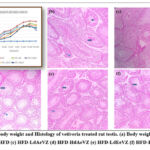 |
Figure 1: Body weight and Histology of vetiveria treated rat testis. (a) Body weight of wistar rats (b) HFD (c) HFD-LdAeVZ (d) HFD-HdAeVZ. |
Biochemical estimation of Lipid profile parameters
The animals treated with high-fat diet (HFD) had considerably higher cholesterol levels compared to controls. However, treatment with Vetiveria extracts (aqueous and ethanol) resulted in a significant reduction in cholesterol levels, especially by the eighth week, surpassing both the HFD and HFD+SIM treated groups (Fig. 2a). Furthermore, Vetiveria extracts enhanced HDL cholesterol levels (Fig. 2c) and significantly reduced serum triglyceride levels (Fig. 2b) across all time periods, maintaining them even in hyperlipidemic circumstances. Interestingly, rats given vetivera had stabilized LDL cholesterol levels, but rats given a high-fat diet showed a progressive rise in LDL cholesterol levels (Fig. 2d). These findings highlight vetivera’s effectiveness in modifying lipid profiles and reducing hyperlipidemia.
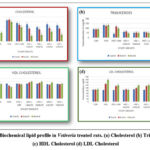 |
Figure 2: Biochemical lipid profile in Vetiveria treated rats. (a) Cholesterol (b) Triglycerides (c) HDL Cholesterol (d) LDL Cholesterol |
ANOVA Analysis
The ANNOVA analysis of biochemical parameters between groups and within groups have shown it is highly significant in cholesterol P<0.002, HDL P<0.000, Triglyceride P<0.034 and LDL levels P<0.010. (Table 2)
Table 2: ANOVA analysis of biochemical parameters
| Groups | Sum of Squares | df | Mean Square | F | P-Value | |
| CHOL | Between Groups | 71180.645 | 4 | 17795.161 | 4.623 | 0.002* |
| Within Groups | 327170.020 | 85 | 3849.059 | |||
| Total | 398350.666 | 89 | ||||
| HDL | Between Groups | 176751.279 | 4 | 44187.820 | 17.036 | 0.000* |
| Within Groups | 220466.632 | 85 | 2593.725 | |||
| Total | 397217.911 | 89 | ||||
| TG | Between Groups | 17109.069 | 4 | 4277.267 | 2.731 | 0.034* |
| Within Groups | 133121.889 | 85 | 1566.140 | |||
| Total | 150230.958 | 89 | ||||
| LDL | Between Groups | 19260.939 | 4 | 4815.235 | 3.520 | 0.010* |
| Within Groups | 116289.463 | 85 | 1368.111 | |||
| Total | 135550.402 | 89 | ||||
*P<0.05 statistical significance in ANNOVA analysis
In silico analysis:
Compound library screening
Hypolipidemia and Rat testicles proteins was retrieved from Gene cards. Thirty-six common targets of proteins were retrieved among 181 hypolipidemia and 2619 rat testicles target selection and PPI was generated. Biological process represents different molecular mechanisms including cell differentiation, regulation, signal transduction, lipid metabolism, homeostatis, cell communication, substance transportation and structural development etc. from the PPI interaction network. Cellular component enteries in terms of GO analysis include cytoplasm, intracellular membrane, endoplasmic reticulum to the least of plasma membrane signalling receptor complex, clathrin coated endocytic vesicle membrane and intermediate density lipoprotein particle. KEGG pathway analysis predicted around 16 signalling pathways with 60 gene counts.
Screening of small-molecule compound -CODD PRED
The small molecule compounds were screened through CODD pred by two datasets i.e., Obesity model-1 and 2, PIC50 values. Around7 compounds were found to be with good predicted pIC50 value (above 5) and hence based on the ranking, these compounds are further taken for Molecular docking study (Table 3). The ADME and insilico rat toxicity model was carried out for all the 7 compound. The results revealed that Globulol, Cyclohexanemethanol and trans-Z-.alpha.-Bisabolene epoxide both exhibited high absorption and binding, with Globulol having a predominantly short half-life and high clearance rate, confirming rapid metabolism and excretion. According to the LD50 values, none of the compounds exhibit acute toxicity at the investigated doses, indicating that they have high tolerance levels in the rat model.
Table 3: Selected ligands Molecular docking
| S. No | Compounds name |
| 1 | Phenol, 2-methoxy-4-(1-propenyl)- |
| 2 | Cyclohexanemethanol, 4-ethenyl-.alpha.,.alpha.,4-trimethyl-3-(1-methylethenyl)-, acetate, [1R-(1.alpha., |
| 3 | Acetic acid, 2,6,6-trimethyl-3-methylene-7-(3-oxobutylidene)oxepan-2-ylester |
| 4 | Dimethylmalonic acid, monochloride, 2-octyl ester |
| 5 | 1,3-Dioxolane, 2,2-dimethyl-4-hydroxymethyl-5-(2-hydroxypropyl)- |
| 6 | Globulol |
| 7 | trans-Z-.alpha.-Bisabolene epoxide |
Homology protein modelling
Uniprot database analysis and homology protein modelling done for identification of different conforms of same protein. Protein modelling of different conforms by Swiss model and structural assessment tool in Swiss bioinformatics database used for analysis. Conforms selection process with high value in Ramachandran plot and lower clash score. Qmean value of the model was estimated for analyzing integrity of developed model. According to results given in table 4, isoform 3 of 7-dehydrocholesterol reductase (DHCR7 receptor) (Fig. 3a) and isoform 1 of Squalene synthase (FDFT1 receptor) (Fig. 3b) showed the highest Ramachandran plot vale of 98.59 and 98.07 % respectively.
Table 4: Ramachandran plot and clash score of selected targets
| Uniprot ID | Protein Name | Isoforms | Ramachandran flavoured (%) | Clash score | Qmean |
| Q9UBM7 | 7-dehydrocholesterol reductase
(DHCR7 receptor) |
1 | 95.35 | 0.91 | 0.91 |
| 2 | 87.65 | 2.10 | 0.66 | ||
| 3 | 98.59 | 0.86 | 0.93 | ||
| P37268 | Squalene synthase
(FDFT1 receptor) |
1 | 98.07 | 0.15 | 0.90 |
| 2 | 95.16 | 0.35 | 0.93 | ||
| 3 | 94.85 | 0.56 | 0.93 |
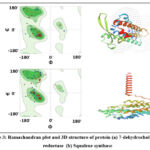 |
Figure 3: Ramachandran plot and 3D structure of protein (a) 7-dehydrocholesterol reductase (b) Squalene synthase |
Molecular docking and stimulation
The molecular docking gives us the interaction between a compound and the protein target, their better binding energy which is considered as the best fit (Table 5). Docking results suggested that the highest binding energy of the compound globulol with the receptor DHCR7 -6.8 and FDFT1 -8.6 was observed (Fig. 4)
The best 2 complexes, one from each protein were taken for Molecular simulation. Complex stability checking analyzed by interaction map and the ligand-protein RMSD (root mean square deviation) plot. From the RMSD plot of DHCR7_Globulol, the interaction was stable till 300th frame of simulation with the RMSD value of 0.3nm. There was a slight fluctuation observed from 370th frame to 1000th frame with the RMSD value fluctuating between 0.5 – 2.3nm. From the RMSD plot of FDFT1_Globulol, the interaction was unstable till 200th frame of simulation with the RMSD value fluctuating between 0.3 to 0.6nm. The stabilization was observed from 500th frame to 1000th frame with the RMSD value 0.5nm (Fig. 4)
Table 5: Molecular docking binding energy of compounds with target protein
| S. No | Compounds name | Binding energy with target protein DHCR7 (Kcal/mol) | Binding energy with target protein FDFT1 (Kcal/mol) |
| 1 | Phenol, 2-methoxy-4-(1-propenyl)- | -6.0 | -6.4 |
| 2 | Cyclohexanemethanol, 4-ethenyl-.alpha.,.alpha.,4-trimethyl-3-(1-methylethenyl)-, acetate, [1R-(1.alpha., | -5.2 | -6.5 |
| 3 | Acetic acid, 2,6,6-trimethyl-3-methylene-7-(3-oxobutylidene)oxepan-2-ylester | -6.6 | -5.8 |
| 4 | Dimethylmalonic acid, monochloride, 2-octyl ester | -5.3 | -6.2 |
| 5 | 1,3-Dioxolane, 2,2-dimethyl-4-hydroxymethyl-5-(2-hydroxypropyl)- | -5.5 | -5.3 |
| 6 | Globulol | -6.8 | -8.6 |
| 7 | trans-Z-.alpha.-Bisabolene epoxide | -6.7 | -7.2 |
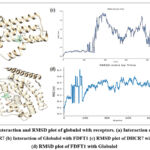 |
Figure 4: Interaction and RMSD plot of globulol with receptors. (a) Interaction of Globulol with DHCR7 (b) Interaction of Globulol with FDFT1 (c) RMSD plot of DHCR7 with Globulol (d) RMSD plot of FDFT1 with Globulol |
Discussion
Hyperlipidemia is associated with adverse health risks such as heart diseases, obesity, metabolic abnormalities, and infertility. Male infertility is responsible for 40-50% of reproductive issues in couples. There are several disorders and aberrant metabolic processes that raise the risk of male infertility.23 Cholesterol have a major role in sperm maturation and fertility in male not only in sperm cellular functions as well as spermatogenesis. High fat diet cause defect in testis tissues and lipid profile alterations.24-25 We assessed lipid profile abnormalities and its association, histological alterations in testis tissues and observed Vetiveria zizaniodes ameliorates the defects in lipid metabolism and tissue damage. Studies had shown that high fat diet and hyperlipidemia condition impairs spermatogenesis via the regulation of lipid and glucose metabolism in sertoli cells suggested unbalanced alterations in spermatogenesis.26 The histopatological studies have shown tubules with adequate spermatogenesis, good number of mature spermatozoa, mild interstitial oedema, reduced necrotic spermatocytes in the organs of HFD animals treated with low or high dose of aqueous or ethanolic extracts of VZ roots. These results provide us a greater dyslipidemic and cellular protective effect of Vetivera zizaniodes. Previous research revealed that Cordia dichotoma displayed hyperplasia of the seminal vesicle and mild to severe atrophy of the prostate and seminiferous tubule cells.27 Another study found that that the mid-piece regions of sperm cells, which are densely packed with mitochondria that provide energy for movement, had decreased sperm motility in the untreated hyperlipidemic group.28 Daily oral administration of Sembung leaf extract at 2 mg/ml successfully prevented Leydig cell damage associated with a high-fat diet in the treatment group.29 In humans, the aqueous leaf extract of Moringa oleifera improved spermatozoa quality and function, reduced excess free superoxide production, and maintained both acrosome reaction and DNA integrity.30 Generally adipose tissue weight, adipose cell size, and adipose cell number were all elevated in obese rats fed a high-fat diet.31 The aqueous extract Vetiveria treated animals when compared to HFD treated animals showed 50% reduction of body weight. These results suggest that Vetiveria have a prominent effect in reducing the body fat during hyperlipidemic condition and preventing the risk factors of overweight or body mass. The hydroalcoholic extract from Rosa roxburghii Tratt fruit protected HFD rats from body weight increase and hyperlipidemia which was similar to current study.
Lipid metabolism abnormalities are linked to heart illnesses, obesity, and its associated conditions.32 Hence regulation of hyperlipidemia with VZ as extract has been analyzed in the current study. The lipid profile parameters have shown a marked increase in triglycerides, total and LDL cholesterol and decrease in HDL cholesterol in the HFD treated animals compared to control. Additionally, we observed the aqueous extract plays a prominent dyslipidemic effect, maintaining the intact morphology, unrecognized inflammatory lesions than the ethanolic extract of Vetivera zizaniodes. Cocoa powder high in catechins and polyphenols was helpful in lowering plasma LDL cholesterol levels while boosting plasma HDL cholesterol levels in people with mild hypercholesterolemia. Oral administration of NawaTab (125 mg/kg/day) for just 4 weeks effectively lowered plasma total cholesterol, LDL-cholesterol, VLDL-cholesterol and triglycerides levels in rats with hyperlipidemia induced by a high-fat diet.33 In an HFCD-induced hyperlipidemic mouse model, P. eryngii var. ferulae DDL01 antihyperlipidemic action was examined by lowering serum TC, TGs, and LDL-C.34 A triterpenoid combination from Protium heptaphyllum and lanostane triterpenoids from Prosthechea michuacanahave been shown to have hypolipidemic effects by lowering serum cholesterol and triglyceride levels while raising HDL-c levels.35-36 Animal models of hyperlipidemia and atherosclerosis are widely used, crucial for studying potential therapeutic targets, and provide safety information for human trials.37 We observed VZ treated rats shown decrease in serum lipid parameters which results in hypolipidemic effect. Studies have shown that antihyperlipidemic action will be estimated by lowering serum TC, TGs, and LDL-C. Treatments with a methanolic extract of Vetiveria zizanioides root significantly lowered TC and TG levels and prevented histological changes i.e., fatty degeneration and periportal fibrosis, indicating that the extracts can regulate ethanol-induced hyperlipidemia through hepatoprotective action.38
Insilico analysis of disease target protein prediction retrieved thirty-six targets between the hypolipidemia and rat testis. KEGG pathway analysis predicted around 16 signaling pathways with 60 gene counts. 52 compounds were predicted through this ADMET prediction. Among the two datasets, around 7 compounds were found to be with good predicted pIC50 value (above 5). Homology protein modelling using swiss uniport database retrieved two protein targets with the Ramachandra plot and 3D structure model. At the molecular docking and stimulation analysis, among the 7 compounds globulol have the high binding affinity with the targets 7-dehydrocholesterol reductase or squalene synthase. The last stage of cholesterol production is catalyzed by DHCR7, which converts 7-dehydrocholesterol to cholesterol. In addition an essential component of the endogenous cholesterol production pathway, FDFT1 condenses two molecules of farnesyl pyrophosphate (FPP) to produce squalene. Therefore, DHCR7 and FDFT1 being the major contributors to cholesterol metabolism have been targeted in the current study. Previous research revealed that Globulol is an active sesquiterpenoid with mild antioxidant effects. In addition to targeting bacteria, it demonstrates antifungal action against a variety of fungal species. Furthermore, globulol has spasmolytic properties.39-42 The antihyperlipidemic acitivity of Globulol hasn’t been much explored which is the limitation of this study. Hence Globulol in future could be the drug of interesting treating infertility caused by hyperlipidemia. Overall, from the result it was evident that at high dose (600mg/kg) both the extracts had positive impact on lipid reduction. Compared to previous studies, ethanol and aqueous extract at of Vetiveria zizanioides had positive impact on hyperlipidemia by reducing cholesterol, triglycerides, LDL and HDL.
Conclusion
Invivo studies revealed that the body weight of animals treated ethanolic or aqueous extracts of VZ have been reduced significantly. VZ have positive impact on hyperlipidemia by reducing cholesterol, triglycerides, LDL and increase in HDL. VZ aqueous extract and ethanolic extract treatment showed protective histological changes in testis. Insilico analysis reports suggest that among seven compounds globulol have high binding affinity with the target proteins 7-dehydrocholesterol reductase or squalene synthase. This study has provided promising results in treatment of hyperlipidemia using Vetiveria zizanioides.
Acknowledgement
SRM Medical College Hospital and Research Centre for providing the work space and research facilities for the completion of this project. Our Institutional review board and ethical committee for the approval and providence of animals for the study. We would also like to acknowledge the support service of Simbioen labs, Chennai.
Funding Sources
The author(s) received no financial support for the research, authorship, and/or publication of this article.
Conflict of Interest
The author(s) do not have any conflict of interest.
Data Availability Statement
This statement does not apply to this article.
Ethics Statement
Institutional Review board and Ethical committee approved the study and provided Ethical clearance number: 18123/835/PO/Re and allotted required animals for the study.
Informed Consent Statement
This study did not involve human participants, and therefore, informed consent was not required.
Clinical Trial Registration
This research does not involve any clinical trials
Permission to reproduce material from other sources
Not Applicable
Author Contributions
- Sangeetha Raja: Concepts, Study design, Intellectual content, literature search, Experiments, Data acquisition, Supervision, manuscript review
- Satyajit Mohapatra: Ideas, Study design, content, literatures and manuscript review
- Kalaivani Amitkumar: Content, literature, histology experiment, review
- Kasthuri Natarajan: Concepts, Study design, Methodology, Literature background study, Experiments, Data acquisition and analysis, Statistical analysis, Manuscript writing, editing, review, journal submission and publication process
- Jamuna Rani R: Concept and design, intellectual content, manuscript review
- Alwin D: concept and design, animal dosage and handling, animal maintenance, review
- Farhana Rahman: Manuscript suggestions and review
Reference
- Faiza N, Mariam O and Manal Y. Risk Factors and Management of Hyperlipidemia. Asian Journal of Cardiology Research. 2019;2(1):1-10.
- Mumthaj P, Natarajan P, Janani AM, et al. A Global Review Article on Hyperlipidemia. J. Pharm. Sci. Rev. Res. 2021;68(1):104-110.
- Joshi SR, Anjana RM, Deepa M, et al. ICMR-INDIAB Collaborative Study Group. Prevalence of dyslipidemia in urban and rural India: the ICMR-INDIAB study. PLoS One. 2014;9(5):9.
CrossRef - Fatmi Z, Kondal D, Shivashankar R, et al. Prevalence of dyslipidaemia and factors associated with dyslipidaemia among South Asian adults: The Center for Cardiometabolic Risk Reduction in South Asia Cohort Study. Natl Med J India. 2020;33:137-145.
CrossRef - Niharika V. Introduction to hyperlipidemia and its treatment: a review. Int J Curr Pharm Res. 2017;9(1):6-14.
CrossRef - Balasankar D, Vanilarasu K, Selva Preetha P, et al. Traditional and Medicinal Uses of Vetiver. Journal of Medicinal Plants Studies. 2013;1(3):191-200.
- Bharat B, Sharma SK, Singh T, et al. (Linn.) Nash: A pharacological overview. Res. J. Pharm. 2013;4(7):18-20.
CrossRef - Mishra S, Sharma SK, Mohapatra S, et al. An Overview on Vetiveria Zizanioides. Biological and Chemical Sciences. 2013;4(3):777-783.
- Saroosh Z, Sammia S and Urooj F. Review of Pharmacological Activities of Vetiveria zizanioides (Linn) Nash. Journal of Basic & Applied Sciences. 2018;14:235-238.
CrossRef - Monika S, Verma G. An Overview on Microscopic, Pharmacological Activities and Uses of Vetiveria Zizanioides. International Journal of Pharmaceutical Research and Applications. 2023;8(1):2288-2291.
- Das K, Iyer KR, Orfali R, et al. In silico studies and evaluation of in vitro antidiabetic activity of berberine from ethanol seed extract of Coscinium fenestratum (Gaertn.) Colebr. Journal of King Saud University-Science. 2023; 35(5):102666.
CrossRef - Kumari S, Deori M, Elancheran et al. In vitro and in vivo antioxidant, anti-hyperlipidemic properties and chemical characterization of Centella asiatica (L.) extract. Frontiers in Pharmacology. 2016;7:400.
CrossRef - Brodribb JM, Spiller GA, Kay RM. Medical aspects of dietary fiber. Plenum Press New 1980.
- Trinder P. Determination of glucose in blood using glucose oxidase with an alternative oxygen acceptor. Annals of Clinical Biochemistry. 1969; 6(1): 24–27.
CrossRef - Patel DK, Patel KA, Patel UK, et al. Assessment of lipid lowering effect of Sida rhomboidea. Roxb methanolic extract in experimentally induced hyperlipidemia. Journal of Young Pharmacists. 2009;1(3):233.
CrossRef - Stelzer G, Rosen N, Plaschkes I, et al. The GeneCards Suite: from Gene Data Mining to Disease Genome Sequence Analyses. Curr Protoc Bioinformatics. 2016;54(1):1–30.
CrossRef - Szklarczyk D, Gable AL, Lyon D, et al. STRING v11: protein–protein association networks with increased coverage, supporting functional discovery in genome-wide experimental datasets. Nucleic Acids Res. 2019;47(D1): D607–D613.
CrossRef - Yueming Yin, Haifeng Hu, Jitao Yang, et al. OLB-AC: toward optimizing ligand bioactivities through deep graph learning and activity cliffs. Bioinformatics. 2024;40(6):365.
CrossRef - Erkan O, Khattab AK, Mezher H, et al. Investigation of berberine and its derivatives in Sars Cov-2 main protease structure by molecular docking, PROTOX-II and ADMET methods: in machine learning and in silico study. Journal of Biomolecular Structure and Dynamics.
- Laskowski RA. A program for visualizing molecular surfaces, cavities, and intermolecular interactions. Journal of Molecular Graphics. 1995;13(5):323–330.
CrossRef - Trott O and Olson AJ. AutoDock Vina: improving the speed and accuracy of docking with a new scoring function, efficient optimization, and multithreading. Journal of Computational Chemistry. 2010;31(2):455–461.
CrossRef - Abraham MJ, Murtola T, Schulz R, et al. GROMACS: High performance molecular simulations through multi-level parallelism from laptops to supercomputers. SoftwareX. 2015;1-2;19–25.
CrossRef - Ventimiglia E, Capogrosso P, Colicchia M, et al. Metabolic syndrome in white European men presenting for primary couple’s infertility: investigation of the clinical and reproductive burden. Andrology. 2016;4(5):944-51.
CrossRef - Yarub Modhar A, Muna Hussain AL, Kadhim S. Histological changes and some biochemical analysis in male rats exposed High Fat Diet. Sys Rev Pharm. 2020;11(2):1938-1943.
- Amaneh Mohammadi R, Iraj Salehi and Motahareh Mortazavi. Protective Effects of Restricted Diet and Antioxidants on Testis Tissue in Rats Fed with High-Fat Diet. Iranian Biomedical Journal. 2015; 19 (2): 96-101.
- Luo D, Zhang M, Su X, et al. High fat diet impairs spermatogenesis by regulating glucose and lipid metabolism in Sertoli cells, Life Sciences. 2020.
CrossRef - El-Newary SA, Aly MS, Hameed ARAE, et al. Sperm quality and testicular histopathology of Wistar albino male rats treated with hydroethanolic extract of Cordia dichotoma fruits. Biol. 2022;60:pp. 282-293.
CrossRef - Ekakitie O, Okoro FE, Nwite EJ, et al. Methanolic extract of Citrulluslanatus seeds abates testicular degeneration and dose-dependently modulates testicular function in hyperlipidemicmale Wistar rats. Nigerian Journal of Physiological Sciences: Official Publication of the Physiological Society of Nigeria. 2021; 36(1):101-107.
- Widhiantara G, Agung Ayu Putri Permatasari A, Angga Wiradana P. The effect of sembung leaf extract (blumea balsamifera) on the number and diameter of rats leydig cells induced by high-fat diet. Medicine. DOI:51470/plantarchives.2021.v21.no1.049.
CrossRef - Moichela FT, Adefolaju GA, Henkel RR, et al. Aqueous leaf extract of Moringa oleifera reduced intracellular ROS production, DNA fragmentation and acrosome reaction in Human spermatozoa in vitro. Andrologia. 2021;53(1):e13903.
CrossRef - Ong SL, Nalamolu KR, Lai HY. Potential Lipid-Lowering Effects of Eleusine indica(L) Gaertn. Extract on High-Fat-Diet-Induced Hyperlipidemic Rats. Pharmacogn Mag. 2017;13(Suppl 1):S1-S9.
CrossRef - Chaudhari HS, Bhandari U, Khanna G. Preventive effect of embelin from embelia ribes on lipid metabolism and oxidative stress in high-fat diet-induced obesity in rats. Planta Medica. 2012; 78(07): 651–657.
CrossRef - Niyomchan A, Chatgat W, Chatawatee B, et al. Supplementation with the Traditional Thai Polyherbal Medicine NawaTab Ameliorates Lipid Profiles in High-Fat Diet-Induced Hyperlipidemic Rats. Evid Based Complement Alternat Med. 2022; 120-128.
CrossRef - Choi JH, Kim DW, Kim S, Kim SJ. In vitro antioxidant and in vivo hypolipidemic effects of the king oyster culinary-medicinal mushroom, pleurotus eryngii var. Ferulae DDL01 (agaricomycetes), in rats with high-fat diet–induced fatty liver and hyperlipidemia. International Journal of Medicinal Mushrooms. 2017; 19(2).
CrossRef - Gutierrez RMP. Evaluation of the hypoglycemic and hypolipidemic effects of triterpenoids from Prosthechea michuacana in STZ-induced type 2 diabetes in mice. Pharmacologia. 2013; 4: 170–179.
CrossRef - Sudhahar V, Kumar S A, Sudharsan P T, Varalakshmi P. Protective effect of lupeol and its ester on cardiac abnormalities in experimental hypercholesterolemia. Vascular Pharmacology. 2007; 46(6): 412–418.
CrossRef - Paigen B, Plump A S, Rubin E M. The mouse as a model for human cardiovascular disease and hyperlipidemia. Current Opinion in Lipidology. 1994; 5(4): 258–264.
CrossRef - Raja S, Rani J, Mohapatra S, Devaraj A. Effect of VZ on experimentally induced dyslipidemia. J. Pharma Bio Sci. 2017; 8: 351–359.
CrossRef - Rodriguez S, Sueiro R A, Murray A P, Leiro, J M. Bioactive Sesquiterpene Obtained from Schinus areira L. (Anacardiaceae) Essential Oil. 2019; 41(1): 85.
CrossRef - Tan M, et al. Antimicrobial activity of globulol isolated from the fruits of Eucalyptus globulus Labill. Nat Prod Res. 2008;22(7):569-75.
CrossRef - Mihir Y. Parmar, Purvi A. Shah, Vaishali T. Thakkar and Tejal R. Gandhi. (2022). Toxicological Evaluation of Methanolic extract of Vetiveria zizanioides roots in male and female rats: A Rare Research Report. Clinical Research Notes. 3(1).
CrossRef - Polat GP, Gumral N, Aslankoc R, Ozmen O, Çelik Ö, Kavrik O, Saygın M. Vetiveria zizanioides modulates experimental epilepsy-induced seizures, oxidative stress, and apoptosis in the brain of rats. Metab Brain Dis. 2024 Nov 22;40(1):36.
CrossRef

