





Manuscript accepted on :03-06-2025
Published online on: 13-06-2025
Plagiarism Check: Yes
Reviewed by: Dr. Fatma Çavuş Yonar
Second Review by: Dr. Masumeh Saeedi
Final Approval by: Dr. Gul Ozcan
 Views:
 PDF Downloads:
Mariia Shanaida1* , Kateryna Lipka1, Tetyana Kucher2, Liubomyr Kryskiw2, Antonina Pryshlyak3, Mariya Koval4
1Department of Pharmacognosy and Medical Botany, I. Horbachevsky Ternopil National Medical University, Ternopil, Ukraine
2Department of Pharmaceutical Chemistry, I. Horbachevsky Ternopil National Medical University, Ternopil, Ukraine
3Department of Human Anatomy, I. Horbachevsky Ternopil National Medical University, Ternopil, Ukraine
4Department of General Chemistry, I. Horbachevsky Ternopil National Medical University, Ternopil, Ukraine.
Corresponding Author E-mail: shanayda@tdmu.edu.ua
DOI : https://dx.doi.org/10.13005/bpj/3166
Abstract
Dracocephalum officinale (L.) Y.P. Chen & B.T. Drew, previously known by the synonym Hyssopus officinalis L., is an essential oil-bearing plant found in the wild in the Eastern Mediterranean and Central Asia. While its health benefits are primarily based on folklore rather than scientific evidence, it has not been included in any of the world’s Pharmacopoeias. Today, there are numerous subspecies, forms, and chemotypes of this species. This study aimed to investigate the potential medicinal value of a blue-flowered form of Dracocephalum officinale cultivated in Ukraine, based on the results of its phytochemical analysis and DPPH free radical scavenging activity. Gas chromatography-mass spectrometry (GC/MS) analysis was used to ascertain the qualitative content and quantity of volatile chemicals. For the chromatographic analysis of phenolic acids, a high-performance liquid chromatography (HPLC) method was employed. The herb was extracted using 80% methanol in an ultrasonic bath at 45°C both for HPLC analysis and spectrophotometric assay of antioxidant activity using 2,2-Diphenyl-1-picrylhydrazyl (DPPH). A total of 40 volatile compounds were identified in the essential oil of Dracocephalum officinale using GC/MS. The primary components of the essential oil included pinocamphone (27.55%), isopinocamphone (15.55%), β-pinene (7.68%), germacrene D (4.76%), α-sabinene (4.62%), myrtenol (4.32%), and γ-elemene (4.10%). High-performance liquid chromatography (HPLC) analysis revealed the presence of nine phenolic acids in an 80% methanolic extract of the studied herb, with rosmarinic acid (19.942 mg/g) and caffeic acid (2.851 mg/g) being the most prevalent. The study conducted on the antioxidant effect of the Dracocephalum officinale extract found a moderate scavenging effect on DPPH free radicals, with the IC50 value of 1.65 mg/mL. This study concludes that further pharmacological research and the development of phytochemicals from Dracocephalum officinale in different dosage forms represent promising areas for future investigation.
Keywords
Blue-flowered Hyssop; Сhemotaxonomic features; Chromatographic analysis; Essential oil; Ethnobotanical use; Free radical scavenging activity; Phenolic acids; Spectrophotometry
Download this article as:
| Copy the following to cite this article: Shanaida M, Lipka K, Kucher T, Kryskiw L, Pryshlyak A, Koval M. Phytochemical Profiling and Antioxidant Activity of Dracocephalum officinale (Blue-Flowered Form) Cultivated in Ukraine. Biomed Pharmacol J 2025;18(2). |
| Copy the following to cite this URL: Shanaida M, Lipka K, Kucher T, Kryskiw L, Pryshlyak A, Koval M. Phytochemical Profiling and Antioxidant Activity of Dracocephalum officinale (Blue-Flowered Form) Cultivated in Ukraine. Biomed Pharmacol J 2025;18(2). Available from: https://bit.ly/4069lLt |
Introduction
Essential oil-bearing plants are widely recognized as herbal medicines that serve therapeutic, aromatic, and culinary purposes. They are integral components of medicinal products, cosmetics, and health foods.1 These aromatic medicinal plants produce various bioactive compounds that are valuable in drug development, flavoring, and other functional products due to their antioxidant, anti-inflammatory, and antimicrobial properties.2
The genus Dracocephalum L. (family Lamiaceae) currently includes 89 species of aromatic plants, incorporating previously separate genera such as Hyssopus L. and Lallemantia Fisch. & C.A.Mey.3,4 Currently, Dracocephalum is considered a polyphyletic genus.4-8 The most abundant groups of bioactive compounds in these genera are terpenoids and polyphenols. The metabolites derived from them exhibit a variety of pharmacological activities, including antimicrobial, anti-inflammatory, expectorant, hepatoprotective, anti-hyperlipidemic, and anti-tumor properties.8,9 Ethnopharmacologically, these compounds have been mainly used to treat diseases of the respiratory and digestive systems.9 In recent years, due to search for effective herbal remedies to combat COVID-19, Hyssopus species and other members of the Lamiaceae family have attracted considerable attention from researchers.10-12 Despite the extensive research on these genera of plants, no species has yet been included in any of the world’s pharmacopoeias. Additionally, there are numerous subspecies, forms, and chemotypes of the species, largely due to variations in the composition of essential oils, which depend on factors such as geographical location, cultivation practices, and genetic characteristics.
In the wild, Dracocephalum officinale (L.) Y.P. Chen & B.T. Drew (a synonym for Hyssopus officinalis) is primarily found in the Eastern Mediterranean and Central Asia.5,6,13 This subshrub could be a significant species to introduce in countries with temperate climates, as it exhibits high resistance to frost and drought.14 It has been traditionally used for various medicinal purposes, particularly in the treatment of ailments such as colds, laryngitis, bronchitis, loss of appetite, enterocolitis, neuroses, and spasmodic conditions.5,6 It is also applied topically for conditions like stomatitis and dermatitis. However, the health benefits of hyssop are primarily based on folklore rather than substantial scientific evidence from experimental studies or clinical trials, which tend to be conducted sporadically. When such studies do occur, they indicate potential therapeutic effects. For example, in a placebo-controlled clinical trial, 60 patients with mild to moderate asthma were randomly assigned to receive either Hyssopus officinalis syrup (5 mL twice daily, containing 0.86 g of extract from the plant) for four weeks.15 The syrup demonstrated benefits for asthmatic patients with a productive cough, but it was not effective for those suffering from a dry cough.
Thus, the main constituents of the hyssopus include essential oil and polyphenolic compounds, primarily flavonoids and phenolic acids. Researchers have focused significantly on the chemical composition and therapeutic properties of the essential oil of this plant which varies greatly depending on the plant’s growth location, the year’s climatic conditions, and the available forms and chemotypes.14, 16-20 In contrast, the phenolic compounds of this species, particularly in the methanolic extracts of the raw material, have been researched much less.21-23
It is known, the extracts from Lamiaceae representatives, which are rich in polyphenols, can scavenge DPPH free radicals due to their significant antioxidant activity.1,24,25 However, as it was noted recently,23 Hyssopus species remain under-investigated in this regard.
This study aimed to investigate the medicinal potential of the blue-flowered form of Dracocephalum officinale based on the phytochemical analysis of its primary metabolites and evaluation of its free radical scavenging activity.
Materials and Methods
Plant-based raw material
The species identification was conducted by Dr. Mariia Shanaida. The voucher specimen of the studied species has been deposited in the herbarium collection of the Department of Pharmacognosy and Medical Botany of I. Horbachevsky Ternopil National Medical University (Ternopil, Ukraine).
The aerial parts of 2-year-old plants of Hyssopus officinalis, specifically the blue-flowered variety, were harvested during the flowering period in 2024 from plots in the Ternopil region (49°38′3″ N 25°28′32″ E; temperate climate) of Ukraine. The plants were grown in compliance with the Good Agricultural and Collection Practices requirements (GACP).26 The plant material was harvested and then left to dry in the shade at a temperature of 30 to 35 °C.
Chromatographic analyses
Gas chromatography-mass spectrometry (GC/MS) analysis was used to ascertain the qualitative content and quantity of volatile chemicals. An Agilent Technologies 6890 gas chromatograph with an HP-5ms capillary column and a mass spectrometric detector was utilized for the analysis, as it was previously described.27
For the chromatographic analysis of phenolic acids in the raw materials of the studied species, a high-performance liquid chromatography (HPLC) method was employed. Initially, the dried herb was crushed to a particle size of up to 2.5 mm using a sieve with appropriate holes. It was then mixed with 80% methanol in a ratio of 1:15 (raw material to extractant). This mixture was allowed to infuse for 60 min at room temperature. Following the infusion, the mixture was subjected to extraction for 30 min in an ultrasonic bath at 45°C. After the first extract was drained, the remaining plant material was mixed with a fresh portion of 80% methanol, following the same 1:15 ratio. This second extraction was also performed for another 30 min in the ultrasonic bath at 45°C. Finally, the extracts from both extractions were combined and filtered through membrane filters with 0.22 μm pores. It was utilized using an Agilent Technologies 1200 liquid chromatograph and a Zorbax SB-C18 column (3.5 μm, 150 x 4.6 mm) according to methodology described earlier.27 The standard solutions of benzoic, caffeic, chlorogenic, trans-cinnamic, p-coumaric, trans-ferulic, gallic, hydroxyphenylacetic, rosmarinic, syringic, and sinapic acids were used in this study.
The all reagents were purchased from VWR Chemicals BDH (USA). Each analysis was conducted three times, with results expressed as a mean. The normalized peak area abundances were used for semi-quantification in GC/MS.
Spectrophotometric analysis of antioxidant activity (in vitro)
2,2-Diphenyl-1-picrylhydrazyl (DPPH) and Trolox were purchased obtained from Tokyo Chemical Industry Co., Ltd (Japan). Methanol was obtained purchased from VWR Chemicals BDH (USA). All reagents and solvents used were of analytical grade.
The DPPH radical scavenging activity was measured according to28 utilizing a Shimadzu UV-1800 UV-vis spectrophotometer.29 The assay involved mixing 0.1 mL of various concentrations of the extract, obtained from the herb using 80% methanol, with 1.9 mL of a DPPH (25μg/mL) solution prepared by dissolving 3.0 mg of DPPH powder in 100 mL of methanol. The absorbance decrease of the tested mixtures was monitored at 516±2 nm after incubating for 60 minutes in the darkness at room temperature (Fig. 1) as the extract showed the maximum of its decolorizing activity at this time. The percentage of DPPH inhibition after a 60-minute reaction period was plotted against the extract concentrations. The IC50 value, which indicates the concentration of the substance required to reduce the free radical by 50%, was then calculated. Trolox served as a standard antioxidant (concentration ranging 0.02-0.2 mg/mL).
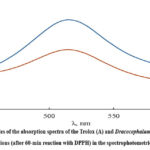 |
Figure 1: Examples of the absorption spectra of the Trolox (A) and Dracocephalum officinale extract (B) dilutions (after 60-min reaction with DPPH) in the spectrophotometric analysis. |
The level of DPPH free radical-scavenging activity was calculated using the following equation: % Inhibition = [(AB − AA) / AB] × 100, where AB and AA are the absorbances of the DPPH solution and test sample, respectively. All experiments were conducted in triplicate.
Statistical analyses were conducted using Statistica software, version 13.1 (StatSoft). The data are presented as mean ± standard error of the mean.
Results
Over 40 chemicals were identified in Dracocephalum officinale’s essential oil during the GC/MS study. Table 1 lists the principal components of this essential oil, each of which accounts for more than 1% of the overall content and collectively accounts for roughly 90% of the studied oil. Figure 2 shows an example of the GC/MS chromatogram.
Our findings show that the abundance of the major compounds decreases in the following order: pinocamphone, isopinocamphone, β-pinene, germacrene D, α-sabinene, myrtenol, γ-elemene, and α-elemol.
The obtained results indicate that the abundance of the main components declines in the following order: pinocamphone, isopinocamphone, β-pinene, germacrene D, α-sabinene, myrtenol, γ-elemene, and α-elemol.
Pinocamphone, isopinocamphone, and β-pinene are classified as bicyclic monoterpenoids, while germacrene D, γ-elemene, and α-elemol are categorized as sesquiterpenoids. Overall, the combination of both major and minor volatiles contributes to the distinct GC/MS chromatographic profile of the studied essential oil.
Sesquiterpenoids included germacrene D, γ-elemene, and α-elemol, whereas bicyclic monoterpenoids encompass pinocamphone, isopinocamphone, and β-pinene. Ultimately, the unique GC/MS chromatographic profile of the examined essential oil has been affected by the mix of main and minor volatiles.
Table 1: Component composition of essential oil from the Dracocephalum officinale herb studied by GC/MS
| Compound | Retention time, min | Relative quantity, % |
| β–Phellandrene | 5.71 | 1.87±0.06 |
| β–Pinene | 5.79 | 7.68±0.14 |
| β-Thujene | 5.99 | 1.75±0.04 |
| α-Sabinene | 6.78 | 4.62±0.12 |
| Linalool | 8.13 | 1.53±0.03 |
| Isopinocamphon | 9.46 | 15.55±0.23 |
| Pinocamphone | 9.76 | 27.55±0.30 |
| Myrtenol | 10,15 | 4.32±0.11 |
| β-Bourbonene | 13.87 | 1.16±0.04 |
| Caryophyllene | 14.52 | 1.93±0.05 |
| Isospathulenol | 15.26 | 1.77±0.05 |
| Germacrene D | 15.62 | 4.76±0.10 |
| γ-Elemene | 15.89 | 4.10±0.08 |
| α-Elemol | 16.75 | 3.92±0.07 |
| (-)-Spathulenol | 17.28 | 2.52±0.06 |
| epi-α-Selinene | 17.40 | 1.57±0.04 |
| 10-epi-α-Eudesmol | 18.0 | 1.41±0.02 |
| α-epi-7-epi-5-Eudesmol | 18.16 | 1.91±0.05 |
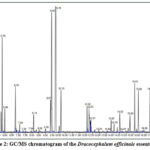 |
Figure 2: GC/MS chromatogram of the Dracocephalum officinale essential oil. |
As for the study of phenolic acids in the Dracocephalum officinale aerial part, we revealed the contents of nine of them using HPLC (Table 2, Fig. 3). Rosmarinic acid was detected as the most concentrated compound, followed by caffeic and trans-ferulic acids.
Table 2: Composition of phenolic acids in the herb of Dracocephalum officinale studied by HPLC
| Compound | Retention time, min | Content, mg/g |
| p-Hydroxyphenylacetic acid (HPA) | 9.195 | 0.087±0.001 |
| Caffeic acid | 12.067 | 2.851±0.06 |
| Syringic acid | 14.279 | 0.201±0.005 |
| Benzoic acid | 15.357 | 0.310±0.007 |
| p-Hydroxycinnamic acid | 16.253 | 0.343±0.006 |
| trans-Ferulic acid | 18.038 | 0.559±0.009 |
| Sinapic acid | 19.373 | 0.089±0.002 |
| Rosmarinic acid | 20.828 | 19.942±0.015 |
| trans-Cinnamic acid | 22.414 | 0.051±0.001 |
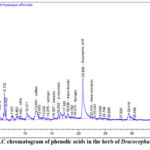 |
Figure 3: HPLC chromatogram of phenolic acids in the herb of Dracocephalum officinale |
The study of the antioxidant activity of 80% methanolic extract of Dracocephalum officinale demonstrated the scavenging effect on DPPH free radical. Its IC50 was 1.65±0.04 mg/mL. Thus, the extract showed significant antioxidant activity (p < 0.05).
Discussion
Secondary metabolites, particularly terpenoids, are recognized to have noticeable chemotaxonomic relevance for a variety of Lamiaceae members.25,30 Comparing our findings to data from scientific literature, we found that the main ingredients of this species’ essential oil from the Western Himalaya31 include pinocarvone, isopinocamphone, and β-pinene, which is comparable to research conducted by us. It was found that these compounds show promising antimicrobial and anti-inflammatory effects.16 Furthermore, later it was discovered32 that β-pinene possesses anti-adenovirus properties.
Isopinocamphone was the main predominant component (40.07–45.45%) in all analyzed essential oil samples of Hyssopus officinalis obtained through three various modified hydrodistillation methods in Poland.19 The main components of essential oil from the other samples of Hyssopus officinalis that was also harvested in Poland were cis-pinocamphone (44.9%) and trans-pinocamphone (18.2%).23 Somewhat different data have been published by other researchers. Thus, recent studies conducted by Miladinović et al.20 found that the most abundant essential oil components of Hyssopus officinalis collected from natural populations in southeastern Serbia were eucalyptol, β-pinene, pinocamphone, and β-ocimene. The primary volatile components of Hyssopus officinalis collected in the mountains of Kurdistan (Iran) were camphor (23.61%) and β-pinene (21.91%).
Three distinct chemotypes of Hyssopus officinalis were revealed in Italy33. Notably, one of these chemotypes had not been documented in previous scientific literature and demonstrated a predominance of (-)-limonen-10-yl-acetate at 67.9%. The other two chemotypes were characterized by different dominant compounds: one featured methyleugenol at 41.5% and 1,8-cineole at 39.7%, while the one collected in Navelli was characterized by predominance of cis-pinocamphone at 43.2% and methyleugenol at 15.8%.
Hyssopus officinalis subsp. aristatus essential oils gathered from five locations in Montenegro were high in phenylpropanoids, including methyl eugenol (up to 28.33%), oxygenated monoterpenes, such as 1,8-cineole (38.19-67.1%), and monoterpene hydrocarbons, such as limonene (7.99-23.81%).21 The essential oil of Bulgarian Hyssopus officinalis subsp. aristatus collected at different times during the hydrodistillation process, contained dominating components such α-pinene, β-pinene, sabinene, β-myrcene, and 1,8-cineole in varied ratios.18
The essential oil content of three genotypes of Hyssopus officinalis (blue-, pink, and white-flowered forms) gathered in Moldova was found to vary slightly14. Notably, the main constituents of the essential oils of all three types were isopinocamphon and pinocamphon, albeit in varying amounts. The minor compounds of these essential oils have varying concentrations, with some being present in only one or two genotypes, highlighting their chemotaxonomic characteristics.
The principal essential oil components of the pink-flowered form of Hyssopus officinalis, gathered in Poland, were pinocamphone (28.8%) and isopinocamphone (21.9%), while the white-flowered form contained mainly pinocamphone (51.0%).17 Specific characteristics in the production of secondary metabolites were identified by GC/MS analysis of the volatile component content in plants with varying hues of Hyssopus officinalis flowers collected at an elevation of 1100 meters above sea level. It was discovered that blue-flowered plants only had 20.85% of pinocamphone, but white-flowered plants had up to 44.99% and pink-flowered ones up to 45.23%.34 When compared to the data we obtained on the blue-flowered form of the plant (see Table 1), these results are quite similar.
As for the comparative analysis of the component composition of essential oils of phylogenetically close species from the Lamiaceae family, it is important to note that the main compounds of the essential oil from the Dracocephalum moldavica herb collected in Iran were geranial (28.52%), neral (21.21%), and geraniol (19.60%).35 The main components of Iranian Lallemantia iberica essential oil were germacrene D (33.7%) and δ-3-carene (19.0%).36 Thus, these data about new ‘relatives’ in the frame of the Dracocephaum genus are very different from the component composition of the various Hyssopus sp. described above.
As for the biological activity of essential oils of species from the studied genus, there are several of them. Thus, Leigh-de Rapper et al.37 conducted a study that investigated the potential effects of 369 combinations of commercial essential oils to evaluate their efficacy in treating respiratory tract infections. Five specific combinations, including one featuring Hyssopus officinalis essential oil, showed the most promising effects. These combinations demonstrated notable antimicrobial activity and enhanced anti-inflammatory effects. Regarding toxicity issues, it was reported38 that high doses (above 0.13 mg/g) of hyssop essential oil caused convulsions in experimental animals. The daily repeated injection of its subclinical doses demonstrated the cumulative toxic effect. The authors linked this neurotoxic effect with the presence of pinocamphone in the hyssop essential oil. Recently, Wang et al.39 demonstrated that the volatile oil of Hyssopus cuspidatus is a promising therapeutic agent for neutrophil-dominant steroid-resistant asthma by targeting the formation of neutrophil extracellular traps. High doses of Hyssopus cuspidatus essential oil (1.71 mg/kg body weight in mice) were used, which is equivalent to the clinical dose in humans. Eighteen terpenoids, including six new compounds, were isolated from Hyssopus cuspidatus by Aihaiti et al.40 Most of the identified compounds exhibited potent anti-inflammatory activity.
Similarily to our findings, rosmarinic acid was the predominant phenolic compound revealed in the aerial parts of various Lamiaceae species collected in Ukraine, with concentrations ranging from 12.61 to 24.83 mg/g depending on the species.41 The ethanolic extracts from three Italian Hyssopus officinalis chemotypes exhibited qualitatively similar phenolic acids profiles, with chlorogenic (3.30-7.39 mg/g), rosmarinic (2.78-7.59 mg/g), and caftaric (2.11-3.08) acids identified as the main molecules.33 The amount of rosmarinic acid being the main component in the aerial part of wild-growing Hyssopus cuspidatus collected in northern China,42 ranged from 1.238 to 1.305 mg/g, depending on the year of collection, which is much less than found by us in the Hyssopus officinalis herb (see Table 2). In methanolic extracts of 5 samples of Hyssopus officinalis subsp. aristatus gathered in Montenegro, the most abundant phenolic compounds were chlorogenic acid and rosmarinic acid, present at concentrations of 23.35-33.46 mg/g and 3.53-17.98 mg/g, respectively.21 It should be noted that in the 70% ethanolic extract of the above-ground part of Hyssopus officinalis collected in Romania, the most prevalent hydroxycinnamic acid was ferulic acid, with a concentration of 36.92 µg/g.24
It should be noted that rosmarinic acid is famous for its noticeable antioxidant, hepatoprotective, immunomodulatory, and chemopreventive therapeutic properties.42 Ceylan et al.43 demonstrated significant antioxidant and anticancer properties of a number of hydroxycinnamic acids, including those we identified in the studied raw material (see Table 2).
As is known, the antioxidant activity measured by the DPPH method is related to the composition and content of polyphenolic compounds in the plant extracts.21,24 The methanolic extracts of Hyssopus officinalis subsp. aristatus collected in Montenegro demonstrated the moderate antioxidant activity using a DPPH test.21 The antioxidant properties of a few standardized extracts from Thai FDA-approved nutritional supplements produced from medicinal plants were investigated by Limsuwan et al.45 The extracts from the Coffea arabica seeds and Curcuma longa rhizomes demnstrated the most notable activity in neutralizing free radicals against DPPH, with IC50 values which varied from 0.17 to 0.42 mg/mL, respectively. Therefore, the extract we studied could be evaluated as possessing a moderate scavenging effect on DPPH radicals, as its IC50 value is higher (1.65 mg/mL), which reflects the necessity of using its higher concentration to inhibit the aforementioned free radical.ee radical.
Regarding other bioactivities of Hyssopus officinalis, the experimental studies conducted by Khaksar et al.22 indicated that a methanolic extract of hyssop, administered at a dose of 100 mg/kg for 7 days, shows significant potential in inhibiting brain tumor damage. This effect appeared to be partly due to its influence on oxidative stress and cell proliferation pathways. Mićović et al.46 investigated the anti-inflammatory effects of hyssop herb preparations using in vitro, in vivo, and in silico methods. A molecular docking study indicated that the primary compounds in the extract, such as rosmarinic acid and chlorogenic acid, were responsible for these anti-inflammatory effects. The results confirm the use of hyssop plant in traditional medicine to treat inflammatory disorders.
Conclusion
The GC/MS analysis study identified more than 40 volatile compounds in the essential oil of the blue-flowered form of Dracocephalum officinale under its cultivation in Ukraine. The primary components of this essential oil, in descending order, are as follows: pinocamphone (27.55%), isopinocamphone (15.55%), β-pinene (7.68%), germacrene D (4.76%), α-sabinene (4.62%), myrtenol (4.32%), γ-elemene (4.10%), and α-elemol (3.92%). Additionally, HPLC analysis of the 80% methanolic extract revealed the presence of nine phenolic acids, with rosmarinic acid being the most abundant at 19.942 mg/g, followed by caffeic acid at 2.851 mg/g. The study of the antioxidant activity of the Dracocephalum officinale extract showed a moderate scavenging effect on DPPH free radicals, with an IC50 value of 1.65 mg/mL. Single-omics data only reflect changes at one disease level and have limited effectiveness at screening disease targets.
The limitations of this study include the fact that the GC/MS analysis of volatile compounds does not capture the composition of non-volatile terpenoids present in the raw material being studied. As a result, these non-volatile terpenoids could be analyzed in future research. Additionally, the HPLC studies were restricted to the standards of phenolic acids that were available to us. While we analyzed the antiradical activity of the Dracocephalum officinale extract against DPPH, it would also be beneficial to utilize other known in vitro models, such as ABTS and FRAP, for a more comprehensive assessment.
Generally, these findings indicate that further pharmacological research on Dracocephalum officinale using in vitro, in silico, and in vivo models shows promise due to its phytochemical composition.
Acknowledgment
We would like to express our sincere gratitude to two anonymous reviewers whose insightful comments and suggestions helped us to enhance the quality of our manuscript.
Funding Sources
The author(s) received no financial support for the research, authorship, and/or publication of this article.
Conflict of Interest
The author(s) do not have any conflict of interest.
Data Availability Statement
This statement does not apply to this article.
Ethics Statement
This research did not involve animal subjects, human participants, or any material that requires ethical approval.
Informed Consent Statement
This study did not involve human participants, and therefore, informed consent was not required.
Clinical Trial Registration
This research does not involve any clinical trials.
Permission to reproduce material from other sources
Not Applicable
Authors’ Contribution
- Mariia Shanaida: Conceptualization, Methodology, Analyses, Writing – Original Draft.
- Kateryna Lipka: Preparation of raw material samples for analysis; кeference search and interpretation of the obtained data.
- Tetyana Kucher: Conducting analyses, writing – review & editing.
- Liubomyr Kryskiw: Conducting analyses, writing – review & editing.
- Antonina Pryshlyak: writing – review & editing.
- Mariya Koval: Reference search and general editing.
References
- Al-Jaafreh AM. Evaluation of Antioxidant Activities of Rosemary (Rosmarinus officinalis) Essential Oil and Different Types of Solvent Extractions. Biomedical and Pharacology Journal. 2024;17(1). Available from: https://bit.ly/43uFuNk
CrossRef - Zhao L, Ji Z, Li K, Wang B, Zeng Y, Tian S. HPLC-DAD analysis of Hyssopus сuspidatus Boriss extract and mensuration of its antioxygenation property. BMC Complement Med Ther. 2020;20(1):228. doi:10.1186/s12906-020-03016-0
CrossRef - Plants of the World Online. Available online: https://powo.science.kew.org/taxon/urn:lsid:ipni.org:names: 30022219-2#distributions(accessed on 26 March 2025).
- Chen YP, Turdimatovich TO, Nuraliev MS, Lazarević P, Drew BT, Xiang CL. Phylogeny and biogeography of the northern temperate genus Dracocephaluml. (Lamiaceae). Cladistics. 2022;38(4):429–451. doi:10.1111/ cla.12502
CrossRef - Sharifi-Rad J, Quispe C, Kumar M, et al. Hyssopus Essential Oil: An Update of Its Phytochemistry, Biological Activities, and Safety Profile. Oxid Med Cell Longev. 2022:8442734. doi:10.1155/2022/8442734
CrossRef - Atazhanova G, Ishmuratova M, Levaya Y, Smagulov M, Lakomkina Y. The Genus Hyssopus: Traditional Use, Phytochemicals and Pharmacological Properties. Plants (Basel). 2024;13(12):1683. doi:10.3390/ plants13121683
CrossRef - Shanaida M, Pryshlyak A., Shanaida V. Gas chromatography mass spectrometric analysis of carboxylic acids in the herbs of two Dracocephalum species. PharmacologyOnLine. 2021;3:15–20.
- Liu H, Feng X, Zhao Y, et al. Pharmacophylogenetic relationships of genus Dracocephalumand its related genera ased on multifaceted analysis. Frontiers in pharmacology. 15;1449426. doi.org/10.3389/ fphar.2024. 1449426
CrossRef - Bjørklund G, Cruz-Martins N, Goh BH, et al. Medicinal Plant-derived Phytochemicals in Detoxification. Curr Pharm Des. 2024;30(13):988-1015. doi:10.2174/1381612829666230809094242
CrossRef - Ćavar Zeljković S, Schadich E, Džubák P, Hajdúch M, Tarkowski P. Antiviral Activity of Selected Lamiaceae Essential Oils and Their Monoterpenes Against SARS-Cov-2. Front Pharmacol. 2022;13:893634. doi:10.3389/fphar.2022.893634
CrossRef - Zahmatkesh S, Klemeš JJ, Bokhari A, et al. Critical role of Hyssop plant in the possible transmission of SARS-CoV-2 in contaminated human Feces and its implications for the prevention of the virus spread in sewage. Chemosphere. 2022;305:135247. doi:10.1016/j.chemosphere.2022.135247
CrossRef - Gasmi A, Kanwal S, Oliinyk P, et al. Ayurvedic and Chinese Herbs against Coronaviruses.Curr Pharm Des. 2024;30(21):1681
CrossRef - Fathiazad F, Hamedeyazdan A review on Hyssopus officinalis L: Composition and biological activities. African Journal of Pharmacy and Pharmacology. 2011;(5)17:1959–1966.
CrossRef - Gonceariuc M, Balmuù Z. Diversity of the essential oil content and chemical composition of Hyssopus officinalis genotypes. Buletinul ASM. Stiintele vietii. 2013;29(10):86–96.
- Daneshfard B, Amini F, Jaladat AM, et al. Effect of Hyssop (Hyssopus officinalis) Syrup on Mild to Moderate Asthma: A Randomized Double-Blind Placebo-Controlled Trial. Tanaffos. 2024;23(2):146
- Judžentienė A. Hyssop (Hyssopus officinalis) oils. Іn: Essential Oils in Food Preservation, Flavor and Safety. 2016:471–479.
CrossRef - Baj T, Korona-Głowniak I, Kowalski R, Malm Chemical composition and microbiological evaluation of essential oil from Hyssopus officinalis L. with white and pink flowers. Open Chem. 2018;16:317–323.
CrossRef - Semerdjieva IB, Burducea M, Astatkie T, Zheljazkov VD, Dincheva I. Essential Oil Composition of Ruta graveolens Fruits and Hyssopus officinalissubsp. aristatus (Godr.) Nyman Biomass as a Function of Hydrodistillation Time. Molecules. 2019;24(22):4047. doi:10.3390/molecules24224047.
CrossRef - Wesołowska A., Jadczak D., Grzeszczuk M. Essential oil composition of hyssop (Hyssopus officinalis) cultivated in north-western Poland. Herba Pol.2020;56:57–65.
- Miladinović DL, Dimitrijević MV, Miladinović LC, Stamenković JG, Mihajilov-Krstev TM. Study of Hyssop Essential Oil from Southeastern Serbia. Chem Biodivers. 2025;22(2):e202401954. doi:10.1002/cbdv.202401954
CrossRef - Mićović T, Topalović D, Živković L, et al. Antioxidant, Antigenotoxic and Cytotoxic Activity of Essential Oils and Methanol Extracts of Hyssopus officinalis Subsp. aristatus(Godr.) Nyman (Lamiaceae). Plants (Basel). 2021;10(4):711. doi:10.3390/plants10040711
CrossRef - Khaksar S, Kiarostami K, Alinaghi S. The Effects of Methanol Extracts of Hyssopus officinalis on Model of Induced Glioblastoma Multiforme (GBM) in Rats. J Mol Neurosci. 2022;72(9):2045– doi:10.1007/s12031-022-02058-y
CrossRef - Michalak M, Błońska-Sikora E, Stryjecka M, Zagórska-Dziok M, Klimek-Szczykutowicz M, Szopa A. Phytochemical Profile and Antioxidant and Protective Activities of Various Types of Extracts from Hyssopus officinalis and Grindelia robustaNutt. Herb Grown in Poland. Curr Top Med Chem. 2024;24(25):2238–2253. doi:10.2174/0115680266319052240819104310
CrossRef - Vlase L, Benedec D, Hanganu D, et al. Evaluation of antioxidant and antimicrobial activities and phenolic profile for Hyssopus officinalis, Ocimum basilicum and Teucrium chamaedrys. 2014;19(5):5490–5507.
CrossRef - Ben Arfa A, Gouja H, Hannachi H, Isoda H, Neffati M, Najjaa H. Seasonal changes in rosemary species: A chemotaxonomic assessment of two varieties based on essential oil compounds, antioxidant and antibacterial activities.PLoS One. 2022;17(8):e0273367. doi:10.1371/journal.pone.0273367
CrossRef - Guideline on good agricultural and collection practice (GACP) for starting materials of herbal origin (London, 20 February 2006 Doc. Ref. EMEA/HMPC/246816/2005)
- Shanaida M., Korablova O., Bakalets D., Potikha N., Rakhmetov D. Chemotaxonomic Characteristics of Satureja coerulea (Lamiaceae family) based on analysis of its bioactive compounds. Biomedical and Pharacology Journal. 2025;18(1):559–568. https://bit.ly/4hTUB8J
CrossRef - Shanaida M, Hudz N, Korzeniowska K, Wieczorek Antioxidant activity of essential oils obtained from aerial part of some Lamiaceae species International Journal of Green Pharmacy. 2018;12(3):200–204.
- Shulyak N, Protsyk S, Kucher T, Kryskiw L, Poliak O, Zarivna,N, Logoyda L. Development of the spectrophotometric method for the determination of atorvastatin in tablets by using bromothymol blue. ScienceRise: Pharmaceutical Science. 2022;4(38):89–97. /doi.org/10.15587/2519-4852.2022.263878
CrossRef - Koshovyi O, Raal A, Kovaleva A, Myha M, Ilina T, Borodina N, Komissarenko A. The phytochemical and chemotaxonomic study of Salvia growing in Ukraine. J Appl Biol Biotech. 2020;8(03):29–36. doi: 10.7324/jabb.2020.80306.
CrossRef - Stappen I, Wanner J, Tabanca N, et al. Chemical composition and biological activity of essential oils of Dracocephalum heterophyllum and Hyssopus officinalis from Western Himalaya. Nat Prod Commun. 2015;10(1):133
CrossRef - Qiu B, Wei F, Su J, et al. The Effects of β-Pinene, a Pine Needle Oil Monoterpene, on Adenovirus Type 3. Bull Exp Biol Med. 2022;172(3):345-351. doi:10.1007/s10517-022-05390-w
CrossRef - Guerrini A, Sacchetti G, Echeverria Guevara MP, et al. Wild Italian Hyssopus officinalisaristatus (Godr.) Nyman: From Morphological and Phytochemical Evidences to Biological Activities. Plants (Basel). 2021;10(4):631. doi:10.3390/plants10040631
CrossRef - Radjabov GK, Musaev AM, Islamova FI, Aliev Analysis of the accumulation of volatile organic compounds in Hyssopus officinalisL. plants introduced in mountain conditions. Sustain Dev. Mt. Territ. 2023;15:174–181.
CrossRef - Ehsani A, Alizadeh O, Hashemi M, Afshari A, Aminzare M. Phytochemical, antioxidant and antibacterial properties of Melissa officinalis and Dracocephalum moldavica essential Vet Res Forum. 2017;8(3):223–229.
- Nori-Shargh D, Kiaei SM, Deyhimi F, Mozaffarian V, Yahyaei H. The volatile constituents analysis of Lallemantia iberica (M.B.) Fischer & Meyer from Iran. Nat Prod Res. 2009;23(6):546– doi:10.1080/ 14786410601132394
CrossRef - Leigh-de Rapper S, Viljoen A, van Vuuren S. Essential Oil Blends: The Potential of Combined Use for Respiratory Tract Infections. Antibiotics (Basel). 2021;10(12):1517. doi:10.3390/antibiotics10121517
CrossRef - Millet Y, Jouglard J, Steinmetz MD, Tognetti P, Joanny P, Arditti J. Toxicity of some essential plant oils. Clinical and experimental study. Clin Toxicol. 1981;18(12):1485– doi:10.3109/15563658108990357
CrossRef - Wang X, Peng HM, Zhang MR, et al. Hyssopus cuspidatus volatile oil: a potential treatment for steroid-resistant asthma via inhibition of neutrophil extracellular traps. Chin Med. 2025;20(1):17. doi:10.1186/s13020-025-01069-2
CrossRef - Aihaiti K, Li J, Xu NN, Tang D, Aisa HA. Monoterpenoid derivatives from Hyssopus cuspidatus and their bioactivities. Fitoterapia. 2023;165:105432. doi:10.1016/j.fitote.2023.105432
CrossRef - Shanaida M, Jasicka-Misiak I, Makowicz E, Stanek N, Shanaida V, Wieczorek PP. Development of high-performance thin layer chromatography method for identification of phenolic compounds and quantification of rosmarinic acid content in some species of the Lamiaceae family. J Pharm Bioallied Sci. 2020;12(2):139-145. doi:10.4103/jpbs.
CrossRef - Aihaiti K, Li J, Yaermaimaiti S, Liu L, Xin X, Aisa HA. Non-volatile compounds of Hyssopus cuspidatus Boriss and their antioxidant and antimicrobial activities. Food Chem. 2022;374:131638. doi:10.1016/ j.foodchem. 2021.131638
CrossRef - Hitl M, Kladar N, Gavarić N, Božin B. Rosmarinic Acid-Human Pharmacokinetics and Health Benefits. Planta Med. 2021;87(4):273-282. doi:10.1055/a-1301-8648
CrossRef - Ceylan FD, Günal-Köroğlu D, Saricaoglu B, et al. Anticancer potential of hydroxycinnamic acids: mechanisms, bioavailability, and therapeutic applications. Naunyn Schmiedebergs Arch Pharmacol. 2025;398(1):469-495. doi:10.1007/s00210-024-03396-x
CrossRef - Limsuwan S, Awaeloh N, Na-Phatthalung P, Kaewmanee T, Chusri S. Exploring Antioxidant Properties of Standardized Extracts from Medicinal Plants Approved by the Thai FDA for Dietary Supplementation. Nutrients. 2025;17(5):898. doi:10.3390/nu17050898
CrossRef - Mićović T, Katanić Stanković JS, Bauer R, et al. In vitro, in vivo and in silico evaluation of the anti-inflammatory potential of Hyssopus officinalis subsp. aristatus (Godr.) Nyman (Lamiaceae). J Ethnopharmacol. 2022;293:115201. doi:10.1016/j.jep.2022.115201
CrossRef

