Development and In Vitro Assessment of Novel Bilayer Tablets Containing Glimepiride and Metformin
 , Rajani Vetapalem2, Eswara Gopala Krishna Murthy Talasila3, Haritha Potluri4, Ramesh Alluri5 and Vijaya Kumar Ghanta6
 1Department of Pharmaceutical Analysis, V. V. Institute of Pharmaceutical Sciences, Gudlavalleru, Andhra Pradesh, India.
2Department of Pharmaceutics, V. V. Institute of Pharmaceutical Sciences, Gudlavalleru, Andhra Pradesh, India.
3Department of Pharmaceutics, Bapatla College of Pharmacy, Bapatla, Andhra Pradesh, India.
4Department of Chemistry, Seshadri Rao Gudlavalleru Engineering College, Gudlavalleru, Andhra Pradesh, India.
5Department of Pharmacology, Vishnu Institute of Pharmaceutical Education & Research, Narsapur, Telangana, India.
6Department of Pharmacy Practice, KVSR Siddhartha College of Pharmaceutical Sciences, Vijayawada, Andhra Pradesh, India.
Corresponding Author E-mail: dralrao@gmail.com
DOI : http://dx.doi.org/10.13005/bpj/3495
Download this article as:

Type 2 diabetes mellitus requires combination therapy to achieve effective glycemic control. Bilayer tablet formulations combining immediate and sustained drug release offer improved therapeutic outcomes. Glimepiride and Metformin hydrochloride are commonly prescribed together due to their complementary mechanisms of action. The aim of the current research was to formulate bilayer tablets of Glimepiride and Metformin hydrochloride to enhance therapeutic utility in the management of type 2 diabetes mellitus. Bilayer tablets were developed with Glimepiride in the immediate-release layer using the superdisintegrant croscarmellose sodium, and Metformin hydrochloride in the sustained-release layer using microcrystalline cellulose and HPMC K100M as key excipients. The formulations were optimized by evaluating immediate-release characteristics of Glimepiride and sustained-release profiles of Metformin hydrochloride. The optimized formulation (F6) demonstrated 99.92% immediate release of Glimepiride within 45 minutes, while Metformin hydrochloride showed a sustained release of 99.87% over a period of 12 hours. The study indicates the successful development of bilayer tablets of Glimepiride and Metformin hydrochloride, which can be effectively used for the management of type 2 diabetes mellitus.
KEYWORDS:Bilayered tablets; Diabetes mellitus; Evaluation; Glimepiride; Insulin; Metformin
Introduction
Type 2 diabetes is more accurately described as a chronic metabolic disorder characterized by hyperglycemia due to insulin resistance and progressive β-cell dysfunction. Essentially, persistent elevation of blood glucose because of relative deficiency of insulin leading to insulin resistance.1-6Glimepiride is a second generation sulfonylureaand Metformin hydrochloride, a biguanide, is first of two classes of commonly used pharmacological agents for management of diabetes mellitus.7-11Glimepiride stimulates insulin secretion from pancreatic beta cells, while Metformin hydrochloride inhibits hepatic glucose production, thereby reducing blood glucose levels.12-19Key reason for using combination therapy is to decrease need for use of each drug at that dosage, so that potential for dose dependent side effect and adverse reactions is minimized. Emphasizing the therapeutic implications for diabetes management, the combined use of Glimepiride and Metformin offers improved glycemic control through complementary mechanisms. This dual-action approach enhances treatment efficacy by providing both immediate and sustained blood glucose regulation. Such formulations can improve patient compliance and overall clinical outcomes in the management of type 2 diabetes mellitus.
Glimepiride and Metformin exhibit a synergistic effect, making them highly effective in lowering blood glucose levels.20-24Depending on drug, a bilayer tablet can be used as an elegant strategy to ensure that chemical incompatibilities among dissimilar drugs do not lead to problems; a method of physically separating these drugs in different layers and allowing for their different release profiles – immediate (IR) for one drug, sustained (SR) forother.25-28This format is particularly influenced when combining two drugs that require different release kinetics or two drugs that require different release profiles including both a loading dose (IR) &a sustained dose (SR). Disease is diabetes with type 2, and it is progressive illness caused by numerousunderneath pathophysiological mechanisms.29Often, mono-therapy does not preserve adequate glycemic management and hence, treatment failure can develop.30An optimal mix of glucose-lowering substances should include balancing mechanisms, orient toward multigene disease pathways, be administered at all disease stages, and be tolerated without increasing danger of hypoglycemia, heart-related complications, or putting on weight.31-32The present study aims to formulate and evaluate a bilayer tablet 33-40consisting of an immediate-release layer with crosscarmellose sodium and a sustained-release layer containing Glimepiride and Metformin hydrochloride, using extended-release polymers (MCC and HPMC K100M).
Materials aand Methods
Chemicals and reagents
Glimepiride (GM) & Metformin HCl (MF) were kindly provided by M/s Shree Icon Laboratories as gift samples, Vijayawada, India. Loba Chemie Pvt Ltd., Mumbai, India procured crosscarmellose sodium, microcrystalline cellulose, HPMC K100M, povidone K30, magnesium stearate, talc, isopropyl alcoholand quinoline yellow. Pharmaceutical grade excipients were used in the study.
Preliminary Studies
Preformulation studies were carried out in relation to selection of solvent system, &in process assessment of solubility of drugs in dissolution media that will be used, also performed to evaluate potential interactions between drugs &drug excipients. Amber-colored vials fitted with rubber stoppers made of bromo butyl containing drugs, either singly or in combination with excipients were placed in a Remi lab (Mumbai), India environmental stability chamber under accelerated stability conditions. A 30 day period testing was done using temperature of 40±2°C &relative humidity is of 75±5% to simulate long term stability. IR absorption spectra of Glimepiride &Metformin hydrochloride was recorded by Bruker FT-IR spectrophotometer. Baseline spectra of pure drugs were compared with spectra of polymers containing pure drugs with KBr dispersion method. Spectrum of IR for drug-excipient blend was also compared with standard IR spectra of individual drugs to determine whether any of drug &excipient interacted. FT-IR spectroscopy was valuable in identifying drugs &examining drug-polymer compatibility to prevent adverse interactions that would deterioratefinal formulation stability &performance.
Rationale for polymers
The selected concentration ranges of croscarmellose sodium (2-12%) and HPMC K100M (5-30%) were based on their well-established functional roles and typical usage levels reported in the literature for immediate and sustained release formulations, respectively. Preliminary screening studies were conducted to identify suitable ranges that could achieve rapid disintegration for Glimepiride and controlled drug release for Metformin HCl without compromising tablet integrity. Lower concentrations of croscarmellose sodium were insufficient to produce the desired rapid disintegration, while higher levels risked affecting tablet hardness and stability. Similarly, lower amounts of HPMC K100M failed to sustain drug release adequately, whereas higher concentrations could lead to excessive gel formation and hinder drug diffusion. Therefore, these ranges were selected to systematically optimize the formulation and achieve a balance between immediate and sustained release characteristics.
Blend preparation of immediate release layer of Glimepiride
To establish appropriate dose, immediate release layer for Glimepiride was fixed at 1 mgformulation was prepared using direct compression technique for immediate release layer. Glimepiride and excipients were sieved through 40-mesh sieve & thoroughly mix in blender for about 5 minutes to ensure a uniform distribution. A small amount of quinoline yellow was passed through a 100-mesh sieve, and this was added to blend to achieve a consistent color throughout.Blend was then lubricated for 2 minutes with magnesium stearate, previously sieved through 60-mesh sieve, to enhance flow properties and prevent sticking during compression process. Crosscarmellose sodium, a superdisintegrant, was incorporated into blend to facilitate rapid disintegration of immediate release layer. Table 1 outlines composition of Glimepiride formulation.
Table 1: Formulation for Glimepiride
|
Composition (mg) |
FG1 | FG2 | FG3 | FG4 | FG5 |
FG6 |
|
Glimepiride |
1 | 1 | 1 | 1 | 1 | 1 |
| Cross carmellose sodium | 2 | 4 | 6 | 8 | 10 |
12 |
|
Lactose |
146 | 144 | 142 | 140 | 138 | 136 |
| Magnesium stearate | 2.5 | 2.5 | 2.5 | 2.5 | 2.5 |
2.5 |
|
Talc |
2.5 | 2.5 | 2.5 | 2.5 | 2.5 | 2.5 |
| Quinoline yellow | 1 | 1 | 1 | 1 | 1 |
1 |
|
Total |
155 | 155 | 155 | 155 | 155 |
155 |
Granule making of sustained release layer of Metformin hydrochloride
A Metformin HCl dose formulation of 500 mg was extended to a sustained release one. For sustained release layer, Metformin HCl was equipped by wet granulation technique. Metformin HCl, microcrystalline cellulose (MCC), and HPMC K100M were sieved through 40- mesh sieve. Sifted materials were then homogenously mixed for 5 minutes using a mortar and pestle to obtain uniform mix. A povidone K30 binder solution was prepared by dissolving a mixture of isopropyl alcohol. Sifted powder blend was granulated by kneading it 2 minutes, which also formed uniform granules and then granulated granules were dispersed in binder solution. Excess moisture was removed in a tray dryer at 65°C followed by drying of resulting granules at 65°C. After drying, granules were then passed through an oscillating granulator by 20-mesh screen which break it into finer particle. Then, granules were lubricated with magnesium stearate &talc for 2 mins to facilitate flow properties and reduced frictionduring compression process. Table 2shows formulation composition for Metformin HCl.For tablet compression, extended-release granules of Metformin hydrochloride were first compressed to form bottom (sustained release) layer, followed by compression of Glimepiride granules astop (immediate release) layer.
Table 2: Formulation for Metformin HCl
|
Composition(mg) |
FM1 | FM2 | FM3 | FM4 | FM5 |
FM6 |
|
Metformin HCl |
500 | 500 | 500 | 500 | 500 | 500 |
| HPMC K100M | 5 | 10 | 15 | 20 | 25 |
30 |
|
Microcrystalline cellulose |
400 | 395 | 390 | 385 | 380 | 375 |
| Povidone K30 | 25 | 25 | 25 | 25 | 25 |
25 |
|
Isopropyl alcohol |
Q.S | Q.S | Q.S | Q.S | Q.S | Q.S |
| Magnesium stearate | 5 | 5 | 5 | 5 | 5 |
5 |
|
Talc |
10 | 10 | 10 | 10 | 10 | 10 |
| Total | 945 | 945 | 945 | 945 | 945 |
945 |
In vitro assessment of drug release profile
Dissolution tests for prepared tablets were conducted by means ofpaddle method (USP dissolution apparatus II) at a rotational rate of 50 rpm, with the temperature maintained at 37±0.5°C. During procedure, 5 milli litrealiquotswere withdrawn at predetermined time intervals, &the withdrawn volume was replaced with fresh dissolution medium to maintain a consistent volumethroughout test. Drug content in dissolved aliquotswas quantified by means a UV-Visible spectrophotometer. Glimepiride was measured at 226 nm, while Metformin hydrochloride was analyzed at 233 nm.For first two hours of dissolution, dissolution testing was performed using 750 mL of 0.1 N hydrochloric acid at pH 2.0. After initial 2-hour period, dissolution medium was replaced with 250 mL of a 0.2M sodium phosphate tribasic solution, adjusted to pH 6.8, and test continued under these conditions with temperature maintained at 37±0.5°C.
Evaluation of dissolution kinetics
Several commonly applied release models were used to describekinetics of drug release process for different formulations using dissolution data obtained from optimized formulation. Data was subjected to linear regression analysis and model that best fit release profile was selected. Models used to test release models were zero order, first order, higuchi &korsmeyer and peppas. Mechanism when drug is released from dosage forms and rate of release of drug from dosage forms were determined by employing these models. Best representation of drug release kinetics from formulation was chosen based on correlation coefficient (r²) of model that has highest value.
Results
Glimepiride linearity plot
Standard solutions of Glimepiride with varying concentrations were equipped in 0.1N hydrochloric acid (pH 2.0), & absorbance was determinedat 226 nm. A calibration plot was generated spanning concentrations from 2 to 12 µg/mL, exhibiting a highly linear relationship with r² of 0.999. This UV-Visible spectrophotometric method showed excellent linearity, demonstrating its suitability and accuracy for determining Glimepiride concentrations in the dissolution medium.
Metformin HCl linearity plot
Phosphate buffer at pH 6.8 was employed for the preparation of the standard Metformin hydrochloride solution, and the absorbance was determined at 233 nm. The calibration curve exhibited linearity over the concentration range of 2-10 µg/mL with r² of 0.998. This confirms the method’s precision and reliability for accurately quantifying Metformin HCl in the dissolution medium.
Drug-Excipients compatibility studies
FT-IR Spectroscopy analysis
FT-IR spectroscopy was engaged to sense functional groups in both drugs. Metformin HCl exhibited strong absorption bands at 3372 cm⁻¹ (NH bending), 1448.81 cm⁻¹ (CH₃ bending), and 1039.8 cm⁻¹ (CN bending), while Glimepiride showed similar bands corresponding to NH, CH₃, and CN at 3372 cm⁻¹, 1448.81 cm⁻¹, and 1039.77 cm⁻¹. FT-IR spectrum of final formulation was compared with spectraof individual drugs. No significant shifts in characteristic peaks of either drug were observed, indicating that drugs did not undergo any chemical interaction with excipients. This suggests that formulation is stable, with no chemical incompatibility between drugs and excipients.
In Vitro drug release
In Vitro drug release profiles for blendsF1-F6 and marketed preparation were evaluated and are presented in Tables 3-6, along with release data for Glimepiride and Metformin HCl. Release profiles are graphically represented in Figures 1-5, showing time versus percentage of drug released. Dissolution tests were performedwithUSP Type II dissolution equipment, where release medium was 0.1 N HCl of pH 1.2 for initial 2 hours, abided by a transition to phosphate buffer of pH 6.8 for up to 24 hrs. Releasecharacteristics of both Glimepiride and Metformin HCl from various formulations were analyzed under these conditions to simulate physiological environment and assess release patterns.
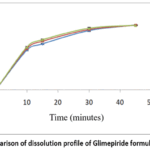 |
Figure 1: Comparison of dissolution profile of Glimepiride formulations F1 to F3 Click here to View Figure |
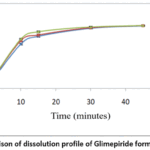 |
Figure 2: Comparison of dissolution profile of Glimepiride formulations F4 to F6 Click here to View Figure |
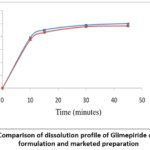 |
Figure 3: Comparison of dissolution profile of Glimepiride optimized formulation and marketed preparation Click here to View Figure |
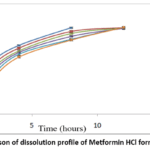 |
Figure 4: Comparison of dissolution profile of Metformin HCl formulations F1 to F6 Click here to View Figure |
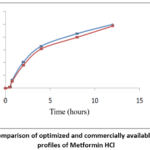 |
Figure 5: Comparison of optimized and commercially available dissolving profiles of Metformin HCl Click here to View Figure |
Table 3: Dissolution profile of Glimepiride
|
Time (min) |
F1 | F2 | F3 | F4 | F5 |
F6 |
|
0 |
0±0 | 0±0 | 0±0 | 0±0 | 0±0 |
0±0 |
|
10 |
60.87±1.07 | 63.87±1.17 | 65.72±0.84 | 70.45±1.18 | 75.87±1.28 |
78.44±0.79 |
|
15 |
70.43±0.83 | 74.65±0.72 | 76.88±0.98 | 82.76±1.11 | 84.77±1.23 |
89.91±0.94 |
| 30 | 90.87±1.33 | 92.77±1.26 | 94.55±1.38 | 95.33±1.24 | 96.13±0.90 |
97.55±1.05 |
|
45 |
99.54±0.59 | 99.32±0.66 | 99.12±0.77 | 99.31±0.73 | 99.76±0.61 |
99.92±0.62 |
Mean ± SD, n=6
Table 4: Dissolution profile of Glimepiride optimized and marketed formulation
|
Time (min) |
F6 |
MF |
|
0 |
0±0 | 0±0 |
| 10 | 78.44±0.79 |
75.16±1.39 |
|
15 |
89.91±0.94 | 86.45±1.16 |
|
30 |
97.55±1.05 | 95.34±0.94 |
|
45 |
99.92±0.62 |
96.55±1.15 |
Mean ±SD, n=6
Table 5: Dissolution profile of Metformin HCl
|
Time (hr) |
F1 | F2 | F3 | F4 | F5 | F6 |
| 0 | 0±0 | 0±0 | 0±0 | 0±0 | 0±0 |
0±0 |
|
0.5 |
5.23±0.37 | 6.54±0.49 | 4.87±0.72 | 4.12±0.49 | 3.45±0.46 | 2.34±0.53 |
| 0.75 | 25.73±0.95 | 22.65±1.11 | 20.55±0.62 | 17.32±0.54 | 15.23±0.56 |
12.54±0.88 |
|
2 |
60.12±1.30 | 55.87±1.04 | 52.34±1.14 | 48.98±0.81 | 44.77±1.10 | 40.89±1.13 |
| 4 | 78.98±0.68 | 75.98±1.03 | 72.77±0.77 | 70.95±0.56 | 68.98±1.08 |
65.76±1.07 |
|
8 |
99.34±0.83 | 95.12±1.07 | 92.76±0.90 | 89.44±0.70 | 86.18±0.61 | 85.32±1.06 |
| 12 | – | 99.43±0.66 | 99.13±0.72 | 98.76±1.03 | 99.9±0.77 |
99.87±0.77 |
Mean ± SD, n=6
Table 6: Dissolution profile of Metformin optimized and marketed formulation
|
Time (hr) |
F6 |
MF |
|
0 |
0±0 | 0±0 |
| 0.5 | 2.34±0.53 |
1.32±0.64 |
|
0.75 |
12.54±0.88 | 10.65±1.11 |
| 2 | 40.89±1.13 |
35.98±1.08 |
|
4 |
65.76±1.07 | 61.45±0.82 |
| 8 | 85.32±1.06 |
79.66±0.94 |
|
12 |
99.87±0.77 |
97.43±1.17 |
Mean ± SD, n=6
Mathematical models
An investigation of drug release kinetics and mechanisms required application of different kinetic models to dissolution data of encapsulated compounds. These models included: A zero-order model appears when tracking drug release based on percentage outcome together with time measurements. Measurement followed first-order methods by processing remaining drug percentage through time-based logarithmic calculations. Drug release data matches higuchi’s model when expressed as drug cumulative percentage against square root time measurements. R² values represented linear regression results of plotted data. Drug release invitro data analysis for all formulations achieved R² values which indicated appropriate mathematical modeling of drug data fitted to these models. First-order kinetics defined drug release pattern of formulations according to calculated R² values. Tests utilizing korsmeyer-peppas model allowed investigators to calculate release exponent (n) for drug release evaluation. A value of n between 0.45 and 0.89 confirms that drug release follows non-Fickian diffusion thus indicating both diffusion & erosion control release mechanism.
Discussion
Developing and refining bilayered tablets with Glimepiride for rapid release and Metformin HCl for sustained release was aim of this work. Glimepiride, a sulfonylurea class medication, and Metformin hydrochloride, a biguanide type medication, were chosen because of their complementary modes of action in lowering blood glucose levels. By offering both an instant release of Glimepiride & a continued release of Metformin, formulation was intended to increase patient compliance. In order to get desired release summary utilizing wet granulation process, six preparations of Metformin HCl were developed using different amounts of HPMC K100M polymer. Similarly, six Glimepiride formulations with different amounts of crosscarmellose sodium as superdisintegrant were made utilizing direct compression method.
Powdered blends’ physicochemical analyses for each formulation satisfied as per official requirements. Acceptable physicochemical elements, such as hardness,thickness, friability and weight fluctuation, were displayed by final tablets. Optimized formulation, F6, showed friability of 0.36%, mean weight of 1099 mg, mean hardness of 7.16 kg/cm2, and mean tablet thickness of 4.44 mm. 0.1N HCl was used for first two hours of invitro dissolving experiments, and then phosphate pH 6.8buffer for lasting ten hours. F6 preparation of Glimepiride delivered 99.92% of medication in 45 minutes, but F6 formulation of Metformin HCl demonstrated a 99.87% drug release after 12 hours. Optimized F6 formulation displayed a comparable release profile to commercial version.F6 formulation showed best linearity in higuchi model, according to kinetic analysis, suggesting that non-Fickian diffusion governed drug release from bilayered tablet. This implies to facilitate diffusion & erosion worked together to regulate release mechanism, guaranteeing steady and regulated medication release throughout time.
The classification of drug release as non-Fickian diffusion from the korsmeyer-peppas model indicates that the release mechanism is governed by a combination of drug diffusion and polymer matrix relaxation/erosion rather than simple diffusion alone. In this formulation, HPMC K100M plays a critical role by hydrating upon contact with dissolution media to form a viscous gel layer around the tablet. This gel barrier controls drug release by simultaneously allowing diffusion of the drug through the hydrated matrix and undergoing gradual swelling and erosion over time. The thickness and integrity of this gel layer depend on the concentration of HPMC, thereby modulating the release rate. Microcrystalline cellulose (MCC), on the other hand, acts as a filler and matrix former that improve tablet porosity and mechanical strength. Its porous nature facilitates water penetration into the matrix, which aids in polymer hydration and creates channels for drug diffusion, thereby contributing to a controlled and consistent release profile.
The optimized formulation (F6) demonstrated a release profile comparable to previously reported bilayer formulations and commercially available products, achieving rapid release of Glimepiride and sustained release of Metformin HCl over 12 hours, which aligns with therapeutic requirements. Although Tables 4 and 6 indicate comparison with a marketed formulation (MF), the lack of explicit identification limits direct benchmarking; however, similarity in dissolution profiles suggests equivalent performance, which could be further substantiated using similarity factor (f2) analysis as a key optimization criterion. The selection of F6 was likely based on a combination of parameters, including release profile matching, physicochemical properties, and kinetic behavior, rather than a single approach such as desirability functions alone. Additionally, alternative interpretations of the data should be considered: the initial burst release observed in some formulations may be attributed to surface-associated drug rather than controlled matrix diffusion, while incomplete drug release in other batches could result from potential drug-polymer interactions or excessive gel barrier formation, which may hinder diffusion rather than purely reflecting matrix erosion mechanisms.
Furthermore, the successful optimization of formulation F6 highlights the significance of excipient selection and concentration in achieving the desired release characteristics of bilayer tablets. The use of HPMC K100M in varying proportions played a crucial role in controlling the sustained release of Metformin HCl by forming a gel barrier that modulates drug diffusion, while croscarmellose sodium ensured rapid disintegration and prompt drug release of Glimepiride. The dissolution profile similarity with the marketed formulation confirms the reliability and potential applicability of the developed bilayer system in clinical settings. Additionally, the kinetic modeling data indicating higuchi release with non-Fickian diffusion underscores a combined mechanism of drug diffusion and matrix erosion, which is essential for maintaining consistent plasma drug levels. Overall, this study demonstrates that the bilayer tablet approach is an effective strategy for delivering combination therapy, ultimately enhancing therapeutic efficiency, patient adherence, and long-term management of type 2 diabetes mellitus.
Conclusion
The goal was to combine Glimepiride in an immediate-release form with Metformin HCl in a sustained-release form. Crosscarmellose Sodium, a superdisintegrant, was used to create immediate release layer of Glimepiride, while microcrystalline cellulose and HPMC K100M were used worn to create sustained release layer of Metformin HCl. Loading dose of Glimepiride was first released in a burst by tablets, and then Metformin HCl was released continuously for up to 12 hours. This two-layered tablet formulation may potentially improve bioavailability, reduce dosage frequency, andenhances patient adherence.
The selection of the optimized formulation (F6) was based on a comprehensive evaluation of multiple parameters rather than a single criterion. F6 was chosen because it exhibited an ideal balance between rapid and sustained drug release, achieving nearly complete immediate release of Glimepiride and a controlled 12-hour release of Metformin HCl. Additionally, its dissolution profile showed close similarity to that of the marketed formulation, indicating comparable in vitro performance. The formulation also met all physicochemical quality attributes, including acceptable hardness, friability, weight uniformity, and thickness. Furthermore, kinetic analysis supported a desirable release mechanism, reinforcing F6 as the most suitable optimized formulation.
The conclusion should clearly highlight that the optimized formulation (F6), containing 12% croscarmellose sodium in the immediate-release layer and 30% HPMC K100M in the sustained-release layer, was identified as the most effective composition for achieving the desired drug release profile. This formulation provided rapid release of Glimepiride along with controlled, prolonged release of Metformin HCl over 12 hours. Furthermore, kinetic analysis confirmed that the drug release followed a non-Fickian diffusion mechanism, indicating the combined influence of diffusion and polymer matrix erosion. Including these details in the conclusion strengthens the scientific validity of the study and provides a concise summary of both formulation strategy and release behavior.
Furthermore, compared to conventional single-layered tablets, bilayered tablet technology has a number of benefits. Its dual-layer construction enables delivery of both immediate and maintenance doses, makes it ideal for chronological release of 2 medications in combination, & permitsseparation of incompatible chemicals. This method overcomesdifficulties of creating tablets with incompatible medications by offering a controlled release mechanism with surrounding or multiple swelling layers. It also provides a more effective and offers potential advantages over conventional single-layer tablets. This study demonstrates the successful development of an optimized bilayer tablet enabling effective immediate and sustained drug release for improved diabetes management.Future work may focus on in vivo studies, scale-up feasibility, and long-term stability to validate clinical applicability.
Acknowledgement
The authors are very grateful to V. V. Institute of Pharmaceutical Sciences, Gudlavalleru for proving necessary facilities for carryout the research work.
Funding Sources
The author(s) received no financial support for the research, authorship, and/or publication of this article.
Conflict of Interest
The author(s) do not have any conflict of interest.
Data Availability Statement
This statement does not apply to this article.
Ethics Statement
This research did not involve human participants, animal subjects, or any material that requires ethical approval.
Informed Consent Statement
This study did not involve human participants, and therefore, informed consent was not required.
Clinical Trial Registration
This research does not involve any clinical trials.
Permission to reproduce material from other sources
Not applicable
Author’s Contribution
- Lakshmana Rao Atmakuri: Conceptualization, Methodology, Writing – Original Draft
- Rajani Vetapalem: Data Collection, Analysis
- Eswara Gopala Krishna Murthy Talasila: Project Administration, Writing – Review & Editing
- Haritha Potluri: Funding Acquisition, Resources
- Ramesh Alluri: Supervision, Data Interpretation
- Vijaya Kumar Ghanta: Visualization, Final Draft Approval.
References
- Lu X, Xie Q, Pan X, Zhang R, Zhang X, Peng G, et al. Type 2 diabetes mellitus in adults: Pathogenesis, prevention and therapy. Signal Transduct Target Ther. 2024;9(1):262.
CrossRef - Antar SA, Ashour NA, Sharaky M, Khattab M, Ashour NA, Zaid RT, et al. Diabetes mellitus: Classification, mediators, and complications; a gate to identify potential targets for development of new effective treatments. Biomed Pharmacother. 2023;168;115734.
CrossRef - Yedjou CG, Grigsby J, Mbemi A, Nelson D, Mildort B, Latinwo L, et al. The management of diabetes mellitus using medicinal plants and vitamins. Int J Mol Sci. 2023;24(10):9085.
CrossRef - Banday MZ, Sameer AS, Nissar S. Pathophysiology of diabetes: An overview. Avicenna J Med. 2020;10(4):174-188.
CrossRef - Kharroubi AT, Darwish HM. Diabetes mellitus: Epidemic of century.World J Diabetes. 2015;6(6):850-867.
CrossRef - Schuster DP, Duvuuri V. Diabetes mellitus. Clin Podiatr Med Surg. 2002;19(1):79-107.
CrossRef - Massi MB. Glimepiride in type 2 diabetes mellitus: A review of worldwide therapeutic experience. Clin Ther. 2003;25(3):799-816.
CrossRef - Langtry HD, Balfour JA. Glimepiride. A review of its use in the management of type 2 diabetes mellitus. Drugs. 1998;55(4):563-584.
CrossRef - Massi-Benedetti M. Glimepiride in type 2 diabetes mellitus: A review of the worldwide therapeutic experience. Clin Ther. 2003;25(3):799-816.
CrossRef - Basit A, Riaz M, Fawwad A. Glimepiride: Evidence-based facts, trends, and observations. Vasc Health Risk Manag. 2012;8:463-472.
CrossRef - Kim J, Kwon M, Lee S, Noh J, Shim WS, Song E, et al. Comparisons of pharmacokinetics of Glimepiride in combination with Ojeok-san versus Glimepiride alone: An open-label, one-sequence, two-treatment controlled clinical study. Sci Rep. 2025;15(1):25813.
CrossRef - Dutta S, Shah RB, Singhal S, Dutta SB, Bansal S, Sinha S, et al. Metformin: A review of potential mechanism and therapeutic utility beyond diabetes. Drug Des Devel Ther. 2023;17:1907-1932.
CrossRef - Kang CW, Nam JH, Oh JH, Wang EK, Lee SH, Shin HJ, et al. Novel mechanism whereby Metformin improves glucose homeostasis: TXNIP-GLUT1 axis modulation enhances intestinal glucotonic effects. Exp Mol Med. 2025;57(8):1775-1788.
CrossRef - Dunn CJ, Peters DH. Metformin: A review of its pharmacological properties and therapeutic use in non-insulin-dependent diabetes mellitus. Drugs. 1995;49(5):721-749.
CrossRef - Raja T, Lakshmana Rao A. Validated HPTLC method for simultaneous estimation of Metformin hydrochloride and Sitagliptin phosphate in bulk drug and formulation. Rasayan J Chem. 2012;5(3):407-413.
- Muralikrishna R, Lakshmana Rao A, Basaveswara Rao MV, Vinayender A. Simultaneous determination of Canagliflozin and Metformin in human plasma by LC-MS/MS assay and its application to a human pharmacokinetic study. Indian J Pharm Educ Res. 2019;53(3)Supple2:S364-S372.
CrossRef - Venkateswara Rao P, Lakshmana Rao A, Prasad SVUM. Development and validation of new stability indicating reverse-phase high-performance liquid chromatography method for simultaneous determination of Metformin hydrochloride and Ertugliflozin in bulk and pharmaceutical dosage form. Asian J Pharm Clin Res. 2019;12(1):235-240.
CrossRef - Rajani V, Rajendra Prasad Y, Lakshmana Rao A. Development and validation of a stability indicating RP-HPLC method for simultaneous estimation of Teneligliptin and Metformin. Turk J Pharm Sci. 2020;17(2):141-147.
CrossRef - Venkateswara Rao P, Lakshmana Rao A, Prasad SVUM. Rapid quantitative estimation of Metformin and Ertugliflozin in rat plasma by liquid chromatography-tandem mass spectroscopy and its application to pharmacokinetic studies. Egypt Pharm J. 2021;20:1-7.
CrossRef - Lakshmana RaoA,Taraka Ramesh G, Rao JVLNS. Development and validation of RP-HPLC method for the estimation of Bicalutamide in pure and pharmaceutical dosage forms. Rasayan J Chem. 2009;2(2):512-515.
- Prabhakar PK, Anil K, Mukesh D. Combination therapy: A new strategy to manage diabetes and its complications. Phytomedicine. 2014;21(2);123-130.
CrossRef - Charpentier G, Fleury F, Kabir M, Vaur L, Halimi Improved glycaemic control by addition of Glimepiride to Metformin monotherapy in type 2 diabetic patients. Diabet Med. 2001;18(10):828-834.
CrossRef - Sahay RK, Mittal V, Gopal GR, Kota S, Goyal G, Abhyankar M, et al. Glimepiride and Metformin combinations in diabetes comorbidities and complications: Real-world evidence. Cureus. 2020;12(9):e10700.
CrossRef - Rajeswari KR, Sankar GG, Rao AL, Rao JVLNS. Development and validation of RP-HPLC method for the estimation of Aceclofenac in tablet dosage form. Indian Drugs. 2005;42(10):693-695.
- Lee S, Song ES, Lee E, Kwon G, Kim DW. Tunable drug release from 3D-printed bilayer tablets: Combining hot-melt extrusion and fused deposition modeling. Polymers (Basel). 2026;18(2):210.
CrossRef - Kim N, Kim K, Jeong S, Kim J, Cho H, Lee YJ, et al. Development and evaluation of bilayer sustained-release tablets of Ruxolitinib using discriminative pharmacokinetic analysis and IVIVC. Pharmaceutics. 2025;17(4):432.
CrossRef - Uzakova AB, Yergaliyeva EM, Yerlanuly A, Mukatayeva ZS. A systematic review of advanced drug delivery systems: Engineering strategies, barrier penetration, and clinical progress. 2025;18(1):11.
CrossRef - Priyamvada B, Ganarajan G, Preeti K. Bilayer: A review. Int J Pharm Chem Sci. 2013;2(4):1788-1797.
- Prakash SP, Pravin SU, Pravin DC, Pradnya SB. Formulation development and evaluation of bilayer floating tablet of antidiabetic drugs. Der Pharm Lett. 2016;8(21):34-54.
- Rajani V, Rajendra Prasad Y, Lakshmana Rao A. Comparative in vivo evaluation of marketed and optimized formulations of Teneligliptin and Metformin bilayered tablets. Curr Trends Biotechnol Pharm. 2022;16(2S):96-102.
- Rajani V, Rajendra Prasad Y, Lakshmana Rao A. In vivo evaluation of optimized formulation of Dapagliflozin and Saxagliptin bilayered tablets. Indian Drugs. 2024;61(3):56-60.
CrossRef - Kottala N, Abebe A, Sprockel O, Bergum J, Nikfar F, Cuitino AM. Evaluation of the performance characteristics of bilayer tablets: Part I. Impact of material properties and process parameters on the strength of bilayer tablets. AAPS PharmSciTech. 2012;13(4):1236-1242.
CrossRef - Verma A, Vaja PN, Umesh K, Patel JR, Nayak PG, Jha AK. Development and evaluation of a controlled-release combination tablet of Glimepiride and Metformin for type 2 diabetes mellitus. Int J Drug Deliv Technol. 2025;15(4):1947-1951.
CrossRef - Bian X, Jiang L, Gan Z, Guan X, Zhang L, Cai L, et al. A Glimepiride-Metformin multidrug crystal: Synthesis, crystal structure analysis, and physicochemical properties. Molecules. 2019;24(20):3786.
CrossRef - Sujatha Kumari M, Kishore Babu M, Rajesh K, Jyothsna G, Jeevan Reddy G. Formulation development of Metformin HCl and Repaglinide bilayer tablets: A novel approach to improve rgerapeutic efficacy. Research J Pharm and Tech. 2018;11(9):4119-4125.
CrossRef - Gioumouxouzis CI, Baklavaridis A, Katsamenis OL, Markopoulou CK, Bouropoulos N, Tzetzis D, et al. A 3D printed bilayer oral solid dosage form combining Metformin for prolonged and Glimepiride for immediate drug delivery. Eur J Pharm Sci. 2018;120:40-52.
CrossRef - Momin MM, Kane S, Abhang P. Formulation and evaluation of bilayer tablet for bimodal release of Venlafaxine hydrochloride. Front Pharmacol. 2015;6:144.
CrossRef - Kalpesh SW, Sachin SK, Kamlesh DM, Satish KP, Dheeraj TB. Design and evaluation of bilayer tablets of Glimepiride and Metformin hydrochloride with combination of hydrophilic and hydrophobic polymers by hot melt extrusion. Asian J Pharm Clin Res. 2014;7(5):300-304.
- Ahmed R. A simple and convenient method for the simultaneous in vitro study of Metformin and Glimepiride tablets. Pak J Pharm Sci. 2014;27(6):1939-1943.
- Pattanayak DP, Dinda SC. Bilayer tablet formulation of Metformin hydrochloride and Glimepiride: A novel approach to improve therapeutic efficacy. Int J Drug Discov Herb Res. 2011;1(1):1-4.
Abbreviations
HPMC-Hydroxypropyl methylcellulose
HCl- Hydrochloride
IR- Immediate release
SR- Sustained release
MCC- Microcrystalline cellulose
GM- Glimepiride
MF- Metformin
PVP- Polyvinylpyrrolidone
USP- United States Pharmacopeia
IPA- Isopropyl alcohol
 PlumX:
 Views: 413
  PDF Downloads:
13
PDF Downloads:
13 
Accepted on: 28-07-2026
Second Review by: Dr. Mustafa TÜRKMEN
Final Approval by: Dr. Prabhishek Singh