Profile of Invasive Fungal Diseases (IFD) among Severely Critically Ill Non-neutropenic Patients in the HCU or ICU at a Single Referral Hospital in Indonesia
 , , 3, Aninda Dinar Widiantari3*, Maria Lawrensia Tampubolon3, Surya Oto Wijaya4, Rosamarlina5, Dian Wahyu Tanjung6and Farida Murtiani3
 1Department of Clinical Parasitology, Sulianti Saroso Infectious Disease Hospital, Indonesia
2Department of Clinical Pharmacology, Sulianti Saroso Infectious Disease Hospital, Indonesia
3Clinical Research Unit, Sulianti Saroso Infectious Disease Hospital, Indonesia
4Intensive Care Unit, Sulianti Saroso Infectious Disease Hospital, Indonesia
5Department of Pulmonology, Sulianti Saroso Infectious Disease Hospital, Indonesia
6Department of Clinical Pathology, Sulianti Saroso Infectious Disease Hospital, Indonesia
Corresponding Author E-mail: dinaraninda@gmail.com
DOI : http://dx.doi.org/10.13005/bpj/3527
Download this article as:

Invasive fungal diseases (IFD) are responsible for more than 1.5 million deaths globally annually. Candida spp. and Aspergillus spp. are the most frequent causes of healthcare-associated fungal infections, particularly in critically ill patients. This study aimed to describe severely critically ill patients with IFD caused by Candida spp. and Aspergillus spp. A cross-sectional study was conducted from July to December 2021 in the High Care Unit (HCU) and Intensive Care Unit (ICU) of Sulianti Saroso Hospital. We enrolled non-neutropenic patients with pneumonia or sepsis. Blood, lung exudate, and urine samples were collected from each patient for fungal testing. We performed mycological examination by culture and serology (galactomannan test used to detect Aspergillus antigen). Proven, probable, and possible are proposed as levels of IFD probability. Descriptive statistics were used to summarize the variables. Among 67 severely crititcally ill patients in the HCU and ICU who met the criteria. Blood samples were collected from 48 males and 19 females and then investigated. Most patients experienced pneumonia (87.0%), respiratory failure (76.1%), and sepsis (56.7%). Candida albicans was most commonly found in sputum (28.4%) and urine (25.4%), while Aspergillus fumigatus was found in sputum (3.0%). Candida parapsilosis and Candida duobushaeminlonii were found in the blood (4.5% and 1.5%, respectively), which is causing probable and possible IFDs. This study showed that invasive fungal disease was identified in non-neutropenic patients with severe to critical cases at HCU/ICU. The main cause of IFD is Candida albicans, while a small number of cases are caused by Aspergillus fumigatus, Aspergillus flavus, and Aspergillus niger. The fungi are commonly found in sputum and urine, whereas Candida duobushaemulonii and Candida parapsilosis were detected in blood cultures.
KEYWORDS:Critically ill; Invasive Fungal Disease (IFD); High Care Unit (HCU); Intensive care unit (ICU)
Introduction
Over 1.5 million fatalities worldwide are caused by fungal diseases annually, particularly in immunocompromised patients.1 Invasive fungal disease (IFD) is increasing and is associated with considerable morbidity and mortality.2 The most common causes of fungal infections related to healthcare, especially in critically ill patients, are Aspergillus and Candida species. Invasive candidiasis has a 40–60% fatality rate, making it a very deadly illness, especially in intensive care units (ICUs).2,3 Over the last twenty years, candidemia has become more prevalent, most likely as a result of more aggressive therapy. Some studies have noted a decline in the incidence of candidemia associated with improvements in healthcare and the use of biomarkers and predictive tools.3,4
Indonesia is a warm, humid tropical country that is ideal for the growth of fungi, including allergens and pathogens that cause human infections.5 As the fourth most populous country, Indonesia has a high burden of fungal infections, with a serious case rate of 2.87%.6 Several risk factors of IFD have been identified, including diabetes mellitus, renal insufficiency, surgery, mechanical ventilation, and immunosuppressive agents.2,5 Ageing, underlying medical disorders, and the use of a central venous catheter, prophylactic therapy, and therapeutic selection in intensive care are factors associated with mortality.3 Early diagnosis and initiation of appropriate antifungal therapy are essential to eradicate IFD and reduce its morbidity and mortality. Clinicians must recognize the risk factors and identify patients at risk.6
A positive blood culture, which is slower and less sensitive, is the gold standard for identifying fungal infections, with a typical sensitivity of 50%.7,8 However, non-culture-based diagnostic tests have been developed to detect and provide results faster than blood culture. European guidelines recommend mannan/anti-mannan and β-d-glucan testing. Those tests are not widely used due to their high cost and their tendency to underestimate IFD rates.3 Consequently, the true burden of IFD may be underestimated due to the lack of reliable diagnostic methods and their limited use. Therefore, we used serological diagnostic methods as an adjunctive diagnostic approach for our patients in the HCU/ICU. This study aimed to describe severely critically ill patients with fungal infections caused by Candida spp. and Aspergillus spp.
Materails and Methods
Design Study
A cross-sectional study was conducted from July to December 2021. The study included 67 severely critically ill patients from Sulianti Saroso Hospital High Care Unit (HCU) and Intensive Care Unit (ICU) with pneumonia or sepsis without neutropenia.
Inclusion criteria
Inclusion criteria were patients who were ≥15 years old and who experienced one of the conditions. The conditions were such as severely critically ill patients due to sepsis or prolonged fever with adequate antibiotic treatment, or with underlying disease COVID-19 and non-COVID-19 (COPD, kidney failure, stroke, DM, tuberculosis (TB), history of TB, cirrhosis hepatis, sepsis, etc), post-surgical intervention, HIV and lung disease, long-period corticosteroid treatment (minimally 7 days in three weeks before admission to ICU or 5 days in ICU or glucocorticoid treatment in three months). However, patients with none of the above conditions but who showed clinical symptoms of invasive fungal infections, pleuritic pain, pleural rub, or one of the lower respiratory infection syndromes (sputum secretion, respiratory failure, or haemoptysis) or new infiltrate on X-ray imaging were included.
Exclusion criteria
Exclusion criteria were patients who received systemic antifungal therapy in the month before with neutropenia or malignancy, and those who received immunosuppressive treatment, as well as those with inadequate samples (haemolysis, insufficient volume, or no samples).
Procedures, Variables and Data
Samples from each patient were collected from blood, lung exudate, and urine to detect the fungus. We performed a mycological examination by culture and serology (galactomannan test for invasive aspergillosis). Blood, lung exudate, and urine samples were cultured on Sabouraud Dextrose Agar (SDA) supplemented with chloramphenicol and incubated based on standard mycological procedures. Fungal isolates were identified based on colony morphology and microscopic characteristics, which were identified as Aspergillus spp. (filamentous) and as Candida spp. (yeast). In addition, serum galactomannan antigen was detected using an enzyme-linked immunosorbent assay (ELISA) with the Platelia™ Aspergillus Ag kit (Bio-Rad Laboratories, Marnes-la-Coquette, France; Catalog No. 62794), following the manufacturer’s instructions.
Proven, probable, and possible are proposed as levels of IFD probability in accordance with EORTC guidelines.2,8 Evidence of the pathogen in a sterile clinical specimen was necessary for the definition of proven invasive candidiasis. At least one blood culture containing Candida spp. should be used to treat invasive candidiasis. The proposed definition of probable invasive candidiasis consisted of at least one clinical criterion, at least one mycological criterion (a positive culture from a non-sterile clinical specimen), and at least one host factor, such as glucocorticoid treatment. Possible invasive candidiasis was based on host factors and clinical criteria. The proposed definition of proven invasive aspergillosis included definitive evidence of filamentous growth and associated tissue damage, including culture confirmation. Plus, at least one host factor, such as glucocorticoid treatment. Possible invasive aspergillosis was based on host factors and clinical criteria.
Data Analysis
Primary data were interpreted using SPSS version 20. Numerical data were presented as the mean and standard deviation, while categorical variables were displayed as percentages. Descriptive statistics were used to summarize the variables.
Results
Among 67 severely critically ill patients in the HCU and ICU who met the inclusion and exclusion criteria. Samples from 48 males and 19 females were collected and investigated. Most of the patients experienced pneumonia (87.0%), respiratory failure (76.1%), and sepsis (56.7%).
Table 1: Demography and Clinical Description of Critically Ill Patients in the HCU and ICU
|
Variable |
Mean (SD) or [n (%)] |
|
Demography |
|
|
Age (years) |
58 (19) |
|
Gender |
|
|
Male |
48 (71.6%) |
| Female |
19 (28.4%) |
|
Type of ICU Room |
|
| Non-isolation ICU |
65 (97%) |
|
Isolation ICU |
2 (3%) |
|
Clinical |
|
| Length of Stay (days) |
9 (3.9 days) |
|
Underlying Disease |
|
| Sepsis |
38 (56.7%) |
|
Heart Disease |
16 (23.9%) |
|
Chronic Obstructive Pulmonary Disease |
2 (3.0%) |
|
Chronic Kidney Disease |
14 (20.9%) |
| Pneumonia |
58 (87.0%) |
|
Central Nervous System Disease |
23 (34.3%) |
| Post-surgical treatment |
3 (4.5%) |
|
Tuberculosis |
28 (41.8%) |
| Diabetes Mellitus |
20 (29.9%) |
|
Respiratory Failure |
51 (76.1%) |
|
Outcome |
|
|
Not survive |
50 (74.6%) |
| Survive |
16 (23.8%) |
|
Other (refer to other hospital) |
1 (1.5%) |
We collected blood, sputum, and urine samples from each of the 67 patients to examine fungi. Table 2 shows the results. Candida albicans was most commonly found in sputum and urine, while Candida duobushaeminlonii were mostly found in the blood. Aspergillus fumigatus and Aspergillus flavus were found in sputum (3.0% and 1.5%, respectively). Figure 1 shows the classification of proven, probable, and possible IFDs.
Table 2: Breakdown of fungal species according to various specimens
|
Various of specimen |
Fungal species | Number of specimens |
(%) |
|
Blood |
Candida duobushaeminlonii | 1 |
1.5 |
|
|
Candida parapsilosis | 3 | 4.5 |
| Sputum | Candida albicans | 19 |
28.4 |
|
|
Candida tropicalis | 8 | 11.9 |
| Cryptococcus laurentii | 4 |
6.0 |
|
|
|
Candida spp. | 3 | 4.5 |
| Candida glabrata | 4 |
6.0 |
|
|
|
Candida famata | 3 | 4.5 |
| Candida ciferii | 4 |
6.0 |
|
|
|
Aspergillus fumigatus | 2 | 3.0 |
| Rhodotorula glutinis | 1 |
1.5 |
|
|
|
Candida parapsilosis | 1 | 1.5 |
| Candida krusei | 1 |
1.5 |
|
|
|
Aspergillus flavus | 1 | 1.5 |
| Aspergillus niger | 1 |
1.5 |
|
|
|
Zygosaccharomyces spp. | 1 | 1.5 |
| Candida dubliniensis | 1 |
1.5 |
|
|
Urine |
Candida albicans | 17 | 25.4 |
| Candida tropicalis | 12 |
17.9 |
|
|
|
Cryptococcus laurentii | 4 | 6.0 |
| Candida famata | 2 |
3.0 |
|
|
|
Candida ciferii | 2 | 3.0 |
| Candida parapsilosis | 2 |
3.0 |
|
|
|
Candida lusitaniae | 1 | 1.5 |
| Rhodotorula glutinis | 1 |
1.5 |
|
|
|
Candida duobushaemolonii | 1 |
1.5 |
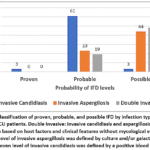 |
Figure 1. Classification of proven, probable, and possible IFD by infection types among HCU and ICU patients. Double invasive: invasive candidiasis and aspergillosis; Click here to View Figure |
Discussion
In our study, Candida albicans from sputum and urine was highly prevalent. It is similar to the study by Gurmeet Singh et al. and Mayasari et al., which found Candida albicans to be the most common fungal isolate (32.4%) and 50,8%, respectively.9 Candida spp. are commensal microorganisms in humans; they can become pathogens when the immune system is compromised.10,11 Fungal colonization of urine and lung exudate specimens is usually present.12 In this study, we examined urine, lung exudate, and blood cultures in each patient that confirmed fungal species. However, the sensitivity of SDA methods was 50%, and the specificity was nearly 100%. Differentiating colonization from infection often requires various findings, such as clinical symptoms, underlying disease, radiology findings, and multiple positive test results.11
In certain clinical conditions, such as in critically ill patients, individuals with weakened immune systems, and those with chronic diseases, it becomes more relevant due to the possibility of active infection and complications.10 Meanwhile, the prevalence of candidemia is 10/100,000. Nosocomial transmission can result from excessive intravascular equipment use and poor handwashing techniques. It is often a commensal organism on mucosal surfaces, but when specific risk factors are present, it can cause severe infection. 13
Invasive aspergillosis is a potentially severe infection that is underdiagnosed. Several risk factors have been identified, including glucocorticoid use, ICU admission, and influenza. Regardless of the availability of antifungal medications, the mortality rate from invasive aspergillosis is substantial, ranging from 30 to 90%. Common nonspecific clinical symptoms of invasive aspergillosis are fever, dyspnea, and cough; a risk assessment and other diagnostic information are necessary for diagnosis.10
We gathered data on 67 critically ill patients with invasive fungal infections. It occurs most often in males and older adults, with an average age of 58 years, consistent with prior studies.12,14,15 Older people were more likely to have debilitating medical conditions and other predisposing factors than younger patients.12 Diabetes mellitus (DM) is a risk factor for early IFD in critically ill patients, urging early antifungal treatment. Antifungal treatment was needed when the patient was diagnosed with oral candidiasis, vulvovaginal candidiasis, or Candida bloodstream infection, which was at higher risk in DM patients. IFD was present in 29.9% of critically ill patients with DM in this research. However, there were 7.7 million Indonesians with serious fungal infections annually. Identifying high-risk patients and early detection become important steps to reduce fungal infection-related mortality.16
This study showed that the IFD mortality rate was 52 (75.4%). The suggested annual incidence of IFD in previous studies ranged from 35% to 90%. 1,13 The number of laboratories that can perform mycological testing, which may result in misdiagnosed cases; a lack of antimicrobial stewardship; resistance to antifungal medications; and inadequate management of underlying illnesses in high-risk patients constitute all factors that contribute to poor outcomes. 11
Candida duobushaemulonii and Candida parapsilosis in blood cultures are rare but can cause superficial & invasive infections.11 Non-albicans Candida (NAC), which has been demonstrated to have greater azole resistance than other Candida species, is becoming more common in candidemia each year.17 Multiple factors, including antifungal exposure and the presence of a peripherally inserted central catheter, were associated with NAC candidemia; prior antifungal exposure was an independent risk factor. Patients with NAC candidemia frequently have particular azole resistance and cross-resistance; the results of Candida albicans candidemia and NAC candidemia were comparable. Non-albicans candidemia is significant because of its potential for multidrug resistance.
In this study, 23 subjects had probable invasive aspergillosis based on the galactomannan test. The galactomannan test demonstrated sensitivity of 71–88% and specificity of 89–98%.15,16 It was noted that false positive results may occur due to cross-reactions in patients receiving beta-lactam antibiotic therapy.18–20 In this study, the galactomannan test used blood serum samples, which may be affected by cross-reactions. Recent findings suggest that the aspergillus galactomannan in bronchoalveolar lavage specimens is a more significant predictor of invasive aspergillosis.15,21 For the management of invasive aspergillosis, preemptive antifungal therapy with voriconazole is administered according to standard treatment guidelines.22
The study’s limitations were that the data were collected from a single center, which means that the findings may not represent trends in other parts of Indonesia. However, IFD profiles can use these data as a reference. Second, we did not use serological tests for Candida (β-d-glucan test) in the same way as galactomannan tests for Aspergillus; a combination of these tests should be proposed for a cost-effective management strategy, and the limitations of β-d-glucan reagents in Indonesia. Third, samples for galactomannan testing were taken from blood serum because the kit test was not available for BAL specimens. Fourth, we used SDA culture methods that were less sensitive, while we collected all type specimens such as blood, urine, and lung exudate, and we used a serology test. Fungal antigen and fungal antibody detection should be performed sequentially to obtain more accurate information in establishing the diagnosis of acute fungal infection and assessing the patient’s disease progression.
Conclusion
This study showed that invasive fungal disease was identified in non-neutropenic patients with severe to critical cases at HCU/ICU. The main cause of IFD is Candida albicans, while a small number of cases are caused by Aspergillus fumigatus, Aspergillus flavus, and Aspergillus niger. The fungi are commonly found in sputum and urine, whereas Candida duobushaemulonii and Candida parapsilosis were detected in blood cultures.
Acknowledgement
We would like to thank the President Director and Director of Human Resources, Education, and Research of Sulianti Saroso Infectious Disease Hospital for permitting the research to be conducted.
Funding Sources
The author(s) received no financial support for the research, authorship, and/or publication of this article.
Conflict of Interest
The authors do not have any conflict of interest.
Data Availability Statement
This statement does not apply to this article.
Ethics Statement
This study received ethical approval from the Health Research Ethics Committee of Sulianti Saroso Infectious Disease Hospital (SSIDH) under approval number 31/XXXVIII.10/IX/2021.
Informed Consent Statement
The participants were asked to sign a written informed consent if they agreed to participate in the study.
Clinical Trial Registration
This research does not involve any clinical trials.
Permission to reproduce material from other sources
Not Applicable.
Author contributions
- Siti Pratiekauri: Conceptualization, Data Analysis, Methodology, Writing – Review & Editing.
- Nina Mariana: Conceptualization, Data Analysis, Writing – Review & Editing.
- Aninda Dinar Widiantari: Data Collection, Writing – Original Draft
- Maria Lawrensia Tampubolon: Supervision.
- Surya Oto Wijaya: Data Collection
- Rosamarlina: Data Collection
- Dian Wahyu Tanjung: Data Collection
- Farida Murtiani: Data Analysis
References
- Rayens E, Norris KA. Prevalence and Healthcare Burden of Fungal Infections in the United States, 2018. Open Forum Infect Dis. 2022 Jan 1;9(1).
CrossRef - Rozaliyani A, Nelwan EJ, Wahid M, Aditianingsih D, Karyanti MR, Pratiekauri S, et al. Expert Panel Recommendations on the Clinical Practice Guidelines for the Diagnosis and Management of Invasive Candidiasis in Indonesia. Acta Med Indones. 2024;56(2):260–72.
- Elmasry WG, Abdelbaky AM, Hossameldin A, Awad A. Management of invasive candidiasis in the ICU : Challenges and advances ( Review ). Med Int. 2025;1–9.
CrossRef - Smadu SG, Tetradov SC, Ene L, Oprisan C. Diagnostic Biomarkers for Invasive Candidiasis : A Clinician-Oriented Review. J Fungi. 2026;1–16.
CrossRef - Changzhen Yang, Jie Xiong, Jiakai Wang, Hongying Bi, Jianyu Fu XL et al. Clinical Characteristics, Risk Factors and Outcomes of Invasive Fungal Disease in Critically III Patients with Hematological Malignancy: A Retrospective Study. Clin Lymphoma Myeloma Leuk. 2025;25(4):e214–21.
CrossRef - Bongomin F, Ekeng BE, Kibone W, Nsenga L, Olum R, Itam-Eyo A, et al. Invasive Fungal Diseases in Africa: A Critical Literature Review. J Fungi. 2022;8(12).
CrossRef - Cabrera-Guerrero JP, García-Salazar E, Hernandez Silva G, Chinney Herrera A, Martínez-Herrera E, Pinto-Almazán R, et al. Candidemia: An Update on Epidemiology, Risk Factors, Diagnosis, Susceptibility, and Treatment. Pathogens. 2025;14(8):1–35.
CrossRef - Bassetti M, Azoulay E, Kullberg BJ, Ruhnke M, Shoham S, Vazquez J, et al. EORTC/MSGERC Definitions of Invasive Fungal Diseases: Summary of Activities of the Intensive Care Unit Working Group. Clin Infect Dis. 2021;72:S121–7.
CrossRef - Mayasari E, Siregar C. Monitoring the Diversity and Antifungal Susceptibility of Candida Isolates at Adam Malik Hospital, Medan, Indonesia. Ahmed I, editor. Int J Microbiol. 2026;2026(1)
CrossRef - Dichtl K, Forster J, Ormanns S, Horns H, Suerbaum S, Seybold U, et al. Comparison of β-D-glucan and galactomannan in serum for detection of invasive aspergillosis: Retrospective analysis with focus on early diagnosis. J Fungi. 2020 Dec 1;6(4):1–11.
CrossRef - Lass-Flörl C. Beyond guidelines: what do I need to know when dealing with fungal diagnostics? Clin Microbiol Infect. 2025;31(12):1980–4.
CrossRef - Gong Y, Li C, Wang C, Li J, Ding M, Chen D, et al. Epidemiology and mortality-associated factors of invasive fungal disease in elderly patients: A 20-year retrospective study from Southern China. Infect Drug Resist. 2020;13:711–23.
CrossRef - D D. Global incidence and mortality of severe fungal disease. Lancet Infect Dis. 2024;24:e428–38.
CrossRef - Liu F, Zhong L, Zhou F, Zheng C, Zhang K, Cai J, et al. Clinical Features, Strain Distribution, Antifungal Resistance and Prognosis of Patients with Non-albicans Candidemia: A Retrospective Observational Study. Infect Drug Resist. 2021;14:3233–46.
CrossRef - Bukkems LMP, van Dommelen L, Regis M, van den Heuvel E, Nieuwenhuizen L. The Use of Galactomannan Antigen Assays for the Diagnosis of Invasive Pulmonary Aspergillosis in the Hematological Patient: A Systematic Review and Meta-Analysis. J Fungi. 2023;9(6).
CrossRef - Rahmiati L, Mubarokah M, Prasetyo DS. Galactomannan Test in Suspected Invasive Pulmonary Aspergillosis Patients: An Evidence-Based Case Report. J Respirologi Indones. 2025;45(4):312–8.
CrossRef - Garg P, Suyal S, Deepak D, Hembrom S, Chauhan AK, Kaur N, et al. Evaluating the causes associated with false positive Galactomannan assay in suspected cases of respiratory fungal infections. J Fam Med Prim Care. 2025;14(2):736–42.
CrossRef - Otting KA, Stover KR, Cleary JD. Drug-laboratory interaction between beta-lactam antibiotics and the galactomannan antigen test used to detect mould infections. Brazilian J Infect Dis. 2014;18(5):544–7.
CrossRef - Cardoso E, Cerecedo M. False-positive results in the galactomannan PlateliaTM Aspergillus assay with generic piperacillin/tazobactam. 2008;20(1):1–2.
- Kindo AJ, Easwaramoorthy A. Galactomannan assay and clinical correlation at a tertiary care hospital: A pilot study. J Acad Clin Microbiol. 2024;25(2):72–4.
CrossRef - Chun JY, Jeong SJ, Kim S, Choi S, Lee JH, Chung HS, et al. Performance of the galactomannan test for the diagnosis of invasive pulmonary aspergillosis using non-invasive proximal airway samples. J Infect. 2024;88(6):106159.
CrossRef - Epelbaum O, Marinelli T, Haydour Q, Pennington KM, Evans SE, Carmona EM, et al. Treatment of Invasive Pulmonary Aspergillosis and Preventive and Empirical Therapy for Invasive Candidiasis in Adult Pulmonary and Critical Care Patients: An Official American Thoracic Society Clinical Practice Guideline. Am J Respir Crit Care Med. 2025;211(1):34–53.
CrossRef
 PlumX:
 Views: 267
  PDF Downloads:
2
PDF Downloads:
2 
Accepted on: 15-07-2026
Second Review by: Dr. Arif Ansori and Dr. Faheema Jabbar aboalhor
Final Approval by: Dr H Fai Poon