Evaluation of a Dibutyltin(IV)-Allopurinol Complex in Breast Cancer Patients Using Serum Lactate Dehydrogenase as a Biomarker
 , Emad Yousif1*, Khawla Kasar1and Muna Bufaroosha2
 1Department of Chemistry, College of Science, Al-Nahrain University, Baghdad, Iraq
2Department of Chemistry, College of Science, United Arab Emirates University, Al-Ain, United Arab Emirates
Corresponding Author E-mail: emad.yousif@nahrainuniv.edu.iq
Download this article as:
ABSTRACT:Organotin (IV) complex have acquired significant interest because of their fascinating biological and anticancer properties. In the present study, a new dibutyltin (IV)-allopurinol complex (Bu2SnL2) was synthesized and characterized and its effect on lactate dehydrogenase (LDH) activity associated with breast cancer was investigated. The complex was prepared by reacting dibutyltin dichloride and allopurinol in a 1:2 metal to ligand molar ratio under reflux conditions. The melting point determination, FTIR, EDX, 1HNMR, 13CNMR and 119 Sn-NMR techniques were used for structural analysis and confirmed the effective coordination of allopurinol to the tin center via the pyrazole nitrogen atom and the formation of a stable six-coordinated geometry. The biological activity of the synthesized complex in vitro was evaluated using serum samples obtained from 25 healthy controls and 75 Iraqi women with breast cancer. Serum LDH levels were determined by ELISA and statistical analysis was performed by one way ANOVA and Dunnett’s multiple comparisons test. LDH activity was significantly higher in patients with breast cancer than in healthy controls (p < 0.0001). Treatment with Bu2SnL2 modulated LDH activity in a concentration dependent manner with the largest decrease observed at 50 µg/mL. In the solvent control group, no significant changes were observed, showing that the effect was due to the organotin complex itself. The results indicate that the synthetic dibutyltin (IV)-allopurinol complex shows a promising LDH-modulating activity and may be a potential candidate for further investigation as an anticancer drug targeting breast cancer metabolism.
KEYWORDS:Allopurinol; Anticancer Activity; Breast Cancer; Dibutyltin(IV) Complex; Lactate Dehydrogenase Inhibition
Introduction
In the last few decades, organometallic chemistry has become more important in medicine, industry, and academia. This development shows how important organometallics are as chemical synthesis intermediates. Also, the compounds could be used to make simple and complex materials that are useful in technology and medicine1. Many organometallic compounds have a wide range of chemical structures and are very reactive2. The use of organometallics as catalysts also made it possible to create organic compounds more efficiently, with less waste. They can be used to make thin films and nanomaterials for a variety of purposes.
Tin can form stable complex with a number of organic ligands that have atoms that are rich in electrons, such as heteroatoms (like nitrogen, oxygen, sulphur, etc.)3. The amount and type of substituents (like aryl or alkyl groups) that are attached to tin have a big effect on how different and reactive these compounds are3. Right now, the main goal of medical chemistry is to create new, stronger metal-based cancer-fighting drugs that either kill cancer cells directly or stop them from growing without causing any bad effects on the body as a whole3.
Organotin(IV) complexes have received considerable attention in the field of organometallic chemistry4. Mono-, di-, tri- and tetra-coordinated derivatives of the organotin complexes 5can be prepared5. Organotin compounds are among the most studied chemicals. They are used in the production of PVC polymers. They have also been widely used as slimicides in industrial water systems, insecticides and fungicides for crops, wood preservatives. and things that stop organisms from growing on marine surfaces. Researchers are looking into a lot of different organotin complexes with different organic parts to see if they can be used6–8. For example, complexes are often used in medicine and pharmaceuticals12–15, and have been tried as additives to make polyvinyl chloride more stable in light9–11. Organotin compounds have also been widely used as starting materials in the synthesis of many chemical compounds. In addition, cancer is a highly complex disease, making it difficult to control cell growth. Chemotherapy remains one of the main treatment strategies for managing this disease. However, there has been a significant improvement in cancer treatment methods in the last few years. These include ferroptosis-based therapy, radionics, natural antioxidants, ablation therapy, targeted therapy, nanoparticles, stem cell therapy, and chemodynamic therapy.
The newest oncology methods try to make cancer nanomedicines that are both safe and effective in order to fight the disease. The death rate from cancer is still high, even though science has made progress. Even though treatment has gotten better, there are still not many drugs available16. Many cancer drugs on the market today have very bad side effects. Thus, the creation, manufacturing, and utilization of innovative anti-cancer pharmaceuticals remain essential. Recent studies indicate that platinum-containing complexes are less efficacious than carboxylate-modified organotin (IV) compounds in inducing apoptosis in cancer cells and chemical reactions and in farming17-20.
Organotin complexes as anticancer agents may target the phosphate groups and nitrogen atoms in DNA and nucleotide base pairs21, 22. The successful application and contact with the target sites depends on the coordination ability of the tin atom, the type of coordination groups (aliphatic or aromatic), the number of coordinating groups (mono-, di- and tri-substitution) and the form of the complexes23. For example, the lipophilicity and hydrophilicity of the tin complex are affected by the heteroatoms of sulphur, nitrogen and oxygen in the carboxylate ligand, which influences its activity and allows it to pass through the cell membrane24 . Trisubstituted tin compounds are generally more dangerous than the di- and monosubstituted ones25. The genes in cancer cells become more active when higher doses of the organotin chemicals are used 16. Apoptosis causes DNA damage. It is not the other way round. It increases calcium cation concentration and reduces macromolecule synthesis, linoleic acid peroxidation and mitochondrial metabolism14.
Materials and Methods
Fourier transform infrared spectroscopy (FTIR).
Using a disc of KBr and a Model 8300 Shimadzu Spectrophotometer from Japan, we looked at the FT-IR measurements of Bu2SnL2 complex and allopurinol by looking at the absorption bands and transmission of infrared light. The measurements were taken at frequencies between 4000 and 400 cm-1 and gave information about the structure of molecules and their functional groups.
Proton and carbon Nuclear magnetic resonance (1H-NMR and 13C-NMR).
We used a Bruker Avance DRX 400 MHz spectrometer to record the proton nuclear magnetic 1H-NMR (400 MHz) and 13C-NMR (100.6 MHz) spectra). The Bruker spectrophotometer was at Basra University in Iraq. Using a solvent called deuterated dimethyl sulfoxide (DMSO), all of the compounds were dissolved.
Energy- dispersive X-ray analysis (EDX).
Energy-dispersive X-ray spectroscopy (EDX) is an analytical method for figuring out the elements and makeup of materials. It is usually used with scanning electron microscopy (SEM). The technique relies on identifying unique X-rays emitted from a sample upon interaction with an incident electron beam. Each element makes peaks at certain energy levels. Finding peaks lets you do qualitative analysis, and using the right correction models, you can use peak intensities to make quantitative estimates. EDX is often used to check the purity of a sample, make sure it has the right elements, and make sure it has metal centers.
Reaction of ligand (L) and dibutyltin dichloride complex.
The molar ratios (metal : ligand) used to make the complex are 1:2. This is because the right amounts of Bu2SnCl2 (0.3038 g, 1.0 mmol) were dissolved in 5 ml of methanol and then added to the agitated solution of allopurinol (0.272 g, 2.0 mmol, in 10 ml methanol). This resulting mixture was heated to 65 °C for 6 hours in a reflux. After filtering, washing, drying, and recrystallizing the solution, it became an off-white powder. Scheme (1) shows how di- Bu2SnL2 complex are structured.
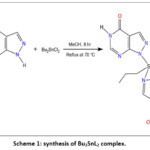 |
Scheme 1: synthesis of Bu2SnL2 complex. Click here to view Figure |
Study design and sample collection.
Serum samples of 100 Iraqi women aged 20 to 70 years were used to conduct this case-control study. The study population included 75 patients with breast cancer who treated in the Oncology Teaching Hospital, Baghdad, Iraq. The control group comprised 25 women who appeared to be in good health and had no previous history of cancer.
To minimise the possibility of confounding factors affecting serum LDH activity, patients with secondary breast tumours, chronic liver disease, diabetes mellitus, hypertension, polycystic ovarian syndrome or who were pregnant or nursing, were excluded from the study. Breast cancer patients were subsequently divided into two groups according to oestrogen receptor (ER) status: ER-positive (n=43) and ER-negative (n=32).
Under aseptic conditions approximately 5 mL peripheral venous blood was bled from each participant. The blood samples were allowed to clot, and the serum was separated by centrifugation and stored under the correct lab conditions until the biochemical analysis.
The study protocol was reviewed and approved by Research Ethics Committee of Al-Nahrain University, College of Science, Baghdad, Iraq. Written informed consent was obtained from all subjects prior to sample collection. All procedures were performed in accordance with the ethical standards laid down in the Declaration of Helsinki.
Parameter analysis.
Blood samples were collected under controlled conditions, and serum samples were used to quantify LDH levels. Biochemical analyses were performed using commercially available enzyme-linked immunosorbent assay (ELISA) kits (ELK Biotechnology and FineTest, Fine Biotech Co., Ltd., China), following the manufacturers’ instructions. Absorbance was measured using a microplate ELISA reader (Germany) at the appropriate wavelength to ensure the accuracy of the results. All biomarkers were quantified using commercially available enzyme-linked immunosorbent assay (ELISA) kits according to the manufacturers’ protocols.
Statistical analysis
GraphPad Prism version 9.2 (GraphPad Software, San Diego, CA, USA) was used for statistical analysis. Mean ± SD is used to express data. One-way ANOVA and Dunnett’s multiple comparisons test were used to examine group differences. Statistical significance was defined as a p-value < 0.05.
Results
Physical data
The dibutyltin(IV)-allopurinol complex (Bu₂SnL₂) was prepared efficiently by refluxing dibutyltin dichloride and allopurinol in a 1:2 molar ratio of metal to ligand. The free ligand was afforded as a white solid with melting point 205–207 °C, and the synthesized complex was obtained as an off-white solid with melting point 168–170 °C and a reaction yield of 84%. These results indicate that the desired organotin complex has been synthesized in good yield and purity.
Energy- dispersive X‑ray (EDX)
The EDX analysis was used to investigate the elemental composition of the Bu2SnL2 complex and the synthesized ligand. The spectra of the ligand showed signals corresponding to the atoms of carbon, nitrogen and oxygen as predicted. Whereas the spectra of the synthesized complex showed a characteristic tin (Sn) signal as well as the ligand elements, indicating that the tin atom had been successfully incorporated into the molecular structure. The elemental composition obtained from the EDX spectra (Figure 1) was consistent with the proposed molecular structure of the synthesized dibutyltin(IV) complex.
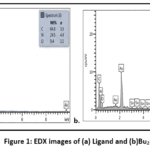 |
Figure 1: EDX images of (a) Ligand and (b)Bu2SnL2. Click here to view Figure |
Fourier transform infrared spectroscopy (FTIR)
The FTIR spectra of the synthesized Bu2SnL2 complex and the free allopurinol are listed in Table 1. The N–H stretching vibrations are slightly shifted at 3215 and 3166 cm⁻¹ in comparison to the unbound ligand. The carbonyl stretching band was found at 1701 cm-1 and the aromatic C-H stretching vibration was almost unchanged at 3082 cm-1. Upon complex formation a small shift of the C=N stretching vibration from 1593 to 1589 cm⁻¹ and a larger shift of the pyrazole C=C vibration from 1527 to 1479 cm⁻¹ was observed. The successful synthesis of the organotin complex was confirmed by the appearance of two additional absorption bands at 448 and 536 cm-1 corresponding to v(Sn-N) and v(Sn-C) respectively.
Table 1: The FTIR of ligand and Bu2SnL2 complex.
|
Assignment |
Ligand | Complex |
| ν(N–H) | 3166 |
3215 / 3166 / 3200 |
|
ν(C–H) |
3083 | 3082 |
| ν(C=O) | 1699 |
1701 |
|
ν(C=N) |
1593 | 1589 |
| ν(C=C) (pyrazole ring) | 1527 |
1479 |
|
ν(Pyrimidine ring) |
1388 / 1365 | 1386 / 1363 |
| ν(C–N) pyrazole | 1232 |
1232 |
|
ν(C–C) |
1155 | 1155 |
| CH deformation | 1081 |
1080 |
|
Ring breath |
954 |
952 |
|
CH out of plane |
912 | 912 |
| NH out of plane | 889 / 815 / 783 / 705 |
885 / 813 / 779 / 703 |
|
ν(Sn–N) |
– | 448 |
| ν(Sn–C) | – |
536 |
Nuclear magnetic resonance (1H‑NMR)
The 1H NMR spectra (400 MHz, DMSO-d³) of the obtained Bu₂SnL₂ complex showed the characteristic resonances expected for the proposed structure (Table 2). The coordinated allopurinol ligand N–H protons were observed as a singlet at δ 12.10 ppm. Aromatic protons belonging to the purine ring appeared as singlets at δ 8.54 and 8.04 ppm. The efficient incorporation of the dibutyltin moiety into the synthesised compound was confirmed by the observation of the butyl substituents attached to the tin atom as characteristic multiplets and triplets at δ 1.55, 1.32, 1.26 and 0.84 ppm.
Nuclear magnetic resonance (13C‑NMR).
The 13C NMR spectrum of Bu₂SnL₂ exhibited the anticipated resonances for the carbon atoms of the dibutyltin groups and the allopurinol ligand (Table 2). Signals of the aromatic carbon atoms were observed at δ 157.9, 153.9, 148.2, 135.6 and 105.8 ppm. Furthermore, the aliphatic carbon atoms of the butyl chains were observed at δ 28.1, 26.0 and 14.2 ppm. The spectra obtained were consistent with the proposed molecular structure of the synthetic organotin complex.
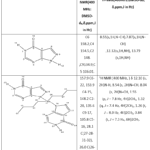 |
Table 2: The 1H-NMR and 13 C-NMR for ligand and Bu2SnL2 complex.Nuclear magnetic resonance (119Sn‑NMR). Click here to view Figure |
The 119 Sn NMR spectra of the resultant Bu2SnL2 complex exhibited a single resonance at -455.41 ppm which means there is only one tin environment in solution. The observed chemical shift is proposed to be due to the six-coordination around the tin center which is in agreement with the successful formation of the dibutyltin(IV) complex.
In Vitro Lactate Dehydrogenase Inhibition:
The effect of the synthesised Bu2SnL2 complex on serum lactate dehydrogenase (LDH) activity was studied on serum samples of breast cancer patients and healthy controls. Table 3 and Figure 2 shows that serum LDH activity was significantly increased in breast cancer patients (7662 ± 2514 U/L) compared to healthy controls (4000 U/L, p < 0.0001). LDH activity was decreased by Bu₂SnL₂ treatment in a concentration-dependent manner. LDH levels were 6111 ± 1849 U/L at 10 μg/mL (p = 0.0040), 4685 ± 717.6 U/L at 25 μg/mL (p = 0.6699) and 3695 ± 355.2 U/L at 50 μg/mL (p = 0.9796). The difference between the solvent control group and the healthy control group was not statistically significant (4564 ± 376.7 U/L, p = 0.9673). This implies that the observed changes were induced by the synthesised organotin complex, not by the solvent.
Table 3: Effect of Bu2SnL2 on serum LDH activity (U/L).
|
Groups |
Mean ± SD | P-values |
| CONTROL vs. SOLVENT CONTROL | 4564± 376.7 |
0.9673 |
|
CONTROL vs. GROUP |
7662±2514 | <0.0001 |
| CONTROL vs. 10 UG/ML | 6111±1849 |
0.0040 |
|
CONTROL vs. 25 UG/ML |
4685±717.6 | 0.6699 |
| CONTROL vs. 50 UG/ML | 3695±355.2 |
0.9796 |
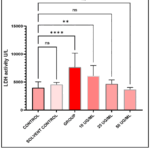 |
Figure 2: LDH levels with Bu2SnL2(U/L). Click here to view Figure |
Discussion
The formation of the dibutyltin(IV)-allopurinol complex was confirmed by the effective synthesis of the complex by complementary spectroscopic methods. The physical properties, such as high yield of reaction (84 %) and variation of melting point with respect to free ligand, are the first evidence for the development of a new kind of coordination molecule. The observed changes suggested that the physicochemical properties of the ligand changed after the coordination of allopurinol to the tin core.
Moreover, the EDX study confirmed the presence of tin along with the expected peaks of carbon, nitrogen and oxygen, which further confirmed the successful synthesis of the complex. The elemental composition agreed well with the proposed molecular formula and confirmed the incorporation of the dibutyltin moiety into the ligand framework. Similar observations have been reported for related organotin (IV) complexes . The elemental composition of the newly synthesised coordination compounds has been confirmed by EDX analysis 26.
The FTIR data clearly showed the coordination behaviour of Allopurinol towards tin atom. The small shift of the C=N stretching vibration and the great shift of the pyrazole C=C band indicate that the pyrazole nitrogen atom participates in the coordination. Furthermore, the formation of tin-nitrogen and tin-carbon bonds is directly evidenced by the appearance of new v(Sn-N) and v(Sn-C) absorption bands. No significant changes were seen in the carbonyl stretching frequencies which indicates that the carbonyl oxygen is not involved in coordination. These results are consistent with the earlier reported spectroscopic studies of organotin (IV) complexes with nitrogen donor ligands 27–30.
The proposed chemical structure was also strongly supported by the NMR spectra. The characteristic proton and carbon resonances of the allopurinol ligand were readily identified after complexation and the additional resonances due to the dibutyltin substituents indicated effective coordination. In addition, the unique resonance observed at −455.41 ppm in the 119Sn NMR spectra is characteristic of sixcoordinate organotin(IV) complexes and further supports the proposed octahedral coordination geometry around the tin center. The results are in agreement with previous reports on similar organotin complexes 31–35.
The biological study found that the serum LDH activity of patients with breast cancer was significantly higher than that of healthy people. This observation is in accordance with the well established role of LDH as a major marker of tumour metabolism. The increased LDH activity is a result of the Warburg effect, which allows high replicating cancer cells to fulfil their high metabolic demands. High levels of LDH have therefore been associated with poor prognosis and aggressive tumour behaviour in patients with breast cancer 36-38 ,41.
Treatment of synthesised Bu2SnL2 complex showed a concentration dependant decrease in serum LDH activity with maximum decrease observed at 50 μg/mL. Interestingly, the solvent control had no visible effect, and the LDH activity at this concentration was similar to that of the healthy control group. These results indicate that the activity observed was not due to the solvent system but to the organotin complex itself. The reduction in LDH activity might be due to the decreased cellular metabolic activity after exposure to the synthesised complex or interference with the altered metabolic pathways in breast cancer cells.
The observed concentration dependent reaction is in agreement with other reports on the anticancer capabilities of organotin(IV) compounds. Organotin complexes have been shown to induce apoptosis, interfere with DNA replication, damage mitochondria and inhibit vital metabolic processes which contribute to tumour growth. 13–16. The allopurinol ligand can enhance the biological activity by modifying the physicochemical properties of the complex, enhancing its stability, and enabling its interaction with biological targets.
The present study only examined enzymatic activity in vitro on blood samples, although the results demonstrate a promising LDH-modulating effect. Further studies on breast cancer cell lines, cytotoxicity assays, apoptosis markers, molecular docking and in vivo experimental models need to be carried out to understand the exact mechanism of action and to determine the therapeutic potential of Bu2SnL2 as a potential anticancer agent39,40.
Conclusion
A new dibutyltin(IV) complex of allopurinol (Bu2SnL2) was synthesized and characterized structurally by FTIR, EDX, 1H-NMR, 13C-NMR and 119Sn-NMR techniques. The structural studies revealed the binding of allopurinol to the tin atom through the pyrazole nitrogen atom and formation of a stable six-coordinated complex. The biological study showed that serum LDH activity of breast cancer patients was significantly higher than that of healthy control. Treatment of the synthesized complex successfully modulated the LDH activity with the maximum reduction at a dose of 50 µg/mL. No obvious change was found in the solvent control group. These results suggest that organotin (IV) complex could be candidates for further studies and Bu2SnL2 exhibits interesting LDH modulating properties. However, further in vitro and in vivo studies are needed to elucidate the underlying mechanism of action, to determine the level of cytotoxicity and the therapeutic potential of this complex in the treatment of breast cancer.
Acknowledgement
The authors sincerely thank the Department of Chemistry, College of Science, Al-Nahrain University, for providing the facilities and support that made this research possible.
Funding Sources
The author(s) received no financial support for the research, authorship, and/or publication of this article.
Conflict of Interest
The authors do not have any conflict of interest.
Data Availability Statement
This statement does not apply to this article.
Ethics Statement
This research did not involve human participants, animal subjects, or any material that requires ethical approval.
Informed Consent Statement
This study did not involve human participants, and therefore, informed consent was not required.
Clinical Trial Registration
This research does not involve any clinical trials.
Permission to reproduce material from other sources
Not Applicable
Author contributions
- Safa Khaldoon: Conducted the experimental work and prepared the initial draft of the manuscript.
- Khawla Kasar: Reviewed and revised the manuscript.
- Emad Yousif and Muna Bufaroosha: Supervised the study and approved the final version of the manuscript.
References
- Joshi R, Tomar N, Pokharia S, Joshi I. Recent advancements in organotin(IV) complexes of drugs: Synthesis, characterization, and application. Results Chem. 2023;5:100955. doi:10.1016/j.rechem.2023.100955.
CrossRef - .Saloutin VI, Edilova YO, Kudyakova YS, Burgart YV, Bazhin DN. Heterometallic molecular architectures based on fluorinated β-diketone ligands. 2022;27:7894.
CrossRef - Abed-Al Zahra MA, Hadi AG. Synthesis, characterization, and antioxidant activity of novel diorganotin(IV) complexes derived from ibuprofen-5-aminosalicylic acid ligand. Bull Chem Soc Ethiop. 2025;39:101-110.
CrossRef - Rasli NR, Hamid A, Awang N, Kamaludin NF. Series of organotin(IV) compounds with different dithiocarbamate ligands induced cytotoxicity. 2023;28:3376.
CrossRef - Hoch M. Organotin compounds in the environment—An overview. Appl Geochem. 2001;16:719-743.
CrossRef - Sánchez-Vergara ME, Hamui L, Gómez E, Chans GM, Galván-Hidalgo JM. Optical and electrical properties of organotin(IV). Polymers. 2021;13:1023.
CrossRef - Smolyaninov IV, Poddel’sky AI, Burmistrova DA, et al. The synthesis and biological activity of organotin complexes with thio-Schiff bases bearing phenol fragments. Int J Mol Sci. 2023;24(9):8319. doi:10.3390/ijms24098319.
CrossRef - Debnath P, Debnath P, Roy M, et al. Novel organotin(IV) complexes of 2-[4-hydroxy-3-((2-hydroxyethylimino) methyl) phenylazo]benzoic acid: Synthesis, structure, noncovalent interactions and in vitro antibacterial activity. 2022;12(11):1582. doi:10.3390/cryst12111582.
CrossRef - Naoom N, Yousif E, Ahmed DS, Kariuki BM, El-Hiti GA. Photostabilization of poly(vinyl chloride). 2022;14:4590.
CrossRef - Fadhil M, Yousif E, Ahmed DS, Kariuki BM, El-Hiti GA. Synthesis of new organotin(IV) complexes. 2022;14:3720.
CrossRef - Hadi AG, Baqir SJ, Ahmed DS, El-Hiti GA, Hashim H, Ahmed A. UV-resistance of PVC films. Polymers. 2021;13:3946.
CrossRef - Niu L, Li Y, Li Q. Medicinal properties of organotin compounds and toxicity limitations. Inorg Chim Acta. 2014;423:2-13.
CrossRef - Devi J, Yadav J. Recent advancements in organotin(IV) complexes as anticancer agents. Anticancer Agents Med Chem. 2018;18:335-353.
CrossRef - Annuar SNS, Kamaludin NF, Awang N, Chan KM. Cellular basis of organotin(IV) derivatives as anticancer metallodrugs. Front Chem. 2021;9:657599.
CrossRef - Muhammad N, Ahmad M, Sirajuddin M, et al. Potential anticancer organotin(IV) complexes. Front Pharmacol. 2022;13:864336.
CrossRef - Pantelić NĐ, Zmejkovski BB, Žižak Ž, et al. Biological activity of organotin(IV) complexes. J Chem. 2019;2019:2905840.
- Indumathy R, Radhika S, Kanthimathi M, Weyhermuller T, Unni NB. DNA binding and cleavage studies. J Inorg Biochem. 2007;101:434-443.
CrossRef - Butt AF, Ahmed MN, Bhatti MH, et al. Structural and theoretical studies of organotin(IV). J Mol Struct. 2019;1191:291-300.
CrossRef - Sirajuddin M, Ali S, Tahir MN. Crystal structure and biological applications. J Mol Struct. 2021;1229:129600.
CrossRef - Davies AG, Gielen M, Pannell KH, Tiekink ERT. Tin in organic synthesis. In: Tin Chemistry: Fundamentals, Frontiers, and Applications. New York, NY: Wiley; 2008:497-665.
CrossRef - Xiao X, Wang Z, Zhao M, et al. Synthesis and characterization of organotin(IV) compounds. J Mol Struct. 2020;1216:128255.
CrossRef - Hong M, Yang Y, Li C, Xu L, Li D, Li CZ. Organotin(IV) functionalized materials. RSC Adv. 2015;5:102885-102894.
CrossRef - Hadjikakou SK, Hadjiliadis N. Antiproliferative and antitumor activity of organotin compounds. Coord Chem Rev. 2009;253:235-249.
CrossRef - Ettouhami A, Yahyi A, El Mejdoubi A, et al. Synthesis and antimicrobial activity of some new organotin(IV) complexes. Med Chem Res. 2012;21:3607-3614.
CrossRef - Basu Baul TS. Antimicrobial activity of organotin(IV) compounds: A review. Appl Organomet Chem. 2008;22:195-204.
CrossRef - Mehmood N, Andreasson E, Kao-Walter S. SEM observations of a metal foil laminated with a polymer film. Procedia Mater Sci. 2014;3:1435-1440.
CrossRef - Nakamoto K. Infrared and Raman Spectra of Inorganic and Coordination Compounds. 6th ed. John Wiley & Sons; 2009.
CrossRef - Nath M, Pokharia S. Organotin(IV) complexes of amino acids and peptides. Coord Chem Rev. 2001;215:99-149.
CrossRef - Casas JS, et al. Diorganotin(IV) derivatives of biologically active ligands. Coord Chem Rev. 2003;241:327-361.
- Davies AG. Organotin Chemistry. 2nd ed. Wiley-VCH; 2004.
CrossRef - Silverstein RM, Webster FX, Kiemle DJ. Spectrometric Identification of Organic Compounds. 8th ed. Wiley; 2014.
- Keeler J. Understanding NMR Spectroscopy. 2nd ed. Wiley; 2010.
- Gielen M. Organotin compounds and their biological activity. Appl Organomet Chem. 2002;16:481-494.
CrossRef - Wrackmeyer B. NMR spectroscopy of tin compounds. Annu Rep NMR Spectrosc. 1985;16:73-186.
CrossRef - Holecek J, Nadvornik M, Handlir K, Lycka A. 119Sn and 13C NMR study of organotin(IV) compounds. J Organomet Chem. 1986;315:299-308.
CrossRef - Yao H, Yang F, Li Y. Natural products targeting human lactate dehydrogenases for cancer therapy: A mini review. Front Chem. 2022;10:1013670. doi:10.3389/fchem.2022.1013670.
CrossRef - Pelizzari G, Gerratana L, Basile D, et al. Serum lactate dehydrogenase in metastatic breast cancer: Prognostic and predictive value. Clin Breast Cancer. 2019;19(5):e489-e496. doi:10.1016/j.clbc.2019.05.006.
CrossRef - Feng Y, Xiong Y, Qiao T, Li X, Jia L, Han Y. Lactate dehydrogenase A: A key player in carcinogenesis and potential target in cancer therapy. Cancer Med. 2018;7(12):6124-6136. doi:10.1002/cam4.1820.
CrossRef - Vandenberg LN, Colborn T, Hayes TB, et al. Hormones and endocrine-disrupting chemicals: Low-dose effects and nonmonotonic dose responses. Endocr Rev. 2012;33(3):378-455. doi:10.1210/er.2011-1050.
CrossRef - Annuar SNS, Kamaludin NF, Awang N, Chan KM. Cellular basis of organotin(IV) derivatives as anticancer metallodrugs. Front Chem. 2021;9:657599. doi:10.3389/fchem.2021.657599.
CrossRef - Kadhim R, Yousif E, Ibrahim S, Bufaroosha M. Lactate dehydrogenase and biochemical markers as indicators of treatment response in breast cancer. Biomed Pharmacol J. 2026;19(1):178-190. doi:10.13005/bpj/3346.
CrossRef

Accepted on: 09-07-2026
Second Review by: Dr. Suaad Al-Majidi and Dr. Fatma Telli
Final Approval by: Dr. Ian James Martin