Wound Healing Activity of Albizia lebbeck Bark Extract in Ointment and Emulgel Formulation: A Comparative Study
 , Satyalakshmi Siragam*1, Srinivasa Rao Yarraguntla1, Lalitha Srilekha Ramanujam1and Bhavya Reddi2
 1Department of Pharmaceutics, Vignan Institute of Pharmaceutical Technology, Duvvada, Visakhapatnam, India.
2Regulatory Affairs, College of Professional Studies, North-eastern University, Boston, United States.
Corresponding Author E-mail: satyalaxmi148@gmail.com
Download this article as:
ABSTRACT:The current research was designed to evaluate the inflammation suppressing and wound healing properties of Albizia lebbeck bark extracts in aqueous and methanolic forms. The study entailed phytochemical analysis of the bark extract, assessment of the suppression of inflammation of aqueous and methanolic extracts via the egg albumin denaturation assay, and then assessment of wound healing activity by Wistar Albino rats through the formulated and evaluated ointments and emulgels. The aqueous extract exhibited the greatest inhibition of denaturation of egg albumin at 68.22 ±0.22 % compared to the methanolic extract. The estimated characteristic properties were fallen within the optimal range for both ointment and emulgel formulations. Six formulations including a control and a standard povidone iodine ointment were tested in triplicate for wound healing activity on Wistar Albino rats over a period of 14 days. The F4 has rapid wound healing capabilities, achieved 99 % wound closure in comparison to other formulations and demonstrated comparable efficacy to povidone-iodine ointment (F6). The overall findings indicated that A. lebbeck bark has potential for use in future ethno medicinal applications as an anti-inflammatory and wound healer, primarily due to its abundance of bioactive molecules.
KEYWORDS:Albizia lebbeck; Anti-inflammatory activity; Emulgel; Ointment; Skin infections; Wound healing activity
Introduction
In light of the rising mortality rate due to bacterial infections and alarming increase in antimicrobial resistance (AMR), this study aimed at developing the best topical preparations with extracts of A. lebbeck bark which have strong anti-inflammatory and wound healing effects. Over the past several years, phyto-pharmaceuticals have gained a lot of interest both in the West and in the East as an excellent source of bioactive products, particularly in the discovery of antioxidant, anti-inflammatory, anticarcinogenic, and cytotoxic agents.1,2 Herbal medicines have been demonstrated to be a natural source of secondary metabolites, which possess a spectrum of biological activity in the plant and other organisms. Albizia genus belongs to the family Fabaceae and has approximately 150 plant species that occur in warm climatic regions of Asia, Africa, Madagascar, Australia and America. It has been reported that some of the Albizia species such as A. procera, A. amara and A. lebbeck have been found to possess antioxidant, inflammation modulation and antibacterial properties which makes it to have the high ethnopharmacological importance. It has been shown that isolated compounds of Albizia lebbeck (L.) Benth leaf, bark and flower have a broad spectrum of pharmacological activities.5 Nonetheless; comprehensive studies on A. lebbeck incorporated into topical formulations remain limited. Therefore, the present research seeks to compare the wound-healing potential of A. lebbeck bark extract in emulgel and ointment formulations.
Materials and Methods
Materials
Chemicals used for topical formulations were obtained from Jay Chem Marketing in Mumbai, India. Chemicals used for testing biological activities were purchased from Sigma Aldrich in Mumbai, India.
Collection of Plant Material
Albizia lebbeck bark was collected from Kapujaggarajupeta near the college campus in December. Before the utilization of the bark in the study, the plant was identified and authenticated by Andhra University (Department of Botany) in Visakhapatnam. The initial step involved cleaning the bark and then drying it in the sun. The dried bark had its outermost layer, the outer bark, peeled off and was then ground into powder using a mixer, which was subsequently sifted through sieves of No. 20. The powder was kept in an airtight container, which was utilised throughout the investigations. The powder was preserved from atmospheric air and moisture, and this was used throughout the investigations.
Extraction
Dried and ground A. lebbeck bark powder, 50 g was put in the thimble of a Soxhlet apparatus. In the extraction, 200 mL of methanol was used as the extraction solvent in a Soxhlet apparatus. The extraction was carried out by continuous reflux until the solvent in the siphon tube became clear. The contents of the thimble were filtered with a muslin cloth and then evaporated to produce concentrated methanolic extract (MetEx).6 A cold maceration process was used to produce the aqueous extract (AqEx). The 50 g of powdered sample in a conical flask was then filled up to 200 mL of a 10 % alcohol solution of water as a preservative. The mixture was then thoroughly mixed and left to stand after 72 h with frequent shaking. The coarse concentrated AqEx was collected by means of filtering the contents of the flask with a muslin cloth and then evaporating it.7 Although various extraction methods were employed, Soxhlet extraction was utilized for methanol due to its increased efficiency in extracting less polar phyto-constituents. To prevent prolonged exposure to high temperatures, cold maceration was chosen for aqueous extraction. The aqueous extract was then concentrated under lowered pressure at temperatures below 40 °C, in order to reduce thermal degradation of its heat-sensitive phytoconstituents.
Phytochemical Analysis
The two extracts underwent phytochemical analysis to identify their bioactive phyto-constituents. The extracts were tested for the presence of metabolites including alkaloids, cardiac glycosides, phenols, tannins, terpenoids, flavonoids, quinones, saponins, and amino acids using standard biochemical assays.8
Anti-inflammatory Activity
Prevention of Albumin Protein Degradation
A 0.2% aqueous solution of egg albumin was put into phosphate-buffered saline solution with pH at 6.4. The protocol on preventing egg albumin denaturation was carried out with a minor changes.6 The reaction mixture (5 mL), comprised 0.2 mL of albumin (0.2 % w/v), 2.8 mL of pH 6.4 phosphate buffer, and 2 mL of herbal concentrate at concentration ranging from 100-500 µg/mL. The same volume of water that was twice distilled acted as the control. The mixtures were incubated at 37 oC, 15 min., and then heated at 70 oC, 5 min. Absorbance at 660 nm was then measured after cooling. As the reference drug, diclofenac sodium was subjected to the same conditions and the same range of concentrations for the determination of absorbance. Three experiments were carried out and the average was averaged out. The % protein denaturation inhibition was calculated by the formula:
Inhibition percentage (%) = (A0 -A)/A0) x100
Where: A0= absorbance of control
A= absorbance of test sample
Preparation and Evaluation of Topical Formulations
Preparation of ointment
Hard paraffin 1 g was placed in a beaker and then submerged in a water bath. After the above mixture had melted, other ingredients were then added into the beaker in a specified concentration as shown in Table 1. The mixture was permitted to cool down. Albizia AqEx (F1) and MetEx (F2) in a 10 % concentration were selected from the published data9 and incorporated into the previously prepared ointment base. F1 and F2 had been prepared via levigation until a smooth paste was obtained. The formulated preparations were assessed for spreadability, texture, extrudability, permeability, etc.10
Table 1: Formulation of ointment with bark extract
| S. No. | Constituents | F1 (AqEx) | F2 (MetEx) |
| 1 | Albizia (g) | 2 | 2 |
| 2 | Cetosteryl alcohol (g) | 1 | 1 |
| 3 | Wool fat (g) | 1 | 1 |
| 4 | Hard paraffin (g) | 1 | 1 |
| 5 | Soft paraffin (g) | 17 | 17 |
Formulation of Emulgel
The procedure of developing emulgel formulation started with the dispersal of HPMC in hot purified water between 70-80 oC, and continuous mixing was done until the solution hydrated as the temperature was lowered down to around 40 oC. Tween-20, propylene glycol and methyl paraben were dissolved in a little amount of water to make an uniform slurry and plant materials were added at a concentration of 10 % (Table 2). This aqueous solution was then added to ethanol. The non aqueous phase and Span-20 were individually heated under 70-75 oC. The aqueous phase and the oil phase were then heated until they were at the same temperature and the oil phase was gradually poured into the aqueous one with constant stirring to create an emulsion. This emulsion was cooled to approximately 40 oC and the HPMC gel base was added in 1:1 ratio with gentle stirring thus creating the final emulgel. Distilled water was added to maintain the PH level at 6-6.5. Without adding any test sample in the similar way as F3 and F4, F5 was made (control). The ready formulations were tested in terms of spreadability, consistency, extrudability, diffusion, viscosity, and swelling index among others.11
Table 2: Formulation of emulgel with bark extract
| INGREDIENTS | F3 (AqEx) | F4 (MetEx) | F5(Control) |
| A. lebbeck (g) | 2 | 2 | – |
| HPMC (g) | 2.5 | 2.5 | 2.5 |
| Liquid paraffin (g) | 5 | 5 | 5 |
| Tween 20 (g) | 1 | 1 | 1 |
| Span 20 (g) | 1.5 | 1.5 | 1.5 |
| Propylene glycol (g) | 5 | 5 | 5 |
| Ethanol (g) | 2.5 | 2.5 | 2.5 |
| Methyl paraben (g) | 0.03 | 0.03 | 0.03 |
| Purified water | qs | qs | Qs |
In vivo Wound Healing Activity
The experiment was ethically approved by the Institutional Animal Ethics Committee of the Vignan Institute of Pharmaceutical Technology, given approval Number as IAEC/VIPT/2024/05 . The albino rats that had a weight of 150-200 g were placed in standard polypropylene cages that were fitted with stainless-steel lids and that were fitted with wheat straw bedding. The animals were maintained at the Department of Pharmacology animal facility where they had free access to food and water. The temperature was kept at 23 oC. The animals were separated into three categories and their formulation was as follows. There were four animals in every group. There were six groups that were chosen and treated with F1, F2, F3, F4, F5 and the sixth group with povidone iodine ointment.
Excision Technique Animal Wound Model
The contraction of the wound was measured on day 1, 7 and 14.12 The skin in the specific wound location was marked following the shaving procedure. Toothed forceps, surgical blade and fine scissors were used to create full-thickness skin wounds. Cotton swab dipped in alcohol was used to clean the wound area. Preparation of emulgel was done to six groups of animals every two days. Measurement of wound contraction was done on the 1st, 7th and 14th day.12 The wound contraction that led to wound closure was evaluated by tracing the area of the raw wound on transparent paper until an area of epithelium covered it completely. The tracings of the wounds were redrawn on a graph paper in mm scale and the area of wound closure was calculated through the formula provided.
Results are expressed as mean ± SEM. Initial group differences were evaluated via Student’s t-test, followed by further analysis using Tukey’s post-hoc test. P < 0.05 was considered statistically significant.
Results
Phytochemical Analysis
Collected and grounded A. lebbeck bark powder was then subjected to extraction using aqueous and methanolic solvents. The qualitative phytochemical screening revealed the presence of alkaloids, cardiac glycosids, phenols, tannin, flavonoids and saponins in the aqueous extract (AqEx) and the methanolic extract (MetEx). In both extracts, amino acids were not found. AqEx contained more flavonoids in comparison with MetEx. In both extracts, terpenoids displayed lower colour intensity whereas quinones were not present in AqEx and present in low concentrations in MetEx. The results validate the abundance of secondary metabolites in the A. lebbeck bark. Devi et al., also reported the similar results.8
Inhibition of Albumin Denaturation
AqEx and MetEx showed a significant capacity of preventing protein denaturation under heat conditions, with the highest inhibition percentage of 200 µg/mL; 68.221 ±0.22 % and 64.823±0.18 % (Fig. 1), respectively. A better rate of inhibition of 70.623 ± 0.97 %, was observed with the standard NSAID, diclofenac. Although the inhibition was high, a dose-dependent trend was not evident throughout the investigated concentrations.13,14
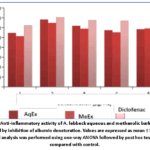 |
Figure 1: Anti-inflammatory activity of A. lebbeck aqueous and methanolic bark extracts evaluated by inhibition of albumin denaturation.
|
Comparative Analysis of Topical Formulations
Compared with F3 (AqEx) and F4 (MetEx), ointments F1 (AqEx) and F2 (MetEx) had spreadability values of 6.3 ± 0.2 and 7.9 ± 0.3 g cm/s with penetration depths of 3.9 ± 0.3 mm and 5.4 ± 0.1 mm, respectively. They were found to have viscosities of 25,000 ± 800 cP (F1) and 22,000±700 cP (F2). The cumulative releases were 39.3±0.7 (F1) and 47.8 ± 0.6 (F2) after relating to 8 h according to the studies of Franz diffusion (p < 0.05). Emulgels F3 and F4 exhibited decreased viscosities (5,300 ± 110 cP and 5,400 ± 130 cP) and increased spreadability (13.2 ± 0.5 and 14.4 ± 0.6 g cm/s), and swelling indices of 230 ± 7 % and 240 ± 6 %. Cumulative release of 63.2 ± 0.6% (F3) and 71.2 ± 0.6% (F4) after 24 h, was found to be higher compared to the control (F5). These results indicate that emulgels are better than ointments with regard to release properties.
Wound Healing Activity
The excision wound healing activity research revealed that extract treated groups exhibited a much higher contraction than the controls (Fig. 2 and 3). Statistical analysis showed p < 0.05 with wound closure with higher contraction rates to MetEx formulations (F2 and F4) (p < 0.01 compared aqueous groups). The emulgel (F4) of MetEx recorded the best wound closure rate of 95.6 ± 0.9% at day 14, similar to the usual povidone-iodine group (F6).
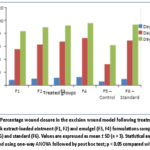 |
Figure 2: Percentage wound closure in the excision wound model following treatment with A. lebbeck extract-loaded ointment (F1, F2) and emulgel (F3, F4) formulations compared with control (F5) and standard (F6).
|
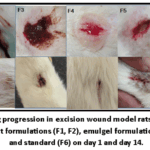 |
Figure 3: Wound healing progression in excision wound model rats treated with A. lebbeck extract-loaded ointment formulations (F1, F2), emulgel formulations (F3, F4), control (F5), and standard (F6) on day 1 and day 14.
|
Discussion
The current study is based on the design and evaluation of the wound healing properties of A. lebbeck bark extract in ointment and emulgel forms. Qualitative phytochemical studies show that A. lebbeck is a good source of flavonoids, phenols, saponins, and terpenoids which are linked with several biological activities such as anti-inflammatory and wound-healing. As noted by Samant et al., The presence of alkaloids, flavonoids, tannins, saponins, and phenolic compounds in A. lebbeck bark suggests its possible use as an anti-inflammatory agent, as this is consistent with the previous studies due to the evidence of notable A. lebbeck extracts in terms of their ability to inhibit the albumin denaturation process by AqEx and MetEx. Topical ethanolic extracts of A. lebbeck bark demonstrated significant anti-inflammatory properties in rat paw edema and granuloma models, which is indicative of the traditional application of ethanolic extracts of A. lebbeck bark as a topical agent in the anti-inflammatory property.15,16 The enhanced diffusion characteristics and spreadibility of emulgel formulations in the current study is similar to the topical formulation science, in which emulgels typically exhibit improved drug release and diffusion into the skin when compared to traditional ointments. The higher release in MetEx emulgel could be attributed to the semi lipophilic character of some of the phytoconstituents such as flavonoid which have greater solubility and partition in gel systems. Other mechanisms have been reported as the cause of the superior wound healing with MetEx, including emulgel form with, especially regarding antioxidant control of oxidative stress at the wound site, provocation of collagen synthesis, and antimicrobial barrier enhancing infection resistance.17-20 Our findings have been supported by a previous experimental study involving A. lebbeck extracts in wound healing, which also showed significant improvements in wound contraction and tensile strength, collagen content and formation of granulation tissue, which is due to A. lebbeck extracts having significant antioxidant enzyme properties and collagen deposition mechanisms.18-21 Another study with A. lebbeck extracts in wind healing studies also reported significant wound contraction and histological improvement with the use of A. lebbeck extracts, other herbal constituents in emulgel formulation which is attributed to the significant role of antioxidant.22,23
Conclusion
The current research showed that Albizia lebbeck bark extracts, especially the methanolic extract (MetEx), substantially improved wound healing when formulated into topical preparations. The superior wound closure seen with MetEx-based emulgel (F4) in the excision wound model can be attributed, in part, to its modulation of inflammatory responses, which is supported by its effective inhibition of egg albumin denaturation. Inflammation regulation is a vital initial process in wound healing, and it may also contribute to decreased tissue damage, enhanced collagen formation, and quicker wound contraction. F4 showed almost complete wound closure (99% by day 14), matching the standard povidone-iodine treatment and outperforming other test and control formulations. These results indicate that the wound-healing effectiveness of A. lebbeck bark extract is backed by its ability to regulate inflammation, along with beneficial formulation attributes. Additional research is necessary to determine which active plant components are responsible and to refine advanced topical treatments for practical use.
Acknowledgement
We are grateful to the Chairman of the Vignan Group of Institutions, Dr. L. Rathaiah, for providing bench space for this research.
Funding Sources
The author(s) received no financial support for the research, authorship, and/or publication of this article.
Conflict of Interest
The author(s) do not have any conflict of interest.
Data Availability Statement
This statement does not apply to this article.
Ethics Statement
The experiment was ethically approved by the Institutional Animal Ethics Committee of the Vignan Institute of Pharmaceutical Technology, registration number 2003/PO/Re/S/18/CCSE.
Informed Consent Statement
This study did not involve human participants, and therefore, informed consent was not required.
Clinical Trial Registration
This research does not involve any clinical trials
Permission to reproduce material from other sources
Not Applicable
Author Contributions
- Vineela Sekharamantri: Data collection, Analysis, Writing- Original Draft
- Satyalakshmi Siragam: Data collection, Analysis, review and & Editing, and Project Coordinator
- Srinivasa Rao Yarraguntla: Data collection, Analysis, Review, & Editing
- Lalitha Srilekha Ramanujam: Data collection, Analysis
References
- Siragam SL. Biomedical applications of phytonanotechnology. Phytonanotechnology. 2022;77:1–10.
CrossRef - Mani U, Srinivasa Rao Y, Vastav M, Persis JK, Satyalakshmi S. Repurposing efavirenz for anticancer therapy with curcumin combination in solid lipid nanoparticle formulation. Indian J Pharm Educ Res. 2025;59(4):1347–1356.
CrossRef - El-Saadony MT, Saad AM, Mohammed DM, Korma SA, Alshahrani MY, Ahmed AE, et al. Medicinal plants: bioactive compounds, biological activities, combating multidrug-resistant microorganisms, and human health benefits—a comprehensive review. Front Immunol. 2025;16:1491777. doi:10.3389/fimmu.2025.1491777.
CrossRef - Ramya Devi D, Sowmiya Lakshna S, Veena Parvathi S, Vedha Hari BN. Investigation of wound healing effect of topical gel of Albizia amara leaves extract. S Afr J Bot. 2018;119:400–409. doi:10.1016/j.sajb.2018.10.005.
CrossRef - Yang Y, Kwon CH, Ham YM, Ha MW. Pharmacological spectrum of substances derived from Albizia julibrissin Int J Mol Sci. 2025;26(16):7778. doi:10.3390/ijms26167778.
CrossRef - Satyalakshmi S. Determination of biological activities of three marine algae collected from Visakhapatnam coast. Asian J Pharm Clin Res. 2017;10(12):274–279.
CrossRef - Nisca A, Tanase C. Approaches to extracting bioactive compounds from bark of various plants: a brief review. Plants. 2025;14(18):2929. doi:10.3390/plants14182929.
CrossRef - Devi D, Singh S, Moond M, Kumari S, Beniwal A, Saini K. Phytochemical analysis and antioxidant potency of stem bark of Albizia lebbeck (L.) (Siris). Int J Pharm Sci Rev Res. 2023;41:1263–1271.
CrossRef - Balekar N, Jain DK, Upadhyay RK. Evaluation of the wound healing potential of Albizzia lebbeck (L.) bark. Thai J Pharma Sci. 2013;37(3):125-133. https://doi.org/10.56808/3027-7922.2072
CrossRef - Siragam S, Bora RR, Nakka V, Yarraguntla SR, PV KK. Diclofenac sodium–curcumin nanogel: an efficient topical agent against inflammation. Indian Drugs. 2024;15(3):1120–1128.
CrossRef - Lakshmi SS, Divya R, Rao YS, Kumari KP, Deepthi K. Emulgel—novel trend in topical drug delivery system: a review. Res J Pharm Technol. 2021;14(5):2903–2906.
CrossRef - Sofrona E, Tziveleka LA, Harizani M, Koroli P, Sfiniadakis I, Roussis V, et al. In vivo evaluation of the wound healing activity of extracts and bioactive constituents of the marine isopod Ceratothoa oestroides. Mar Drugs. 2020;18(4):219. doi:10.3390/md18040219.
CrossRef - Bakasatae N, Kunworarath N, Yupanqui CTT, Voravuthikunchai SP, Joycharat N. Bioactive components, antioxidant, and anti-inflammatory activities of the wood of Albizia myriophylla. Rev Bras Farmacogn. 2018;28(4):444–450. doi:10.1016/j.bjp.2018.05.010.
CrossRef - Abriham H, Paulos B. In vitro antioxidant and antibacterial activity of Albizia lebbeck (L.) Benth stem bark. Sci Technol Arts Res J. 2016;4(2):204–206. doi:10.4314/star.v4i2.25.
CrossRef - Samant SS, Jagtap VA, Kalangutkar P, Morye R, Gadekar A, Rane R, Desai S. Phytochemistry and therapeutic uses of Albizia lebbeck. Flora J. 2023;11(5A). doi:10.22271/flora.2023.v11.i5a.884.
CrossRef - Chaudhuri PK, Ghosh T, Basu S. Evaluation of the anti-inflammatory activity of the aqueous and ethanolic extracts of Albizia lebbeck leaves in rats. J Tradit Complement Med. 2016;6(2):172–175. doi:10.1016/j.jtcme.2014.11.038.
CrossRef - Criollo-Mendoza MS, Contreras-Angulo LA, Leyva-Lopez N, Gutierrez-Grijalva EP, Jimenez-Ortega LA, Heredia JB. Wound healing properties of natural products: mechanisms of action. Molecules. 2023;28(2):598. doi: 10.3390/molecules28020598.
CrossRef - Tasneem R, Khan HMS, Zaka HS, Khan P. Development and cosmeceutical evaluation of topical emulgel containing Albizia lebbeck bark extract. J Cosmet Dermatol. 2022;21(4):1588–1595. doi:10.1111/jocd.14244.
CrossRef - Upadhyay RK, Balekar N, Jain DK, Jain NK. Evaluation of wound healing activity of stem bark of Albizzia lebbeck. Int J Pharm Biol Arch. 2013;4(4):672–677.
- Kokane DD, More RY, Kale MB, Nehete MN, Mehendale PC, Gadgoli CH. Experimental evaluation of Albizia lebbeck stem bark for wound healing activity in mice. Biotechnol Asian J. 2010;7(2):451-456.
- Sharma A, Meena R, Jain R. A comprehensive insight into the phytochemical profile, pharmacological potential, and traditional medicinal uses of Albizia lebbeck (L.) Benth. J Ethnopharmacol. 2022; 289, https://doi.org/10.1016/j.jep.2022.115034
CrossRef - Balekar N, Jain DK, Upadhyay RK. Evaluation of the wound healing potential of Albizzia lebbeck (L.) bark. Thai J Pharm Sci. 2013;37:125–133.
CrossRef - Khan KU, Munir AB, Khan MRU, Siddique W, Iqbal A, Meran-e-T, Shoaib QA. Wound healing activity of an emulgel formulation containing essential oils isolated from Withania somnifera. Chem Pap. 2025;79(10):6667–6679. doi:10.1007/s11696-025-04212-3.
CrossRef

Accepted on: 20-04-2026
Second Review by: Dr. Ramya Rachamanti and Dr. Surendra Kumar Swarnkar
Final Approval by: Dr. Prabhishek Singh