Association of the rs2234671 Polymorphism with Recurrent Urinary Tract Infection Susceptibility in the Bangladeshi Population
 , Sadia Jannat Tauhida1, Md. Mohaimenul Islam Tareq1, Florence Bornali Ratno1, Mohammad Ashik Sheikh1, Md Ridoy Hossain1, Md. Nazmul Hasan Zilani2and Md. Nazmul Hasan1*
 1Department of Genetic Engineering and Biotechnology, Jashore University of Science and Technology, Jashore, Bangladesh.
2Department of Pharmacy, Jashore University of Science and Technology, Jashore, Bangladesh.
Corresponding Author E-mail: mn.hasan@just.edu.bd
DOI : http://dx.doi.org/10.13005/bpj/3458
Download this article as:

Urinary tract infections are one of the most common bacterial infections in the world and recurrent UTI (rUTI) is a major clinical problem. Genetic polymorphisms in the CXCL8 and its receptor, CXCR1, could affect host susceptibility due to their role in recruitment of neutrophils and clearance of bacteria in the urinary tract. The CXCR1 rs2234671 is a Serine-to-Threonine substitution in the IL-8 receptor A protein, associated with several inflammation-related diseases; however, there is limited data available for South Asian populations. The aim of the present study was to explore the possible relationship between the CXCR1 rs2234671 polymorphism and the risk of recurrent UTI in the Bangladeshi population. A case-control study was performed with 109 patients, including 64 patients with rUTI and 45 healthy controls, who were selected from a tertiary care centre at Jashore, Bangladesh. Peripheral blood was used to isolate genomic DNA, and the CXCR1 region (including rs2234671) was amplified by Polymerase Chain Reaction to generate a 205 bp PCR product. A total of 58 participants (34 cases and 24 controls) were genotyped by Sanger sequencing, and data were compared statistically using the chi-square test. All 34 cases had the homozygous GG genotype, and all 24 controls had the heterozygous GC genotype with no CC genotype being observed. There were significant differences in genotype and in allele frequencies between the groups (p < 0.001) and the C allele was inversely correlated with rUTI susceptibility, but deviations from Hardy–Weinberg equilibrium were seen in the controls. These preliminary findings suggest that the CXCR1 rs2234671 polymorphism may be a candidate genetic marker associated with rUTI susceptibility in this population. However, validation in larger independent cohorts and functional studies is required.
KEYWORDS:Bangladeshi Population; CXCR1; rs2234671; Recurrent Urinary Tract Infection; Single Nucleotide Polymorphism
Introduction
One of the most common bacterial illnesses in the world, urinary tract infections (UTIs) impact millions of people each year and place a significant strain on healthcare systems.1Escherichia coli is the most common cause of these infections, which include those of the kidneys, ureters, bladder, and urethra.2 According to epidemiological research, between 50 and 80 percent of women will get a UTI at least once in their lifetime, and between 27 and 44 percent will get recurrent UTIs. The incidence of two or more episodes within six months or at least three episodes within a year is the clinical definition of rUTI.3 Only a small percentage of people experience repeated infections despite comparable environmental exposures, indicating that host genetic variables are important in susceptibility.4
The significance of genetic predisposition in the pathophysiology of rUTIs is becoming more and more evident. A heritable component of disease risk has been supported by family-based research that show a greater prevalence of UTIs among first-degree relatives of afflicted patients.5 Single nucleotide polymorphisms (SNPs) in genes related to immune response pathways have been linked to altering host vulnerability to infection, among other genetic factors.6 The host’s capacity to identify and eradicate uropathogens may change as a result of these polymorphisms’ effects on gene expression, protein structure, and immune function.7
The interleukin-8 (IL-8) signaling axis is one of the most physiologically significant routes in UTI defense. In reaction to bacterial invasion, uroepithelial and immune cells release IL-8, a crucial pro-inflammatory chemokine.8 It is essential for attracting and stimulating neutrophils at the infection site.9 C-X-C chemokine receptor type 1 (CXCR1) and type 2 (CXCR2), which are G protein-coupled receptors expressed on neutrophils, are the main mediators of IL-8’s biological action.10 Among these, CXCR1 is crucial for efficient neutrophil migration, activation, and bacterial clearance in the urinary tract and has a high affinity for IL-8.11
Increased vulnerability to UTIs has been closely linked to dysregulation of the IL-8–CXCR1 signaling system. According to experimental research, compromised CXCR1 activity results in poor neutrophil recruitment and decreased bacterial clearance, which causes tissue damage and prolonged infection.12 This finding is corroborated by clinical research, which shows that decreased CXCR1 expression is linked to an increased risk of rUTIs, especially in women.13 These results imply that individual susceptibility to recurrent infections may be significantly influenced by genetic differences impacting CXCR1 activity.
The single nucleotide polymorphism rs2234671 in the CXCR1 gene has been identified as one of the genetic variants of particular interest. At interleukin-8 receptor A (IL-8RA) protein, this polymorphism causes a missense mutation that replaces serine (Ser) with threonine (Thr).14 This replacement may change the receptor’s structural shape, ligand-binding affinity, or intracellular signaling efficiency even if both amino acids are polar. These functional alterations may hinder neutrophil chemotaxis and activation, hence impairing the host’s capacity to eradicate uropathogens.15
Numerous investigations into the relationship between rs2234671 and UTI susceptibility have produced data supporting its functional relevance. Individual disparities in immunological response, variations in IL-8 levels, and variations in receptor expression have all been associated with CXCR1 gene variants, such as rs2234671. Specifically, a higher incidence of both asymptomatic bacteriuria and symptomatic UTIs has been linked to lower CXCR1 expression linked to specific genotypes 16. Furthermore, research has shown that the genotype distributions of patients with recurrent infections differ from those of healthy controls, indicating that this polymorphism may increase the risk of illness.2
Despite, results from different studies are still inconsistent, which could be explained by environmental factors, population variability, and small sample numbers.17 Additionally, data from South Asian populations-including Bangladesh, where UTIs are extremely common and frequently underreported is conspicuously lacking.18 The distribution and functional significance of rs2234671 may be influenced by genetic diversity and regional environmental factors, highlighting the need for population-specific studies.19 Examining CXCR1’s connection to rUTI is crucial because of its vital role in neutrophil-mediated host defense and the possible functional ramifications of the rs2234671 polymorphism.20 Identifying possible indicators for risk stratification and gaining knowledge into how this genetic variation affects susceptibility to recurrent infections may be beneficial.21
Thus, the goal of this study is to investigate the relationship between the risk of recurrent UTIs and the rs2234671 polymorphism in the CXCR1 gene. The work aims to elucidate the functional genetic variant in regulating host immunological responses, specifically neutrophil-mediated bacterial clearance.3 Additionally, by assessing this connection in the Bangladeshi community, this study aims to close the current gap in population-specific genetic data. The results may help identify potential genetic biomarkers for early risk assessment, better diagnosis, and the development of focused therapeutic and preventive strategies. They are anticipated to further our understanding of the molecular mechanisms underlying rUTI susceptibility.22
Materials and Methods
Study design and participants
This study enrolled with 109 participants: 64 with Urinary Tract Infections and 45 healthy control participants. All UTI cases were diagnosed according to the standard criteria and were recruited from a tertiary care healthcare facility in the Khulna division of Bangladesh. A standardized questionnaire was administered to collect information on demographic characteristics, medical history, medication use, and lifestyle factors.23Patients with a history of chronic systemic diseases, pregnancy, renal or hepatic abnormalities, cardiovascular events and type 1 diabetes mellitus were included in the study. The research was carried out following the principles of the Declaration of Helsinki, and all participants had signed an informed consent before enrolling into the research.
Ethical Approval
The Ethical Review Committee of the Faculty of Biological Science and Technology, Jashore University of Science and Technology, Bangladesh [ERC/FST/JUST/2025-215] approved all procedures pertaining to the collection, handling, and in vivo experiments of human blood, and they were carried out in compliance with institutional and international ethical standards.
Primer Design
Primers for the amplification of the CXCR1 gene region encompassing the rs2234671 (+2607G/C) polymorphism were designed using Primer3Plus and the Integrated DNA Technologies (IDT) OligoAnalyzer tool.24 The human CXCR1 reference sequence (GenBank accession NG_011814.1, Homo sapiens C-X-C motif chemokine receptor 1, RefSeqGene on chromosome 2) was used as the template.25 The forward primer was positioned at nucleotides 7591–7609 and the reverse primer at 7815–7835, yielding an expected amplicon of 205 bp. The SNP of interest (rs2234671) is located at position 7609, where a G→C substitution results in a serine-to-threonine amino acid change at codon 276 of the IL-8 receptor A protein.26
To enable allele-specific amplification, two forward primers were designed with the 3′-terminal nucleotides matching either the G or C allele, paired with a common reverse primer. The primer sequences were as follows:
Table 1: Primer sequences used for PCR amplification of the CXCR1 rs2234671 polymorphism.
| Forward primer 1 (G allele) | 5′-CCCAGGTGATCCAGGAGAG-3′ |
| Forward primer 2 (C allele) | 5′-CCCAGGTGATCCAGGAGAC-3′ |
| Common reverse primer | 5′-TCAGAGGTTGGAAGAGACATT-3′ |
All primers were synthesized commercially and reconstituted in nuclease-free water to a working concentration of 10 µM prior to use.27
Blood sample collection
Peripheral blood samples were collected from each participant using sterile disposable syringes under aseptic conditions. Approximately 1–1.5 mL of venous blood was collected and transferred into EDTA-containing tubes to prevent coagulation. The samples were stored at -20°C and processed for genomic DNA extraction within 1 week.
DNA extraction
The peripheral whole blood was used for genomic DNA extraction, which was modified salting out technique.28 150 uL of whole blood was transferred into a sterile volume 1.5 ml Eppendorf tube and 1 ml of cell lysis solution was added. The mixture was swirled then centrifuged at 4000 rpm for 7.5 minutes at 4 °C. After centrifugation, the supernatant was properly disposed of in a waste bottle with Savlon and the resultant cell pellet was kept. 25 µl of 5 M sodium perchlorate and 100 µl of nuclear lysis buffer was then added and the mixture was gently shaken on a rotary shaker at 30 rpm for approximately 15 minutes at room temperature for the second time. The mixture was incubated at 65°C for 30 minutes to ensure complete nuclear lysis. Following incubation, 125 µl of cold chloroform was added after which, the mixture was gently swirled at 30 rpm in a rotary mixer over a period of 10 minutes and centrifuged at 3000 rpm taking 2.5 minutes. The top aqueous layer was transferred to a new sterile volume of Eppendorf tube 1.5 ml. The desired DNA precipitation was obtained by adding 2 volumes of 70% ethanol to the aqueous phase that was transferred and then inverted gently. The sample was then centrifuged for 10 minutes at 10,000 rpm and a white pellet, similar to cotton wool, of DNA was formed in a separate tube. A DNA pellet was dissolved in 200 µl of TE buffer and allowed to dissolve overnight at 65 °C to get complete dissolution. Lastly, the genomic DNA sample was frozen at -20 C till further analysis.
Gel electrophoresis
Using agarose gel electrophoresis, the isolated DNA’s purity and integrity were evaluated . A 1.5% agarose gel made in 1× Tris-acetate-EDTA (TAE) buffer with ethidium bromide (0.5 µg/mL) was loaded with around 10µL of each DNA sample. After 30 to 40 minutes of electrophoresis at 100 V, DNA bands were seen using ultraviolet (UV) transillumination utilizing a gel documentation system. High-quality genomic DNA appropriate for subsequent molecular studies was indicated by the presence of distinct, complete bands without smearing.
PCR amplification
The 2× ABclonal PCR Master Mix was used for PCR amplification, and the manufacturer’s suggested reagent composition and heat cycling parameters were closely followed.29 Each 25 µL reaction contained 12.5 µL of the 2× Master Mix, 7 µL of template DNA, 0.5 µL of the forward and reverse primers specific for each gene, and 4.5 µL of nuclease-free water, to achieve the final volume. The thermal cycling conditions for the PCR were 45 s at 98 °C followed by 35 amplification cycles of 10 s at 98 °C, 25 s at 60 °C and 30 s at 72 °C. After synthesis at 4–12 °C, a final extension step was done at 72 °C for 5 min, which ensures full synthesis of all amplicons. The PCR products were then run on a 2.5% agarose gel for 40 minutes to allow complete separation of the amplicons. All reactions were performed as per the ABclonal criteria to achieve the highest amplification efficiency, fidelity and reproducibility.
Sanger Sequencing
Total 58 (34 cases and 24 controls) purified PCR amplicons were subjected to Sanger sequencing using the usual procedure used by BdGenome sequencing facilities (Bangladesh) in order to confirm the sequence. After being confirmed on an agarose gel, PCR products were purified by eliminating extra primers and dNTPs using an enzymatic cleanup technique. The purified DNA (10–20 ng/µL) was mixed with 3.2 pmol of forward or reverse primer and sent for sequencing. BigDye Terminator v3.1 chemistry was used to perform cycle sequencing under the typical temperature profile of 25 cycles of denaturation at 96 °C for 10 s, annealing at 50 °C for 5 s, and extension at 60 °C for 4 min.30 An automated capillary electrophoresis device (such as the ABI 3500/3730 Genetic Analyzer) was used to evaluate the extension products after they had been filtered to exclude any unincorporated dyes. The sequencing reads obtained were aligned with the MAFFT program for multiple sequence alignment, using Linux Ubuntu. To ensure an accurate comparison of nucleotide sequences and to verify any sequence variation in the targeted region of the CXCR1 gene, alignment was carried out.
Statistical analysis
The data were analyzed using SPSS software (IBM Corp., Armonk, NY, USA). Data of continuous variables were presented as mean ± standard deviation (SD) while categorical variables were presented as frequencies and percentages. All the continuous variables were analyzed for normality. The independent samples t-test was used to compare the demographic and clinical parameters of the recurrent UTI cases and healthy controls, while the chi-square (χ²) test was used for categorical variables. The genotype and allele frequencies of the CXCR1 rs2234671 polymorphism were obtained using the Sanger sequencing data and direct counting. The standard method used in genetic association studies with cases and controls to test differences in genotype and allele distribution was the chi-square (χ²) test. The Fisher’s exact test was also used to confirm the results of the chi-square test, because some of the contingency tables had cells with zero counts. The Hardy–Weinberg equilibrium (HWE) of the control group was evaluated by chi-square goodness-of-fit test, and the results were compared with the expected genotype frequencies under the assumption of HWE. The association between recurrent UTI susceptibility and the rs2234671 polymorphism was subsequently assessed using the dominant genetic model, which included a genotype of at least one C vs. a GG genotype. All tests were performed with two tails and p<0.05 was regarded as statistically significant.
Results
Genomic DNA extraction
A systematic salting out procedure was used to successfully extract genomic DNA from peripheral blood samples. The technique demonstrated its dependability and effectiveness by producing a consistent DNA yield in every sample. DNA integrity and purity were evaluated using 1.5% agarose gel electrophoresis. Under UV trans-illumination, distinct, crisp, high molecular weight DNA bands with little background noise were seen (Figure 1). There was no sign of RNA contamination, shearing, or DNA deterioration. The strong, clear bands show that proteins and other cellular impurities have been effectively removed, and the DNA yield is excellent. These findings demonstrate that the isolated genomic DNA had sufficient concentration, purity, and integrity to be used in further molecular procedures such PCR, genotyping, sequencing, and other genetic investigations.
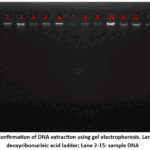 |
Figure 1: Confirmation of DNA extraction using gel electrophoresis. Lane 1:1 Kb deoxyribonucleic acid ladder; Lane 2-15: sample DNA. |
Polymerase Chain Reaction
The CXCR1 gene was successfully amplified using the ABclonal 2× PCR Master Mix under ideal reaction and thermal cycling conditions. A clear and prominent DNA band at roughly 205 bp, which corresponds to the anticipated amplicon size of the CXCR1 target, was seen when the PCR results were electrophoresed on a 2.5% agarose gel (Figure 2). To verify precise fragment size calculation and appropriate band resolution, a 50 bp DNA ladder was employed. According to the predicted molecular weight, the amplified product moved between the 200 bp and 250 bp marker bands. High specificity and efficiency of the PCR conditions were demonstrated by the absence of primer-dimer production or non-specific amplification. These results verify that the CXCR1 gene fragment was successfully amplified, making it appropriate for further molecular and genetic investigations.
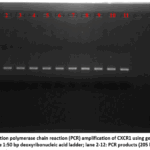 |
Figure 2: Confirmation polymerase chain reaction (PCR) amplification of CXCR1 using gel electrophoresis. Lane 1:50 bp deoxyribonucleic acid ladder; lane 2-12: PCR products (205 bp). |
Sanger Sequencing
CXCR1 PCR amplicons were subjected to Sanger sequencing in order to assess sequence quality and identify any possible genetic variants. Using gene-specific primers, forward-direction sequencing was performed on 58 samples, comprising 34 cases and 24 controls. The chromatograms showed clear, distinct peaks with little background noise and signal ambiguity, indicating precise base calling, and high-quality nucleotide sequence reads were acquired. Effective PCR amplification and effective amplicon purification before sequencing are reflected in the sequence profiles’ constant clarity. There were no noticeable overlapping peaks or significant sequencing artifacts. These results attest to the produced sequences’ dependability and enough quality for subsequent investigations, such as the detection of single nucleotide polymorphisms (SNPs) and other genetic variants within the CXCR1 gene.
rs2234671 polymorphism Distribution and Allelic Frequencies of CXCR1
The rs2234671 polymorphism in the CXCR1 gene was successfully genotyped by Sanger sequencing in 58 participants, comprising 34 recurrent UTI cases and 24 healthy controls. Genotype calls were made from forward-strand chromatograms with clear, unambiguous peaks at the polymorphic site (position 7609 of NG_011814.1), and verified by multiple sequence alignment in MAFFT (Figure 3). The corresponding amino acid alignment at codon 276 of the IL-8 receptor A protein is shown in Figure 4.
The observed genotype and allele frequencies are summarized in Table 02. All 34 recurrent UTI cases carried the homozygous GG genotype (100%), while all 24 healthy controls carried the heterozygous GC genotype (100%). The homozygous CC genotype was not detected in either group. Consequently, the G allele frequency was 1.00 in cases and 0.50 in controls, whereas the C allele frequency was 0.00 in cases and 0.50 in controls.
Table 2: Statistical comparison of genotype and allele frequencies of the CXCR1 rs2234671 polymorphism between recurrent UTI cases and healthy controls.
| Variable | Cases (n = 34), n (%) | Controls (n= 24), n (%) | Statistical test | χ² | df | p-value |
| Genotype distribution | Pearson’s χ² test; Fisher’s exact test | 58.00 | 1 | <0.001 | ||
| GG | 34 (100.0%) | 0 (0.0%) | ||||
| GC | 0 (0.0%) | 24 (100.0%) | ||||
| CC | 0 (0.0%) | 0 (0.0%) | ||||
| Allele distribution | Pearson’s χ² test; Fisher’s exact test | 42.87 | 1 | <0.001 | ||
| G allele | 68 (100.0%) | 24 (50.0%) | ||||
| C allele | 0 (0.0%) | 24 (50.0%) | ||||
| HWE in controls | — | Deviated from HWE | Chi-square goodness-of-fit test | 24.00 | 1 | <0.001 |
Values are presented as n (%). Pearson’s chi-square test was used to compare genotype and allele distributions between recurrent UTI cases and healthy controls. Fisher’s exact test was also considered because some cells contained zero counts. HWE, Hardy–Weinberg equilibrium.
The distribution of genotypes differed significantly between cases and controls (χ² = 58.00, df = 1, p < 0.001), as did the distribution of alleles (χ² = 38.67, df = 1, p < 0.001). Hardy–Weinberg equilibrium (HWE) was tested in the control group; the observed all-heterozygous distribution deviated significantly from HWE expectations (p < 0.001), which is noted as a limitation to be addressed in the Discussion.
Under a dominant genetic model in which carriage of at least one C allele is considered, the C allele was completely absent in cases and universally present in controls, suggesting a possible inverse association between the C allele and recurrent UTI susceptibility in this Bangladeshi cohort. However, given the complete genotype separation between groups and the deviation from Hardy–Weinberg equilibrium in controls, these findings should be interpreted with caution and warrant validation in a larger, independently genotyped sample.
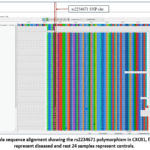 |
Figure 3: Multiple sequence alignment showing the rs2234671 polymorphism in CXCR1, first 34 samples represent diseased and rest 24 samples represent controls. |
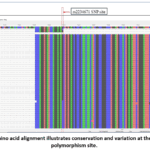 |
Figure 4: Amino acid alignment illustrates conservation and variation at the rs2234671 polymorphism site. |
Discussion
UTIs are one of the most common bacterial infections in the world and are a significant clinical and economic burden, especially in women, who are at higher risk for recurrent UTIs.31 Although environmental exposures are similar, only a portion of people get recurrent infections, which confirms the longstanding hypothesis that there is a significant genetic susceptibility. The IL-8-CXCR1 signaling axis plays a pivotal role in bacterial clearance in the urinary tract mediated by neutrophils, thus making genetic variants that regulate CXCR1 function potential modifiers of recurrent UTI (rUTI) risk.12 In the present study, we focused on a Bangladeshi population to explore the rs2234671 polymorphism of the CXCR1 gene, which is, to our knowledge, the first study into this South Asian population.27
In this study of 58 sequenced individuals, we observed a complete separation of genotypes between the two groups, in which all patients with recurrent UTI were homozygous GG, whereas all healthy controls were heterozygous GC. The CC genotype was not detected in either group. The genotypic and allelic frequencies differed significantly between cases and controls (p < 0.001), and the C allele showed a possible inverse association with rUTI susceptibility in this cohort.
The biological plausibility of an association between rs2234671 and infection susceptibility is supported by previous studies.21 The polymorphism results in an amino acid change (Ser to Thr) in the IL-8 receptor A protein, located in the cytoplasmic tail of the receptor, a region that is important for receptor desensitization, internalization and subsequent signal transduction.32 This substitution is a chemically conservative mutation and is reported to affect the efficiency of receptor signaling and neutrophil responsiveness. rs2234671 has already been associated with changes in susceptibility to various inflammation-related diseases such as breast cancer,33 perihilar cholangiocarcinoma,34 lung cancer and recurrent UTI in Iraqi women. Notably, significant associations of the genotype at rs2234671 and rUTI risk were observed in Iraqi women in the same direction as observed in the present study, but with a much larger difference reported here.2
The significant difference between cases and controls in this study raises the question of whether there is a complete separation of the two groups. This pattern is atypical for genetic association studies, where even highly disease-associated SNPs generally exhibit partial overlap of genotype distributions between affected and unaffected populations.35 Some points should be considered. First, it is noteworthy that the deviation from Hardy–Weinberg equilibrium (HWE) in the control group is the one in which all individuals were heterozygous.36 If HWE were true, then the control population would have about 25% GG, 50% GC and 25% CC genotypes. The present results are subject to interpretation, as deviations from HWE can be attributed to population substructure, non-random sampling, small sample size, and/or selection effects in recruitment.37 Second, the relatively small number of sequences (n = 58 of 200 enrolled subjects) limits the quality and precision of the estimates of genotype frequencies and affects the distribution of the observed genotype frequencies by chance.38 Third, allele frequencies for rs2234671 have not been previously reported in the Bangladeshi population, but reference allele frequency information from global population datasets suggests that allele frequencies may vary among populations, and South Asian populations may have unique distributions that have not been systematically reported.39
The biological mechanism for how the rs2234671 G allele could be more susceptible to rUTI in this cohort aligns with the known function of CXCR1 in host defense.40 Loss of efficiency of CXCR1 signaling has been linked to decreased chemotaxis, impaired bacterial clearance and extended uroepithelial inflammation, which may increase the risk of recurrent infection.13 This could reasonably be extrapolated into a reduced efficiency of the receptor function within the urinary mucosa in this group, which could explain their susceptibility to pyelonephritis and increased pyelonephritis recurrence rates.14 In contrast, all controls had at least one C allele, indicating that it might offer protection through lessened or maintained neutrophil clearance, which would need functional studies to verify the effect.15
There are some points that are limitations of this study. First, the number of individuals genotyped (n = 58) is a subsample of the 109 participants enrolled in the study and therefore the statistical power and generalizability of the results is reduced.38 The remaining samples are being sequenced and will help to give a more complete picture of the genotype frequencies in this population. Second, Larger genotyping and independent validation using an alternative method like restriction fragment length polymorphism (RFLP) analysis or Taqman-based assays, and examination of potential population stratification would help validate the results.17 Third, the study did not look at other CXCR1 polymorphisms (e.g. rs1008562, rs3138060) or other functionally related genes (e.g. CXCR2 and CXCL8) that can contribute together to the susceptibility to rUTIs.4 Fourth, environmental and behavioral risk factors for UTI were documented, but not incorporated into a multivariable model. Lastly, the cross-sectional case-control design does not enable causal inference, and functional studies of the expression levels of CXCR1 and neutrophil activity in genotyped individuals would be necessary to draw inference on a mechanistic link.22
The present study is significant because it provides the first genetic information on the polymorphism of the gene rs2234671 in the Bangladeshi population and a strong candidate genetic marker linked to the susceptibility to rUTI in this population.3 The results highlight the need for population-specific genetic studies of common infections in South Asian communities, which are under-represented. Larger, independent Bangladeshi cohorts of children will be required to confirm the association and to determine the clinical usefulness of CXCR1 signaling as a biomarker for risk-stratification of recurrent UTI , as will functional characterization of CXCR1 signaling and neutrophil function in different genotypic groups.41
Conclusion
This study investigated the association between the CXCR1 rs2234671 (+2607G/C) polymorphism and recurrent urinary tract infection susceptibility in a Bangladeshi population, providing preliminary genetic data from this South Asian community. Sanger sequencing of 58 participants revealed a marked difference in genotype distribution between recurrent UTI cases and healthy controls, with the GG genotype observed among cases and the GC genotype observed among controls. The C allele showed a possible inverse association with rUTI susceptibility, suggesting that this variant may be related to neutrophil-mediated host defense against uropathogens in this population.
These findings support the possible involvement of the IL-8–CXCR1 signaling axis in recurrent urinary tract infection susceptibility and indicate that rs2234671 may be considered a candidate genetic marker for further investigation. However, the observed genotype pattern should be interpreted with caution because of the limited sample size, complete genotype separation between groups, deviation from Hardy–Weinberg equilibrium in the control group, and the absence of prior population-specific data for this variant in Bangladeshi individuals.
Further studies in larger, independent cohorts, employing complementary genotyping methods and incorporating functional analyses of CXCR1 expression and neutrophil activity, are required to validate the present findings and clarify the underlying mechanisms. If confirmed, the rs2234671 polymorphism may help identify individuals at increased risk of recurrent urinary tract infections and may contribute to future risk assessment strategies in South Asian populations.
Acknowledgement
We deeply thank the Department of Genetic Engineering and Biotechnology, Jashore University of Science and Technology for supporting this study.
Funding Sources
The author(s) received no financial support for the research, authorship, and/or publication of this article.
Conflict of Interest
The authors do not have any conflict of interest.
Data Availability Statement
The manuscript incorporates all datasets produced or examined throughout this research study.
Ethics Statement
This study has received ethical clearance from ethical standards approved by the Ethical Review Committee, Faculty of Biological Science and Technology, Jashore University of Science and Technology[Ref: ERC/FBS/JUST/2025-215].
Informed Consent Statement
This study has received written informed consent from all participants.
Permission to reproduce material from other sources
Not Applicable
Clinical Trial Registration
This research does not involve any clinical trials
Authors’ Contribution
- Biplob Kanti Biswas: Conceptualization, Study Design, Sample Collection, Writing –Original Draft.
- Sadia Jannat Tauhida: Conceptualization, Study Design, Sample Collection, DNA Extraction, PCR Amplification, Sanger Sequencing, Writing – Original Draft.
- Md. Mohaimenul Islam Tareq: Study Design, Sample Collection, DNA Extraction, PCR Amplification, Writing – Original Draft.
- Florence BornaliRatno: DNA Extraction, PCR Experiments, Writing – Original Draft.
- Mohammad Ashik Sheikh: Study Design, Sequence Alignment Analysis.
- Md Ridoy Hossain: DNA Extraction, PCR Experiments, Writing – Original Draft
- Md. Nazmul Hasan Zilani: Study Design, Manuscript Review, Writing – Review & Editing.
- Md. Nazmul Hasan: Supervision, Study Design, Data Analysis, Manuscript Review, Writing – Review & Editing, Final Approval.
References
- Barnett BJ, Stephens DS. Urinary tract infection: an overview. The American journal of the medical sciences. 1997;314(4):245-249.
CrossRef - Abbas HM, Al-Mathkhury HJF. Association between the rs2234671 polymorphism and the risk of recurrent urinary tract infections in Iraqi women. Meta Gene. 2020;26:100763.
CrossRef - Naser HH, Kadhim MJ, Almhanna H. Investigating the impact of the genetic variant CXCR1 (rs2234671) in individuals with urinary tract infections. Human Antibodies. 2024;32(1):9-18.
CrossRef - Sarker P, Pereira GMV, Khullar V, Yu J, Cartwright R. VDR, CXCR1, CXCR2, PSCA Polymorphisms and Recurrent Urinary Tract Infections in Women: Genetic Association Study. International Urogynecology Journal. 2024;35(3):695-701.
CrossRef - Scholes D, Hawn TR, Roberts PL, et al. Family history and risk of recurrent cystitis and pyelonephritis in women. The Journal of urology. 2010;184(2):564-569.
CrossRef - Hawn TR, Scholes D, Li SS, et al. Toll-like receptor polymorphisms and susceptibility to urinary tract infections in adult women. PloS one. 2009;4(6):e5990.
CrossRef - Zaffanello M, Malerba G, Cataldi L, et al. Genetic risk for recurrent urinary tract infections in humans: a systematic review. BioMed Research International. 2010;2010(1):321082.
CrossRef - Agace WW, Hedges SR, Ceska M, Svanborg C. Interleukin-8 and the neutrophil response to mucosal gram-negative infection. The Journal of clinical investigation. 1993;92(2):780-785.
CrossRef - Ko Y-C, Mukaida N, Ishiyama S, et al. Elevated interleukin-8 levels in the urine of patients with urinary tract infections. Infection and immunity. 1993;61(4):1307-1314.
CrossRef - Murphy PM. Neutrophil receptors for interleukin-8 and related CXC chemokines. 1997:311-318.
- Godaly G, Proudfoot AE, Offord RE, Svanborg C, Agace WW. Role of epithelial interleukin-8 (IL-8) and neutrophil IL-8 receptor A in Escherichia coli-induced transuroepithelial neutrophil migration. Infection and immunity. 1997;65(8):3451-3456.
CrossRef - Frendéus B, Godaly G, Hang L, Karpman D, Lundstedt A-C, Svanborg C. Interleukin 8 receptor deficiency confers susceptibility to acute experimental pyelonephritis and may have a human counterpart. The Journal of experimental medicine. 2000;192(6):881-890.
CrossRef - Smithson A, Sarrias MR, Barcelo J, et al. Expression of interleukin-8 receptors (CXCR1 and CXCR2) in premenopausal women with recurrent urinary tract infections. Clinical and Vaccine Immunology. 2005;12(12):1358-1363.
CrossRef - Artifoni L, Negrisolo S, Montini G, et al. Interleukin-8 and CXCR1 receptor functional polymorphisms and susceptibility to acute pyelonephritis. The Journal of urology. 2007;177(3):1102-1106.
CrossRef - Javor J, Bucova M, Cervenova O, et al. Genetic variations of interleukin‐8, CXCR1 and CXCR2 genes and risk of acute pyelonephritis in children. International journal of immunogenetics. 2012;39(4):338-345.
CrossRef - Hawn TR, Scholes D, Wang H, et al. Genetic variation of the human urinary tract innate immune response and asymptomatic bacteriuria in women. PloS one. 2009;4(12):e8300.
CrossRef - Han SS, Lu Y, Chen M, Xu YQ, Wang Y. Association between interleukin 8‐receptor gene (CXCR1 and CXCR2) polymorphisms and urinary tract infection: evidence from 4097 subjects. Nephrology. 2019;24(4):464-471.
CrossRef - Chowdhury SS, Tahsin P, Xu Y, Mosaddek ASM, Muhamadali H, Goodacre R. Trends in antimicrobial resistance of uropathogens isolated from urinary tract infections in a tertiary care hospital in Dhaka, Bangladesh. Antibiotics. 2024;13(10):925.
CrossRef - Gond DP, Singh S, Agrawal N. Testing an association between TLR4 and CXCR1 gene polymorphisms with susceptibility to urinary tract infection in type 2 diabetes in north Indian population. Gene. 2018;641:196-202.
CrossRef - Lundstedt A-C, Leijonhufvud I, Ragnarsdottir B, Karpman D, Andersson B, Svanborg C. Inherited susceptibility to acute pyelonephritis: a family study of urinary tract infection. The Journal of infectious diseases. 2007;195(8):1227-1234.
CrossRef - Yu J, Pereira GMV, Allen-Brady K, et al. Genetic polymorphisms associated with urinary tract infection in children and adults: a systematic review and meta-analysis. American journal of obstetrics and gynecology. 2024;230(6):600-609. e3.
CrossRef - Isali I, Wong TR, Batur AF, et al. Recurrent urinary tract infection genetic risk: A systematic review and gene network analysis. International Urogynecology Journal. 2024;35(2):259-271.
CrossRef - Anger J, Lee U, Ackerman AL, et al. Recurrent uncomplicated urinary tract infections in women: AUA/CUA/SUFU guideline. The Journal of urology. 2019;202(2):282-289.
CrossRef - Untergasser A, Cutcutache I, Koressaar T, et al. Primer3—new capabilities and interfaces. Nucleic acids research. 2012;40(15):e115-e115.
CrossRef - Sayers EW, Cavanaugh M, Clark K, et al. GenBank 2024 update. Nucleic Acids Research. 2024;52(D1):D134-D137.
CrossRef - Lundstedt A-C, McCarthy S, Gustafsson MC, et al. A genetic basis of susceptibility to acute pyelonephritis. PloS one. 2007;2(9):e825.
CrossRef - Lee AC, Mullany LC, Koffi AK, et al. Urinary tract infections in pregnancy in a rural population of Bangladesh: population-based prevalence, risk factors, etiology, and antibiotic resistance. BMC pregnancy and childbirth. 2019;20(1):1.
CrossRef - Miller SA, Dykes DD, Polesky H. A simple salting out procedure for extracting DNA from human nucleated cells. Nucleic acids research. 1988;16(3):1215.
CrossRef - Kb M. Specific synthesis of DNA in vitro via a polymerase-catelyzed chain reaction. Methods Enzymol. 1987;155:335-50.
CrossRef - Kieleczawa J. Simple modifications of the standard DNA sequencing protocol allow for sequencing through siRNA hairpins and other repeats. Journal of biomolecular techniques: JBT. 2005;16(3):220.
- Medina M, Castillo-Pino E. An introduction to the epidemiology and burden of urinary tract infections. Therapeutic advances in urology. 2019;11:1756287219832172.
CrossRef - Raghuwanshi SK, Su Y, Singh V, Haynes K, Richmond A, Richardson RM. The chemokine receptors CXCR1 and CXCR2 couple to distinct G protein-coupled receptor kinases to mediate and regulate leukocyte functions. The Journal of Immunology. 2012;189(6):2824-2832.
CrossRef - Gallegos-Arreola M, Briseño-Zuno C, Figuera L, et al. The rs1008562, rs2234671, and rs3138060 polymorphisms of the CXCR1 gene are associated with breast cancer risk in a Mexican population. European Review for Medical & Pharmacological Sciences. 2020;24(19)
- Lurje I, Czigany Z, Bednarsch J, et al. Genetic variant of CXCR1 (rs2234671) associates with clinical outcome in perihilar cholangiocarcinoma. Liver Cancer. 2022;11(2):162-173.
CrossRef - Hirschhorn JN, Daly MJ. Genome-wide association studies for common diseases and complex traits. Nature reviews genetics. 2005;6(2):95-108.
CrossRef - Wigginton JE, Cutler DJ, Abecasis GR. A note on exact tests of Hardy-Weinberg equilibrium. The American Journal of Human Genetics. 2005;76(5):887-893.
CrossRef - Rodriguez S, Gaunt TR, Day IN. Hardy-Weinberg equilibrium testing of biological ascertainment for Mendelian randomization studies. American journal of epidemiology. 2009;169(4):505-514.
CrossRef - Hong EP, Park JW. Sample size and statistical power calculation in genetic association studies. Genomics & informatics. 2012;10(2):117.
CrossRef - Chiang CW, Mangul S, Robles C, Sankararaman S. A comprehensive map of genetic variation in the world’s largest ethnic group—Han Chinese. Molecular biology and evolution. 2018;35(11):2736-2750.
CrossRef - Hang L, Frendéus B, Godaly G, Svanborg C. Interleukin-8 receptor knockout mice have subepithelial neutrophil entrapment and renal scarring following acute pyelonephritis. The Journal of infectious diseases. 2000;182(6):1738-1748.
CrossRef - Ragnarsdottir B, Jönsson K, Urbano A, et al. Toll-like receptor 4 promoter polymorphisms: common TLR4 variants may protect against severe urinary tract infection. PloS one. 2010;5(5):e10734.
CrossRef
 PlumX:
 Views: 603
  PDF Downloads:
108
PDF Downloads:
108