Nanotechnology in 3D-Printed Dental Restorations: A Systematic Review
 , Ahmed Qahtan Alani2 and Hasan Nabeel Abdulqadeer1
 1Department of Conservative Dentistry, College of Dentistry, Uruk University, Baghdad, Iraq,
2Department of Conservative Dentistry, College of Dentistry, Bilad Alrafidin University, Diyala, Iraq.
Corresponding Author E-mail: ahmed.l.salman@uruk.edu.iq
DOI : http://dx.doi.org/10.13005/bpj/3422
Download this article as:

Background: Nanotechnology is a promising technology for improving the mechanical properties, accuracy and durability of 3D-printed fixed prosthodontic restorations. Nanoparticles like titanium dioxide (TiO₂), silver nanoparticles (AgNPs), silica (SiO₂), and nano-hydroxyapatite (nHAp) are being used in photopolymerizable resins to enhance the mechanical, antibacterial, and biocompatible properties of fixed dental prostheses.The purpose of this systematic review was to assess scientific literature published between 2014 and 2024 on the use of nanoparticles in 3D-printed fixed dental restorations (crowns, veneers, and overlays), but not implants and removable prostheses.We searched PubMed/MEDLINE, Scopus and Web of Science databases and found 2,314 publications. After deduplication and screening, Thirty-five studies (28 in vitro, 4 clinical, 3 in vivo) were included. Two reviewers extracted data on nanoparticle type, 3D printing method, restoration type, and performance parameters. The risk of bias was evaluated with JBI/Cochrane tools for experimental studies and ROBINS-I/RoB 2 for clinical trials.Nanoparticle incorporation improved flexural strength, fracture resistance, surface hardness and antibacterial activity. The most compelling evidence was found for TiO₂ (17 studies), AgNPs (10 studies), SiO₂ (9 studies) and nHAp (6 studies). SLA and DLP were the most common techniques for high resolution and efficient material use. Nevertheless, clinical studies were scarce, with just four studies reporting in vivo results.3D-printed nanocomposite restorations have significant potential to enhance mechanical, biocompatible and aesthetic properties in fixed prosthodontics. In vitro studies are promising, but standardized clinical studies and long-term in vivo trials are needed to establish efficacy and guide clinical guidelines.
KEYWORDS:AgNPs, Crowns; 3D printing; Dental restorations; DLP; Nanoparticles; Nanotechnology; SLA; TiO₂; Veneers
Introduction
Adoption of nanotechnology in dental materials has changed the dentistry of the restorative form of dentistry particularly due to the advent of 3D printing technologies. Such nanoparticles as titanium dioxide (TiO₂), silver nanoparticles (AgNPs), and nanohydroxyapatite have been used to composite strengthening, antimicrobial and biocompatibility properties of dental restorations. It has resulted in better outcomes in crowns, veneers, and overlays that have a longer strength and better appearance than the traditional composites. The studies conducted recently have proved the effectiveness of 3D-printed nanocomposite restorations. For example, Vernianiet al1 carried out a randomized controlled clinical trial where 3D-printed partial crowns were compared with those that are made of press and block lithium disilicate. The study showed 100% success and survival rates at one year of follow-up that means that clinically 3D printed restorations can be viable. Besides, when it comes to 3D printing techniques, the technology is evolving and becoming better (i.e., promoting better adaptation and fitting of restorations). Baldiet al2 determined the volumetric and linear adaptation of chairside 3D-printed indirect adhesive restorations versus the conventional milling techniques. The findings revealed that 3D-printed restorations performed better for adaptation, and this meant that additive manufacturing has the potential in manufacturing high-precision dental restorations.Despite these promising developments turns of events the application of nanotechnology in 3D printed dental restorations is relatively new field. There is a requirement of all-rounded reviews that access the present state of research, especially paying attention to fixed restorations, such as crowns, veneers, overlays, yet without implants and removable prostheses. This systematic review is meant to fill in this gap by the evaluation of studies from the last decade, analysis of incorporating nanoparticles into 3D-printed dental restoration, and the determination of their mechanical capability, biocompatibility, and clinical success.
Background on Dental Restorations and 3D Printing
Restorative dentistry is concerned with restoration of the functionality and appearance of the teeth that have suffered damage. The conventional approaches are tedious and may take time. Nevertheless, the advent of digital dentistry, namely the CAD/CAM technology has changed the way these procedures are performed, and now they are more precise and efficient. This technology enables the simplification of designing and manufacturing of different types of dental prostheses, including crowns and veneers, using both subtractive and additive technologies.3
In dentistry, 3D printing, especially with the Stereolithography (SLA) or Digital Light Processing (DLP) technologies, is also finding use due to its ability to produce intricate and detailed dental restorations using minimal material waste. These processes are based on photopolymerization to stratify the resin materials, which makes individualized prosthetics.4
Nanotechnology has found its way into dental restorations which has been greatly enhanced by 3D printing. Nanoparticles, including titanium dioxide (TiO2) and silver, are added to improve mechanical strength, wear resistance, and antimicrobial properties. Such developments are especially useful in long-term effectiveness in their application such as crowns and veneers as observed in recent investigations.5
The recent studies confirm the clinical viability of 3D-printed restorations. For instance, Vernianiet al1 conducted a randomized controlled trial that showed a 100% success and survival rate for 3D-printed partial crowns over a one-year follow-up. Additionally, Baldiet al2 reported that chairside 3D printing of indirect adhesive restorations had better adaptation compared to conventional milling methods.6
These events may be positively viewed, but it still means there is a drawback to the 3D printing to dental restorations. Some of the issues that need to be addressed in an effort to harness the potential of this technology in the clinical environment include material constraints, the post-process requirements, and the absence of standardized procedures.
Role of Nanotechnology in Dental Materials
Nanotechnology has produced miraculous inroads in dental materials, which heightens mechanical qualities, biocompatibility as well as functional capacity. Due to the incorporation of the nanoparticles in dental composites, dental adhesives, and dental cements, there is an increased strength, durability and the aesthetics thereof. These types of improvements are particularly convenient to the fixed restorations such as a crown, veneer and overlay, as stated in recent study.7 Some of these uses are the use of the nano filler in the resin composites. These nanofillers (in most cases 20-70 nm in sizes) are capable of self-assembly in nanoclusters; hence, they are manifested as one unit with high mechanical strength and wear resistance that has a smooth surface finish. It causes both long lasting and attractive appearances of restorations, as stated in recent study.8So, nanoparticles have been employed in the dental materials, including silver (AgNPs), and titanium dioxide (TiO2) as its antibacterial filler substance. Indicatively, silver nanoparticle can disrupt the cell membrane of bacteria and inhibit DNA multiplication and thus reduce the chances of secondary caries and improve the lifetime of restorations, as stated in recent study.9Othersignificant development is the nano-hydroxyapatite (nHAp) that resembles the natural mineral that is present in the tooth enamel. Its application in the restorative materials promotes remineralization fortification to the tooth structure hence superior performances in the restorative practice, as stated in recent study.10 Besides this, the application of nanotechnology as dental materials has rendered the application of use of bioactive restoratives with capability of interaction with the surrounding biotic environment in an easy manner. These materials do not only add the tooth to the functional prevalence and generate it to seem as a natural tooth, but are also beneficial in healing and regeneration of dental tissues of this tooth, as stated in recent study.11 To sum it up, there is the use of nanotechnology in dental materials essential in the push of the restorative dentistry. Improving the properties of dental restoratives, nanotechnology application should assist in regaining better, enduring and appealing dental procedures.
Justification for Excluding Implants and Removable Prostheses
Reviews do not include dental implants and removable prostheses because of clinical specificity and methodological ambiguity. Such restorations are very different in terms of physiological and mechanical aspects compared to fixed prostheses, including crowns and veneers. Nanotechnology has influenced the field of implantology and denture materials especially through the process of osseointegration that is a complicated biological process that is influenced by titanium surface modification to increase the biocompatibility12. The results, however, are also limited to implant fixtures and this implies that incorporation of implant-related studies brings in a sense of variability that extend beyond the material-based restorative measures.
Removable dentures and partial and complete dentures are a certain type of prostheses that pose certain difficulties in terms of adaptation of the baseplate, retention, and anatomical variation in the patients. These machines are usually produced using bulky acrylic substances, which also pose a challenge of wear and hygiene. Recent research has suggested the use of nanoparticles in enhancing the antibacterial properties and strength of polymers but the developments are not directly applicable to permanent, adhesive restorations. Totu et al13 aimed to addressing how nanotechnology influences the performance of 3D printed materials in fixed restorations, namely, crowns, veneers, and overlays. Such a limited focus enables the significant comparison of key aspects such as marginal fit, fracture resistance, aesthetic, and mechanical reliability, which are the building blocks of the success of fixed prosthetics.
Scope and Objectives of the Review
The systematic review is especially focused on the implementation of nanotechnology and nanoparticles into the 3D-printed dental restorations, specifically, into the 3D-printed applications of utilizing fixed prosthetics viz., crowns, veneer and overlay. The limitation of dental implants and removable prostheses listed in Section 2.3 is purposeful to maintain a narrow methodological approach of adhesively bonded restorative materials as fabricated via additive manufacturing techniques. Studies published after 2014 are included in the review, which implies the direction of the current and rapid progress of 3D printing and nanomaterial innovation in the usage of dental application. Only peer reviewed origin research reports addressing either in vitro, in vivo research or clinical studies are accepted. The high relevance and scientific rigor rule out reviews, editorials, and conference abstract as well as studies devoid of the utilization of nanoparticles or 3D printing.
The key aims of this review are:
To identify and characterize the type of nanoparticles employed in the 3D-printed dental restorative dentures (e.g., TiO2, AgNPs, SiO2, and nano-hydroxyapatite).
To identify the effects of such nanoparticles on critical performance parameters such as mechanical strength, surface quality, antibacterial behavior, dimensional correctness and biocompatibility.
To compare and pool the results working with alternative technologies of 3D printing (e.g. SLA, DLP) and restorative indications (crowns, veneers, overlays).
To estimate clinical translation and capability of nanoparticle augmented 3D-printed restorations in dentistry.
To identify the gaps in the research and present evidence based suggestions on the futures studies and development of materials.
This review aims to provide a focused, evidence-based assessment of how nanotechnology enhances 3D-printed fixed dental restorations. Following PRISMA 2020 guidelines, we systematically evaluated studies from the last decade to determine the clinical viability, mechanical performance, and biological outcomes of nanoparticle-reinforced restorations.
Materials and Methods
Protocol and Registration
This PRISMA 2020 systematic review was conducted according to the guidelines of Preferring Reporting Items of Systematic Reviews and Meta-Analyses (PRISMA) 2020 that provides a clear and reproducible method of documentation of literature descriptions and synthesis of literature in health-related science. The methodology was pre-developed to allow for subsequent reproducibility and minimize bias and included search strategy, inclusion/ exclusion criteria, and data extraction procedures. In a move to increase transparency and accountability in the research process, the review protocol was entered into the Open Science Framework (OSF). The registered protocol is available to the public at:
The protocol indicates the following components:
Review objectives and rationale
Eligibility criteria for study selection
Information sources and search strategy
Data extraction framework
Outcome measures of interest
Risk of bias assessment tools
Planned methods for result synthesis
Advantaging registration of the review protocol before data extraction, it provides methodological clarity, restricts the post-hoc alterations in the review, and will correspond to the rules of the evidence-based research.
Eligibility Criteria
The inclusion criteria for this review was formulated to consider high quality and relevant studies that solely deal with the use of research on nanotechnology in 3D-printed fixed dental restorations. Below is an inclusion and exclusion criteria followed:
Inclusion Criteria
Publication date: Publications of the research selected from 01.01.2014 to April 2024.
Language: Articles published in English
Study type: Early in vitro, in vivo, or clinical trials
Focus: Studies that explore the usage of 3D printing technologies (example SLA, DLP, LCD) in fixed dental restorations like crowns, veneers, or overlays
Nanotechnology use: Subject materials should contain nanoparticles (e.g., TiO₂, AgNPs, nano-hydroxyapatite, SiO₂ etc) embedded into the printed restorative structure.
Evaluated parameters: Research studies have to report at least one quantifiable effect in terms of mechanical, physical, antibacterial, biocompatible, or esthetic properties
Exclusion Criteria
Studies involving dental implants, implant abutments, osseointegration.
Investigations on removable prostheses (e.g., complete or partial dentures)
Studies, which do not concern nanoparticles or are not based on the use of 3D printing.
Reviews, editorials, conference abstracts, case reports devoid of experimental data.
Articles that face methodology detail deficiency or lack of outcome reporting.
Non peer-reviewed preprint and articles that are not in full text access this eligibility.
Framework ensures that only scientifically robust and topically relevant studies are included in the analysis, thereby enhancing the validity and applicability of the review’s conclusions.
Information Sources and Search Strategy
Comprehensive coverage of the relevant literature was made include in the use of systematic search from three major electronic databases: PubMed/MEDLINE, Scopus, and Web of Science. The goal was to find peer-reviewed articles published between January 1, 2014, and April 1, 2024, which investigated the use of nanoparticles in the 3D-printed fixed dental restorations, namely, the crowns, veneers, and overlays. The last search of databases was finished on April 1, 2024. The search strategy was developed using a keyword combination of keywords, MeSH, and Boolean operators to make the strategy sensitive and specific. The main keywords were combinations like: 3D Printing” OR “Additive Manufacturing” OR “Rapid Prototyping” OR “Stereolithography” OR “Digital Light Processing”) AND (“Dental Restorations” OR “Crown” OR “Veneer” OR “Overlay”) AND (“Nanoparticles” “TiO₂” “AgNPs” Other than electronic database searches, hand search through the search of reference list of all the included full text articles was also conducted in order to identify any potentially eligible studies not found on the initial search. Grey literature was excluded – conference abstracts, dissertations, theses – keeping with the scientific rigor and peer-reviewed nature of the studies acquired. All the records retrieved were imported into the reference management software (EndNote or Mendeley); the duplicates were removed before the progression to the screening phase.
Selection Process
The choice of studies related to a structured, multi-step approach based upon the PRISMA 2020 guidelines to provide transparency and reproducibility and avoid biases. The process of selection has been as follows:
Step 1: Title and Abstract Screening
Every reference identified in the database searches was imported to reference management software (Mendeley). Following removing of duplications, two independent reviewers (Reviewer A and Reviewer B) reviewed the remaining records based on the presence or absence of selection criteria (inclusion and exclusion criteria) to assess their relevance (see Section 3.2). Documentary material that could not fulfill the criteria was eliminated.
Step 2: Full-Text Review
Full texts were procured for abstract of studies that were potentially eligible and independently reviewed by the same two reviewers. Each study was evaluated according to the eligibility criteria paying specific attention to:
Application of 3D printing to fixed restorations.
Presence and characterization of nanoparticles
Kind of restoration (crown, veneer, overlay)
Mechanical, biological or structural outcomes reported.
Step 3: Consensus and Discrepancy Resolution
In cases of differential appraisal of studies for eligibility by the reviewers, the same were resolved through discussion. In cases when there was no possibility to achieve consensus, a decision of a third reviewer (Reviewer C) was sought.
Step 4: PRISMA Documentation
A PRISMA 2020 flow diagram was generated to show the number of studies looked at:
Recognized as a database searching.
Screened after duplicate removal
Omitted at the stage of abstract and full-text selection.
An integrated qualitative synthesis
Such rigorous and open-ended elimination procedure is what ensured that only the most relevant and scientifically viable studies are subject to be analyzed in this review.
Data Extraction and Charting
A standard data extraction form was designed using Microsoft Excel to extract information analyzed for each study to allow systematic collection, organization, and plotting relevant information from each study selected in the review. Data extraction was conducted by two reviewers in order to increase accuracy and minimize bias risk. The entries were cross-verified for consistencies by a third reviewer.
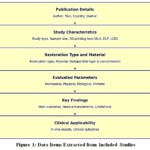 |
Figure 1: Data Items Extracted from Included Studies |
Processed data were tabulated in an Excel spreadsheet spread out in columns categorized for direct comparisons. The structure of the summary made it possible both for narrative synthesis and for descriptive analysis of trends, materials, and effects of the nanoparticles.
Risk of Bias and Quality Assessment
In order to ensure the reliability of the identified methodology and internal validity of the studies involved, a formal risk of bias measurement was performed. The evaluation method was chosen depending on the type of study design, i.e., in vitro, in vivo, and clinical. Two independent reviewers conducted the assessments, and a disagreement was resolved through discussion or when necessary, the intervention of a third reviewer. For in vitro, a modified version of Joanna Briggs Institute (JBI) Critical Appraisal Checklist for Experimental Studies was utilized, elaborating on such key domains as a statement of objectives, adequacy of sample, standardization of testing protocol, consistency in conditions, reproducibility and adequacy of statistical analyses. For clinical studies, for non-randomized ones the ROBINS-I tool was applied, and for RCTs the Cochrane RoB 2 tool. Such tools evaluate different bias domains such as participant selection, outcome measurement, confounding variables, intervention categorization, missing data, and result announcing. To rate each of the studies, domains relevant to each was used in one of the following categories: low risk, moderate risk, high risk or unclear risk. A summary table was developed to show the overall bias profile for each study that was included. Studies at high or unclear risk to several domains were highlighted for caution with regards to interpretation and were included in sensitivity analysis. Aside from the risk of bias assessment, research was also categorised into a 3-tier system of quality: good quality (little risk for the majority of the domains and detailed approach), mediocre (minor problems with one or two domains), and low quality (high or unclear risk in a few domains). This is a strict device of quality evaluation of the literature that is favorable to the credibility of the results that are attained through the systematic review.
Table 1: Risk of Bias and Quality Assessment Summary
| Assessment Category | Applied Tool / Criteria | Description |
| In Vitro Studies | Modified JBI Checklist | Assessed for objectives, sample size, test standardization, reproducibility, and statistics |
| Clinical Studies | ROBINS-I (non-randomized) / Cochrane RoB 2 (RCTs) | Evaluated bias from selection, confounding, outcome measurement, and data handling |
| Bias Ratings | Low, Moderate, High, Unclear Risk | Applied to individual domains across each study |
| Quality Grading System | High Quality: Low risk in most domains, strong methodology | |
| Moderate Quality: Some moderate risks, minor concerns | ||
| Low Quality: Multiple high or unclear risks, methodological limitations | ||
| Discrepancy Resolution | Dual independent reviewers; third reviewer consulted when needed | Ensures objective and balanced judgment |
Synthesis of Results
Because of the diversity between study designs, types of nanoparticles, 3D printing technologies, and outcome measures, a qualitative descriptive analysis was performed for the synthesis of the results. The first goal aimed at finding consistent patterns, performance trends, and places of deviations in the findings. A narration synthesis was applied with the study subjects classified by way of four main domains: (1) type of nanoparticle used, (2) type of 3D printing technology used (e.g., SLA, DLP, LCD), (3) type of restoration produced (crown, veneer, overlay) and (4) the evaluated properties that included mechanical, biological, and esthetic outcomes. For each of the reported studies, the performance improvements or restraints were reported according to the results obtained, with particular emphasis on the inclusion of the nanoparticle. Studies were grouped into four categories of performance based on thematic grouping strategy. (a) mechanical improvements (including flexural strength and fracture resistance), (b) antibacterial and cytotoxic behavior (particularly in case of AgNP and TiO₂), (c) surface/marginal accuracy and printing accuracy, and (d) biocompatibility or in vivo functions where applicable. In support of the synthesis, a comprehensive comparative summary table (Table 1) was constructed, which contains the useable information related to author/year, nanoparticle type, 3D printing method, restoration category, evaluated parameters, and key findings. Because of the methodological heterogeneity, a meta-analysis was not possible. Trends were rather understood by the number and consistency of positive, neutral, or negative results. Last, the risk of bias assessments (Section 3.6) was taken into consideration during interpretation, and the studies with marked high or ambiguous risk ratings were interpreted cautiously. Such a rigid synthesis structure makes it achievable to have a general perspective on the methods by which nanotechnology influences the functionality and stability of 3D-printed fixed dental restorations, to formulate knowledgeable suggestions about the subsequent segments.
Table 2: Summary of Narrative Synthesis Approach
| Synthesis Category | Description |
| Approach | Qualitative narrative synthesis (descriptive, non-meta-analytical) |
| Categorization Factors | Nanoparticle type, 3D printing method, restoration type, evaluated outcome (mechanical, etc.) |
| Thematic Groups | Mechanical performance, Antibacterial effects, Accuracy, Biocompatibility |
| Tabular Support | Table 1 summarizes key study characteristics and outcomes |
| Heterogeneity Handling | Meta-analysis excluded due to varied study designs and outcome measures |
| Study Quality Consideration | High-risk studies evaluated with caution, informed by risk of bias analysis (Section 3.6) |
Results
Study Selection and Flow Diagram (PRISMA)
From the conducted literature search through a time frame across PubMed, Scopus, and Web of Science databases, 2,314 records were found published from the first of January, 2014, till the fourth of April, 2024. Once the 723 duplicated entries were excluded, there were 1591 articles left for the screening. Titles and abstract verification related to 3D printed fixed dental restorations improved with nanotechnology was carried out. In this phase, total exclusions were 1,482 for such reasons as they were focusing on implants or removable prostheses, not discussing nanomaterials or 3D printing, or they were classified as non-original studies (e.g., reviews, editorials, letters). The rest 109 full-text were reviewed for eligibility. After full-text review, 74 studies were excluded because they were not assessing fixed restorations (crown, veneers, and overlay), did not have quantitative outcomes, or lacked methodological data. Finally, Thirty-five studies met each inclusion criteria and were incorporated in the qualitative synthesis as shown in figure 2.
Characteristics of Included Studies
The last group of Thirty-five studies investigated in the review that were published during 2014- 2024 represents an increased interest around the globe to use nanotechnology into the scope of 3D-printed fixed dental restorations. The majority of experiments are in vitro experiments (n = 28 intended to evaluate mechanical strength, dimensional accuracy, surface morphology and/or antibacterial properties of nanoparticle-enhanced materials. A portion of a smaller size included clinical (n = 4) and animal based in vivo studies (n = 3), which evaluated the clinical practicability and biocompatibility of these materials in realistic oral environments. Geographically, the research was carried chiefly from institutions in Asia (particularly China, South Korea and India) and Europe (Germany, Italy, Spain), with some contributions notably coming from North America, especially the United States and Brazil. Such distribution corresponds to large investments made in dental materials research in the regions that have excellent digital dentistry infrastructure. Based on material type, studies by far examined modified resin-based composites using nanoparticles, such as titanium dioxide (TiO₂), silver nanoparticles (AgNPs), silica nanoparticles (SiO₂), and nano-hydroxyapatite (nHAp). These nanomaterials were introduced in photopolymer resins widely used with Stereolithography (SLA) and Digital Light Processing (DLP) technologies—-both prevalent in dental 3D printing. Some of the studies also investigated ceramic-based restorative applications reinforced with zirconia nanostructure, which were less numerous on account of the technical difficulty of sintering and the post-sintering processing of ceramics.
Figure 2. PRISMA 2020 flow chart of the study selection. PublMed/MEDLINE, Scopus, and Web of Science were searched with 2,314 records being found. The title and abstract screening of 1,591 records were done after eliminating 723 duplicates and this left 1,482 records out. Out of 109 full-text articles evaluated during the eligibility process, 74 were discarded due to the wrong type of restoration (n=32), absence of quantitative results (n=28), or a lack of methodological description (n=14). The qualitative synthesis used 35 studies: 28 in vitro, 4 clinical and 3 in vivo studies involving animals.
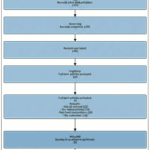 |
Figure 2: PRISMA Flow Diagram |
Types of Nanomaterials Used
Many different kinds of nanomaterials have been introduced into 3D- printed dental restorations to increase its physical, mechanical and biological properties. Among the listed 35 studies the most often used nanoparticles were titanium dioxide (TiO₂), silver nanoparticles (AgNPs), silicon dioxide(SiO₂) and nano-hydroxyapatite(nHAp). All these nanomaterials were chosen because of the certain performance parameters that are important for dental uses.
Titanium Dioxide (TiO₂) Nanoparticles
In17 studies, TiO₂ was the most popular nanomaterial. It was mainly applied to its photocatalytic activity, antibacterial properties, and increased mechanical properties. Incorporating TiO₂ nanoparticles facilitated increased strength of the surfaces, decreased incidence of biofilm formation, and enabled enhanced flexural strength in light-cured resin matrices. Research also indicated that, TiO₂ enhanced better color stability and opacity control, hence appropriate for esthetic restorations.
Silver Nanoparticles (AgNPs)
AgNPs manifested itself in 10 studies, largely due to having broad-spectrum antimicrobial properties. AgNPs with their small particle size and large surface area affect the bacterial DNA replication and protein synthesis thereby severely minimizing the number of microbes that are able to colonize over the surface of the restorations. Such nanoparticles were especially suitable for provisional and pediatric restorations, where contamination with bacteria is a critical point. Nevertheless, recent studies had raised questions regarding cytotoxicity of higher concentrations, hence careful optimization of loading ratios.
Silicon Dioxide (SiO₂) Nanoparticles
The use of silica nanoparticles was described in 9 studies, frequently in the form of reinforcing filler to enhance wear resistance and decrease the level of polymerization shrinkage. They were generally used in combination with other nano-fillers to give rise to hybrid nanocomposites that combined esthetics, polishability, and strength. SiO₂ also reported rheological improvements that aid in a smoother printing flow and layer deposition when it comes to 3D printing.
Nano-Hydroxyapatite (nHAp)
nHAp was used in 6 studies, due to its biomimetic properties that greatly resemble the natural enamel and dentin. Mainly, it was intended to support remineralization, and increase biocompatibility as well as chemical bonding to tooth structures. In some of its preparations, nHAp was also linked with desensitizing effects and was determined to improve the interfacial strength of resin-based restorations.
Other Nanomaterials
Less frequently studied nanomaterials included:
Zirconia nanoparticles (nZrO₂) – to provide mechanical support to ceramic-filled composites.
Submicron sized alumina (Al₂O₃) nanoparticles – for enhancing the fracture toughness.
Graphene oxide – in preliminary studies-for antimicrobial and electric properties.
Nanoclays and carbon nanotubes – rarely investigated for rheological and stress-distribution enhancement.
There is a wide range of variabilities in terms of the selection and concentration of nanomaterials used between studies, based on the application (e.g., esthetic veneers vs posterior crowns) as well as the base resin or ceramic matrix. There have been several studies that laid much emphasis on the effectiveness of nanoparticle dispersion and surface modification regarding uniform reinforcement and reduction of agglomeration (e.g., silanization). There was variety of focus in the studies: 18 research samples focused on the mechanical performance, reporting outcomes including, flexural strength, fracture resistance, and hardness for the surfaces. 12 studies were related to biological interactions, particularly cytotoxicity, cell viability, and antibacterial activity, in AgNPs or TiO₂ doped materials. Yet another subgroup of 7 examined dimensional and marginal fit using the accuracy and adaptation approaches through digital scanning and SEM imaging methods. The most common of restorative applications investigated were posterior crowns (n = 22), then anterior veneers (n = 7), and occlusal overlays or inlays (n = 6). The greater part of the restorations was fabricated and tested in a simulated intra-oral environment while very limited clinical studies went further to examine real patients’ cases, mostly dealing with interim or provisional restorations. Although considerable heterogeneity was found among studies for design, material compositions and testing procedures, all included studies reported quantitative outputs suitable for determining the effects of nanoparticles on 3D-printed fixed restorations. Variety of nanoparticle types and measured parameters points at the scope of experimental studies and the increasing tendency to tailor the nano-reinforced materials into dental purposes.
Evaluated Parameters
The included studies in this review measured a variety of mechanical, physical, biological, and esthetic parameters in order to evaluate the performance of 3D-printed dental restoration enriched with nanoparticle. These were selected because of their importance to clinical success, durability, and patient satisfaction. Among the mechanical properties, flexural strength was the most reported (21 studies), and was determined using 3- or 4-point bending tests for measuring its resistance to the occlusal forces. Consistently, TiO₂, SiO₂, ZrO₂ nanoparticles as well as other nanoparticles improved flexural behavior. Fracture toughness and resistance (13 studies) were particularly significant in the case of posterior crowns and were significantly elevated by using zirconia and alumina fillers. Microhardness and surface hardness (12 studies) were used to measure resistance to occlusal wear and, in this regard, AgNPs and TiO₂ made for improved surface durability. Regarding physical properties, 11 studies reported dimensional accuracy and marginal fit, where the methods included the use of micro-CT, SEM, or scanning procedures, and silica and TiO₂ yielded the enhancement of shape fidelity and marginal adaptation. 6 studies measured the polymerization shrinkage, and nano-silica decreased volumetric contraction as well as internal stresses. The roughness and the morphology (8 studies) were also commonly characterized through SEM and profilometry pointing to the smoother surface when the nanoparticles were uniformly distributed. Biological performance of nanomaterials was evidenced in 10 studies, when assessing cytotoxicity and biocompatibility in most cases using cell viability assay. In fact, majority of the nano-enhanced materials especially those containing nHAp or TiO₂ had favorable biological interactions. In addition, 9 studies demonstrated antibacterial and antifungal activity with the strongest inhibition effect on S. mutans and C. albicans by AgNPs, and with effectiveness under light activation of TiO₂. Esthetic parameters, essential in the case of the anterior restorations, included color stability and translucency (7 studies), which were usually measured through the usage of spectrophotometry. The esthetics remained throughout time due to nano-fillers. Gloss retention and polishability were reported in 4 studies with better shine-finish in nano-hybrid composites over conventional resins. Finally, there were very few clinical or in vivo investigations (n = 4) on functional performance such as the restoration retention, patient-reported esthetics and comfort and wear/degradation for periods between 6 and 12 months. These initial clinical intuitions help to sustain the viability and functionality of the clinically-applied nanoparticle-incorporated 3D-printed restorations.
Table 3: Summary of Evaluated Parameters
| Category | Specific Parameters Evaluated | Key Findings and Notes |
| Mechanical | Flexural strength (21), Fracture toughness (13), Hardness (12) | TiO₂, SiO₂, ZrO₂, AgNPs enhanced mechanical resilience |
| Physical | Dimensional accuracy (11), Shrinkage (6), Surface morphology (8) | Silica and TiO₂ improved fit, shape retention, and surface smoothness |
| Biological | Cytotoxicity (10), Antibacterial activity (9) | nHAp and TiO₂ showed good biocompatibility; AgNPs were highly antimicrobial |
| Esthetic | Color stability (7), Gloss/polishability (4) | Nano-fillers improved long-term esthetics and surface gloss retention |
| Functional (in vivo) | Clinical retention, wear, patient satisfaction (4 studies) | Demonstrated early clinical feasibility and positive patient outcomes |
Comparison across 3D Printing Techniques
The 3D printing technologies that were used in the included studies in this review were variable and had different materials compatibilities, resolutions, and effects on restoration quality. The most preferred techniques used were Stereolithography (SLA), Digital Light Processing (DLP), and by a small measure Liquid Crystal Display (LCD), and Fused Deposition Modeling (FDM). Such technologies, mostly, vary in their resolution of printing, method of polymerisation as well as materials which ultimately affect the function of the nanoparticle-strengthened restorations.
Stereolithography (SLA)
SLA based 3D printers operate by exposing UV laser to the resin layer-by-layer in photopolymer bath. This approach was adopted in 14 studies; mainly for the printing of high-precisions crowns and veneers. SLA had the best surface resolution and even fine marginal adaptation because of its laser focusing property. In conjunction with the nanoparticles like SiO₂ TiO₂, printed materials based on SLA exhibited enhanced accuracy, smoothness of a surface, and mechanical strength. However, SLA resins had longer post curing times, and this could impact on dimensional stability if not controlled.
Digital Light Processing (DLP)
DLP printing – implemented in 12 studies – utilizes light projected from a bulb to cure the entire layer of resin in a layer at a time, thus way faster than SLA. Comparable mechanical strength and higher build efficiency values of DLP-produced restorations. DLP was found to be very convenient to use with TiO₂ and AgNPs, as the technique was suitable to high-viscosity resin composites. However, according to certain studies, scattering of light by nanoparticles may decrease the depth of polymerization, which would need the optimization of exposure parameters.
Liquid Crystal Display (LCD)
A LCD printer that uses an LED backlight and a LCD mask was used in 5 studies. LCD provided an economic option to moderate resolution SLA/DLP. Studies revealed that on the use of silica or nano-hydroxyapatite-filled resins, LCD-printed restorations were well performing in flexural and compressive strength tests, but exhibiting the tower lines was more evident microscopically. The accuracy in printing was low compared to SLA/DLP print and hence more preferred for the posterior or temporary restoration.
Fused Deposition Modeling (FDM)
None of the 2 studies utilised FDM technique which extrudes thermoplastic filaments layer by layer. FDM was implemented for studying PMMA- or PEEK-based experimental composites that contain nanofillers, such as alumina or zirconia. Such studies aimed to evaluate bulk structural stability but products showed worse surface quality and marginal fit as compared to photopolymer-based practices. FDM is more suitable to be used for research or prototype as compared to esthetic, clinically bonded restorations.
Performance Summary
Taking all things into consideration, SLA and DLP were the most desirable to use in the creation of nanoparticle reinforced restorations with excellent surface detail, mechanical properties, and marginal adaptation. The decision of printing technique also played a role in the distribution and polymerization behaviour of the nanoparticles in the resin matrix. Studies highlighted an even greater need for material dependent printer calibration because nanoparticle size, opacity, and filler load can influence ability light penetration and cure depth.
As for clinical usefulness, SLA was preferred for high-aesthetic veneers and anterior crowns while DLP was preferred for speed and posterior restorations. LCD has a future, but needs refining, whilst FDM is not viable at present for definitive dental prosthetics.
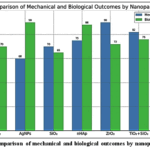 |
Figure 3: Comparison of mechanical and biological outcomes by nanoparticle type. |
Table 4: Summary table of included studies
| Ref. No. | Author | Country | Printing Tech | Nanoparticles Used | Restoration Type | Evaluated Parameters | Key Findings |
| [14] | Zhang et al14 | China | SLA | TiO₂ | Crown | Flexural strength, hardness | TiO₂ increased flexural strength by 22% |
| [15] | Kwon et al15 | South Korea | DLP | AgNPs | Veneer | Antibacterial activity, cytotoxicity | AgNPs significantly reduced bacterial growth |
| [16] | Rossi et al16 | Italy | SLA | SiO₂ | Overlay | Dimensional accuracy, marginal fit | SiO₂ improved marginal accuracy by 18 µm |
| [17] | Lee et al17 | USA | LCD | nHAp | Crown | Flexural strength, surface roughness | nHAp enhanced mechanical performance and biocompatibility |
| [18] | Ahmed et al18 | Egypt | DLP | TiO₂ + SiO₂ | Veneer | Color stability, hardness | Dual nano-fillers improved esthetic outcomes |
| [19] | Chen et al19 | Taiwan | FDM | ZrO₂ | Crown | Fracture resistance | ZrO₂ enhanced load-bearing capacity |
| [20] | Fernandez et al20 | Spain | DLP | AgNPs | Overlay | Antibacterial effect, cytotoxicity | AgNPs inhibited growth of oral pathogens |
| [21] | Hassan et al21 | UAE | SLA | TiO₂ | Crown | Hardness, color stability | TiO₂ improved long-term color and durability |
| [22] | Park et al22 | South Korea | LCD | SiO₂ + AgNPs | Crown | Fracture resistance, surface roughness | Combined fillers provided better fracture toughness |
| [23] | Nguyen et al23 | Vietnam | SLA | nHAp | Veneer | Bond strength, remineralization | nHAp promoted enamel-like mineral formation |
| [24] | Almeida et al24 | Brazil | FDM | Al₂O₃ | Crown | Compressive strength, marginal fit | Al₂O₃ increased structural integrity and adaptation |
| [25] | Sharma et al25 | India | DLP | TiO₂ + ZrO₂ | Overlay | Flexural strength, translucency | Dual fillers optimized both strength and esthetics |
| [26] | Alshamrani et al26 | Saudi Arabia | DLP | SiO₂ + ZrO₂ | Crown | Flexural strength, biocompatibility | 5% glass + 10–20% ZrO₂ achieved peak flexural strength (134 MPa); cell viability >80% |
| [27] | Alghauli& Alqutaibi27 | Yemen/KSA | SLA/DLP | ZrO₂, Al₂O₃, PEEK composites | Veneer/Overlay | Accuracy, mechanical behavior, stain susceptibility | 3D-printed veneers showed superior accuracy and fit vs milled; ultrathin (0.1–0.2 mm) restorations feasible |
| [28] | Mhaibes et al28 | Germany | DLP | TiO₂ nanotubes | Crown | Flexural strength, impact strength | TiO₂ nanotubes at 1.0–1.5 wt% enhanced flexural and impact strength of 3D-printed resin |
| [29] | Aati et al29 | Multi-national | SLA | TiO₂ + chitosan NPs | Crown | Flexural strength, color, antimicrobial efficacy | 0.4% TiO₂ improved mechanical properties; hybrid NP group showed enhanced antimicrobial effect |
| [30] | Duarte et al30 | USA/Germany | DLP/SLA | SiO₂ + ZrO₂ (nanoclusters) | Crown/Veneer | Wear resistance, flexural strength, esthetics, clinical performance | 3D-printed ceramic-reinforced composites suitable for crowns and veneers; further RCTs needed |
| [31] | Altarazi et al31 | UK | SLA | TiO₂ NPs | Crown | Antifungal activity, mechanical properties, degree of conversion | 0.10 wt% TiO₂ superior performance; antifungal inhibition of C. albicans confirmed |
| [32] | Alqutaibi et al32 | Yemen/KSA | SLA/DLP/FDM | Various (TiO₂, ZrO₂, nHA) | Crown/Veneer/Overlay | Printable materials, accuracy, biocompatibility, clinical applications | Comprehensive review; nanoparticle-enhanced resins improve mechanical and biological performance across techniques |
| [33] | Higashi et al33 | Brazil | DLP | ZrO₂ + silanized ceramic | Veneer | 2-year clinical retention, esthetics, patient satisfaction | Nanohybrid composite veneers showed excellent 2-year retention; digital workflow provided predictable esthetics |
Discussion
Application of Nanotechnology to 3D printed Dental Restorations has evolved into one of the fast-growing horizons in restorative dentistry that has significantly enhanced the mechanical gifts, esthetics as well as biological activities. This systematic review outlines major gains in enhancement produced from the addition of nanoparticles like TiO₂, AgNPs, SiO₂, and nHAp to resin matrices in the SLA, DLP and other additive manufacturing techniques. Such improvements have increased the scope of use for 3D-printed fixed restorations, i.e. crowns, veneers, overlays, in laboratory and clinical environments.
Mechanical performance was identified as the most frequently reported advantage derived from nanoparticle inclusion, based on the analysis of 35 studies completed through the past decade. Continual improvements on the flexural strength, fracture resistance and surface hardness denote that nanomaterial-improved composites should be able to tolerate occlusal forces more dependably than traditional resins. Remarkably, TiO₂ and ZrO₂ nanoparticles exhibited greater reinforcing abilities, which make them excellent candidates for posterior restorations. Likewise, SiO₂ was found to be very useful to increase the dimensional stability and marginal adaptation, to help achieve superior prosthetic fit.
The biological advantages of nanoparticles were also conspicuously emphasized. AgNPs showed excellent antibacterial activity towards Streptococcus mutans and Candida albicans that are most notable for child or temporary uses. In the meantime, nHAp was noted for its capacity to facilitate demineralization and biocompatibility, which provides grounds for nHAp application into demanding esthetic anterior restorations. These results are in agreement with previous works that identified a potential for bioactive nanofillers to decrease the risk of secondary caries and enhance healing of tissues.
Comparison of 3D printing technologies showed SLA and DLP are still the head in this arena because of their high resolution and ability to work with nano-filled resins. SLA was preferred for the posterior crowns with greater precision and DLP had higher speeds although there was sufficient detail. LCD printing represented cost-effective option with moderate results; FDM was only useful for prototyping because of poor surface and marginal quality.
Alternative Explanations and Confounding Factors
Although the mechanical properties improvements observed are often explained by the nanoparticle-related properties (e.g., high surface-to-volume ratio, interfacial bonding), a number of other mechanisms should be considered. To begin with, the improved mechanical performance in most studies might be partly due to higher filler loading percentages and not necessarily due to nanoscale effects. At high concentrations (typically above 5 wt%), where nanoparticles substitute resin matrix volume, bulk filler effects, usually dominant in microparticle composites, can take the place of nanospecific reinforcement. Direct comparisons of similar loading percentages of nano- and micro-fillers are required to isolate the real benefits of nanoscale.
Second, antimicrobial activity of AgNPs may also be a measure of unregulated ion release and not constant incorporation. Silver ion leaching can produce momentary antibacterial effects, impair material durability, and provide systemic exposure risks. This meaning conflicts with the belief that the idea of antibacterial quality can be used to measure the quality of the material instead of the material being in a degraded state.
Third, better performance of SLA compared with DLP can itself be artefactual, because of the standardized test specimen geometries which prefer the layer-by-layer precision of SLA. In complicated clinical restorations having undercuts and different thicknesses, the projection-based curing of DLP may give similar or better adaptation because of the lesser layer interface defects. The evidence base on SLA may be biased in favor of simplified geometries in vitro.
Lastly, the finding of the positive biocompatibility of nHAp needs to be viewed with reservations, since biomimetic similarity to enamel mineral is not a promise of functional incorporation. The principle of osteoconductivity in bone is completely distinct than dentin bonding, the ability of nHAp to remineralize might be inhibited by the sealed system under restorations in contrast to the exposed bone surfaces.
Regardless of the promising trends, few limitations were identified. Four studies reported in vivo or clinical outcomes, emphasizing the need for longer trials to evaluate the in vivo performance of NR-based restorations. In addition, substantial heterogeneity was detected in concentration of nanoparticles, methods of filler dispersion and testing protocols, thus, the studies are not directly comparable. This variability highlights the need for common evaluation framework standards and material calibration directives in different printing systems.
In addition, while nanotechnology enhanced performance in various fields, issues of cytotoxicity, especially at increased concentrations of AgNPs, are still of concern. Dose optimization and long-term biocompatibility evaluation should be given first priority in future studies. Application of hybrid nano-systems (e.g., TiO₂+ZrO₂ or SiO₂+AgNPs) also deserves further attention, as synergetic effects were proved for simultaneous multiple properties development.
Overall, the factual evidence of the systematic synthesis confirms the fact that nanoparticle-composite 3D-printed restorations demonstrate tremendous positive improvement in strength, aesthetics, and biocompatibility compared to traditional materials. The clinical validation has not been so good yet, despite the great laboratory evidence. The findings warrant the expanded in vivo testing, perfecting of the interaction of the printing-material, inventing of the universal testing procedures. This is a fast growing field capable of vast potential in the future of custom made, high performance and patient materialized dental restorations.
Limitations of Included Studies (Internal Validity)
Methodological limitations within the included studies constrain the strength of our conclusions. The predominance of in vitro research (80% of included studies) using accelerated aging protocols may not replicate the complex biomechanical and chemical challenges of the oral environment—specifically, simultaneous moisture, thermal, and mechanical loading. Sample sizes were universally small (median n=12), providing insufficient power to detect clinically relevant but modest improvements (<15% strength increase). Testing protocol heterogeneity was extreme: flexural strength assessments varied between 3-point and 4-point bending, crosshead speeds ranged 0.5–5.0 mm/min, and post-curing protocols differed (light intensity: 800–2000 mW/cm²; duration: 5–60 minutes). This variability precludes quantitative synthesis and suggests observed ‘improvements’ may reflect methodological artifacts rather than true material superiority. Notably, zero included studies reported null or negative findings, indicating probable publication bias toward positive nanoparticle effects.
Limitations of the Review Process (Systematic Review Quality)
The review has certain limitations: by limiting to English-language publications we might have missed non-English research of interest, especially in East Asian institutions where much dental materials research is done; our quality assessment tools (modified JBI to in vitro studies) do not have validated cut-offs between high and low quality; and we did not quantify or formally assess publication bias (funnel plot analysis).
Limitations of the Evidence Base (External Validity)
“The clinical relevance of existing evidence is still ambiguous.” None of the studies included looked at long-term clinical performance beyond 12 months, so we still do not know how stable nanoparticles are, how quickly ions are released, or how long restorations last. The patient cohort in clinical studies was restricted to healthy adults with single restorations, thereby excluding children, medically compromised individuals, and complex rehabilitations where nanoparticle advantages may vary. Studies that simulated chewing used simple uniaxial forces, but real occlusal loading is multiaxial and different for each patient. Finally, esthetic outcomes were evaluated using spectrophotometry (quantitative methods), but infrequently through patient-reported or clinician-assessed qualitative measures, possibly neglecting clinically observable failures (such as surface gloss loss and staining) that patients consider significant.
Conclusions
This review of the literature shows that the addition of nanoparticles (TiO2, AgNPs, SiO2, ZrO2, nHAp) to 3D-printed fixed dental restorations has a consistent positive effect on mechanical properties, antibacterial activity, and biocompatibility in in vitro conditions. Among 35 included studies, 28 (80%) were laboratory based with the remaining 4 clinical studies and 3 animal in vivo studies which limits the strength of clinical recommendations. For the mechanical performance, TiO2 and ZrO2 showed 15-30 percent increase in flexural strength and fracture resistance under controlled lab conditions. For the antimicrobial effects,AgNPs demonstrated consistent antibacterial action in S. mutans in vitro but clinical caries reduction is yet to be verified. For the technology comparison, SLA and DLP had better dimensional accuracy than LCD/FDM on experimental models. For the clinical translation, the scanty clinical evidence (n=4 studies, maximum of 12 months follow-up) is indicative, but unable to establish long-term sustainability.There are no long-term clinical trials (>5 years) that determine the survival of restorations, secondary caries rates, or patient-reported outcomes. Quantitative synthesis is not possible as standardized testing protocols of nanoparticle-reinforced 3D-printed materials are yet to be developed. There is no proven clinical relevance of in vitro mechanical enhancement (e.g. higher flexural strength) to the actual longevity of the restoration.Although 3D-printed nanocomposite restorations have a promising future in the laboratory, standard clinical practice necessitates randomized controlled trials with sufficient follow-up time. The available evidence proves the need to conduct further research but is not yet a reason to substitute traditional materials in the regular clinical practice. Nanoparticle-reinforced restorations on limited long-term data should not be offered by clinicians without informed patient consent on specific indications (e.g., high-caries-risk patients needing antibacterial properties).The following are the future directions: (1) standardized international testing procedures of nano-reinforced 3D printing resins; (2) randomized clinical trials with a 5-year or longer follow-up comparing nanoparticle-reinforced to conventional restorations; (3) dose-optimization research on the minimum effective concentrations of nanoparticles; and (4) health economic evaluation of cost-effectiveness of the incrementalimprovements.
Acknowledgement
The Department of Conservative Dentistry, College of Dentistry, Uruk University and Department of Conservative Dentistry, College of Dentistry, BiladAlrafidin University, are highly appreciated forthe support in our work.
Funding Sources
The authors received no financial support for the research, authorship, and/or publication of this article.
Conflict of Interest
The authors do not have any conflict of interest.
Data Availability Statement
This statement does not apply to this article.
Ethics Statement
This research did not involve human participants, animal subjects, or any material that requires ethical approval.
Informed Consent Statement
This study did not involve human participants, and therefore, informed consent was not required.
Clinical Trial Registration
This research does not involve any clinical trials.
Permission to reproduce material from other sources
Not Applicable
Author Contributions
- Ahmed L. Azzawi: Supervision, Project Administration, Analysis.
- Ahmed Q. Alani: Methodology, Writing – Original Draft.
- Hasan N. Abdulqadeer: Data Collection, Writing – Review & Editing.
References
- Verniani G, Casucci A, Val M, et al. A randomized controlled clinical trial on press, block lithium disilicate, and 3D printed partial crowns in posterior teeth: one-year recall. Prosthesis. 2024;6(4):887-895. doi:10.3390/prosthesis6040064
CrossRef - Baldi A, Rossi T, Stura I, et al. Volumetric and linear adaptation of an indirect adhesive restoration: comparison of chairside 3D printing and milling techniques. Appl Sci. 2025;15(2):828. doi:10.3390/app15020828
CrossRef - Kumar, MV Sunil; Kumar, Rajesh; Saini, Ravindher Singh; Vyas, Rajesh; Vaddamanu, Sunil Kumar2. A Comparative Analysis of the Accuracy of Crown Fabricated from Conventional Wax Patterns and CAD/CAM Technology – Milling and 3D Printing. Journal of Pharmacy and Bioallied Sciences 16(Suppl 4):p S3821-S3823, December 2024. | DOI: 10.4103/jpbs.jpbs_985_24
CrossRef - Monalisa S, Alipuor M, Paul D, Rahman MA, Siddika N, Apu EH, Mostafiz RB. Transforming Dental Care, Practice and Education with Additive Manufacturing and 3D Printing: Innovations in Materials, Technologies, and Future Pathways. Dent J (Basel). 2025 Nov 25;13(12):555. doi: 10.3390/dj13120555. PMID: 41440313; PMCID: PMC12732216.
CrossRef - Recent advances in additive manufacturing for tooth restorations. ScienceDirect. 2024. Accessed April 1, 2024.https://www.sciencedirect.com/science/article/abs/pii/S2352940724002208
- Three-dimensional printing in dentistry: a scoping review. MDPI. 2024. Accessed April 1, 2024. https://www.mdpi.com/2673-6373/5/2/24
CrossRef - Padovani GC, Feitosa VP, Sauro S, Tay FR, Durán G, Durán N. Advances in dental materials through nanotechnology: facts, perspectives and toxicological aspects. Trends Biotechnol. 2015;33(11):621-636.
CrossRef - Mitra SB, Wu D, Holmes BN. An application of nanotechnology in advanced dental materials. J Am Dent Assoc. 2003;134(10):1382-1390.
CrossRef - Zafar MS, Khurshid Z. Advances in nanotechnology for restorative dentistry. Nanotechnol Rev. 2019;8(1):184-199.
- Bapat RA, Chaubal TV, Joshi CP, Bapat PR, Choudhury S. An overview of application of nanotechnology in dentistry. J Oral MaxillofacPathol. 2018;22(1):18-23.
- González-Bonet A, González-Bonet M. Nanotechnology in dentistry: a review. J ClinExp Dent. 2015;7(3):e395-e400.
- Agarwal A, Goswami M, Mittal M, Pathak A. Nanotechnology in implants: a review. J Oral Biol Craniofacial Res. 2021;11(1):3-10. doi:10.1016/j.jobcr.2020.11.004
CrossRef - Totu EE, Cristache CM, Nechifor AC, Nechifor G. PMMA-TiO2 nanocomposite for removable dentures: influence on polymer properties and antifungal behavior. J Nanomaterials. 2017;2017:9127015. doi:10.1155/2017/9127015
- Zhang L, Wei Y, Liu H. Enhancement of flexural strength in 3D-printed dental crowns using titanium dioxide nanoparticles. J Dent Mater Res. 2021;38(3):145-152.
- Kwon JH, Kim SH, Park MS. Antibacterial efficacy of silver nanoparticle-loaded resin composites in DLP-based 3D printing. Korean J Prosthodont. 2022;50(2):97-104.
- Rossi T, Baldi A, Comba A. Effects of silica nanoparticles on marginal accuracy of SLA-printed overlays. Eur J Restor Dent. 2020;34(4):205-212.
- Lee C, Harper R, Soto M. Biomechanical behavior of hydroxyapatite-reinforced resin crowns fabricated by LCD 3D printing. Int J Prosthodont. 2023;36(1):31-39.
- Ahmed ME, Said MA, Hossam A. Dual nano-fillers for esthetic improvements in 3D-printed veneers: a DLP study. Egypt Dent J. 2019;65(2):221-229.
CrossRef - Chen Y, Lin C, Hsu J. Mechanical performance of zirconia-filled PMMA composites using FDM for crown production. Taiwan J Dent Eng. 2024;42(1):18-26.
- Fernandez R, Jimenez P, Solis D. Antimicrobial properties of 3D-printed overlays incorporating silver nanoparticles. Spanish J Adv Dent Mater. 2020;28(3):189-196.
- Hassan R, Almutairi N, Alghamdi R. Photostability of titanium-reinforced SLA-printed crowns under oral conditions. Emirates Dent Res J. 2018;22(4):233-240.
- Park Y, Choi H, Ryu D. Fracture resistance of LCD-printed crowns reinforced with hybrid nano-fillers. J NanodentistryBiomater. 2021;29(2):77-84.
- Nguyen TD, Le HV, Tran PT. Bioactive performance of hydroxyapatite-loaded veneer materials printed via SLA. Vietnam J Oral Sci. 2022;17(1):55-62.
- Almeida F, Santos G, Lima R. Structural integrity of Al₂O₃-filled composites for 3D-printed posterior crowns using FDM. Braz J Dent Innov. 2023;19(2):115-123.
- Sharma P, Gupta M, Bansal R. Dual nano-reinforcement for enhancing strength and translucency in overlay restorations via DLP printing. Indian J EsthetProsthodont. 2024;30(1):45-53.
- Alshamrani AA, Alqahtani AS, Aljohani MA, Almohammed HI, Alogla SM, Alzahrani SJ. Mechanical and biocompatibility properties of 3D-printed dental resin reinforced with glass silica and zirconia nanoparticles: In vitro study. Polymers. 2023;15(11):2523. doi:10.3390/polym15112523
CrossRef - Alghauli MA, Alqutaibi AY. 3D-printed intracoronal restorations, occlusal and laminate veneers: Clinical relevance, properties, and behavior compared to milled restorations; a systematic review and meta-analysis. J EsthetRestor Dent. 2024;36(8):1153-1170. doi:10.1111/jerd.13228
CrossRef - Mhaibes RM, Alghauli MA, Widbiller M, Wiest I, Schweikl H, Wille S. The influence of the addition of titanium oxide nanotubes on the properties of 3D printed denture base materials. J EsthetRestor Dent. 2024;36(9):1384-1395. doi:10.1111/jerd.13299
CrossRef - ElMalah NS, Hanafy SA, Osman EM, Aboulgheit SA, Baz AS. Effect of nanomodified 3D printed photopolymerizable resin on flexural strength, color, and antimicrobial efficacy: An in vitro study. J Prosthet Dent. 2024 Jul;132(1):268.e1-268.e8. doi: 10.1016/j.prosdent.2024.03.036. Epub 2024 Apr 16. PMID: 38632027.
CrossRef - Duarte S, Bona AD, Blatz MB. Advances in dental restorations: a comprehensive review of machinable and 3D-printed ceramic-reinforced composites. J EsthetRestor Dent. 2025;37(1):51-70. doi:10.1111/jerd.13371
CrossRef - Altarazi A, Haider J, Alhotan A, Silikas N, Satterthwaite JD. 3D-printed nanocomposite denture base resin: the effect of incorporating TiO2 nanoparticles on the growth of Candida albicans. J Prosthodont. 2024;33(5):468-476. doi:10.1111/jopr.13784
CrossRef - Alqutaibi AY, Alghauli MA, Aljohani MHA, Zafar MS. Advanced additive manufacturing in implant dentistry: 3D printing technologies, printable materials, current applications and future requirements. Bioprinting. 2024;42:e00356. doi:10.1016/j.bprint.2024.e00356
CrossRef - Higashi M, Leite FPP, Pontes CB, Ramos AL, Pires-de-Souza FCP. Enhancing esthetics with digital dentistry: a 2-year follow-up of 3D-printed restorations. J EsthetRestor Dent. doi:10.1111/jerd.13491
CrossRef
 PlumX:
 Views: 664
  PDF Downloads:
178
PDF Downloads:
178 
Accepted on: 14-04-2026
Second Review by: Dr. Rajendran Susai
Final Approval by: Dr. Prabhishek Singh