Phytochemical Characterization and Nephroprotective Effects of Taraxacum officinale F.H.Wigg Extract in a Gentamicin-Induced Acute Nephrotoxicity Rat Model
 , , 3*, Enkhzaya Lkhagvadorj3, Anu Altangerel1, Nyamdolgor Uranbileg4, Faletrov Yaroslav5, Tserenkhand Gundsambuu6 and Chimedragchaa Chimedtseren1
 1Department of Pharmacology, Research Center, Institute of Traditional Medicine and Technology, Ulaanbaatar, Mongolia
2Department of Clinical Pharmacy and Pharmaceutical Management, School of Pharmacy, Mongolian National University of Medical Sciences, Ulaanbaatar, Mongolia
3Department of Chemistry and Technology, Research Center, Institute of Traditional Medicine and Technology, Ulaanbaatar, Mongolia
4Department of Pathology, Institute of Veterinary Medicine, Ulaanbaatar, Mongolia
5Research Institute for Physical-Chemical Problems, Republic of Belarus, Minsk
6Laboratory of plant stress physiology, Botanic Garden and Research Institute, MAS, Ulaanbaatar, Mongolia.
Corresponding Author E-mail: Erdenechimeg.ch@mnums.edu.com
DOI : http://dx.doi.org/10.13005/bpj/3452
Download this article as:

Gentamicin-induced acute kidney injury (AKI) causes tubular damage and activates inflammatory pathways, including p38 MAPK, which regulates cellular stress and inflammation. This study assessed the phenolic compound profile, safety, and nephroprotective effects of Taraxacum officinale extract in an experimental model of AKI. Phenolic compounds, specifically flavonoids and phenolic acids, were identified by thin-layer chromatography and quantified spectrophotometrically. Acute toxicity was measured by the Prozorovsky method. AKI was induced in Wistar rats with gentamicin (100 mg/kg), followed by oral administration of T. officinale extract (44 or 88 mg/kg) for 14 days. Kidney function, kidney injury molecule-1 (KIM-1), and activated p38 levels were measured to evaluate inflammation and renal protection. The extract contained luteolin, quercetin, apigenin, and caffeic acid. Total flavonoid content was expressed as luteolin equivalents (2.464 ± 0.24%). The LD50 (2.19 g/kg) showed low acute toxicity. Gentamicin raised serum creatinine, KIM-1, and p38 (p < 0.01), while 88 mg/kg extract reduced creatinine (−49.7%), KIM-1 (−14.3%), and p38 (−19.4%) (p < 0.05–0.01). Histopathology confirmed renal protection. These results demonstrate that T. officinale confers dose-dependent renoprotection, likely by reducing inflammation through flavonoid-mediated suppression of p38 MAPK signaling, which limits downstream production of pro-inflammatory mediators and renal cell injury.
KEYWORDS:Acute kidney injury; Flavonoids; Gentamicin nephrotoxicity; Inflammation; Kidney injury molecule-1; Mitogen-activated protein kinase
Introduction
Acute kidney injury (AKI) is a significant clinical issue linked to elevated morbidity and mortality rates and is an important risk factor for the development of chronic kidney disease.1,2 Drug-induced nephrotoxicity represents a significant proportion of AKI cases, particularly among hospitalized patients.3 Aminoglycoside antibiotics such as gentamicin are extensively utilized for the management of severe Gram-negative infections; however, their clinical application is limited by dose-dependent nephrotoxicity.4,5
Gentamicin accumulates in proximal tubular epithelial cells, leading to mitochondrial dysfunction, excessive generation of reactive oxygen species (ROS), lipid peroxidation, and ultimately tubular necrosis.5 These pathological changes trigger inflammatory signaling cascades that can lead to kidney impairment. Among these pathways, mitogen-activated protein kinase (MAPK) signaling plays a critical role in mediating cellular stress and inflammatory responses.6 In particular, activation of the p38 MAPK pathway promotes the production of pro-inflammatory cytokines and apoptotic signaling in injured renal tissue.7,8 Consequently, inhibition of p38 MAPK activation has emerged as a potential therapeutic strategy to attenuate inflammation and limit renal injury in experimental models of AKI.9
Natural products rich in flavonoids and phenolic compounds are of interest as nephroprotective agents, as they often exhibit antioxidant and anti-inflammatory effects.10 Flavonoids, such as luteolin and quercetin, can limit cellular oxidative damage and reduce the generation of pro-inflammatory cytokines by blocking the activation of MAPK and NF-κB signaling pathways.11-13 This dual activity, by altering critical signaling cascades and diminishing oxidative stress, underscores their potential to avert inflammatory kidney injury.14
Taraxacum officinale F.H.Wigg (Asteraceae), or dandelion, is a medicinal plant utilized for inflammatory and metabolic disorders. It contains many flavonoids and phenolic acids, such as luteolin, quercetin, apigenin, and caffeic acid.15-18 Studies report antioxidant, anti-inflammatory, and hepatoprotective effects of T. officinale extracts.19 However, its mechanistic nephroprotective effects in gentamicin-induced AKI, particularly regarding p38 MAPK and tubular damage markers, remain poorly defined.
Therefore, the present study aimed to evaluate the phytochemical composition, safety profile, and nephroprotective effects of Taraxacum officinale extract in a gentamicin-induced acute kidney injury rat model. In particular, the study focused on assessing renal injury biomarkers and investigating the modulation of the p38 MAPK-mediated inflammatory pathway.
Materials and Methods
Materials
The herb Taraxacum officinale F.H.Wigg. was taken from Gachuurt, Mongolia, in 2024, and the species was recognized by Dr. M. Urgamal, a botany expert at the Botanic Garden and Research Institute, Mongolian Academy of Sciences, Ulaanbaatar, Mongolia.
Chemicals, Reagents, and Instruments
Thin-layer chromatography used silica gel 60 F254 aluminum plates (20 × 20 cm, Merck KGaA, Germany) and a glass chromatography chamber. Visualization and absorbance measurements were performed using a ZF20D UV lamp (254 and 365 nm) and a UNICO UV-2102C spectrophotometer. Biochemical parameters were analyzed with a Biobase-Silver biochemical analyzer. An automated hematology analyzer, the BK-3200VET, was used to measure hematological parameters. A ChroMate-4300 microplate reader was used to perform enzyme-linked immunosorbent assay (ELISA) tests in accordance with the manufacturer’s instructions.
Reference standards included apigenin (≥99%, HPLC, Carl Roth, Germany), luteolin (≥99%, HPLC, Sigma-Aldrich, Germany), gallic acid (≥99%, HPLC, China), and caffeic acid (≥99%, HPLC, China). Folin–Ciocalteu reagent (Sangon, China) and ELISA kits for KIM-1 and p38 (China) were also used.
Experimental Animals and Ethical Considerations
This study followed ARRIVE guidelines and NIH animal care standards. Procedures were approved by the Biomedical Ethics Committee of the Ministry of Health of Mongolia (Approval No: 24/091). Healthy adult mice and Wistar rats bred in the institution’s vivarium were used and kept at 20 ± 2°C, with full access to food and water and a 12-hour light/dark cycle.
Phytochemical Analysis
Identification of Biologically Active Compounds by TLC
One gram (±0.001 g) of powdered sample was extracted at 200C temperature using 20 milliliters of methanol for 1 h and filtered. Aliquots (50–100 µL) were applied onto silica gel 60 F254 plates. Standard solutions (1 mg/mL in methanol) of luteolin, caffeic acid, quercetin, and apigenin were prepared, and 5–10 µL were spotted alongside the samples. Chromatographic separation used n-hexane:ethyl acetate:acetic acid (12.4:5.6:2) as solvent. After development and drying, the plates were sprayed with 5% ferric chloride solution.20
Determination of Total Flavonoid Content
The total flavonoid content of the sample was quantified using a spectrophotometric aluminum complexation assay. Finely powdered plant sample was underwent to ethanol extraction under reflux conditions. A portion of the obtained extract was treated successively with sodium nitrite, aluminum nitrate, and sodium hydroxide, which resulted in the formation of a colored flavonoid–aluminum complex. The intensity of the developed color was recorded at 500 nm using a spectrophotometer equipped with a 1 cm path length cuvette. Quantification was performed using luteolin as the reference compound, and the flavonoid concentration was expressed as luteolin equivalents (mg LE%)21
Determination of Total Phenolic Content
Total phenolic compounds were assessed by a spectrophotometric assay employing Folin–Ciocalteu reagent. This procedure relies on the reduction of the reagent by phenolic constituents in an alkaline environment, leading to the development of a blue-colored complex. The ethanolic extract was combined with diluted Folin–Ciocalteu reagent, followed by the addition of sodium carbonate solution to establish alkaline conditions. After a defined incubation period, the absorbance of the mixture was observed at 760 nm. Gallic acid served as the standard for calibration, and the results were calculated and reported as gallic acid equivalents (GAE%)22
Determination of Total Phenolic Acids
Total phenolic acids were quantified using the Arnow reagent method, which relies on the formation of a colored complex between phenolic acids and nitrite–molybdate reagents under alkaline conditions. The extract was reacted with hydrochloric acid, Arnow’s reagent, and sodium hydroxide, and the absorbance of the developed color was measured at 525 nm. Results were calculated as caffeic acid equivalents.23
Acute Toxicity Study
Acute toxicity was determined using the rapid method of Prozorovsky (1978).25 A 1:1 liquid extract was administered intraperitoneally to male and female white mice (15–19 g, n = 20). Mortality was observed for 72 h, and LD50 values were calculated and classified according to Sidorov (1973).26
Anti-Inflammatory Activity
Acute nephrotoxic inflammation was induced by gentamicin, as described by Nadeem and Rania (2023).7 Doses were selected based on preliminary toxicity data and previous pharmacological studies. Forty Wistar rats were split into four groups at random (n = 10 per group): group 1 (control group): oral distilled water for 14 days; group 2 (gentamicin group): oral distilled water for 14 days plus intraperitoneal gentamicin (100 mg/kg) from days 8–14, group 3: therapy with gentamicin + T. officinale 44 mg/kg, group 4:Gentamicin + T. officinale 88 mg/kg dose treatment. The test preparation was administered orally for 14 days. At the end of the experiment, the kidney index was calculated. Samples of blood were taken in order to measure creatinine, urea, and total protein levels. ELISA was used to determine KIM-1 and p38 levels in serum and kidney tissue. Histopathological examination of kidney tissue was performed, and the analysis was blinded.
Statistical Analysis
The mean ± SD was used to express the data. One-way ANOVA and Tukey’s post hoc test were used for statistical comparisons. The Shapiro-Wilk test was used to determine normality. The threshold for statistical significance was fixed at p < 0.05. GraphPad Prism version 9.0 was used for statistical analysis.
Results
Identification of Flavonoids and Phenolic Compounds by TLC
Thin-layer chromatographic analysis of chloroform and methanol extracts of Taraxacum officinale raw material revealed the presence of several flavonoids and phenolic acids. The chloroform extract was included for comparative phytochemical screening purposes only; the methanol extract was used for all subsequent pharmacological experiments. Distinct yellow fluorescent spots corresponding to luteolin (Rf = 0.55), quercetin (Rf = 0.62), and apigenin (Rf = 0.64) were observed under UV light (365 nm).
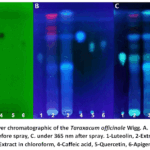 |
Figure 1: Thin-layer chromatographic of the Taraxacum officinale Wigg. A. under 254 nm, B. under 365 nm before spray, C. under 365 nm after spray. |
In addition, a blue spot corresponding to caffeic acid (Rf = 0.74) was detected at the same migration level as the standard compound. The coincidence of Rf values and fluorescence characteristics between sample extracts and reference standards confirmed the presence of these bioactive compounds in the plant material.
Quantitative Determination of Flavonoids and Phenolic Compounds
The quantitative analysis of biologically active constituents in T. officinale raw material demonstrated the following contents:
Table 1: Quantitative Analysis of Phenolic Compound Subgroups (Flavonoids, Phenolic Acids, and Total Phenolics) in T.officinale
| Biologically Active Compounds | Values obtained |
| Flavonoids | 2.464±0.24% |
| Total phenolic acid | 0.912±0.3% |
| Total phenolics | 0.527±0.04% |
Total phenolics, phenolic acid, and flavonoids in methanol extracts of the T.officinale (n=3).
Pharmacological Evaluation
Acute Toxicity
The acute toxicity study demonstrated that the LD50 value of the dry extract of T. officinale was 2.19 (1.75–2.47) g/kg body weight following intraperitoneal administration. According to established toxicity classification criteria, this value indicates low acute toxicity.27
Effect on Gentamicin-Induced Acute Nephrotoxicity
Renal Function Parameters
In the Gentamicin-induced nephrotoxicity model, serum urea levels did not differ significantly among the experimental groups (p = 0.98), indicating that urea was not markedly affected under the experimental conditions.
Conversely, serum creatinine levels were markedly increased in the control group relative to the healthy control group (p < 0.01), confirming successful induction of renal injury.
Table 2: Renal function parameters of T. officinale in the Gentamicin-induced nephrotoxicity model
| Groups | Urea (mmol/L) | Creatinine(umol/l) |
| Normal | 23.17 ± 0.17 | 62.97±6.31 |
| Control | 22.61 ± 0.79 | 127.7±16.95## |
| T. officinale 44 mg/kg | 25.99 ± 1.28 | 119.6±7.33 |
| T. officinale 88 mg/kg | 24.49 ± 2.00 | 64.19±15.25** |
##p < 0.01 vs the normal group
** p < 0.01 vs gentamicin group
Administration of T. officinale extract at a dose of 88 mg/kg significantly reduced serum creatinine levels, representing a 49.7% decrease compared with the control group (p < 0.01). The 44 mg/kg dose showed a decreasing trend; however, the reduction was not statistically significant.
Effect on Inflammatory and Kidney Injury Biomarkers
Serum KIM-1 concentrations were markedly elevated in the control group compared to the healthy group, representing a 38.2% increase (p < 0.01). Treatment with T. officinale extract showed in a dose-dependent reduction in KIM-1 levels. At 44 mg/kg, KIM-1 decreased to 40.31 ± 1.33 pg/mL (p < 0.05 vs. control), corresponding to a 9.02% reduction. At 88 mg/kg,
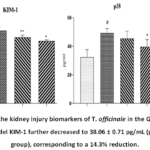 |
Figure 2: Levels of the kidney injury biomarkers of T. officinale in the Gentamicin-induced nephrotoxicity model KIM-1 further decreased to 38.06 ± 0.71 pg/mL (p < 0.01 vs. Control group), corresponding to a 14.3% reduction. |
Likewise, serum p38 levels were markedly increased in the control group relative to the normal group, representing a 34.2% increase (p < 0.01). Administration of the extract at 88 mg/kg significantly reduced p38 levels to 39.64 ± 5.00 pg/mL (p < 0.05 vs. control group), corresponding to a 19.4% decrease. The 44 mg/kg dose showed a trend toward reduction, but did not reach statistical significance.
Histopathological result
Histopathological examination of kidney tissue from the healthy control group revealed normal renal architecture, including intact glomeruli and well-preserved proximal and distal tubules.
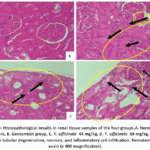 |
Figure 3: Histopathological results in renal tissue samples of the four groups.A. Normal renal structure, B. Gentamicin group, C. T. officinale 44 mg/kg, D. T. officinale 88 mg/kg, |
In contrast, the control group exhibited extensive tubular epithelial degeneration and necrosis, marked congestion, edema, and inflammatory cell infiltration in both cortical and medullary regions, confirming the establishment of acute nephrotoxic inflammation.
In the treatment groups, renal structural damage was attenuated. In the 44 mg/kg group, tubular epithelial degeneration and necrotic changes were slightly reduced compared with the pathological control. Notably, the 88 mg/kg group demonstrated relatively reduced inflammatory infiltration and improved preservation of tubular and glomerular structures. Collectively, these results indicate that T. officinale extract exerted a dose-dependent nephroprotective and anti-inflammatory effect in gentamicin-induced acute renal injury.
Discussion
The present study demonstrates that Taraxacum officinale extract confers significant renoprotection in gentamicin-induced acute kidney injury (AKI), primarily through modulation of inflammatory signaling pathways, particularly p38 MAPK. Gentamicin nephrotoxicity is characterized by preferential accumulation in proximal tubular epithelial cells, leading to excessive ROS generation, mitochondrial dysfunction, and activation of stress-responsive kinases, including p38 MAPK.1,2 Activation of p38 promotes transcription of pro-inflammatory mediators and enhances tubular epithelial apoptosis, thereby contributing to progressive structural and functional renal impairment.7,8
In the present model, gentamicin markedly increased serum creatinine, KIM-1, and p38 levels, confirming renal dysfunction and activation of inflammatory injury pathways. KIM-1 is a well-established biomarker of proximal tubular damage and is closely associated with inflammatory signaling activation during AKI.28-30 Treatment with T. officinale extract—particularly at 88 mg/kg—significantly reduced creatinine (−49.7%), KIM-1, and p38 concentrations, accompanied by clear histopathological improvement. These findings suggest that p38 MAPK suppression is a central mechanism underlying the observed nephroprotective effect.
The identified flavonoids—luteolin, quercetin, and apigenin—are well-documented modulators of MAPK signaling cascades. Experimental evidence demonstrates that these compounds attenuate p38 MAPK phosphorylation and inhibit downstream NF-κB activation, thereby decreasing pro-inflammatory cytokine synthesis and limiting apoptosis in injured tissues.11,12,31,32 By targeting redox-sensitive kinase pathways, flavonoids disrupt the ROS–p38–NF-κB amplification loop characteristic of gentamicin-induced tubular damage.8,12 The relatively high total flavonoid content (2.464 ± 0.24%) observed in this study supports the biological plausibility of MAPK pathway inhibition as a mechanism underlying renal protection.
The concurrent reduction in KIM-1 and p38 further indicates coordinated suppression of tubular inflammatory signaling rather than a purely antioxidant effect. Given that p38 MAPK activation is upstream of multiple inflammatory mediators implicated in AKI progression, its modulation may interrupt key amplification cascades that exacerbate tubular necrosis and interstitial inflammation.7,33,34 The concordance between biochemical, molecular, and histological findings strengthens the mechanistic interpretation of renoprotection.
Moreover, the observed dose-dependent response underscores the pharmacological relevance of the extract. While the lower dose produced partial improvement, the higher dose normalized renal parameters to a statistically significant extent, supporting concentration-dependent modulation of inflammatory kinase signaling.
The absence of significant changes in serum urea levels may be attributed to its limited sensitivity as a biomarker of acute kidney injury and its susceptibility to extrarenal influences such as protein metabolism and hydration status. In gentamicin-induced nephrotoxicity, which primarily affects proximal tubular cells, early renal damage may not immediately translate into elevated urea levels, whereas creatinine and tubular injury markers such as KIM-1 are more responsive indicators of renal dysfunction.28-30
Several limitations should be acknowledged. First, phosphorylated p38 (p-p38) levels were not directly quantified; thus, definitive confirmation of kinase inhibition requires molecular validation by Western blot or immunohistochemical analysis.8 Second, downstream inflammatory cytokins including IL-6, NF-κB and TNF-α, were not measured, limiting comprehensive characterization of the inflammatory cascade.7 Third, oxidative stress indicators—comprising malondialdehyde and superoxide dismutase, and Nrf2/HO-1 signaling—were not assessed, precluding full delineation of redox–inflammatory interactions known to contribute to gentamicin-induced injury.5,33 Additionally, pharmacokinetic behavior, systemic bioavailability, and long-term safety of the active flavonoids remain to be elucidated. Future mechanistic studies incorporating pathway-specific inhibitors and molecular assays are warranted to clarify the hierarchical relationship between ROS generation, p38 activation, and tubular injury.
Drug-induced AKI remains a major clinical challenge with limited targeted pharmacological interventions.2,35,36 Given the central role of p38 MAPK in mediating inflammatory renal injury, therapeutic strategies aimed at modulating this pathway have gained increasing attention.7,37 The ability of T. officinale extract to attenuate p38 activation and reduce tubular injury biomarkers, combined with its favorable acute safety profile (LD₅₀ = 2.19 g/kg), suggests potential as an adjunctive renoprotective agent during aminoglycoside therapy. Nevertheless, translation into clinical application requires rigorous standardization of active constituents, pharmacokinetic characterization, chronic toxicity evaluation, and controlled clinical trials. Mechanism-driven phytotherapeutics targeting inflammatory kinase pathways may represent complementary strategies to reduce AKI risk in susceptible patient populations.14
Conclusion
The present study demonstrates that the methanol extract of Taraxacum officinale contains defined subgroups of phenolic compounds — the flavonoids luteolin, quercetin, and apigenin, and the phenolic acid caffeic acid — with total flavonoid content quantified as luteolin equivalents (2.464 ± 0.24%). The extract exhibited low acute toxicity (LD₅₀ = 2.19 g/kg). In a gentamicin-induced acute kidney injury model, oral administration of the extract at 88 mg/kg produced significant dose-dependent renoprotection, reducing serum creatinine by 49.7%, the proximal tubular injury marker KIM-1 by 14.3%, and p38 MAPK by 19.4% compared with the gentamicin control (p < 0.05–0.01). Histopathological examination confirmed attenuation of tubular necrosis, epithelial degeneration, and inflammatory cell infiltration. These results indicate that the nephroprotective effect is mediated, at least in part, through flavonoid-dependent suppression of the p38 MAPK inflammatory signaling pathway, thereby limiting downstream production of pro-inflammatory mediators and tubular cell injury. The favorable acute safety profile and mechanistic activity against a clinically relevant model of drug-induced AKI support the potential of T. officinale extract as a plant-based adjunctive agent during aminoglycoside therapy. Further studies incorporating molecular validation of kinase inhibition, assessment of oxidative stress markers, pharmacokinetic characterization, and controlled clinical trials are warranted to fully establish its therapeutic potential.
Acknowledgement
We would like to express our special thanks to the Mongolian Foundation for Science and Technology. We would also like to express our appreciation for our colleagues in our laboratory for their support in implementing this research project.
Funding Sources
This study was conducted jointly by the Research Center of the Institute of Traditional Medicine and Technology and the Institute of Physical and Chemical Problems of the Belarusian State University between 2023 and 2025. This project was funded by the Mongolian Foundation for Science and Technology. The contract number was BLR-2023/05.
Conflict of Interest
The authors do not have any conflict of interest.
Data Availability Statement
This statement does not apply to this article.
Ethics Statement
This study was approved by the Biomedical Ethics Committee of the Ministry of Health of Mongolia (Approval No: 24/091).
Informed Consent Statement
This study did not involve human participants, and therefore, informed consent was not required.
Clinical Trial Registration
This research does not involve any clinical trials.
Permission to reproduce material from other sources
Not Applicable.
Author Contributions
- Dejidmaa Buyantogtokh: Data collection, Analysis
- Erdenechimeg Chuluunbaatar: Writing- Original Draft; Analysis, review and & Editing, and Project Supervision;
- Enkhzaya Lkhagvadorj: Data collection, Analysis
- Anu Altangerel: Data collection, Analysis
- Faletrov Yaroslav: Analysis
- Tserenkhand Gundsambuu: Data collection, Analysis
- Nyamdolgor Uranbileg: Histopathology
- Chimedragchaa Chimedtseren: Funding Acquisition, Resources, Supervision.
References
- Ning Y, Zou X, Xu J, Wang X, Ding M, Lu H. Impact of acute kidney injury on the risk of mortality in patients with cirrhosis: a systematic review and meta-analysis. Ren Fail. 2022;44(1):1-14.
CrossRef - Kellum JA, Romagnani P, Ashuntantang G, Ronco C, Zarbock A, Anders HJ. Acute kidney injury. Nat Rev Dis Primers. 2021;7:52.
CrossRef - Liu C, Yan S, Wang Y, Wang J, Fu X, Song H, et al. Drug-induced hospital-acquired acute kidney injury in China: a multicenter cross-sectional survey. Kidney Dis. 2021;7(2):143-155. doi:10.1159/000510455
CrossRef - Awodele O, Tomoye OP, Quashie NB, Amagon KI, Ogunnowo SA. Gentamicin nephrotoxicity: animal experimental correlate with human pharmacovigilance outcome. Biomed J. 2015;38(2):125-130.
CrossRef - Randjelovic P, Veljkovic S, Stojiljkovic N, Sokolovic D, Ilic I. Gentamicin nephrotoxicity in animals: current knowledge and future perspectives. EXCLI J. 2017;16:388-399.
- Zhang M, Zhou Y, Wang X, Li Y, Wu X. Gentamicin aggravates renal injury by affecting mitochondrial dynamics, altering renal transporter expression, and exacerbating apoptosis. Toxicol Lett. 2025;412:55-67.
CrossRef - Nadeem RI, Aboutaleb AS, Younis NS, Ahmed HI. Diosmin mitigates gentamicin-induced nephrotoxicity: insights into Nrf2/HO-1 and p38-MAPK/NF-κB pathways. 2023;11(1):48.
CrossRef - Johnson GL, Lapadat R. Mitogen-activated protein kinase pathways mediated by ERK, JNK, and p38. Science. 2002;298(5600):1911-1912.
CrossRef - Ashraf MI, Ebner M, Wallner C, Haller M, Khalid S, Schwelberger H, et al. A p38MAPK/MK2 signaling pathway leading to redox stress, cell death and ischemia/reperfusion injury. Cell Commun Signal. 2014;12:6.
CrossRef - Fan M, Zhang X, Song H, Zhang Y. Dandelion (Taraxacum genus): chemical constituents and pharmacological effects. 2023;28:5022.
CrossRef - Imran M, Rauf A, Abu-Izneid T, et al. Luteolin: a flavonoid with diverse pharmacological activities. Biomed Pharmacother. 2019;112:108612.
CrossRef - Li Y, Yao J, Han C, et al. Quercetin, inflammation and immunity. 2016;8(3):167.
CrossRef - Lu Q, Guo L, Zhang Q, Yang F, Zhou S, Sun Q. Luteolin alleviates TNF-α-induced inflammatory response of human microvascular endothelial cells via the Akt/MAPK/NF-κB pathway. Mediators Inflamm. 2024;2024:6393872.
CrossRef - Hu R, Tang S, Gao X, Qi S, Ren S, Wang Z, et al. Bioinformatics-guided network pharmacology exploration of Taraxacum officinale renoprotective effects against cisplatin-induced nephrotoxicity. 2025;17(19):3092.
CrossRef - Schütz K, Carle R, Schieber A. Taraxacum—a review of phytochemical and pharmacological profile. J Ethnopharmacol. 2006;107(3):313-323.
CrossRef - Ligaa U, Davaasuren B, Ninjil N. Mongolian Medicinal Plants Used in Western and Eastern Medicine. Ulaanbaatar: JKC Printing; 2005.
- World Health Organization. Medicinal Plants in Mongolia. Geneva: WHO; 2013.
- Lynn R, Nadia B, Mirian TK. Bioactive compounds from dandelion (Taraxacum officinale): advances in extraction techniques and applications. 2026;15(4).
CrossRef - Colle D, Arantes LP, Gubert P, Luz SC, Athayde ML, Rocha JB, et al. Antioxidant properties of Taraxacum officinale leaf extract are involved in the protective effect against hepatotoxicity induced by acetaminophen in mice. J Med Food. 2012;15(6):549-556.
CrossRef - Wagner H, Bladt S. Plant Drug Analysis: A Thin Layer Chromatography Atlas. 2nd ed. Berlin: Springer; 1996.
CrossRef - Erdenechimeg C, Guiqide A, Dejidmaa B, Chimedragchaa C, Purevsuren S. Total phenolic, flavonoid, alkaloid and iridoid content and preventive effect of Lider-7-tang on lipopolysaccharide-induced acute lung injury in rats. Braz J Med Biol Res. 2017;50(12).
CrossRef - Gabriel AA, Joe AV, Patrick ED. Folin-Ciocalteu reagent for polyphenolic assay. Int J Food Sci Nutr Diet. 2014;3(1):3-11.
- Tahirović A, Bašić N. Determination of phenolic content and antioxidant properties of methanolic extracts from Viscum album ssp. album Beck. Bull Chem Technol Bosnia Herzegovina. 2017;49:25-30.
- Bilegsaikhan Z, Buyantogtokh D, Chuluunbaatar E, Altangerel A, Gundsambuu T, Buyambaa T, Chimedragchaa C. Hepatoprotective activity of Odontites vulgaris Moench herb against carbon tetrachloride toxicity and evaluation of its standardization parameters. Biomed Pharmacol J. 2025;18(1).
CrossRef - Prozorovskii VB, Prozorovskaya MP, Demchenko VM. Express method of determining the median effective dose and its error. Farmakol Toksikol. 1978;4:497-500.
- Brezovskaya IV. Classification of chemical substances according to acute toxicity parameters with parenteral administration. Khim Farm Zh. 2003;(3):32-34.
CrossRef - Bekhaled I, Benalia A, Mehida H, Meziani S, Tarfaoui L, Djjebar AA, et al. Evaluation of the acute toxicity of dandelion (Taraxacum officinale) roots. J Drug Deliv Ther. 2020;10(3):159-163.
CrossRef - Vaidya VS, Ramirez V, Ichimura T, Bobadilla NA, Bonventre JV. Urinary kidney injury molecule-1 as a biomarker of renal injury. Am J Physiol Renal Physiol. 2006;290(2):F517-F529.
CrossRef - Han WK, Bailly V, Abichandani R, Thadhani R, Bonventre JV. Kidney injury molecule-1: a novel biomarker for human renal proximal tubule injury. Kidney Int. 2002;62(1):237-244.
CrossRef - Zhang PL, Liu M. From acute tubular injury to tubular repair and chronic kidney diseases: KIM-1 as a promising biomarker for predicting renal tubular pathology. Curr Res Physiol. 2025;8:100123.
CrossRef - Wu PS, Yen JH, Kou MC, Wu MJ. Luteolin and apigenin attenuate 4-hydroxy-2-nonenal-mediated cell death through modulation of UPR, Nrf2-ARE and MAPK pathways in PC12 cells. PLoS One. 2015;10(6):e0130599.
CrossRef - Nabavi SF, Braidy N, Gortzi O. Luteolin as an anti-inflammatory and neuroprotective agent: a mechanistic review. CNS Neurol Disord Drug Targets. 2015;14:42-49.
- Zarbock A, Gomez H, Kellum JA. Sepsis-induced acute kidney injury revisited. Nat Rev Nephrol. 2014;10:630-639.
CrossRef - Meldrum KK, Meldrum DR, Hile KL, Yerkes EB, Ayala A, Cain MP, et al. p38 MAPK mediates renal tubular cell TNF-α production and TNF-α-dependent apoptosis during simulated ischemia. Am J Physiol Cell Physiol. 2001;281(2):C563-C570.
CrossRef - Connor S, Roberts RA, Tong W. Drug-induced kidney injury: challenges and opportunities. Toxicol Res. 2024;13(4):tfae119.
CrossRef - Liu J, Zeng D, Wang Y, Deng F, Wu S, Deng Z. Identification of druggable targets in acute kidney injury by proteome- and transcriptome-wide Mendelian randomization and bioinformatics analysis. Biol Direct. 2025;20:38.
CrossRef - Stambe C, Atkins RC, Tesch GH, Kapoun AM, Hill PA, Schreiner GF, Nikolic-Paterson DJ. Blockade of p38α MAPK ameliorates acute inflammatory renal injury in rat anti-GBM glomerulonephritis. J Am Soc Nephrol. 2003;14(2):338-351.
CrossRef
Abbreviations
Acute kidney injury (AKI), Reactive Oxygen Species (ROS), Mitogen-activated Protein Kinase (MAPK)Thin-layer Chromatography (TLC), Enzyme-linked Immunosorbent Assay (ELISA), HPLC kidney Injury Molecule-1 (KIM-1), T. officinale ARRIVE guidelines and NIH, LD50,SD
 PlumX:
 Views: 922
  PDF Downloads:
196
PDF Downloads:
196