Risk Factors for Early Neonatal Mortality in Morocco
 , , 3 Halima Ibrahimi1, 3, Sima M. Boulebatt4, My Abdellah Nabaoui1, Amina Essamett1and Hefdhallah Al-Aizari1, 5*
 1Laboratory of natural resources and sustainable development, Faculty of Sciences, Ibn Tofail University, Kenitra, Morocco
2Laboratory of Health Sciences and Technologies, Higher Institute of Health Sciences, Hassan 1st University, Settat, Morocco.
3Research Team on Health and Nutrition of Mother and Child, Mohammed V University, Faculty of Medicine and Pharmacy, Rabat, Morocco
4MD National Hospital Center (CHN) of Nouakchott -Mauritania5Laboratory of Chemistry, Faculty of Education, Dhamar University, Yemen.
Corresponding Author, E-mail: alaizari2@gmail.com
DOI : http://dx.doi.org/10.13005/bpj/3460
Download this article as:

The aim of the analyze the risk factors for the main causes of early neonatal mortality in Morocco. At the national level, Intrauterine hypoxia, prematurity, perinatal infection and neonatal jaundice account for 90% of neonatal deaths in Morocco. Intrauterine hypoxia, prematurity, perinatal infection and neonatal jaundice account for 90% of neonatal deaths in Morocco. Factors associated with intrauterine hypoxia include: maternal anemia (OR :1.8 CI to 95% :1.5,3.2), placental infarction (OR :1.2 CI to 95%:1.1,2.2), parental smoking (OR :3.9 CI to95% :3.2,6.9), intrauterine growth retardation (OR :5. 6 CI to 95% :5.1,7.3) and gestational diabetes (OR :4.9, CI to95% :5.01,7.5), with regard to neonatal jaundice, the risk factors gravitate around hyperbilirubinemia (OR :1.6 CI to95% :1.2,2.5), premature birth less than 37weeks (OR :4. 6 CI to95% :3.4,7.1), congenital hemolytic anemia (OR :3.2 CI to 95% :3.1,4.2), and blood group incompatibility (OR :2.4 CI to 95% :2.2,3.9). For risk factors of perinatal infection, the study highlighted the association with maternal age less than 25years (OR :3. 5 CI to 95% :2.7,4.3), bacterial vaginosis (OR :4.2 CI to 95% :3.9,7.5), Placenta Preavia (OR :7.2 CI to 95% :5.3,8.5), and prenatal consultation frequency less than two visits (OR :6.4 CI to 95% :5.2,6.9. With regard to risk factors for neonatal infection, Escherichia coli, isolated by Cyto-Bacteriological examination, was the cause of 973 (31.9%) neonatal infections. The study highlighted several factors: premature rupture of membranes beyond 12 hours, (OR:5. 4 CI to 95%:4.2,6.3), gestational age less than 37 weeks of amenorrhea (OR:4.6 CI to 95%:3.4,7.1), on the other hand, cesarean section was a protective factor against perinatal infection (OR:0.3 CI to 95%:0.1,0.4). Screen and treat maternal anemia; educate on smoking cessation; manage gestational diabetes; monitor fetal growth. Identify and manage hyperbilirubinemia; care for premature infants; screen for hemolytic anemia; test blood group compatibility. Promote maternal health; screen for bacterial vaginosis; manage placenta previa; increase prenatal consultations. Manage membrane rupture; care for premature infants; use cesarean sections when needed; ensure neonatal hygiene.
KEYWORDS:Early neonatal infection; Intrauterine hypoxia; Neonatal jaundice; Perinatal infection; Prematurity
Introduction
Indicators of neonatal mortality due to events occurring from birth to 28 days testify that, in certain respects, newborn survival is more determined by maternal factors, genetics, other environmental factors inherent in lifestyles and the family’s socio-economic status. Knowing that indicators of preventable newborn deaths record the fragility of the performance of health system services in reducing unavoidable neonatal deaths.1 According to the United Nations Children’s Fund, newborns who die in the neonatal period present with conditions and diseases associated with the absence of quality care at birth or the absence of care provided by qualified personnel immediately after birth and in the first days of life.2Premature births, complications during childbirth due to birth asphyxia or lack of breathing, and infections are the cause of most neonatal deaths.3 According to the world Bank, Morocco ranks 15th in terms of mortality rate per thousand live births,4 and the performance of hospital neonatal services largely determines the survival time of newborns. One study identified factors linked to facility management, as well as difficult working conditions marked by a low ratio of sick staff to newborn admissions, and high mortality among newborns under 7 days of age, as in most studies in our environment, the lack of mastery of emergency obstetric and neonatal care and neonatal resuscitation, as well as the delay in referring newborns referred from other health structures, present a significantly higher mortality rate, which can be explained by the delay in the decision to refer newborns to appropriate structures for their care, as well as the availability of means of transport that are not suitable for ensuring adequate and immediate care as soon as the newborn is referred to an appropriate neonatology unit .5 By its nature, neonatal infection is considered to be alterations of the organism mainly due to group B streptococcus and Escherichia-coli, generally contracted during or after birth.6 In Morocco, ore particularly infections bacterial neonatal infections which constitute a public health problem, since their incidence varies from 0.5 to 1% of births in industrial countries but remains higher (3 to 5%) in developing countries. In Morocco, neonatal infection is the cause of more than 16% of perinatal mortality.7 The evaluation of the performance of management of neonatal infections involves the choice of criteria to demonstrate this, then of indicators allowing these criteria to be measured. In this regard, the world health organization has established standards to measure the performance of the hospital service in terms of average length of stay (ALS), average occupancy rate (AOR), rotation interval (RT) in order to evaluate the effectiveness, efficiency and quality of care for each hospital service.8 These measures are linked by a functional relationship between them and are used to identify or evaluate the efficiency of a hospital such as the average occupancy rate and the average length of stay,on the one hand and the average length of stay and rotation interval (RT) of the other. However, separately, they provide only an incomplete partial picture of hospital effectiveness and efficiency.9The aim of the study was to identify the risk factors for neonatal morbidity associated with the four main causes of mortality in Morocco.
Materials and methods
Study design and setting
A cross-sectional observational study was conducted on 360 newborns born at the twelve regional pediatriccenters of Morocco, admitted to the neonatology unit at the regional pediatric services of Morocco, fromMay1 toJuly31, 2023.
Study population
The sample selected for this study was designed to reflectas closely as possible the heterogeneity represented in the target population. Cluster-type probability sampling seemed to be the most appropriate for this study. This type of sampling allows researchers to divide the population into internal heterogeneous and external homogeneous sub-populations. The sample size depended on the representativeness of newborns less than 29 days from birth, the desired degree of precision, and the 95% confidence level, i.e. an α risk of 5%. The formula for determining the sample size (n) depends on: α= risk set at 5%, so Zα=1.96, i= precision level of 5%. The expected proportion is unknown, due to the absence of similar studies has been set at 50%.
Datacollection
The study included newborns admitted to the neonatal unit of twelve neonatal units of regional pediatric services inMorocco. Participants were monitored for up to 28 days to assess their survival rates. The study followed Neonatal Unit Management Criteria (DMS, TOM, IROT), including birth weight, gestational age, antibiotics, phototherapy, CPR, vasoactive drugs, anticonvulsants, surfactants, blood products, and steroids.10 Data were extracted using a pre-tested structured questionnaire. Variables likely to assess the performance of the 12 neonatal units in maintaining newborn survival, ,premature infants at service level, included maternal age, socio-economic status, level of education, occupation, social security coverage, place of residence, references, marital status, parity, antenatal care visits (ANC), history of abortion, stillbirth, premature rupture of membrane (PROM), gestational age (GA), mode of delivery presentation, birth weight,APGAR scores, use of antibiotics, nasal positive airway pressure, intubation, phototherapy, CPR, vasoactive drugs, anticonvulsants, surfactants, blood products, steroids for hypoglycemia, and surgical interventions.
Statistical analysis
Prior to analysis, data entry was double-checked to ensure validity and accuracy. The data were then entered into EpiData and subsequently exported to the Statistical Package for the Social Sciences (SPSS) version 23.0 (IBM Corp., Armonk, NY). and descriptive and analytical procedures were implemented, followed by descriptive statistics such as frequencies and cross-tabulations. Data analysis was performed using the chi-square test and Fisher’s exact test where appropriate, with a significance level of 5%. Results were presented in text and table format.
Ethical considerations
The study protocol was approved by the Ethics Committee at Med University Morocco. Data collectors were trained, a pre-test conducted, and 20 participants provided informed consent. Confidentiality and supervision ensured reliability.
Result
Sociodemographic characteristics of the study population
Table 1: Sociodemographic characteristics among Mothers population
| Age of mother in years | Effect if and percentage (%) |
| <25 | 1982(66) |
| >25 | 1066(34) |
| Residence | |
| Urban | 1676.4(55) |
| Rural | 1371.6(45) |
| Socioeconomic status | |
| Low | 1372(45) |
| Medium | 1066(35) |
| Higher | 609(20) |
| Educational level | |
| University | 183(6) |
| Secondary | 610(20) |
| Primary | 1372(45) |
| Illiterate | 884(29) |
| Marital status | |
| Married | 1677(55) |
| Single | 1371(45) |
| Medical coverage | |
| No | 701(23) |
| Medical assistance regime | 1066(35) |
| National fund of social Welfare Organizations | 457(15) |
| National social security Fund | 640(21) |
| Private insurance | 182(6) |
Among the 3048 mothers of newborns admitted to the twelve neonatal intensive care units, 1982(66%) were under 25 years of age, 1372(45%) of the newborns of mothers with low socio-economic status, of whom 1371.6 (45%) lived in rural areas. With regard to the educational level of mothers of newborns1372(45%) have a primary level in 884(29%) cases. As for the social status of mothers, 1371(45%) are single. In terms of social security coverage, 58% of the study population belonged to the lowest social class in Morocco (Table 1).
Approximately 1468(58%) of the mothers participating in the study were multiparous, 900 (70.5%) had antenatal consultations, of which more than three thirds (1859, 78.5%) had incomplete antenatal consultations 2148(70.5%) (<4). Some 2704(83.8) experienced a duration of labor during delivery that exceeded 12h.With regard to mode of delivery, 2286(75%) gave birth vaginally, however, 762(25%) were cesareanized. Mothers had pathologies during pregnancy: hypertension (25%), diabetes (34%), complications leading to caesarean delivery (25.4%) and PROM (18.5%).
Gyneco-obstetric characteristics of mothers
Table 2: Obstetric characteristics of mothers
| Parity | |
| Primiparous | 1280,16(42) |
| Multiparous | 1767.84(58) |
| Antenatal care follow-up | |
| ≤2 | 2148(70.5) |
| ≥2 | 900(29.5) |
| During of labour | |
| ≤12 hr | 345(16.2) |
| ≥12 hr | 2704(83,8) |
| Mode of delivery | |
| Vaginal deliveries | 2286(75) |
| Cesarean section | 762(25) |
| Appearance of amniotic fluid | |
| Clear | 1972(64.7) |
| Meconium | 1075(35.3) |
Performance results of twelve neonatal units in Morocco
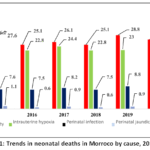 |
Figure 1: Trends in neonatal deaths in Morroco by cause,2014-2021 |
The main causes of neonatal mortality in Morocco are prematurity in 28% of cases, followed by intra- uterine hypoxia in 24.2% of cases, perinatal infection in 8.5% of cases, and neonatal jaundice in 1.1% of cases. The neonatology service at the 12 regional units in Morocco have seen the average occupancy rate rise steadily, with estimates from the Ministry of Health noting that 6034763 newborns were hospitalized at the twelve Moroccan regional neonatal units. However, the average occupancy rate stagnated from 2014 until 2019, which but from 2019, the rate fell until 2021, that said, the effectiveness of the neonatal care service notes questionable effectiveness(Table 2,& Figure 1).
Performance results for twelve neonatal units based on average occupancy rate and length of stay
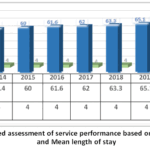 |
Figure 2: Efficiency-based assessment of service performance based on Average occupany rate and Mean length of stay |
The graph above shows a stable average length of stay from 2015 to 2019, followed by an increase from 2019 to 2020. However, the rotation interval experienced a regression from 2015 to 2019, followed by an ascent in MDS from 2019 to 2021.the period from 2020 to 2021, which demonstrates a better degree of quality of care, this while efficiency remains questionable at the level of Morocco’s twelve regional neonatal units 24h/24h medicalized, it ends at 16h (Figure 2).
Risk factors
Intrauterine hypoxia
Table 3: Logistic regressionanalysis of the association between intrauterine hypoxia and n risk factor from 2017 to 2021
| CasesNo. % | Controls No. % |
OR | 95% CI | Adjusted ORa | 95% CI P | |
| Gestational age (37–38) | 1395(45%) | 1653(54%) | 2.3 | [1.1,2.5] | 2.1 | [1.07,2.5] < 0.001 |
| Hb<12g/dl | 856(28%) | 2192(72%) | 2.7 | [2.7,3.4] | 1.8 | [1.5,3.2] < 0.005 |
| Placental infarction | 319(10.46%) | 2729(89.54) | 1.9 | [1.4,2.5] | 1.2 | [1.1,2.2] < 0.001 |
| Umbilical cord occlusion | 793(26.01%) | 2255(73.99) | 2.3 | [2.1,3.8] | 2.2 | [1.01,2.3] < 0.001 |
| Epidural analgesia | 219(7.18%) | 2829(92,82) | 2.1 | [1.9,8.5] | 1.9 | [1.52,7.4] < 0.001 |
| Antecedent of Apgar score at 5 minutes <7 | 956(31.3%) | 2092(68,7) | 2.12 | [2.1,6.5] | 1.7 | [1.1,2.5] < 0.003 |
| Antecedent of Apgar score at 10 minutes < 5 | 729(23.91%) | 2319(76.09) | 3.4 | [2.2.4,9] | 3.2 | [3.1,4.2] <0.005 |
| Smoking | 682(22.37%) | 2366(77,63) | 4.5 | [4.3,7.5] | 3.9 | [3.2,6.9] < 0.005 |
| Depression | 1563(51.2%) | 1485(48,8) | 3.4 | [3.1,5.8] | 2.5 | [2.3,4.6] < 0.001 |
| Intrauterine growth retardation | 765(25%) | 2283(75) | 6,5 | [6.4,9.7] | 5.6 | [5.1,7.3] < 0.001 |
| Gestational Diabetes | 974(31.9%) | 2074(68,1) | 5.2 | [5.1,9.5] | 4.9 | [4.01,7.5] < 0.001 |
Abbreviations and acronyms
CI, confidence interval; OR, odds ratio; Hb Hemoglobin, a : Adjusted for intrauterine hypoxia: gestational age, Hemoglobin, placental infarction, Umbilical cord occlusion, Epidural analgesia, Apgar score at 5 minutes <7, Apgar score at 10 minutes <5, Smoking, Depression, Intrauterine growth retardation and gestational diabetes, Values may not sum to totals because of missing data.
About half (45%) of newborns from 3048 births had intrauterine hypoxia; born between 37- and 38-weeks amenorrhea, first risk factor [Odds ratio: 2.1, 95% confidence interval (CI): 1.07,2.1]. In bivariate analysis, the factors associated with intrauterine hypoxia included the rate of hemoglobin<12g/dl, [OR:1.8; CI to 95%:1.5,3.2]; Placental infarction [OR:1.2, CI to 95%:1.1,2.2], Umbilical cord occlusion [OR:2.2; CI to 95%:1.01,2.3], Epidural analgesia [OR:1.9, CI to 95%: 1.52,7.4], Apgar score at 5 minutes <7[OR:1.7: CI to 95%: 1.1:2.5],Apgar score at 10 minutes <5 [OR:3.2,CI to 95%:3.1,4.2],Smoking[OR: 3.9,95% CI: 3.2,6.9],Depression[OR: 2.5,CI to 95%: 2.3, 4.6], Intrauterine growth retardation [OR: 5.6,CI to 95%:5.1,7.3],and Gestational Diabetes [OR:4.9,CI to 95%:4.01,7.5],Hypoxia, was confirmed by culture(Table 3). It is important to note that intrauterine hypoxia is intricately connected to various maternal, placental, and fetal conditions, manifesting in different forms such as preplacental hypoxia and uteroplacental hypoxia, where maternal oxygenation remains normal. One of the primary complications of chronic hypoxia is the fetus’s inability to achieve its genetic growth potential.10Therefore,it is important to note that intrauterine hypoxia is intricately connected to various maternal, placental, and fetal conditions, manifesting in different forms such as preplacental hypoxia and uteroplacental hypoxia, where maternal oxygenation remains normal. One of the primary complications of chronic hypoxia is the fetus’s inability to achieve its genetic growth potential.11
Perinatal jaundice
Table 4: Logistic regression analysis of the association between puerinatal jaundice and neonatal Risk factors in Morocco from 2017 to 2021.
| CasesNo. % | ControlsNo. % | OR | 95%CI | Adjusted ORa | 95%CI p | |
| Spontaneous vaginal delivery | 973(31.9) | 2075(68) | 4.3 | [3.1,6.5] | 3.7 | [2.6,4.9] <0.001 |
| Hyperbilirubinemia | 356(11.6) | 2692(88) | 2.7 | [1.9,3.2] | 1.6 | [1.2,2.5] <0.003 |
| Premature birth < 37WG | 723(24) | 2325(76) | 5.9 | [3.9,7.1] | 4.6 | [3.4,7.1] <0.001 |
| Umbilical cord occlusion | 345(11.3) | 2703(73) | 6.1 | [5.1,9.4] | 5.4 | [4.2,6.3] <0.001 |
| Breech foetal presentation | 495(16.24) | 2553(83) | 7.3 | [4.7,8.3] | 6.2 | [6.1,8.4] <0.003 |
| Sibling history | 537(17.6) | 2511(82) | 2.2 | [2.1,3.5] | 1.4 | [1.3,1.9] <0.005 |
| Congenital hemolytic anemia | 914,4(30) | 2319(70) | 3.4 | [2.2.4,9] | 3.2 | [3.1,4.2] <0.001 |
| Intrauterine growth retardation | 691(22.37) | 2357(77) | 5.3 | [4.3,7.5] | 4.9 | [4.3,7.9] <0.001 |
| Poor sucking or feeding | 867(28.4) | 2172(71) | 7.9 | [6.3,8.5] | 6.3 | [5.2,7.1] <0.005 |
Almost a third (31.9%) of the 3048 newborns with jaundice resulted from spontaneous vaginal delivery [OR:3.7; 95% CI:2.6,4.9]. In bivariate analysis, factors associated with neonatal jaundice included hyperbilirubinemia [OR:1.6.; 95% CI :1.2,2.5]; history of umbilical cord occlusion [OR:5.4; 95% CI:4.2,6. 3], breech fetal presentation[OR:6.2; 95% CI:6.1,8.4]; sibling history of neonatal jaundice[OR:1.4; 95% CI:1.3,1.9], congenital hemolytic anemia[OR:3. 2; 95% CI:3.1,4.2],intrauterine growth retardation[OR:4.9, 95% CI:4.3,7.9],Poor sucking [OR:6.3; 95% CI:5.2,7.1] and blood group incompatibility[OR:2.4; 95% CI:2.2,3.9](Table 4).
Premature
Table 5: Logistic regression analysis of the association between premature and neonatal Period risk factors in Morocco from 2017 to 2021.
| CasesNob. % | ControlsNo. % | OR | 95%CI | AdjustedORa | 95%CI P | |
| Smoking | 1979(64.9) | 1069(35.7) | 6.7 | [5.9,8.2] | 5.3 | [4.5,6.7] <0.000 |
| Female sexofnewborn | 2134(70) | 2692(30) | 5.9 | [4.8,6.1] | 4.6 | [4.3,7.3] <0.001 |
| Druguse | 223(7.3) | 2825(76) | 2.4 | [2.1,3.2] | 1.6 | [1.4,2.5] <0.001 |
| Lowersocioeconomic | 2189(71) | 859(29) | 9.6 | [7.4,9.8] | 6.2 | [5.3,9.9] <0.005 |
| Illiterate | 879(28.8) | 2151(71,2) | 7.3 | [4.7,8.3] | 6.9 | [6.1,8.4] <0.003 |
| AgeofMother ≤25 | 1997(65.5) | 1051(34.5) | 4.3 | [4.2,5.6] | 3.5 | [2.7,4.3] <0.001 |
| Gestationaldiabetes | 914,4(34.5) | 2134(70) | 3.2 | [2.8,4,1] | 2.4 | [2.3,4.2] <0.005 |
| Bacterialvaginosis | 689(22.6) | 2359(77,4) | 6.2 | [5.3,7.9] | 4.2 | [3.9,7.5] <0.001 |
| PlacentaPreavia | 987(67.6%) | 2061(91.3) | 8,2 | [7.3,9.4] | 7.2 | [5.3,8.5] <0.005 |
| ANC<2 | 2150(70.5) | 890(29.5) | 7.1 | [6.7,8.3] | 6.4 | [5.2,6.9] <0.001 |
Regarding premature births, more than half of births (64.9%) were exposed in utero to passive smoking, either from the mother or the father. In bivariate analysis, factors associated with premature birth included, drug use[OR:1.6; 95% CI:1.4,2.5], Lower socioeconomic [OR:6.2; 95% CI:5.3,9.9],illiteracy[OR:6.9; 95% CI: 6.1,8.4], mother’s age less than 25 years [OR: 3.5; 95% CI:2.7,4.3], [OR:1.6; 95% CI:2.3,5.1],bacterial vaginosis[OR:4.2; 95% CI:3.9,7.5],placenta previa[OR:7.2; 95% CI:5.3.4,8.5], Gestational diabetes [OR:2.4;CI:2.3,4.2],Antenatal care follow-up<2 [OR:6.4; 95% CI:5.2,6.9](Table 5).
Perinatal infection
Table 6: Logistic regression analysis of the association between perinatal infection and neonatal Period risk factors in Morocco from 2017 to 2021
| CasesNob. % | ControlsNo. % | OR | 95%CI | AdjustedORa | 95%CIP | |||
| Escherichiacoli | 973(31.9) | 2075(68) | 4.3 | [3.1,6.5] | 3.7 | [2.6,4.9] <0.001 | ||
| Female sex of newborn | 356(11.6) | 2692(88) | 2.7 | [1.9,3.2] | 1.6 | [1.2,2.5] <0.001 | ||
| Gestational age < 37WG | 723(24) | 2325(76) | 5.9 | [3.9,7.1] | 4.6 | [3.4,7.1] <0.001 | ||
| PROM >12H | 345(11.3) | 2703(73.99) | 6.1 | [5.1,9.4] | 5.4 | [4.2,6.3] <0.001 | ||
| Oligohydramnios | 495(16.24) | 2553(83,7) | 7.3 | [4.7,8.3] | 6.2 | [6.1,8.4] <0.001 | ||
| Sibling history | 537(17.6) | 2511(82,4) | 2.2 | [2.1,3.5] | 1.4 | [1.3,1.9] <0.001 | ||
| Congenital hemolytic anemia | 914,4(30) | 2319(70) | 3.4 | [2.2.4,9] | 3.2 | [3.1,4.2] <0.003 | ||
| Intrauterine growth retardation | 691(22.37) | 2357(77,63) | 5.3 | [4.3,7.5] | 4.9 | [4.3,7.9] <0.005 | ||
| Poor sucking or feeding | 867(28.4) | 2172(71,6) | 7.9 | [6.3,8.5] | 6.3 | [5.2,7.1] <0.001 | ||
| Blood type incompatibility | 323(10.5) | 2725(89.5) | 3.1 | [2.7,4.5] | 2.4 | [2.2,3.9] <0.001 | ||
| Vaginal deliveries | 1914(62.8) | 1134(37.2) | 5.4 | [4.9,6.3] | 4.7 | [3.7,5.2] <0.001 | ||
| Caesarean delivery | 685(22.5) | 2363(77.5) | 0.5 | [0.3,0.7] | 0.3 | [0.1,0.4] <0.005 | ||
| Use of forceps/Vacuum | 448(14.7) | 2600(85.3) | 0.6 | [0.3,0.7] | 0.2 | [0.1,0.5] <0.001 | ||
| Appearance of amniotic fluid Clear | 369(12.1) | 2679(87.9) | 0.6 | [0.5,0.7] | 0.2 | [0.3,0.4] <0.005 | ||
| Appearance of amniotic fluid Meconial | 2546(83.3) | 502(16.46) | 5.9 | [4.2.6,9] | 4.2 | [3.2.6,9] <0.001 | ||
Regarding births with perinatal infection, Escherichia coli was isolated by Cyto-Bacteriological examination of urine, analyzing the mother’s urine, as a routine examination upon admission to the maternity ward. More than a third of newborns contracted Escherichia coli [OR:3.7; 95% CI:2.6,4.9].In bivariate analysis, factors associated with premature birth included, female sex of the newborn [OR:1.6; 95% CI: 1.2, 2.5], the gestational age of the mother less than 37 weeks of amenorrhea [OR: 4.6; 95% CI: 3.4, 7.1], premature rupture of membranes beyond 12 hours, [OR: 5.4; 95% CI:4.2,6.3],Oligohydramnios[OR:6.2; 95% CI: 6.1.8.4], Sibling history [OR: 1.4; 95% CI: 1.3, 1.9], Congenital hemolytic anemia [OR: 3.2; 95% CI:3.1,4.2], Intrauterine growth restriction [OR:4.9 95% CI:4.3,7.9],Poor feeding suction [OR:6.3 95% CI:4.3,7.9], Group incompatibility blood [OR:2.4 95% CI:2.2,3.9], Vaginal births [OR:4.7 95% CI:3.7,5.2], Caesarean section[OR:0.3 95% CI: 0.1,0.4], Use of forceps/aspirator [OR:0.2 95% CI:0.1,0.5], Amniotic fluid appearance Clear[OR:0.2 95% CI:0.3,0.4], Amniotic fluid appearance Meconium [OR:4.2 95% CI:3.2,6.9] (Table 6).
Discussion
Many maternal-fetal and hospital management factors can influence the perinatal health of newborns. This study explored various fetal and maternal factors, including those related to newborn sex, mode of delivery, gestational age at birth less than 37 weeks’ amenorrhoea, low haemoglobin, adverse pregnancy history, amniotic fluid status, umbilical cord occlusion, placental health and Apgar scores. In this prospective case-control study, the results indicate that birth weight, amniotic fluid contamination and Apgar scores at 5 and 10 minutes may have an impact on intrauterine hypoxia (HI). Specifically, gestational diabetes, smoking, as well as epidural analgesia, placental infarction, depression, a low 5-minute Apgar score (≤7) and a low 10-minute Apgar score (≤5) may increase the risk in infants: ‘gestational age less than 37 weeks. The study highlighted the association between intrauterine hypoxia and intrauterine growth retardation (OR: 4.9 95% CI: 5.1,7.3), which is in full agreement with the results of a systematic review that highlighted abnormal placental implantation in complicated IUGR pregnancies, caused by gestational, hypertensionwhichincreasestheriskforthemotherandfetusofdeveloping cardiovascular disease later in life.12,13 Common complications related to hypoxia includemeconium aspiration, cerebral palsy, and cognitive dysfunction.14 Acute and chronic hypoxia are also associated with a variety of fetal and functional cardiac changes aimed at compensating for reduced oxygenation to vital organs.15 Smoking and primiparity expose more people to intrauterine hypoxia (OR: 3.9, 95% CI, 3.2, 6.9), this is perfectly consistent with the results of a study which demonstrated thatmaternal tobacco consumption doubles the risk of intrauterine fetal death in 10% of late intrauterine fetaldeaths have been attributed to tobacco,16 as well as to malformations linked to the development of theneural tube.17 The study results confirmed that gestational diabetes is the primary risk factor for exposureto intrauterine hypoxia (OR: 6.9, 95% CI 5.01, 7.5), but they corroborate the results of a study carried out in Romania which highlighted.18 Gestational diabetes was diagnosed in 974 (31.9%), as well as depressionin1,563(51.2%)womenandplacentalinfarction319(10.46%).Wassignificantlyassociatedwith intrauterine hypoxia, respectively (OR : 6.9, 95% CI 5.01, 7.5), (OR : 2.5, 95% CI 2.3, 4.6 ) and (OR : 1.2, 95% CI 1.1, 2.2). These results corroborate a study carried out on intra-partial cardiotocographic patterns linked to hypoxia (OR 1.94, 95% CI 1.64–2.34) as well as the results of Apgar scores (< 5 and 7 min) (OR 6.64, 95% CI 1.84-12.03) were observed in women with gestational diabetes compared to those who did not have it, remember that the Apgar score is used as an indicator to judge the degree of neonatal asphyxia.19
Regarding the factors relating to neonatal jaundice, this study highlighted a number of associated factors, including gestational age less than 37 weeks (OR:4.6, 95% CI 3.4,7.1) Hyperbilirubinemia (OR:1.6 , 95% CI 1.2,2.5) premature birth (OR:4.6, 95% CI 3.4,7.1) umbilical cord occlusion (OR:5.4, 95% CI 4.2,6.3), congenital hemolytic anemia (OR:3.2, 95% CI 3.1,4.2) blood type incompability (OR:2.4, 95% CI2.2,3.9). In this regard, a study recommended that to reduce the risks associated with neonatal jaundice upon discharge from the hospital, carried out individualized monitoring for each infant and independently of gestational age at birth.20It is important to remember that neonatal hyperbilirubinemia is common in healthy newborns and usually resolves spontaneously. Excess unconjugated bilirubin in the plasma results from a temporary imbalance between bilirubin productionmainly from the breakdown of red blood cells, which are more abundant and have a shorter lifespan in newborns than in adults.21 Regarding factors associated with the risk of prematurity, statistical analysis showed significant associations with maternal age under 25 years, tobacco use, female sex of the newborn, low socioeconomic status, diabetes, bacterial vaginosis, placenta previa, and inadequate prenatal care.22Remember that premature births, intrapartum complications, discontinuity of care, infections,andcongenitalmalformations arethe cause of most neonataldeaths.23 Maternal age has an influence on the occurrence of premature birth. Women (under 25 years old) presentedan association with premature birth, which corroborates the existing literature.24 A cohort study on theinfluence of maternal age on the risk of prematurity carried out showed that the risk of premature birthincreased with maternal age, reaching a relative risk 7.5 times higher in women up to the age of 16.25 Inanother study, even in places with lower income, women over 40 had 2.6 preterm births.26 Gestational diabetes and placenta previa were linearly associated with increased exposure to premature births, in multivariate analysis the present study showed that gestational diabetes increases the risk of premature births by 24% (OR: 2.4 95% CI 2.3,5.1), this agrees with the results of a study carried out in Hubei, China (OR 2.5; 95% CI : 2.3, 2.9)27 The study also demonstrated that placenta previa exposes you to the risk of prematurity (OR: 7.2, 95% CI 5.3, 8.5), this is consistent with the results of a study on the risk factors for prematurity (OR 1.8; 95% CI). : 1.5, 2.2) .28 Regarding the effect of prenatal monitoring on the birth of premature babies, the multivariate analysis shows that the risk of prematurity increases by six times (OR: 6.4; CI to 95% :5.2,6.9). The concordant results of a study carried out on a study on morbidity and mortality in Burkina Faso, which focused on the factors of death of prematurity, highlighted that the multivariate analysis that prematurity depends largely on rhythm of consultations prenatal (OR : 3.44; CI to 95% 1.26-9.35).29 Regarding the risk factors for perinatal infection, among the 973 cases of perinatal infection, 31.9% of newborns contracted Escherchia coli infection from their mothers and developed septicemia. The age of onset was less than 12 hours, the cause of admission being premature rupture of the membranes. Eleven of the PROM cases of babies with sepsis (38%) were born 12 hours after premature rupture of membranes, compared to 62% of newborn cases in the control group (P<0.005). The results corroborate with the conclusions of a study entitled maternal and neonatal outecoma linked to delayed delivery following premature rupture of the membranes. The results demonstrate that the best neonatal and maternal outcomes are obtained if delivery takes place within 12 hours, and the worst if it takes place within 48 hours and/or even 72 hours.30
Conclusion
This study aimed to identify risk factors for early neonatal infection in Morocco. Results showed that that intrauterine hypoxia, prematurity, perinatal infection, and neonatal jaundice are responsible for 90% of neonatal deaths. Factors associated with intrauterine hypoxia include maternal anemia, placental infarction, parental smoking, intrauterine growth retardation, and gestational diabetes. For neonatal jaundice, risk factors include hyperbilirubinemia, prematurity, congenital hemolytic anemia, and blood group incompatibility. Perinatal infection is associated with maternal age under 25, bacterial vaginosis, placenta previa, and fewer than two prenatal visits. Escherichia coli was identified as the primary cause of neonatal infections, with risk factors including premature membrane rupture and gestational age under 37 weeks, while cesarean sections offered some protection. Strategies to mitigate these risks involve screening and treating maternal anemia, promoting smoking cessation, managing gestational diabetes, monitoring fetal growth, identifying and managing hyperbilirubinemia, providing care for premature infants, screening for hemolytic anemia, ensuring blood group compatibility, promoting maternal health, screening for bacterial vaginosis, managing placenta previa, increasing prenatal consultations, managing membrane rupture, and ensuring neonatal hygiene.
Acknowledgement
This research study on the factors of neonatal death relating to intrauterine hypoxia, neonatal jaundice, puerinatal infection, prematurity was carried out with the support and supervision of the national center for neonatology and nutrition in Rabat. under the supervision of Professor Barkat Amina. We are very grateful to the staff of the mother-child center of the Avicenne University Hospital in Morocco.
Funding Sources
The author(s) received no financial support for the research, authorship, and/or publication of this article.
Conflict of Interest
The authors do not have any conflict of interest.
Data Availability Statement
This statement does not apply to this article.
Ethics Statement
This research did not involve human participants, animal subjects, or any material that requires ethical approval.
Informed Consent Statement
This study did not involve human participants, and therefore, informed consent was not required.
Clinical Trial Registration
This research does not involve any clinical trials.
Permission to reproduce material from other sources
Not Applicable
Author Contributions
- Fatima Aslaou: Conceptualization, Methodology, Writing – Original Draft.
- Fatima Aslaou, Najat Ababsi, Halima Ibrahimi, Sima M. Boulebatt, My Abdellah Nabaoui, Amina
Essamett, Hefdhallah Al-Aizari: Data Collection, Analysis, Writing – Review & Editing.
Fatima Aslaou, Hefdhallah Al-Aizari: Visualization.
References
- Organization WH. Improving newborn and child health: a strategic framework (2018–2022). 2018..
- Canton H. United Nations Children’s Fund—UNICEF. In: The Europa Directory of International Organizations 2021. Routledge; 2021:160-172.
CrossRef - Soon BT. The global action report on preterm birth. Geneva World Health Organ. 2012;2.
- Sharrow D, Hug L, You D, et al. Global, regional, and national trends in under-5 mortality between 1990 and 2019 with scenario-based projections until 2030: a systematic analysis by the UN Inter-agency Group for Child Mortality Estimation. Lancet Glob Health. 2022;10(2):e195-e206.
CrossRef - Koum DCK, Essomba NE, Ngaba GP, Sintat S, Ndombo PK, Coppieters Y. Morbidité et facteurs de risque de mortalité néonatale dans un hôpital de référence de Douala. Pan Afr Med J. 2015;20(1)..
CrossRef - Applegate JA, Ahmed S, Khan MA, et al. Early implementation of guidelines for managing young infants with possible serious bacterial infection in Bangladesh. BMJ Glob Health. 2019;4(6):e001643.
CrossRef - Ouahid H, Adarmouch L, Belouali R, Mouwafaq S, Soummani A. Les facteurs associés à la mortalité intrapartum et néonatale très précoce au niveau de la maternité du centre hospitalier universitaire Mohammed VI, Marrakech, Maroc. Étude cas témoin. Rev DÉpidémiologie Santé Publique. 2019;67(4):233-238.
CrossRef - Lopez-Barreiro J, Garcia-Soidan JL, Alvarez-Sabucedo L, Santos-Gago JM. Practical approach to designing and implementing a recommendation system for healthy challenges. Appl Sci. 2023;13(17):9782.
CrossRef - Devasahay SR, DeBrun A, Galligan M, McAuliffe E. Key performance indicators that are used to establish concurrent validity while measuring team performance in hospital settings–A systematic review. Comput Methods Programs Biomed Update. 2021;1:100040.
CrossRef - Huppertz B. Placental physioxia is based on spatial and temporal variations of placental oxygenation throughout pregnancy. J Reprod Immunol. 2023:103985.
CrossRef - Tong W, Giussani DA. Preeclampsia link to gestational hypoxia. J Dev Orig Health Dis. 2019;10(3):322-333.
CrossRef - Barker DJ, Bull AR, Osmond C, Simmonds SJ. Fetal and placental size and risk of hypertension in adult life. Br Med J. 1990;301(6746):259-262.
CrossRef - Hutter D, Jaeggi E. Causes and mechanisms of intrauterine hypoxia and its impact on the fetal cardiovascular system: a review. Int J Pediatr. 2010;2010.
CrossRef - Lonser RR, Zipfel GJ, Chiocca EA. National Institute of Neurological Disorders and Stroke: current funding status, opportunities, challenges, emerging scientific advances, and recommendations for neurosurgery. J Neurosurg. 2020;133(4):1264-1269.
CrossRef - Sab IM, Ferraz MMD, Amaral TAS. Prenatal hypoxia, habituation memory and oxidative stress. Pharmacol Biochem Behav. 2013;107:24-28.
CrossRef - Tarasi B, Cornuz J, Clair C, Baud D. Cigarette smoking during pregnancy and adverse perinatal outcomes: a cross-sectional study over 10 years. BMC Public Health. 2022;22(1):2403. doi:10.1186/s12889-022-14881-4
CrossRef - Vardavas CI, Hohmann C, Patelarou E,. The independent role of prenatal and postnatal exposure to active and passive smoking on the development of early wheeze in children. Eur Respir J. 2016;48(1):115-124.
CrossRef - Preda A, Pădureanu V, Moța M,. Analysis of maternal and neonatal complications in a group of patients with gestational diabetes mellitus. Medicina (Mex). 2021;57(11):1170.
CrossRef - Tarvonen M, Hovi P, Sainio S, Vuorela P, Andersson S, Teramo K. Intrapartum zigzag pattern of fetal heart rate is an early sign of fetal hypoxia: A large obstetric retrospective cohort study. Acta Obstet Gynecol Scand. 2021;100(2):252-262. doi:10.1111/aogs.14007
CrossRef - Lin Q, Zhu D, Chen C, Feng Y, Shen F, Wu Z. Risk factors for neonatal hyperbilirubinemia: a systematic review and meta-analysis. Transl Pediatr. 2022;11(6):1001.
CrossRef - Mohammed N. Risk Factors for Severe Hyperbilirubinemia and Exchange Transfusion in Neonates. Kirkuk J Med Sci. 2023;11(2):42-50.
CrossRef - Gourley GR. Breast-feeding, neonatal jaundice and kernicterus. In: Seminars in Neonatology. Vol 7. Elsevier; 2002:135-141.
CrossRef - Newborns WHO. Improving survival and well-being. World Health Organ. 2020.
- Fuchs F, Monet B, Ducruet T, Chaillet N, Audibert F. Effect of maternal age on the risk of preterm birth: A large cohort study. PloS One. 2018;13(1):e
CrossRef - Barbuscia A, Martikainen P, Myrskylä M,. Maternal age and risk of low birth weight and premature birth in children conceived through medically assisted reproduction. Evidence from Finnish population registers. Hum Reprod. 2020;35(1):212-220.
CrossRef - Jafari M, Seyedjavadi M, Zaboli R. Assessment of performance in teaching hospitals: Using multicriteria decision-making techniques. J Educ Health Promot. 2020;9.
CrossRef - Li H, Nawsherwan, Fan C, Mubarik S, Nabi G, Ping YX. The trend in delayed childbearing and its potential consequences on pregnancy outcomes: a single center 9-years retrospective cohort study in Hubei, China. BMC Pregnancy Childbirth. 2022;22(1):514. doi:10.1186/s12884-022-04807-8
CrossRef - Jolly M, Sebire N, Harris J, Robinson S, Regan L. The risks associated with pregnancy in women aged 35 years or older. Hum Reprod. 2000;15(11):2433-2437.
CrossRef - Nagalo K, Dao F, Housseini FT, Diarra Y. Morbidity and Mortality of Newborns Hospitalized over 10 Years at the El Fateh-Suka Clinic (Ouagadougou, Burkina Faso). Pan Afr Med J. 2013;14.
CrossRef - Pajntar M, Verdenik I. Maternal and neonatal outcome related to delivery time following premature rupture of membranes. Int J Gynecol Obstet. 1997;58(3):281-286.
CrossRef
 PlumX:
 Views: 3870
  PDF Downloads:
204
PDF Downloads:
204 
Accepted on: 19-06-2024
Second Review by: Dr. Rosaline Vimala J and Dr. Surendra Kumar Swarnkar
Final Approval by: Dr. Mariia Shanaida