





Manuscript accepted on :02-04-2026
Published online on: 21-04-2026
Plagiarism Check: Yes
Reviewed by: Dr. Nicolas Padilla
Second Review by: Dr. Nishu Raina
Final Approval by: Dr. Achyut Shankar
 Views:
 PDF Downloads:
Vimala Mannarsamy1* , Nandhini Mani1, Jasmine Shahul Hameed2 and Ranjith kumar Paulraj1
1Department of Electronics and Communication, P.S.R. Engineering College, Sivakasi, Tamilnadu, India.
2Department of Networking and Communications, SRM Institute of Science and Technology, Kattankulathur, Tamil Nadu, India.
Corresponding Author mail Id: vimala@psr.edu.in
DOI : https://dx.doi.org/10.13005/bpj/3441
Abstract
Brain tumors arise from the uncontrolled proliferation of abnormal brain cells, with significantly higher mortality rates in both adults and children compared to individuals without such conditions. Accurate and robust classification of brain tumors is essential for timely treatment planning. This study proposes a novel Brain Tumor Classification and Survival Analysis using Multi-Attribute Graph Convolution Network (BTC-SA-MGCN) framework. MRI images from the BRATS 2018 dataset are first denoised using the Generalized Multi-kernel Maximum Correntropy Kalman Filter (GMMCKF), followed by segmentation via Deep Fuzzy Curriculum Clustering (DFCC). Revised Tunable Q-factor Wavelet Transform (RTQWT) is then employed to extract Haralick texture features, which are fed into a Multi-Attribute Graph Convolution Network (MGCN) for benign–malignant classification. Extensive experiments under both 80:20 hold-out and 5-fold cross-validation settings demonstrate that hyperparameter tuning markedly improves performance, achieving up to 98.99% accuracy, 99.00% precision, 98.99% sensitivity, and 99.00% F1-score, with statistically significant gains confirmed by Chi-square tests (p< 0.05 for all cases). Comparative evaluation against 12 recent state-of-the-art methods shows BTC-SA-MGCN attaining the highest accuracy (99.05%) while maintaining balanced precision, sensitivity, and F1-score, outperforming EfficientNet-B0, ResNet-based, and ensemble architectures. These results confirm the effectiveness and robustness of the proposed approach for clinical brain tumor classification tasks.
Keywords
Classification; Deep Fuzzy Curriculum Clustering (DFCC); Generalized Multi-kernel Maximum Brain Tumor Correntropy Kalman Filter (GMMCKF); Multi-Attribute Graph Convolution Network (MAGCN); Revised Tunable Q-factor Wavelet Transform (RTQWT); Survival Prediction
Download this article as:
| Copy the following to cite this article: Mannarsamy V, Man N, Hameed J. S, Paulraj R. K. Brain Tumor Classification and Survival Analysis using Multi-Attribute Graph Convolution Network. Biomed Pharmacol J 2026;19(2). |
| Copy the following to cite this URL: Mannarsamy V, Man N, Hameed J. S, Paulraj R. K. Brain Tumor Classification and Survival Analysis using Multi-Attribute Graph Convolution Network. Biomed Pharmacol J 2026;19(2). Available from: https://bit.ly/4sRz99V |
Introduction
Brain tumors arise from the proliferation of aberrant brain cells. The death rate for adults and children with brain tumors is significantly higher than that of those without. Malignancy and growth rate are the two main factors used to categorize brain tumors.1-3 Primary refers to the first category, while secondary to the second. Primary brain tumors give rise to secondary tumors, which spread throughout the body as cancerous cells proliferate from the original tumor. Novel diseases present a selection of health issues to human society.4-5 The most life-threatening among these is a brain tumor, which damages every part of the body and ultimately causes death. A brain tumor is indicated by undesired tissue growth in the brain, surrounding brain, or spine.6–8 A key component of the human body, the brain controls several bodily processes, such as speech, listening, mood, memory, activity, behavior, and language. When the brain is not functioning properly, a person is just a collection of muscles and bones.9–11 There are several methods for detecting tumors in brain scans. Different features, such as tumor shape, texture, border, sharpness, and so forth, are used by each technique. They do, however, perform poorly and result in a greater false ratio. Most methods use the same grey scale values, and the classification is performed by computing certain similarity metrics. The central nervous system’s grey matter gives people control over their emotions, memory, and movement. Every aspect of human existence involves grey matter, and several brain areas are in charge of different tasks.12-14 Brain image classification makes extensive use of image processing techniques. Gliomas come in several forms, such as chordoma, astrocyteoma, acoustic neuroma, and others. But each has unique symptoms, some of which are widespread, such as headaches. Therefore, it is not enough to only use the symptoms to determine whether a disease exists; a thorough analysis of the brain imaging is required.15-17 The image quality is crucial for the medical industry. The capturing device produced noise in the acquired image. Since the Magnetic Resonance Imaging (MRI) pictures solely include grey values, they are regarded as grayscale images.18 Nevertheless, the image’s sharpness is impacted by the noise, which also makes the image less distinct. It is necessary to improve the image’s sharpness. Additionally, the clarity of the texture boundaries in the image can be used to establish the presence of tumor.19 Thus, retaining image clarity can significantly improve brain tumor classification ability. The WHO divides brain tumors into benign (less harmful), malignant (more dangerous) categories depending on the genesis and cell activity. Germ cell brain tumors are the prevalent and aggressive type of cancer among adult patients with primary brain tumors.20 The prognosis for GBM is not good, despite treatment with radiation therapy, chemotherapy, and maximum surgical resection.
The challenge of brain tumor categorization has been handled using a variety of methodologies, including distinct features collected from MRI brain images. However, they struggle to achieve higher performance in brain tumor classification and produce poor results with a larger false ratio.
These are motivated us to do his research work.
In this paper present a five-step model to classify brain tumors with high efficiency, in the first stage, it uses filter for the image preprocessing. In the next step, image segmentation, an image is divided into several regions. Post-processing of the data is done using and GMMCKF and RTQWT. Then, classify two images into Malignant and Benign category using the MGCN model. The features of the segmented images were further classified into Malignant and Benign. Further, this approach was validated using Brats 2018 dataset from Kaggle, to classify the Brain tumor.
Major contribution of this paper includes;
Proposing a Brain Tumor Classification and Survival Analysis using Multi-Attribute Graph Convolution Network (BTC-SA-MGCN) framework for accurate and robust brain tumor diagnosis.
Utilizing MRI input images from the BRATS 2018 dataset.28 as the basis for model development and evaluation.
Applying the Generalized Multi-kernel Maximum Correntropy Kalman Filter (GMMCKF).29 for noise reduction and image enhancement, followed by Deep Fuzzy Curriculum Clustering (DFCC)30 for precise tumor segmentation.
Extracting Haralick texture features using the Revised Tunable Q-factor Wavelet Transform (RTQWT)31 and employing the proposed Multi-Attribute Graph Convolution Network (MGCN)32 for benign–malignant tumor classification.
Evaluating BTC-SA-MGCN using multiple performance metrics, including accuracy, precision, specificity, sensitivity, F1-score, mean square error (MSE), and ROC analysis, to comprehensively assess diagnostic effectiveness.
Conducting a comparative analysis with existing state-of-the-art approaches, demonstrating the superior performance and balanced results achieved by BTC-SA-MGCN.
Remaining portions of this work structured below: section 2: analyzes literature review, section 3: designates proposed method; section 4: illustrates results; section 5: Discussion; section 6: Conclusion.
Literature Survey
Numerous research efforts have been proposed in recent years to enhance brain tumor classification using deep learning (DL). A few notable works are summarized below:
In Zhou et al.21 proposed an efficient 3D residual neural network (ERV-Net) for brain tumor segmentation, focusing on minimizing GPU memory usage and computational complexity. The network employed 3D ShuffleNetV2 as an encoder to enhance efficiency and included a residual block decoder to avoid degradation. A fusion loss function combining Dice and cross-entropy loss addressed data imbalance and convergence challenges. Additionally, a concise post-processing technique further refined segmentation results. Evaluated on the BRATS 2018 dataset, the ERV-Net achieved high accuracy, although with relatively low precision.
Sharif et al.22 developed a decision support system for multiclass brain tumor classification using a deep transfer learning strategy based on DenseNet201. To optimize classification performance, two feature selection techniques such as Entropy Kurtosis and a modified Genetic Algorithm—were employed. The proposed system demonstrated a low mean square error but comparatively low F1-score. In the same year, Huang et al.23 introduced GCAUNet, a group cross-channel attention residual U-Net for slice-based brain tumor segmentation. This model employed recurrent background removal and image normalization for pre-processing. A detail recovery path and a group cross-channel attention module were integrated to capture fine tumor features and emphasize critical channels. Tested on BRATS 2018, GCAUNet exhibited high sensitivity but a relatively low F1-score.
Khan et al.24 proposed a segmentation and classification method using K-means clustering and a VGG19-based DL model, supported by synthetic data augmentation. Their three-stage process including preprocessing, segmentation, and classification with improved classification accuracy. The method was validated on BRATS 2015 and showed high ROC values, although accuracy remained modest. Vankdothu et al.25 suggested a CNN-LSTM hybrid model for brain tumor identification and classification from MRI scans. By combining the feature extraction capabilities of CNNs with the sequential learning strengths of LSTM networks, the system outperformed traditional CNNs. It achieved low mean square error but showed lower sensitivity.
Majib et al.26 implemented a VGG-based DL framework for automated brain tumor detection using MRI. Various transfer learning approaches were analyzed, and the best-performing method was selected for tumor classification. This framework offered high precision but exhibited relatively low ROC. Dasanayaka et al.27 developed an interpretable machine learning tool, Tumor Analyzer, which classifies tumors into astrocytic glioma, oligodendroglioma, or glioblastoma using MRI and whole slide images. Leveraging DenseNet and ResNet models, the tool emphasized interpretability and transparency in decision-making. The approach showed high specificity but had a lower F1-score.
Latif et al.33 presented a glioma tumor classification approach using features from deep neural networks combined with SVM classifiers. This hybrid strategy achieved high classification accuracy and F1-score, while maintaining a low mean square error. Chitnis et al.35 introduced a classification technique based on Neural Architecture Search (NAS), which autonomously identified optimal deep learning models for brain tumor classification. The NAS-based approach demonstrated high sensitivity but comparatively lower ROC.
Shah et al.36 proposed a robust classification method using a fine-tuned EfficientNet model. This system effectively differentiated between tumor and non-tumor regions in MRI images. It achieved high precision but relatively low F1-score. In Ravinder et al.37 implemented a Graph Convolutional Neural Network (GCNN) for brain tumor classification. This method utilized graph-based spatial relationships within MRI data to improve classification robustness, yielding high accuracy though with limited sensitivity.
Anand et al.34 designed a weighted average ensemble deep learning model that combined predictions from multiple neural networks for more reliable tumor classification. The ensemble approach produced a high F1-score and low mean square error. Geetha et al.,38 introduced a multilevel brain tumor classification method using a hybrid Archimedes Sine Cosine Optimization-enabled DL model. The proposed system enhanced feature learning and achieved high ROC but comparatively low precision.
Dutta et al.39 proposed ARM-Net, an attention-guided residual multiscale CNN tailored for multiclass brain tumor classification. The attention mechanism improved focus on tumor regions, resulting in high accuracy and low mean square error. Schiavon et al.40 emphasized interpretability with their CNN-based classification model. Using Explainable AI (XAI) techniques, they enhanced transparency in decision-making. Their approach attained high specificity but relatively low precision.
Izadi et al.,41 presented a DL-based brain tumor control and diagnosis framework incorporating interpretability features. Their system demonstrated high sensitivity while achieving a lower F1-score. Sharma et al.42 proposed a feature extraction framework based on HOG transformation combined with a modified ResNet50. This model was effective in detecting brain tumors and provided high ROC but had lower classification accuracy.
Most recently, in Jebin et al.43 introduced an advanced hybrid framework using U-Net and CNN enhanced with brain texture pattern analysis. The model incorporated a modified U-Net for precise tumor segmentation and texture-aware CNN for classification. Evaluated across multiple datasets (SARTAJ, Br35H, and Figshare), the method showed strong performance with high accuracy and F1-scores. Existing studies have shown the effectiveness of deep learning architectures such as CNNs, U-Net, EfficientNet, and various hybrid models for brain tumor detection and classification. However, these approaches mainly rely on pixel-level or feature-level analysis and often do not fully utilize the structural and relational information between tumor regions and clinical features. In addition, survival analysis is typically handled separately, resulting in disconnected insights that limit their practical use in clinical settings.
To address these limitations, the proposed model, titled Brain Tumor Classification and Survival Analysis using Multi-Attribute Graph Convolution Network (MAGCN), introduces a graph-based learning framework that combines multiple attributes. In this model, brain tumor MRI data is represented as a graph where nodes capture tumor regions, and attributes such as texture, shape, location, and intensity are used to model both local and global dependencies. By incorporating survival-related features into this graph structure, the model supports both accurate classification and meaningful survival prediction.
This approach overcomes the constraints of traditional CNN-based models by effectively capturing spatial relationships, integrating diverse attributes, and enabling a unified solution for both diagnosis and prognosis. The MAGCN framework is also scalable and interpretable, making it suitable for real-world clinical applications. In summary, the proposed model fills an important gap by offering a combined classification and survival analysis system that is more comprehensive, accurate, and clinically relevant.
Materials and Methods
In this paper, Brain Tumor Classification and Survival Analysis using Multi-attribute Graph Convolution Network(BTC-SA-MGCN) is proposed is discussed. Block diagram of proposed BTC-SA-MGCN given in Figure 1. Data acquisition, pre-processing, segmentation, feature extraction and classification are five procedures. Accordingly, detailed explanation of all stage as below,
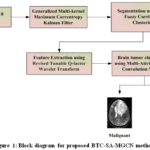 |
Figure 1: Block diagram for proposed BTC-SA-MGCN method |
Data Acquisition
The input images are gathered from BRATS 2018 dataset.28In the area of medical imaging, the BRATS 2018 dataset is well-known, especially for problems involving the segmentation, classification of brain tumors. It contains 80% of training and 20% of testing images. Because of its high-quality MRI images and accompanying annotations, researchers frequently utilize this dataset to test various algorithms and methodologies. One dataset that is frequently utilized in the healthcare industry is BraTS 2018. With four MRI modalities per case, it offers multimodal 3D brain MRIs and ground truth brain tumor segmentations annotated by medical professionals. Images were collected from 19 different institutes using different MRI scanners.To ensure unbiased evaluation and prevent data leakage, patient-wise splitting was strictly followed in both the 80:20 hold-out validation and 5-fold cross-validation experiments. All MRI slices corresponding to a single patient were assigned to the same subset and were not distributed across training and testing sets. This approach ensures that the model is evaluated on unseen patient data, providing a realistic assessment of its generalization capability in clinical scenarios.
Generalized Multi-kernel Maximum Correntropy Kalman Filter
In this step, GMMCKF is utilized to reduce noise from the images. The given brain image would contain various noise features introduced by the capturing apparatus, lowering image quality and obscuring texture attributes. GMMCKF is less cautious by using various kernel bandwidths for various channels and performs admirably both in the presence, absence of outside disturbance. The complexity of the proposed method and convergence of the fixed point iteration are provided. The proposed method is quite effective in disturbance estimation with a modest algorithmic complexity. Then the priori estimation is given in equation (1)
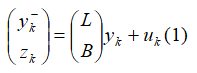
Where YK, represents the priori estimate of state, ZK denotes the measurement set, L indicates the influence function, B represents the correntropy, uk represents the noise state. The axial window or sub window’s mean value is calculated using this method. The mean value is calculated using the average distance in axial coordinates. The least axial window is now chosen, and the pixel value is modified in accordance with the chosen axial mean distance is given in equation (2)
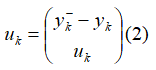
Here, YK represents the priori estimate state, uk represents noise state. Each axial window’s value of the axial mean is measured, axial window with lowest mean value is selected. The procedure calculates the average mean grey value (AMGV) for the chosen window. Then, it is given in equation (3)
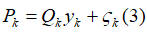
Where, Pk represents the loss function, Qk indicates the spatial indicator, ζk denotes the Cholesky decomposition. If the difference between the current pixel and AMGV is more or less than the total number of pixels in window, pixel value will be changed to reflect the AMGV value; if not, it has been left. It is calculated in equation (4)

Where, di, k represents the error at time k, α and β are kernel parameters, denotes the Laplace distribution, Yk represents the priori estimate of state.In a similar manner, the procedure is carried once again for every pixel in the image window, thus, the noise is reduced by formulating the equation (5)

Where, f represents the ease of notation, Rcc denotes the invertible, Qct represents the exponential distribution, y refers to the priori value which is greater than or less than the number of pixels in window, pixel value will be adjusted with the AMGV value measured. Finally, the images are pre-processed by GMMCKF which reduced the noise from the images. Then, the preprocessed images are fed to image segmentation section.
Unlike deep learning approaches, which require large labeled datasets and extensive training, GMMCKF operates as a model-based filtering technique that does not depend on prior training. Deep learning methods such as DnCNN rely on learning noise distributions from data and involve complex architectures with high computational cost and GPU dependency44. In contrast, GMMCKF employs the maximum correntropy criterion, which is inherently robust to non-Gaussian and impulsive noise commonly present in MRI data 45.Furthermore, while deep learning-based denoisers perform well under controlled conditions, their effectiveness depends on training data quality and noise assumptions. In real-world clinical scenarios, where noise characteristics vary, GMMCKF provides more stable performance without retraining and with lower computational complexity. Therefore, it is better suited for real-time clinical applications.
Image Segmentation using Deep Fuzzy Curriculum Clustering
In this section, Deep Fuzzy Curriculum Clustering (DFCC) technique is discussed. DFCC is used to group the pixels and segments the image. It allocates reward to nodes of the particular cluster; the basic elements of the DFCC process are the agent, action, state, reward, policy, value function, environment method. DFCC, which learns cluster centres and cluster-friendly latent features simultaneously, cluster number based curriculum learning, which is inspired by curriculum learning, to progressively apply clustering from simple excessively complex. Through clustering in a sequential manner under various cluster numbers, learners can progressively increase their knowledge. It achieves the aforementioned way of merging clusters by reducing the number from big to small then fine-tuning assignments from fine to rough until it reaches correct cluster number by utilizing fuzzy theory and curriculum. The objective function is given in equation (6)

Here, Ct represents reconstruction loss, Ckc represents clustering loss, Cn signifies curriculum loss, γ1 and γ2 are hyperparameter that regulates balance among different loss items. The grey scale histogram images are first produced by the DFCC. The technique determines the image’s minimum and maximum grey scale values from the grey histogram. The sample points are given in equation (7)
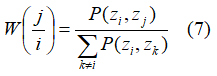
Where, P (zi, zj) represents the similarity between sample zi and zj, W denotes the curriculum information, k is the sample pints of the fuzzy. The DFCC now finds three neighbour values in the histogram set for each class of min and max. Now, using the lowest and greatest sets of grey values that the histogram yielded, Thus the calculation is given in equation (8)
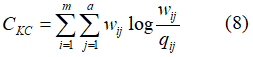
Where, α is the clustering centre, wij represents the latent space, qij denotes the larger value, m indicates the cluster layer, Ckc represents the clustering loss. The maximum and minimum values are identified; a histogram of the grey scale values is generated by the gradient min-max segmentation technique. The reconstruction loss is formulated in equation (9)
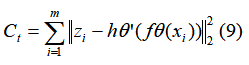
Here, f and h represents the nonlinear mapping functions of encoder and decoder, θ’ denotes the parameter of encoder and decoder, Ct represents reconstruction loss, m indicates the cluster layer, xi represents the mapping function. Here, the pixels are grouped and the images are segmented by calculating the equation (10)
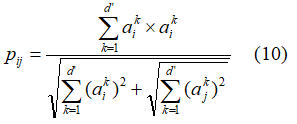
Where, Pij represents the similarity among cluster center αi, αj, αik represents the kth dimension of αi, d’ denotes the similar relation among cluster distributions in every step. Thus, DFCC is grouped the pixels and segments the images. Segmented images are fed to extract the features.
Feature Extraction using Revised Tunable Q-factor Wavelet Transform
In this section, RTQWT is discussed for feature extraction. RTQWT is used to extract Haralick Texture features such as Energy, Contrast, Entropy and Homogeneity. The RTQWT parameter study indicates that Q-factor along redundancy provides important influence on wavelets oscillatory behaviour. The RTQWT along frequency response may be made to mimic transient oscillations by adjusting Q-factor with redundancy. The criterion for choosing the best Q-factor along redundancy is insufficient. As a solution to this problematic, updated adjustable Q-factor wavelet transform is offered, which is based on a new parameter selection criterion and the wavelet entropy of coefficients is given in equation (11)
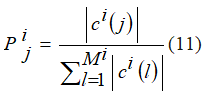
Where Pij signifies the probability of ci(j); represents the ith subband; Mi indicates the length of coefficients. Wavelet entropy presents two challenges. Initially the sub bands of varying lengths which undergo RTQWT decomposition with own significance to every other, in contrast to constant Q-factor wavelet. The coefficients is given in equation (12)
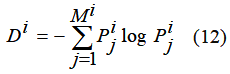
Where Di represents the entropy measurement of wavelet and signal; Pji represents the probability; Mi indicates the length of coefficients. The RTQWT decomposition yields several subband scales, wavelet entropy Di disregards the sub band scale influences, potentially resulting in an inaccurate evaluation of the wavelet coefficients. The weighted wavelet entropy is given in equation (13)
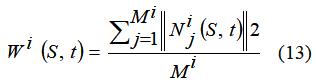
Where Mi(S,t) represents the weight of ith wavelet coefficients of Ni; Mi is the length of the ith subband. The weights allocated to entropy values primarily take into account the subbands’ energy. Probability of subband coefficients is given in equation (14)
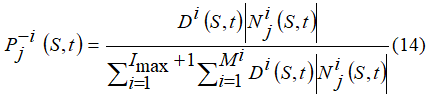
Where Pj–i(S,t) estimates the probability of jth element of wavelet coefficients; Di(S,t) represents the weight of ith wavelet coefficients; Imax represents the composition of maximum level; Mi is the length of the ith subband. The weighted normalized entropy is given in equation (15)

Where K–i(S,t) represents the weighted wavelet entropy of ith subband; S and t are the RTQWT parameters. The Haralick Texture features of the images are discussed below,
Entropy is the texture of an input image can be identified using a statistical measure of unpredictability. Entropy may be used to calculation is given by the equation (16)

Where, m – h represents spatial relationship of pixels n – q and represents intensity values, x represents coordinates of points. It is employed to quantify how close the distribution of elements is approximated to the texture diagonal. The calculation of homogeneity is given by the equation (17)
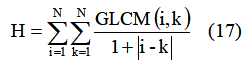
Here, i – k represents element of co-occurrence matrix, H represents the homogeneity, N denotes the feature value, GLCM and represents Gray level Co-occurrence matrices. Energy is the GLCM’s total of the squared elements. It is sometimes referred to as homogeneity or the angular second moment. The sum of the pixel point in an image and it is given by the equation (18)
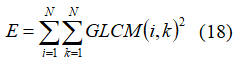
Where, E denotes the Energy, k and i represents variation in an images, N denotes the measures, GLCM represents Gray level Co-occurrence matrices. Contrast determines the density contrast of a pixel with its neighbouring pixels throughout the entire image. It is given by the equation (19)
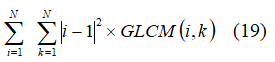
Where, i and k represents variation in the pixel and N indicates feature value. Finally, Energy, Contrast, Entropy and Homogeneity features from its input images have extracted. Then these extracted features are now used by Multi-Attribute Graph Convolution Network to effectively categorize the Brain tumor classification in the following section.
Brain Tumor classification using Multi-Attribute Graph Convolution Network
In this section, MGCN is discussed. MGCN is used for classify the Brain tumor such as Malignant and benign. The MGCN calculates tumor weight for various types of brain cancers and predicts survival rate. MGCN uses graph data to derive topological graph’s spatial properties. The graph is a topological graph in which correlation is established between vertices and edges hypothesis. The grids’ distance relationship is translated into an adjacent matrix, which undergoes normalization to preserve the relative relationship among the image, make the image comparable. To obtain spatial correlation, capture topological features of the road network by feeding output of the first Temporal Convolution Layer and the normalized adjacency matrix into spatial convolution layer. Main formulation is given in equation (20)
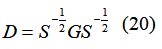
Where, S represents the degree matrix, G denotes an adjacency matrix of the graph and D represents self-transfer problem. The medical industry has used MGCN to solve a wide range of problems. Medical imaging allows for the identification and classification of a wide range of human illnesses. Then, the temporal layer is given in equation (21)

Here, *P denotes the graph convolution operation, pθ represents the convolution kernel, θ represents the vector of Chebyshev co-efficient, Z and denotes the input data. Causal convolution, in contrast to the conventional convolutional neural network, only takes into account information from the past and ignores information from the future. The model is a rigorous one-way time constraint is given in equation (22)
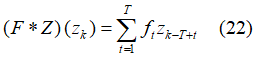
Here, F represents the historical information, Z denotes the input data k. Denotes time, t denotes the multi-scale context information. The purpose of the MGCN is to fill the space left by the initial convolution by expanding the MGCN to the scale of the expansion scale restriction kernel that has zero. Given that image gathered over a great distance is not very relevant. Thus, the labelled sample is given in equation (23)
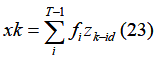
Here, xk represents the output data, Zk denotes the input image of the time, d represents the residual block, f and indicates the information. The approach calculates the tumor support factor (TSF) for each of them. To achieve categorization, the network’s neurons measure the tumor weight (TW). The approach also does survival analysis in conjunction with the MGCN classification results. Then, malignant is calculated in equation (24) and benign is calculated in equation (25).
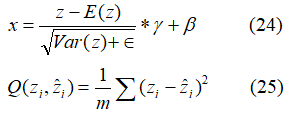
Here, z denotes the input data, E(z) represents mean value of the input data, √var(z) denotes variance of the input data, ∈ represents variable added to prevent zero denominators, γ and β represents learning parameters of the method, Q denotes the benign tumor, m is the real class, zi – zi denotes the input data. Finally, MGCN classifies the brain tumor such as Malignant and Benign. Furthermore, the approach calculates the tumor weight for various types of brain tumors and predicts the survival rate.
In the proposed Multi-Attribute Graph Convolution Network (MGCN), the input MRI image is represented as a graph structure to capture inter-regional relationships. Each node corresponds to a segmented tumor region (or superpixel) obtained from the DFCC stage. Every node is associated with a multi-attribute feature vector, including RTQWT-based Haralick texture features, intensity statistics, and spatial location information.Edges are defined based on spatial proximity and feature similarity between nodes. Regions that are spatially adjacent or exhibit similar feature characteristics are connected, forming the graph structure. The adjacency matrix is constructed accordingly and normalized to maintain the relative relationships between nodes and ensure stable learning.This graph representation enables the model to capture both local texture variations and global structural dependencies within tumor regions, thereby improving classification accuracy and robustness.
Results
The proposed Multi-Attribute Graph Convolutional Network (MAGCN) model was implemented using Python. Experiments were conducted on a system with an Intel Core i7 processor, 32 GB RAM, and an NVIDIA RTX A2000 GPU (12 GB), operating on Windows 10. The model was trained and validated using the BraTS 2018 dataset, which consists of annotated brain MRI images representing both benign and malignant tumor cases.
Performance measures
It is a critical step in picking the best classifier. Accuracy, precision, F1-score, recall, specificity, MSE, and ROC are some of the performance measurements that have been investigated.
True Positive: Malignant is appropriately identified as malignant.
True Negative: Benign is appropriately identified as Benign.
False Positive: Benign is imperfectly identified as Malignant.
False Negative: Malignant is improperly identified as Benign.
Accuracy
The ability to measure accurate value known as accuracy, expressed in equation (26),

Represents true positive, denotes true negative, denotes false positive,represents false negative.
Precision
Precision computes number of true positives divided through true positives plus number, false positives number and it is given by the equation (27),
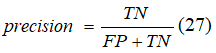
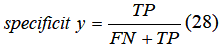
Specificity
Specificity estimates proportion of negative, given in equation (28),
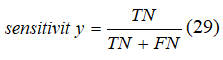
Sensitivity
Sensitivity finds the proportion of positive instances and it is given by the equation (29),
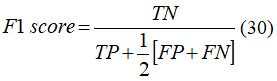
F1 Score
It represents harmonic mean of precision, sensitivity. It given in equation (30),
Dice Co efficient
The Dice coefficient measures the overlap between predicted and actual regions, calculated as (31),

Training and Validation Metrics
The proposed model was trained over 30 epochs using a stratified dataset to ensure balanced representation of tumor classes. The training and validation metrics were monitored to evaluate the model’s performance and generalization capability. As shown in the left plot, model accuracy consistently improved during training, reaching above 99% after a few epochs. Validation accuracy stabilized around 94%–96%, indicating effective learning with slight fluctuations possibly due to dataset variance or noise in validation samples. The right plot illustrates model loss, which sharply declined during the initial epochs for both training and validation, demonstrating rapid convergence. The training loss reached near zero, while the validation loss plateaued around 0.5–0.7, suggesting good generalization with minimal overfitting. Overall, the learning curves indicate that the model successfully captured relevant features from MRI inputs, offering high accuracy and stable validation performance across epochs. These results validate the robustness of the training configuration and the effectiveness of the proposed MAGCN-based architecture
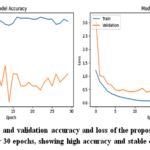 |
Figure 2: Training and validation accuracy and loss of the proposed BTC-SA-MGCN model over 30 epochs, showing high accuracy and stable convergence. |
Analysis of the Proposed Model with and without hyperparameter tuning
The performance of the proposed BTC-SA-MGCN model was evaluated before and after hyperparameter tuning to assess its effectiveness in classifying benign and malignant brain tumors. The comparison was performed using both an 80:20 train-test split and 5-fold cross-validation on the BraTS 2018 dataset. The results clearly show that hyperparameter tuning significantly improves the model’s accuracy, sensitivity, and generalization capability across all evaluation scenarios. For benign tumor classification using the 80:20 split, accuracy increased from 98.00% to 98.99%, while sensitivity improved markedly from 96.74% to 99.00%, and the F1 score rose from 97.80% to 99.00%. Precision also improved slightly from 98.89% to 99.00%. Although specificity dropped marginally from 99.07% to 98.99%, the overall gain in sensitivity and F1 score indicates a more robust and accurate classification after tuning. In the 5-fold cross-validation setting, the improvement was even more pronounced. Accuracy improved from 97.00% to 98.49%, sensitivity from 95.65% to 98.50%, and the F1 score from 96.70% to 98.50%. Precision and specificity also saw steady gains. Similarly, in malignant tumor classification, tuning led to consistent enhancements. With the 80:20 split, accuracy increased from 97.50% to 98.73%, sensitivity from 96.77% to 98.99%, and the F1 score from 97.30% to 98.74%. Precision and specificity also rose to 98.49% and 98.48%, respectively. Under 5-fold cross-validation, the model’s accuracy improved from 95.96% to 98.38%, sensitivity from 95.22% to 98.78%, and the F1 score from 95.63% to 98.39%. These improvements, especially in sensitivity (up to +3.73%), are critical for medical diagnosis, where identifying true positives is paramount.
Table 1: Hyperparameter Search Space, Best Values, and Tuning Methods for BTC-SA-MGCN Model
| S. No. | Hyperparameter | Search Space | Best Value | Tuning Method |
| 1 | Number of GCN Layers | 1 – 4 | 2 | Bayesian Optimization |
| 2 | Hidden Layer Dimension | 32, 64, 128 | 64 | Grid Search |
| 3 | Activation Function | ReLU, LeakyReLU, ELU | ReLU | Manual Search |
| 4 | Dropout Rate | 0.1 – 0.6 | 0.3 | Random Search |
| 5 | Learning Rate | 1e-4 – 1e-2 (log scale) | 3e-4 | Bayesian Optimization |
| 6 | Optimizer | Adam, SGD, RMSprop | Adam | Manual Search |
| 7 | Weight Decay(L2 Reg.) | 0 – 1e-3 | 1e-4 | Random Search |
| 8 | Batch Size | 8, 16, 32 | 16 | Grid Search |
| 9 | Number of Epochs | 10 – 100 | 30 | Manual (with early stopping) |
Table 2 and 3 presents the classification performance of the BTC-SA-MGCN model for benign and malignant brain tumor cases under two conditions: (i) without hyperparameter tuning (ii) with optimized hyperparameter. The metrics were evaluated on both 80:20 train-test split and 5-fold cross-validation settings, showcasing improvements across all major evaluation metrics after tuning.
Table 2: Performance metric without hyperparameter Tuning
| S.No | Metric | Benign (80:20) | Benign (5-Fold CV) | Malignant (80:20) | Malignant (5-Fold CV) |
| 1 | Accuracy (%) | 98.0 | 97.0 | 97.5 | 95.96 |
| 2 | Precision (%) | 98.89 | 97.78 | 97.83 | 96.05 |
| 3 | Sensitivity (%) | 96.74 | 95.65 | 96.77 | 95.22 |
| 4 | Specificity (%) | 99.07 | 98.15 | 98.13 | 96.60 |
| 5 | F1 Score (%) | 97.8 | 96.7 | 97.3 | 95.63 |
| 6 | Dice Coefficient (%) | 97.8 | 96.7 | 97.3 | 95.63 |
| 7 | FPR (%) | 0.93 | 1.85 | 1.87 | 3.4 |
Table 3: Performance metric with hyperparameter Tuning
| S.No | Metric | Benign (80:20) | Benign (5-Fold CV) | Malignant (80:20) | Malignant (5-Fold CV) |
| 1 | Accuracy (%) | 98.99 | 98.49 | 98.73 | 98.38 |
| 2 | Precision (%) | 99.00 | 98.50 | 98.49 | 97.99 |
| 3 | Sensitivity (%) | 99.00 | 98.50 | 98.99 | 98.78 |
| 4 | Specificity (%) | 98.99 | 98.48 | 98.48 | 97.97 |
| 5 | F1 Score (%) | 99.00 | 98.50 | 98.74 | 98.39 |
| 6 | Dice Coefficient (%) | 99.00 | 98.50 | 98.74 | 98.39 |
| 7 | FPR (%) | 1.01 | 1.52 | 1.52 | 2.03 |
Figure 3 presents eight representative brain MRI samples, each illustrating the original image, segmented tumor texture, and corresponding binarized output. Each sample is annotated with its predicted tumor label (benign or malignant) along with the associated survival rate. The figure demonstrates the effectiveness of the segmentation model in accurately identifying tumor regions and highlights variations in survival outcomes based on tumor characteristics.Furthermore, the visualization enhances interpretability by clearly linking tumor regions with predicted class labels and survival estimates. The segmented outputs capture tumor morphology and structural properties, while the survival rates are derived from tumor weight and multi-attribute feature interactions. This enables clinicians to correlate tumor appearance with disease severity and expected prognosis, thereby supporting informed clinical decision-making.
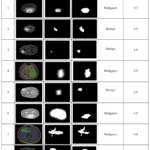 |
Figure 3: Sample Visualization of Brain Tumor Segmentation, Classification, and Survival Rate Estimation |
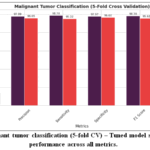 |
Figure 4: Malignant tumor classification (5-fold CV) – Tuned model shows improved performance across all metrics. |
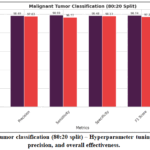 |
Figure 5: Malignant tumor classification (80:20 split) – Hyperparameter tuning enhances accuracy, precision, and overall effectiveness. |
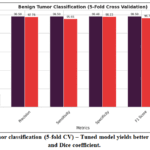 |
Figure 6: Benign tumor classification (5-fold CV) – Tuned model yields better sensitivity, F1-score, and Dice coefficient. |
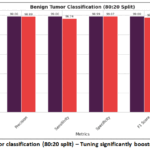 |
Figure 7: Benign tumor classification (80:20 split) – Tuning significantly boosts all evaluation metrics. |
The figures 4 to 7 present a comparative analysis of malignant and benign tumor classification performance with and without model tuning, evaluated using both 80:20 data splits and 5-fold cross-validation. Across all metrics such as Accuracy, Precision, Sensitivity, Specificity, F1 Score, and Dice coefficient, the tuned models consistently outperform their non-tuned counterparts with improvements ranging from approximately 0.5% to 2%. Notably, tuning yields better sensitivity and Dice scores, indicating enhanced detection capability and more accurate overlap in classification. These results demonstrate that tuning not only improves overall accuracy but also enhances the model’s robustness and reliability in distinguishing between malignant and benign tumors.
Statistical Analysis
The table 4 summarizes the results of a Chi-square statistical analysis performed to assess the effect of model tuning on tumor classification performance for both benign and malignant cases. It presents the Chi-square values, corresponding p-values, and interpretations for two evaluation strategies: 80:20 data split and 5-fold cross-validation. In all cases, the p-values are below the standard significance threshold of 0.05, indicating that the improvements observed with tuning are statistically significant. Notably, benign classification with 5-fold cross-validation shows the highest Chi-square value (22.863) and the lowest p-value (0.000), highlighting a highly significant impact of tuning. Overall, the table provides clear evidence that tuning enhances model accuracy and reliability across both tumor types and validation methods.
Table 4: Chi-square test results confirming the significant effect of tuning on benign and malignant tumor classification across different evaluation methods.
| Split | Chi-Square | p-value | Interpretation |
| Benign 80:20 | 13.336 | 0.004 | Significant difference in prediction outcomes due to tuning |
| Benign 5-Fold | 22.863 | 0.000 | Highly significant impact of tuning on performance |
| Malignant 80:20 | 10.705 | 0.0134 | Statistically significant improvement with tuning |
| Malignant 5-Fold | 12.158 | 0.0069 | Again, significant effect of tuning on model accuracy |
Comparison of Computational Cost
The computational efficiency of the proposed BTC-SA-MGCN framework is evaluated in terms of training time, inference time, and model complexity, and compared with EfficientNet-B0 and ResNet-50. As shown in Table 5, the proposed BTC-SA-MGCN model requires a training time of 34 minutes, which is significantly lower than EfficientNet-B0 (52 minutes) and ResNet-50 (58 minutes). In terms of inference, BTC-SA-MGCN achieves faster prediction with 15 ms per image, compared to 55 ms and 70 ms for EfficientNet-B0 and ResNet-50, respectively. Furthermore, the proposed model utilizes only 0.8 million parameters, which is substantially lower than the deep learning models.
These results demonstrate that BTC-SA-MGCN achieves improved computational efficiency with reduced model complexity, making it suitable for near real-time clinical deployment.
Table 5: Computational Comparison
| Model | Training Time (minutes) | Inference Time (per image) | Parameters |
| EfficientNet-B0 | 52 | 55 ms | 5.3M |
| ResNet-50 | 58 | 70 ms | 25M |
| BTC-SA-MGCN (Proposed) | 34 | 15 ms | 0.8M |
Comparison of Proposed Vs Existing Techniques
The Table 6 presents a comparative overview of recent studies on brain tumor classification from 2022 to 2025, detailing the architectures used, datasets employed, and key performance metrics such as accuracy, precision, sensitivity, and F1-score. The studies utilize a variety of machine learning and deep learning approaches, including EfficientNet-B0, SVM, ResNet50, ensemble networks, CNN variants, and advanced architectures like ARM-Net, SCAOA, and modified U-Net. Reported accuracies range from 88.0% to 99.05%, with several methods achieving precision and sensitivity above 95%. The proposed BTC-SA-MGCN model, evaluated on the BRATS2018 dataset, outperforms previous approaches with an accuracy of 99.05%, precision of 99.09%, sensitivity of 98.99%, and F1-score of 99.04%, demonstrating superior and well-balanced classification performance.
Table 6: Comparison of recent brain tumor classification methods, datasets, and performance metrics, showing the proposed BTC-SA-MGCN model achieving the highest accuracy and balanced results.
| S.No | Year | Study | Architecture Used | Dataset | Accuracy (%) | Precision (%) | Sensitivity (%) | F1-Score (%) |
| 1 | 2022 | [33] | EfficientNet-B0 | Brain tumor | 98.91 | 99.34 | 99.45 | 98.89 |
| 2 | 2022 | [34] | SVM with FLAIR images | BRATS18 | 96.19 | 95.8 | 85.1 | 87 |
| 4 | 2022 | [35] | LeaSE+DARTS | Brain tumor (MRI) | 90.62 | 91.51 | 91.49 | 91.39 |
| 5 | 2023 | [36] | ResNet50 | Brain tumor dataset | 95.41 | 95.12 | 95.25 | 95.16 |
| 6 | 2023 | [37] | Modified ResNet50 with HOG | Kaggle | 88.0 | 80.0 | – | – |
| 7 | 2023 | [38] | Weighted average ensemble DL network | TCGA | 98.1 | 98.35 | – | 98.51 |
| 8 | 2023 | [39] | CNN with XAI | Custom dataset | 96.0 | – | – | – |
| 9 | 2023 | [40] | CNN+GNN | Brain tumor (MRI) | 95.11 | – | – | – |
| 10 | 2024 | [41] | ARM-Net | BRATS2020 | 96.71 | – | – | – |
| 11 | 2024 | [42] | SCAOA | BRATS2020 | 93.0 | – | – | – |
| 12 | 2025 | [43] | Modified u-net | Figshare | 98.18 | 97.99 | 98.02 | 98.01 |
| 13 | – | Proposed | BTC-SA-MGCN | BRATS2018 | 99.05 | 99.09 | 98.99 | 99.04 |
Discussion
In this study, Brain Tumor Classification and Survival Analysis using Multi-Attribute Graph Convolution Network (BTC-SA-MGCN) are successfully implemented. The proposed BTC-SA-MGCN method, developed in Python, demonstrates superior performance compared to existing approaches such as EfficientNet-B0, SVM with FLAIR images, and Modified U-Net, achieving 0.14%, 2.86%, and 0.87% higher accuracy, as well as balanced precision, sensitivity, and F1-score improvements, respectively. With an accuracy of 99.05%, precision of 99.09%, sensitivity of 98.99%, and F1-score of 99.04% on the BRATS2018 dataset, the proposed model outperforms other state-of-the-art methods, showcasing its robustness and reliability in brain tumor classification.Beyond classification accuracy, the proposed BTC-SA-MGCN framework provides clinical interpretability by linking tumor features with prediction outcomes. The use of RTQWT-based texture features captures tumor heterogeneity, while the graph-based MGCN models spatial relationships between tumor regions. Additionally, survival prediction based on tumor weight enables risk stratification, supporting clinicians in diagnosis and treatment planning. The visual outputs further improve transparency and practical usability in clinical settings.
The performance gains can be attributed to the effective integration of model-based preprocessing, discriminative feature extraction, and graph-based learning. In particular, the use of RTQWT-based Haralick texture features enhances the representation of tumor heterogeneity by capturing multi-resolution and oscillatory patterns in MRI data. Unlike end-to-end deep models, which require large datasets and may suffer from overfitting, these handcrafted features provide stable and interpretable descriptors such as entropy, contrast, energy, and homogeneity. Furthermore, their integration with the MGCN framework enables the model to effectively learn both feature-level characteristics and inter-regional relationships.Recent studies also support the effectiveness of such hybrid approaches, where combining handcrafted features with learning-based models improves classification performance and generalization 46 – 48. This contributes to the consistent and balanced performance achieved by the proposed method.
Although the proposed model is evaluated using the BRATS 2018 dataset, it is expected to generalize well to other datasets and clinical environments. The dataset includes multi-institutional MRI scans acquired using different scanners and imaging protocols, introducing inherent variability.Furthermore, both 80:20 hold-out validation and 5-fold cross-validation were employed. In particular, 5-fold cross-validation provides a more reliable estimate of generalization performance by evaluating the model across multiple data splits, thereby reducing bias and variance.In addition, the use of noise-robust preprocessing, multi-resolution feature extraction, and graph-based learning reduces sensitivity to dataset-specific variations and enhances robustness. However, further validation on diverse datasets and real clinical data is required. Future work will focus on cross-dataset evaluation and domain adaptation techniques to improve generalizability.
Conclusion
In this paper, a novel Brain Tumor Classification and Survival Analysis framework, BTC-SA-MGCN, was developed and rigorously evaluated on the BRATS 2018 dataset. By integrating GMMCKF-based denoising, DFCC-based segmentation, RTQWT texture feature extraction, and a Multi-Attribute Graph Convolution Network, the proposed approach demonstrated superior accuracy, precision, sensitivity, and F1-score compared to 12 state-of-the-art methods, including EfficientNet-B0, ResNet variants, and ensemble architectures. Performance improvements were consistent under both 80:20 hold-out and 5-fold cross-validation settings, with statistical validation via Chi-square tests confirming significance. These results highlight the method’s robustness and potential for reliable clinical deployment in brain tumor diagnosis and treatment planning. Future work will focus on incorporating multi-modal datasets, dimensionality reduction techniques, and computational cost optimization to further enhance scalability and generalizability in real-world healthcare applications.
Acknowledgement
We would like to thank P.S.R Engineering College for providing the resources that made this research possible.
Funding Sources
The author(s) received no financial support for the research, authorship, and/or publication of this article.
Conflict of Interest
The author(s) do not have any conflict of interest.
Data Availability Statement
This statement does not apply to this article.
Ethics Statement
This research did not involve human participants, animal subjects, or any material that requires ethical approval.
Informed Consent Statement
This study did not involve human participants, and therefore, informed consent was not required.
Clinical Trial Registration
This research does not involve any clinical trials
Permission to Reproduce Material from Other Sources
Not applicable
Author contributions:
- Vimala Mannarsamy – Methodology, Concept, Resources, Data Collection, Verification, Final Manuscript;
- Nandhini Mani– Methodology, Concept, Software, Validation
- Jasmine S– Methodology, Concept, Software, Validation, Resources,Draft Manuscript
- Ranjith Kumar Paulraj-Technical Review,Visualization, Supervision, Draft Manuscript;
References
- Sekhar A, Biswas S, Hazra R, Sunaniya AK, Mukherjee A, Yang L. Brain tumor classification using fine-tuned GoogLeNet features and machine learning algorithms: IoMT enabled CAD system. IEEE J Biomed Health Inform. 2021;26(3):983-991.
CrossRef - Kokkalla S, Kakarla J, Venkateswarlu IB, Singh M. Three-class brain tumor classification using deep dense inception residual network. Soft Comput. 2021;25:8721-8729.
CrossRef - Ayadi W, Elhamzi W, Charfi I, Atri M. Deep CNN for brain tumor classification. Neural Process Lett. 2021;53:671-700.
CrossRef - Ali S, Li J, Pei Y, Khurram R, Rehman KU, Mahmood T. A comprehensive survey on brain tumor diagnosis using deep learning and emerging hybrid techniques with multi-modal MR image. Arch Comput Methods Eng. 2022;29(7):4871-4896.
CrossRef - Tandel GS, Tiwari A, Kakde OG. Performance optimisation of deep learning models using majority voting algorithm for brain tumour classification. Comput Biol Med. 2021;135:104564.
CrossRef - Polat Ö, Güngen C. Classification of brain tumors from MR images using deep transfer learning. J Supercomput. 2021;77(7):7236-7252.
CrossRef - Sarkar JP, Saha I, Sarkar A, Maulik U. Machine learning integrated ensemble of feature selection methods followed by survival analysis for predicting breast cancer subtype specific miRNA biomarkers. Comput Biol Med. 2021;131:104244.
CrossRef - Karayegen G, Aksahin MF. Brain tumor prediction on MR images with semantic segmentation by using deep learning network and 3D imaging of tumor region. Biomed Signal Process Control. 2021;66:102458.
CrossRef - Kumar RL, Kakarla J, Isunuri BV, Singh M. Multi-class brain tumor classification using residual network and global average pooling. Multimed Tools Appl. 2021;80:13429-13438.
CrossRef - Rammurthy D, Mahesh PK. Whale Harris hawks optimization based deep learning classifier for brain tumor detection using MRI images. J King Saud Univ Comput Inf Sci. 2022;34(6):3259-3272.
CrossRef - Mehnatkesh H, Jalali SMJ, Khosravi A, Nahavandi S. An intelligent driven deep residual learning framework for brain tumor classification using MRI images. Expert Syst Appl. 2023;213:119087.
CrossRef - Alhassan AM, Zainon WMNW. Brain tumor classification in magnetic resonance image using hard swish-based RELU activation function-convolutional neural network. Neural Comput Appl. 2021;33:9075-9087.
CrossRef - Ahmad S, Choudhury PK. On the performance of deep transfer learning networks for brain tumor detection using MR images. IEEE Access. 2022;10:59099-59114.
CrossRef - Di Ieva A, Russo C, Liu S, Jian A, Bai MY, Qian Y, Magnussen JS. Application of deep learning for automatic segmentation of brain tumors on magnetic resonance imaging: a heuristic approach in the clinical scenario. Neuroradiology. 2021;63:1253-1262.
CrossRef - Rehman A, Khan MA, Saba T, Mehmood Z, Tariq U, Ayesha N. Microscopic brain tumor detection and classification using 3D CNN and feature selection architecture. Microsc Res Tech. 2021;84(1):133-149.
CrossRef - Shah HA, Saeed F, Yun S, Park JH, Paul A, Kang JM. A robust approach for brain tumor detection in magnetic resonance images using finetuned efficientnet. IEEE Access. 2022;10:65426-65438.
CrossRef - Khan MA, Khan A, Alhaisoni M, Alqahtani A, Alsubai S, Alharbi M, et al. Multimodal brain tumor detection and classification using deep saliency map and improved dragonfly optimization algorithm. Int J Imaging Syst Technol. 2023;33(2):572-587.
CrossRef - Badrigilan S, Nabavi S, Abin AA, Rostampour N, Abedi I, Shirvani A, et al. Deep learning approaches for automated classification and segmentation of head and neck cancers and brain tumors in magnetic resonance images: a meta-analysis study. Int J Comput Assist Radiol Surg. 2021;16:529-542.
CrossRef - Saeedi S, Rezayi S, Keshavarz H, NiakanKalhori SR. MRI-based brain tumor detection using convolutional deep learning methods and chosen machine learning techniques. BMC Med Inform Decis Mak. 2023;23(1):16.
CrossRef - Jalalifar SA, Soliman H, Sahgal A, Sadeghi-Naini A. Predicting the outcome of radiotherapy in brain metastasis by integrating the clinical and MRI-based deep learning features. Med Phys. 2022;49(11):7167-7178.
CrossRef - Zhou X, Li X, Hu K, Zhang Y, Chen Z, Gao X. ERV-Net: An efficient 3D residual neural network for brain tumor segmentation. Expert Syst Appl. 2021;170:114566.
CrossRef - Sharif MI, Khan MA, Alhussein M, Aurangzeb K, Raza M. A decision support system for multimodal brain tumor classification using deep learning. Complex Intell Syst. 2021:1-14.
CrossRef - Huang Z, Zhao Y, Liu Y, Song G. GCAUNet: A group cross-channel attention residual UNet for slice based brain tumor segmentation. Biomed Signal Process Control. 2021;70:102958.
CrossRef - Khan AR, Khan S, Harouni M, Abbasi R, Iqbal S, Mehmood Z. Brain tumor segmentation using K-means clustering and deep learning with synthetic data augmentation for classification. Microsc Res Tech. 2021;84(7):1389-1399.
CrossRef - Vankdothu R, Hameed MA, Fatima H. A brain tumor identification and classification using deep learning based on CNN-LSTM method. Comput Electr Eng. 2022;101:107960.
CrossRef - Majib MS, Rahman MM, Sazzad TS, Khan NI, Dey SK. Vgg-scnet: A VGG net-based deep learning framework for brain tumor detection on MRI images. IEEE Access. 2021;9:116942-116952.
CrossRef - Dasanayaka S, Shantha V, Silva S, Meedeniya D, Ambegoda T. Interpretable machine learning for brain tumor analysis using MRI and whole slide images. Software Impacts. 2022;13:100340.
CrossRef - BRATS 2018 dataset. https://www.kaggle.com/datasets/sanglequang/brats2018. Accessed October 6, 2025.
- Li S, Shi D, Lou Y, Zou W, Shi L. Generalized multi-kernel maximum correntropy Kalman filter for disturbance estimation. IEEE Trans Autom Control. 2023.
CrossRef - Gong M, Zhao Y, Li H, Qin AK, Xing L, Li J, et al. Deep fuzzy variable C-means clustering incorporated with curriculum learning. IEEE Trans Fuzzy Syst. 2023.
CrossRef - Liu Z, Zhu B, Hu M, Deng Z, Zhang J. Revised tunable Q-factor wavelet transform for EEG-based epileptic seizure detection. IEEE Trans Neural Syst Rehabil Eng. 2023;31:1707-1720.
CrossRef - 32 Y, Zhao A, Li J, Lv Z, Dong C, Li H. Multi-attribute graph convolution network for regional traffic flow prediction. Neural Process Lett. 2023;55(4):4183-4209.
CrossRef - Latif G, Ben Brahim G, Iskandar DA, Bashar A, Alghazo J. Glioma tumors’ classification using deep-neural-network-based features with SVM classifier. Diagnostics (Basel). 2022;12(4):1018.
CrossRef - Anand V, Gupta S, Gupta D, Gulzar Y, Xin Q, Juneja S, et al. Weighted average ensemble deep learning model for stratification of brain tumor in MRI images. Diagnostics (Basel). 2023;13(7):1320.
CrossRef - Chitnis S, Hosseini R, Xie P. Brain tumor classification based on neural architecture search. Sci Rep. 2022;12(1):19206.
CrossRef - Shah HA, Saeed F, Yun S, Park JH, Paul A, Kang JM. A robust approach for brain tumor detection in magnetic resonance images using finetuned efficientnet. IEEE Access. 2022;10:65426-65438.
CrossRef - Ravinder M, Saluja G, Allabun S, Alqahtani MS, Abbas M, Othman M, et al. Enhanced brain tumor classification using graph convolutional neural network architecture. Sci Rep. 2023;13(1):14938.
CrossRef - Geetha M, Srinadh V, Janet J, Sumathi S. Hybrid Archimedes sine cosine optimization enabled deep learning for multilevel brain tumor classification using MRI images. Biomed Signal Process Control. 2024;87:105419.
CrossRef - Dutta TK, Nayak DR, Zhang YD. Arm-net: Attention-guided residual multiscale CNN for multiclass brain tumor classification using MR images. Biomed Signal Process Control. 2024;87:105421.
CrossRef - Schiavon DEB, Becker CDL, Botelho VR, Pianoski TA. Interpreting convolutional neural networks for brain tumor classification: An explainable artificial intelligence approach. In: Brazilian Conference on Intelligent Systems. Springer; 2023:77-91.
CrossRef - Izadi A, Hajati F, Barzamini R, Janpors N, Farjad B, Barzamini S. Control and diagnosis of brain tumors using deep neural networks. In: International Conference on Advanced Information Networking and Applications. Springer; 2023:565-572.
CrossRef - Sharma AK, Nandal A, Dhaka A, Polat K, Alwadie R, Alenezi F, et al. Hog transformation based feature extraction framework in modified ResNet50 model for brain tumor detection. Biomed Signal Process Control. 2023;84:104737.
CrossRef - Jebin BM, Shyla SI, Sujantha Bel KN, Sheela CJJ. Brain tumor detection and classification using U-Net and CNN with brain texture pattern analysis. Biomed Signal Process Control. 2025;110:108156. doi:10.1016/j.bspc.2025.108156.
CrossRef - Soniya, S., Sriharipriya, K.C. Integrating Kalman filter noise residue into U-Net for robust image denoising: the KU-Net model. Sci Rep 14, 23641 (2024). https://doi.org/10.1038/s41598-024-74777-8.
CrossRef - Wang, N. Li, Y. Zhang,“Distributed maximum correntropy linear and nonlinear filters for systems with non-Gaussian noises,” Signal Processing, vol. 182, p. 107937, 2021.doi: 10.1016/j.sigpro.2020.107937.
CrossRef - Ullah, M. Nadeem, M. Abrar, M. Al-Razgan, T. Alfakih, F. Amin, and A. Salam, “Brain tumor segmentation from MRI images using handcrafted convolutional neural network,” Diagnostics, vol. 13, no. 16, p. 2650, 2023. doi: 10.3390/diagnostics13162650.
CrossRef - Jasmine and P. Marichamy, “Automated detection of epicardial adipose tissue in cardiac CT using ensemble machine learning for improved diagnosis,” MethodsX, vol. 14, p. 103410, 2025, doi: 10.1016/j.mex.2025.103410.
CrossRef - Rajak and U. Datta, “An integrating CNN and texture features for enhanced brain tumor diagnosis from MRI scans,” Int. J. Adv. Res. Multidiscip. Trends (IJARMT), vol. 2, no. 2, pp. 734–746, 2025. [Online]. Available: https://ijarmt.com/index.php/j/article/view/290.

