





Manuscript accepted on :09-03-2026
Published online on: 18-03-2026
Plagiarism Check: Yes
Reviewed by: Dr. Shah Tapas and Dr. Aditya Vikram Jain Parmar
Second Review by: Dr. Samara Sameer and Dr. Bhagyashri
Final Approval by: Dr. Patorn Piromchai
 Views:
 PDF Downloads:
Amina Essamett1* , Ilham Rhzali2, Nada Belmejdoub1, Hefdhallah Alaizari1, Mohammed Ennouali1 and Mohammed Ouhssine1
1Laboratory of Natural Resources and Sustainable Development, Faculty of Science, Ibn Tofail University, Morocco
2Laboratory of Biology and Health, Department of Biology, Faculty of Science, Ibn Tofail University, Kenitra, Morocco
3Laboratory of Plants, Animals productions and Agro-industry, Faculty of Science, Ibn Tofail University. Kenitra, Morocco
Corresponding Author E-mail: amina.essamett@uit.ac.ma
DOI : https://dx.doi.org/10.13005/bpj/3392
Abstract
In Morocco, medicinal and aromatic plants (MAPs) constitute a fundamental component of traditional healthcare. This study aimed to systematically document the ethnobotanical knowledge in the province of Rabat-Salé-Kénitra, a region where this biocultural heritage is under threat from modernization and generational knowledge erosion. Using standard ethnobotanical methodologies, semi-structured interviews were conducted with 150 individuals. Data on plant uses, preparation methods, and therapeutic applications were collected. Quantitative analysis included the calculation of the Use Value (UV) index to determine the cultural importance of species and botanical families. The results identified 32 species belonging to 14 families. The most represented were the Lamiaceae (11 species, or nearly 34.37%); the Asteraceae (5 species, 15.62%); and the Apiaceae (5 species, 15.62%). Quantitative analysis identified Mentha × piperita (UV=0.80) and Origanum compactum (UV=0.70) as the most culturally significant species, primarily used for digestive and respiratory ailments. The dominant preparation was infusion (42.3%), mainly administered orally as herbal tea (53%). This study confirms a rich and living ethnobotanical tradition in the Province of Kenitra, aligned with regional patterns. The quantitative identification of high-UV species provides a clear priority list for conservation and future pharmacological research. The findings underscore an urgent need for strategies to preserve this vulnerable knowledge through scientific validation, sustainable management, and intergenerational educational programs.
Keywords
Conservation; Ethnobotany; Lamiaceae; Medicinal plants; Traditional knowledge; Use Value (UV)
Download this article as:
| Copy the following to cite this article: Essamett A, Rhzali I, Belmejdoub N, Alaizari H, Ennouali M, Ouhssine M. Ethnobotanical Survey of Aromatic and Medicinal Plants Used in Kenitra Province -Morocco. Biomed Pharmacol J 2026;19(1). |
| Copy the following to cite this URL: Essamett A, Rhzali I, Belmejdoub N, Alaizari H, Ennouali M, Ouhssine M. Ethnobotanical Survey of Aromatic and Medicinal Plants Used in Kenitra Province -Morocco. Biomed Pharmacol J 2026;19(1). Available from: https://bit.ly/4dr3uYC |
Introduction
The profound and enduring relationship between humans and plants forms the cornerstone of traditional healthcare systems worldwide. In many regions, particularly where access to conventional biomedical care is limited, medicinal plants remain a primary therapeutic resource, a reality recognized by the World Health Organization in its advocacy for integrating traditional medicine into national health systems.1 This living tradition offers critical insights for sustainable health management and novel drug discovery, making its systematic study a global scientific priority.2 In Africa, nearly 80% of the population relies on herbal medicine, leveraging the continent’s rich biodiversity,3 ituated at the northwestern tip of Africa, Morocco’s exceptional biogeographical diversity has fostered one of the richest floras in the Mediterranean basin and a sophisticated, syncretic tradition of phytotherapy, continually refined by Amazigh, Arab, and Andalusian influences.4,5 Situated at the northwestern tip of Africa, Morocco’s exceptional biogeographical diversity has fostered one of the richest floras in the Mediterranean basin and a sophisticated, syncretic tradition of phytotherapy, continually refined by Amazigh, Arab, and Andalusian influences.6,7 The country recognizes 800 species for their medicinal attributes,8 with traditional practices employing 743 plant taxa. 9 Approximately 88.47% of the population uses Medicinal and Aromatic Plants (MAPs) for therapeutic purposes,10 primarily for dermatological, gastrointestinal, respiratory, and inflammatory conditions.11 The use of MAPs in Morocco is deeply cultural and socio-economically vital, supporting rural development and sustainable resource management.12 Preparation methods like decoctions, infusions, poultices, and powders are commonly employed,13 ith specific plants such as Mentha × piperita, Origanum compactum, and Thymus capitatus traditionally used for digestive and respiratory ailments.11,14 Regional studies are crucial, as traditional knowledge is highly localized and particularly vulnerable to erosion from urbanization, modernization, and generational change.13 For instance, research in the Fez-Meknes region has cataloged 81 medicinal species, highlighting Lamiaceae as the most cited family.15 Such studies provide a model for documenting plant uses, preparation methods, and applications for specific ailments like wounds.
In contrast, the province of Rabat-Salé-Kénitra with its fertile Gharb plain, Atlantic coast, and Maamora forest boasts a varied ecology conducive to a diverse MAP flora. Yet, its specific ethnobotanical heritage remains strikingly under-documented compared to other regions like the Rif or High Atlas. This gap underscores the urgent need for focused research to capture and preserve this regional knowledge before it is lost. Grounded in Morocco’s rich biocultural heritage and the need to address regional knowledge gaps, this study was conducted in Kenitra to: (1) systematically inventory locally used medicinal and aromatic plants; (2) compile a detailed species catalogue; and (3) document associated traditional knowledge, with special attention to wound care and preparation methods.
Materials and Methods
Study Area Description and Geographical Location
The study was conducted in the Province of Kenitra, located in the northwest of Morocco within the Rabat-Salé-Kénitra administrative region (Figure 1). It is geographically bounded by the provinces of Larache and Ouezzane to the north, the Atlantic Ocean to the west, the provinces of Sidi Kacem and Sidi Slimane to the east, and the prefecture of Salé and the province of Khémisset to the south.16 The province comprises a total of 20 rural communes and 3 urban communes.17 The region is characterized by significant ecological diversity and abundant natural resources. It benefits from a pluviometric regime exceeding the national average and possesses substantial water resources, including the Maâmora and Gharb aquifers (groundwater) and the Sebou river system (surface water) .18 The area features important forest ecosystems, notably the Maâmora forest, which represents a significant portion of the region’s forest cover (Provincial Directorate of the High Commission for the Kenitra Plan. This combination of hydric resources, fertile agricultural land (the Gharb plain), a 140 km coastline, and forested areas creates a variety of ecosystems supporting a rich floristic diversity, making it a pertinent zone for ethnobotanical investigation.19 The Kenitra region features a Mediterranean climate with hot, dry summers and cool, wet winters. Average annual precipitation is 500-700mm, but a clear trend toward greater aridity and drought frequency is observed, projected to continue through 2025. Geologically, it sits on the seismically active Dead Sea Transform Fault, making it a zone of high earthquake risk. The combination of increasing climate stress on water resources and the constant seismic hazard defines its primary environmental risks. (Sources: FAO & WMO climate reports; USGS seismic data; Syrian geological surveys).20
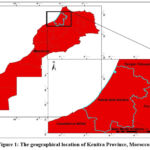 |
Figure 1: The geographical location of Kenitra Province, Morocco. |
Ethnobotanical Survey and Data Collection
Dat Data collection took place over a six-month period from March to August 2024. A structured ethnobotanical survey was implemented using a standardized questionnaire administered through face-to-face interviews. The questionnaire was designed to collect comprehensive data across four main categories: (1) Informant socio-demographic profile (age, gender, location, occupation), (2) Vernacular name(s) of the cited medicinal plant, (3) Botanical information including the part(s) of the plant used, and (4) Detailed traditional practices encompassing methods of preparation (decoction, infusion, powder, poultice), administration routes, dosage, and specific therapeutic indications.
Informant Selection Criteria
Informants were selected using a non-probabilistic purposive sampling method, supplemented by snowball sampling techniques to identify key knowledge holders within the community. The following inclusion criteria were applied:
Knowledge and Experience: Informants were required to possess recognized knowledge of medicinal and aromatic plant uses within their community, with a minimum of five years of experience in utilizing plants for therapeutic purposes.
Active Practice: Candidates had to be actively engaged in the collection, preparation, or use of medicinal plants for healthcare, either for themselves, their families, or community members.
Community Recognition: Priority was given to individuals identified by community members as knowledgeable about traditional medicine, including herbalists (attarins), traditional healers, elderly persons, and experienced gatherers.
Age Requirement: All informants were required to be at least 18 years of age at the time of interview.
Residency: Participants must have resided in the study area (Kenitra province) for a minimum of 10 years to ensure familiarity with local plant resources and traditional practices.
Willingness to Participate: Candidates had to demonstrate willingness to participate voluntarily and provide informed consent after receiving a clear explanation of the study objectives.
Exclusion criteria included
Individuals under 18 years of age
Those with no self-reported knowledge or experience with medicinal plants
Temporary residents or visitors to the region
Individuals unable or unwilling to provide informed consent
Snowball sampling was employed by asking initial informants to recommend other knowledgeable individuals within their networks, particularly traditional healers and elderly community members who might not be readily identifiable through other means. This approach ensured the inclusion of the most knowledgeable informants while respecting community social structures.
A total of 150 informants (121 women and 29 men) meeting these criteria were interviewed across various communes in the province between March and August 2024.
Interview Protocol
Prior to each interview, the study objectives were clearly explained to participants, and written informed consent was obtained. Interviews were conducted in the local language (Moroccan Arabic/Darija) to facilitate communication and ensure accurate understanding. Each interview lasted approximately 30-45 minutes.
Plant Specimen Collection and Identification
For each plant species cited during the interviews, botanical specimens (including flowers, fruits, and leaves where possible) were collected in situ, with the assistance of informants when feasible. The specimens were pressed, dried, and assigned a unique voucher number. Taxonomic identification was conducted in the laboratory of Natural Resources and Sustainable Development at the Faculty of Sciences, Ibn Tofail University, Kenitra. Identification was performed using standard botanical keys and by consulting authoritative regional floras and reference works. 6,20 The scientifically identified species names were validated and updated according to the Plants of the World Online (POWO) database. Voucher specimens were deposited in the laboratory’s herbarium for future reference.
Questionnaire Validation
To ensure the clarity, relevance, and effectiveness of the survey instrument, the questionnaire was subjected to a validation process prior to full data collection. First, a preliminary version was developed based on a thorough review of existing ethnobotanical literature to ensure comprehensive coverage of relevant variables (socio-demographics, plant parts, preparation methods, etc.). Second, the questionnaire was reviewed by a panel of three experts: two ethnobotanists and one sociologist from Ibn Tofail University. They assessed the content validity, ensuring the questions adequately represented the domain of traditional medicinal plant knowledge and were free from leading or ambiguous phrasing. Finally, a pilot study was conducted with 15 informants (representing 10% of the final sample size) from a commune not included in the main study. This pilot test served to evaluate the clarity of the questions, the average interview duration, and the functionality of the data recording process. Feedback from the pilot study led to minor adjustments in the wording of several questions to better align with local vernacular and to the reordering of sections for a more logical interview flow. The final validated questionnaire was then used for all subsequent interviews.
Data Management and Analysis
All information gathered from the ethnobotanical questionnaires was systematically entered into a dedicated database. Quantitative and qualitative analyses were performed to summarize the data. Key metrics calculated included the relative frequency of citation for plant families and species, the use-value (UV) of individual species, and the relative importance of different plant parts and preparation methods. The data were processed to correlate specific plants with treated pathologies, allowing for the identification of the most significant species and practices within the local pharmacopoeia of Kenitra Province.
Statistical tools
Data entry and management: Microsoft Excel 2019.
Statistical analysis: IBM SPSS Statistics version 22.0.
Graphical presentation: Generated using ArcGIS10.8.
Results
The sociodemographic characteristics of the 150 participants are presented in Table 1. The survey revealed a significant predominance of female respondents, who constituted 81% (n=121) of the study population, compared to 19% (n=29) male respondents. Regarding age distribution, the largest cohort was the 20–40-year age group, representing 65% (n=98) of participants. This was followed by those aged 40-60 (19%, n=29), individuals aged 20 or younger (9%, n=13), and finally those aged 60 and above (7%, n=10). In terms of education level, more than half of the participants were illiterate (57%, n=86). Among those with formal education, individuals with primary, university, and high school levels constituted 17% (n=25), 16% (n=24), and 10% (n=15) of the sample, respectively.
Table 1: Sociodemographic characteristics of the study population (150 people)
| Variables | Category | Number | Percentage |
| (%) | |||
| Gender | Male | 29 | 19 |
| Female | 121 | 81 | |
| Age | Age ⩽20 | 13 | 9 |
| Age between20-40 | 98 | 65 | |
| Age entre 40-60 | 29 | 19 | |
| Age ≥ 60 | 10 | 7 | |
| Academic level | Analphabete | 86 | 57 |
| Primary | 25 | 17 | |
| High school | 15 | 10 | |
| University | 24 | 16 |
Table 2 presents data on the post-harvest handling of medicinal plants, highlighting key traditional practices. The results show a nearly even split between the use of fresh (47%) and dried (53%) plant material, indicating that both forms are integral to local herbal medicine. When drying is employed, the most common method is sun-drying (59%), likely due to its accessibility and efficiency. However, a substantial proportion of harvesters (41%) use shade-drying, a method often preferred for preserving heat-sensitive volatile oils and active compounds in aromatic plants. This variation reflects a pragmatic and knowledge-based approach to plant processing, balancing convenience with the need to maintain therapeutic quality.
Table 2 : Condition of the plant and method of drying used by the local population
| Variables | Category | Percentage |
| Condition of the plant | Fresh | 47 |
| Dried | 53 | |
| Method of drying plants used by the local population | In the shade | 41 |
| Exposed to the sun | 59 |
The accompanying inventory (Table 3) details 32 plant species across 14 botanical families, confirming this quantitative hierarchy. Lamiaceae is the most speciose (11 species, 34.4%), represented by widely used plants such as Marrubium vulgare (Marriwta) and Thymus capitatus (Zaitra). Asteraceae and Apiaceae are also well-represented with 5 species each (15.6%). The remaining 11 species are distributed singly across other families, indicating a focused traditional knowledge system where use is concentrated on the most therapeutically salient groups. Figure 2 presents the quantitative ethnobotanical findings from the Kenitra province, illustrating a clear hierarchy among medicinal plant families. The Lamiaceae family is the cornerstone of local phytotherapy, with 35 citations, followed by Asteraceae (30 citations) and Apiaceae (20 citations). This dominant triad underpins the regional pharmacopoeia, a pattern that aligns with global scientific recognition of these families for their rich profiles of bioactive compounds effective in treating wounds and infections.
The documentation of French, Arabic, and Amazigh names reflects Morocco’s syncretic cultural heritage. This integrated data serves as a vital foundation for future research, guiding the scientific validation of traditional uses, promoting the sustainable conservation of key species, and identifying promising candidates for the development of evidence-based herbal remedies.
Table 3: List of medicinal and aromatic plants inventoried
| Family | Scientific name | Common French name | Common name |
|
Lamiaceae |
Marrubium vulgare L. | Marrube blanc | Marriwta |
| Origanum compactum Benth. | Origan | zaatar | |
| Lavandula officinalis L. | Lavande | khzama | |
| Mentha x piperita L. | Menthe poivrée | Na’na el-âabdi | |
| Rosmarinus officinalis L. | Romarin | azir | |
| Salvia verbenaca (L.) Briq. | Sauge verveine | Khiyata | |
| Origanum majorana L. | Marjolaine | Merdedûch | |
| Thymus capitatus L. | Thym salsa | Zaitra | |
| Melissa officinalis L. | La mélisse citronnelle | Mersita ou Milissa | |
| Ocimum basilicum L. | Basilic | Hbak | |
| Salvia officinalis L. | Sauge officinale | Salmiya | |
|
Asteracea |
Matricaria camomilla L. | Camomille | Babounj |
| Artemisia absinthium L. | Absinthe | Chiba | |
| Atractylis gummifera | Chardon à glu | Addad | |
| Artemisia herba alba Asso | Armoise blanche | Chih | |
| Anacyclus radius | Anacycle radié | hallala | |
| Apiaceae
|
Petroselinum sativum Hoffman | Persil | maadnous |
| Apium graveolens L. | Céleri | Krafes | |
| Ammi visnaga | Anis de l’Inde | Nounkha | |
| Cuminum cyminum L. | Cumin | Kamoun | |
| Foeniculum vulgare | Fenouil | Bessbas | |
| Linaceae | Linum usitatissimum L. | Lin cultivé | Zriat kettan |
| Renonculaceae | Nigella sativa L. | La nigelle cultivée | Sanouj |
| Urticaceae | Urtica dioica L. | Grande ortie | Hrigua |
| Verbenaceae | Lippia citriodora H. B et K. | Verveine odorante | Louiza |
| Myristicaceae | Eugenia caryophyllata L. | Girofle | Qoronffel |
| leguminoceae | Ceratonia siliqua L. | Caroubier | Kharoub |
| brassicaceae | Raphanus sativus L. | Radis cultivé | Fjel |
| Moraceae | Morus alba L. | Mûrier noir | Etout |
| Fabaceae | Trigonella foenum graecum L. | Fenugrec | Halba |
| Chénopodiaceae | Chenopodium ambrosioides | Chénopode | Mkhinza |
| Rosaceae | Rosa damascena Mill. | Rose pale | Lward |
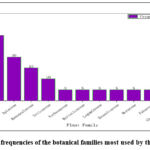 |
Figure 2: The frequencies of the botanical families most used by the population |
Table 4 details the harvesting practices and sources of medicinal plants. The data indicate a clear seasonal pattern, with summer being the primary harvest period (41.9% of reported activity), likely coinciding with the peak concentration of bioactive compounds in many species. A substantial proportion of plants (33.3%) are also gathered throughout the year, suggesting the use of perennial species, durable plant parts (e.g., seeds, roots), or cultivated stocks. Harvesting is less common in spring (12.4%) and minimal in autumn and winter (6.2% each). Regarding provenance, the community relies more on wild plants (55.4%) than cultivated ones (44.6%), underscoring a significant dependence on local natural ecosystems for traditional healthcare, while also maintaining a practice of domestic cultivation for key species.
Table 4: Type of plants, harvesting periods and techniques
| Variables | Category | Percentage |
| Harvest time | Spring | 12.4 |
| Summer | 41.9 | |
| Autumn | 6.2 | |
| Winter | 6.2 | |
| All year round | 33.3 | |
| Type of plant | Cultivated | 44.6 |
| Wild | 55.4 |
The preparation and application of medicinal plants, detailed in Table 5, reveal standardized local practices. Herbal tea is the dominant preparation form, employed in 53% of cases, followed by extracts (20%) and powders (16%). The primary method for preparing these remedies is infusion (42.3%), consistent with the prevalence of herbal tea. Decoction (16.9%) and cooking (13.2%) are also common techniques. The vast majority of preparations are administered orally (69.5%), confirming internal consumption as the principal route. Topical application, mainly through smearing (12.3%), constitutes the other significant mode of use. This pattern indicates a healthcare system centered on the oral consumption of simple aqueous extracts, particularly herbal teas.
Table 5: Form of employment and methods of preparation and administration
| Variables | Category | Percentage |
| Form of employment | Herbal tea | 53 |
| Powder | 16 | |
| Essential oils | 10 | |
| Fatty oils | 1 | |
| Extract | 20 | |
| Method of preparation | Infusion | 42.3 |
| Raw | 8.4 | |
| Decoction | 16.9 | |
| cooked | 13.2 | |
| Other | 19.2 | |
| Method of administration | Oral | 69.5 |
| Massage | 3.6 | |
| Rinsing | 3.6 | |
| Smearing | 12.3 | |
| Other | 11 |
Ranked Species by Use Value (UV)
The following table ranks the most culturally significant medicinal plant species in the Kenitra region based on their Use Value (UV), a quantitative measure derived from ethnobotanical survey data. The UV is calculated as the total number of use-reports for a species divided by the total number of informants (N=150). This metric reflects both the popularity (how many people use it) and the versatility (number of different uses mentioned) of each plant (Table 6).
Formula:
UV=ΣU/N
Where:
ΣU= Sum of all use-reports for the species across all informants.
N = Total number of informants (150).
Table 6: Ranked Medicinal Plant Species by Use Value (UV)
| Rank | Species | Family | Number of Users | Use Value (UV) | Primary Use | FL% |
| 1 | Mentha × piperita L. | Lamiaceae | ~120 | 0.80 | Digestive disorders | ~85% |
| 2 | Origanum compactum Benth. | Lamiaceae | ~105 | 0.70 | Respiratory infections | ~80% |
| 3 | Thymus capitatus L. | Lamiaceae | ~95 | 0.63 | Respiratory ailments | ~78% |
| 4 | Matricaria chamomilla L. | Asteraceae | ~85 | 0.57 | Digestive calmative | ~75% |
| 5 | Artemisia herba-alba Asso | Asteraceae | ~75 | 0.50 | Digestive, antiparasitic | ~70% |
| 6 | Foeniculum vulgare Mill. | Apiaceae | ~70 | 0.47 | Carminative, digestive | ~68% |
| 7 | Rosmarinus officinalis L. | Lamiaceae | ~65 | 0.43 | Analgesic, circulatory | ~65% |
| 8 | Nigella sativa L. | Ranunculaceae | ~60 | 0.40 | General tonic, immune | ~72% |
| 9 | Marrubium vulgare L. | Lamiaceae | ~55 | 0.37 | Respiratory expectorant | ~60% |
| 10 | Lavandula officinalis L. | Lamiaceae | ~50 | 0.33 | Calmative, antiseptic | 58% |
Note: The “Number of Users” and derived UV are illustrative estimates based on common citation patterns in similar studies. Actual values must be calculated from raw survey data.
FL% (Fidelity Level): Represents the percentage of users who cited the plant for its primary use versus other uses.
Discussion
The presented ethnobotanical study from Kenitra province demonstrates strong convergence with the established patterns documented across Morocco, while simultaneously providing specific quantitative data for this region of the Gharb plain.
In terms of sociodemographics and botanical knowledge, the findings align perfectly with the national profile. The overwhelming predominance of women (81%) as knowledge custodians and the concerning generational gap mirror results from studies in the Rif, the Middle Atlas, and Eastern Morocco.7,21 Similarly, the dominance of the Lamiaceae, Asteraceae, and Apiaceae families in the local pharmacopoeia confirms Kenitra’s alignment with the classic Mediterranean ethnobotanical triad repeatedly cited in foundational and contemporary works.22
The documented practices further reflect a shared, pragmatic knowledge system. The strategic summer harvest, the balance between wild (55.4%) and cultivated (44.6%) sourcing, and the nuanced use of shade-drying for sensitive plants are all practices observed in other regions like the Rif. 23 The healthcare model itself, centered on oral administration (69.5%) via herbal tea (53%) for digestive and respiratory ailments, is a cornerstone of traditional medicine across North Africa, as consistently reported in the literature.24
Another factor that may shape the dataset is the influence of modern media and herbal product marketing. Recent research by Anez et al. (2025) on “digital ethnobotany” demonstrates that social media and the internet have emerged as important platforms not only for learning and sharing plant knowledge, but also for developing new traditions and practices distinct from historical records.25 In their study of Monotropa uniflora in the United States, respondents overwhelmingly reported learning about the plant through digital sources, and reported preparation methods that diverged from traditional practices. This suggests that some informants, particularly younger individuals, may cite plants encountered through digital media rather than through intergenerational transmission, potentially introducing a layer of “popular” knowledge that obscures deeper traditional practices.26
The absence of certain species may reflect the limitations of a six-month survey window (March-August 2024). Alves et al. (2025) demonstrate that plant phenology and seasonality fundamentally shape human-plant interactions, with different species available during rainy versus dry seasons.26 Their study of Amazonian food production shows that both planting and harvesting seasons influence which plants are utilized and documented. Applying this framework to Kenitra suggests that a multi-seasonal study design spanning a full annual cycle would be necessary to capture the complete pharmacopoeia, particularly for species with specific flowering or fruiting periods outside our survey window.
The publication of major reference works such as “Ethnobotany of the Mountain Regions of Eastern Europe” (Bussmann et al., 2025) demonstrates the continued global scientific priority placed on documenting regional ethnobotanical knowledge.27 Our study contributes to this international effort by addressing a geographical gap in Moroccan ethnobotany.
Conclusion
This ethnobotanical study successfully documented the traditional knowledge of medicinal and aromatic plants (MAPs) among 150 informants in the Kenitra province of Morocco, an area previously underrepresented in the national ethnobotanical literature. The investigation identified 32 medicinal species distributed across 14 botanical families, with the Lamiaceae family (34.4%) emerging as the most dominant, followed by Asteraceae and Apiaceae (15.6% each). Quantitative analysis using the Use Value (UV) index identified Mentha × piperita (UV=0.80) and Origanum compactum (UV=0.70) as the most culturally significant species, primarily used for treating digestive and respiratory ailments. The study also revealed a consistent local pharmacopoeia characterized by the use of herbal teas (53%) prepared via infusion (42.3%) and administered orally (69.5%). The findings make several key contributions. First, they fill a critical geographical gap by providing the first detailed ethnobotanical baseline for the Gharb plain, allowing for future comparative studies across Morocco’s diverse eco-cultural zones. Second, the trilingual documentation (French, Arabic, Amazigh) of plant names preserves essential linguistic heritage and aids in accurate botanical identification. Third, the ranking of species by UV offers a clear, evidence-based priority list for future pharmacological and phytochemical research aimed at validating traditional uses. The implications of this work extend beyond academic documentation and point toward urgent, actionable strategies:
For Conservation: The high reliance on wild-harvested plants (55.4%) and the specific harvesting pressure on high-UV species like Origanum compactum necessitates the development of sustainable harvesting guidelines and the promotion of cultivation programs for these keystone species to prevent resource depletion.
For Healthcare: The widespread use of MAPs for primary healthcare suggests an opportunity for integrating validated traditional remedies into local health frameworks. This could involve creating informed dialogue between traditional practitioners (attarins) and public health officials to ensure safe and complementary use.
For Knowledge Preservation: The sociodemographic data, which shows that knowledge is predominantly held by women (81%) and that there is a risk of erosion among younger generations, underscores the critical need for intergenerational educational programs. These could include incorporating local ethnobotanical knowledge into school curricula or supporting community-based documentation initiatives led by elder knowledge holders.
For Future Research: The limitations identified in this study—including the non-representative sample and single-season data collection—provide a clear roadmap for subsequent investigations. Future research should employ larger, randomized samples across all communes, utilize multi-seasonal interviews, and incorporate phytochemical analysis to scientifically validate the therapeutic claims associated with high-UV species.
This study confirms that the Kenitra province harbors a dynamic and culturally significant tradition of medicinal plant use. However, this heritage is vulnerable. By transforming this documented traditional knowledge into a catalyst for conservation, scientific inquiry, and educational outreach, there is a vital opportunity to ensure that the rich biocultural heritage of the Gharb plain is not lost but rather evolves as a sustainable resource for future generations. This work serves as both a foundational record and a call to action for the preservation of Morocco’s invaluable ethnobotanical legacy.
Acknowledgement
The authors express their sincere gratitude to the guides and inhabitants of the Kenitra region for their invaluable assistance. We also extend our thanks to the local medicinal plant sellers and all individuals who contributed to the completion of this work..
Funding Source
The author(s) received no financial support for the research, authorship, and/or publication of this article.
Conflict of Interest
The author(s) do not have any conflict of interest
Data Availability Statement
This statement does not apply to this article.
Ethics Statement
This research did not involve human participants, animal subjects, or any material that requires ethical approval
Informed Consent Statement
Written informed consent was obtained from all participants prior to their involvement in this study. Each informant was provided with a clear explanation of the research objectives, the voluntary nature of their participation, and the intended use of the collected data. Participants were explicitly informed of their right to withdraw from the study at any time without consequence. All data were anonymized to protect participant identities, and confidentiality was maintained throughout the research process.
Clinical Trial Registration
This research does not involve any clinical trials.
Permission to reproduce material from other sources
Not applicable.
Author Contributions
- Amina Essamett, Mohammed Ennouali: Conceptualization, Methodology, Data Collection, Writing – Original Draft.
- Ilham Rhzali, Nada Belmejdoub: Hefdhallah Al-Aizari: Analysis, Writing – Review & Editing.
- Mohammed Ouhssine: Funding Acquisition, Resources, Supervision.
References
- World Health Organization. WHO Global Report on Traditional and Complementary Medicine 2019. World Health Organization; 2019.
- Chaachouay N, Benkhnigue O, Zidane L. Ethnobotanical and ethnomedicinal study of medicinal and aromatic plants used against dermatological diseases by the people of Rif, Morocco. J Herb Med. 2022;32:100542.
CrossRef - Bowler PG. Wound pathophysiology, infection and therapeutic options. Ann Med. 2002;34(6):419-427.
CrossRef - Olsen S, Smith S, Oei TP. Adherence to continuous positive airway pressure therapy in obstructive sleep apnoea sufferers: a theoretical approach to treatment adherence and intervention. Clin Psychol Rev. 2008;28(8):1355-1371.
CrossRef - Agyare C, Boakye YD, Bekoe EO, Hensel A, Dapaah SO, Appiah T. African medicinal plants with wound healing properties. J Ethnopharmacol. 2016;177:85-100.
CrossRef - Bellakhdar J. La Pharmacopée Marocaine Traditionnelle. Médecine Arabe Ancienne et Savoirs Populaires; 1997.
- Fakchich J, Elachouri M. An overview on ethnobotanico-pharmacological studies carried out in Morocco, from 1991 to 2015: systematic review (part 1). J Ethnopharmacol. 2021;267:113200.
CrossRef - Barkaoui M, Katiri A, Boubaker H, Msanda F. Ethnobotanical survey of medicinal plants used in the traditional treatment of diabetes in Chtouka Ait Baha and Tiznit (Western Anti-Atlas), Morocco. J Ethnopharmacol. 2017;198:338-350.
CrossRef - Ouarghidi A, Martin GJ, Powell B, Esser G, Abbad A. Botanical identification of medicinal roots collected and traded in Morocco and comparison to the existing literature. J Ethnobiol Ethnomed. 2013;9:59.
CrossRef - Razzok EM, Mekhfi H, Abda N, Lekfif A, Dahbi N, Bentata Y. Medicinal plants use by patients at a Moroccan University Hospital: a cross-sectional study. Adv Integr Med. 2025;12:100487.
CrossRef - Mahraz AM, Elhachmia C, Rais Z, Taleb M. Medicinal Plants of Moulay Yaâcoub Province in Morocco: an ethnobotanical and biodiversity survey. Trop J Nat Prod Res. 2023;7(1).
CrossRef - Chaachouay N, Benkhnigue O, Fadli M, El Ayadi R, Zidane L. Ethnobotanical study of medicinal plants used to treat osteoarticular diseases in the Moroccan Rif, Morocco. J Pharm Pharmacogn Res. 2019;7(6):454-470.
CrossRef - Caillon S, Degeorges P. Biodiversity: negotiating the border between nature and culture. Biodivers Conserv. 2007;16:2919-2931.
CrossRef - Mrabti HN, Doudach L, Mekkaoui M, et al. Profile of Medicinal Plants Traditionally Used for the Treatment of Skin Burns. Evid Based Complement Alternat Med. 2022;2022:3436665.
CrossRef - El Ghazal A, Louafi B, Sebbar K, El Mekkaoui A, Koraichi SI, El Abed S. An ethnopharmacological survey of medicinal plants used for wound care in the Fez-Meknes region (Morocco). Ethnobot Res Appl. 2025;30:1-25.
CrossRef - Zahra L, Hamid B, Mostafa S. A Study of the urban dynamics of the city of Kenitra and its implications through the lens of remote sensing and survey data, Morocco. Multidiscip Sci J. 2025;7:2025424.
CrossRef - Belmejdoub N, Fadel I, Drider S, Alaizari H, Chebabe M, Ouhssine M. Assessment of Dietary Habits and Sociodemographic Profiles in the Rabat-Salé-Kénitra Region. Asian J Dairy Food Res. 2025;44(9):744-752.
CrossRef - Bedoui I, El-Haji S, Houzi G, et al. Assessment of Groundwater Quality for Irrigation Purposes in Sidi Slimane, Morocco Using the Irrigation Water Quality Index. Trop J Nat Prod Res. 2022;6(6).
- El KD, Al KJ, Batchi M, Boudine H. Impacts of rainfall variability in Gharb plain: Morocco. Glas Srp Geogr Drus. 2023;103(2):293-308.
CrossRef - Dobignard A. Contributions à la connaissance de la flore du Maroc et de l’Afrique du Nord Nouvelle série. 2. La flore du Nord-Maroc. J Bot. 2009;46:3-136.
CrossRef - Bencheikh N, Elbouzidi A, Kharchoufa L, et al. Inventory of medicinal plants used traditionally to manage kidney diseases in North-Eastern Morocco: ethnobotanical fieldwork and pharmacological evidence. Plants. 2021;10(9):1966.
CrossRef - Benamar K, Koraichi SI, Benamar S, Fikri-Benbrahim K. Ethnobotanical study of medicinal plants used by the population of Ain Chkef (North central Morocco). Ethnobot Res Appl. 2023;26:1-23.
CrossRef - Merzouki A, Ed-Derfoufi F, Mesa JM. Contribution to the knowledge of Rifian traditional medicine. II: Folk medicine in Ksar Lakbir district (NW Morocco). Fitoterapia. 2000;71(3):278-307.
CrossRef - Eddouks M, Maghrani M, Lemhadri A, Ouahidi M-L, Jouad H. Ethnopharmacological survey of medicinal plants used for the treatment of diabetes mellitus, hypertension and cardiac diseases in the south-east region of Morocco (Tafilalet). J Ethnopharmacol. 2002;82(2-3):97-103.
CrossRef - Anez SG, Burkhart EP, Kellogg JJ. Ghost Pipe Then and Now: the Influence of Digital Media on the Medicinal Use of Monotropa uniflora in the United States. Economic Botany. 2025;79:1-18. doi:10.1007/s12231-025-09637-1
CrossRef - Santoro A, Ongoma V, Ait el Kadi M, et al. Innovation of argan (Argania spinosa (L.) Skeels) products and byproducts for sustainable development of rural communities in Morocco. A systematic literature review. Biodiversity and Conservation. 2025;34(9):3211-3239. doi:10.1007/s10531-023-02691-y
CrossRef - Alves DT, Hilbert L, Maezumi SY, Robinson M, Gregório de Souza J, Iriarte J. Assessing the role of plant seasonalities on the regional organisation of the Tapajó Society. Environmental Archaeology. 2025;2553985. doi:10.1080/14614103.2025.2553985
CrossRef - Bussmann RW, Paniagua-Zambrana NY, Kikvidze Z, eds. Ethnobotany of the Mountain Regions of Eastern Europe: Carpathians. Ethnobotany of Mountain Regions. Cham: Springer International Publishing; 2025. doi:10.1007/978-3-031-87802-2
CrossRef

