The Possibilities of Using Genetic Testing in the Screening of Hereditary Forms of Cancer in the Practice of a Gastroenterologist
 , Irina Vadimovna Kozlova2, Natalia Sergeevna Akimova1, Anton Robertovich Kiselev3*and Yuri Grigorievich Schwartz1
 1Department of Faculty Therapy, Saratov State Medical University, Saratov, Russia
2Department of Therapy, Gastroenterology and Pulmonology, Saratov State Medical University, Saratov, Russia
3Department of Coordinating Center for Fundamental Research, National Medical Research Center for Therapy and Preventive Medicine, Moscow, Russia
Corresponding Author E-mail: antonkis@list.ru
DOI : http://dx.doi.org/10.13005/bpj/3285
Download this article as:

In the context of advancing precision medicine and accumulating new data on genetic markers associated with oncological pathologies of a gastroenterological profile, the necessity of evaluating their practical utility becomes particularly significant. The objective of this review is to analyze existing guidelines concerning the primary forms of gastrointestinal cancers from the perspective of the appropriateness of genetic testing, as well as to assess their potential for practical implementation. A comprehensive review of publications in scientific and methodological literature was conducted, focusing on the application of genetic testing for screening hereditary cancer syndromes within gastroenterological practice. The search was performed across SCOPUS, PubMed, Google Scholar, and Russian Science Citation Index databases. For inclusion, meta-analyses, systematic reviews, and original research articles published between 2012 and 2025 were selected. In this review, we present current guidelines regarding genetic testing for the main types of gastrointestinal cancers. The potential applications of genetic analysis in screening for hereditary cancer forms in gastroenterological practice are discussed. The significance of prompt diagnosis of hereditary cancer syndromes is highlighted to enhance patient management and outcomes. Genetic testing plays a crucial role in managing patients with malignant neoplasms of the gastrointestinal tract, irrespective of tumor location or treatment stage. It is important to emphasize that such testing should not be restricted solely to cases of early-onset cancer. The hereditary form of cancer can be suspected by the clinician based on a combination of clinical features, with an understanding that the established thresholds for risk assessment are somewhat conditional and should be interpreted within the broader clinical context.
KEYWORDS:Familial intestinal gastric cancer syndrome; Genetic testing; Hereditary cancers; Genetic oncomarkers; Gastric adenocarcinoma, Proximal polyposis of the stomach
Introduction
Modern medicine, including gastroenterology, is currently highly focused on the personalization of diagnosis and treatment, which is impossible without the application of molecular and genetic research methods.
Precision medicine, capable of tailoring medical care to the individual characteristics of patients, has become a breakthrough in various medical specialties, including gastroenterology. However, despite the successes achieved in the application of genetic testing, there is currently a lack of clear information regarding the use of molecular and genetic examinations for specific gastroenterological pathologies. For instance, medical genetics textbooks recommended for medical university students do not include chapters on medical-genetic counseling for patients with gastrointestinal disorders. Clinical guidelines for managing gastrointestinal patients do not always contain recommendations for genetic testing. Mentions of the role of genes in the development of various pathologies are primarily found in the context of discussing the etiology and pathogenesis of specific diseases. At the same time, despite the existence of recommendations for genetic examinations, the low level of convincingness and reliability of the evidence is noteworthy.
Nevertheless, a substantial amount of information has been accumulated regarding the practical use of molecular and genetic examination methods, both for diagnostic purposes and for potential therapy correction.
Consequently, understanding and studying the role of genetic research in screening, diagnosis, prognosis, and treatment of gastroenterological diseases is extremely relevant.
The greatest implementation of molecular and genetic diagnostic methods in clinical practice is observed in oncology, including neoplasms of the digestive organs. Currently, there is no doubt about the contribution of genetic changes to carcinogenesis.
The aim of our review is to analyze the existing recommendations for the main forms of gastrointestinal cancer from the perspective of the feasibility of genetic testing, as well as to assess the possibility of their practical application.
Materials and Methods
A review of publications in scientific and methodological literature dedicated to the use of genetic testing in the screening of hereditary forms of cancer in the practice of gastroenterologists has been conducted. A search was performed in the databases SCOPUS, PubMed, Google Scholar, and the Russian Science Citation Index (RSCI). For consideration, meta-analyses, systematic reviews, and original studies from the period of 2012 to 2025 were selected.
Results
According to statistics, about 10% of oncological diseases have a monogenic pattern of inheritance. The overall lifetime risk for an individual to develop an oncological disease is roughly 40%. 1,2 This is related to the concept of gene penetrance.
Penetrance is defined as the percentage of individuals who carry an allele associated with the development of the corresponding phenotype, that is, how often cancer develops in carriers of the mutant gene. 3 The probability of cancer occurrence increases in the presence of certain behavioral risk factors and negative environmental conditions, which corresponds to the theory of two-step genetic breakdown (part of the defective genes is inherited from parents, while the other part is acquired during life) or the “two-hit” theory (Knudson’s hypothesis). 4
It is also necessary to consider genetic heterogeneity, the main manifestations of which are: the absence of a direct correlation between phenotype (disease manifestations) and genotype; various manifestations of mutations in a single gene; different mutant alleles at the same locus causing a similar phenotype (disease) but of varying severity; and possible similarities in the clinical course of diseases caused by different mutations. 5,6
Currently, criteria have been developed to help physicians differentiate hereditary cancer from sporadic cases. First and foremost is the detection of malignant tumors at a young age. Secondly, the simultaneous involvement of multiple different organs (breast cancer and ovarian cancer) or paired organs (cancer of both kidneys) is significant. Additionally, it is characteristic of inheritance to follow Mendelian laws, and it is desirable to determine the number of relatives with malignant tumors on both the maternal and paternal sides of the family, taking into account the degree of kinship and the age of disease onset. 2,7,8
Monogenic cancer can also be suspected when oncological pathology develops that is not typical for a person of a certain sex (for example, breast cancer in a man), as well as when specific signs characteristic of a certain type of cancer is identified. For instance, the presence of perioral lentigines in Peutz-Jeghers syndrome, or the combination of multiple gastrointestinal polyps and hemorrhagic telangiectasia associated with juvenile polyposis syndrome. 9,10,11
General knowledge in this area is undoubtedly important; however, it also seems very important to provide current recommendations for the main forms of gastrointestinal cancer.
Hereditary Gastric Cancer
Gastric cancer accounts for about 6% of cancer cases worldwide, being the fifth most frequently diagnosed malignant neoplasm and the third leading cause of cancer death. now the prevalence of HDGC is less than 0.1 per 100,000 in the general population and in less than 1% of patients with gastric cancer. The identification of predisposing conditions and precancerous lesions is the foundation for screening programs and early-stage cancer treatment. While the majority of stomach cancer cases occur sporadically, about 10% of patients show familial clustering. Of these, hereditary cases linked to recognized cancer predisposition syndromes and/or genetic factors are estimated to represent 1-3% of all stomach cancer cases. 12,13
Three main hereditary autosomal dominant syndromes affecting the stomach have been described: hereditary diffuse gastric cancer, gastric adenocarcinoma and proximal gastric polyposis, as well as familial intestinal-type gastric cancer syndrome. Several other hereditary cancer syndromes associated with a heightened risk of stomach cancer are also recognized. These include both classic and attenuated forms of Familial Adenomatous Polyposis (FAP), MUTYH-associated polyposis (linked to mutations in the MUTYH gene, which encodes the mutY homolog of Escherichia coli), Peutz-Jeghers syndrome, juvenile polyposis syndrome, Lynch syndrome, Li-Fraumeni syndrome, hereditary breast and ovarian cancer syndrome, and Cowden syndrome. 14
Hereditary diffuse gastric cancer
Hereditary diffuse gastric cancer (HDGC) is an autosomal dominant disorder marked by a high occurrence of diffuse gastric cancer and lobular breast cancer. In most instances, hereditary diffuse gastric cancer results from inactivating mutations in the germline of the tumor suppressor gene CDH1. Such mutations are associated with the development of signet-ring cell carcinoma in 30-50% of cases. By age 80, the risk of developing gastric cancer is approximately 67% for men and 83% for women. In fewer cases, hereditary diffuse gastric cancer is linked to mutations in the CTNNA1 gene (encoding alpha-catenin). 5,15
In Russia, data indicate that the incidence of gastric cancer is approximately 3% among carriers of mutations in the BRCA1 gene.16 Additionally, it has been established that 1 to 3 cases of gastric cancer occur in every second Russian family with Lynch syndrome.17
In 1999, the International Gastric Cancer Consortium introduced criteria for hereditary diffuse gastric cancer, which also serve as indications for genetic testing. These criteria included: 1. Two instances of diffuse gastric cancer among first- or second-degree relatives, with at least one case diagnosed before the age of 50. 2. Three or more cases of diffuse gastric cancer within first- or second-degree relatives, regardless of their ages. 18
Subsequently, these criteria were supplemented with points regarding an individual case of diffuse gastric cancer at age 40 or younger, as well as a case of diffuse gastric cancer or lobular breast cancer in a relative occurring at age 50 or younger. 13,16,19
Criteria for genetic evaluation for HDGC in affected families according to ACG (American College of Gastroenterology) 2020 updated clinical guidelines are shown in Figure 1. To exclude hereditary diffuse gastric cancer, genetic testing is recommended to identify mutations in the CTNNA1 and CDH1 genes. Given the high probability of developing gastric cancer among carriers of mutations in the CDH1 gene (up to 80%), the clinical guidelines of the Ministry of Health of the Russian Federation from 2020 recommend that patients with confirmed mutations in the CDH1 gene are recommended to undergo endoscopic examinations every 6 to 12 months.13
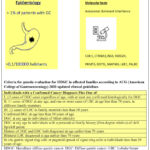 |
Figure 1: Hereditary Diffuse Gastric Cancer |
Gastric adenocarcinoma and proximal polyposis of the stomach
Gastric adenocarcinoma and proximal polyposis of the stomach (GAPPS) is a rare inherited syndrome causing stomach cancer, inherited in an autosomal dominant manner. It is marked by polyposis in the fundic glands of the stomach’s body and carries a high risk of developing gastric adenocarcinoma. 20,21,22
Genetic testing for GAPPS syndrome is based on sequencing the APC gene (adenomatous polyposis coli gene). 21 In 2016, Li and colleagues24 identified three point mutations in the promoter 1B of the APC gene (the gene associated with familial adenomatous polyposis) that are associated with GAPPS symptoms: c.-195A>C, c.-191T>C, c.-192A>G. 23,24,25 It is known that the age at which polyposis begins varies greatly among individuals and is influenced by factors such as genetic background, lifestyle, and environmental exposures. As polyposis progresses, the risk of developing gastric cancer can rise to between 12% and 20%. 23,24,25
Currently, the clinical management features of patients with GAPPS, including screening, monitoring, and the necessity of prophylactic total gastrectomy, remain unclear. Several authors recommend genetic testing for GAPPS when over 30 fundic gland polyps are found in the body and fundus of the stomach, with none present in the antrum or duodenum, regardless of whether dysplasia is present; in cases of polyposis progression; with a family history of polyposis or gastric cancer; and when more than 100 fundic gland polyps are found in one location. 25,26,27 If a risk allele is identified, annual endoscopic surveillance is recommended, and in cases of progressive massive gastric polyposis, prophylactic gastrectomy may be considered. 21
If the test result for GAPPS is negative, it is recommended to exclude other possible syndromes that manifest as polyposis (sporadic fundic polyposis, MAP (MUTYH)-associated polyposis, juvenile polyposis, Peutz-Jeghers syndrome, Cowden syndrome, hereditary diffuse gastric cancer, and Menetrier’s disease). 21
Familial Intestinal Gastric Cancer
The familial intestinal gastric cancer syndrome (FIGC) is an autosomal dominant cancer syndrome associated with an increased risk of intestinal-type gastric cancer. 12,23 The genetic cause underlying the disease has not yet been fully elucidated, although some studies have identified the possibility of a polygenic cause of the disease. 12,28,29 The lifetime risk of developing gastric cancer in this condition is 66% for both sexes. Additionally, the macroscopic and histopathological characteristics are indistinguishable from those seen in sporadic intestinal-type gastric cancer. 12,23,30
The presence of FIGC in a patient with a significant family history of gastric cancer should be suspected when an intestinal-type tumor is identified and no polyps are present in the stomach.
The International Gastric Cancer Consortium has defined the criteria for this syndrome. These include: the presence of intestinal gastric cancer in two or more first-degree relatives, or the identification of intestinal gastric cancer in second-degree relatives, one of whom is diagnosed at age < 50 years, or the detection of intestinal gastric cancer in three or more relatives at any age. At the same time, gastric polyposis must be excluded. 12,23,30
Familial Adenomatous Polyposis
Approximately 5% of all colorectal cancer cases occur in the context of well-established hereditary syndromes, including Lynch syndrome (hereditary nonpolyposis colorectal cancer), familial adenomatous polyposis, and MUTYH-associated polyposis.21
Adenomatous polyposis syndrome (APS) is a rare hereditary disease characterized by the development of multiple (more than 20) adenomas of the colon at a young age, with their inevitable malignant transformation if surgical treatment is not performed in a timely manner. The cause of APS is the presence of a germline mutation in one of the genes that encode proteins regulating intercellular adhesion and apoptosis or involved in Deoxyribonucleic acid (DNA) excision repair (APC, MutYH). 31
MutYH-associated polyposis is an autosomal recessive disease characterized by the development of multiple adenomas of the colon and a risk of colorectal cancer reaching 80%. A characteristic feature of APS caused by a mutation in the MutYH gene is the presence of serrated adenomas, hyperplastic polyps, and mixed polyps (hyperplastic and adenomatous) in the colon, alongside adenomatous polyps. 31,32
The most common manifestations of the disease in the classic form of APS include diarrhea syndrome, metabolic disorders, as well as the presence of blood and mucus in the stool and abdominal pain. Typically, the first symptoms appear at the age of 14-16 years, and malignant degeneration of the polyps occurs between the ages of 18 and 40. In cases of late presentation, signs of intestinal obstruction may be present. In the attenuated form of APS, the main complaints arise between the ages of 20 and 45, with malignant degeneration of the polyps occurring after the age of 40.31,32
Additionally, patients with APS have a high risk of developing malignant neoplasms at extraintestinal sites: duodenal cancer, gastric cancer, thyroid cancer, brain tumors, hepatoblastoma, and tumors of the hepatobiliary system. 31,32,33
According to current clinical guidelines, all patients suspected of having APS are recommended to undergo molecular genetic testing of blood for mutations in the APC/MutYH genes. 31,34
If a patient is found to have more than 100 polyps, it is advisable to start testing with the APC gene for time efficiency, while if the number of polyps is between 20 and 100, testing should begin with the MutYH gene. 31,34,35
Molecular genetic testing for similar mutations is also recommended for blood relatives of the patient. If a mutation is identified, lifelong clinical monitoring and timely surgical intervention are indicated to prevent malignant transformation of the polyps. Relatives who do not have mutations in the APC and MutYH genes are potentially at risk for developing colorectal cancer and require lifelong monitoring. 31,36
Peutz-Jeghers syndrome
Peutz-Jeghers syndrome (PJS) is an exceptionally rare autosomal dominant hereditary disorder, occurring in approximately 1 in 50,000 to 200,000 live births. It is characterized clinically by the presence of multiple hamartomatous polyps in the gastrointestinal tract and mucocutaneous pigmentation, along with a significantly increased risk of developing malignant tumors in various organs. 9,10,37-40
The most common and significant manifestation of the disease in children and adolescents is intestinal obstruction caused by intussusception of the small intestine, with an accompanying risk of intestinal infarction and gastrointestinal bleeding. Anemia, nausea, abdominal pain, intestinal obstruction, the presence of blood in the stool, and the prolapse of polyps from the rectum are also frequently observed. 40,41
Another characteristic feature of PJS is the presence of perioral lentigines—pigmentation around the mouth, nostrils, perianal area, as well as on the palms and fingertips. This clinical symptom occurs in more than 95% of cases and significantly aids in making the correct diagnosis. The genetic aspect of the disease’s development is a mutation in the STK11 gene, which encodes the enzyme serine/threonine kinase 11 (STK11), involved in regulating cellular metabolism, energy homeostasis, and possessing the ability to suppress uncontrolled cell division. STK11 mutations (both inherited and acquired) are found in more than 90% of PJS cases. Additionally, the detection of mutations in this gene is possible in non-small cell lung cancer (up to 30%), cervical cancer (up to 20%), and a number of other tumors. It is known that the combination of mutations in the KRAS and STK11 genes in lung cancer is associated with an aggressive disease course. 9,10,39
Lynch syndrome
Lynch syndrome is an autosomal dominant inherited disorder marked by the occurrence of nonpolyposis colorectal cancer and, less commonly, cancers in other organs.42 It represents up to 3% of all colorectal cancer cases globally. 43 In carriers of pathogenic mutations associated with Lynch syndrome, the risk of developing colorectal cancer is approximately 75%, endometrial carcinoma is 21–60%, and ovarian cancer is 9%. There is also an established association between Lynch syndrome and the development of cancers of the stomach, urinary tract, pancreas, bile ducts, gallbladder, small intestine, and brain. The cause of Lynch syndrome is a mutation in one of the genes responsible for DNA repair errors: MLH1, MSH2, MSH6, or PMS2. 40,41
Lynch syndrome can be suspected if the patient meets the Amsterdam criteria (1999) and the Bethesda criteria (2004). Key criteria include: the presence of at least three relatives with tumors of the colon, endometrium, small intestine, ureter, or renal pelvis across at least two generations; early age of onset (under 50 years); the development of the disease in at least one relative; the presence of the disease in first-degree relatives; absence of polyps in the gastrointestinal tract; presence of microsatellite instability in individuals under 60 years; and the occurrence of colorectal cancer in the patient and their relatives across two or more generations, regardless of age. 42
In the Russian Federation, about 25–30% of patients with genetically confirmed Lynch syndrome do not meet the Amsterdam criteria, as they lack a significant family history. In this regard, specialists from the Federal State Budgetary Institution “A.N. Ryzhikh National Medical Research Center of Coloproctology” have developed original criteria for the necessity of genetic testing in patients suspected of having Lynch syndrome.41 These include: colorectal cancer in the patient at age under 43; the presence of two or more additional cancer cases in the patient or their blood relatives.
Compared to sporadic colorectal cancer, tumors in Lynch syndrome develop at a younger age (in the mid-fifties) and are more frequently localized proximal to the splenic flexure. As with familial adenomatous polyposis, various extraintestinal manifestations are observed in Lynch syndrome. The most common of these are “café au lait” spots and sebaceous gland tumors. Additionally, keratoacanthoma, a benign skin tumor, may occur. 43,44
To confirm the diagnosis, it is necessary to detect an inherited mutation in the DNA repair system genes (MSH2, MSH6, MLH1, or PMS2) in the patient. If a mutation is present, molecular genetic testing is generally recommended for all close relatives of the patient. This allows for monitoring of all carriers of this pathological variant in the family and the development of personalized treatment in the case of oncogenesis. 42
Discussion
It is important to emphasize that a crucial part of managing patients with malignant neoplasms of the gastrointestinal tract, regardless of localization and stage of treatment, is genetic testing. However, overly strict adherence to clinical criteria for genetic testing in any type of cancer may result in a significant number of patients with unfavorable gene variants being overlooked. For example, genetic testing should not be limited exclusively to cases with early-onset cancer occurring at ages under 40 or 50 years, or to other formal signs. Hereditary forms of cancer can be suspected by the physician based on a combination of signs, with an understanding of the conditionality of established boundaries concerning quantitative risk indicators. Thus, the criteria and recommendations provided above are merely a foundation for making medical decisions, and the identification of mutations in cancer patients is extremely important for them and their relatives. In cases where genetic testing is not possible or yields negative results, it is essential to remember that close relatives of patients with a clear hereditary nature have an increased risk and should undergo targeted examinations and monitoring.
Conclusion
It is evident that in the foreseeable future, approaches to molecular diagnostics of cancer and precision gastroenterology as a whole will undergo significant changes, as the creation of a “genetic passport” for most healthy individuals with nearly complete genome sequencing becomes increasingly accessible, and the use of various genome editing techniques, epigenomics, RNA, etc., may fundamentally change the prevention and treatment of hereditary forms of gastrointestinal cancer.
Acknowledgment
The authors are grateful to the Saratov State Medical University for providing the opportunity to conduct research work, National Medical Research Center for Therapy and Preventive Medicine, Coordinating Center for Fundamental Research, Moscow to draft this review.
Funding source
The author(s) received no financial support for the research, authorship, and/or publication of this article.
Conflict of Interest
The authors do not have any conflict of interest.
Data Availability Statement
This statement does not apply to this article.
Ethics Statement
This research did not involve human participants, animal subjects, or any material that requires ethical approval.
Informed Consent Statement-
This study did not involve human participants, and therefore, informed consent was not required.
Clinical Trial Registration
This research does not involve any clinical trials.
Permission to reproduce material from other sources
Not applicable
Author Contributions
- Anastasia Elkina: Study design and concept, Data collection and processing, Text writing, Scientific editing
- Irina Kozlova: Study design and concept, Scientific editing
- Natalia Akimova: Study design and concept, Scientific editing
- Anton Kiselev: Study design and concept, Scientific editing
- Yuri Schwartz: Study design and concept, Data collection and processing, Text writing, Scientific editing
References
- Samir S. Human DNA Mutations and their Impact on Genetic Disorders. Recent Patents on Biotechnology. 2024;18(4):288-315. doi:10.2174/0118722083255081231020055309
CrossRef - Garutti M, Foffano L, Mazzeo R, et al. Hereditary cancer syndromes: a comprehensive review with a visual tool. Genes (Basel). 2023;14(5):1025. doi:10.3390/genes14051025
CrossRef - Schmidt RJ, Steeves M, Bayrak-Toydemir P, et al. Recommendations for risk allele evidence curation, classification, and reporting from the ClinGen Low Penetrance/Risk Allele Working Group. Genet Med. 2024;26(3):101036. doi:10.1016/j.gim.2023.101036
CrossRef - Brzezinski JJ, Malkin D. Knudson’s “Two-Hit” hypothesis and cancer predisposition: a bit more complicated but still going strong. Cancer Discovery. 2025;15(2):258-260. doi:10.1158/2159-8290.cd-24-1662
CrossRef - Gorbunova V.N., Strekalov D.L., Suspicyn E.N. Klinicheskaya genetika. Sankt-Peterburg: Foliant; 2015. (In Russ.).
- Vihinen M. Individual Genetic Heterogeneity. Genes (Basel). 2022;13(9):1626. doi:10.3390/genes13091626
CrossRef - Cunningham LA, Gasior A, Kalady MF. Management of Colorectal Cancer in Hereditary Syndromes. Surgical Oncology Clinics of North America. 2022;31(2):307-319. doi:10.1016/j.soc.2021.11.010
CrossRef - Blair VR, McLeod M, Carneiro F, et al. Hereditary diffuse gastric cancer: updated clinical practice guidelines. Lancet Oncology. 2020;21(8):e386-e397. doi:10.1016/s1470-2045(20)30219-9
CrossRef - Tacheci I, Kopacova M, Bures J. Peutz-Jeghers syndrome. Current Opinion in Gastroenterology. 2021;37(3):245-254. doi:10.1097/mog.0000000000000718
CrossRef - Yamamoto H, Sakamoto H, Kumagai H, et al. Clinical Guidelines for Diagnosis and Management of Peutz-Jeghers Syndrome in Children and Adults. Digestion. 2023;104(5):335-347. doi:10.1159/000529799
CrossRef - Dal Buono A, Gaiani F, Poliani L, Laghi L. Juvenile polyposis syndrome: An overview. Best Practice & Research Clinical Gastroenterology. 2022;58-59:101799. doi: 10.1016/j.bpg.2022.101799.
CrossRef - Gullo I, Grillo F, Mastracci L, et al. Precancerous lesions of the stomach, gastric cancer and hereditary gastric cancer syndromes. Pathologica. 2020;112(3):166-185. doi:10.32074/1591-951X-166
CrossRef - Besova N.S., Bolotina L.V., Gamayunov S.V., et al. Stomach cancer. Zlokachestvennye opuholi. 2023;13(3s2-1):405-424. (In Russ.). doi:10.18027/2224-5057-2023-13-3s2-1-405-424
CrossRef - Kole C, Charalampakis N, Sakellariou S, et al. Hereditary Diffuse Gastric Cancer: A 2022 Update. Journal of Personalized Medicine. 2022;12(12):2032. doi:10.3390/jpm12122032
CrossRef - Bermejo Lorenzo J, Hemminki K. Risk of cancer at sites other than the breast in Swedish families eligible for BRCA1 or BRCA2 mutation testing. Annals of Oncology. 2004;15:1834-1841. doi:10.1093/annonc/mdh474
CrossRef - Cukanov AS, Shubin VP, Pospekhova NI, et al. Hereditary cancers of the gastrointestinal tract. Prakticheskaya onkologiya. 2014;15:126-133.
- Pospekhova NI, Cukanov AS, Shubin VP. Molekulyarno geneticheskaya diagnostika osnovnyh nasledstvennyh form kolorektal’nogo raka. Medicinskij alfavit.2014;1(2):11-15.
- Fitzgerald R., Hardwick R., Huntsman D., et al. International Gastric Cancer Linkage Consortium. Hereditary diffuse gastric cancer: updated consensus guidelines for clinical management and directions for future research. Journal of Medical Genetics. 2010;47:436-444. doi:10.1136/jmg.2009.074237
CrossRef - Associaciya onkologov Rossii. Klinicheskie rekomendacii. Rak zheludka. Available: https://oncology-association.ru/wp-content/uploads/2020/09/rak_zheludka.pdf
- Lenka Foretová, Marie Navrátilová, Marek Svoboda. GAPPS – Gastric Adenocarcinoma and Proximal Polyposis of the Stomach Syndrome in 8 Families Tested at Masaryk Memorial Cancer Institute – Prevention and Prophylactic Gastrectomies. Clinical Oncology. 2019 – Supplementum 2. doi:10.14735/amko2019S109
CrossRef - Zaffaroni G, Mannucci A, Koskenvuo L, et al. Updated European guidelines for clinical management of familial adenomatous polyposis (FAP), MUTYH-associated polyposis (MAP), gastric adenocarcinoma, proximal polyposis of the stomach (GAPPS) and other rare adenomatous polyposis syndromes: a joint EHTG-ESCP revision. British Journal of Surgery. 2024;111(5):070. doi:10.1093/bjs/znae070
CrossRef - Tacheci I, Repak R, Podhola M, et al. Gastric adenocarcinoma and proximal polyposis of the stomach (GAPPS) – A Helicobacter-opposite point. Best Practice & Research Clinical Gastroenterology. 2021;50-51:101728. doi:10.1016/j.bpg.2021.101728
CrossRef - Carneiro F. Familial and hereditary gastric cancer, an overview. Best Practice & Research Clinical Gastroenterology. 2022;58-59:101800. doi:10.1016/j.bpg.2022.101800
CrossRef - Li J, Woods SL, Healey S et al. Point mutations in exon 1B of APC reveal gastric adenocarcinoma and proximal polyposis of the stomach as a familial adenomatous polyposis variant. American Journal of Human Genetics. 2016; 98 (5): 830–842. doi:10.1016/j.ajhg.2016.03.001
CrossRef - Iwatsuki M, Matsumoto C, Mimori K, et al. The comprehensive review of gastric adenocarcinoma and proximal polyposis of the stomach (GAPPS) from diagnosis and treatment. Annals of Gastroenterological Surgery. 2023;7(5):725-732. doi:10.1002/ags3.12708
CrossRef - Worthley DL, Phillips KD, Wayte N et al. Gastric adenocarcinoma and proximal polyposis of the stomach (GAPPS): a new autosomal dominant syndrome. Gut. 2012;61(5):774–779. doi:10.1136/gutjnl-2011-300348
CrossRef - Setia N, Clark JW, Duda DG et al. Familial gastric cancer. Oncologist. 2015;20(12):1365–1377. doi:10.1634/theoncologist.2015-0205
CrossRef - Caldas C, Carneiro F, Lynch HT, et al. Familial gastric cancer: overview and guidelines for management. Journal of Medical Genetics. 1999;36;873-80.
CrossRef - Carvalho J, Oliveira P, Senz J, et al. Redefinition of familial intestinal gastric cancer: Clinical and genetic perspectives. Journal of Medical Genetics. 2020. doi:10.1136/jmedgenet-2019-106346 10.1136/jmedgenet-2019-106346
CrossRef - Garcia-Pelaez J, Barbosa-Matos R, São José C, et al. Gastric cancer genetic predisposition and clinical presentations: Established heritable causes and potential candidate genes. European Journal of Medical Genetics. 2022;65(1):104401. doi:10.1016/j.ejmg.2021.104401
CrossRef - Shelygin Yu.A., Imyanitov E.N., Kutsev S.I., et al. Adenomatous polyposis syndrome. Koloproktologia. 2022;21(2):10-24. doi:10.33878/2073-7556-2022-21-2-10-24
CrossRef - Lauricella S, Rausa E, Pellegrini I, et al. Current management of familial adenomatous polyposis. Expert Rev Anticancer Ther. 2024;24(6):363-377. doi:10.1080/14737140.2024.2344649
CrossRef - Gao XH, Li J, Zhao ZY, et al. Juvenile polyposis syndrome might be misdiagnosed as familial adenomatous polyposis: a case report and literature review. BMC Gastroenterology. 2020;20(1):167. doi:10.1186/s12876-020-01238-7
CrossRef - SyngaL S, Brand RE, Church JM, et al. ACG cLinicaL guideLine: Genetic testing and management of hereditary gastrointestinal cancer syndromes. American Journal of Gastroenterology. 2015;110(2):223-263. doi:10.1038/ajg.2014.435
CrossRef - Dinarvand P, Davaro EP, Doan JV et al. Familial Adenomatous Polyposis Syndrome: An Update and Review of Extraintestinal Manifestations. Archives of Pathology & Laboratory Medicine. 2019;143(11):1382-1398. doi:10.5858/arpa.2018-0570-ra
CrossRef - Aelvoet AS, Buttitta F, Ricciardiello L, Dekker E. Management of familial adenomatous polyposis and MUTYH-associated polyposis; new insights. Best Best Practice & Research Clinical Gastroenterology. 2022;58-59:101793. doi:10.1016/j.bpg.2022.101793
CrossRef - Savelyeva TA, Pikunov DYu, Kuzminov AM, et al. Peutz-Jeghers syndrome: what has been known for 125 years of research? (review). Koloproktologia. 2021;20(2):85–96. (in Russ.). doi:10.33878/2073-7556-2021-20-2-85-96
CrossRef - Sato E, Goto T, Honda H. Peutz-Jeghers Syndrome. JAMA Dermatol. 2022;158(11):1316. doi:10.1001/jamadermatol.2022.3979
CrossRef - Wagner A, Aretz S, Auranen A, et al. The Management of Peutz-Jeghers Syndrome: European Hereditary Tumour Group (EHTG) Guideline. Journal of Clinical Medicine. 2021;10(3):473. doi:10.3390/jcm10030473
CrossRef - Peltomäki P, Nyström M, Mecklin JP, et al. Lynch Syndrome Genetics and Clinical Implications. Gastroenterology. 2023;164(5):783-799. doi:10.1053/j.gastro.2022.08.058
CrossRef - Tsukanov A.S., Shelygin Y.A., Semenov D.A., Pikunov D.Y., Polyakov A.V. Lynch syndrome: current status. Medical Genetics. 2017;16(2):11-18. (In Russ.) https://www.medgen-journal.ru/jour/article/view/217?locale=ru_RU
- Maratt JK, Stoffel E. Identification of Lynch Syndrome. Gastrointestinal Endoscopy Clinics of North America. 2022;32(1):45-58. doi:10.1016/j.giec.2021.09.002
CrossRef
Abbreviations List
APS – adenomatous polyposis syndrome
DNA – Deoxyribonucleic acid
FIGC – familial intestinal gastric cancer syndrome
GAPPS – gastric adenocarcinoma and proximal polyposis of the stomach
HDGC – Hereditary diffuse gastric cancer
MAP – MUTYH-associated polyposis
PJS – Peutz-Jeghers syndrome
STK11 – enzyme serine/threonine kinase 11
 PlumX:
 Views: 331
  PDF Downloads:
269
PDF Downloads:
269