Advancing Ethical Discourse in Neurotechnology: A Bibliometric Approach to Unveiling Research Frontiers
 and Pooja Dogra2*
 1Department of Healthcare Management, University Institute of Applied Management Sciences, Panjab University, Chandigarh, India
2Department of Health Sciences, Chitkara School of Health Sciences, Chitkara University, Rajpura, Punjab, India
Corresponding Author E-mail: drpoojadogra@gmail.com
DOI : http://dx.doi.org/10.13005/bpj/3399
Download this article as:

Neurotechnology is rapidly evolving, presenting significant ethical, legal, and social challenges. This study employs a bibliometric analysis to map the ethical discourse surrounding neurotechnology, with a focus on emerging trends, key contributors, and future research directions. Using Scopus as the primary database, we analyzed 288 research articles published between 2000 and 2025, employing bibliometric tools like VOSviewer and Biblioshiny to visualize trends. Findings reveal four major thematic clusters, Ethical and Legal Dimensions of Neurotechnology, addressing concerns related to privacy, informed consent, and commercialization; Ethical Autonomy in Neurotechnology, exploring issues of AI-driven decision-making, free will, and neurological interventions; Ethics and Applications of Neurotechnological Interventions, highlighting debates on cognitive enhancement, neuromodulation, and medical ethics; and Bioethics and Neuroscientific Foundations of Neurotechnology, which focuses on integrating neuroscientific insights into ethical policy frameworks. 12 research prepositions related to ethical considerations in neurotechnology are proposed by current research. This study highlights gaps in literature, including the lack of standardized regulatory frameworks, disparities in access to neurotechnology, and unresolved ethical concerns about cognitive manipulation and autonomy. The findings emphasize the need for interdisciplinary collaboration between neuroscientists, ethicists, policymakers, and AI specialists to ensure ethical governance of neurotechnology. Future research should focus on policy development, cognitive privacy regulations, and ethical AI integration in neurotechnology.
KEYWORDS:Artificial Intelligence; AI Ethics; Bibliometric Analysis; Cognitive Enhancement; Informed Consent; Neuro Ethics; Neurotechnology
Introduction
In the emerging neuro society, conquests in the global neurotechnology market intersect with complex ethical questions. Only by addressing the manifold ethical implications of neurotechnology, we have a chance at capitalizing on its full potential without descending into controversies or damaging pitfalls.1,2 Ethical discourse in relation to neurotechnology is therefore key for guiding its integration into society, economy, and daily life.3 Recent decades have seen increasing levels of discourse on neurotechnology and its ethical implications across a range of different research fields.4 While these assessments of the perceived importance of different neuroethical, neuro-rights, and techno-ethical questions provide a glimpse into relevant research to date, we argue that in order to delve into the most current frontiers, it is crucial to gauge scientists’ expert knowledge in this expanding field based on the existing academic literature.
A history of neuroscience offers pertinent historical reference points on novel medical and technical interventions for the human brain.5 At the same time, there seems to be a conceptual and empirical infinity between ethical reflections on purely electronic assistive devices and practical philosophical questions concerning intelligible agency and rationally amendable dispositions.6 In view of this, future ethical nervous discourses and, following in their wake, practical changes will require a fusion of analytic fluidity and thematic specificity.7 In combining both approaches, this article sets out to navigate the ethico-philosophical implications of technological interventions in the brain. By conducting a bibliometric topical analysis of a decade of applied neuroethical research on neurotechnology, it first positions the relevant scientific discourses within the interdisciplinary neuroethical field as a whole.
Ways of intervening in the human brain have for long been a subject of both scientific speculation and fears. In recent years, neurotechnology has undergone significant advancements. It is becoming increasingly urgent to study how the impact of neurotechnology is being anticipated and what its normative implications are.8 So far, research on neurotechnology has mainly focused on the ethical implications of application areas, such as neuromarketing and neuromodulation. However, relatively little is known about how broader discussions in the field of neuroethics are evolving. In particular, it is of interest how stakeholders in the scientific community envision advancing ethical discourse in the field. This paper is dedicated to this question. Neurotechnology forms a frontier, representing a continuous threat and promise for shaping how we exist.9 Just like technology can shape our values, justification, resources, social and political interests, and personal identity. Moving towards a post-anthropocentric technological future requires us to adopt a re-ethical mindset.10
To understand major trends, changed focal topics, and where the field is heading in the envisaged immediate future, we aim to develop a granular understanding of relevant ethical and policy-related considerations as discussed in professional literature published to date. Among the factors that motivate this study, we must acknowledge an increased awareness of the moral implications of human subjects’ technological enhancement.11 Neurotechnology often develops in tandem but also in tension with contemporary ethical discourses.12 Decidedly, technological advancements apprehend ethical discussions, of which scholars of neuro-ethics take an interest.
One of the most critical ethical challenges in neurotechnology is the protection of individual privacy. As neuro- technologies such as brain-computer interfaces (BCIs) and neural implants become more sophisticated, they have the potential to access and influence an individual’s thoughts, emotions, and memories. This raise concerns that sensitive data could be misused or accessed without authorization. Neuro- technologies could lead to violations of “cognitive freedom,” where people’s mental states could be manipulated or controlled without consent.12 Furthermore, issues of informed consent in neuro-technologies remain complex. Incorporating BCIs into medical treatments, such as for patients with neurological diseases or disorders, requires a nuanced understanding of consent.
While some argue that such performance enhancements could have social benefits, others have raised concerns about inequality and fairness. As Liao et al.13 argue, neurotechnology, if only accessible to certain socioeconomic groups, could exacerbate existing social inequalities and lead to unequal distribution of cognitive performance gains. Furthermore, the potential for cognitive enhancement has sparked debate about notions of “normality” and the boundaries between treatment and enhancement. Ethical questions arise not only about whether it is acceptable to enhance the human brain, but also where the line between therapeutic applications and performance enhancement should be drawn.14 Neurotechnology has a significant impact on human rights, particularly in regards to freedom and autonomy. The potential for neurotechnological devices to alter or control thoughts and behavior while still preserving autonomy and the capacity to make independent decisions is troubling. The creation of “nerve surveillance” technologies, which involve monitoring the brain’s activity for various purposes such as law enforcement or workplace optimization, may violate the individual’s right to mental privacy and the freedom to be coerced.15
Concisely, this paper provides a detailed look at the current ‘ethico-moral’ thread being drawn through neuro-ethics. This study investigates ethical aspects of neurotechnology. Following research questions drive the current study. The first question asks, what constitutes the emerging themes, trends and influential contributors in terms of ethical discourse on neuro technology? Second question tries to explore what gaps are there in literature and how has focus of ethical discussion in neurology evolved over time? Last question tries to find answer for the future directions that can help in policy making in neurotechnology? In order to get answers for these questions specific and measurable actions in form of objectives have been framed as follows:
To analyze the thematic evolution and intellectual structure of ethical discourse in neurotechnology using bibliometric methods.
To identify prominent authors, sources, organizations and countries contributing towards ethical discourse in neuro-technology research.
Providing insights for future research and policy framework by uncovering gaps in literature and ethical challenges.
Review of Literature
Neurotechnology is a prism of various scientific and technological dimensions aiming to understand and manipulate the human nervous system at different scales from a perspective of function or dysfunction.16 It spans knowledge regarding basic neuronal functioning, cognitive neurosciences, and behavioral sciences associated with fields such as biomedical engineering, molecular chemistry, computer science, artificial intelligence development, and social sciences among others.17 It is crucial to anticipate and manage ethical considerations in such domains from individual and broader societal perspectives. In the field of neurotechnology, for instance, a major aspect of ethical inquiries relates to accessibility to neuro-interventions for quality-of-life improvement through portable interfaces.18-19 Neurotechnology spans different fields and can be defined broadly as any technological device that functions to interact with the nervous system. Within neurotechnology, there are various classes of technologies, including neuro-prosthetics, brain-computer interfaces, deep brain stimulation, and neuroimaging devices.20-22
An increasing use of brain-computer interfaces redirects brain activity to control various devices in a non-invasive manner through monitoring. In the future, while neuro- consumers may use neurotechnology to self-improve, healthy patients might benefit from neurotechnology-assisted focal brain stimulation to accelerate recovery.23 Beyond healthcare, neurotechnology is gaining traction in gaming and entertainment. Inviting players to steer action in a game with a mere thought, headsets by various companies have been popular tracking systems since the late 2000s.24 Historical attitudes towards the use of technologies to probe or intervene in the brain may first appear cautious, followed by an overall welcoming vision.25-26 Moving to more contemporary history, the development and wide adoption of the encephalogram in the 1940s started to make general audiences more comfortable with the idea of technologies for ‘mind reading.’ There is a concern among ethicists that public perceptions might not be sensitized enough to newly emerging ethical considerations in the neurotechnological era.27-28 In light of these historical trends, it is important to engage in an informed ethical analysis of the societal implications of neurotechnology.29
An accessible orientation to these developments, processes, and implications is needed in order to inform ethical and/or responsible opinion and practice. The ethical consideration of ‘brain interventions’ highlights renewed interest in the exploration of relationships between self, society, and culture in light of brain-related discoveries, and also the historical shifts in the values we hold around ‘normalcy’ and therapeutic intervention.30 Such shifts point to the historical development of our understanding of human nature built on relationships between advances in technological society and new ethical dilemmas – shifting from a lukewarm to overwhelmingly positive attitude towards mind-reading technologies.31 With the innovation of EEG technologies came the promise of brain-wave shaping, but also societal concerns about mind control and early neuroethical foci.32 A wave of ethical and legal debate ensued with the advent of deep brain stimulation, and a future development in optogenetics, a relatively new field of research that involves genetically encoding neural or muscle tissue so that it can be controlled by laser illumination, may prompt similar concerns regarding ethics and society.33-35
Four pressing contemporary ethical issues in neurotechnology can be distinguished. First, in investigations where cognitive abilities are enhanced or altered using personal neurotechnology, informed consent can be under pressure, altering what it should mean to act freely and independently, imposing a reshaping of the principle of autonomy.17 An important question is therefore what an adequate condition of informed consent is in the context of its potential alteration via neurotechnology.36 Second, if non-consensual individuals are somehow capable of knowing about the recorded mental states of consenting neurotechnological users, it is feasible for possible mental states themselves to command their controller to take precautions to steer clear of privacy harms, such as exploitation or unwelcome dissemination, thereby imposing the duty on others to respect one’s privacy.37 Third, using neurotechnology to enhance cognitive functions points to a greater potential to modify factors at the basis of personal identity and somatic and psychological continuity.38 Fourth, the project to develop and use neurotechnology is inserted into a contemporary landscape marked by tensions on the ethical acceptability of human enhancement and by a practice of basic and clinical research deeply ingrained in and funded by a competition for technological innovation aimed at market capture and maximum personalization.39
Bibliometrics has become a fundamental tool in the evaluation and interpretation of the impact of research work in virtually all scientific domains.23 It is based on statistical models and visualization techniques to analyze and demonstrate how scientific activity is spread and permeated through different research communities over time and space.40 The statistical survey of written and published documents results in a science of activity diffusion across a biblioscape.41 Typical constructed objects of bibliometrics are the ‘document’ and the ‘citation,’ which are considered basic acts of science. The writing of a document statistically indicates the existence of novel information, and the citation indicates a transfer, reception, and use of this information.42 The purpose of this paper is the application of the tools of bibliometric analysis to study research frontiers in the field of neurotechnology for the development of advanced ethical discourse. In recent years, bibliometric indicators in neurotechnology have become a fundamental tool for mapping research community interests that use bibliometrics.43 The current state-of-the-art research about neurotechnology is documented in science publications, including non-open references and non-accessible local language categories.44-45
The capacity of these technologies to influence thoughts, memories, and identity can potentially undermine our understanding of autonomy and personal identity, this can lead to new ethical questions regarding the nature of consciousness and the individual. To mitigate the ethical concerns associated with neurotechnology, scientists have advocated for more stringent regulations and rules regarding its development and utilization.46-48
Introducing new research frontiers in the next decade necessitates identifying the gaps and potential for improvement in existing literature. Despite unprecedented bibliometric growth in the neurotechnology literature focusing on technology and engineering, little has been published on the ethical issues in neurotechnology. In fact, the little that has been done centres on moral bio- enhancement and unfair brain over other ethical and moral issues. Moreover, while the focus is almost exclusively on neuroethical themes, little has been done on neurotechnology, a term that encompasses neural engineering, neuroeducation, neuro- leadership, and other relevant topics. While additional research concerning existing approaches to personhood and self as the basis of personalized therapy and marketing is rather scarce in comparison to other prevalent bioethical themes, future qualitative research could advance the entirety of ethical considerations regarding this ethico- legal behavior in ways that would be relevant not only to other researchers but also to engineers. Therefore, there are two future research opportunities: addressing underrepresented themes in neurotechnology ethics; and integrating engineering and neuro- ethics, thereby employing multidisciplinarity within the studies conducted. Future research, in addition to the most sophisticated and exclusive neurotechnology, should focus on general human cognition and advances in neural engineering that pose ethical concerns, making a unique and urgent contribution to the neuroethical literature.
Materials and Methods
Systematic literature review or SLR Approach has been employed by using the enhancing and augmenting impact of bibliometric analysis for the purpose of current study. As there is a deficit of in-depth analysis and thoroughness among the traditional way of synthesizing literature review, results put forward by traditional way are found to be inaccurate and misleading many times. One of the objectives of present research is to scrutinize and present the existing literature with respect to ethical dimensions in neuro technology, in a more systematic and structured way. This research paper is an effort to understand the ethical aspects concerning neuro technological interventions and neuroscience, so that future perspectives can be put forward.
Database selection
Scopus database is one of the most comprehensive, vast and high- quality databases for exploring literature related to any field.49 It also provides an easy user interface, detailed information and fast processing for the bibliometric data.50 Scopus database because of its comprehensiveness and ease of use was used for present research. Final data for analysis was extracted in form of .csv file containing details like, authors name, affiliation, sources, co-author countries, institutions, publishers, citations, year of publication, abstract, key words etc. For the purpose of obtaining most relevant and extensive literature, researchers used a string of keywords related to the research area of ethics in neuro-technology.
Search Keywords
Use of appropriate keywords is very critical in ensuring collection of relevant quality research papers from database. The search strategy for ethical considerations in neurotechnology was formulated by keeping in mind the research questions and objectives. The keywords used for creating search string were divided into two sections, first section represented keywords related to neurotechnology, keywords were “neurotechnology, brain computer interface, neural interface, neuroscience”. Ethical consideration terms were represented in second section as, “ethics, ethical concerns, ethical dimensions, bioethics, privacy, consent”. In order to create a search string out of these keywords Boolean operators were used. OR operator was used within each group to expand search and ensure related terms are included. AND operator combined the two groups so that both neurotechnology and its ethical considerations are addressed. Query was further customized by adding specific fields like, TITLE, ABSTRACT and KEYWORDS for more targeted results. Following search string was created, “(TITLE-ABS-KEY (“neurotechnology” OR “neuro-technologies” OR “brain-computer interface” OR “BCI” OR “neural interface” OR “cognitive enhancement”) AND (TITLE-ABS-KEY (“ethics” OR “ethical considerations” OR “bioethics” OR “moral implications” OR “societal implications” OR “privacy” OR “security” OR “human rights” OR “responsible innovation” OR “regulation” OR “governance”))”.
Articles filtering
Figure 1 below provides the PRISMA Flow diagram consisting of four steps, Identification, screening, eligibility and inclusion.
Identification of Documents
After search query was complete, a total of 543 articles were yielded from database. Research papers related to neurotechnology and ethics were searched for, with mention of keywords in abstract, title or keywords. Papers written in English language were included. Research articles published between 2000 and 2025 were made the part of search. Out of these, conference proceedings, newsletters, book chapters and editorials were removed to obtain 458 documents.
Screening of Documents
From the array of documents duplicates were removed in the second step, which further reduced the number to 430. These documents were screened for key words and abstracts, and after removing 52 irrelevant documents, remaining 378 articles were moved to next step.
Eligibility of Documents
Further, full text eligibility was screened for 378 articles and after rationalization, 90 documents which were found to be non-aligned with questions and research objectives were deleted from the pool.
Inclusion of Documents
At the end a total of 288 documents were included for literature review and bibliometric analysis.
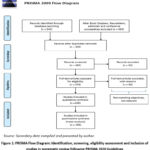 |
Figure 1: PRISMA Flow Diagram: Identification, screening, eligibility assessment and inclusion of studies in systematic review following PRISMA 2020 Guidelines |
Results
A detailed bibliometric visualization on the literature available on ethical aspects in neurotechnology has been presented in this section.
Main Information
The main information related to bibliometric data extracted from Scopus database after analysis with help of Vos viewer and Biblioshiny software has been presented in Figure 2 below. Details pertaining to final 288 documents selected for analysis has been presented here. The selected documents were published between 2000 and 2024. Annual growth rate during this period was found to be 8.45%, which shows that with time a good growth has been noticed in the research area under study. A total of 114 sources were identified, and these 288 documents were authored and co authored by 969 individuals, reflecting a good collaboration among authors. 81 of the articles were having a single author. A percentage of 24.65 for international co-authorship reflects the significance of ethical considerations in neurotechnology worldwide. The document average age is 8.51, this moderate DAA shows that foundational and recent studies, both have contributed towards the research area. As the ACD (Average citations per doc) is high at 20.54, it indicates that documents present in the dataset have relevance and influence. 957 author keywords and 14890 references suggest a vast amount of research being considered.
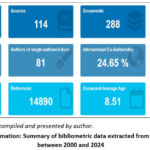 |
Figure 2: Main Information: Summary of bibliometric data extracted from Scopus database between 2000 and 2024 |
Trends in Publication, ASP (Annual Scientific Production)
The Figure 3 below shows the annual scientific production trend for each year from 2000 onwards. There was a low publication per year from 2000 till 2010, annual publication remaining below 10. 2011 onwards till 2018 there was a gradual increase in the field of ethical neurotechnology, signifying increasing research interest in this field. Number of publications decreased in 2019 but after COVID 19 pandemic there was a huge increase in publications related to ethical considerations in neurotechnology, with highest publications in year 2022.34 The findings show that there has been a continuous exploration of the domain area and research is continuously trying to understand ethical dimensions in neurotechnology, matter of concern is that after 2022 there has been a decrease in publications and new research prepositions in this area need to be identified.
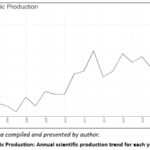 |
Figure 3: Annual Scientific Production: Annual scientific production trend for each year from 2000 onwards. |
Affiliations Statistics
The role of organizations and institutions is of paramount significance in disseminating the scientific knowledge related to any field, and this contribution from affiliations is highlighted in Table 1. “Baylor College of Medicine” leads the institutions with 41 articles. This table contains the names of the famous universities of USA, UK, and Canada and includes “Harvard Medical School, University of Oxford, University of Toronto, and McGill University” etc. These institutions are known for their activities in high impact research, which proves their level of involvement in ethical considerations for neurotechnology. “Oxford University and University of California” both had 26 articles. Other institutions that provide articles include “McGill University” (23 articles), “University of Washington” (21 articles), and many others. The existence of several leading institutions suggests the possibility of interdisciplinary cooperation, perhaps by linking with one of them if new researchers are trying to contribute in the field of neurotechnology ethics.
Table 1: Most Relevant Affiliations: Top 10 organizations contributing towards the field.
| Rank | Affiliation | Articles |
| 1 | Baylor College of Medicine | 41 |
| 2 | University of California | 26 |
| 3 | University of Oxford | 26 |
| 4 | McGill University | 23 |
| 5 | University of Washington | 21 |
| 6 | De Montfort University | 20 |
| 7 | University of Florida | 19 |
| 8 | Harvard Medical School | 16 |
| 9 | University of British Columbia | 16 |
| 10 | University of Toronto | 14 |
Source: Secondary data compiled and presented by author.
Prolific Authors
Table 2 contains the names of most prolific authors in this field. J. Illes and E. Racine are by far the most prolific authors, with each author submitting 10 documents. Given the substantial amount of their publications, it would appear that they are thought leaders in ethical discussions pertaining to neurotechnology. E. Klein and J.J. Fins publish 6 papers each which manifest their joint presence in this domain. Their production is more restrained than that of Illes and Racine, but they have contributed significantly in shaping of the discourse. Each of the six authors among — Buchman, D.Z., Evers, K., Goering, S., Haselager, P., Hildt, E., and Jox, R.J.—have each contributed 4 documents. This indicates that there is a broader network of contributors at play who are influencing discussions on neurotechnology ethics. Publication numbers are distributed unevenly: a few authors are key, but many scholars are writing. This suggests that interdisciplinary collaboration and cross institution research can be carried out.
Table 2: Most Relevant Authors: Top 10 authors with maximum documents on topic
| Rank | Author | Number of Documents |
| 1 | Illes, J. | 10 |
| 2 | Racine, E. | 10 |
| 3 | Fins, J. J. | 6 |
| 4 | Klein, E. | 6 |
| 5 | Buchan, D. Z. | 4 |
| 6 | Evers, K. | 4 |
| 7 | Goering, S. | 4 |
| 8 | Haselager, P. | 4 |
| 9 | Hildt, E. | 4 |
| 10 | Jox, R. J. | 4 |
Source: Secondary data compiled and presented by author.
Source Contribution
From table 3 below, it can be concluded that Neuroethics has 65 documents and dominates, it proves to be a specialized and highly influential, source for researchers working on the ethical dimensions of neurotechnology. Major contributors also include AJOB Neuroscience (27 documents) and Frontiers in Human Neuroscience (18 documents). It is very likely that their focus covers broader neuroscientific topics with ethical considerations included. Current Topics in Behavioral Neurosciences (9 documents) and Journal of Neuroscience Nursing (7 documents) point to the level of attention that is given to ethical discussions within behavioral neuroscience and clinical neuroethics. Frontiers in Neuroscience and Journal of Neural Engineering (6 documents each) highlight an intersection between ethics and technological advancements in neuroscience. This suggests that ethical concerns in neurotechnology are discussed in psychology journals (Frontiers in psychology) and engineering related journals (Brain Computer Interfaces – 5 documents). The wide impact of neuroethics, as articulated by neuroscience, psychology, bioengineering, and medical ethics, is thus confirmed.
Table 3: Most Relevant Sources: Top 10 sources with maximum documents
| Rank | Source | Number of Documents |
| 1 | Neuroethics | 65 |
| 2 | AJOB Neuroscience | 27 |
| 3 | Frontiers in Human Neuroscience | 18 |
| 4 | Current Topics in Behavioral Neurosciences | 9 |
| 5 | Journal of Neuroscience Nursing | 7 |
| 6 | Frontiers in Neuroscience | 6 |
| 7 | Journal of Neural Engineering | 6 |
| 8 | Brain-Computer Interfaces | 5 |
| 9 | Frontiers in Psychology | 4 |
| 10 | Nervenarzt | 4 |
Source: Secondary data compiled and presented by author.
Three Field Plot
This three field Sankey diagram in Figure 4 shows the relationship between the sources of publication (SO), key research topics (DE), and contributing countries (AU_CO). The existence of AJOB Neuroscience and Frontiers in Human Neuroscience indicate that neurotechnology ethical concerns are multi-disciplinary, including philosophy, bioethics and applied neuroscience. Amongst all discussion topics in neurotechnology, the key ethical research areas are Neuro ethics and Ethics (common issues), Neurotechnology and Deep Brain Stimulation (technical focus), Artificial Intelligence (AI) and Neuroimaging (emerging ethical issues), Bioethics, Informed Consent, and Enhancement (regulatory and philosophical issues). This diagram confirms the fact that ethical questions span something more than traditional neuro ethics; they include areas of AI, neuroimaging, and human enhancement. The issues in neurotechnology that are ethical also go beyond the clinical applications to human enhancement, AI, and neuroimaging. The western countries and developed economies are more concerned about the ethical considerations in the field of neurotechnology.
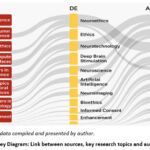 |
Figure 4: Sankey Diagram: Link between sources, key research topics and author countries |
Discussion
Keyword Statistics and Future research directions
The word cloud presented in Figure 5 below helps in identifying following dimensions with respect to ethical considerations in neurotechnology. Neuroethics (74) & Ethics (58) are the most prominent topics, confirming that ethical discussions dominate research on neurotechnology. Neuroscience (47) & Neurotechnology (24) are scientific foundation behind these discussions. Neurotechnology is a subfield of neuroscience, dealing with brain-computer interfaces (BCIs), neuromodulation, and AI-based interventions. Deep Brain Stimulation (17) has been frequently studied for its therapeutic applications (Parkinson’s, depression) but raises concerns regarding consent, identity changes, and long-term effects. Bioethics (14) & Informed Consent (14) are critical in clinical applications, ensuring patient autonomy and addressing risks like coercion or cognitive manipulation. Neuroimaging (12) raises privacy and consent concerns, especially regarding the potential for mind-reading, predictive 4analytics, and surveillance applications. Enhancement (10) & Artificial Intelligence (9) reflect that neurotechnology is not just for medical purposes; there’s growing interest in cognitive enhancement and AI-driven interventions. The bibliometric Implications of this word cloud suggest that the research field is highly interdisciplinary, integrating neuroscience, AI, ethics, law, and psychology. The ethical discourse is expanding beyond medical applications, addressing cognitive enhancement, privacy risks, and AI integration in neurotechnology. Future research may focus on regulatory frameworks, AI-powered brain interventions, and the long-term social impact of neurotechnology.
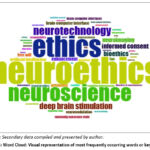 |
Figure 5: Word Cloud: Visual representation of most frequently occurring words or keywords. |
Cluster Analysis
Vos Viewer software was used to conduct a cluster analysis with help of author keywords. Number of keyword occurrences was restricted to 10. Four different clusters were identified and these have been represented by different colours. Keywords co-citation analysis helped in forming following clusters and research prepositions have been suggested as follows:
Cluster 1: Ethical and Legal Dimensions of Neurotechnology
This cluster has been highlighted with red colour and contains eight keywords, Brain computer interface, Brain computer interfaces, Deep brain stimulation, Enhancement, Law, Neuro-ethics, Neuroimaging, Research ethics. Significant research articles containing these keywords were reviewed to identify following research prepositions:
P1: To Study the integration of brain-computer interfaces (BCIs) into daily life which necessitates a new ethical framework to address issues of cognitive privacy and mental autonomy.
P2: To examine role of deep brain stimulation (DBS) in neuropsychiatric treatment which creates new legal challenges related to informed consent and patient autonomy.
P3: To understand how commercialization of BCIs and neuroimaging technologies raises ethical concerns about data ownership, consent, and neuro- privacy.
Cluster 2: Ethical Autonomy in Neurotechnology
There are total 6 keywords in second cluster represented by green colour. The keywords in this cluster are, Artificial intelligence, Autonomy, Free will, Informed consent, Neurology, Neuroscience. Analysis of research papers with these keywords helped in framing following future research prepositions:
P4: To explore the Role of AI in Shaping Ethical Decision-Making in Neurotechnology as AI’s integration into neurotechnology raises questions about autonomy and ethical responsibility.
P5: To understand the Impact of Neurotechnological Interventions on Individual Free Will as neuroscience advances, the boundaries of personal autonomy and external influence must be examined.
P6: To understand the ethical dilemmas arising from AI-driven neurological interventions and their implications for patient rights.
Cluster 3: Ethics and Applications of Neurotechnological Interventions:
Third cluster consists of five items in form of following keywords. Cognitive enhancement, Ethics, Minimally conscious state, Neuromodulation, Neurotechnology depicted by blue colour. Review of articles containing these keywords led to following prepositions:
P7: Analysing the ethical debate on cognitive enhancement through neurotechnology and how it challenges traditional notions of fairness, personal identity, and human agency.
P8: To understand how use of neuromodulation in individuals with minimal consciousness states raises ethical dilemmas concerning consent, quality of life, and end-of-life decisions.
P9: To understand how commercialization of neurotechnology for cognitive enhancement raises concerns about coercion, autonomy, and informed consent in non-medical applications.
Cluster 4: Bioethics and Neuroscientific Foundations of Neurotechnology:
The last cluster comprised of two keywords, Bioethics and Neurosciences. Represented by yellow colour, the related research articles review led to creation of following research prepositions:
P10: To study the intersection of bioethics and neuroscience which requires continuous adaptation of ethical guidelines to address issues related to cognitive enhancement and neural manipulation.
P11: To study the significance of neuroscientific evidence on consciousness, free will, and cognitive agency to develop informed policies.
P12: To develop robust international frameworks for governing neurotechnology applications in medicine, defence, and commercial sectors.
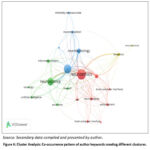 |
Figure 6: Cluster Analysis: Co-occurrence pattern of author keywords creating different clustures. |
Source: Secondary data compiled and presented by author.
How ethical governance influences clinical neuro-engineering innovations
Design requirements and safety-by-design: Because of more strict laws (e.g. FDA documents on AI-powered medical device software) around the added risk management, the clarification about the workings of the AI, and the life cycle tracking, the innovators are in a position to add safety and explainability, and improve the products at the design phase.
Clinical trial design and populations: The advantages of ethical governance (IRBs/IECs and ICMR guidance) is that a series of safeguards are put in place over the vulnerable populations, informed consent and monitoring requirements have an influence over the inclusion/exclusion criteria, trial and long-term follow-up plans.
Data governance and neuroprivacy: The new discourse of neurorights/neuroprivacy and case law will raise the standards of the acquisition of neurological data, its retention, transfer and commercial use and this will influence the decision to do on device or cloud processing and de-identification and consent terms.
The access to the market and post-market monitoring: The regulatory authorities are demanding post-market surveillance plans (especially in relation to AI/ML SaMD). This requirement will change the business models, according to which the vendors will be required to provide the monitoring/ updates, safety reporting, and re-validation of the device performance.
Mapping Ethical Challenges in specific diagnostic or therapeutic technologies
AI-powered SaMD and AI-assisted diagnostics: In this case, explainability and biasness in the data set, validation, excessive reliance of clinicians and lifecycle change management will be the most relevant ethical issues. These are among some of the problems which are mitigated by premarket clinical validation, human-in-the-loop display, documentation of training data and performance monitoring.
Closed-loop/adaptive systems in Deep Brain Stimulation (DBS): Informed consent, ratio of risks and benefits in neuropsychiatry, autonomy and long-term follow ups in the device have remained to be primary areas of ethical anxiety in the field. These ethical issues may be minimized with the establishment of multidisciplinary ethics committees that would include neurosurgery, psychiatry and ethics representatives, capacity assessment and post behavioural make-up refinement should be enhanced.
Neuroprosthetics and Motor/Communication BCI: The technologies have general ethical issues of commercialism, access to the information or data of decoded neural activity, the precision and expectations establishment etc. Decoding signals in form of breach of privacy, access and expectations differences due to overpromising, are the potential clinical implications. The best practices in the governance of these issues are to determine the ownership of data, safety reviews, analyzing the reliability control of the devices, and performance measures.
Neuromodulation: The border between therapy and enhancement is also quite narrow at the stage when such technologies can be non-clinical, and it has some ethical issues related to the possibility of pressure and access inequality. These results can hold a standardization of improvement and free market establishment without regulation on devices, which is regulated or restrained by communal education and community provisions on the applications of enhancement.
Policy implications for safe, and responsible translation of neurotechnological therapies
It will need an all-inclusive framework that combines ethical and clinical and regulatory protection to enable neurotechnological therapies to be translated safely and responsibly. The regulatory bodies should insist that future evidence that is risk-adjusted should not be based merely on safety and clinical efficacy point of view, but psychological, behavioural and identity impact with the long-term follow-up to make the impacts more evident in the long-term. On top of this, AI-based neuro devices should be able to adhere to an open life-cycle management (LCM) approach, and must be supplemented with an established change-control mechanism and continuous post-learn monitoring to prevent the unwanted performance changes. To correct the scenario of equity and inclusion the policymakers must make sure that neuro technological advances become accessible to everyone and see to it that data is free of prejudice and make sure that technology becomes affordable. These in totality are all a governance ecosystem that would pay attention to human dignity, safety, and equity when developing and using neurotechnological treatments.
Conclusion
The main findings of this bibliometric analysis of neurotechnology ethics include the identification of the subjects most frequently broached in discussions and articles on neurotechnology ethics, as well as the identification of the key topics or concepts developed in these fields. In concrete terms, the analysis exposes what topics, such as responsible research and innovation, privacy, or justice and fairness, have been part of published controversies. This can be instrumental in recognizing the key ethical challenges raised by neurotechnology, independently of one’s conceptions of how neurotechnology could or should evolve. In so doing, our bibliometric analysis also concerns itself with the possible emergence of debated subjects concerning the ethics of neurotechnology. Therefore, our analysis remains decidedly confined and raises numerous questions it cannot answer. This is precisely why we believe that it is so important to pursue this conversation that we hope to initiate around this article.
The commercialization of brain–computer interfaces (BCIs), deep brain stimulation (DBS), and neuroimaging technologies suggests the urgent need for extensive ethical and legal frameworks. For responsible deployment of neurotechnologies, issues of cognitive privacy, mental autonomy, and informed consent need to be addressed. When AI is integrated to neurotechnology, there are important concerns about autonomy, control and human right. Neurological interventions with AI at their core violate traditional concepts of free will, decision making and ethical accountability and require new ethical regulator to help maintain the balance between technological innovation and human dignity. As with the use of neurotechnology for cognitive enhancement, neuromodulation, and artificial intervention, relevant ethical problems relate to fairness, personal identity, and quality of life. Potentially unethical concerns regarding commercialization of neurotechnologies for non-medical use (e.g., cognitive enhancement) include coercion, access disparities, and consent in non-clinical settings. Considering that decision-making regarding neurotechnology has an ethical component, bias, it should be informed by neuroscientific evidence in the matters of consciousness, cognitive agency and neural manipulation. Regulating neurotechnologies could perceive bioethics as a means for creating global standards regarding the use of neurotechnologies in medicine, defense, and in the commercial sectors.
Implication of the present research are as follows. Findings first of all highlight the need for such urgent interdisciplinary regulatory frameworks which incorporate legal, ethical and neuroscientific perspectives. Second, standards for Neuroprivacy, policies related to neuroprivacy and global neuroprivacy are to be set by governments and bodies within the international community; third, ethical frameworks must guarantee that patients remain the masters of their cognitive function. The informed consent, data security and mental integrity guidelines need to be further refined. The third implication is that civil ethical issues related to cognitive enhancement and AI-driven neurotechnologies compellingly require wider public awareness and intensifying interdisciplinarity of approach. It is important that bioethicists, neuroscientists, policymakers and technologists collaborate to create and ensure fair and ethically correct neurotechnological applications. Finally, it can be concluded that neurotechnology is one of those technologies that has the potential to be used both for medical and for cognitive and for human enhancements applications, but holds also many ethical implications. An integration of bioethics, legal frameworks, and the neuroscientific insights can ensure the responsible development and deployment of neurotechnology and can protect human rights, autonomy, and welfare of a society.
Acknowledgement
We are thankful to Panjab University, Chandigarh for providing access to library material.
Funding Sources
The author(s) received no financial support for the research, authorship, and/or publication of this article.
Conflict of Interest
The author(s) do not have any conflict of interest.
Data Availability Statement
This statement does not apply to this article.
Ethics Statement
“This research did not involve human participants, animal subjects, or any material that requires ethical approval. This project aligns with ICMR National Ethical Guidelines (2017 + 2024 addenda), CDSCO Medical Device Rules (2017) guidance on software as medical device where applicable, and current FDA/IMDRF principles for AI-enabled devices as relevant.”
Informed Consent Statement
This study did not involve human participants, and therefore, informed consent was not required.
Clinical Trial Registration
This research does not involve any clinical trials
Permission to reproduce material from other sources
Not Applicable
Authors’ Contribution
- Ajay Kumar Dogra: Conceptualization, Writing, Original Draft
- Pooja Dogra: Analysis, Writing, Reviewing and Editing
References
- Angelaki V. Theorising interspaces: creative and critical intersections. In: Springer eBooks. 2024:33-90. https://doi.org/10.1007/978-3-031-54892-5_2
CrossRef - Dubey M, Ghosh R, Das G, et al. Beyond belief and practice: an exploratory literature review and discussion of the differential impact of spirituality and religiosity on mental health disorders. Journal of Religion and Health.2024: 1-14.https://doi.org/10.1007/s10943-024-02090-9
CrossRef - Freeden M. Liberalisms and Socialisms: Recalibrating some analytical criteria. In: Springer eBooks. 2023:17-35. https://doi.org/10.1007/978-3-031-41233-2_2
CrossRef - Thabit S. Perspective Chapter: Embracing the Complexity of Human Emotion. In: Advances in Sentiment Analysis-Techniques, Applications, and Challenges.2024. doi:10.5772/intechopen.112701
CrossRef - Dubey M, Ghosh R, Das G, et al. Beyond belief and practice: an exploratory literature review and discussion of the differential impact of spirituality and religiosity on mental health disorders. Journal of Religion and Health.2024:1-14.https://doi.org/10.1007/s10943-024-02090-9
CrossRef - Rainey S. An Anticipatory approach to Ethico-Legal implications of future neurotechnology. Science and Engineering Ethics. 2024;30(3). https://doi.org/10.1007/s11948-024-00482-4
CrossRef - Sample M, Racine E. Pragmatism for a Digital Society: The (In)significance of Artificial Intelligence and Neural Technology. In: Advances in Neuroethics. 2021:81-100. https://doi.org/10.1007/978-3-030-64590-8_7
CrossRef - González-Márquez C. Neuromodulation and memory: exploring ethical ramifications in memory modification treatment via implantable neurotechnologies. Frontiers in Psychology. 2023;14:1-16.https://doi.org/10.3389/fpsyg.2023.1282634
CrossRef - Penrod J. A new look at Ethics: Veridical Sovereignty and its Implications. In: Springer eBooks. 2022:99-155. https://doi.org/10.1007/978-3-031-18549-6_5
CrossRef - Ienca M, Andorno R. Towards new human rights in the age of neuroscience and neurotechnology. Life Sciences Society and Policy. 2017;13(5):1-27. https://doi.org/10.1186/s40504-017-0050-1
CrossRef - Bostrom N, Sandberg A. Cognitive Enhancement: methods, ethics, regulatory challenges. Science and Engineering Ethics. 2009;15(3):311-341. https://doi.org/10.1007/s11948-009-9142-5
CrossRef - Armstrong BC, Ruiz-Blondet MV, Khalifian N, Kurtz KJ, Jin Z, Laszlo S. Brainprint: Assessing the uniqueness, collectability, and permanence of a novel method for ERP biometrics. 2015;166:59-67.https://doi.org/10.1016/j.neucom.2015.04.025
CrossRef - Campisi P, La Rocca D, Scarano G. EEG for automatic person recognition. 2012;45(7):87-89.https://doi.org/10.1109/MC.2012.233
CrossRef - Diggelmann O, Cleis M. How the right to privacy became a human right. Hum Rights Law Rev. 2014;14(3):441-458.https://doi.org/10.1093/hrlr/ngu014
CrossRef - Dinev T, Hart P. Internet privacy concerns and their antecedents: measurement validity and a regression model. Behav Inform Technol. 2004;23(6):413-422. https://doi.org/10.1080/01449290410001715723
CrossRef - Alston P. Conjuring up new human rights: A proposal for quality control. Am J Int Law. 1984;78(3):607-621. https://doi.org/10.2307/2202599
CrossRef - Charo R. Yellow lights for emerging technologies. 2015;349(6246):384-385. https://doi.org/10.1126/science.aac5096
CrossRef - Decker M, Fleischer T. Contacting the brain: aspects of a technology assessment of neural implants. Biotechnol J. 2008;3(12):1502-1510.https://doi.org/10.1002/biot.200800197
CrossRef - Aharoni E, Vincent G, Harenski C, et al. Neuroprediction of future rearrest. Proceedings of the National Academy of Sciences. 2013;110(15):6223-6228. https://doi.org/10.1073/pnas.1219302110
CrossRef - Lyreskog D, Zohny H, Savulescu J, Singh I. Merging Minds: The conceptual and ethical impacts of emerging technologies for collective minds. Neuroethics. 2023;16(1). https://doi.org/1007/s12152-023-09516-3
CrossRef - Grübler, G., & Hildt, E. The Users’ Perspective. Brain-Computer-Interfaces in their ethical, social and cultural contexts, 2014;115-125.https://doi.org/10.1007/978-94-017-8996-7_10
CrossRef - Hildt E. What will this do to me and my brain? Ethical issues in brain-to-brain interfacing. Front Syst Neurosci. 2015; 9:17.https://doi.org/10.3389/fnsys.2015.00017
CrossRef - Himma K. Artificial agency, consciousness, and the criteria for moral agency: What properties must an artificial agent have to be a moral agent? Ethics Inf Technol.2009;11(1):19-29. https://doi.org/10.1007/s10676-008-9167-5
CrossRef - Jiang L, Stocco A, Losey D, Abernethy J, Prat C, Rao R. BrainNet: A multi-person brain-to-brain interface for direct collaboration between brains. Sci Rep. 2019;9(1):6115. https://doi.org/10.1038/s41598-019-41895-7
CrossRef - Laukyte M. Artificial agents among us: Should we recognize them as agents proper? Ethics Inf Technol. 2017;19(1):1-17. https://doi.org/10.1007/s10676-016-9411-3
CrossRef - Maksimenko V, Hramov A, Frolov N, et al. Increasing human performance by sharing cognitive load using brain-to-brain interface. Front Neurosci. 2018;12:949. https://doi.org/10.3389/fnins.2018.00949
CrossRef - Van Balen B. Can communication Brain-Computer Interfaces read minds? Phenomenology and the Cognitive Sciences. Published online January 20, 2025. https://doi.org/1007/s11097-024-10044-5
CrossRef - Osler L. Taking empathy online. 2024;67(1):302-329. https://doi.org/10.1080/0020174X.2021.1899045
CrossRef - Oxley T, Yoo P, Rind G, et al. Motor neuroprosthesis implanted with neurointerventional surgery improves capacity for activities of daily living tasks in severe paralysis: First in-human experience. J Neurointerv Surg. 2021;13(2):102-108. https://doi.org/10.1136/neurintsurg-2020-016862
CrossRef - Pels E, Aarnoutse E, Ramsey N, Vansteensel M. Estimated prevalence of the target population for brain-computer interface neurotechnology in the Netherlands. Neural Repair. 2017;31(7):677. https://doi.org/10.1177/1545968317714577
CrossRef - Poeppel D. The neuroanatomic and neurophysiological infrastructure for speech and language. Curr Opin Neurobiol. 2014;28:142-149. https://doi.org/10.1016/j.conb.2014.07.005
CrossRef - Rainey S, Maslen H, Mégevand P, Arnal L, Fourneret E, Yvert B. Neuroprosthetic speech: The ethical significance of accuracy, control, and pragmatics. Camb Q Healthc Ethics. 2019;28(4):657-670. https://doi.org/10.1017/S0963180119000604
CrossRef - Mecacci G, Haselager P. Identifying criteria for the evaluation of the implications of brain reading for mental privacy. Sci Eng Ethics. 2019;25:443-461. https://doi.org/10.1007/s11948-017-0003-3
CrossRef - Krol L, Haselager P, Zander T. Cognitive and affective probing: A tutorial and review of acting learning for neuroadaptive technology. J Neural Eng. 2020. https://doi.org/10.1088/1741-2552/ab5bb5
CrossRef - MacKellar C. Cyborg mind: What brain-computer and mind-cyberspace interfaces mean for cyberneuroethics. 2019. https://doi.org/10.2307/j.ctvvb7mw5
CrossRef - Moore A. Privacy, neuroscience, and neuro-surveillance. Res Publica. 2017;23:159-177. https://doi.org/10.1007/s11158-016-9341-2
CrossRef - Vilarroya O. The challenges of neural mind-reading paradigms. Front Hum Neurosci. 2013. https://doi.org/10.3389/fnhum.2013.00306
CrossRef - Burwell S, Sample M, Racine E. Ethical aspects of brain-computer interfaces: A scoping review. BMC Med Ethics. 2017;18(60). https://doi.org/10.1186/s12910-017-0220-y
CrossRef - Zuk P, Torgerson L, Sierra-Mercado D, Lázaro-Muñoz G. Neuroethics of neuromodulation: An update. Curr Opin Biomed Eng. 2018;8:45-50. https://doi.org/10.1016/j.cobme.2018.10.003
CrossRef - Schönau A. The spectrum of responsibility ascription for end users of neurotechnologies. 2021;14(3):423-425. https://doi.org/10.1007/s12152-021-09460-0
CrossRef - Gaudry K, Hasan A, Bedows A, et al. Projections and the potential societal impact of the future of neurotechnologies. Front Neurosci. 2021;15:1-8. https://doi.org/10.3389/fnins.2021.658930
CrossRef - Micoulaud-Franchi J, Fond G, Dumas G. Cyborg psychiatry to ensure agency and autonomy in mental disorders: A proposal for neuromodulation therapeutics. Front Hum Neurosci. 2013;7:463. https://doi.org/10.3389/fnhum.2013.00463
CrossRef - Rudnick A. On the notion of (medical) invasiveness. Health Care Anal. 2011;19(2):99-106. https://doi.org/10.1007/s10728-010-0149-5
CrossRef - Leuthardt E, Moran D, Mullen T. Defining surgical terminology and risk for brain-computer interface technologies. Front Neurosci. 2021;15:46-59. https://doi.org/10.3389/fnins.2021.599549
CrossRef - Bluhm R, Cortright M, Achtyes E, Cabrera L. “They are invasive in different ways”: Stakeholders’ perceptions of the invasiveness of psychiatric electroceutical interventions. AJOB Neurosci. 2021:1-12. https://doi.org/10.1080/21507740.2021.1958098
CrossRef - Müller S, Walter H, Christen M. When benefitting a patient increases the risk for harm for third persons: The case of treating pedophilic Parkinsonian patients with deep brain stimulation. Int J Law Psychiatry. 2014;37(3):295-303. https://doi.org/10.1016/j.ijlp.2013.11.015
CrossRef - Bonaci T, Calo R, Chizek H. App stores for the brain: Privacy & security in brain-computer interfaces. IEEE Technol Soc Mag Sci. 2015;34(2):32-39. https://doi.org/10.1109/MTS.2015.2425551
CrossRef - Moher D, Liberati A, Tetzlaff J, Altman D. Preferred reporting items for systematic reviews and meta-analyses: The PRISMA statement. BMJ. 2009;33(9):25-35. https://doi.org/10.1136/bmj.b2535
CrossRef - Montoya F, Alcayde A, Baños R, Manzano-Agugliaro F. A fast method for identifying worldwide scientific collaborations using the Scopus database. Telematics and Informatics. 2018;35(1):168-185. https://doi.org/10.1016/j.tele.2017.11.004 .
CrossRef - Schotten M, Aisati M, Meester W, Steiginga S, Ross C. A brief history of Scopus: The world’s largest abstract and citation database of scientific literature. In Research Analytics: Boosting University Productivity and Competitiveness through Scientometrics. Auerbach Publications. 2017:31-58. https://doi.org/10.1201/9781315155890-3
CrossRef
 PlumX:
 Views: 356
  PDF Downloads:
132
PDF Downloads:
132